New on DVD, Blu-ray: ‘Skin I Live in’ and ‘To Catch a Thief’

By Michael Wilmington
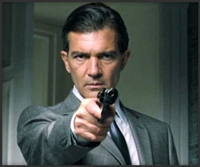
Antonio Banderas

The Skin I Live In (DVD)/2011/Sony Pictures Home Entertainment/117 min.

Pedro Almodóvar, the Spanish master of kink and perverse soap opera (“Matador,” “Law of Desire,” “Talk to Her”), here plunges into high Gothic melodrama, with Antonio Banderas as a wealthy and reclusive plastic surgeon, who becomes obsessed with implanting the features of his beautiful, beloved, dead wife on the face of a female prisoner (Elena Anaya) whom he keeps hidden away in his posh isolated home.

Also involved: a mysterious housekeeper who knows some dark secrets (Marisa Paredes) and a raunchy interloper in a tiger suit (Roberto Álamo).

Not for every taste of course – no Almodovar film is – but a good, creepy elegant old-school horror movie worthy of its obvious influences: Georges Franju’s “Eyes Without a Face,” James Whale’s Frankenstein, Luis Buñuel, Alfred Hitchcock and Fritz Lang. And the reunion of Almodovar and star Banderas, is a felicitous one. At the very least, this film will give you a different slant on Banderas’ “Puss in Boots.” (In Spanish, with English subtitles.)

Extras: Documentary featurettes; Q&A with Almodovar

xxx
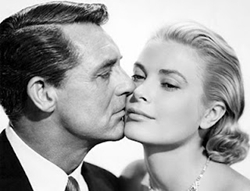
Grant and Kelly: One of Hitchcock’s sexiest duos.

To Catch a Thief (Blu-ray)/1955/Paramount/106 min.

Cary Grant is a Riviera cat burglar, framed by another mysterious thief and chased by both the local gendarmerie and his old pals in the Resistance. Grace Kelly is a rich, gorgeous vacationer who can really get those fireworks and colored lights going.

One of Alfred Hitchcock’s most purely entertaining movies, beautifully shot in Cannes and surrounding locations, with Grant and Kelly making up his sexiest couple, except maybe for Grant and Bergman in “Notorious.”

From the (not too good) novel by David Dodge, scripted by John Michael Hayes. With Jessie Royce Landis, Charles Vanel and John Williams.

Pure – well, a little impure – fun.

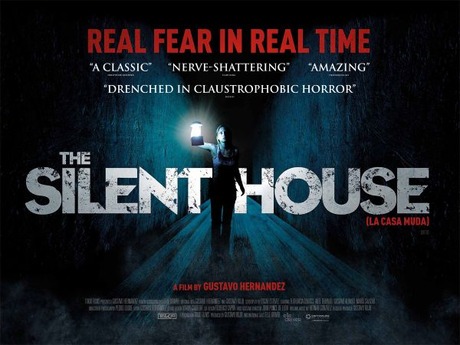
Tense one-take ‘Silent House’ undercut by lack of depth

Silent House/2012/LD Entertainment, et al/88 min.

Does the average moviegoer care if a movie seems to be shot in one continuous take? Maybe, maybe not. To create the appearance of a one-take thriller, “Silent House,” directed by Chris Kentis and Laura Lau, was filmed on one Canon 5D camera with two operators in 13 total shots.

Whether you know or care about tricky production, the point is to try to make you feel the fear of the main character Sarah (Elizabeth Olsen) a girl who’s in for a bad night at her family’s dark, isolated, creaky, spooky (natch) summer home. “The continuous take in itself is really what builds the tension,” said Lau at a recent press day in Beverly Hills. “She’s trapped in terror.”

(Similarly, Alfred Hitchcock crafted the illusion of a continuous shot in his first color film, 1948’s “Rope,” starring James Stewart, John Dall and Farley Granger.)

Kentis and Lau (co-directors of 2003’s “Open Water”) remade “Silent House” from Gustavo Hernández’s “La Casa Muda” (2010), which was inspired by events that occurred in a Uruguayan village in the 1940s. For their version, Lau wrote a new script, working late at night and listening to Nine Inch Nails. In addition to Trent Reznor, the filmmakers said they drew inspiration from psychological thrillers like Roman Polanski’s “Repulsion” (1965).

“Silent House” also features Adam Trese and Eric Sheffer Stevens as Sarah’s father and uncle, and Julia Taylor Ross as a family friend, but ultimately it’s Olsen’s movie. Because she’s rarely offscreen, the film hinges on her presence and acting.

Expressive, vulnerable and luminous, Olsen is compelling to watch. “I felt like I was part of the editing process,” said Olsen at the press day. “It was like dancing with the DP [Igor Martinovic] and figuring out a rhythm.”

The drama hinges on a devastating secret, long hidden within the walls of this sinister summer home. Though “Silent House” is swift and slick, unfortunately, the twist that’s supposed to lend psychological depth feels clumsy and lame, like a thin slap of paint on a faded front door.

“Silent House” opens today nationwide.

‘Sound of Noise’ riffs on cops, rogue musicians; director/drummer to battle Melvins Friday at Cinefamily

Sound of Noise/2010/Magnolia Pictures/102 min.

The cop drama gets a frenetic comic spin in “Sound of Noise” by Swedish filmmakers Ola Simonsson and Johannes Stjärne Nilsson. When a group of six drummers decides to unleash anarchy by commandeering everyday objects (medical equipment, paper shredders, jack hammers) to use as makeshift instruments, they draw the ire of a police officer with an ax to grind.

Amadeus Warnebring (Bengt Nilsson) is the tone-deaf black sheep in a family of prominent musicians and, though he hates music, he has what it takes to track down these percussive renegades. “There’s a metronome here somewhere,” Amadeus tells his team as he surveys the scene after one of the gang’s hit-and-run performances. “Find it.”

Leading the raids is a take-charge blonde named Sanna Persson (Sanna Persson Halapi), who has decided it’s time to strike back in a city that’s “contaminated by shitty music.” (The city as well as the exact time is undefined; the film was shot mostly in Malmö, Sweden.) Despite his frustration, which he vents at one point by smashing instruments, Amadeus also finds it hard to resist Sanna’s allure.

Weirdly original and whimsically entertaining, “Sound of Noise” charms in a way that’s delightfully absurd and singularly Swedish. Bengt Nilsson brings just the right amount of loner intensity to Amadeus; Sven Ahlstrom neatly complements as Amadeus’ brother Oscar, golden boy and admired conductor. It’s also nicely lit by cinematographer Charlotta Tengroth.

“Sound of Noise” is the first feature from Simonsson and Stjärne Nilsson. Their previous work includes the acclaimed shorts “Music for One Apartment and Six Drummers” (2001), “Way of the Flounder” (2005) and “Woman and Gramophone” (2006).

“Sound of Noise” opens Friday, March 9, in New York, LA and Seattle. Over the next several weeks, it will play in select cities; check local listings for details. The filmmakers will be at Cinefamily (611 N. Fairfax Ave., Los Angeles, 90036, 323-655-2510) on Friday, March 9, and Saturday, March 10, for Q&As. Additionally, on Friday, Cinefamily will host an opening party featuring a live drum battle with co-director Ola Simonsson and Melvins’ drummers, Dale Crover and Coady Willis.

Warning: ‘Thin Ice’ has more than a few cracks

Thin Ice/2012/ATO Pictures/93 min.

Small towns where not much happens, 20-below weather, dive bars and cheese curds. It’s all good fodder for quirky, memorable Midwestern noir. Or it could be. But unfortunately “Thin Ice” lets its promise and potential melt away.

There are some things to like – a few funny moments, it looks good and it’s quite well cast. Greg Kinnear plays a sleazy, smiling insurance salesman named Mickey V. Prohaska. His license plate is MVP2 because someone already had MVP. And he’s desperate for cash. He sees a chance to secure some money after he discovers that a new client (Alan Arkin) has a valuable violin tucked away in his farmhouse, amid the knick-knacks and fading wallpaper.

But when Mickey tries to grab the violin, his plan goes disastrously awry thanks to a local psycho (Billy Crudup). Instead of a clean swipe, there’s a dead body to dispose of and complications ensue. David Harbour shines as Mickey’s earnest employee. So does Lea Thompson as Mickey’s estranged wife and Bob Balaban as the violin appraiser.

“Thin Ice” is watchable, parts are enjoyable, but the story limps, then stumbles to a ridiculous ending. There’s no command of the material as it stands. I say as it stands because writer/director Jill Sprecher, a Wisconsin native who wrote the script with her sister Karen Sprecher, reportedly tried to remove her name from the film after the distributor recut it without their involvement.

I wish I could see Sprecher’s original movie and, as for “Thin Ice,” I wish I’d stayed home and watched “Fargo” by the Coen brothers one more time instead.

“Thin Ice” opened in limited release last Friday.

Strong acting, stellar cast can’t save ‘Rampart’

Rampart/2011/Millennium Entertainment/108 min.

“This used to be a glorious soldiers’ department,” says Woody Harrelson as dirty LA cop and Vietnam vet Dave Brown early on in “Rampart” by director Oren Moverman.

He’s right. Beset by the Rampart scandal, the LAPD in 1999 is anything but glorious. And corrupt, bloodthirsty, womanizing, racist Dave is anything but sympathetic. Dave’s also oddly verbose at times, perhaps signaling that he isn’t as smart as he thinks he is.

The best part of “Rampart” is the strong acting by Harrelson and the rest of the cast – Ned Beatty, Ben Foster, Robin Wright, Anne Heche, Cynthia Nixon, Sigourney Weaver, Ice Cube, and a cameo from Steve Buscemi.

Despite the formidable acting, there’s scant character development, a turbid storyline and gimmicky camerawork. Sometimes the script, by Moverman and James Ellroy, just thuds. When Dave meets Linda (Wright) in a bar, his opening gambit is: “You’re wearing a courtroom suit and you have litigator eyes.” Really?

And when Beatty’s character, an ex-bad-cop, meets Dave in a library, he tells him: “I don’t play games. I don’t name names.”

As much as I wanted to like “Rampart,” I found the film unpleasant to watch. Granted, it is unpleasant subject matter, but dramatically this is a letdown. I had high hopes for “Rampart” because I admired Harrelson and Moverman’s excellent movie “The Messenger” from 2009. For really sizzling neo-noir stories of police corruption, give me “L.A. Confidential” (based on Ellroy’s novel) or “Serpico” anytime.

Free stuff from FNB: Win ‘Notorious’ by Alfred Hitchcock

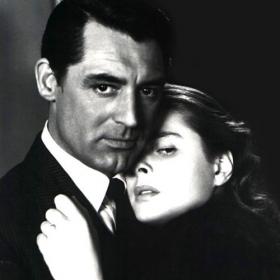
Cary Grant and Ingrid Bergman in "Notorious"

In honor of Valentine’s Day, I am giving away a DVD copy of the 1946 Alfred Hitchcock classic “Notorious,” starring Cary Grant, Ingrid Bergman and Claude Rains. Both an espionage thriller and a tortured love story, the movie is considered one of Hitchcock’s finest works and was François Truffaut’s fave. I will run a review in the next few weeks.

(Patricia is the winner of the January reader giveaway, a paperback copy of “We Need to Talk About Kevin” by Lionel Shriver. Congrats to Patricia and thanks to all who entered!)

To enter the February giveaway, just leave a comment on any FNB post from Feb. 1-29. We welcome comments, but please remember that, for the purposes of the giveaway, there is one entry per person, not per comment.

The winner will be randomly selected at the end of the month and announced in early March. Include your email address in your comment so that I can notify you if you win. Your email will not be shared. Good luck!

Compelling but flawed ‘Kill List’ melds drama, thriller, horror

Kill List/2011/IFC Midnight/95 min.

“Kill List” is a resonant film that demands your attention with its oblique weirdness and darkly alluring characters, but in the end doesn’t live up to its full storytelling potential.

An ambitious mix of genres, the film is divided into three parts – it begins with fly-on-the-wall family drama, segues into a black-humor thriller about two matter-of-factly brutal hitmen and culminates in full-on horror centering on a furtive, frightening cult. But while the first two thirds of the movie are richly atmospheric and unusually compelling (there’s an intense realism to the acting), the final chapter feels disappointingly banal.

“Kill List” has real spontaneity in the performances though, perhaps because director Ben Wheatley co-wrote the script with Amy Jump specifically for the actors, then encouraged them to improvise. That, said Wheatley at a round-table interview Friday in West Hollywood, gave the film sweeter, funnier moments than he had in the script.

MyAnna Buring

Neil Maskell plays Jay, an English hitman figuring out his next step, several months after a job went wrong in Kiev. An average Joe with a pudgy face and love handles, Jay might just as easily be a used-car salesman or an insurance agent who has hit a dry patch and needs to pull in some cash.

Tension simmers between Jay and his wife Shel (MyAnna Buring, an icy Hitchcockian blonde). Their young son Sam (Harry Simpson) winces when his parents fight, which is frequently.

Jay’s work prospects look brighter after a visit from his friend, goofy-looking Gal (Michael Smiley) and his smoldering girlfriend Fiona (Emma Fryer). Jay and Gal, despite their apparent inefficiency in Kiev, are entrusted with a new assignment. The victims accumulate, Jay’s grasp on reality is increasingly tenuous and the hitmen are drawn into the workings of the cult.

Wheatley, who also directed the 2009 crime comedy “Down Terrace,” has a penchant for ’70s films. In “Kill List,” he said, he had elements of these films on his radar: “Race with the Devil,” “The Wicker Man,” “The Parallax View,” and “The Manchurian Candidate” as well as the work of directors John Cassavetes (“Faces”) and Alan Clarke (“Scum”).

As for the genre-bending in “Kill List,” Wheatley said he front-loaded the film with characterizations so the last part would work. “Knowing who these people are amplifies the violence and you’re primed for the crazy horror.”

All well and good. Except that, despite laying the groundwork, the horror seemed more half-baked than truly disturbing. But that’s just me. Pointing out that much of the film’s violence is implicit – imagined and defined by viewers – Wheatley said, “You look at the film and the film looks at you. Your own prejudices come out. [The film] puts a weird curse on the audience.”

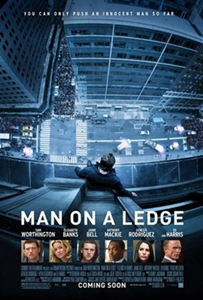
‘Man on a Ledge’ falls squarely into the realm of the absurd

Man on a Ledge/2012/Summit Entertainment/102 min.

By Michael Wilmington

“Man on a Ledge,” a thriller about a man clinging to a 21st-story ledge, while Manhattan goes wild below him, is a real mind-boggler – not because of any hair-raising suspense but because the story is so ridiculous that, despite a high-octane cast, it’s capable of putting you into a state of befuddled exasperation and disbelief.

“Man on a Ledge” has that slick, self-satisfied gleam movies can get when they cost too much and they’re stuffed with formula and clichés and stars. The picture’s constantly accelerating absurdities suggest that the filmmakers assume their audience will swallow anything. It also has a plot so preposterous, motivations so inane and an ending so bonkers that the best way to play them would be for laughs, if the show were good at comedy (which it isn’t).

Consider the premise. A tough ex-cop named Nick Cassidy (Sam Worthington) is in jail, framed for a $40 million diamond robbery from a Donald Trump-like financier named David Englander (Ed Harris). Nick escapes from custody while on a furlough to attend his father’s funeral, then checks into the Roosevelt Hotel, orders breakfast and crawls out the window onto the ledge, 21 stories above the street.

Soon, he attracts a crowd, as well as police (his buddy Mike played by Anthony Mackie and the cynical Jack played by Edward Burns), along with a vain, callous TV news reporter Suzie Morales (Kyra Sedgwick), and a lusty but conscientious crisis negotiator, Lydia Mercer (Elizabeth Banks), who tries a little harder than Jack to talk Nick back inside.

It doesn’t work. Nick keeps refusing to get off his ledge while talking in a curious accent that suggests an Australian trying to impersonate a New York City Irish-American. (Couldn’t Worthington get some lessons from Burns?)

Why, you might wonder, does somebody break out of prison in order to jump out of a hotel window? Good question. (There are many more.) It turns out that the episode we’re watching is not a real suicide attempt, but an elaborate diversion, intended to preoccupy the police and everyone else.

Meanwhile, across the street, Nick’s live-wire brother Joey (Jamie Bell) and Joey’s hottie partner Angie (Genesis Rodriguez) break into Englander’s suite, where they’re convinced the $40 million diamond is still lying around somewhere and will exonerate Nick, if they can find it. In other words, the “jump” is staged as part of a robbery intended to clear the “jumper” of a conviction for another robbery of the very same diamond. Got that?

Why this outrageously silly heist is committed during the day, after a huge crowd, police and media have been pulled into the area by the phony suicide, or why Nick didn’t do his ledge routine somewhere else farther away, remains another of the show’s endless mysteries.

“Man on a Ledge” is director Asger Leth’s first fiction feature – he’s done an admired documentary called “Ghosts of City Soleil” – and he makes the movie slick and fast. (Pablo F. Fenjves wrote the script.) Ludicrous, yes, but it’s never boring, and the sheer, uninspired phoniness and preposterousness almost command a perverse respect, though, to tell the truth, I couldn’t wait to leave.

‘Marnie’ is a complex, thoughtful and satisfying story

Marnie/1964/Universal Pictures/130 min.

In honor of Tippi Hedren’s 82nd birthday earlier this month (Jan. 19), I’m running this review of “Marnie.” In 1983, Hedren, a Minnesota native of Scandinavian descent, founded the Roar Foundation to support abandoned exotic felines at the Shambala Preserve in Acton, Calif.

Most cynics have romantic souls and if there’s one Hitchcock film that works on this premise it’s “Marnie.” Though the legendary auteur frequently featured redemptive, romantic endings, here a pair of feuding lovers must work through many an issue before they hit happily ever after. It’s also a portrait of a wayward woman struggling with a tortured psyche, stemming from an unresolved childhood trauma.

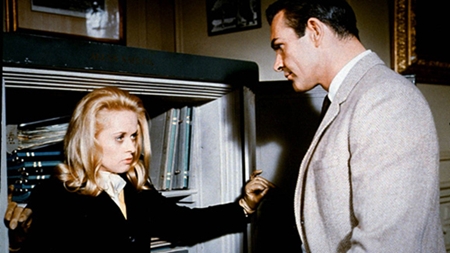
Marnie (Tippi Hedren) and Mark (Sean Connery) must work through many an issue.

In the opening scene we meet impeccably dressed, raven-haired career girl Marnie Edgar (Tippi Hedren) carrying a citron-colored handbag that’s as covetable today as it was in 1964. (Hedren starred in Hitchcock’s “The Birds” one year earlier.)

Marnie has just finished doing what she does best: stealing from her employer, then donning a new disguise so she can pull the same scam at another company.

Besides her sizable clothing and hair-color budget, Marnie wants money to give to her poor frumpy Mama (Louise Latham), telling her: “That’s what money’s for. To spend.” (Especially when it’s someone else’s cash.) But despite these handouts, which Marnie personally delivers, Mama’s uptight and hard to please, preferring to lavish her attention on a little girl from the neighborhood (Kimberly Beck) instead of on her daughter.

At her next job, Marnie sports auburn up-do’s and sensible shoes. It’s here that she meets devastatingly handsome businessman Mark Rutland (Sean Connery). Intense and domineering, Mark is quickly smitten but ice-queen Marnie has no interest in him or in any man, though she does weaken long enough to kiss him.

Diane Baker plays sassy Lil.

Not so impressed with Marnie is Mark’s sharp, sassy sister-in-law Lil (Diane Baker). Packed with interesting women, the cast also includes Mariette Hartley as Marnie’s office colleague and Melody Thomas Scott as young Marnie.

Marnie’s coldness just makes Mark more determined – he is used to getting what he wants – and once he finds out about her criminal past, he uses this info to hasten their marriage.

The fact that Marnie can’t stand his touch doesn’t make for the most romantic honeymoon. Perhaps if he were a tad less controlling …

Will Mark help Marnie confront her past before her spate of Dior-collar crime catches up with her? That’s the movie’s source of suspense. It’s loosely based on a novel by Winston Graham but Hitchcock typically used the literary source material as merely a starting point to create a tension-filled, sometimes terrifying, reality and render his unique vision. The script came from Jay Presson Allen, a former actress and writer, who also worked with Sidney Lumet.

Hitchcock enjoyed exploring psychosexual theory in his films, sometimes with a smirk, sometimes not. In this case, Dr. Hitch diagnoses frigidity, rescue fantasies, control issues bordering on obsession, repressed memories and of course a major power struggle.

The movie was trashed upon its release. Critics called Hitchcock sloppy and unfairly pounced on Hedren’s acting. The editing is occasionally choppy, some of the backdrops look fake, the screen goes red when Marnie sees the color red, there are thunderstorms aplenty. Though they might seem flawed or slightly old-hat, these noirish devices reflect Marnie’s off-kilter world, her confused and anguished psychological state.

And Hitchcock’s personality was too controlling and perfectionistic to have coasted through this movie. Conscious of every detail of every frame, he sometimes shopped for and selected accessories like hats and handbags because even these seemingly minor visual elements affected the color palette of each shot. He also wanted classic lines for the clothes so that in years to come they wouldn’t look dated.

Always engaging, sometimes thrilling, “Marnie” is a complex, thoughtful and satisfying story.

‘Marnie’ quick hit

Marnie/1964/Universal Pictures/130 min.

In Alfred Hitchcock’s “Marnie,” a twisted rescue fantasy meets a pretty passel of repressed memories. The wannabe rescuer is intense, domineering and drop-dead gorgeous Mark Rutland (Sean Connery). His damsel in distress, and often in disguise, is chic thief Marnie Edgar (Tippi Hedren), still dogged by a childhood trauma. Marnie is determined to buy a few new dresses for her fashion-challenged Mama (Louise Latham), just as Hitch was determined to make Tippi his new Grace Kelly. Always engaging, sometimes thrilling, “Marnie” is a complex, thoughtful and satisfying story.