The German Film Festival in Los Angeles ends today

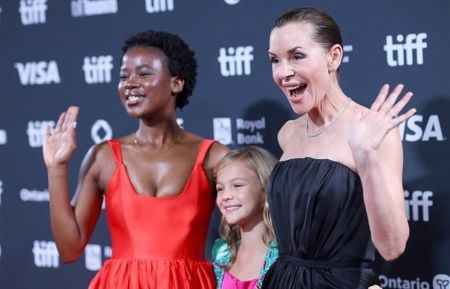
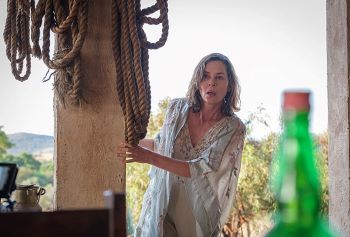
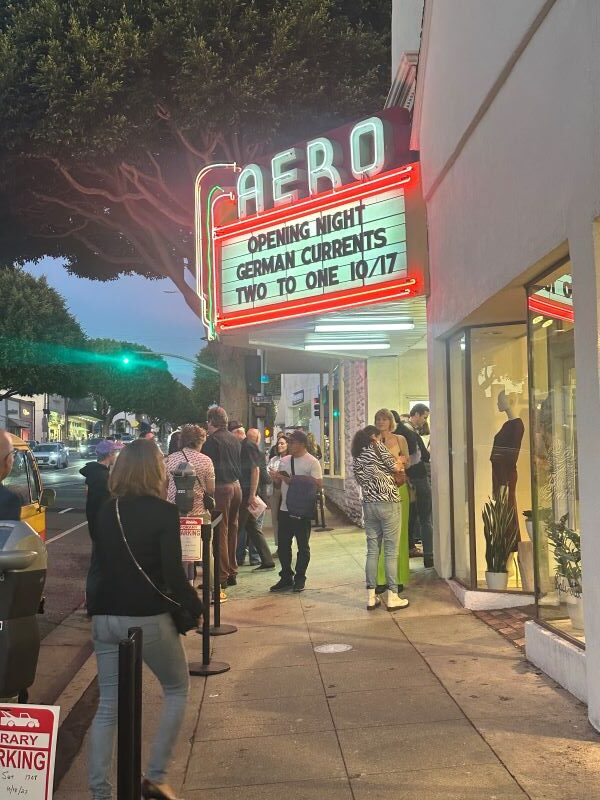
“Two to One,” starring Sandra Hüller, played to a full house on Friday night at the Aero Theatre in Santa Monica.

On Friday, we attended opening night of German Currents: the 19th Festival of German Film, thanks to our lovely friend Debra Levine of artsmeme.com. Held at the Aero Theatre in Santa Monica, the featured film was “Two to One,” a comedy-caper from writer-director Natja Brunckhorst, starring Sandra Hüller, Max Riemelt, and Ronald Zehrfeld. Hüller garnered international acclaim for “Anatomy of a Fall” and “The Zone of Interest” (both 2023; she got an Oscar nom for the former). The festival, which ends today, is a co-production of the Goethe Institut and the American Cinematheque.

In “Two to One,” we meet an East Berlin family who, after the fall of the Berlin Wall and before unification, sees a way to make a bundle by exchanging ostmarks for deutschemarks at the rate of two to one – but only if they act quickly.

The Aero was packed, even though the LA Dodgers were playing at home in Game 4 of the National League Championship Series (they won!). Following the show, Ronald Zehrfeld did a Q&A; then guests headed to the after party to nosh on schnitzel sliders and custard buns, and sip excellent Tupetz wine.

Alle hatten eine gute Zeit!

Despite engrossing story, ‘Shoshana’ lacks emotional core


Director Michael Winterbottom knows how to use the tools of his craft to build a world the audience can enter and, over his long career, has rendered onscreen realities that merge with superb storytelling, across a variety of genres. A few highlights of his work include: “Jude” 1996, “Welcome to Sarajevo” 1997, “Wonderland” 1999, “24 Hour Party People” 2002, “The Road to Guantanamo” 2006, “A Mighty Heart” 2007, “The Killer Inside Me” 2010 and “The Trip” series (starting in 2010 and starring Steve Coogan and Rob Brydon.)

His latest effort is “Shoshana,” a political thriller/drama that takes place in 1930s-1940s British-run Palestine and is based on real-life events and people. For a little background: Britain gained control of Palestine after World War I and, in 1922, the League of Nations granted a mandate over the territory. The mandate, which aimed to establish a national home for the Jewish people while safeguarding the rights of the existing Arab population, ended on May 14, 1948, with the declaration of the State of Israel. Arab nationalists opposed the mandate, leading to violence and clashes with British authorities.

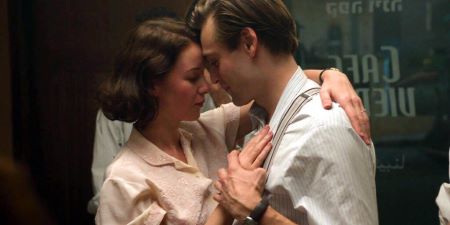
Shoshana (Irina Starshenbaum) and Tom (Douglas Booth) try to keep their love alive.

The film stars Irina Starshenbaum as Shoshana Borochov, a strong-willed Jewish writer and member of the Haganah underground military organization, who’s romantically involved with a smart, charming, easy-on-the-eyes British police officer named Tom Wilkin (Douglas Booth). Tom reports to Geoffrey Morton (Harry Melling), who becomes increasingly ruthless as they pursue Zionist militant Avraham Stern (Aury Alby). At the same time, Shoshana and Tom’s relationship grows more and more fractious.

No doubt, Winterbottom does an excellent job of transporting the viewer to Tel Aviv (shot in Italy) and creating a mood of tension and uncertainty, thanks to seamless production design, wardrobe, music and other period detail. Though riveting and fast-paced, the movie is sometimes a bit hard to follow.

“Shoshana” doesn’t really belong to its eponymous character (it’s hard to connect with what she’s feeling below the surface), and the love story seems more tacked on than central to the narrative. The script, previously titled “Promised Land” and written by Winterbottom, Laurence Coriat and Paul Viragh, doesn’t draw Shoshana and Tom vividly enough. Because their relationship lacks chemistry, they never sizzle, even during their tempestuous scenes. Without much of an emotional core in “Shoshana,” it’s hard to be moved by the actors’ performances, despite the high-stakes situations the characters find themselves in amid the ominous onset of World War II.

“Shoshana” opens in Los Angeles theaters on July 25.


‘Don’t Let’s Go to the Dogs Tonight’ offers richly textured, nuanced portrait of turbulent childhood in Africa

Childhood comes with a singular sense of time, place, atmosphere, and emotion – which stamps our memory both indelibly and unreliably – as each of us tries to stake out our small corner of the world and understand our place within it.

Exploring this formative chapter of life has long been fertile ground for master filmmakers, and has produced classics of the genre, such as: “Pather Panchali” (1955, Satyajit Ray),  “Les Quatre Cents Coups,”/“The 400 Blows,” (1959, François Truffaut), “Ivan’s Childhood” (1962, Andrei Tarkovsky), “To Kill a Mockingbird” (1962, Robert Mulligan), “The Spirit of the Beehive” (1973, Victor Erice), “Fanny and Alexander” (1982, Ingmar Bergman), “Au Revoir Les Enfants” (1987, Louis Malle), “Hope and Glory” (1987, John Boorman), “Celia” (1989, Ann Turner), and “Pan’s Labyrinth” (2006, Guillermo del Toro).

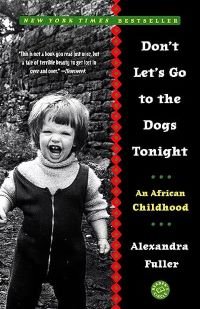
A new and notable entry in the category is “Don’t Let’s Go to the Dogs Tonight” by Embeth Davidtz, who wrote, directed and acted in the movie. Davidtz adapted the screenplay from Alexandra Fuller’s acclaimed 2001 memoir of the same name. The story, told through the eyes of an 8-year-old child nicknamed Bobo (Lexi Venter), recounts a British family’s life on a farm in Zimbabwe (then known as Rhodesia) during the Rhodesian Bush War, which ended in 1980.

“I fell in love with the book,” said Davidtz, an American-South African actress, at a recent sneak preview at the Laemmle Royal Theatre. Davidtz optioned the book and, though she hadn’t intended to write the screenplay, eventually began chipping away at it and decided to direct as well. “I thought the characters would be amazing in a film and I really wanted to play the part of the mother [Nicola Fuller],” said Davidtz, 59, adding that she felt a kinship with the author, since much of her own childhood was spent in South Africa.

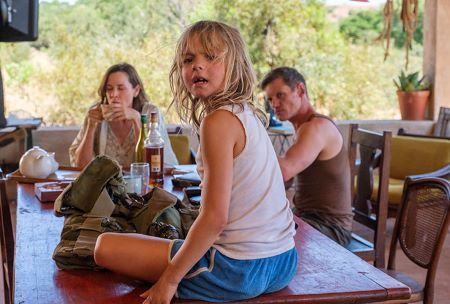
Bobo (Lexi Venter), her mother (Embeth Davidtz) and father (Rob Van Vuuren) know how to fend for themselves.

The film, like the memoir, avoids sentimentality, giving an unvarnished view of the highs and lows of Bobo’s day-to-day life. Her flinty mother (Davidtz) and tough father (Rob Van Vuuren) while fundamentally loving are a far cry from helicopter parents (both sleep with guns at their sides). Bobo’s older sister Vanessa (Anina Reed), almost a teen, considers her a pest. When the family faces a personal tragedy, her mother’s struggles with alcoholism and mental illness are intensified.

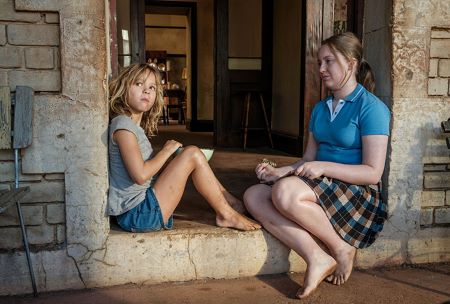
As a result, the rough-and-tumble tomboy is often left to her own devices – riding a horse or a motorbike, steering clear of snakes and scorpions. She finds comfort in smoking cigarettes, snuggling up to the family cat or bugging their kind and patient maid Sarah (Zikhona Bali) to tell her a story. Sarah’s affection for Bobo is mixed with resentment at the privilege unfairly bestowed on the child. Sarah’s husband Jacob (Fumani Shilubana) is tired of being patient and urges Sarah not to get attached.

Bobo often turns to Sarah (Zikhona Bali) when she needs a friend.

In its sensitive, even-handed rendering of quotidian routines and rhythms, the film simultaneously captures broader elements: the magnificent beauty of the African landscape, the turbulent upheaval of the war, the dehumanization of Black workers, the often-hardscrabble existence of the tenant farmers.

Briskly paced (Davidtz’s narrative is much shorter than Fuller’s) and evocatively shot in South Africa by cinematographer Willie Nel, not far from where Davidtz grew up, this ambitious first feature succeeds as an assured and poignant foray into storytelling that resonates long after the ending. “It echoes and mirrors my own childhood,” said Davidtz at the Laemmle q&a.

Bobo and her older sister Vanessa (Anina Reed) share a moment.

She credits much of the film’s authenticity to Fuller’s contributions. “Alexandra Fuller was extremely involved in the process of getting me ready to write the screenplay and make the film,” said Davidtz. “She really educated me on the difference between the Zimbabwean story and the South African story. She was very exacting, and her help was invaluable. I don’t think I would have the details I have without her.”

But perhaps most impressive of Davidtz’s accomplishments is the spontaneous and nuanced acting from her cast, especially the knockout performance from newcomer Lexi Venter, who had no previous acting experience.

Zikhona Bali, Lexi Venter and Embeth Davidtz promote the film.

Davidtz explained: “I sent out a Facebook post and I said I need a dirty, feral, wild-haired, barefoot, grubby little child – a kid who has grown up barefoot and dirty like I did. And someone knew someone who said, ‘I know a kid like that.’ ”

As soon as they met, Davidtz said, she knew she’d found the right child. Of course, directing a non-actor had its challenges. “There’s a lot of antics – it was me saying, ‘now look sad, now look over here, now look over there’ and then piecing things together. But she has star power, she has that face and she has spirit.”

“I really wanted to play the part of the mother [Nicola Fuller],” said actress, writer and director Embeth Davidtz.

Additionally, she went through an exhaustive search to cast Zikhona Bali. “I think I saw every wonderful South African Black actress of that age group and the minute I saw her take, because she was so still and so deep and had so much humanity, I knew she was the right person.”

Clearly, Davidtz was the right person to helm the project and highlight the experiences of strong, complicated, multidimensional women. And her willingness to take a risk – financially and creatively – paid off. As she puts it: “I approached American producers, and nobody wanted to touch this material. I think people were very scared of the race aspect. It was just too threatening a subject matter to go near. So, I cobbled together the tiniest budget … I put in some of my own money, we got money in South Africa, and it really was stitched together. Every part of this has been a miracle.”

“Don’t Let’s Go to the Dogs Tonight” opens in Los Angeles theaters on July 11.

Lighthouse Café’s jazz brunch brightens Sunday mornings

Femmes fatales are naturally nocturnal and enjoy night-time carousing almost as much as they love spending a hefty pile of cold, hard cash. But there are exceptions to that rule.

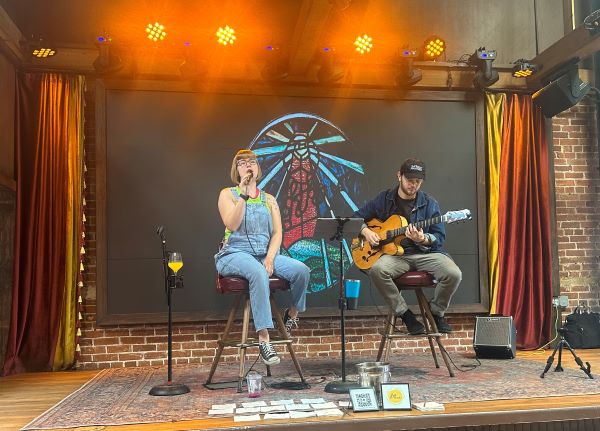
For example, the Sunday jazz brunch at the Lighthouse Café in Hermosa Beach provides plenty of reasons to be up early-ish on a weekend morning. The event, which runs from 10 am to 2 pm, features classic songs (think Cole Porter, Irving Berlin, George and Ira Gershwin) and attracts first-rate performers, such as vocalist Lia Booth and guitarist Miles Jensen.

Vocalist Lia Booth and guitarist Miles Jensen help the audience mellow out with excellent music.

Sporting Bettie Page bangs and retro specs, classically trained Booth makes each song her own with singular phrasing and Jensen gives a lithe grace to every chord he plays. Most of the songs are audience requests and patrons are encouraged to try to stump the versatile chanteuse.

While jotting down your requests, you can nosh on great brunch fare. Treat yourself to the irresistibly decadent fry up (eggs, hashbrowns, bacon, sausage and toast) or the more demure yogurt and fresh fruit. The raspberry daiquiri pairs remarkably well with both, or go for a savory note and sip a classic Bloody Mary.

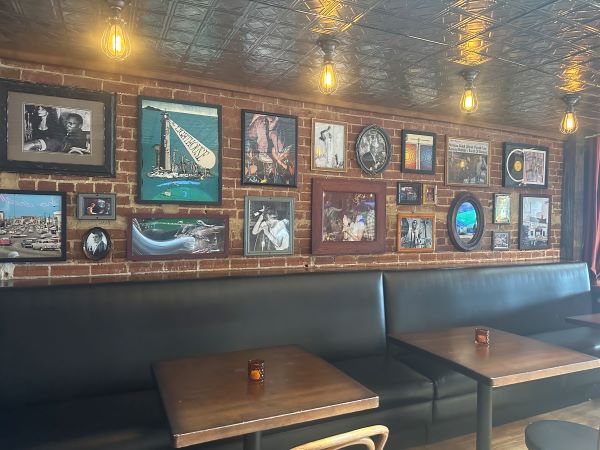
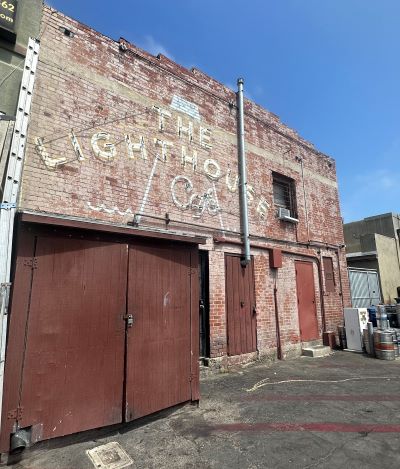
If these walls could scat … jazz artists have played here since the place opened in 1949.


To be sure, performers Booth and Jensen follow in some mighty big footsteps. The Lighthouse Café celebrated its 75th anniversary this summer and has long been known as a ballast of bebop and a hot spot for cool jazz, showcasing legendary musicians like Dizzy Gillespie, Miles Davis and Chet Baker.

In the early days, bassist/band leader/club manager Howard Rumsey put together a house band called the Lighthouse All-Stars, frequently playing with guest musicians. Many artists recorded at the café as well.

Current owner Josh Royal recently told the Daily Breeze he aims to keep the old-school vibe and maintain the café as a live music venue. Besides the brunch, the café hosts a jazz jam session on Monday nights. Royal and his partners took over in 2021. Previously, Paul Hennessey had owned the place for about 40 years.

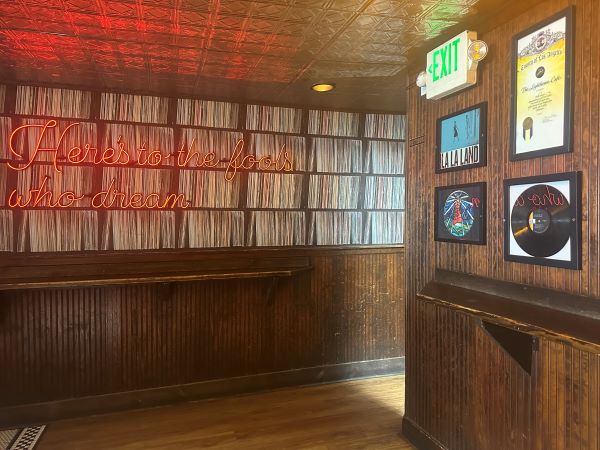
The neon sign is a nod to the 2016 movie, “La La Land” and its iconic scenes that were shot at the Lighthouse café.

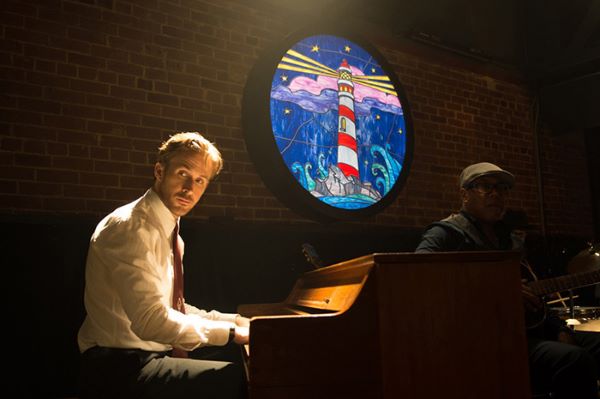
And Musicians aren’t the only ones who are drawn to the historic café. The Lighthouse earned a cinematic claim to fame when it was selected as a location for “La La Land” (2016, Damien Chazelle), starring Emma Stone and Ryan Gosling (pictured below), which won the best Picture Oscar in 2017. Filming took place over four days in late summer, 2015. There is a neon sign that pays tribute to the popular flick; it reads: “Here’s to the fools who dream.”

Ryan Gosling won the Best Actor Oscar for his role in “La La Land.”


Both interior and exterior scenes in “La La Land” were filmed at the café.

Vocalist Lia Booth and guitarist Miles Jensen will play on Sunday, Sept. 15, from 10 am to 2 pm. The Lighthouse Café is located at 30 Pier Ave., Hermosa Beach, CA 90254. Ryan Gosling may or may not be in attendance.

Noir City Hollywood turns 20! Fest begins Friday

Tough smart wise-cracking private eyes in Bogey-style raincoats and crisp fedoras. Sleek sexy ladies with Bacall-type husky voices. Murderous gangsters and villains. Nosey cops. Dangerous thugs. Beautiful dames in slinky gowns who could eat you for lunch. Shadows draping over a rain-slickened midnight street. Booze. Guns. Jazz. And, over it all, the machinery of fate.

For 20 years, audiences in Hollywood and in other cities have thrilled to Noir City, the premier cinema festival devoted to what we call film noir – the movie genre that introduced us to a lot of the images above, and many more.

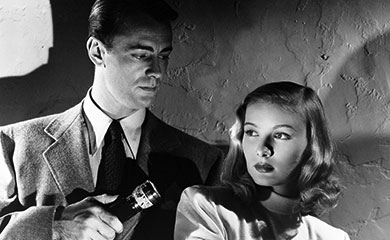
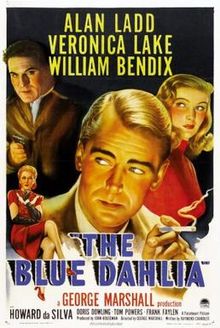
“The Blue Dahlia” (starring Alan Ladd and Veronica Lake) is Raymond Chandler’s only original screenplay.

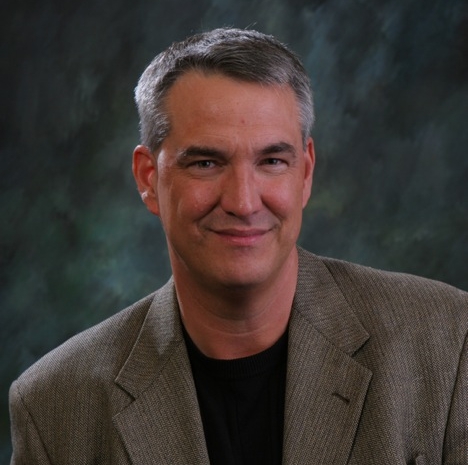
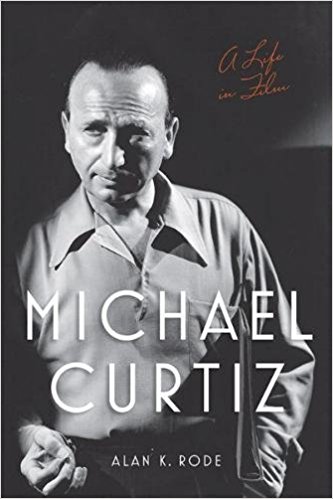
Now, with the advent of the 20th annual Los Angeles Festival of Film Noir, they’ll be lining up again for the suspense-racked programs at Grauman’s/American Cinematheque Egyptian Theatre on Hollywood Boulevard, a classic venue for classic cinema and all the tricks, treats and tragedies of noir. Hosts Eddie Muller (the founder of Noir City, the film noir festival and the Film Noir Foundation) and Alan Rode (author of a splendid recent critical biography of noir master Michael Curtiz), with be there to guide us down the dark streets.

The fest runs for 10 days – April 13-April 22 – and features 20 films. Each program starts at 7:30 p.m. Here’s a look at highlights for the first part of the festival; stay tuned for more recommendations. You may have seen some of these gems before. So see them one more time. (At least) They’ll catch your breath and tingle your spine all over again.

FRIDAY, April 13 (Opening Night)
“The Blue Dahlia” (1946, George Marshall) An essential: Raymond Chandler’s only original screenplay, a tense look at three returning WWW2 vets (Alan Ladd, William Bendix and Hugh Beaumont), who fall into a post-war swamp of murder, infidelity, a “wrong man” and Veronica Lake’s peek-a-boo hairdo . Chandler, king of the noir writers (James Ellroy would disagree), was forced to use an ending here – and to finger a killer – that he hadn’t written and didn’t want. (You’ll be able to guess the killer that should have been almost instantly.) But the movie works anyway.

“I Love Trouble” (1948, S. Sylvan Simon)
A kind of Chandler pastiche: A smart-ass private-eye thriller, with detective Franchot Tone cracking wise amid the likes of Raymond Burr and John Ireland. The writer, Roy Huggins, later came up with TV’s “Rockford Files,” “77 Sunset Strip,” “The Fugitive” and (my favorite TV Western) “Maverick.”

SATURDAY, April 14
“L. A. Confidential” (1997, Curtis Hanson)
Three savvy L. A. cops (Russell Crowe, Guy Pearce and Kevin Spacey), their tyrannical chief (James Cromwell), a sleazy scandal magi publisher (Danny De Vito) and a gorgeous hooker who’s been cut to resemble Veronica Lake (Kim Besieger) are all enmeshed in L. A. ’50s police and governmental super-corruption. Maybe the greatest of the (fairly) contemporary post-war neo-noirs, stunningly executed by director Hanson and scriptwriter Brian Helgoland. James Ellroy wrote the book and he’ll be there to talk about it and the movie, with Eddie.

SUNDAY, April 15
“Kiss Me Deadly” (1956, Robert Aldrich)
Mickey Spillane was the most popular American crime novel writer (for a while, the most popular American writer period) when director Robert Aldrich and writer A. I. Bestrides did this brilliant demolition job on the pop and political culture that fed one of the Mick’s most brutal and misogynistic and cold-blooded thrillers. Ralph Meeker is a perfect, vicious Mike Hammer, Albert Becker, Jack Elam, Jack Lambert and Strother Martin are perfectly nasty heavies, and yeah, that’s Cloris Leachman in the first scene, flagging down Hammer’s car in the nude. And that’s Nat King Cole crooning the romantic ballad under the reverse credit crawl.

“City of Fear” (1959, Irving Lerner)
Vince Edwards is a con on the loose, with a suitcase full of deadly radioactive poison. One of the best of the cheapo arty B’s, from one of Marty Scorsese’s favorite low-budget helmers, Irving Lerner.

MONDAY, April 16
“Dark City” (1950, William Dieterle)
A gang of bickering grifters, led by Charlton Heston (in his off-type movie star debut) get in hot water after a crooked card game. Stylish Dieterle direction and a great cast (Lizabeth Scott, Viveca Lindfors, Ed Begley, Dean Jagger, Jack Webb and Henry Morgan) make this one a winner.

“Armored Car Robbery” (1950, Richard Fleischer)
One of the best of the cheapo non-arty B’s, by crime thriller ace Richard Fleischer. Charles McGraw is the good bad guy, William Talman is the bad bad guy, Adele Jergens is the bad girl.

TUESDAY, April 17
“He Walked by Night” (1948, Alfred Werker)
Richard Basehart plays a brainy heist guy pursued by the LAPD (and Steve Brodie) in this stunningly shot (by John Alton) crime thriller. I’ve always thought Jack Webb (who plays a tech cop) got a lot of ideas for “Dragnet” from this movie – some of which was directed by the uncredited noir expert Anthony Mann.

“Down Three Dark Streets” (1954, Arnold Laven)
FBI agent Broderick Crawford opens three case files (about Ruth Roman, Martha Hyer and Marisa Pavan) on his late friend’s desk and proceeds to unravel the past.
Sounds interesting.

WEDNESDAY, April 18
“Dragnet” (1954, Jack Webb)
Jack Webb again, with his Joe Friday magnum opus … dum-da-dum-dum! The names were changed to protect the innocent – but some of the names they kept were Ben Alexander (Friday’s Man Friday) and the underrated Richard Boone as their superior. “Hill Street Blues” and “Law and Order” it ain’t, but in a way, it paved the way for them.

“Loophole” (1954, Harold D. Schuster)
The powers that “B.” Barry Sullivan is a bank worker wrongly accused of filching the assets with relentless investigator Charley McGraw on his trail. Dorothy Malone too.
See the rest of the Noir City schedule next week.

Long-awaited Curtiz book hits Hollywood; Egyptian Theatre hosts signing and screening

Alan K. Rode

Film noir expert Alan K. Rode has released “Michael Curtiz: A Life in Film,” published by the University Press of Kentucky. To mark the book’s launch, the American Cinematheque is hosting a book signing and screening of two Curtiz gems on Thursday night in Hollywood at the Egyptian Theatre.

The Sea Wolf” (1941) stars Edward G. Robinson, John Garfield, Ida Lupino, Gene Lockhart and Barry Fitzgerald in a tense and moody adaption of Jack London’s anti-fascist adventure novel. Robert Rossen (“The Hustler”) wrote the screenplay.

The Breaking Point” (1950) takes Ernest Hemingway’s tragic novel “To Have and Have Not” as its source material. Though the setting is changed from Key West to Newport Beach, Calif., Curtiz delivers a more faithful version of the book than the famous Howard Hawks vehicle starring Bogart and Bacall.

Here, John Garfield expertly plays Skipper Harry Morgan. Gravel-voiced Patricia Neal is the alluring vamp; Phyllis Thaxter, Wallace Ford and Juano Hernandez round out the cast.

Rode set himself quite the task when he decided to write about this master director. Uncommonly prolific across many genres (including Westerns, swashbucklers and musicals), Hungarian-born Curtiz made more than 60 movies in Europe and more than 100 in Hollywood, arriving in 1926 at the behest of Warner Bros. Studio.

He won the Best Director Oscar for 1942’s noir-tinged “Casablanca” and for a short called “Sons of Liberty” from 1939. He was nominated for Oscars five times and directed 10 actors to Oscar nominations. James Cagney and Joan Crawford received their only Academy Awards under Curtiz’s direction.

Crawford won for her comeback role, “Mildred Pierce,” a domestic film noir from 1945. With a screenplay by Ranald MacDougall, the movie improves and heightens the drama of James M. Cain’s novel.

Co-starring Ann Blyth, Zachary Scott, Jack Carson, Eve Arden and Bruce Bennett, “Mildred Pierce” ranks as one of our all-time favorite films.

For tonight, however, we’ll just have to swoon over John Garfield. Life’s rough.

Rode will sign his book in the lobby at 6:30 p.m. He will also introduce the films, slated to start at 7:30 p.m.

As AFI turns 50, this year’s fest looks set to be one of the best

We are very excited that AFI FEST presented by Audi starts in Hollywood on Thursday, Nov. 9, and ends Thursday, Nov. 16. This great fest is open to the public so check it out.

Load the app and pack some snacks – there are more than 100 movies showing!

Opening the festival on Thursday night is Dee Rees’ “Mudbound,” a drama set in post-World War II Mississippi, starring Carey Mulligan, Garrett Hedlund, Jason Mitchell, Jason Clarke, Mary J. Blige and Rob Morgan.

To mark the 50th anniversary of the American Film Institute, several 1967 titles will screen, such as: “The Good, the Bad and the Ugly,” “Guess Who’s Coming to Dinner,” “Barefoot in the Park,” “Blow-Up,” and “Red Desert.”

On Saturday, Nov. 11, documentary filmmaker Errol Morris will be honored with a tribute following a 3 p.m. screening of “Wormwood,” about one man’s 60-year quest to illuminate the circumstances of his father’s mysterious death. Peter Sarsgaard stars. Morris’ credits include the Oscar®-winning “The Fog of War” (2003) as well as “Gates of Heaven” (1978), “The Thin Blue Line” (1988), “Tabloid” (2010) and “The Unknown Known” (2013).

The world premiere of Ridley Scott’s “All the Money in the World” was scheduled to close the festival. On Monday, however, Sony pulled the film from the fest because of the sexual misconduct allegations against Kevin Spacey. In this thriller based on real events, Spacey initially played billionaire J. Paul Getty in 1973, as he refuses to give in to kidnappers who demand $17 million in ransom for the release of Getty’s grandson. The movie is still scheduled for theatrical release later this year but has been reshot, cutting Spacey and replacing him with Christopher Plummer.

Here at FNB, of course, we are super stoked about the neo-noir slate of programming, in particular:

Writer/director Aaron Katz’s “Gemini,” a thriller set in Hollywood starring Lola Kirke and Zoë Kravitz.

Have a Nice Day,” a Chinese animated noir about greed and ruthlessness amid China’s new economy, is generating buzz. Jian Liu writes and directs.

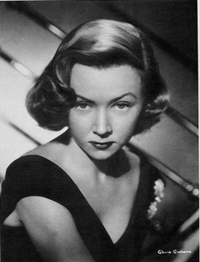
Gloria Grahame

“Film Stars Don’t Die in Liverpool,” is Paul McGuigan’s film based on Peter Turner’s memoir of his relationship with actress Gloria Grahame, near the end of her life. Annette Bening plays Grahame, an icon of film noir. Jamie Bell plays her young lover, Peter. Julie Walters and Vanessa Redgrave round out the cast.

In “Molly’s Game,” Jessica Chastain is Molly Bloom, a former athlete targeted by the FBI after she gets involved in running high-stakes poker games. Based on a true story; directed by writing giant Aaron Sorkin.

In the Fade” is Germany’s contender this year for Best Foreign Film Oscar. Diane Kruger plays a wife and mother who turns vigilante after violence rips her life apart. Fatih Akin directs and co-writes. This is one of 14 Foreign Language Oscar entries in the fest lineup.

An athlete with an unscrupulous agenda – figure skater Tonya Harding – is the subject of “I, Tonya,” from director Craig Gillespie. Margot Robbie stars. Our friend Bob Strauss of the LA Daily News describes this as “hilarious and hard-hitting.”

Spoor” is a new crime thriller by the great Agnieszka Holland and is Poland’s Best Foreign Film Oscar entry.

In Laurent Cantet’s “The Workshop,” set in a declining town near Marseille, the vibe of a writers’ group goes from soothing to sinister.

An estranged couple must join forces to find their missing son in Andrey Zvyagintsev’s “Loveless,” which is Russia’s Best Foreign Film Oscar hopeful.

Other highlights include:

The 12-film Robert Altman retrospective will screen “M*A*S*H” (1970), “McCabe & Mrs. Miller” (1971), “The Long Goodbye” (1972), “California Split” (1973), “Nashville” (1975), “3 Women” (1977), “Vincent & Theo” (1990), “The Player” (1992), “Short Cuts” (1993), “Kansas City” (1996), “Gosford Park” (2001) and “A Prairie Home Companion” (2006). Talent in attendance at screenings will be announced closer to the festival.

Call Me By Your Name” is a coming-of-age bisexual love story set in Italy in 1983, directed by Luca Guadagnino, based on André Aciman’s novel and starring Armie Hammer, Timothée Chalamet and Michael Stuhlbarg.

Hostiles,” a highly anticipated Western by Scott Cooper, starring Christian Bale.

Guillermo del Toro’s “The Shape of Water,” a sci-fi love story set during the Cold War.

Let the Sun Shine In” a comedy/romance with the always-wonderful Juliette Binoche; directed by Claire Denis.

Isabelle Huppert

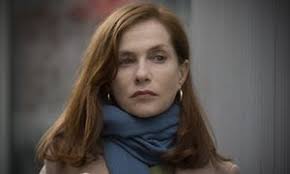
Isabelle Huppert fans, take note. The inimitable actress stars in two dramas: Michael Haneke’s “Happy End” and “Claire’s Camera” by Hong Sang-soo. (“Happy End” is Austria’s Best Foreign Film Oscar contender.)

Another coveted ticket: “The Other Side of Hope” by Finland’s Aki Kaurismäki, a critics’ darling.

Talent scheduled to appear at AFI FEST presented by Audi includes: Christopher Nolan, Angelina Jolie, Sofia Coppola, Martin McDonagh, Agnes Varda and Jordan Peele (“Get Out”).

Enjoy!

Romero honored at special screening of ‘Creepshow’

An indie director before the term was widely used, George Romero carved his own niche in the horror genre by brilliantly marrying over-the-top blood and guts with sharp social satire.

He broke new ground with his first effort, 1968’s “Night of the Living Dead.” Dismissed by critics, his low-budget film was a huge hit with audiences and grossed more than $50 million. Romero went on to direct these sequels: 1978’s “Dawn of the Dead,” 1985’s “Day of the Dead,” 2005’s “Land of the Dead,” 2007’s “Diary of the Dead” and 2009’s “George A. Romero’s Survival of the Dead.”

The Bronx-born maverick moviemaker died on July 16, 2017; he was 77.

Comic book fans will no doubt appreciate Romero’s “Creepshow,” a 1982 black comedy shot in Pittsburgh, as were many of his other flicks. (Romero graduated from Carnegie Mellon University in Pittsburgh in 1960.)

Starring Hal Holbrook, Adrienne Barbeau, Fritz Weaver, Leslie Nielsen, Ted Danson and E.G. Marshall, the film was Stephen King’s first script. King also plays a part in one of the five stories, which are inspired by the EC and DC comics of the 1950s.

You can see “Creepshow” on the big screen on Wednesday, October 25, at the Alex Theatre in Glendale. The Alex is hosting a tribute to Romero with a preshow reception and Q&A.

Happy Halloween, zombie people!

‘Jane’ documentary is a joy to watch

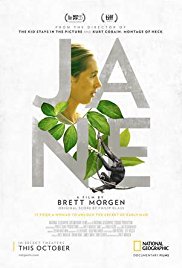
A review of “Jane” might seem an odd choice for a site that focuses on film noir. But here at FNB we also celebrate strong, independent women and anthropologist Jane Goodall, the topic of Brett Morgen’s National Geographic documentary, is certainly that.

Goodall and Morgen appeared on-stage at a lovely screening Oct. 9 at the Hollywood Bowl with live orchestral accompaniment by Philip Glass. The event, which was open to the public, drew celebrities such as Angelina Jolie, Judd Apatow, Jamie Lee Curtis, Jane Lynch, Kate Bosworth and Ty Burrell.

Goodall received hearty applause when she said we humans need to do a better job of taking care of the Earth. Morgen gave a shoutout to his mother because the screening date is also her birthday.

Speaking of mothers, Goodall probably would not have achieved as much as she did had it not been for the steady support of her mom. In the film, Goodall explains that, as a young girl, when she expressed her desire to study animals in their natural habitats, her mother didn’t flinch; she encouraged Jane to pursue her goal. Later, she joined her daughter in Africa and helped out in their day-to-day living.

The world’s top expert on chimpanzees, Goodall spent more than 50 years observing and documenting social interactions of wild chimps in Tanzania, starting under the guidance of Louis Leakey in the late 1950s.

In the early 1960s, Dutch filmmaker Hugo van Lawick shot more than 140 hours of footage of Goodall’s work, documenting it for National Geographic. From this filmic record and original interviews, Morgen weaves together his subject’s fascinating life story, both public and private.

With no college degree, Goodall tells us, her job qualifications were a love for animals and an open mind. (She later earned a PhD at Cambridge University.) As a leggy young blonde, she also courted a fair amount of media attention and not surprisingly caught van Lawick’s eye. They eventually married and had a child.

“A lot of people have extraordinary lives, but not a lot of people can articulate those lives, and even fewer have had that entire life photographed on 16mm by one of the world’s greatest photographers,” Morgen told The Hollywood Reporter.

Morgen, whose other credits include “The Kid Stays in the Picture,” “Crossfire Hurricane,” and “Cobain: Montage of Heck,” seamlessly captures Goodall’s passion and commitment, her gentle pragmatism, her quick wit and warm humor.

“I wish I could embrace every single one of you. I want to thank you for being here,” Goodall said at the Hollywood Bowl. “I hope you had a wonderful time.”

We did, indeed. This wonderful film is a joy to watch.

‘Jane’ opens in Los Angeles on Oct. 20.

COLCOA keeps ’em coming: 3 more great period dramas

In addition to “A Woman’s Life” (see earlier post), there were three other outstanding period dramas we enjoyed at COLCOA that are well worth seeing if you get the chance.

First: In writer/director Nicolas Boukhrief’s “The Confession,” which is based on Béatrix Beck’s 1952 novel “Léon Morin, prêtre,” Marine Vacth plays a fiery, fiercely free-thinking woman who develops an unconventional friendship with a charming priest (Romain Duris) in a small French town during World War II. Their intellectual debates and emotional vicissitudes as well as their growing depth of feeling and personal peril are handled with subtlety and tenderness.

The book previously came to the big screen in 1961 in a film adapted and directed by Jean-Pierre Melville, starring Jean-Paul Belmondo and Emmanuelle Riva.

Second: A true story you’ll never forget. “A Bag of Marbles,” co-written and directed by Christian Duguay, recounts the harrowing experiences of a Jewish family desperately trying to evade the Nazis in 1941 Paris.

After their parents decide it would be safer to split up temporarily, the youngest sons, 10 and 12, head to France’s “free zone” on their own and must fend for themselves along the way.

The atmosphere is pitch-perfect and the performances all around (especially the boys, as played by Dorian Le Clech and Batyste Fleurial) are authentic and fresh in addition to being uncommonly moving. Based on the memoir by Joseph Joffo and Claude Klotz.

Third: “Mr. & Mrs. Adelman” is a portrait of a relationship over the course of 50 years. Highly engaging, original and often delightfully acerbic, the film was made by Nicolas Bedos and Doria Tiller, who also play the leads and are themselves a couple.