Meticulously made ‘Mastermind’ inspired by real-life robbery

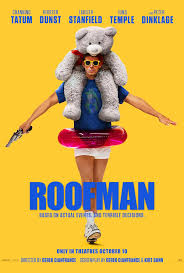
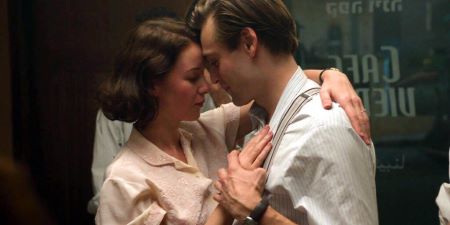
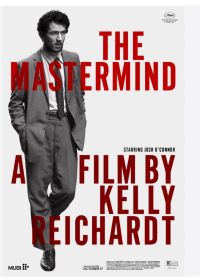
Less than a week after seeing “Roofman” – starring Channing Tatum as an ingenious but goofy thief in a story “based on actual events and terrible decisions,” as per the movie’s tagline – I went to a screening of “The Mastermind.” It’s a heist film inspired by the 1972 robbery of the Worcester Art Museum in Massachusetts, in which two Gauguins, a Picasso, and a Rembrandt were stolen.

The movie opens with a young family wandering around the “Framingham Museum of Art” (a place invented for this flick). The mom Terri Mooney (Alana Haim) silently leads the boys Carl and Tommy (Sterling Thompson and Jasper Thompson) as Carl chatters about a guessing game. The dad James Blaine Mooney (Josh O’Connor) hangs back. They have the place mostly to themselves; the security guard is zoned out as he catches z’s. It’s the perfect moment to contemplate the paintings or, if you’re a feckless art-school grad who’s bent on rebellion, as James Blaine (JB) is, pull a key out of your pocket, open a display case, and help yourself to a carved figure.

JB’s initial pilfering is just a prelude to his carelessly thought-out plan of stealing four paintings, a feat he pulls off with the help of two accomplices (Cole Doman and Javion Allen), one of whom is armed with a gun. JB hides the artwork in a barn, hoping he’ll be able to sell it and rustle up a wad of cash. Presumably, he’ll add the money to his family’s finances, convincing his wife and parents (Hope Davis and Bill Camp) that he’s finally having success as an architect.

But his deeper motivation appears to be two-fold: railing against the confines and ennui of his middle-class existence, and in some way defying his father. The fact that his father is a local judge paradoxically figures into JB’s cover story when he is questioned by the police.

After JB leaves town and goes on the lam (rather haphazardly), his comfort, security, and entitlement slip away as he grows increasingly desperate, though not exactly downhearted. Watching “The Mastermind,” as it slowly unwinds, there is ample time to ponder JB, his relationships, what drives him, and what he’s lost.

Visually, the film is impeccable. Writer-director-editor Kelly Reichardt meticulously recreates the look and feel of early 1970s Massachusetts and the Midwest under overcast skies. Wardrobe, hair/makeup, art direction, production design, set decoration, lighting, and documentary-like camerawork all contribute to the precise rendering of each scene. Rob Mazurek’s scintillating jazz score provides a dynamic complement to the underplayed performances and spare dialogue.

However, as much as I typically enjoy a slow-burn film and as much as I tried to invest in JB’s fate, I ultimately disconnected with “The Mastermind.” While O’Connor does possess a breezy, everyman energy, he lacked the requisite charisma to make me care about this misguided man trapped somewhat by societal expectations but mainly by his own choices.

“The Mastermind” opens in theaters on Friday, Oct. 17.

‘Roofman’ manages to climb into your heart and charm you

“Roofman” sneaks into the film noir genre like a clumsy cat burglar – and that’s fitting because the movie’s protagonist is real-life robber Jeffrey Manchester (played by Channing Tatum) – a US Army vet with a high IQ who’s bold, brilliant, and daring, but also a colossal screw-up. Indeed, the name of the film might just as easily be “Goofman.”

In an early scene, Jeffrey’s friend Steve (LaKeith Stanfield) – a fellow vet and a straight shooter – shakes his head at Jeff’s smart-dumb dynamic and his lack of a steady income, telling him to capitalize on his gift for noticing a myriad of details. Jeffrey heeds Steve’s advice in his own wily way by thinking outside the box to find a novel way of getting inside a box and plundering it. In other words, instead of breaking and entering through a door or window, he goes through the roof.

He starts by stealing cash from a local McDonald’s, gets away with it, and goes on to commit more than 40 robberies. For a while, it’s all good as far as he’s concerned and he’s able to provide a better life (and better birthday gifts) for his three kids and his ex-wife (Melonie Diaz).

Eventually, he’s arrested and sentenced to 45 years in jail. But he plots a clever escape and evades capture by holing up in a hidden space in a Toys “R” Us store. By day, he surreptitiously keeps tabs on the pompous store manager named Mitch (Peter Dinklage) and staffers Leigh (Kirsten Dunst), a recently divorced, hardworking, church-going mom of two girls, as well as meek and mild Otis (Emory Cohen).

At night, Jeffrey disables the security cameras and leaves his “room” to roam the aisles, nosh on candy, and purloin video games, which he will later sell for cash. After learning that Leigh is organizing a toy drive at her church, he grabs toys to donate. When he shows up at the church to drop them off, he introduces himself as John Zorin, from New York. Leigh is intrigued and later, at a church singles event, they hit it off and begin dating. To account for his mysterious comings-and-goings and vague backstory, “John” tells her he is an undercover government agent.

From there, “Roofman” becomes a tale of doomed love as we wait to see how long Jeffrey can keep the ruse going without Leigh suspecting or the police narrowing in. Jeffrey wins not only Leigh’s heart but also the affection of her daughters, sweet and adorable Dee (Kennedy Moyer) and Lindsay (Lily Collias), a moody teenager. We’re rooting for Jeffrey and Leigh’s crazy relationship to work out, though, as mentioned, this is a tale of doomed love …

As such, it’s surprisingly affecting and moving, thanks to sharp direction from Derek Cianfrance and first-rate acting, especially from Tatum, a great casting choice. Tatum’s performance, while very human, exudes more sweetness than menace, more sincerity than malice. And Dunst rings true as a harried mom who wants a second chance at love.

“Roofman” gives us entertaining moments, no doubt, but it’s not quite a dark comedy. Cianfrance – whose previous work includes “Blue Valentine” (2010), “The Place Beyond the Pines” (2012), and “The Light Between Oceans” (2016) – counters the playful, almost whimsical, mood with an undercurrent of sadness. Cianfrance co-wrote the script with Kirt Gunn.

Cinematographer Andrij Parekh uses 35mm to lend a sometimes-garish brightness and Christopher Bear’s subtle piano score reminds us that Jeffrey’s freedom is merely fleeting. “Roofman” manages to climb into your heart and charm you with a heavily flawed main character, full of head-scratching contradictions and unrealized potential.

“Roofman” opened in theaters on Friday, Oct. 10.

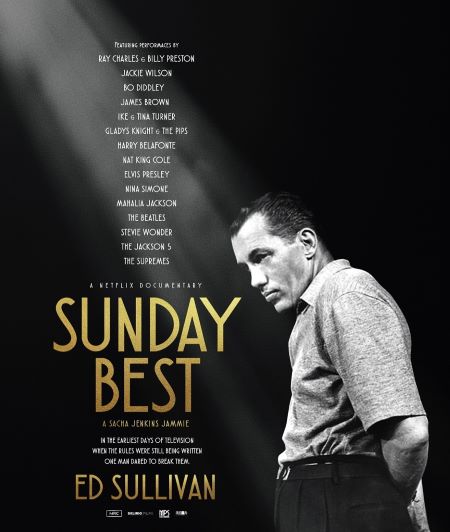
‘Sunday Best: The Untold Story of Ed Sullivan’ documentary reveals host’s hidden depths and courageous stance

Today’s consumers of pop culture and infotainment might not have vivid memories of iconic TV host Ed Sullivan, given that he died more than 50 years ago, at age 73, on Oct. 13, 1974 (about 2,000 people attended his funeral at St. Patrick’s Cathedral in New York). That said, he made his mark so deeply and was so famous in his day that even people who were too young to watch “The Ed Sullivan Show,” which ran on CBS from 1948-1971, nevertheless recognize his place in showbiz history.

Not that he was a king of cool. Just the opposite – in fact, he came across as staid, old-fashioned and a bit of a fuddy-duddy, particularly with the advent of rock ‘n’ roll. But the show was still the place to reach mainstream America. When the Beatles appeared on the variety show on February 9, 1964, they drew a record-breaking 73 million viewers.

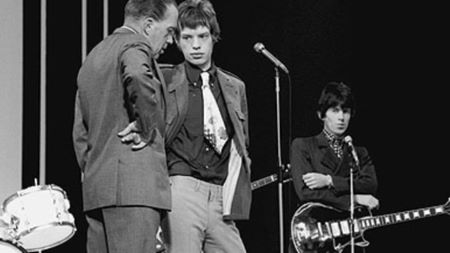
Ed Sullivan talks with Mick Jagger while Keith Richards (right) looks on. When the Rolling Stones performed on the show, Mick found a way to express himself without getting on Sullivan’s bad side. Hence, the Stones were invited back to the show.

Several rock performers made appearances during which they went against the grain – delighting the audience and drawing Sullivan’s ire. Before singing “Light My Fire,” Jim Morrison and the Doors indicated that Morrison would accept Sullivan’s request to substitute “girl, we couldn’t get much better” for “girl, we couldn’t get much higher.” On air, Morrison stuck to his original lyrics. Scandalous! Prior to the Rolling Stones’ appearance, they were told to change “let’s spend the night together” to “let’s spend some time together.” Mick Jagger complied but added a thick layer of sarcasm to his delivery. (To paraphrase Jagger, it wasn’t that what they were doing was especially shocking, it was that people at that time were easily shocked.)

The times were definitely changing. But even before those milestones, Sullivan was changing the course of entertainment in America with his commitment to racial equality and his determination to book Black artists on his show – something that was extremely rare in TV’s early years and an aspect of Sullivan’s character that’s not well remembered today. A fascinating documentary “Sunday Best: The Untold Story of Ed Sullivan” directed by the late Sacha Jenkins highlights the lasting impact Sullivan made by challenging the norms of the day and introducing top-tier artists to the country and the world.

“Sunday Best” showcases performances from Sullivan’s guests, including Mahalia Jackson, Nat King Cole, Elvis Presley, Harry Belafonte, Ray Charles & Billy Preston, The Beatles, Ike & Tina Turner, Bo Diddley, Jackie Wilson, James Brown, Diana Ross & the Supremes, Gladys Knight & the Pips, Nina Simone, Stevie Wonder, and The Jackson 5. There are also clips of guests Cab Calloway, Ella Fitzgerald, Lena Horne, Louis Armstrong, Bill “Bojangles” Robinson, Sammy Davis Jr., and others.

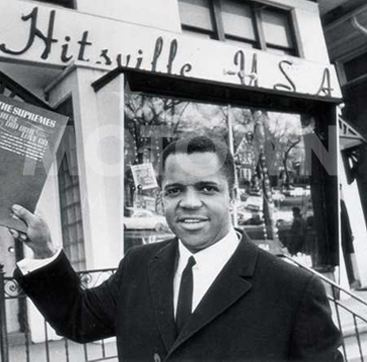
Photo by Tony Spina, Detroit Free Press
Outside Hitsville USA in 1964, Berry Gordy, Detroit native and founder of Motown Records, shows off The Supremes’ “Where Did Our Love Go.”

Numerous interviews with luminaries like Berry Gordy, founder of Motown Records in Detroit, help to put Sullivan’s fighter’s stance (and the risks he took by standing up to CBS and its sponsors) into context. “With Ed, everything changed,” said Gordy. “He seemed to be fearless.”

On the surface, Sullivan was an unlikely choice for such a prime slot in the CBS lineup. He was not a handsome gladhander or a slick showman. As the documentary points out, Sullivan was pilloried by the press for his lugubrious demeanor, stone-faced expression and sour-looking smile.

But he took the role seriously and brought to the job the skills he’d acquired as a journalist. Growing up in a poor but tightknit family in Harlem (at that time residents were mostly Irish and Jewish), he knew early on he wanted to be a writer. Eventually he became a sports reporter and editor, and developed an eye for identifying and describing the unique traits of great athletes.

After working at many newspapers, by the early 1930s, he was the Broadway columnist at the New York Daily News (and had a fierce rivalry with Walter Winchell). Sullivan worked hard to find the best up-and-coming entertainers (often visiting Harlem clubs) and was extremely confident in his critical judgment of talent. Also, he lauded TV’s ability to give everyone in the audience a front-row seat to a superb performance.

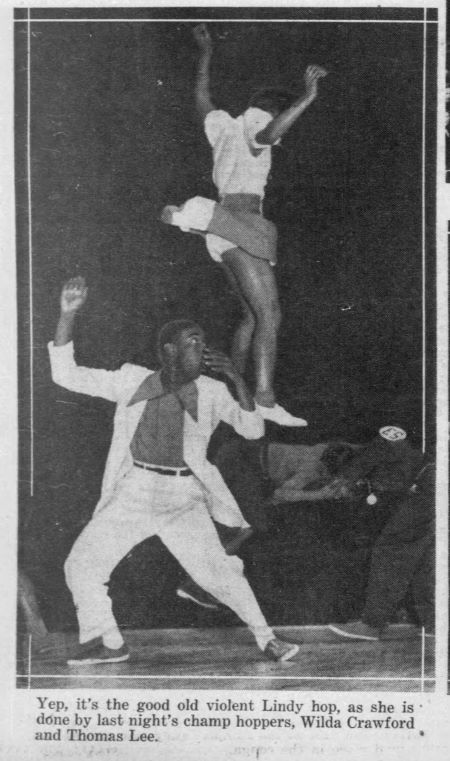
Wilda Crawford and Thomas Lee were the 1940 Lindy Hop dance winners at the Harvest Moon Ball amateur dance competition, which was held annually in NYC.

While still writing his column, he gave radio broadcasts and starred in the 1933 film “Mr. Broadway.” In 1947, CBS televised the Harvest Moon Ball, an amateur dance competition held annually in New York, and Sullivan was the master of ceremonies. The next year, he was selected to host “Toast of the Town” (later renamed “The Ed Sullivan Show”).

By that time, he’d developed a singular stage presence that was dry, straightforward and sincere without being star-struck or sycophantic. “On TV, I’ve been myself and it’s the only thing that saved me,” he said.

In breaking racial barriers, he credited his parents, especially his father, whom he described as sensible and courageous. As Irish immigrants, they’d faced prejudice and ignorance, and were quick to defend an underdog.

“Sunday Best” also gives a glimpse into Sullivan’s personal life. He clearly adored his wife Sylvia and their only child, a daughter named Betty; they were equally devoted to him. Their elegant apartment in the Delmonico Hotel on Park Avenue was packed with photos and other mementos, such as a pair of shoes that had belonged to Bill “Bojangles” Robinson.

By the time Sullivan’s show hit its 20-year mark, the mood and mores in America were far different than they’d been at the time of the program’s launch. The show slowly lost popularity and began to sink in the ratings. Sullivan was angry when in 1971 CBS canceled the show, but he hosted a 25th anniversary special in June 1973.

Though Sullivan could be dictatorial, short-tempered and thin-skinned, his equanimity usually won out. Toward the end of his life, he said, “I had a good long run. I put a good fight for what I believed in. And I have no complaints at all.”

“Sunday Best: The Untold Story of Ed Sullivan” was recently released on Netflix.

Despite engrossing story, ‘Shoshana’ lacks emotional core


Director Michael Winterbottom knows how to use the tools of his craft to build a world the audience can enter and, over his long career, has rendered onscreen realities that merge with superb storytelling, across a variety of genres. A few highlights of his work include: “Jude” 1996, “Welcome to Sarajevo” 1997, “Wonderland” 1999, “24 Hour Party People” 2002, “The Road to Guantanamo” 2006, “A Mighty Heart” 2007, “The Killer Inside Me” 2010 and “The Trip” series (starting in 2010 and starring Steve Coogan and Rob Brydon.)

His latest effort is “Shoshana,” a political thriller/drama that takes place in 1930s-1940s British-run Palestine and is based on real-life events and people. For a little background: Britain gained control of Palestine after World War I and, in 1922, the League of Nations granted a mandate over the territory. The mandate, which aimed to establish a national home for the Jewish people while safeguarding the rights of the existing Arab population, ended on May 14, 1948, with the declaration of the State of Israel. Arab nationalists opposed the mandate, leading to violence and clashes with British authorities.

Shoshana (Irina Starshenbaum) and Tom (Douglas Booth) try to keep their love alive.

The film stars Irina Starshenbaum as Shoshana Borochov, a strong-willed Jewish writer and member of the Haganah underground military organization, who’s romantically involved with a smart, charming, easy-on-the-eyes British police officer named Tom Wilkin (Douglas Booth). Tom reports to Geoffrey Morton (Harry Melling), who becomes increasingly ruthless as they pursue Zionist militant Avraham Stern (Aury Alby). At the same time, Shoshana and Tom’s relationship grows more and more fractious.

No doubt, Winterbottom does an excellent job of transporting the viewer to Tel Aviv (shot in Italy) and creating a mood of tension and uncertainty, thanks to seamless production design, wardrobe, music and other period detail. Though riveting and fast-paced, the movie is sometimes a bit hard to follow.

“Shoshana” doesn’t really belong to its eponymous character (it’s hard to connect with what she’s feeling below the surface), and the love story seems more tacked on than central to the narrative. The script, previously titled “Promised Land” and written by Winterbottom, Laurence Coriat and Paul Viragh, doesn’t draw Shoshana and Tom vividly enough. Because their relationship lacks chemistry, they never sizzle, even during their tempestuous scenes. Without much of an emotional core in “Shoshana,” it’s hard to be moved by the actors’ performances, despite the high-stakes situations the characters find themselves in amid the ominous onset of World War II.

“Shoshana” opens in Los Angeles theaters on July 25.


Clive Owen plays cards close to his chest in compelling ‘Croupier’ revisited after 25 years

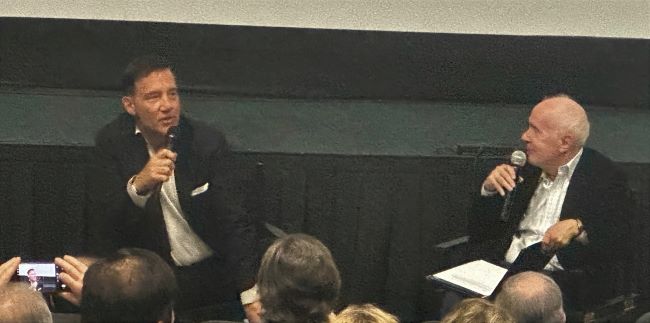
Clive Owen and critic Stephen Farber discuss “Croupier” Wednesday night at the Laemmle Royal in Los Angeles.

Writers are a bit like gamblers. They look for lucky breaks, they hope agents or editors will give their work a chance, they meet deadlines with a nervous mix of triumph and trepidation. Win, lose or break even, they keep taking the bet.

This comparison comes to life in “Croupier,” a British neo-noir directed by Mike Hodges and starring Clive Owen, which released in the US in 2000 and put Owen on the path to Hollywood stardom. The film screened Wednesday night at the Laemmle Royal, as part of the Anniversary Classics Series, with Owen in attendance.

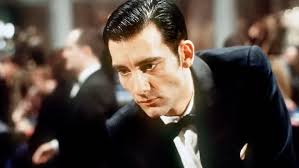
Clive Owen plays it cool in the casino.

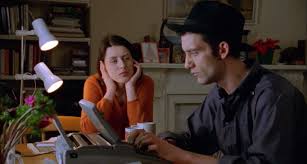
Owen plays Jack Manfred, a man in need of a job and a writer in search of material. He finds it amid the grit, stale glamour and greed at the Golden Lion casino in London – a job his cheerful grifter father Jack Sr. (Nicholas Ball) has secured for him. His dad likely has had more downs than ups in his business ventures, but breezily pretends to be a big success.

Night after night, cooly detached Jack sees people at their worst as he encounters shady players, sweaty addicts and sexy ladies. While we see him deal cards, we hear the voiceover of his novel in progress based on his observations at the casino – his inner monologue is reminiscent of the flashback VO recounted by screenwriter Joe Gillis (William Holden) in “Sunset Boulevard” (Billy Wilder, 1950).

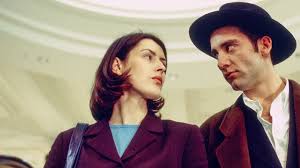
Gina McKee as Marion sits by her man, Jack (Clive Owen).

When not working, Jack is writing or sleeping, and friction grows with his supportive, supremely loyal, live-in girlfriend Marion (Gina McKee), a department-store security guard. She’s put off by the cynical tone of his book and by the main character who enjoys seeing people lose.

Though Jack says he cannot tolerate cheaters and claims he never gambles, he is a scribe on the sly, after all, and it’s not long before he performs some slick shuffling of his moral code – his risk-taking begins with entanglements that put his job on the line. He’s drawn to co-worker Bella (Kate Hardie) and flirts with a mysterious casino patron hailing from South Africa named Jani (Alex Kingston). “If you don’t call me, I’ll understand, but I hope that you do,” she informs him matter of factly, as she hands him her phone number.

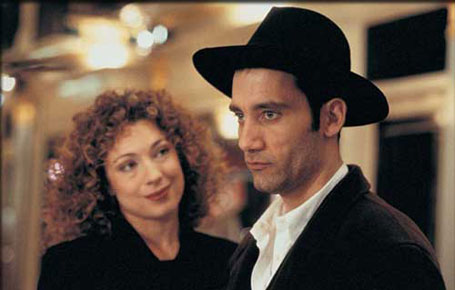
Yani (Alex Kingston) does her femme fatale finest to lure Jack into a scheme.

Not surprisingly, this cig-puffing femme fatale leads Jack further down the road of debauchery, tempting him with a simple role in an inside-job robbery. Steely-eyed, laconic Jack exudes an enigmatic intensity and shows little to no emotion – except on the rare occasion when he completely loses control.

Fast paced with brisk editing and harsh, bleak lighting (nary a noir shadow here), “Croupier” is smart, engrossing, entertaining and laced with moments of dry humor.

Paul Mayersberg’s suspenseful script touches on sexual politics, class divisions, family dynamics, creating art, the duality of human nature and the randomness of existence. If the ending is slightly pat, it doesn’t spoil the story. Owen gives a fine performance as the unflinching anti-hero and his fellow cast members meet him every step of the way, each shining in their roles.

At Wednesday’s screening, critic Stephen Farber and veteran producer/marketing luminary Mike Kaplan introduced the film. Known for his ingenuity and dogged tenacity, Kaplan rescued “Croupier” from almost-certain obscurity. Released with virtually no promotion, the movie (which reportedly had a budget of £3 million) didn’t do well in England.


Director Mike Hodges (1932-2022) remarked at the time, “It wasn’t released. It escaped.” Hodges also directed “Get Carter” (1971), “Pulp” (1972), “Flash Gordon” (1980) and reunited with both Owen and Kaplan for 2003’s “I’ll Sleep When I’m Dead.” He hoped “Croupier” would fare better in America if Kaplan got involved.

“It played for a week in London and it was gone,” said Kaplan. “It was a tragedy because it’s a great movie, but it wasn’t recognized as such … It had an amazing texture of violence with a lot of integrity. It’s technically perfect and it introduced Clive Owen to an international audience in a performance that’s unlike any other.”

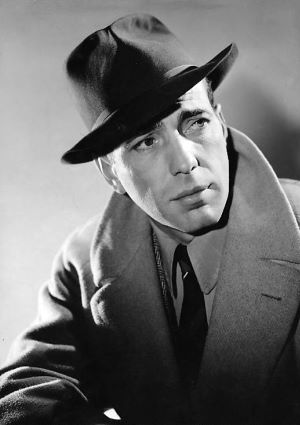
Humphrey Bogart, shown here in 1940, was one of many actors’ names critics mentioned in their reviews of “Croupier.” Last year, in a TV miniseries, Owen played Sam Spade, one of Bogart’s most iconic roles.

So, Kaplan championed the film – coming up with a brilliant ad campaign highlighting major actors Owen had been compared to in critics’ reviews. The esteemed list included Humphrey Bogart, Richard Widmark, Robert Mitchum, Sean Connery, James Mason, Nicolas Cage, Paul Newman and Clint Eastwood. “It played at the Fairfax Theatre (now closed) for two weeks and ran at the Aero, which was a second-run theater at the time, for several months,” said Kaplan.

Farber summed up: “It turned out to be a tremendous success and everybody in Hollywood took notice.”

After the film, Owen talked with Farber. Already an established actor in England, Owen recalled that the script intrigued him, especially the dialogue, which was not naturalistic. “The combination of Mike Hodges who’s very specific, very noir, very grounded and Paul Mayersberg who’s very intellectual and abstract in some ways [results in] the scenes having a kind of heightened quality,” said Owen.

Farber asked him to talk about his co-stars. “It was a great cast Mike Hodges put together,” said Owen. “The actors embraced the non-naturalistic style of dialogue and when you’re all committed to it, then the thing can sing.”

Owen added that he loves noir and has returned to the genre over the course of his career, most recently playing Dashiell Hammett’s famous private detective in the “Monsieur Spade” TV miniseries, which ran last year on AMC.

Actress Gina McKee epitomizes the good-girl archetype.

During the audience Q&A, noted Los Angeles writer and publisher of artsmeme.com, Debra Levine asked Owen to share his thoughts about the three female characters and the actresses who played them. She pointed out, in classic noir, there’s a bombshell who brings the character down and, in this film, the women have different trajectories, especially Gina McKee’s character.

Owen responded: “I actually think all the women in their own way are very strong in this movie. They’re all very independent. When I look at it, I think it’s refreshing. I think they are really great parts for women. They’re interesting and they’re powerful women. I think, especially considering it was made 25 years ago, they’re really well written parts and were fun to play. They were all really good actresses as well.”

For him, he acknowledged, the film was a major gear change, radically shifting everything. Said Owen: “It’s something that stayed with me ever since.”


Laemmle Royal Theatre to host 30th anniversary screening of ‘The Last Seduction’ with special guest, director John Dahl

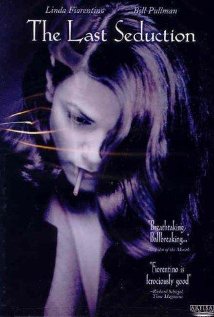
Linda Fiorentino [is] the baddest of the bad women, the most full-blown yet utterly believable femme fatale to come along in years.”

Mick LaSalle, San Francisco Chronicle

Critic Mick LaSalle was writing about “The Last Seduction” (1994, John Dahl) and if you’ve never seen it, you’d better have a damn good reason!

Angelenos can watch this unforgettable neo-noir on the big screen on Tuesday, Oct. 8, at 7 pm, at the Laemmle Royal Theatre in West Los Angeles. Director John Dahl will be the special guest. In honor of the event, part of Laemmle’s Anniversary Classics Series, we’re rerunning our “Last Seduction” review.

The Last Seduction/1994/ITC/110 min.

Years ago, I wrote a weekly column for the Chicago Tribune. I interviewed experts on ways women could work smart and climb the corporate ladder. Most of the time, no matter what the obstacle or dilemma was – job hunting, negotiating a raise, getting a promotion – the bottom line was: do your homework, highlight your achievements and ask for what you want.

In 1994’s “The Last Seduction” by director John Dahl and writer Steve Barancik, Linda Fiorentino as Bridget Gregory takes this advice to dazzling new heights. As the story unfolds, this career maven excels in not just one job, but several. In the opening scene, she’s a supervisor at a telemarketing sales firm in New York City, where she doesn’t ask, she demands. Then she needles her hapless sales guys mercilessly, calling them “maggots, eunuchs and bastards.”

At least they know where they stand. That pat-on-the-back stuff is way overrated.

Later she becomes Director of Lead Generation at an insurance company in a small town in New York state. Under her own steam (at night, of course, this being a noir) she researches prospects for a telemarketing murder business. Hey, it’s not like there isn’t a market.

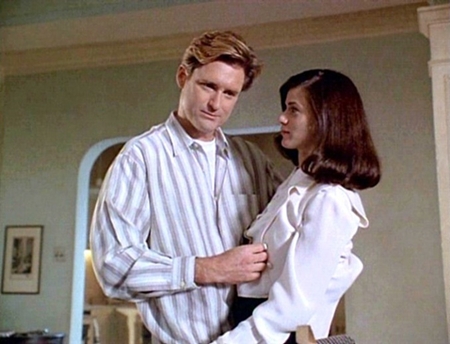
And she launches an entrepreneurial venture in which she steals a boatload of cash from her husband, malleable Clay (Bill Pullman) and taps loyal-to-a-fault Mike, her lover/investment partner (Peter Berg), to help her. Neither of these dudes is much of a match for her – their chief virtue (besides being good looking) is that they are good at following orders, which is especially true in Mike’s case.

Bill Pullman and Linda Fiorentino play husband and wife.

When one of Mike’s friends asks him: “whadd’ya see in her?” he replies: “a new set of balls.” Her résumé also includes legs that never stop, bedroom eyes and a ready laugh, especially at the expense of doofuses or dumpy small-town mores. Just when you think an interfering man is going to impede her climb to the top, she flicks him away like a speck of lint from her sleek pinstripe suit.

Having done her due diligence, she’s hoping to close the deal in such a way that neither Clay nor Mike can claim a penny of the profit. Talk about multi-tasking. It’s understandable that so much juggling might make Bridget a little irritable from time to time.

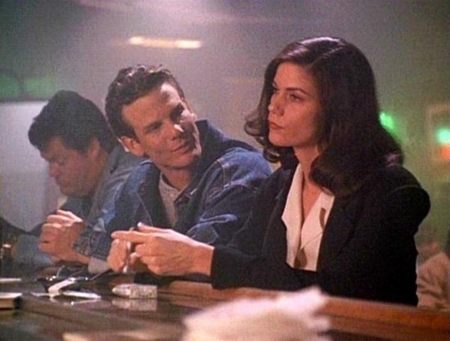
Luckily, Mike is nothing if not supportive and just turns the other (butt) cheek when she calls him a rural Neanderthal. When he suggests they go on a date and chat sometime; she asks: “What for?”

When Mike (Peter Berg) suggests going on an actual date, Bridget (Linda Fiorentino) asks, “What for?”

To say that Fiorentino, a Philly native with a fiery intensity, nails the part is an understatement. She is one of the fiercest femmes fatales in all of neo-noir moviemaking. If I were a guy, I think seeing this performance would surely give me an uneasy night’s sleep. I would have loved to see Fiorentino work with Quentin Tarantino, but her career short-circuited fairly early. I have heard she was a tad hard to work with – shocker! Pullman, Berg and the rest of the cast more than hold their own, underplaying their parts and letting Fiorentino hold bitchy court.

Director Dahl is a neo-noir specialist (he also directed “Red Rock West,” “Kill Me Again” and “Rounders”) and the sharp, funny script is peppered with references to noir classics. For instance, Dahl tips his hat to “Double Indemnity” by having Bridget and Mike both work at an insurance company and, when Bridget calls the police to falsely accuse a guy of exposing himself (so she can make a getaway), she gives her name as “Mrs. Neff.”

I suppose that could be evidence of her truly tender heart – in her imagination, the doomed lovers Walter Neff and Phyllis Dietrichson get married and live happily ever after. Yeah, right. But, if Bridget said it, you’d believe her.

‘Speak No Evil’ tells a suspenseful, satirical tale

2024/1h 50m

Speak No Evil” – a psychological thriller written and directed by James Watkins – begins its push-pull of nervous energy from the very first frame. After a mysterious, night-time opening shot, we’re introduced to an American family on vacation in sunny Italy. Louise Dalton (Mackenzie Davis), her husband Ben (Scoot McNairy) and their daughter Agnes (Alix West Lefler) are trying to enjoy the trip, but can’t quite seem to relax, despite the scenic views and scrumptious food. For one thing, Louise and Ben disagree on a parenting issue. Ben wants Agnes, almost 12, to put away, once and for all, a stuffed rabbit named Hoppy, which she holds tight when she feels anxious. Louise feels it’s better not to make a big deal about it.

One day, while strolling around town, they encounter another family: friendly and charismatic Paddy (James McAvoy), easy-going Ciara (Aisling Franciosi) and their sweet son Ant (Dan Hough), who is a few years younger than Agnes and has trouble communicating. Paddy instantly impresses Agnes by offering her a ride on his snazzy Vespa.

Later, as the two families share a meal, Ben and Louise reveal that they relocated to London for Ben’s career, but his job was downsized shortly after they moved. Louise works in PR; however, it’s been hard for her to build a new network of contacts. Paddy, a doctor, Ciara, a stay-at-home mom, and Ant live in England’s west country.

The two families meet in Italy. From left to right: Mackenzie Davis, Alix West Lefler, Scoot McNairy, Dan Hough, Aisling Franciosi and James McAvoy.

Once the holiday has ended and the Daltons are back in London, they’re at a loose end workwise and their marital problems are bubbling to the surface. When they receive a letter from Paddy inviting them (for the second time) to come for a visit, Ben and Louise hesitate – it’s a lot of time with new friends they hardly know. On the other hand, they’ve had a nice time together so far and Paddy’s charm makes it hard to say no. After all, what could go wrong?

Quite a lot, actually, with awkward moments starting almost as soon as they arrive at Paddy and Ciara’s rustic farmhouse. Red flags keep popping up and the extent to which Louise and Ben choose to ignore them allows “Speak No Evil” to be a dark comedy of manners as well as an excellent suspenser distinguished by superb storytelling. Though the third act plays out in familiar slasher-movie fashion, it’s preceded by interesting characters played by talented actors, a mood of quiet malice and stunning cinematography (shot in Croatia and Gloucester, England). McAvoy is completely convincing as the jovial alpha male with an undercurrent of hostility while McNairy makes beta male Ben relatable if not entirely likable. Mackenzie Davis is terrific as Louise, who can take charge when needed. Aisling Franciosi plays Ciara with a sweetness that slow-burns into edgy weirdness. Both child actors are excellent as well.

Also, director Watkins (“Eden Lake” 2008 and “The Woman in Black” 2012) deserves praise for the unhurried pacing. (That could be a nod to the Danish film of the same name from 2022 directed by Christian Tafdrup on which Watkins based his movie.) As the story unfolds little by little, layer by layer, we learn more about the cracks in Ben and Louise’s marriage, cringe at the uncomfortable exchanges between the couples, and see well beyond the surface of Paddy and Ciara’s cozy family life – especially when Paddy quotes Philip Larkin’s famous lines about parents and humiliates Ant while the kids are performing a dance they’ve rehearsed. Once the social niceties subside and the polite forbearance finally ends, Louise and Ben must trust each other 100% and work as allies – not to mention wield deadly weapons – to survive this idyllic country getaway, which has spiraled into chilling insanity.

“Speak No Evil” opened Sept. 13 and is playing in theaters nationwide.

Courtroom drama dissects defiance of French far-left activist

2023 France/2024 US/1h 56m

The Goldman Case” functions as a tense, often-tumultuous courtroom drama, which is based on a true story. At the same time, the film delves into a turbulent period of modern French history – the late 1960s and 1970s – grappling with political, cultural and social-justice issues as it renders an even-handed portrait of an intellectual/self-described revolutionary/criminal agitator.

That agitator is French far-left activist Pierre Goldman (Arieh Worthalter). His parents (both Polish) were members of a branch of the French Resistance in WW2; after the war, his mother returned to Poland and Pierre was raised primarily by his father in France. At 19, Pierre became a communist and over the next several years spent time in Cuba and Venezuela, where he was involved with guerrilleros. He was part of the Royal Bank of Canada robbery in Venezuela in 1969, but was not identified and returned to Paris.

He continued his criminal activities and was given a life sentence in 1974 after being convicted of a robbery in which two pharmacists were killed. He denied having committed that robbery (although he’d admitted to three other, earlier robberies and had received a 12-year jail sentence).

While in prison, he wrote a book about his case, “Souvenirs obscurs d’un juif polonais né en France (“Obscure Memories of a Polish Jew Born in France,” 1975), which caught the attention of Simone Signoret, Jean-Paul Sartre and others, and Goldman became a cause célèbre.

Because of the publicity and emerging questions about the police work, Goldman is granted a retrial. In the courtroom, Goldman frequently disregards protocol and speaks out of turn – arguing his cause, criticizing the proceedings (angrily explaining, for example, why he sees character references as pointless) and asserting racism by the police. His outbursts spur cheers from his many supporters in attendance. Though the judges don’t sanction him (no “order in the court!”), his seeming bent on self-destruction frustrates his defense team.

As various witnesses testify and we learn more about Goldman, his family, his relationships and his mental health, we’re unsure from minute to minute as to his innocence or guilt regarding the murder charges. The rousing speeches from passionate lawyers on both sides and the sometimes-arcane idiosyncrasies of French legal proceedings add to the tension. Confining most of the action to the gloomy, harshly lit courtroom creates a pervasive sense of claustrophobia.

Ably directed by Cédric Kahn (he wrote the screenplay with Nathalie Hertzberg), the acting is solid throughout and it’s hard to take your eyes off Worthalter, who fully inhabits the fiery, ferocious Goldman and brings to life a character and a case that remain fascinating and disturbing long after the film ends.

“The Goldman Case” opened Sept. 13 in Los Angeles and is playing in select theaters nationwide.

Sly, stylish “Strange Darling” takes us on a weird and wild ride

2023 Film Festivals/2024 Theatrical Release/1h 37m

In a summer that’s short on must-see movies, “Strange Darling” ranks as essential viewing for fans of neo-noir thriller/horror flicks. A riveting story of a serial killer on the loose in rural Oregon, the film has much to recommend it: compelling creepy characters; superb acting; first-rate visuals; gritty intensity; and taut pacing, clocking in at 96 minutes. But most memorably, “Strange Darling” upends our expectations of the genre in a strikingly original way.

Bookended by stark black and white photography, the film opens with a moody shot, introducing us to the two leads: the red-headed, doe-eyed Lady (Willa Fitzgerald) and the clean-cut, rugged Demon (Kyle Gallner) – two easy-on-the-eyes, mutually attracted strangers who are sitting in the Demon’s truck swigging booze late one night, deciding whether they will take their party to a room at the nearby Blue Angel hotel. She comments that violence is always a risk for a woman in this situation and asks him if he’s a serial killer. He says no. From there, the story unfolds in six non-linear chapters.

Chapter 3 “Can you please help me?” comes first (and the phrase pops up several times throughout the movie). The next morning, the Lady, pale and frail but wiry, is now a blonde and has changed into hideous red scrubs. Driving a red Pinto, she floors it frantically down a quiet road. The gun-toting Demon is in determined, coke-fueled pursuit, but she escapes into dense, sun-dappled woods and eventually pounds on the door of a rustic cabin, occupied by hippie/doomsdayers (with a penchant for butter-laden breakfasts) Genevieve (Barbara Hershey) and Frederick (Ed Begley Jr.), and they let her in.

Terrified, wounded, hungry and hungover, she feasts, like a feral animal, on what’s left of their hearty morning meal. But when Frederick suggests they call the cops, the Lady vehemently disagrees. (Later, we do meet two officers, well played by Steven Michael Quezada and Madisen Beaty, who fall into a figurative snare that’s constructed from gender stereotypes.)

To reveal more of the plot would ruin the movie, so suffice to say as writer/director JT Mollner skillfully puts the puzzle pieces together, holes are tightened and questions are answered. That is, except for the most perplexing, probably unanswerable, question: how do people become crazy enough to go on a bloody killing binge with zero remorse?

The Demon (Kyle Gallner) is on a mission in rural Oregon.

Watching this masterful work, you feel the influence of Quentin Tarantino, the Coen brothers, Martin Scorsese, Michael Mann, David Lynch and Alfred Hitchcock. Mollner delivers a picture (his second) that’s bold, clever, sordid and sometimes darkly comic. Shot in 35 mm by cinematographer Giovanni Ribisi, “Strange Darling” is great-looking throughout – boasting rich color and arresting compositions. Composer Craig DeLeon’s score and original songs written and performed by Z Berg help to sustain the suspenseful mood.

Additionally, Mollner elicits terrific performances from the entire cast and especially from the captivating Fitzgerald as she pulls out all the stops playing a Lady you’ll never forget and Gallner, by turns sinister and phlegmatic; threatening and vulnerable.

Granted, “Strange Darling” won’t be everyone’s cup of blood. It’s a dark dive into the world of a serial killer, so if gore and graphic violence are a deal-breaker, you’ll want to give this a pass. (Also, if you’re looking for deep, thoughtful commentary on gender roles and sexual politics, look elsewhere.)

But for those who dig crime tales, sly, stylish “Strange Darling” takes us on a weird and wild ride.

“Strange Darling” opened Aug. 23 and is playing in theaters nationwide.

‘Once Upon a Time … in Hollywood’ is a flaky, flimsy fairy tale that’s still pretty entertaining

For Angelenos, “Once Upon a Time … in Hollywood,” by Quentin Tarantino, is required viewing if you 1) are too young to have any idea who Charlie Manson’s family was 2) love Brad Pitt 3) are craving cocktails and massive portions at Musso & Frank’s and feel the need to rationalize a visit to the restaurant.

The film is a heavy-handed homage to the slowly collapsing Studio System, in the year 1969, as well as a revisionist and rescue fantasy from a director who gorges on movie lore like some of us feast on popcorn. But as glossy looking (shot by Robert Richardson) and as crammed with period detail as it is, “Once Upon,” has a script that’s thin and unsatisfying; the film has very little tension or much humor to sustain its 2 hour and 41 minute running time. The place, slick and sultry and a bit sinister, is rendered with a sure eye; the mood is often flat.

The story revolves primarily around a macho TV actor named Rick Dalton (Leonardo Di Caprio) whose career is starting to wobble and his friendship with his stuntman and helper Cliff Booth (Brad Pitt). Rick is fond of easing his angst with booze; Cliff is a laconic cool guy, war veteran and mysterious widower – there are rumors that he might have been involved in his wife’s death. Rick happens to live on Cielo Drive, next door to director Roman Polanski (Rafal Zawierucha) and his wife Sharon Tate (Margot Robbie).

In “Once Upon,” Rick plays the villain in “Lancer,” which was an actual Western show that aired on CBS for two seasons, starting in 1968 and starring actor James Stacy (played in “Once Upon” by Timothy Olyphant) and Wayne Maunder (Luke Perry).

Robbie is an ideal choice to play Tate; she exudes young energy and abundant promise. So, it would have been nice if Tarantino had given her more to do than being adorable, acquiescent and slightly vacant.

But hey she is a starlet, after all. We meet lots of stock players in this dark-side-of-the-dream scenario: Al Pacino as a glitzy producer, looking to snag film roles for Rick in Italian movies; Lorenza Izzo as the 2-D, temperamental wife Rick meets while making an Italian movie; and Julia Butters as a precocious child actor (is there any other kind?) and co-star of Rick’s Italian movie. As Tarantino melds reality with fantasy, we also spy Steve McQueen (Damian Lewis), Sam Wanamaker (Nicholas Hammond), Bruce Lee (Mike Moh) and others.

The other major plotline, awkwardly lumped in, comes from the fact that cult leader Charlie Manson and his murderous followers also had tangential and tenuous (but 100% real) connections to Tinseltown. Manson once aspired to a music career and mistakenly believed that producer Terry Melcher lived in the Tate-Polanksi residence on Cielo Drive. Also, the Manson “family” lived at Spahn Ranch, which was a filming location for the Jane Russell movie “The Outlaw” and some episodes of the TV show “Bonanza.”

By chance, Cliff picks up a hitchhiking Mansonite named Pussycat (Margaret Qualley, of TV’s “The Leftovers” and “Fosse/Verdon”), drives her to the ranch and stops in for a visit. Apparently, Rick and Cliff once worked there and Cliff remembers George Spahn, who in 1969 was 80 years old and blind.

Long-legged and lithe Pussycat bites her lip repeatedly as part of her seduction but Cliff decides she’s too young for him and takes a pass, on her and the Manson cult. Pussycat might be based in part on Kathryn Lutesinger, who briefly followed Manson but later turned against him. Dakota Fanning and Austin Butler play (real-life) Manson followers and criminals Lynette “Squeaky” Fromme and Tex Watson. Damon Herriman plays Manson.

“Once Upon …” isn’t a bad movie but it’s not Tarantino at his finest. It’s well acted, especially Brad Pitt as Cliff Booth and Bruce Dern as George Spahn, and it’s all pretty enjoyable, it’s just not that interesting or weird or wild overall. Granted, the reimagining of the Manson Tate murders definitely provides a kooky ending – the problem is it also comes off as strained and random, more gimmick than grand finale.

Welcome to LA.