‘The Woman in the Fifth’ is a mystery thriller in disguise

The Woman in the Fifth/2011/ATO Pictures/83 min.

A hypnotic story set in Paris. A creeping sense of dread, hints of dark memories and damaging secrets about to unfold. Dream imagery and sleight-of-hand shots. Shadowy criminal types and a formidable, cryptic seductress. Excellent acting. “The Woman in the Fifth” has the ingredients for a first-rate psychological thriller, in the tradition of Roman Polanski or David Lynch.

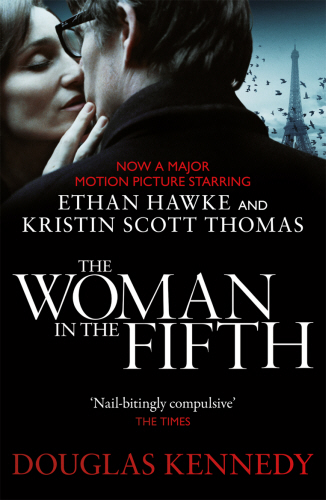
Ethan Hawke plays Tom, an American writer trying to repair his relationship with his ex-wife (Delphine Chuillot) and daughter (Julie Papillon) in Paris. His wife wants nothing to do with him though, as per the restraining order against him.

Broke, frustrated and forlorn, he takes a job at a warehouse and finds solace from a distinguished, domineering translator who lives in the 5th arrondissement (Kristin Scott Thomas) and a young Polish barmaid (Joanna Kulig). But, when a fellow resident at Tom’s grim hostel is murdered, he struggles to retain his tenuous grip on reality.

Polish director Pawel Pawlikowski (his last work was 2004’s “My Summer of Love”) describes “Woman,” based on a novel by Douglas Kennedy, as a mystery thriller in disguise and more precisely as a nightmare about “a man who fails to pay attention to the outside world, who lives in his own head and is totally incapable of understanding his true motives.”

But the film is at its best and most interesting before the anything-goes twist; once that’s revealed, the tension seeps out and we’re left deflated as the story sputters to the end.

“The Woman in the Fifth” opens today in select cities and on June 22 in LA.

Poetic, mysterious ‘Americano’ lacks emotional resonance

Americano/2011/MPI Media Group/105 min.

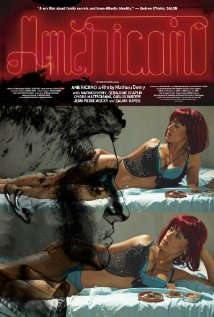
“Americano,” Mathieu Demy’s first feature film, contemplates the passing of time and ghosts of memory, the grieving of a parent and letting go of the past. Poetic, dreamlike and visually compelling, the film has the makings of a personal odyssey meets noirish mystery but ultimately is undermined by a thin story that lacks emotional resonance.

Writer/director/actor Demy plays Martin, a real-estate broker who lives with his girlfriend Claire (Chiara Mastroianni) in Paris; he’s on the fence about raising a family with her. When his estranged mother dies, he travels to her home in Venice, Calif., where he spent part of his childhood before moving to France with his father (Jean-Pierre Mocky) after his parents divorced.

Returning to settle his mother’s affairs, with the help of a family friend named Linda (Geraldine Chaplin), Martin finds that in addition to the turmoil of pain, both raw and repressed, he is haunted by the recollection of Lola, a childhood acquaintance (Salma Hayek plays the adult Lola). She remained friends his mother while Martin was in France.

After learning that Lola was deported, Martin takes Linda’s red Ford Mustang convertible and heads to Tijuana (unfamiliar and dangerous territory that is all the more appealing in his grief) to find Lola and probe the relationship she had with his mother. There he finds the brassy, tough chick working in a strip club called Americano. It’s not exactly a happy reunion and Martin must decide whether he can trust this no-nonsense femme fatale.

Though a fictional film, “Americano” is also a valentine to Demy’s parents: French New Wave director Jacques Demy (he died in 1990) and Agnès Varda, who has been directing movies since the 1950s. Showing glimpses of Martin’s childhood in Venice, and simultaneously creating a more personal story, Demy uses footage of himself in Varda’s 1981 film “Documenteur.”

“I wanted the two films to echo one another, with 30 years separating them,” said Demy at a recent press conference in Beverly Hills. The desire to connect the films also prompted Demy to shoot “Americano” in super 16 mm cinemascope; “Documenteur” was shot in super 16 mm. And, of course, Hayek’s character name echoes Jacques Demy’s 1961 “Lola,” his first feature. Like Demy, Mastroianni (daughter of Catherine Deneuve and Marcello Mastroianni) and Chaplin (daughter of Oona O’Neill and Charlie Chaplin) are artists with prodigious legacies.

A.O. Scott, writing for the New York Times, notes, “As a director, [Mathieu Demy] owes less of a debt to his parents than to the American film noir tradition and, above all, to the melancholy romanticism of Wim Wenders, the German auteur whose love of scruffy North American locations, ambiguous quest narratives and the color red seems to resonate through much of ‘Americano.’ ” [Read more…]

With a stand-out lead performance, ‘Wallander’ delivers

‘Wallander: The Revenge’/90 min./Music Box Films

If you need a little Scandinavian neo-noir fix this weekend, “Wallander: The Revenge” should do the trick nicely. It’s one episode from a 13-part Swedish TV series, based on original stories by popular Swedish crime writer Henning Mankell and directed by Charlotte Brändström. Fast, good-looking, intelligent and compelling, it’s also very entertaining.

Krister Henricksson plays small-town police detective Kurt Wallander. Gruff, shrewd and set in his ways (he’s 62 in the books), he’s counting the days until he can live in his house by the sea and walk his dog. But first he’s got to suss the connection between three murder victims, all of whom have been shot 17 times. At the same time, a power substation has been blown up and some suspect Islamic terrorists are behind both the explosion and the murders.

Krister Henricksson

Lena Endre

Helping him out are rookie cop (Nina Zanjani) and public prosecutor Katarina Ahlsell (Lena Endre). The performances are excellent, especially Henricksson who shines in a tense scene toward the end in which he placates a crazed man clutching a bomb.

True, when Wallander cracks the case, it’s a bit pat, but for me that was a minor flaw. I was left wanting to watch the rest of the series.

“Wallander: The Revenge” is playing in LA at Laemmle’s Music Hall 3, 9036 Wilshire Blvd., Beverly Hills, 90211. The 13 films in this series will be available on DVD, VOD iTunes, Amazon and Vudu. (Kenneth Branagh plays Wallander in the BBC/PBS “Masterpiece Theater” adaptation.)

FNB free stuff: ‘Body Heat,’ ‘L.A. Confidential,’ ‘The Player’

This month, I am giving away a must-have neo-noir triple feature from Warner Bros. on Blu-ray: “Body Heat” (1981, Lawrence Kasdan), “L.A. Confidential” (1997, Curtis Hanson) and “The Player” (1992, Robert Altman). I will post reviews of “Body Heat” and “The Player” later this month.

(Paul is the winner of the April reader giveaway, a Criterion DVD set of “Criss Cross” and a TCM mug. Congrats to Paul and thanks to all who entered!)

To enter the May giveaway, just leave a comment on any FNB post from May 1-31. We welcome comments, but please remember that, for the purposes of the giveaway, there is one entry per person, not per comment.

The winner will be randomly selected at the end of the month and announced in early June. Include your email address in your comment so that I can notify you if you win. Your email will not be shared. Good luck!

Director Maïwenn on working with the actors of ‘Polisse’

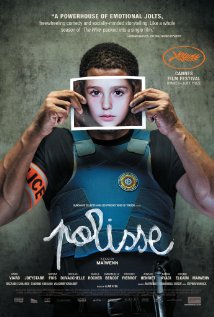
“Polisse,” a French cop drama, features truly outstanding performances, ones that linger in your memory long after the credits roll.

“When I felt that the kids were too much pushed by their parents, I wouldn’t take them,” said director/writer/actor Maïwenn.

How did director and co-writer Maïwenn (she also played Melissa the photographer) get this stunning work from her cast?

At a recent press conference in Beverly Hills, after first saying she was simply lucky, Maïwenn elaborated on her collaboration with actors. She said the key was to keep it simple and true. “I think the secret is the way you [the actors] listen to me, the way you listen to the script. All the cases were true, based on real cases.”

As for working with the children, Maïwenn said she was extremely careful to shield the kids from any negative impact that might result from playing characters in such traumatic situations. This included involvement from a French child-protection agency and a psychologist.

And recognizing their limits. “When the kids were on the set, we had to go fast. They want to have it fun so it has to be short. Otherwise, if they have to wait too much, they’re getting bored.

Additionally, she put much thought and effort into casting the children. “I am a mother so I’m used to talking with kids and I knew them a long time before the shoot and I met their parents. … When I felt that the kids were too much pushed by their parents, I wouldn’t take them. I was an actress child and my mother was pushing me too much. … I chose the kids when they were authentic and when they were not too much actors. … The kids I loved, when I asked them, ‘Why do you want to do this movie?’ they said because it’s true cases.”

Maïwenn discovered that fine-tuning the script to minimize lewd words and the suggestion of acts involving the kids improved the storytelling. “I discovered that the less you show, the more it’s powerful.”

Non-stop film noir on the big screen in Los Angeles

The enduring appeal of film noir shows no signs of waning – there are scads of noir screenings in and around LA over the next several weeks.

Noir City Hollywood continues at the Egyptian Theatre through May 6. Tonight, actress Julie Adams will talk with Alan K. Rode between the films 1957’s “Slaughter on Tenth Avenue” (in which Adams co-stars with Richard Egan, Jan Sterling, Dan Duryea, Walter Matthau and Charles McGraw) and “Edge of the City” (1957).

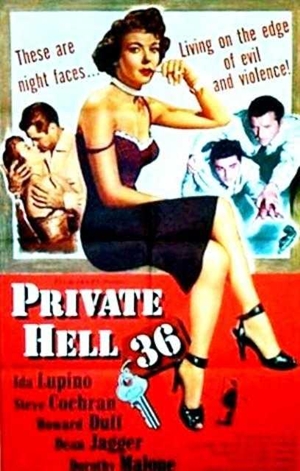
And a must-see for me: Ida Lupino in “Private Hell 36” (1954) by director Don Siegel. Lupino also co-wrote this flick, which runs on Wednesday, May 2, after “Shield for Murder” (1954), co-directed by Howard Koch and star Edmond O’Brien.

In conjunction with the Herb Ritts: L.A. Style exhibition, running through Aug. 26 at the Getty Museum, a companion (free!) film series starts today. Ritts (1952–2002) was a top 1980s photographer and his preference for outdoor locations such as the desert and the beach helped to distinguish his work from his New York-based peers.

Admittedly, “Gilda” is the only true noir on the roster, but Ritts’ work taps retro Hollywood glamour. As the Getty puts it: “Ritts’ relationship with his subjects echoes certain director-actor relationships dating from the silent era and the eight films in this series showcase this special relationship.”

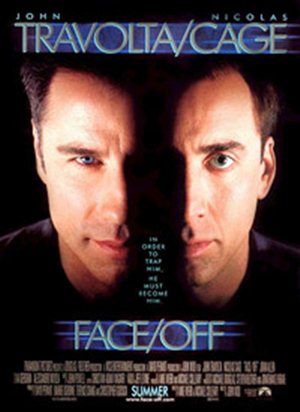
On Friday, May 4, the New Beverly Cinema is showing John Frankenheimer’s sci-fi neo-noir from 1966 “Seconds,” which stars Rock Hudson; cinematography by James Wong Howe. “Seconds” is paired with 1997’s “Face/Off” by director John Woo starring John Travolta, Nicolas Cage, Joan Allen, Dominique Swain and Nick Cassavetes. Screenwriters Mike Werb and Michael Colleary are scheduled to appear in person.

Also worth a watch: Universal Pictures celebrates its centennial with a series of screenings (“The Black Cat” and “The Birds” caught my eye) at UCLA’s Billy Wilder Theater in Westwood from May 4 to June 24.

You’ll certainly get a full-on noir lineup at the 12th annual Arthur Lyons Film Noir Festival, which runs in Palm Springs from May 10-13.

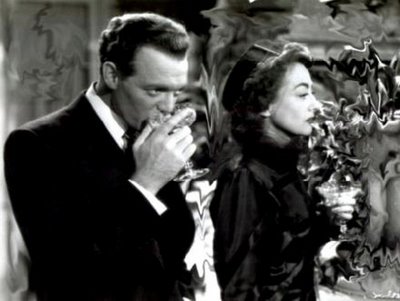
Van Heflin and Joan Crawford star in “Possessed” from 1947.

Festival programmer and film historian Alan K. Rode has selected a great lineup, including Fritz Lang’s “The Big Heat” (1953), starring Glenn Ford, and “Possessed” (1947) by Curtis Bernhardt.

Ford’s son Peter will attend “The Big Heat” screening. “Possessed” earned Joan Crawford her second Oscar nom (she won for 1945’s “Mildred Pierce”); co-starring are Van Heflin, Raymond Massey and Geraldine Brooks.

Other titles, screened from new 35 mm prints, include: “Shield for Murder” (1954), “I Love Trouble” (1948), “Slaughter on Tenth Avenue” (1957) and “The Face Behind the Mask” (1941), starring Peter Lorre.

I’m also very much looking forward to The Sun Sets in the West: Mid-Century California Noir at the Los Angeles County Museum of Art (LACMA), from May 18-26.

Says LACMA: “Experience the dark side of modern living with this series of mid-century film noirs. Shot on location and set amid the bustle of major cities such as Los Angeles and San Francisco – as well as their sun-soaked periphery, beach cities, and desert oases – these 10 films inject the Golden State’s benign climate with a heady dose of postwar angst.”

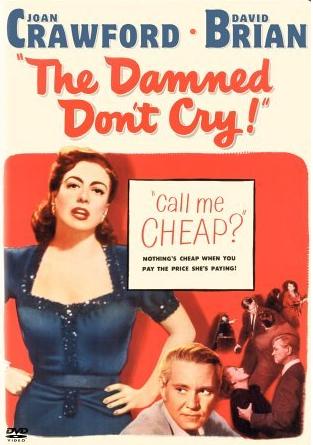
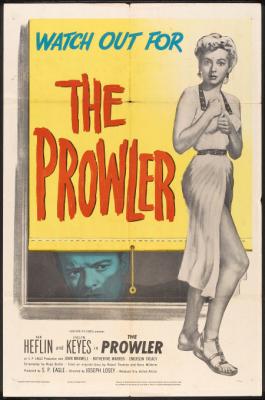
The titles in the series are: “Kiss Me Deadly” (1955, by director Robert Aldrich); “The Crimson Kimono” (1959, Sam Fuller) “Experiment in Terror (1962, Blake Edwards); “Criss Cross” (1949, Robert Siodmak); “M” (1951, Joseph Losey); “The Damned Don’t Cry” (1950, Vincent Sherman); “Slightly Scarlet” (1956, Allan Dwan); “Murder by Contract” (1958, Irving Lerner); “Nightfall” (1957, Jacques Tourneur) and “The Prowler” (1951, Joseph Losey).

The one and only Bogart

Additionally, UCLA’s Film & Television Archive and the Million Dollar Theater are presenting three interesting double bills in downtown Los Angeles:

Brian De Palma in the 1970s (“Sisters,” his first Hitchcockian thriller, and “Phantom of the Paradise”) on Wednesday, May 2.

“The hunted and the hunter” film-noir night, featuring “Mickey One” (1965, Arthur Penn) and “Blast of Silence (1961, Allen Baron) on Wednesday, May 16.

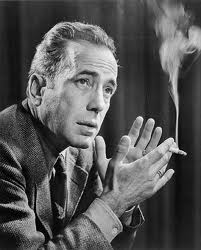
Nicholas Ray directs Humphrey Bogart in “Knock on Any Door” (1949) and “In a Lonely Place” (1950) on Wednesday, May 23.

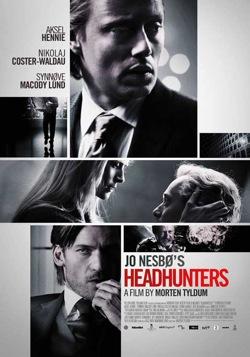
Norwegian hell-on-wheels neo-noir ‘Headhunters’ is no bore

Headhunters/2012 Norway/Magnolia Pictures/100 min.

By Michael Wilmington

Think you’ll be bored at a movie about corporate head-hunting and a missing Peter Paul Rubens painting? Not necessarily. The Norwegian neo-noir “Headhunters” may have its flaws – outrageous improbability chief among them – but it’s definitely no bore. In fact, the movie pretty well blasts you away as you watch it, using hot sex, cold brutality, and a twisty, constantly surprising crime plot to put you on the edge of your seat and then try to knock you out of it.

Based on a best-selling novel by Jo Nesbø– Norway’s most popular and highly regarded crime novelist, and the creator of the Harry Hole detective series – “Headhunters” revolves around a diminutive anti-hero, 5’6” Roger Brown (Aksel Hennie), who works as a headhunter and CEO recruiter, and dabbles in art thievery on the side. Roger, a self-professed “over-compensator,” is also married to an intimidatingly tall and beautiful Diana (Synnove Macody Lund), and he pulls his jobs with the unabashedly pathological heist man Ove Kikerud (Eivind Sander), a violent creep with nerves of ice and a taste for Russian hookers.

Into Roger’s life comes the intimidatingly tall and handsome Clas Greve (Danish actor Nicolaj Coster-Waldau), an ex-Dutch commando who also happens to have his hands on a long-missing, incredibly valuable Rubens painting, titillating the little headhunter/thief on two levels and maybe more. Roger’s life soon turns into a bloody mess.

The film however is slick and fast and gorgeously shot – if sometimes almost criminally outlandish and over-the-top. Director Morten Tyldum (a Norwegian TV commercial whiz), cinematographer John Andreas Andersen and editor Vidar Flataukan all succeed at times in knocking our socks off or at least getting them pulled pretty far off our toes. The four main actors are all compelling; Hennie and Coster-Waldau make a nice sparky pair of Mutt and Jeff antagonists. You may be irritated by “Headhunters.” You won’t be yawning, unless you were exhausted to begin with.

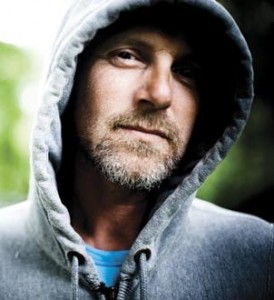
Writer Jo Nesbø

Norway’s Jo Nesbø is a thriller-writer in the Steig Larsson tradition, mixing sex and violence and social corruption with complex criminal behavior, and generating huge world-wide sales. Nesbø’s noir novels have been published in 140 countries and translated into 35 languages. He also scored the top three places in a recent Norwegian newspaper poll (by the journal Dagbladet) on Norway’s all-time best crime novels – and then took five more slots among the next eight. Hollywood is apparently impressed: Martin Scorsese and Mark Wahlberg are among the names that have been mentioned for the seemingly inevitable American versions.

But I suspect those movies, when they come, may not have quite the pizzazz of the Norwegian novels – as Tyldum’s “Headhunters” apparently does. It’s a racy, violent, hell-on-wheels neo-noir that makes Norway look, for at least a little while like the capitol of fictional crime – and maybe of overcompensation too.

“Headhunters” opens today in New York and LA.

Neo noir snags top award from COL•COA French film fest

The City of Lights City of Angels (COL•COA) 16th annual French film festival on Monday announced its winners. Nearly 19,000 attended the week-long fest at the Directors Guild of America in Hollywood.

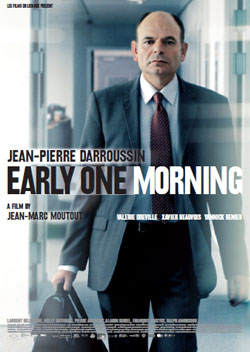
I was pleased to see that one of the noir titles, “Early One Morning” (De bon matin) garnered the Critics Award from the Los Angeles Film Critics Association; Christy Lemire of the Associated Press served as president of the jury. Starring Jean-Pierre Darroussin, “Early One Morning” was directed by Jean-Marc Moutout.

“Paris by Night” (Une nuit) and “A Gang Story” (“Les Lyonnais”) completed the film-noir series on Friday night. There were many terrific films shown at the fest; other movies with noir elements included: “38 Witnesses,” “Guilty,” “Americano,” “Polisse” and “The Minister.” And it was a treat to see Marcel Carné’s “Hotel Du Nord” – a masterpiece of Poetic Realism and an important precursor of film noir.

The rest of the award winners (for feature films) were:

The Critics Special Prize and the COL•COA Audience Award went to “The Intouchables,” written and directed by Olivier Nakache and Eric Toledano. Starring François Cluzet and Omar Sy, this buddy-movie comedy will be released in the U.S. on May 25.

Critics Special Mention for “Polisse,” written by Maïwenn and Emmanuelle Bercot; directed by Maïwenn. This opens in the U.S. on May 18.

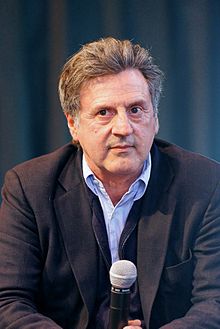
Daniel Auteuil's breakthrough role was in “Jean de Florette” and its sequel “Manon des Sources,” both from 1986.

The First Feature Award went to “The Adopted,” written by Mélanie Laurent, Morgan Perez and Chris Deslandes; directed by Mélanie Laurent.

The Audience Special Prize went to the documentary “Leadersheep,” written and directed by Christian Rouaud.

“The Well Digger’s Daughter,” written and directed by Daniel Auteuil based on Marcel Pagnol’s original work, won the Audience Special Mention. This film opens in the U.S. on July 20.

Stay tuned for reviews of COL•COA films!

Masterpiece of neo-noir ‘Chinatown’ is an unmatchable blend of wised-up savvy and yearning romanticism

Chinatown/1974/Paramount/130 min.

“Chinatown” will screen at 9:30 p.m. Friday, April 13, at the TCM Classic Film Festival. Writer Robert Towne and producer Robert Evans will be at the event. This is the site’s second review of the movie; you can read FNB’s piece here.

By Michael Wilmington

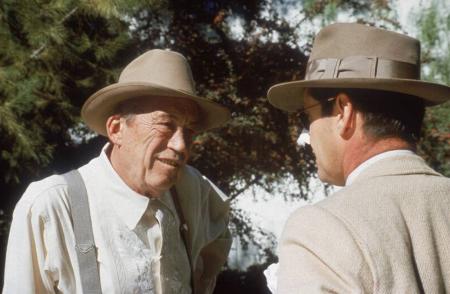
Noah Cross (John Huston) tells J.J. Gittes (Jack Nicholson) what’s what.

“Forget it, Jake. It’s Chinatown.”

Those are the last words, chilling, evocative, cynical, of Roman Polanski and Robert Towne’s Chinatown – that great dark tale of politics, murder and family secrets in ’30s Los Angeles. No matter what you think of Polanski and his arrest and extradition problems, the director’s 1974 private-eye classic “Chinatown” is still a masterpiece of neo-noir. The movie, one of the big commercial-critical hits of its era, was a career peak for director Polanski, the matchless screenwriter Towne and the superb star team of Jack Nicholson, Faye Dunaway and John Huston.

It’s a picture that seems close to perfect of its kind and one of the ’70s films I love best. Gorgeous and terrifying and sometimes funny as hell, “Chinatown” tells a romantic/tragic/murder mystery tale of official crimes and personal depravity raging around the real-life Los Angeles water scandal, with private sin and public swindles steadily stripped bare by J. J. Gittes (one of Nicholson’s signature roles), a cynical, natty, smart-ass shamus, with a nose for corruption and a hot-trigger temper.

Gittes is an anti-Philip Marlowe detective. He’s proud of taking divorce cases (Marlowe disdained them), and he’s not too queasy about selling out. He’s also much less sexually reticent than Raymond Chandler’s knight of the mean streets, though he cracks just as wise. Fundamentally, Gittes is a survivor.

He likes his nose, he likes breathing through it. But he finds it increasingly hard to keep it unbloodied and out of rich L. A. people’s business as he keeps digging deeper into what starts as a simple infidelity investigation and then broadens to include a vast conspiracy, intertwined with the deadly history of immaculately evil nabob Noah Cross (played by the devilishly genial Huston) and his desperate, wounded daughter Evelyn Mulwray (Dunaway). It’s a nasty web that includes Polanski himself as the cocky little fedora-topped thug (with a Polish accent) who calls Gittes “Kitty-Kat” and slices up his proboscis for a memento mori.

“Chinatown”– with splendid Richard Sylbert production design, gleaming John Alonso cinematography and a haunting Jerry Goldsmith score – wafts us back to LA’s downtown and Silverlake in the ’30s: the era of the Depression. It was also the heyday, of course, of the hard-boiled, high-style thrillers of Dashiell Hammett and Chandler, fiction that Towne, at his absolute best, pastiches to a fine turn and that Polanski, at his best makes shatteringly alive.

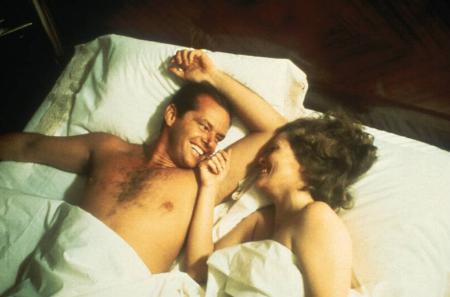
Gittes puts in some extra time with client Evelyn Mulwray (Faye Dunaway).

The movie has great dialogue, great acting, great direction and an unmatchable blend of wised-up savvy and yearning romanticism. The bleak ending (Polanski’s idea) cuts you to the heart. Temper-tantrum virtuoso Nicholson has some of his best blowups.

And the supporting cast members – Polanski, Burt Young, Diane Ladd, Perry Lopez, Dick Bakalyan, Roy Jenson, James Hong, Bruce Glover, Joe Mantell and John Hillerman (at his smarmiest) – are wonderful too.

In fact, this is a movie that – not counting Gittes’ slit nose – has no perceptible flaws: a classic you can’t and won’t forget. “Chinatown” reminds you of how Nicholson almost single-handedly, shifted the ground of the movies, and changed our conception of what a movie star was. It reminds you of how vulnerable Dunaway could be, of what a sly old movie fox Huston was.

It reminds you how great films can be when they have really wonderful, beautifully crafted, verbally agile scripts (like Towne’s here). And it reminds you that Polanski is a filmmaker who’s maybe faced such terror, darkness and despair in his own life – from the Holocaust to personal tragedy – that he can, brilliantly and memorably, turn fear into art.

‘The Raid’ a disappointing swoop into neo-noir territory

The Raid/2011/Sony Pictures Classics/100 min.

The central character of “The Raid” (Iko Uwais) aims to complete a SWAT team’s covert mission to remove a crime lord from a dilapidated apartment building in Jakarta. This is particularly challenging once their cover is blown, their leader (Joe Taslim) falls and they are trapped inside.

Fans of martial-arts action flicks might find this (and the Mike Shinoda/Joseph Trapanese score) good fun. The choreography of the fight scenes was top-notch. But I’d been hoping that a bit of intrigue and noir storytelling would be layered into the mix; instead “The Raid” was ridiculously, relentlessly, stupefyingly violent. Yawn.

Perhaps Welsh-born writer/director Gareth Evans (who teamed with Uwais on 2009’s “Merantau”) sums it up best: “I’m the guy that makes stunt performers take multiple kicks to the head for the pleasure of what I hope is a captivated audience. … I deal in blood and mayhem.”

“The Raid” opened in New York and LA on March 23.