The Noir File: Hitchcock, Grant, Fontaine fill us with ‘Suspicion’

By Michael Wilmington and Film Noir Blonde

A guide to classic film noir and neo-noir on cable TV. All the movies are from the current schedule of Turner Classic Movies (TCM), which broadcasts them uncut and uninterrupted. The times are Eastern Standard and (Pacific Standard).

PICK OF THE WEEK

Suspicion” (1941, Alfred Hitchcock). Thursday, Sept. 27, 8 a.m. (5 a.m.):
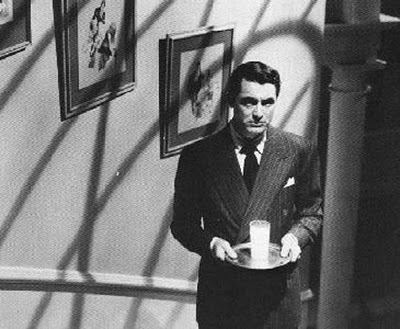
Cary Grant bringing the glass of milk is an unforgettable moment.

In Alfred Hitchcock’s glossy, shivery 1941 domestic thriller, British provincial wallflower Joan Fontaine marries the gorgeous but irresponsible Cary Grant and begins to suspect, more and more strongly, that he intends to murder her. Hitchcock builds the suspicion, and the suspense, beautifully.

And the lovely might-be victim Fontaine, whom Hitch had made a first-rank star the year before by casting her as the shy, nameless heroine of his Best Picture Oscar winner “Rebecca,” this time won the Best Actress Oscar herself.

“Suspicion” is one of Hitchcock’s most polished and well-executed thrillers, and there are scenes and shots in the film – such as the sinister, glowing glass of milk Grant carries upstairs to his sick wife – that have become famous. But the movie has one big flaw, dictated by the culture of the time and by the Production Code. You’ll know what it is by the end of the film.

The classy British émigré cast includes Sir Cedric Hardwicke, Dame May Whitty, Nigel Bruce and Leo G. Carroll. The screenwriting team – Samson Raphaelson, Joan Harrison and Hitchcock’s wife, Alma Reville – adapted “Suspicion” from Francis Iles’ classic suspense novel “Before the Fact,” and they should have kept Iles’ shocking original ending.
Friday, Sept. 21

5:15 p.m. (2:15 p.m.): “Lolita” (1962, Stanley Kubrick).

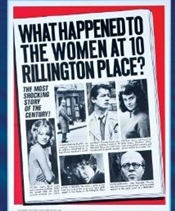
4 a.m. (1 a.m.): “10 Rillington Place” (1971, Richard Fleischer). Noir expert Richard Fleischer specialized in true-crime movies (“Compulsion,” “The Boston Strangler”) and this is one of his best: a chilling realistic thriller modeled on the famous case of British serial killer Dr. John Christie (brilliantly underplayed by Richard Attenborough), and the hapless man he frames for one of his murders, (a brilliant job by John Hurt). Also with Judy Geeson, Andre Morell and Bernard Lee.

Saturday, Sept. 22

8 p.m. (5 p.m.): “Gilda” (1946, Charles Vidor).

Tuesday, Sept. 25

1 p.m. (10 a.m.): “Nightfall” (1956, Jacques Tourneur).
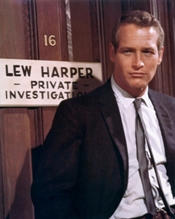
Paul Newman as Lew Harper

Wednesday, Sept. 26

12 a.m. (9 p.m.): “Harper” (1966, Jack Smight). Paul Newman, at his most attractively laid-back, plays one of detective literature’s most celebrated private eyes, Ross MacDonald’s Lew Archer, in this brainy thriller based on MacDonald’s novel “The Moving Target.”

One catch: Archer has been renamed “Lew Harper,” so Newman could have (he hoped) another hit movie with an “H” title, like “The Hustler” and “Hud.” He got one. The stellar cast includes Lauren Bacall, Janet Leigh, Julie Harris, Shelley Winters, Robert Wagner, Arthur Hill, Robert Webber and Strother Martin. Scripted by William Goldman.

Thurs., Sept. 27

9:45 a.m. (6:45 a.m.): “Murder, My Sweet” (1944, Edward Dmytryk).

On the radar: At the V&A, ‘On Hollywood,’ window popping

Three exhibitions, one in London and two in New York, look well worth a visit.
#

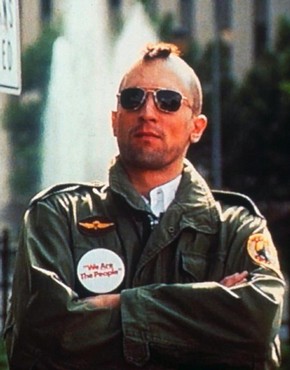
Robert De Niro as Travis Bickle

Hollywood Costume,” which explores the central role costume design plays in cinema storytelling, is the autumn exhibition at London’s V&A Museum. With more than 100 of the most iconic movie costumes from 1912-2012, the show is an opportunity to see the clothes worn by characters such as Dorothy Gale, Indiana Jones, Scarlett O’Hara, Jack Sparrow, Holly Golightly and Darth Vader.
#
Most of these clothes have never been publicly displayed and have never been seen beyond the studio archives, says the museum. The exhibition opens Oct. 20 and is scheduled to close on Jan. 27, 2013.
#
And running at the V&A through Jan. 6, 2013, is another bit of sartorial fun: “Ballgowns: British Glamour Since 1950.”
#

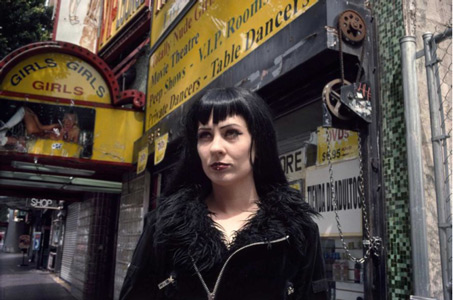
“On Hollywood” was shot in Kodachrome 64 color film.

On Hollywood,” an exhibition of color photographs by Lise Sarfati, continues through Oct. 13 at the Yossi Milo Gallery in New York, following a show earlier this year at the Rose Gallery in Los Angeles. Sarfati, who lives and works in Paris and Los Angeles, will have a solo show at Bibliothèque Nationale de France in 2014.
#

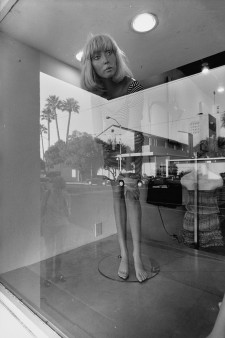
“Tucson” 2011 by Lee Friedlander

For “On Hollywood,” Sarfati shot women on street corners, sidewalks, parking lots and corner stores, using Kodachrome 64 color film, which was used for Hollywood movies of the 1940s. Says the gallery: “The Technicolor quality of the film stock presents the unglamorous subjects and locations as a heightened reality tinged with old Hollywood artifice.”#

Mannequin – images by photographer Lee Friedlander – will open Oct. 26 at the Pace/MacGill Gallery in New York, following an earlier show at San Francisco’s Fraenkel Gallery. Friedlander shot images of store windows in U.S. cities over the last several years. You can see a selection of New York shots here. The work will be displayed through Dec. 22. Born in 1934, Friedlander has sustained an influential body of work over five decades.
#
Robert de Niro image from “Taxi Driver,” 1976. Costume designed by Ruth Morley. Columbia/The Kobal Collection
#

The Noir File: Non-stop tension from pulp-fiction king Woolrich

By Mike Wilmington and Film Noir Blonde

This is a guide to classic film noir on cable TV. All the movies are from the current schedule of Turner Classic Movies (TCM), which broadcasts them uncut and uninterrupted. The times are Eastern Standard and (Pacific Standard).

Pick of the Week

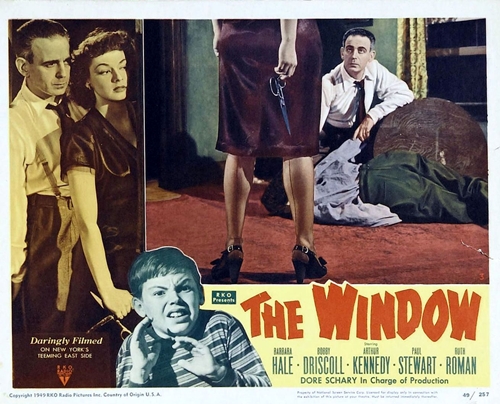
The Window” (1949, Ted Tetzlaff). Monday, Sept. 17, 2012, 1:45 a.m. (10:45 p.m.)

On a sweltering New York City night, a 9-year-old named Tommy (Bobby Driscoll) witnesses a murder committed by neighbors (Paul Stewart and Ruth Roman).

Unfortunately Tommy is known for crying wolf and his parents (Barbara Hale and Arthur Kennedy) don’t believe him. As he keeps trying to tell his story, the killers become more and more aware of the threat he poses and more determined to shut him up.

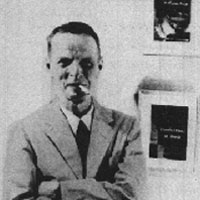
Of all the great noir writers – Hammett, Chandler, Cain, Goodis, Thompson – no one could generate sheer screaming suspense like pulp-fiction king Cornell Woolrich. And this picture, along with Hitchcock’s 1954 “Rear Window,” are the most tension-packed, unnerving movies made from Woolrich’s stories.

Cornell Woolrich (1903-1968)

“The Window,” shot largely on location, has grittily evocative street scenery and the cast is letter-perfect. (Driscoll won a special Juvenile Oscar for his performance.) The director was Ted Tetzlaff, an ace cinematographer who shot Hitchcock’s “Notorious,” and he does a wonderful job here.

This movie seethes with atmosphere and character, crackles with fear and dread. There are some classic film noirs that are underrated, and – perhaps because the protagonist here is, atypically, a child – this is one of them.

Saturday, Sept. 15

10 p.m. (7 p.m.) “Strangers on a Train” (1951, Alfred Hitchcock)

12 a.m. (9 p.m.) “Dial M for Murder” (1954, Alfred Hitchcock)

2 a.m. (11 p.m.) “Niagara” (1953, Henry Hathaway)

3:45 a.m. (12:45 a.m.): “The Postman Always Rings Twice” (1946, Tay Garnett). See Noir File, 6/29/12

Sunday, Sept. 16

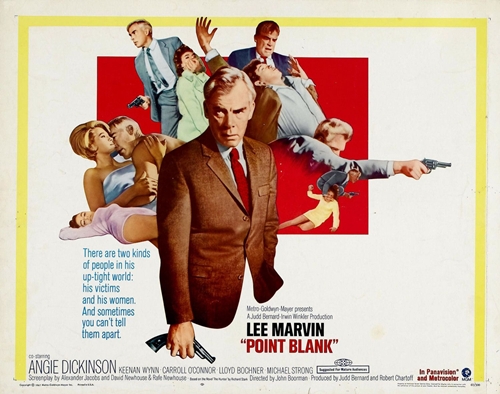
3:30 p.m. (12:30 p.m.): “Point Blank” (1967, John Boorman). “Point Blank” is one of the quintessential neo noirs. Lee Marvin is a thief betrayed and left for dead in Alcatraz. When he takes off after his treacherous associates and their bosses (Carroll O’Connor and Lloyd Bochner), with the help of a mysterious guide (Keenan Wynn) and a glamorous pal (Angie Dickinson), it’s a magnetic, terrifying sight.

Based on a novel by “Richard Stark” (aka Donald Westlake), the movie is steeped in its Los Angeles locale: a deadly city of noir that’s also a surprisingly beautiful sunlit-vision of LA circa 1967. With Boorman going all out, this classic movie plays like a grand collaboration among Don Siegel, Alain Resnais, Phil Karlson and Jean-Pierre Melville. As for Lee Marvin, he’s at the top of his game. So is Angie.

Wednesday, Sept. 19

6:15 p.m. (3:15 p.m.): “The Breaking Point” (1950, Michael Curtiz). Based on Hemingway’s “To Have and Have Not,” and starring John Garfield in the Bogie part, this is a more faithful adaptation than the 1944 Howard Hawks picture, but not quite as good a movie. (Then again, some buffs prefer it.) Curtiz gives it speed, atmosphere and a dark overview. The rest of the cast includes Patricia Neal, Phyllis Thaxter and, in the Walter Brennan part, the matchless Juano Hernandez.

Perfect, posh fodder for a Hitchcock mind game

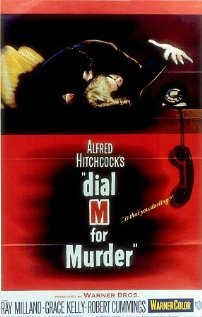
Dial M for Murder/1954/Warner Bros. Pictures/105 min.

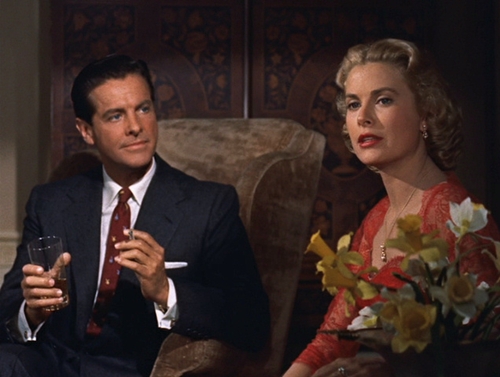
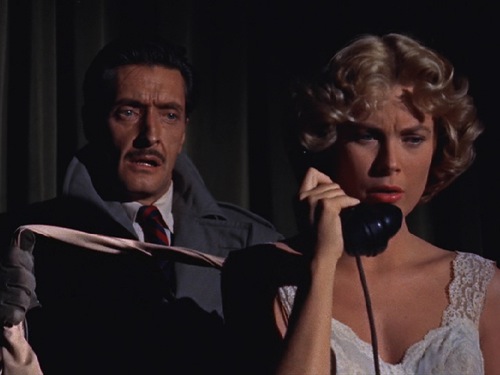
A streetwise femme fatale she’s not. Grace Kelly is too refined, too ladylike, too exquisitely beautiful. But in “Dial M for Murder,” her first movie with Alfred Hitchcock, she proves herself to be a smart and capable heroine in this film that’s nearly as ravishing to look at as she is.

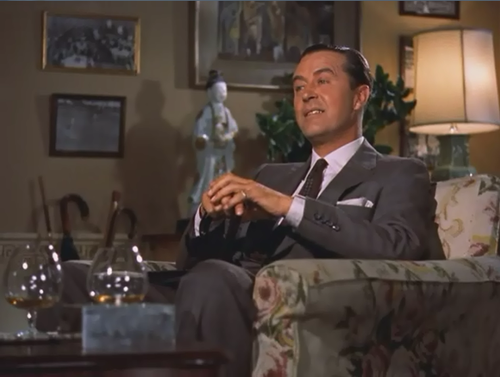
Ray Milland as Tony Wendice brims with confidence and charm.

We first see her character Margot Wendice, in a demure white dress, as she reads the London Times over breakfast with her debonair husband Tony (Ray Milland). Tony’s a former tennis champ who now sells sports equipment. But it’s Margot’s family money that pays for their posh lifestyle and elegant flat in Maida Vale.

Minutes after her breakfast, we see Margot with her lover, a mystery writer named Mark Halliday (Robert Cummings), this time in a bright red dress that signals where her real passion lies. Margot is fretting a bit because she’s received letters from an anonymous blackmailer who knows about her affair and threatens to tell Tony.

Turns out, though, the “blackmailer” is suave old Tony himself. He’s known for quite a while that Margot and Mark are an item and he’s hatched a plan to do away with his wife, get her money and use her lover as his alibi. It’s a very clever plan and Tony has worked out every detail. But as I mentioned Margot is no slouch. She proves quite skilled at surviving and improvising with weapons. A little trick she picked up at boarding school, I expect. Still, Tony sees a chance to achieve his goal using a new ploy.

Mark (Robert Cummings) is the writer with whom Margot (Grace Kelly) begins an affair.

Like most Hitchcock noirs, the story takes place in a world in which manners and titles and accents count for a great deal – in which fate is determined over champagne cocktails and glasses of brandy by a roaring fire. This chi-chi, upper-crust milieu is far removed from the gritty, urban, angst-ridden territory of much of the film noir canon. But a common thread of film noir, regardless of setting, is that its writers and directors were intensely aware of class differences and divisions, of society’s inequalities and injustices.

With a screenplay by Frederick Knott (based on his Broadway and West End hit), “Dial M for Murder” boasts a very civilized, very English, very cozy atmosphere, at least on the surface. Whereas Hitchcock often tended to use novels and short stories as gestalts for his own uniquely original narratives, when he chose to film a play, he left them virtually unaltered. In fact, he considered “Dial M” a minor work, something to do while he recharged his creative batteries.

That said, he shot the movie in 3-D, in vibrant color with extreme camera angles to keep us from getting too claustrophobic (the action takes places almost entirely in the Wendices’ well appointed flat). The lush look, upbeat mood, romantic music by Dimitri Tiomkin and charming characters all belie the darkness at the core of the story.

Milland is magnetic, confident, perfectly composed with just a shimmer of vulnerability. Kelly, the flawless incarnation of ’50s femininity, seems the perfect wife for him. (The supporting cast is splendid as well. Anthony Dawson plays the college acquaintance whom Tony ropes into his scheme. John Williams is urbane as ever as Chief Inspector Hubbard.) But, as sumptuous as these appearances are, they are nevertheless deceiving.

A pawn in the game: Anthony Dawson tries to strangle Margot (Grace Kelly).

“Dial M for Murder” is an excellent example of one of Hitch’s favorite mind games – inviting us to get swept up in this picture-perfect world and then upending our expectations and revealing his (and perhaps our) mistrust of the upper classes, particularly through the use of subversive casting.

For instance, Margot and Mark’s fling is surely one of the most tasteful and thoroughly dull affairs in movie history (despite the red dress). I reckon any woman would take sexy, athletic Tony over sweet but insipid Mark. Of course, Hitchcock knows this. He uses Milland’s humor and appeal to build the audience’s sympathy for the wrong person, to get us to identify with a would-be killer, to subtly underscore the moral ambiguities and deep flaws that make us human.

Hitch liked to play cat and mouse with the audience, to entice us with wit, gloss and visual flair, then slyly expose our delusions and hypocrisies. Or as Francois Truffaut put it: “Hitchcock loves to be misunderstood, because he has based his whole life around misunderstandings.”

‘Dial M for Murder’ quick hit

Dial M for Murder/1954/Warner Bros. Pictures/105 min.

Alfred Hitchcock’s “Dial M for Murder” boasts a very civilized, very English, very cozy atmosphere, at least on the surface. But under the elegant façade, a spurned husband (Ray Milland) crafts an intricate plan to murder his rich wife (Grace Kelly) and use her lover (Robert Cummings) as his alibi. Based on a play by Frederick Knott, this gorgeous-looking film is an excellent example of a classic Hitchcockian trope – subversive casting.

Seeking ‘recline’ inspiration from film noir’s injured characters

I recently experienced a little setback: I fractured my toe (one in from the pinkie on the right foot). I didn’t teeter as I tried on Loubou’s or tumble on a treacherous chunk of pavement. Nor was I hang-gliding or training for a 5k run. Please. Have we met? No, in typical femme fatale fashion, à la Mae West, I tripped over a pile of men.

Sporting hideous footwear.

Of course I don’t mind being ordered by doctors to rest and relax. In fact, I relish the opportunity. And if ever there were a time to be waited on hand and foot, bark out orders and be completely catered to, honey this is it! I’m also grateful that the toe (underrated little body part that it is) wasn’t broken or more severely damaged – it should heal nicely as long as I’m patient.

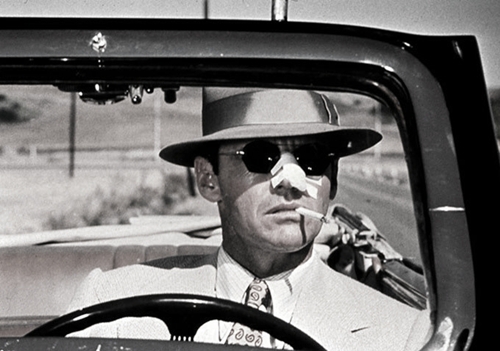
But the thing I really miss is going to yoga. Feeling a little blue and kicking myself (pun intended) for not being more careful, I called my friend Anne who pointed out that what’s bad in life is good on the page. She suggested that as I recuperate I commiserate with noir characters – like nostril-impaired Jake Gittes (Jack Nicholson) in “Chinatown” – who sustain and recover from injuries. (You can always trust a Gemini to come up with a creative approach.)

As I lounge on my sofa, I also find myself pondering existential questions, such as: Can I now fulfill my long-held fantasy of going to yoga and resting in child’s pose for the entire class? Will wine and ice cream provide the same benefits as shavasana? What about cupcakes? Does Susie Cakes deliver? Is it possible to dance while using crutches? How long can a girl go without shaving her legs?

Aah, more than my peabrain can process right now. So, with many thanks to Anne, here are my favorite mending moments of film noir.

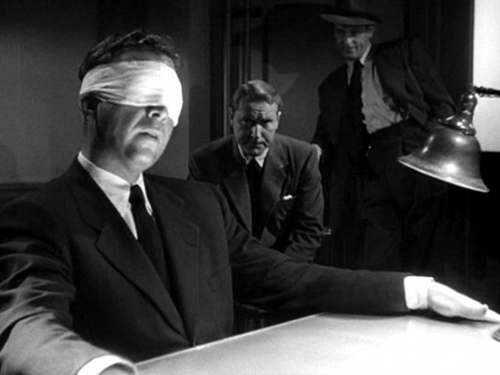
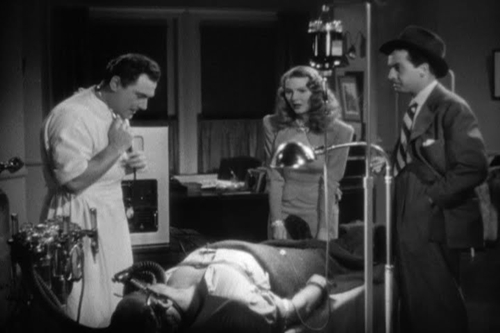
Dick Powell as Philip Marlowe is temporarily blinded in “Murder, My Sweet.”


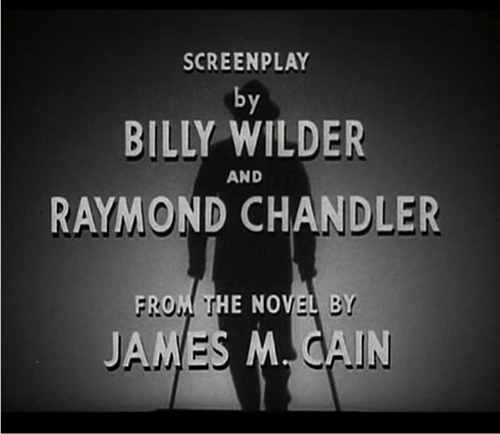
Phony, schmony. The dude still hobbled around on crutches: Fred MacMurray in “Double Indemnity.”


Decoy”’s Frank Armstrong recovers from the ultimate “accident.” Cold-hearted Jean Gillie sees a way to get her hands on a wad of cash by bringing her criminal boyfriend back to life following his visit to the gas chamber. Absurd? Absolutely. Still, it’s all in a day’s work for film noir’s toughest femme fatale.


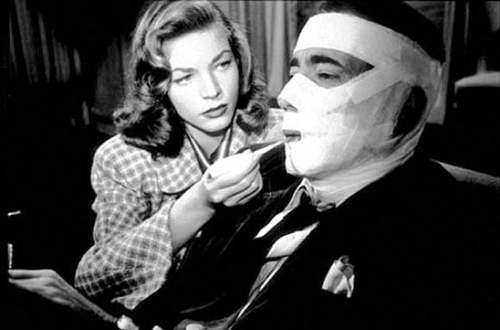
“Dark Passage”: Unjustly sentenced prison escapee Humphrey Bogart undergoes plastic surgery to alter his looks. He co-stars with real-life wife Lauren Bacall.


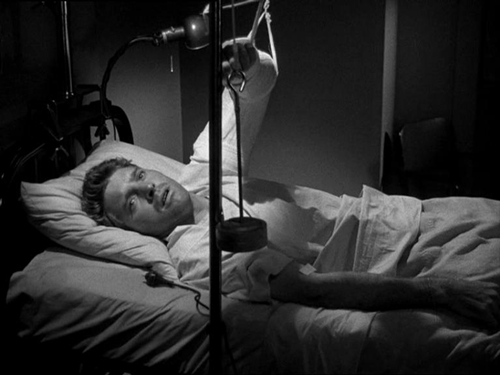
Burt Lancaster sustains major injuries after a heist gets fouled up in “Criss Cross.” (In “The Killers” Lancaster plays a boxer whose career folded after hurting his hand.)


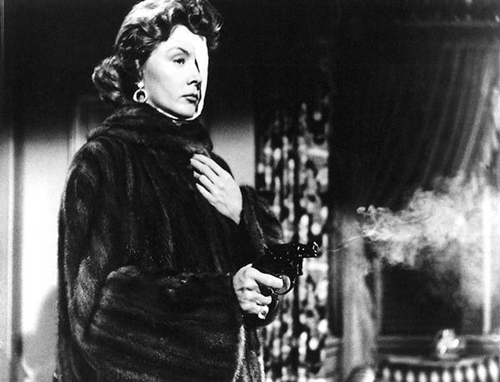
The Big Heat” contains one of film noir’s most famous violent scenes. Lee Marvin throws a pot of boiling coffee at Gloria Grahame and disfigures her face. She gets even in the end.


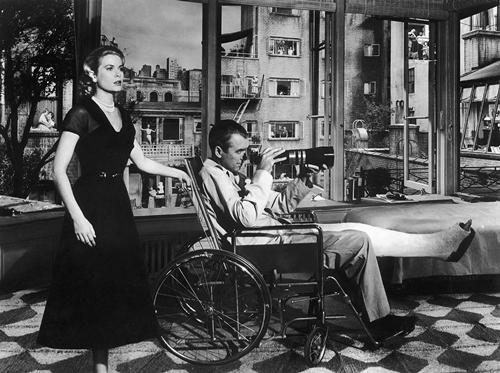
Jimmy Stewart is a photojournalist who watches his neighbors to pass the time (with gorgeous Grace Kelly for company) while his leg heals in “Rear Window.”


Jack Nicholson wears his bandage for most of “Chinatown.” Director Roman Polanski plays the menacing punk who cuts Nicholson’s nose.


“Misery”’s Kathy Bates is the nurse-from-hell to wounded writer James Caan.


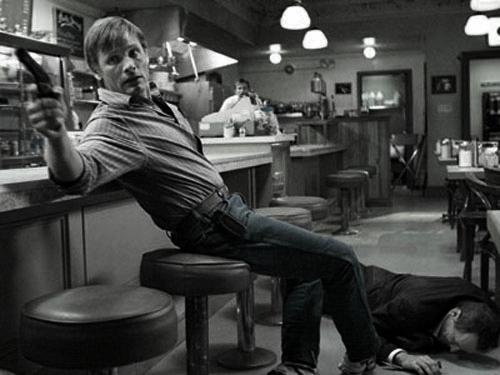
Viggo Mortensen gets stabbed in his foot after fending off two thugs in “A History of Violence.”

‘Killer Joe’ borders on bipolar, despite a riveting performance from Matthew McConaughey

Killer Joe/2011/LD Entertainment/103 min.

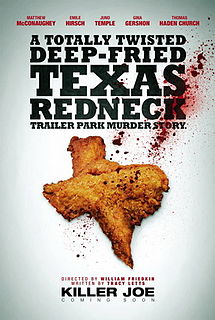
The words “TEXAS REDNECK” jump off the poster for “Killer Joe,” William Friedkin’s neo noir/Southern Gothic black comedy written by playwright Tracy Letts and starring Matthew McConaughey as a hitman who’s also a cop.

The rednecks are the Smiths, a Southern family for whom sleaze and greed have long replaced Sunday grace. In the opening scene, Sharla (Gina Gershon) gets out of bed and answers the door; her stepson Chris (Emile Hirsch) is outside, rain drenched, having been kicked out of his place by his girlfriend. Does Sharla bother to throw on clothes before opening the door? Hell, no. This ain’t no Ritz Hotel after all.

Turns out, Chris is a drug dealer with a debt and needs cash fast. His solution is to murder his mother (mostly unseen in the movie) and cash in on her insurance policy. No one’s really that fond of the mother so the rest of the family – stepmom Sharla, Chris’ remarried father Ansel (Thomas Haden Church) and his sister Dottie (Juno Temple) – are all on board with his plan. They’re not the sharpest tools in the shed, but they know a job like this has to be done right so they hire a pro named Killer Joe (McConaughey). Need I say, things don’t go to plan?

On the plus side, “Killer Joe” is well shot, well directed and well acted – McConaughey is especially magnetic, outlining the character’s chilling darkness and letting us fill in the blanks. On the minus side, though, “Killer Joe” never feels like much of a noir or much of a comedy. The mood shifts border on the bipolar, culminating in a resolution that may have worked on stage but seems laughable (in a bad way) on film, not to mention ridiculously violent. By that time, though, we are nothing if not primed for blood to be shed.

This marks the second collaboration for Friedkin and Letts – their first was 2006’s “Bug” based on Letts’ play. The Chicago-based playwright’s other work includes the Pulitzer-prize winning “August: Osage County” (the movie version is set to start filming in September) as well as “Superior Donuts” and “Three Sisters.”

Given the talent that came together for “Killer Joe,” was I wrong to hope for meatier fare? Though tempting on the outside, this ain’t the blood-red burger I wanted on my plate.

“Killer Joe” opens today in LA.

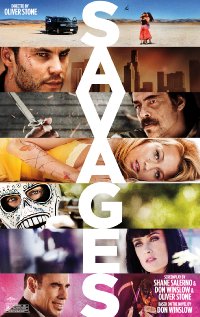
Entertaining ‘Savages’ wears blood and guts on its sleeve

Savages/2012/Universal/130 min.

Without giving too much away, Blake Lively’s character in “Savages,” Oliver Stone’s latest neo noir, is forced to, um, live rough for the sake of a business deal gone brutal. Still, this doesn’t stop the quintessential, sun-kissed beach blonde named O (short for Ophelia) from asking her keepers: “Do you think I could get a salad once in a while instead of pizza?”

O, with her lean limbs, long hair and dazzling smile, is a gorgeous if slightly vacuous pawn in this story, which she also narrates. The movie’s biggest strength is that Lively and the rest of the cast so effortlessly inhabit their characters.

The power brokers are her luscious boyfriends Ben (Aaron Johnson) and Chon (Taylor Kitsch); she’s involved with both of them and, even if she’s not the sharpest tool in the shed, she deserves a little credit for that nifty set-up. Ben’s a Buddhist who studied business and botany; Chon’s a baddist, as O puts it, and a former Navy SEAL. Together, they’ve built a thriving marijuana biz that catches the eye of a major Mexican cartel run by Elena (Salma Hayek) and Lado (Benicio Del Toro).

Lado is a badass assassin type with an abundance of fluffy hair and Elena puts her steely focus steadfastly on the bottom line. For Lado, that means bringing Ben and Chon on Elena’s board of directors, as it were. Ben and Chon don’t take kindly to hostile takeovers, however, and they aren’t afraid to fight back. (Not sure who runs the cartel’s IT department but it’s eminently capable of providing video footage of hideously violent acts with nary a glitch or file not found.) John Travolta plays Dennis, the corrupt cop.

Stone has lined up the perfect players (Hayek, Del Toro and Travolta have the meatiest parts) for an entertaining, extremely violent, sometimes-funny tale, based on Don Winslow’s novel, of savage “execs” and what they’ll do to keep making enormous gobs of illegal cash. (Stone co-wrote the script with Winslow and Shane Salerno.) Diced and sliced with kinetic editing, and drenched in the piercing bright light of Southern California, the story unspools with Stone’s trademark acuity and intensity.

But there are essentially two endings and the final “real” one strikes me as a mistake. I wish Stone, given his typical hard edge, had not felt the need to close on a sunny note when the bleaker, darker ending would have better fit this bold neo noir that throughout wears blood and guts on its sleeve.

“Savages” opens nationwide today.

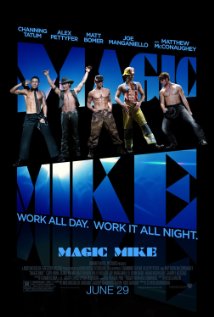
‘Magic Mike’ has bump and grind of truth, some of the time

Magic Mike/2012/Nick Wechsler Productions/110 min.

By Michael Wilmington

The art and commerce of striptease – at least as we see it in director Steven Soderbergh and producer/star Channing Tatum’s “Magic Mike” – is entertainment in a very elemental (let’s not say stripped-down) form. The performer takes off her/his clothes and dances suggestively. Audience members, if they choose, holler rude, lewd lines, drink themselves into a stupor and sometimes shower the stripper with bills.

Technique is helpful, but not as crucial as looks or stage presence – both of which Tatum must have had in his brief career, in his teens, as a male exotic dancer. The dancing doesn’t have to be particularly good, but it’s best when the dancer has a sense of humor or drama. (I guess Tatum must have had those too.)

The well-upholstered Tatum, who plays Magic Mike, star dancer dude at the raunchy Tampa club Xquisite, is also one of the film’s producers. (“Magic Mike” must be one of the few movies where a producer has to take off his clothes and get money jammed into his thong as part of his duties.) His producing partner Reid Carolin wrote the script (I assume based largely on Tatum’s memories) and plays the part of Paul. The plot Tatum and Carolin have come up with loosely resembles “All About Eve” crossed with “Boogie Nights,” “Showgirls” and Christina Aguilera’s “Burlesque” – with male strippers, mostly without bitchery.

Here’s what happens. Tatum as Magic Mike, ab-happy king of the strip hill at Xquisite, befriends college dropout Adam aka “The Kid” (Alex Pettyfer) on a construction job, introduces him to Xquisite head honcho Dallas (Matthew McConaughey), and gets him a job at the club. The Kid’s fresh looks and what-am-I-doing-here? attitude make him an immediate sensation. Meanwhile, Magic Mike, who wants to go legit with a custom-made furniture business, also gets a yen for Adam’s sister, sensible Brooke (Cody Horn).

The Kid’s star rises. Things get darker. There’s a lot of sex and nudity, including an orgy with a pig wandering around. (You suspect something like this once happened somewhere.) Dallas wants to take the act to Miami. The club deejay, good-natured and chubby Tobias (Gabriel Iglesias), peddles Ecstasy on the side. Adam loses a lot of drugs and dough. Hey, stripping isn’t all “woman, money and good times,” as one character puts it. Some mornings you wake up with a pig staring you in the face.

“Magic Mike” struck me as realistic in its depiction of the whole club milieu (not that I’ve done any research), but as somewhat phony in its story – though the dialogue is periodically sharp and the acting is much better than usual for this kind of show. (Remember “Showgirls”?)

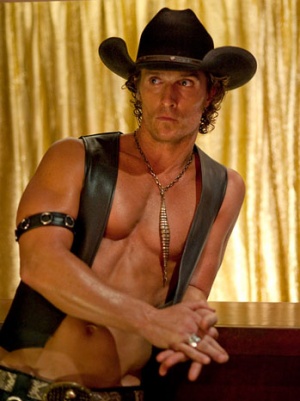
Matthew McConaughey gives depth to the part of Dallas.

There’s one knockout performance, by McConaughey as the affable, energetic and utterly shameless club czar and sometime stripper. McConaughey plays it strictly for sleaze and laughs, but he also suggests a real person: a sleazy, funny one. If the entire movie were as entertaining as McConaughey – or a bit darker than Tatum, Carolin and Soderbergh seem to want to make it – it would have been better.

Tatum, as mentioned, has the looks and presence for Mike, but not quite the magic. He does a fairly good job, and his onstage backflips are awesome, but I thought he spent too much time seducing the camera, James Deaning it up and getting us to like him, and not enough digging into the guy and making him real. It’s a very self-conscious “good” performance.

Pettyfer does an even more narcissistic job, and I’m not sure the fact that The Kid is supposed to be narcissistic and irresponsible is much of an excuse. Sister Brooke is a typical decent-onlooker part, which she does OK. People who like the dancing won’t care all that much about the acting – and that’s probably a good part of what made the movie such an opening-weekend hit.

So why did a sometimes brilliant and unpigeonholeable filmmaker like Steven Soderbergh want to make this movie? Well, sex, if not lies and videotape, has usually worked for him, and it’s always good news when a gifted moviemaker – especially one like Soderbergh, who really takes chances – gets a financial success. Obviously, he likes to work, likes the whole job of making movies. (He also photographed and edited this one.) He likes working with good-looking actors, and “Magic Mike” allows him to twist around sex roles for men the way “Haywire” shuffled them around for a woman (Gina Carano). Maybe he liked the music. And maybe he secretly harbored the desire to do a pig-at-the-orgy scene.

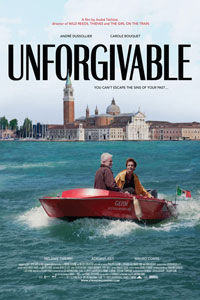
Noirish ‘Unforgivable’ is sleek, suspenseful, contemplative

Unforgivable/2011/Strand Releasing/112 min.

There’s a moment early on in “Unforgivable” when André Dussollier ’s character, a best-selling crime writer named Francis, suggests to a woman he just met (Judith, played by Carole Bouquet) that they move in together. Exasperated, she rolls her eyes and reminds him that they barely know each other. His response is that “knowing” isn’t a prerequisite to love.

Crazy as it seems, she accepts the offer (ok, it happens to be on an island near Venice) and somehow the decision seems completely plausible in the coolly hypnotic world created by director/co-writer André Téchiné.

He’s in his 60s, she’s in her 50s and, as they attempt to merge their lives, their flaws and frailties surface, not to mention their baggage. Francis’ adult daughter Alice (Mélanie Thierry) has a wild-child streak; while visiting the couple, she takes off, leaving no word as to her whereabouts.

Judith, a former model, now real-estate agent, has had many lovers with whom she has stayed friendly. She is independent, sometimes aloof and doesn’t take Francis and his family drama as seriously as perhaps he would like. Panicked about Alice, Francis taps an old flame of Judith’s (Adriana Asti as gumshoe Anna Maria) to find her. As his frustration about Alice mounts, Francis becomes suspicious and jealous of Judith’s chill charm and knack for attracting attention. So he hires Anna Maria’s son Jérémie (Mauro Conte), just out of jail and in need of cash, to follow her and report back to him her activities.

Technically, “Unforgivable” isn’t a neo noir, but there are noir elements in this sleek, suspenseful, contemplative movie that is particularly well written and well acted. (Based on a novel by Philippe Dijan, Téchiné co-wrote the film with Mehdi Ben Attia.) Arguably, there is almost too much going on – sometimes the supporting players’ strands of the story meander a bit randomly and Alice’s relationship with her father doesn’t quite feel authentic. But Téchiné, one of the most highly regarded French filmmakers of his generation, rewards patient viewing with graceful images and illumination of the niggling difficulties inherent in loving and trusting other people.

“Unforgivable” opens today in New York and LA.