Earthy, sexy and wry, Marie Windsor was born to play fatales

Let’s be fair. Marie Windsor as femme fatale Sherry Peatty in “The Killing” by Stanley Kubrick may seem venal, treacherous and manipulative. And yes she hatches a scheme to feather her nest that’s a bit dangerous. But is it right that she’s punished for being as smart, decisive and daring as the men?

Sherry is married, need I say unhappily, to George (Elisha Cook, Jr.), a nervous, Milquetoast cashier at a racetrack. Through George, she gets wind of a heist taking place at the track by Johnny Clay (Sterling Hayden) and his gang. Sherry tips off her lover Val (Vince Edwards) and comes up with this idea: let George and his friends do the heavy lifting, then she and Val can take off with the stolen cash, about $2 million.
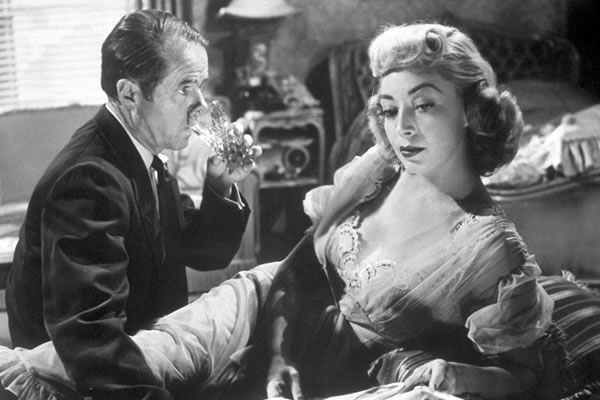
In "The Killing," Marie Windsor as Sherry Peatty is so over her dreary husband George (Elisha Cook, Jr.).

Of course, you could argue that the deeply flawed Sherry is downright immoral. And so are the men. But Sherry only gets as far as she does because of George’s colossal ego. Or perhaps it’s his tremendous capacity for denial. Clearly, she’s been after money all along and she’s tired of George not coming through with it. C’mon, George, did you really think she was into your swagger? (Offscreen, Windsor and Cook were chums. She said of him in a 1992 interview, “Elisha Cook was a darling and full of the devil.”)

Earthy, sexy and wry, Windsor was an actress born to play femmes fatales – with her huge, restless eyes, slightly cynical smile and lean but curvy body. Regardless of how many lines or how many scenes Windsor was in, she had a quality both luminous and tawdry, an expressiveness bordering on vulgarity that meshed perfectly with noir sensibility.
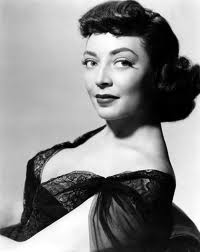
Windsor won an award from Look magazine for her role in "The Killing."

Born and raised in Utah, Windsor was especially popular with directors of Westerns and of noirs (in particular, “Force of Evil,” 1948, by Abraham Polonsky; “The Narrow Margin,” 1952, by Richard Fleischer; and “The Sniper,” 1952, by Edward Dmytryk). Once Windsor had been cast, the director had one less thing to worry about, knowing that she’d nail the character.

Kubrick so wanted Windsor for “The Killing” that he delayed filming until she had wrapped up 1955’s “Swamp Women” by Roger Corman. She was worth the wait; for playing Sherry in “The Killing,” Windsor was rewarded with a 1956 Best Supporting Actress award from Look magazine, a prestigious honor at the time.

Windsor worked steadily in movies and TV through the early 1990s. She was married to Jack Hupp for 46 years, from 1954 until her death in 2000.

Despite Sherry’s, um, blemished character, I prefer her gumption to Johnny’s girlfriend, the desperately needy Fay (Coleen Gray). As Fay tells Johnny: “I’m not very pretty and I’m not smart so please don’t leave me alone any more. I’ll go along with anything you say, Johnny. I always will.”

Ever heard of a spine, lady? Well, Sherry has.

Kubrick creates his defining template with ‘The Killing’

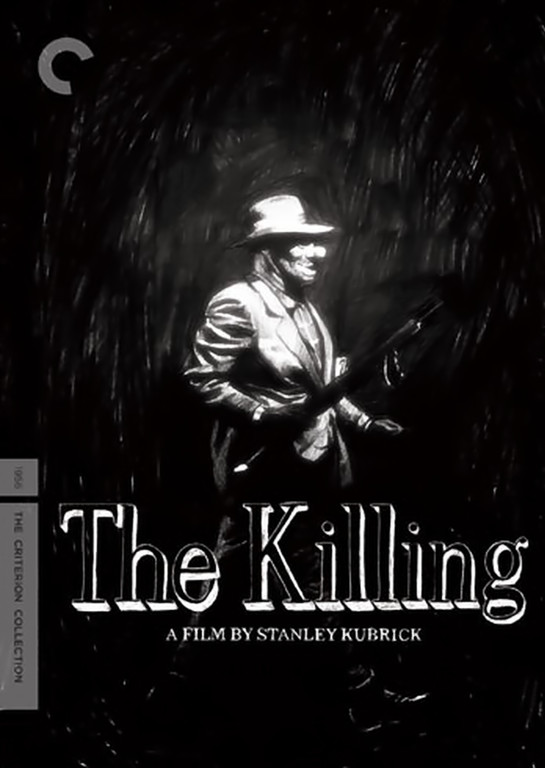
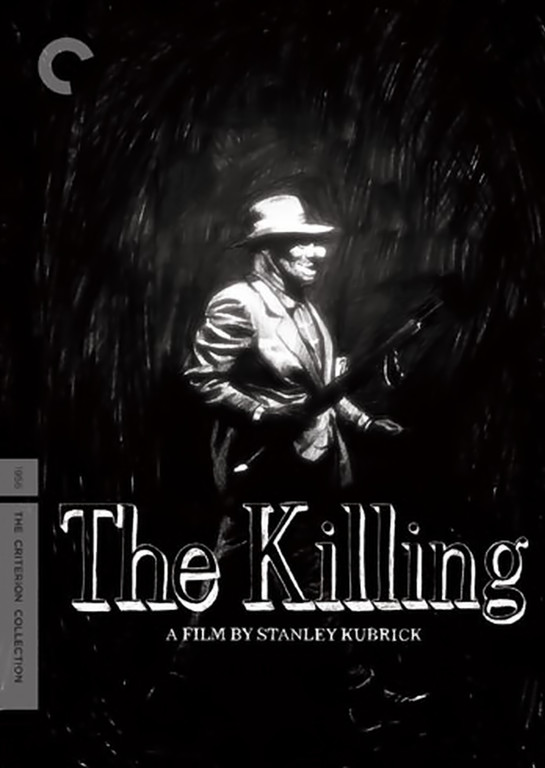
The Killing/1956/United Artists/85 min.

A DVD copy of “The Killing” from Criterion is this month’s Film Noir Blonde reader giveaway. Newly digitally restored, the two-disc set contains many extras, including Kubrick’s 1955 noir, “Killer’s Kiss,” also reviewed below.

By Michael Wilmington

It takes guts and brains to pull the perfect heist. Or to shoot the perfect heist movie.

In 1956, at the age of 28, Stanley Kubrick, a New Yorker who grew up in the Bronx, traveled to Hollywood and San Francisco to direct the movie that would not only make his reputation but would provide the template – the clockwork nightmare with humans caught in the machinery – that defines most of the films he made from then on.

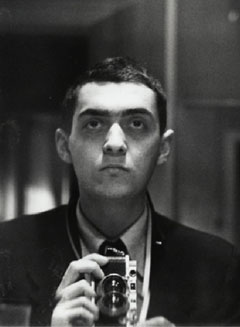
A Kubrick self-portrait, 1950

Those later films include acknowledged masterpieces: “Paths of Glory” (1957), “Dr. Strangelove, or How I Learned to Stop Worrying and Love the Bomb” (1964), “2001: a Space Odyssey” (1968), “A Clockwork Orange” (1971). But none of them is more brilliantly designed or more perfectly executed than that inexpensive film, “The Killing.”

Kubrick and nonpareil pulp novelist Jim Thompson (“The Killer Inside Me”) wrote the script, based on Lionel White’s neatly plotted crime novel “Clean Break.” The great cinematographer Lucien Ballard (“The Rise and Fall of Legs Diamond”) photographed the film.

That cast – a Who’s Who of noir types – includes Sterling Hayden (“The Asphalt Jungle”), Coleen Gray (“Kiss of Death”), Elisha Cook, Jr. (“The Maltese Falcon”), Marie Windsor (“The Narrow Margin”), Ted De Corsia (“The Naked City”), Timothy Carey (“Crime Wave”), James Edwards (“The Phenix City Story”), Joe Sawyer (“Deadline at Dawn”), Vince Edwards (“Murder by Contract”), Jay Adler (“Sweet Smell of Success”) and Jay C. Flippen (“They Live By Night”).

Perhaps inspired by Akira Kurosawa’s 1950 art-house classic “Rashomon,” Kubrick’s movie repeatedly circles back to the fictional Lansdowne race track (actually the Bay Meadows in San Francisco) during a fictional race. It’s a “jumbled jigsaw puzzle,” as one character calls it, that will supposedly end with a $2 million score of Lansdowne’s Saturday gambling receipts.

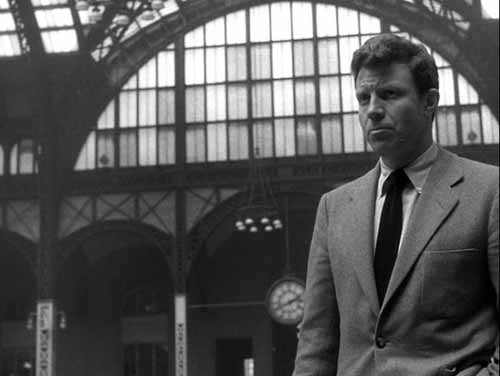
Immaculately orchestrated by a brusque criminal mastermind named Johnny Clay (Hayden), the heist kicks off when crack rifleman Nikki Arcane (Carey), shoots the favorite, Red Lightning, from a parking lot outside the track, at one of the turns. Thanks to Johnny, the robbery has been cleverly designed and planned to the last detail with each of the participants keenly aware of his part, executing it with precision and together getting away with the cash.

But like almost all great movie heists, like the robberies in “Rififi” and “The Asphalt Jungle” and “Le Cercle Rouge,” the one in “The Killing” has to unravel. And it does. The flaw in this system is the dysfunctional marriage between mousy cashier George (Cook, Jr., in his archetypal role) and George’s lazily sexy, unfaithful wife Sherry (Windsor, in hers).

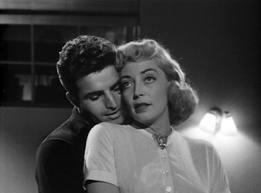
Vince Edwards and Marie Windsor as the lovers.

George, desperate to keep his wayward wife interested, hints at an upcoming windfall. Sherry shares the leak with loverboy Val Cannon (Vince Edwards) – that has to be one of the great adulterous boyfriend movie names – and we can feel doom coming up fast on the outside.

The show clicked. It conquered audiences, especially critics. “The Killing” was immediately hailed by many as a classic of its kind, the very model of a high-style, low-budget thriller. “Kubrick is a giant,” said Orson Welles and it was the young Welles, of “Citizen Kane,” to whom the young Kubrick was most often compared.

If anything, his third feature’s reputation has grown over the years, as has the stature of the type of movie it embodies: the lean, swift, shadowy, cynical, hard-boiled crime genre we call film noir.

Also includes: “Killer’s Kiss”/1955/United Artists/67 min. This was Kubrick’s second feature and his first collaboration with producer James Harris. One of the most gorgeous-looking B movies ever, Kubrick shot in a style that effortlessly mixes the street-scene poetic realism of movies like “Little Fugitive” and “On the Waterfront” with film noir expressionism.

Jamie Smith plays a boxer in "Killer's Kiss."

But Kubrick’s script is subpar, mostly in the dialogue. It creaks, while his cinematography soars. A nearly washed-up boxer (Jamie Smith) falls in love with the woman across the courtyard (Irene Kane, aka Chris Chase), a dance hall girl who’s tyrannized by her obsessively smitten gangster boss (Frank Silvera).

The story sounds trite and that’s how it plays. But Silvera is good and the classy visuals give “Killer’s Kiss” a power that holds you. All Kubrick needed was a writer and a cast, and in “The Killing,” he got them.

Stanley Kubrick photo from Vanity Fair, courtesy of the Look Magazine Photograph Collection/The Library of Congress.

‘The Chanteuse and the Devil’s Muse’ combines music, dance and drama to explore infamous Black Dahlia case

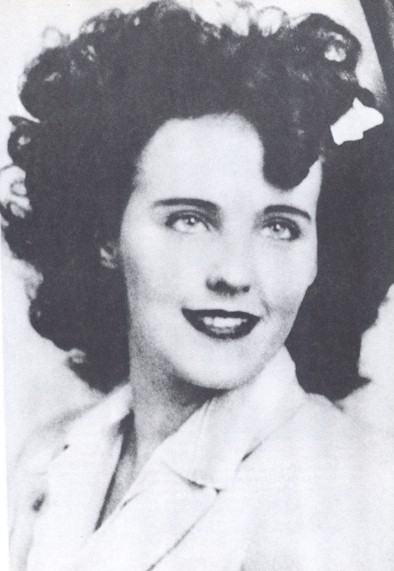
Elizabeth Short

“She’s a very noirish character,” says musician/writer/director David J. Haskins of Elizabeth Short, better known as the Black Dahlia. “She’s a blank screen on which anything can be projected. She was a mysterious, glamorous, romantic figure.”

Indeed, very little is known for sure about the brief life of the Black Dahlia, who in death attained the fame she dreamt of in Hollywood. Some say she was an aspiring actress; other accounts portray her as a confused drifter.

Her brutally mutilated and severed body was found, artfully arranged, in a vacant lot near Crenshaw Boulevard and West 39th Street in Los Angeles on Jan. 15, 1947; she was 22. The mystery of her death remains unsolved, though there have been numerous theories and potential suspects.

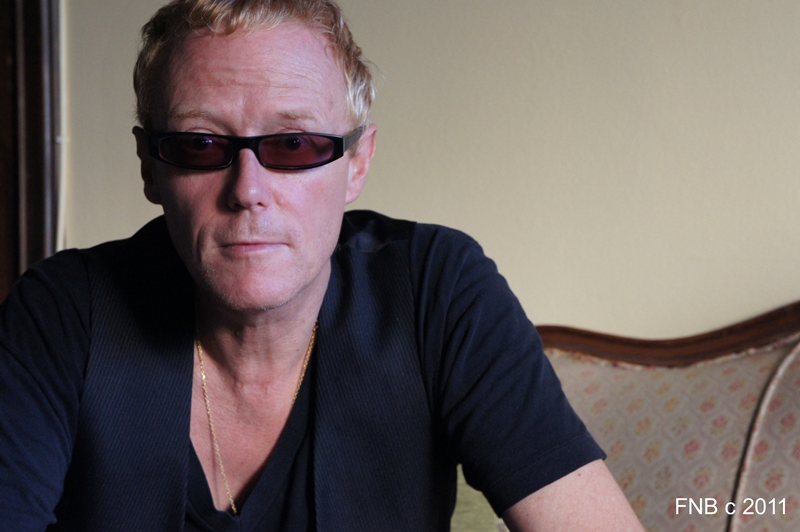
David J. Haskins

Haskins (formerly a member of the band Bauhaus as well as Love and Rockets) puts forward his contention about the murder in his new play, “The Chanteuse and the Devil’s Muse.” It opens Thursday at the Bootleg Theater in Los Angeles.

The production uses three interwoven devices: a dramatization; live music from Haskins, Ego Plum and Ysanne Spevack; and butoh dance by acclaimed performer Vangeline. The songs were originally composed for Ramzi Abed’s 2007 film about the Dahlia called “The Devil’s Muse.”

Madi Comfort's boyfriend lived in this house on Franklin Avenue in Hollywood.

Central to the story is real-life singer Madi Comfort (played by Daniele Watts with Tracey Leigh making special appearances throughout the run). Comfort’s lover was a suspect in the Black Dahlia case. Douglas Dickerman plays cop Frank Jemison, a straight arrow determined to get to the bottom of the slaying.

A longtime fan of German Expressionism and film noir, particularly its “very clipped, smart, sharp dialogue with fast delivery,” Haskins names “The Maltese Falcon” as one of his favorite movies and Orson Welles as a much-admired director.

“The Chanteuse and the Devil’s Muse” runs Thursdays through Saturdays at 7:30 p.m. through Oct. 1 at the Bootleg, 2220 Beverly Blvd., 213-389-3856; tickets are $25, $18 for students and seniors. Run time is just under one hour.

Stay tuned – I’ll be posting video snippets from my recent interview with Haskins.

Free stuff: Win ‘The Killing’ and try Cafecito Organico

The winner of the August reader giveaway has been selected. For September, I am giving away a copy of Criterion’s new DVD release of “The Killing” (1956).

Stanley Kubrick directed this racetrack-robbery noir; pulp novelist Jim Thompson wrote dialogue. The impressive cast includes Sterling Hayden, Coleen Gray, Timothy Carey, Elisha Cook Jr., and Marie Windsor.

Criterion’s new digital restoration features a slew of great special features, namely:

*a new interview with producer James B. Harris

*excerpted interviews with Hayden from the French TV series “Cinéma cinemas”

*a new interview with author Robert Polito about Thompson

*restored high-definition digital transfer of Kubrick’s 1955 noir feature “Killer’s Kiss” and a video appreciation of “Killer’s Kiss” featuring film critic Geoffrey O’Brien

*trailers and a booklet featuring an essay by film historian Haden Guest as well as a reprinted interview with Windsor.

Additionally, I am giving away a T-shirt and 12-ounce bag of Espresso Clandestino from Los Angeles-based Cafecito Organico. Their coffee is sustainably grown and locally roasted, which results in a rich, robust flavor that’s also uncommonly smooth – there’s no trace of bitterness or harsh acidity.

Perfecting summing up how many noir denizens feel first thing in the morning, Cafecito’s motto is Café o Muerte (Coffee or Death).

To enter the September giveaway, just leave a comment on any FNB post from Sept. 1-30. The winner will be randomly selected at the end of the month and announced in early October. Include your email address in your comment so that I can notify you if you win. Your email will not be shared. Good luck!

Noir in a tube: Gloss in Crime, Mystery, Thriller, Genre, Chase

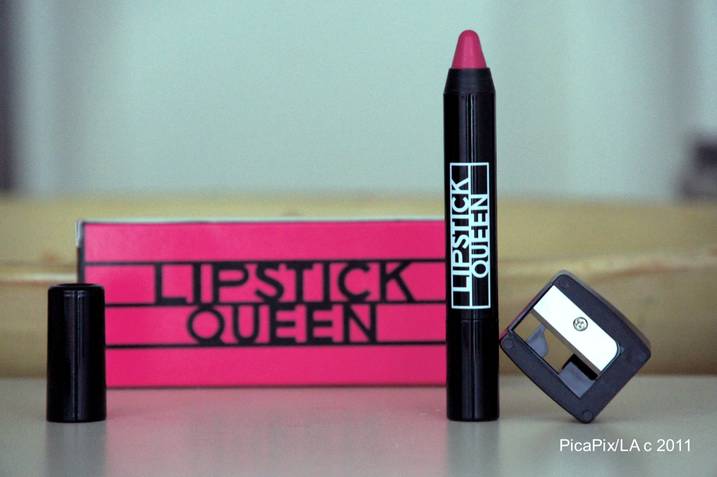
Chinatown in Crime is a hot pink.

On the 1974 movie “Chinatown,” by director Roman Polanski, Faye Dunaway reportedly touched up her makeup between every take. Bee-stung lips are a bit high-maintenance. Too bad she didn’t have a Chinatown Glossy Pencil from Lipstick Queen, $20.

The easy-to-use pencils combine vibrant, subtle color and super-sheer texture. The moisturizing gloss feels light on your lips with zero stickiness. And it comes with a sharpener.

The Chinatown line was inspired by Polanski’s movie as well as the fact that the company’s New York office is near the Canal Street subway. Colors include: Crime, Mystery, Thriller, Genre and Chase.

Poppy King

“I wanted lipsticks that gave me the look of the 1940s,” says founder Poppy King, a Melbourne native who started her first lipstick brand in 1992. She was 18 at the time, having finished high school with “lackluster grades and 101 ways to get out of phys ed.”

My kind of girl.

To buy the product, look under Stores and find one near you – if you order directly from the Lipstick Queen site, you may get frustrated as it seems many items are out of stock.

Product Source: From my own collection; I did not receive product or compensation from Lipstick Queen.

An impeccable noir and an insightful portrait: ‘Love Crime’

Love Crime/2010/UGC/106 min.

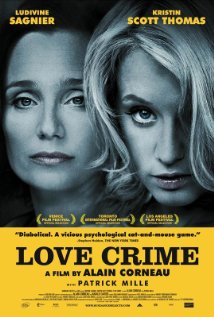
“Love Crime,” a splendidly suspenseful ride, just might be the late Alain Corneau’s best film. A great script, excellent actors, perfect pacing and a terrific final twist make this a must-see movie.

Sleek and savvy Christine (Kristin Scott Thomas), a powerful exec at a multinational company, seems to have a charmed existence – success, style, a glitzy social life and a gorgeous lover, Philippe (Patrick Mille). Reporting to Christine is ambitious, hard-working and eager-to-please Isabelle (Ludivine Sagnier).

Their relationship is subtle and complex – a mix of admiration and affection, rivalry and rude awakenings. Isabelle’s first jolt is when Christine takes credit for Isabelle’s work. (In corporate life, really?) Acting as a pawn in their mind games and manipulation is Philippe, one of their many male colleagues. It’s not long before barbed convo at the water cooler shifts to a malevolent life-and-death battle. (In corporate life, really?) We see that Isabelle’s methodical, meticulous approach applies to every project she tackles, at the workplace and beyond.

Corneau, who died last August at age 67, referred to the film as one of his little Fritz Lang labyrinths. “It can be summed up very simply,” he said. “After you have committed the perfect crime, of which you will definitely be suspected, how can you prove you are innocent by making yourself look guilty?”

“Love Crime” is an impeccable noir with a stark look and restrained palette from director of photography Yves Angelo. It’s also an original, insightful portrait of two characters’ identities. Corneau, aided by co-writer Natalie Carter, explored fresh terrain by focusing on female characters. “I’ve recently discovered how exciting it is to have women in leading roles,” said Corneau. “I thought, without knowing why, that it would be more spectacular if the labyrinthine plot were feminine.”

Spectacular it definitely is; and of course sad that his first foray into the inner lives of women was also his last.

And one more thing. There’s particular attention paid to Isabelle’s blonde hair. She starts out with a mane of slightly messy curls; as she climbs the corporate ladder, she taps her inner Veronica Lake for a peek-a-boo effect that’s smoothly sexy and seductive. Looking good is always key, especially when you’re up to no good.

“Love Crime” opens Sept. 2 in Los Angeles and New York.

Honey, your September horoscope is here …

Yvonne De Carlo

Evan Rachel Wood

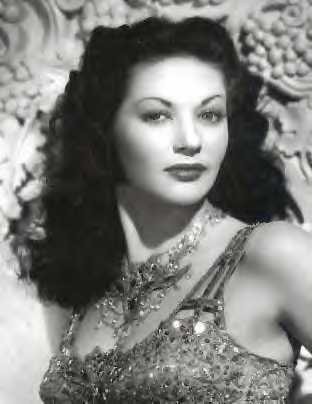
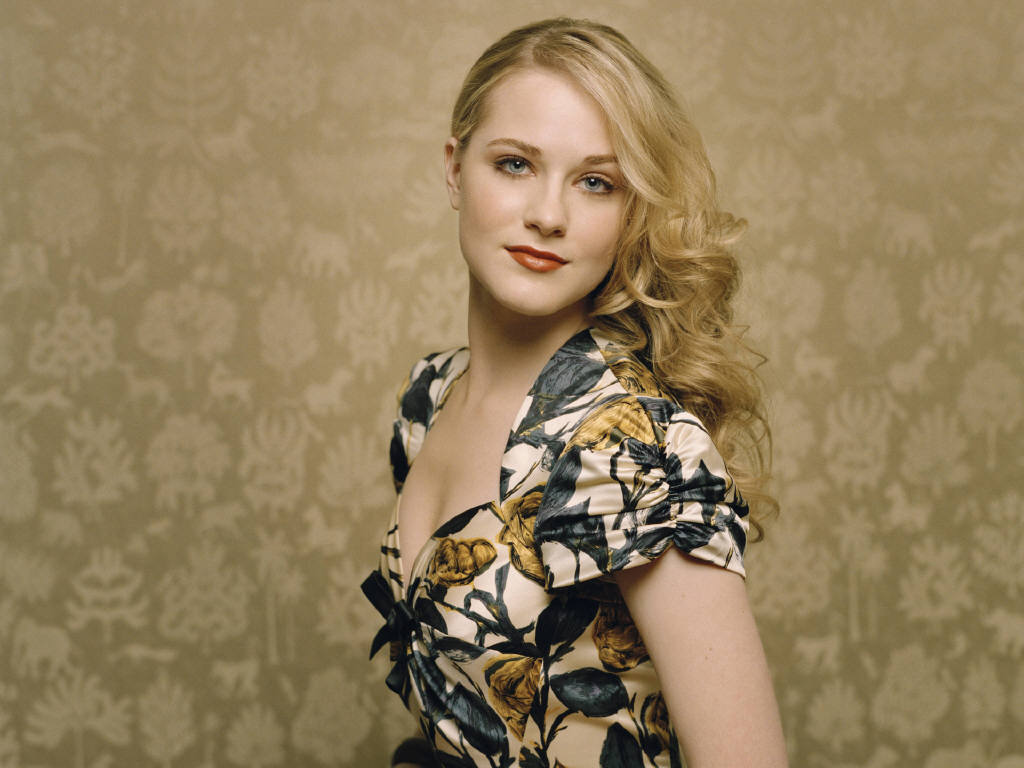
Fate reigns supreme in film noir, but that doesn’t mean we don’t love us some zodiac fun. Hope your September is full of intriguing possibilities and sublime pleasures. And happy birthday, Virgo and Libra! A special shout-out and remembrances to alluring Virgos Yvonne De Carlo (Sept. 1), Salma Hayek (Sept. 2), Evan Rachel Wood (Sept. 7), Brian De Palma (Sept. 11), Tommy Lee Jones and Oliver Stone (both Sept. 15), Lauren Bacall (Sept. 16) and Sophia Loren (Sept. 20) and exquisitely talented Libras F. Scott Fitzgerald (Sept. 24), William Faulkner, Michael Douglas and Catherine Zeta-Jones (all Sept. 25), Gwyneth Paltrow (Sept. 27), Naomi Watts (Sept. 28) and Lizabeth Scott (Sept. 29).

Virgo (August 24-September 23): With a birthday nigh (or just celebrated) you may be pondering the possibility of a little shot of Botox that no one but you and your dermo need to know about. But, for the price of that needle, you could buy a lot of massage time and yoga classes, which offer benefits aplenty. And you still look great. Remember what Virgo icon Sophia Loren said: “Sex appeal is 50 percent what you’ve got and 50 percent what people think you’ve got.” At work, your precision pays off. At play, romance comes to the fore. Enjoy!

Libra (September 24-October 23): You will feel especially powerful this month as you easily connect and hit it off with nearly everyone you encounter. Celebrate your magnetism and relish your independence. A rivalry finally subsides and a friendship follows. At work, remember to provide a pat on the back to a colleague; it will be appreciated. Men are like putty in your hands. Well, what else is new? [Read more…]

On the radar: Books, a blogathon and a bash; Billy Wilder, Bono and Bogart

Must-read material: The Fatal Gift of Beauty: The Trials of Amanda Knox by Nina Burleigh. Knox and Raffaele Sollecito were convicted of murdering Meredith Kercher, a British student who died on Nov. 1, 2007 in Perugia, Italy. They are appealing their convictions. As Burleigh told Elle magazine: “She was investigated, arrested and convicted as part of a massive multicultural misunderstanding, abetted by her own quirky personality. … Your identity as a young, attractive woman does not belong to you.”

Diana Vreeland

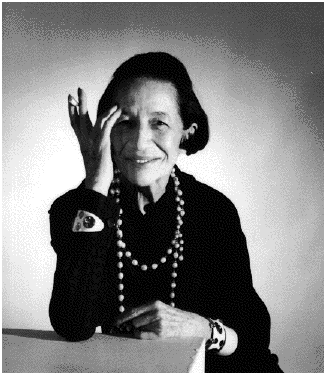
Diana Vreeland invented the concept of a fashion editor, putting her indelible stamp on Harper’s Bazaar from 1936 to 1962 and Vogue, where she became editor-in-chief, from 1962 to 1971. In the September issue of Harper’s, Lisa Immordino Vreeland conjures a portrait of the famous sartorial icon. When Carmel Snow offered her the Harper’s job, Diana Vreeland replied, “But Miss Snow, except for my little lingerie shop in London, I’ve never worked. I’ve never been in an office in my life. I’ve never dressed until lunch.”

Lauren Bacall

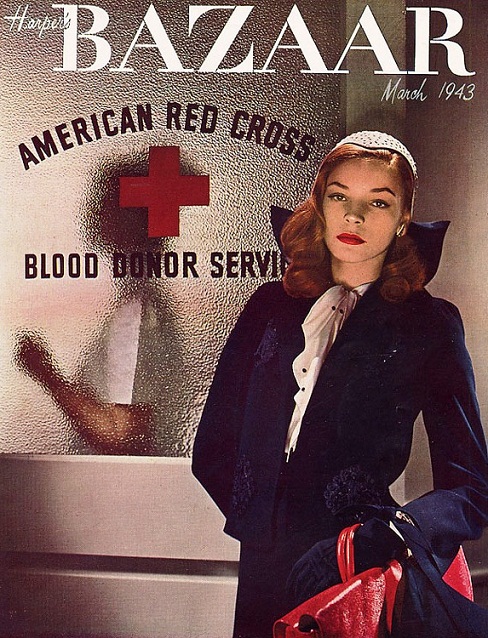
Immordino Vreeland’s book, Diana Vreeland: The Eye Has to Travel will be published on Oct. 1. (I hope the copy editor for the book was better than the one at Harper’s; there were two glaring errors in that piece.) It was during Vreeland’s tenure at Harper’s that Lauren Bacall’s career was launched after appearing on the cover, shot by Louise Dahl-Wolfe, in March 1943.

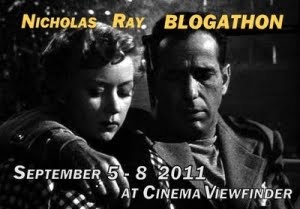
Happy birthday, Mr. Ray: In honor of director Nicholas Ray, who would have turned 100 on Aug. 7, Tony Dayoub of Cinema Viewfinder is running a Nicholas Ray Blogathon Sept. 5-8. Ray directed many noirs (“They Live By Night,” “Knock on Any Door,” “A Woman’s Secret,” “In a Lonely Place,” “Born to be Bad,” “On Dangerous Ground,” “Bigger Than Life”). I look forward to submitting my piece and reading other contributors’ work.

Go on, it’s good for the economy: FNO returns on Sept. 8! Fashion’s Night Out is a global initiative created in 2009 as a partnership between American Vogue, the Council of Fashion Designers of America, NYC & Company, and the City of New York to celebrate fashion, restore consumer confidence, boost the industry’s economy, and put the fun back in shopping. Find out what’s going on in your city and check out the merch.

With love from USPS: Billy Wilder gets his own stamp starting next year. Wilder won Academy Awards for directing “The Lost Weekend” and “The Apartment.”

Other Wilder favorites include: “Some Like It Hot,” “Double Indemnity,” “Sunset Blvd.,” “Ace in the Hole,” “Irma la Douce,” “Sabrina” and “The Seven Year Itch.” Part of a four-stamp Great Film Directors series, Frank Capra, John Ford and John Huston will also be honored.

Doc takes center stage: The Toronto International Film Festival runs from Sept. 8-18. The opening night film is “From the Sky Down,” Academy Award-winning filmmaker Davis Guggenheim’s documentary about Irish band U2. It’s the first time in 36 years that the festival will open with a documentary.

Bogey as Spade and Marlowe: The American Cinematheque’s Aero Theatre in Santa Monica is showing on Sept. 8: “The Maltese Falcon” (1941, John Huston) and “The Big Sleep” (1946, Howard Hawks). Double crossing, dubious motives and dry wit abound.

Diana Vreeland photo by Horst P. Horst

In ‘Human Desire,’ Gloria Grahame as a devious temptress gives us raw sexuality, a glimpse of tragedy

Human Desire/1954/Columbia/Sony/91 min.

By Michael Wilmington

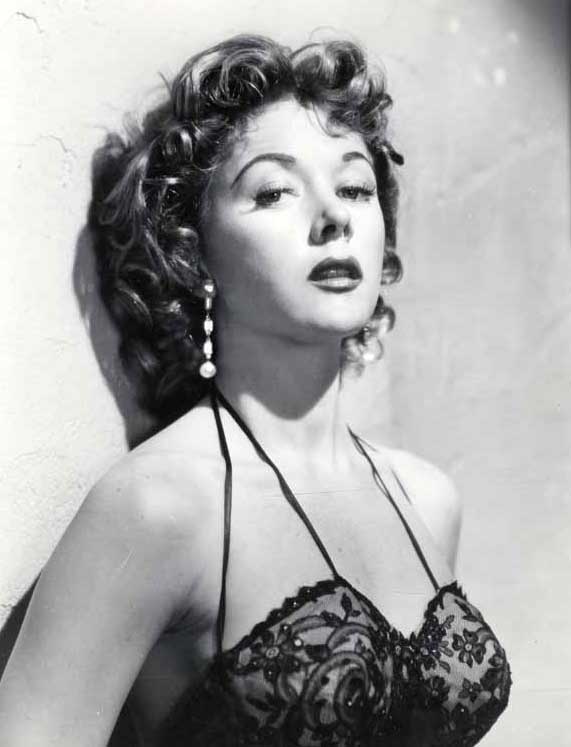
Gloria Grahame

Gloria Grahame was a film noir doll and movie moll of the first rank – and in Fritz Lang’s 1954 “Human Desire,” she gave one of her most fetchingly sultry, and powerful, performances. As a tricky, trapped, unfaithful but resourceful railroad wife named Vicki, she seduces the camera, the audience and her co-stars (one in real life), in one of the two noir classics she made with Glenn Ford for noir master and reputed on-set tyrant, Fritz Lang.

1952’s “The Big Heat,” that great scalding saga of gangsterism and revenge, is the more famous Lang-Ford-Grahame collaboration, and rightly so. But “Human Desire” is a moody little classic as well, one of Lang’s last American films, and among the most complex and chilling roles ever for Grahame and Ford – who spiced up the movie this time with an offstage affair.

“Human Desire” is one of two Lang American remakes of French film classics directed by Lang‘s great colleague Jean Renoir, a generous-hearted, humanistic Frenchman who seems at first, the temperamental opposite of the icy-eyed Lang. But Lang’s 1945 noir masterpiece “Scarlet Street” was derived from Renoir’s 1931 “La Chienne,” and “Human Desire” is a remake (and a softening) of Renoir’s great dark, violent crime drama/romance “La Bête Humaine” (1938), a noir precursor adapted from the classic 19th century novel by Émile Zola.

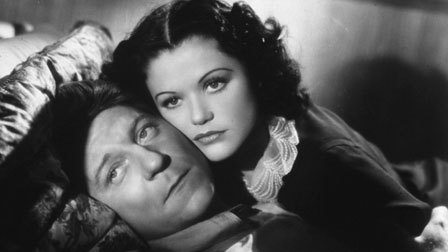
Jean Gabin and Simone Simon in “La Bête Humaine”

“La Bete Humaine” and “Human Desire” are both set mostly in grim gray railroad yards, the shadowy surrounding cities and on the trains – and both Renoir and Lang get great mileage out of the hypnotic scenes they both shot of speeding trains, landscapes rushing past and train tracks merging and diverging inexorably below, echoing the characters’ headlong plunge into madness.

Ford, like “La Bete Humaine’s” Jean Gabin, plays an all-too-human train engineer: in Ford’s case, returning Korean War vet Jeff Warren, a good guy tormented by illicit, adulterous desire. (Gabin’s fireman and train sidekick was the ebullient Julien Carette, the imp of “Grand Illusion” and “The Rules of the Game.” Ford’s is crusty old westerner Edgar Buchanan.)

The desire of course, is for Grahame’s provocative, minx-eyed blonde Vicki, the persecuted wife of brutal, alcoholic, insanely jealous yard boss Carl Buckley, played by Broderick Crawford five years after his “All the King’s Men” best actor Oscar. (Another great French actor, Fernand Ledoux, played the equivalent part for Renoir.) And, as Vicki, Grahame touches many noir bases: tempting cutie-pie, disturbed and abused wife, haunted adulteress, lady in distress, and classic scheming femme fatale (a note she didn’t strike in “The Big Heat,” when she played coffee-scorched Debby, Lee Marvin’s tragic moll.)

Ford was a great brooder, as was “Bete Humaine’s” Gabin. And, when Jeff broods over Vicki, as she pulls him into her sexual web, the whole screen heats up and then darkens and goes cold. The original “Bete Humaine” adulteress was the legendary French sex kitten Simone Simon (in a role that made her an international star and eventually brought her to America for “Cat People”).

Grahame is scarier and deeper and more human (and desirable) than Simon – mostly because, in the beginning, we like Vicki. We sympathize with her, feel sorry for her because of her violent mistreatment by the obviously pathological Carl, whose jealousy drives him to murder and drink, and puts him on a collision course with Ford’s glowering, love-drunk Jeff. [Read more…]

‘Recipe For Murder’ tells true story of Australian lethal ladies

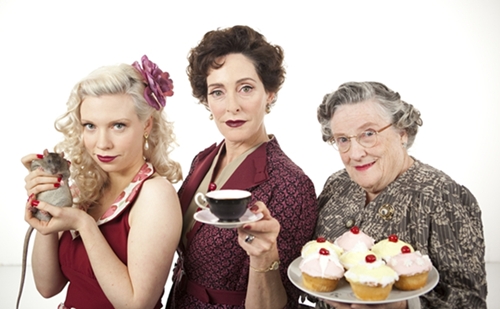
From left: Aimee Horne, Anne Looby and Betty Tougher portray the real-life killers.

Sydney, Australia’s inner suburbs in the early 1950s seem an unlikely setting for a slew of cold-blooded murders. But many families were plagued by poverty, poor housing conditions and an epidemic of rats (there are stories of parents sleeping with their children to protect them from being bitten during the night). And, for several women, apparently unhinged or at the end of their ropes, eliminating a tiresome man or two topped their to-do lists, along with cooking, cleaning and killing rats of the rodent variety.

Thallium – the active ingredient in rat poison – was the perfect murder weapon. It had no color, taste or smell and it produced a gradual demise rather than sudden death. Police estimate that hundreds of people died from thallium poisoning in the late 1940s and early 1950s. Banned in the rest of the Australia and most of the developed world, thallium was freely available in Sydney.

Writer/director Sonia Bible

“Recipe For Murder,” a film by first-time writer/director Sonia Bible, tells the true story of three notorious poisoners: Yvonne Fletcher, Caroline Grills and Veronica Monty.

Yvonne Fletcher, 29, a blonde good-time girl, was accused of killing two husbands. Next to be charged was Caroline Grills, 63. She was accused of being a serial killer after four members of her family died in suspicious circumstances.

The most scandalous and sensational case was Veronica Monty. The 45-year-old was charged with attempted murder of her son-in-law, Bobby Lulham, a famous Australian Rugby league player, with whom she had an affair.

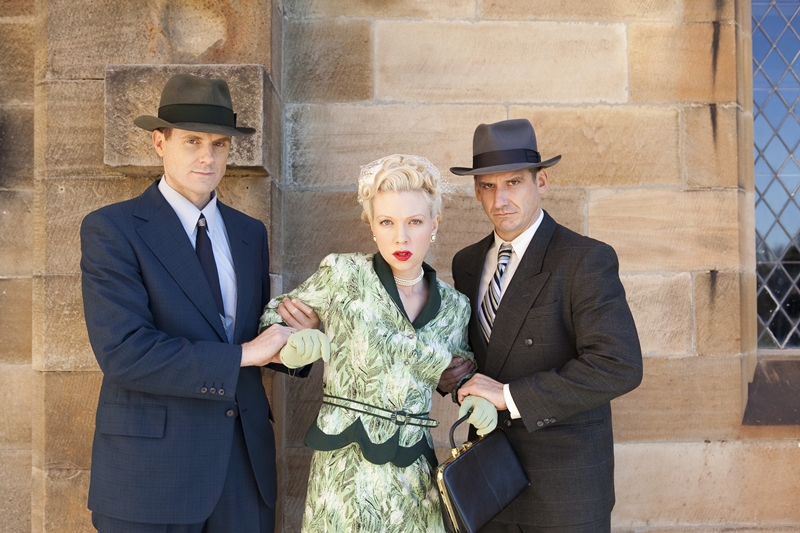
“Recipe For Murder” follows the detectives cracking the cases, the media and the women standing trial. The film combines archival footage, film-noir re-enactments, interviews with witnesses, a musical score from “Animal Kingdom” composer Antony Partos and narration by Dan Wyllie. There are no plans for a theatrical release, but you can buy the film here.

I recently chatted with Sonia via email.

Film Noir Blonde: It’s such a fascinating but little-known story. I understand you became aware of it in 2003 at an exhibition in Sydney called “Crimes of Passion.” What was it that drew you to these murders?
Sonia Bible: The story of the thallium murders was a piece of history that I didn’t know about, and it was also a period that I was fascinated with visually. With three real-life femme fatales, film noir was the perfect fit for the stylized re-enactments.

Anne Looby as Veronica Monty and James Anderson as her son-in-law Bobby Lulham, a famous Rugby player.

FNB: At what point did you decide to make a film and profile the three women?
SB: Yvonne Fletcher, Caroline Grills and Veronica Monty were the three most notorious women of all those charged with murder by thallium. Their stories also intersected in interesting ways at different points in time.

FNB: Thallium poison, though it caused a painful death, was a silent, surreptitious killer. Was there something about that approach that you think appealed to women?
SB: The use of poison is traditionally a woman’s crime. It’s been around for a long time and is more often used by women. Men tend to use their fists or weapons to commit violence against others.

FNB: At the same time, thallium’s “advantages” may have held equal appeal for men, correct?
SB: No. Men used thallium in Sydney at the time to poison others or themselves, but women committed the majority of thallium poisoning cases. Women didn’t have any other means to control their circumstances at the time. Also the control of rats was considered a domestic duty to be carried out by women. Women had more understanding of the poison and ready access to it.

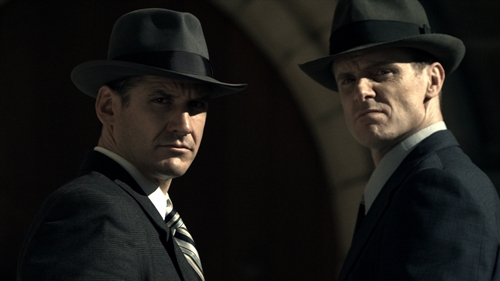
Grant Garland and Matthew Dale play the cops.

FNB: Toward the end of the film, we learn that the police investigators working on these cases (Don Fergusson and Fred Krahe) turned out to be corrupt. Do you think they may have targeted women perpetrators as a way of making an example of them or even to advance their own careers?
SB: No. Although Krahe and Fergusson went on to be corrupt, their investigations into the thallium murders were thorough and professional. Yvonne Fletcher was the first person to be charged with murder by thallium and it wasn’t because she was a woman. It was because she murdered two husbands in a very cruel way. Nobody even knew that thallium was dangerous to humans until Krahe and Fergusson cracked that case.

Matthew Dale, Aimee Horne and Grant Garland

FNB: What was your biggest obstacle or challenge in making the film?
SB: The biggest challenge in making the film was the production budget. We were doing period drama on a documentary budget, and always looking for creative solutions and innovative ways of getting around the budget constraints.

FNB: What kind of reception have you had from the film, both at home and elsewhere?
SB: “Recipe For Murder” achieved really high ratings when it screened on TV in Australia. It also got rave reviews in the Australian media leading up to the screening. The film won a Silver Hugo award at Chicago International Film Festival 2011 as well. We were all thrilled with the enthusiastic response.