On the radar: Battle of the Blondes begins, AFI fest kicks off, poets ponder Los Angeles noir

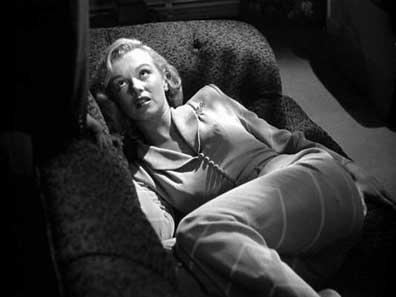
Marilyn in "The Asphalt Jungle" tops the TCM list.

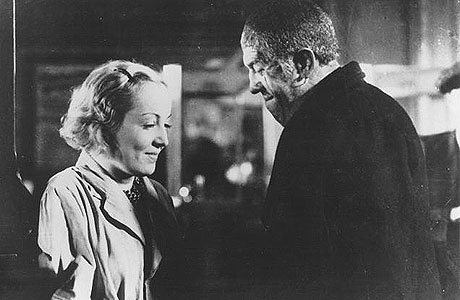
One more reason to love Turner Classic Movies: The network has compiled a list of 10 favorite movie moments featuring Marilyn Monroe. The list comes as TCM gears up for its Battle of the Blondes this month, which kicks off Nov. 2 with a Marilyn Monroe double feature.

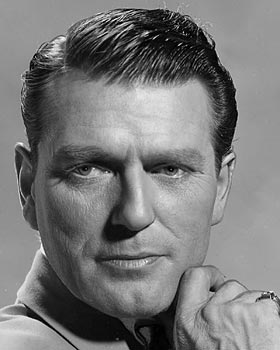
First on the fave moments list is Marilyn looking up at Louis Calhern in the classic noir “The Asphalt Jungle” from 1950 directed by John Huston. Third on the list is her sexy walk in “Niagara,” Henry Hathaway’s 1953 Technicolor noir. (“Niagara” and 1959’s “Some Like It Hot” by Billy Wilder are tonight’s double bill.)

Throughout November, TCM will celebrate Hollywood’s greatest blondes. Each Monday and Wednesday night’s lineup will feature two blondes going head-to-head in a pair of double features, including Marilyn Monroe and Jayne Mansfield on Nov. 2, Veronica Lake and Lana Turner on Nov. 7, Judy Holliday and Jean Harlow on Nov. 9, Marlene Dietrich and Ursula Andress on Nov. 14, Carole Lombard and Mae West on Nov. 16, Janet Leigh and Brigitte Bardot on Nov. 21, Betty Grable and Doris Day on Nov. 23, Julie Christie and Diana Dors on Nov. 28 and Grace Kelly and Kim Novak on Nov. 30.
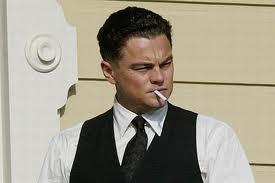
Leonardo DiCaprio

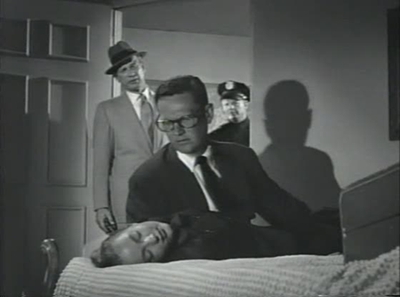
Best of the fest: The AFI FEST 2011, the American Film Institute’s annual celebration of international cinema from modern masters and emerging filmmakers, starts Nov. 3 with Clint Eastwood’s “J. Edgar,” starring Leonardo DiCaprio.

Noir gems include “Eyes Without a Face,” “The Killers,” “Nightmare Alley” “Le Cercle Rouge,” “Once Upon a Time in Anatolia” and “We Need to Talk About Kevin.” Topping my new-viewing list is: “Miss Bala,” “Art History,” “Carnage,” “Shame,” “Kill List” and “The Artist.”

The festival runs through Nov. 10 in Hollywood and I look forward to covering it.

Lines to remember: Continuing through Nov. 13, the Los Angeles Poetry Festival is hosting Night and the City: L.A. Noir in Poetry, Fiction and Film. There are readings, screenings and discussions in various locations. I’ve marked my calendar for the Raymond Chandler open reading on Nov. 6 in Hollywood.

Film noir’s feline stars: The cat in ‘Sudden Fear’

Happy Halloween everyone! More on the most famous kitties in film noir

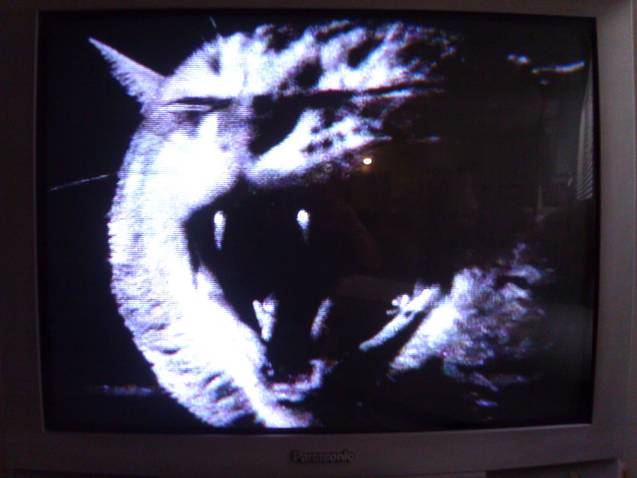
The Cat in “Sudden Fear” 1952

Name: Scair D. Cat

Character Name: Alcatraz Joe

His one-time acting role allowed Chicago-born Scair D. Cat to pursue his culinary ambitions on the West Coast.

Bio: Having grown up in the back room of Chicago’s Katnip Klub on Lincoln Park West (“where no puss gets the boot”), Scair D. Cat was on particularly friendly terms with bartenders, bouncers and cooks. In fact, it was by helping out in the kitchen that he perfected a secret steak sauce he hoped to introduce to a bigger audience.

After receiving the blessing of the Klub’s management, Scair decided the sauce was ready for the big leagues and on a chilly winter day in 1952 skulked his way to Table One of the famous Pump Room restaurant at the Ambassador East Hotel, seeking to snag the chef’s attention.

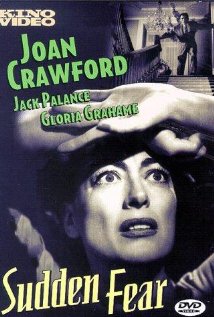
But as Fate would have it, Joan Crawford and director David Miller were the human guests at Table One that day, discussing their upcoming project, the melodramatic thriller “Sudden Fear,” set in San Francisco. Crawford’s role as a playwright, who marries a younger man (Jack Palance) but discovers his treacherous true colors and carefully plots her retaliation, was one of her most demanding.

Crawford, eyes bulging and brows arched, took one look at Scair’s bulging eyes and arched brows, and convinced Miller that he should be cast as Alcatraz Joe. Scair was not the least bit interested in acting or Hollywood but Crawford won him over by promising that she would help promote his steak sauce on the West Coast as soon as filming wrapped. And Crawford made the ideal choice – Scair lends a shocking fierceness and rugged theatricality to the intense chase scenes toward the movie’s end.

True to her word, Crawford made several important introductions for her feline co-star. At the same time, Scair fell in love with the West Coast and began creating seafood sauces and recipes. He set up shop in San Francisco’s Fisherman’s Wharf and became a consultant to restaurants such as Alioto’s. He and Crawford remained close friends.

Edith, Head of her class: A shrewd woman with a sharp eye and unprecedented success in Hollywood

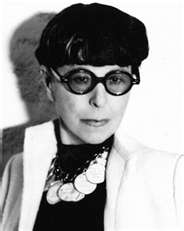
Famed costume designer Edith Head knew that clothes should underscore an actor’s character, not upstage it. And she applied the same discipline to dealing with Hollywood’s elite, putting every ounce of effort into making them look their absolute best while deflecting attention from herself.

Edith Head

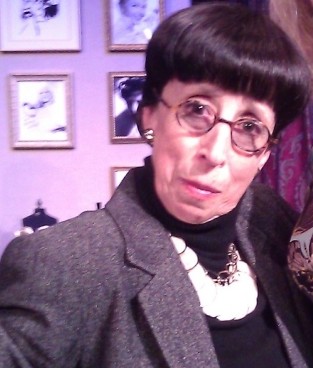
Actress Susan Claassen

A shrewd approach along with her natural talent for design, a gift for navigating studio politics and a tremendous amount of hard work made her one of the movie industry’s most successful women.

In her 60-year career, at Paramount and Universal, she worked on more than 1,131 films, received 35 Academy Award nominations and won eight Oscars, more than any other woman. (Walt Disney, with 26 Oscars, holds the record for a man.)

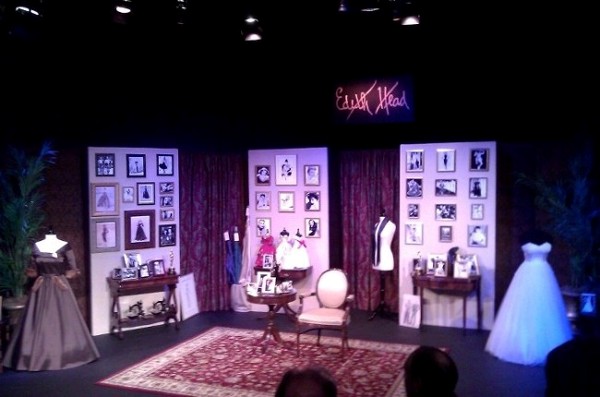
This savvy lady with her tailored suits, neat little bun and statement specs comes out of the shadows and into the spotlight in “A Conversation With Edith Head,” which opened Friday night at LA’s Odyssey Theatre. And she’s spirited, strong, funny and flawed as played by actress Susan Claassen.

One of her peccadilloes was a disdain for modesty. “I’m not different from other designers, I’m the best,” Claassen tells the audience matter of factly. Another memorable Head aphorism: “You can have anything you want in life, if you dress for it.”

Tinseltown anecdotes and stories of working with the stars are sprinkled throughout the play, which is set in 1981. Head died in October of that year at age 83, still under contract to Universal, having just completed the Steve Martin film “Dead Men Don’t Wear Plaid.”

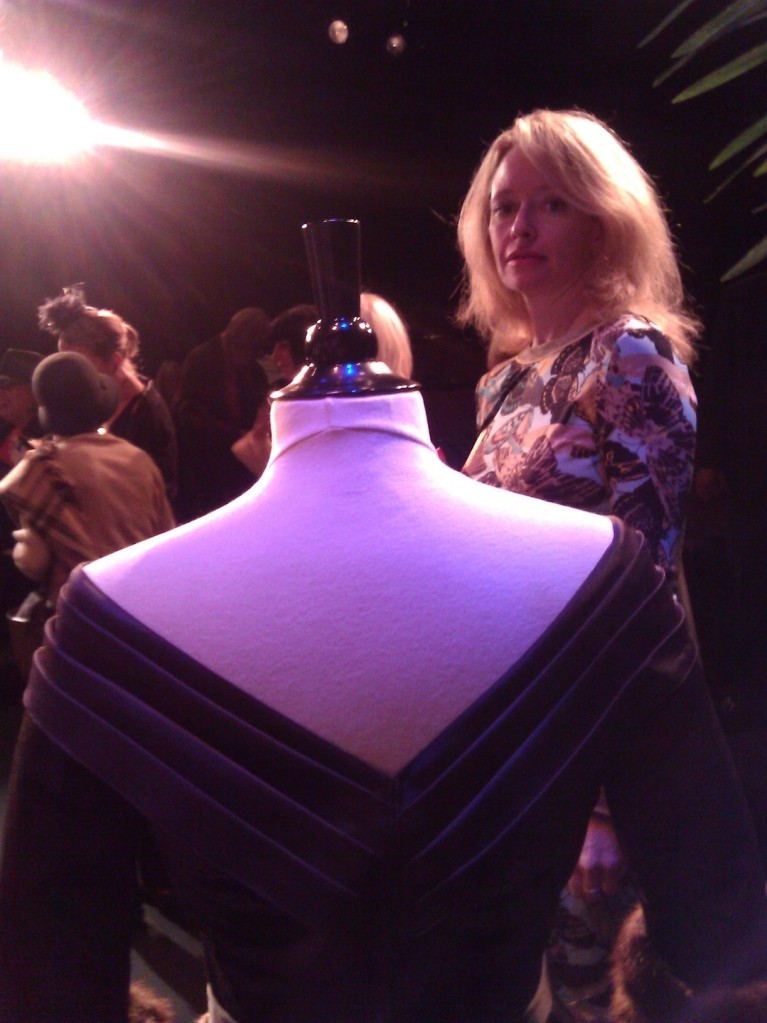
The show recreates Head's cocktail dress for Bette Davis (far left) and a gown for Elizabeth Taylor (far right).

The format includes questions from the audience as well as free advice on your sartorial choices. Since Claassen called me stunning and asked if I was a model, naturally I think the woman is the greatest genius known to Western civilization. 😉

But, joking aside, Claassen is brilliant in this role, capturing the character’s gestures, mannerisms and demeanor without mimicry or impersonation. Claassen reveals the enormous power Head wielded through her sketch pad and pencil as well as the sacrifices (15-hour days, six days a week in her heyday), self-doubt and sadness that were facets of her extraordinary life.

A closer look at the recreated dress for Bette Davis in "All About Eve" from 1950.

Claassen, who recently received an Ovation nomination for Lead Actress in a Play for this part, co-wrote the work with Paddy Calistro, author of the book “Edith Head’s Hollywood.” The idea came to Claassen while watching a TV biography about Head.

Says Claassen: “Not only do I bear a striking resemblance to Edith, but we share the same love for clothes and fashion. … There are many myths about her, but she was a discreet, tenacious personality. She knew whose hips needed clever disguising and made sure those legendary stars always looked the part.”

Head was a frequent collaborator with Alfred Hitchcock and added élan to the wardrobe of film noir stars, dressing, for example, Barbara Stanwyck in “Double Indemnity,” Gloria Swanson in “Sunset Blvd.,” Ingrid Bergman in “Notorious,” Grace Kelly in “Rear Window” and “To Catch a Thief,” Kim Novak in “Vertigo,” and Tippi Hedren in “The Birds.”

She also dressed Bette Davis as the glamorous actress Margo Channing in “All About Eve” and designed Elizabeth Taylor’s white ball gown in “A Place in the Sun.” In fact, she worked with nearly all the Hollywood greats, including Mae West, Clara Bow, Audrey Hepburn, Sophia Loren, Marlene Dietrich, Katharine Hepburn, Cary Grant, Sean Connery, Robert Redford and Paul Newman.

When in 1967 Paramount chose not to renew her contract, she was hired by Universal, thanks to her friendship with Hitchcock, who perhaps really was her favorite director, despite her practical policy of naming her favorite director as the one for whom she was currently working.

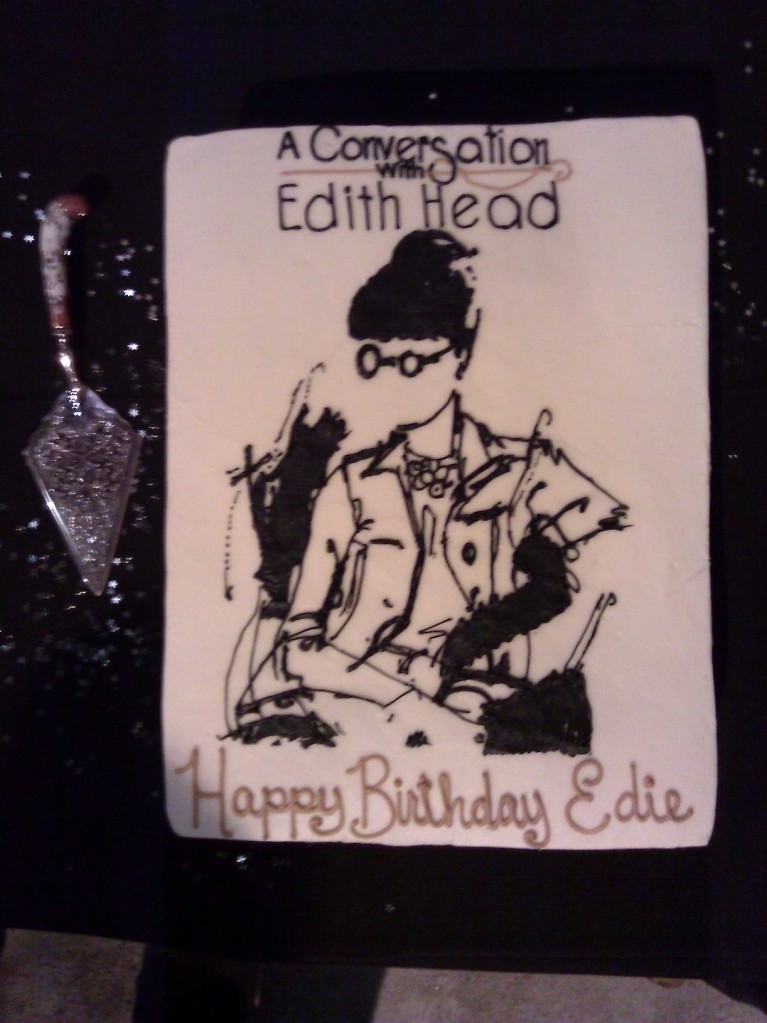
Opening night fell on Head's birthday. Cake and champagne were in order, natch.

Though Head’s motto was to accentuate the positive and camouflage the negative, the chapter of her childhood spent in the Nevada desert was good training for holding her own in Hollywood. She was, she said, used to dealing with scorpions.
Opening night coincided with what would have been Head’s 114th birthday so, after the show, party guests sipped champagne and ate red-velvet birthday cake, donated by Susie Cakes.

“A Conversation With Edith Head” is a guest production at the Odyssey Theatre, 2055 S. Sepulveda Blvd., Los Angeles, 90025. It runs Thursdays through Sundays through Nov. 13. (The play premiered in Tucson, Ariz., in 2002 and has since played in many US cities and abroad.) Tickets are $40. For more information: 310-477-2055; www.edithhead.biz.

Photos from the production are copyright of Film Noir Blonde.

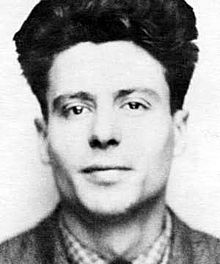
In his short life, Jean Vigo helped ignite a cinematic uprising

October’s reader giveaway, announced earlier this month, is Criterion’s anthology of French filmmaker Jean Vigo and a Chicago film fest T-shirt. To enter, just comment on any post this month. Here, critic Michael Wilmington discusses the director and his work.

He died at 29: Jean Vigo, the spirit of youth, of art, of cinematic rebellion, of France between the wars. He was a citizen of the world cinema, even though he directed only four films: two documentary shorts, a featurette, and one feature, all of them to some degree commercial and critical failures. And yet Vigo lives.

The son of a revolutionary who died in a prison, Vigo helped ignite an artistic and cinematic uprising. He and his co-conspirators, Jean Renoir, Pierre Chenal, Julien Duvivier, and Marcel Carné, created Poetic Realism, beautiful stylized portrayals of marginalized, often doomed characters, such as criminals. This style of filmmaking, along with German Expression, greatly influenced film noir.

Jean Vigo

The look of Vigo’s films inspired 1940s and ’50s Hollywood. His great collaborator was the cinematographer Boris Kaufman, a poet of light, who later shot “On the Waterfront” for Elia Kazan and Sidney Lumet’s “12 Angry Men.”

Vigo’s works are records of the real – love and sex, wealth and poverty, French culture, French life as it was lived in the 1930s – and documents of the surreal, that mysterious land of our dreams.

He made movies about sunny resort cities and the bourgeoisie at play (1930’s “À propos de Nice), about a real-life Olympic champion swimmer (1931’s “Taris”), about schoolboys in revolt in a school run by monsters (1933’s “Zéro de Conduite”) and about two lovers and a wild old man on a barge on the river (1934’s “L’Atalante”).

“Zéro de Conduite,” a 44-minute featurette was based on Vigo’s memories of boarding school days, a nightmare of absurdities, tangled up with lyrical flights of freedom. The sarcastic treatment given the school’s bizarre academics is probably partly responsible for the film’s long banning in France (1933-45).

Dita Parlo and Michel Simon star in "L'Atalante."

“L’Atalante” remains one of the most hypnotically beautiful and lyrical films ever made. Twice, in 1962 and 1992, “L’Atalante” was voted one of the 10 greatest films of all time in the Sight and Sound International film poll. It is now a national treasure in France.

Vigo died in 1934. His work was trashed and forgotten, then resurrected and restored a decade after his death, and seen all over the world. If you see these films, they will make you feel more alive. They will flood your heart with love, your eyes with beauty and your mind with poetry, mad comedy and dreams. There are only four Jean Vigo films, but they open up a world for us. If we let them.

This Criterion anthology offers excellent special features and of course the films:

“À propos de Nice” (1930, silent, English intertitles)

“Taris” (1931, English subtitles) With Jean Taris.

“Zéro de Conduite” (1933, English subtitles) With Jean Daste, Louis Lefebvre.

“L’Atalante” (1934, English subtitles) With Michel Simon, Dita Parlo, Jean Daste, Louis Lefebvre.

Wendell Corey astonishes as a doofus turned dangerous

The Killer is Loose/1956/Crown Productions, UA/73 min.

Michael Wilmington

By Michael Wilmington

Budd Boetticher, who didn’t direct nearly as many films as he should have, made a lot of them in the ’50s. And in 1956, he directed both a classic Western (“Seven Men from Now”) and a neglected semi-classic low-budget noir, “The Killer is Loose.”

Joseph Cotten plays a dedicated if disgruntled LA cop, Rhonda Fleming is his unwisely feisty wife, Alan Hale and John Larch are fellow fuzz, and, very memorably, Wendell Corey is the escaped bank robber who blames Cotten (correctly) for the death of his wife during his arrest.

Corey was a dependable, if often unexciting, sidekick and secondary guy in the ’40s and ’50s. In 1947’s “Desert Fury,” he plays John Hodiak’s right-hand crook, another great noir role. Corey gives an astonishing performance here as the psychotic vengeance-seeker – playing the character not as the usual cold-blooded, relentless Lee Marvin or Jack Palance type, but as someone you’d probably trust.

Wendell Corey plays the psycho as a polite, trustworthy type.

He’s a polite, preoccupied, considerate, somewhat clumsy, nice-enough-acting doofus, not at all maniacal or dangerous-appearing. He’s also seemingly unstoppable, as he breaks out of jail and moves inexorably toward Cotten and Fleming and their home in the suburbs, killing everyone in his way.

Corey’s loose killer and his last disguise, which in some ways anticipates Norman Bates’ mother in “Psycho,” are both absurd and scary.

The movie, like a lot of Boetticher, is immaculately well executed, the work of an extraordinary genre-bending talent. By the way, Lee Marvin had one of his all-time best heavy roles in Boetticher’s above-mentioned gem “Seven Men from Now.” In that movie, it was hero Randolph Scott who was the relentless pursuer, out to avenge his wife.

The cinematographer of “The Killer is Loose” was Lucien Ballard, Boetticher’s good friend and great collaborator. Ballard, an ace at both Westerns and noirs, shot this movie the same year he lit Stanley Kubrick’s “The Killing.”

MGM Limited Edition Collection, available from online retailers. No extras.

Ann Savage in ‘Detour’ is the ultimate ‘dame with claws’

Detour/1945/PRC/67 min.

Edgar Ulmer

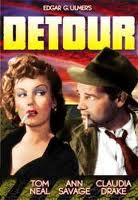
Luck so bad it borders on absurd, a story as flimsy as cardboard, a femme fatale who’s downright feral. That would be 1945’s “Detour,” a B classic that director Edgar Ulmer shot in less than a month for about $30,000.

Despite these limitations (or maybe because of them) Ulmer manages to work some visual miracles. Those foggy scenes where you can’t see the street? He didn’t have a street so he filled in with mist. Born in what is now the Czech Republic, Ulmer came to the US in 1923. He brought a high-art, painterly disposition to this tawdry little flick, as he did to most of his work. (Ulmer’s “The Black Cat” from 1934 is a must-see.)

With a screenplay by Martin Goldsmith (he also wrote the source story), you might say “Detour” is Ulmer’s meditation on Fate. As the film’s doomed hero puts it: “Whichever way you turn, Fate sticks out a foot to trip you.” And later: “Fate or some mysterious force can put the finger on you or me for no good reason at all.”

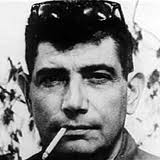
The doomed hero Al Roberts is memorably played by rugged, slightly boyish Tom Neal. Al plays piano in a New York nightclub; his girlfriend Sue Harvey (Claudia Drake) sings. Sue is the most wholesome nightclub singer you can imagine and maybe that’s the rub – they find it hard to make ends meet. She decides to leave New York and try her luck in Hollywood, only to end up slinging hash. (Look out for Esther Howard as a diner waitress; Howard played the haggard Jesse Florian in “Murder My Sweet” from 1944.)

To reunite with Sue, Al heads to California, hitching a ride with smug and chatty Charles Haskell Jr. (Edmund MacDonald), whose hands are mysteriously scratched. “There oughtta be a law against dames with claws,” says Haskell.

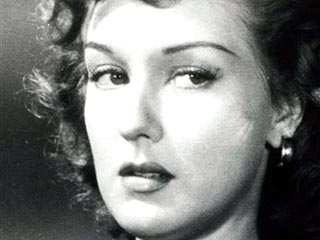
Ann Savage

When Haskell suddenly dies during Al’s turn at the wheel, Al panics and takes off with the car. Next, Al meets the striking but cheap Vera (Ann Savage), also thumbing rides and in need of a shower. (The hairdresser slathered her hair with cold cream to make it look dirty and stringy.)

Vera happens to know Haskell and she knows a good chance for blackmail when she sees one. She works one angle after another, including a scheme to steal Haskell’s inheritance money.

She. Runs. The. Show. As director Wim Wenders says in Michael Palm’s “Edgar G. Ulmer: The Man Off-Screen” documentary: “she’s 30 years ahead of her time … a revolutionary female character.” In the same documentary, actress Savage (who made five films with Neal) says of Vera: “She’s mean to the extent that she wants to be boss. She’s a real b-i-t-c-h.”

True, Vera is not the most complex character – she’s short on nuance and dimension. But then, Vera herself would sneer at the mention of nuance and complexity, and snipe something like, “Do I look like a dictionary to you?” And as a ruthless, conniving, raw femme fatale, Savage’s Vera is hard to match.

Ulmer amazes with his deft and daring handling of the material. It’s unfortunate that he didn’t get to unleash his imagination and talent on higher-level projects. Though he worked with directors such as Fritz Lang, F.W. Murnau, Max Reinhardt, Ernst Lubitsch, Cecil B. DeMille, Erich von Stroheim, Robert Siodmak, Fred Zinneman and Billy Wilder, he was never part of the Hollywood elite.

Ulmer has said he would’ve been unhappy with the constraints of mainstream, commercial productions, but it’s likely he still craved the recognition and respect that A-list status confers. Also, Ulmer was ostracized from the in-crowd when he fell in love with the wife of an independent producer. She left her husband, Max Alexander, the nephew of Universal president Carl Laemmle.

Barbara Payton

Still, it seems Ulmer fared a bit better than his leading man Tom Neal (1914-1972) whose off-screen life would be good fodder for a noir. Neal was born into a wealthy family in Evanston, Ill., and attended Northwestern University and Harvard Law.

In 1951, he attacked fellow actor Franchot Tone in a jealous fit over actress Barbara Payton, inflicting broken bones and a concussion, and damaging his own reputation to the point of ending his career. In 1965, he was convicted of involuntary manslaughter in the shooting death of his third wife; he was paroled after serving six years of a 10-year sentence.

“Detour” was remade in 1992, starring Tom Neal Jr.

The original is recognized as corner stone of the noir genre. Filmmaker Errol Morris counts it as a favorite film, noting that: “It has an unparalleled quality of despair, totally unrelieved by hope.”

Ann Savage photo from AP/Ann Savage Archive

‘Detour’ quick hit

Detour/1945/PRC/67 min.

Hard as nails Ann Savage is hell on wheels, literally. As a hitchhiker with a taste for fraud, she pulls unlucky traveler Tom Neal into her sticky web of treachery and deceit.

A searing, seminal noir from often-unappreciated director Edgar Ulmer, known for performing minor miracles on a shoestring budget.

Bribes, brawls and bullets, and sultry Marie Windsor

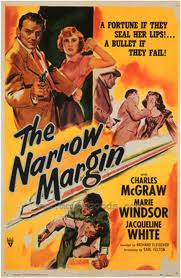
The Narrow Margin/ 1952/RKO/71 min.

“She haunts my dreams and some of my nightmares as well,” says an ardent fan of actress Marie Windsor in 1952’s “The Narrow Margin,” directed by Richard Fleischer.

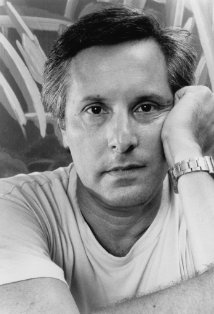
Billy Friedkin

The fan in question is Chicago-born Billy Friedkin – director of “The French Connection” (1971), “The Exorcist” (1973) and “To Live and Die in L.A.” (1985), among many others – and his comments come in the form of DVD commentary for “The Narrow Margin,” a definitive film noir. Maybe Windsor had that mysterious-older-woman vibe going on too, since Friedkin was only 17 when this B-movie came out.

In it, she plays Mrs. Frankie Neall, a gangster’s wife. She’s a bribable beauty with a sharp tongue. The story takes place almost entirely on a train from Chicago to LA, where Mrs. Neall is scheduled to testify against the mob. Making sure she doesn’t bail on the way is her police escort Walter Brown (Charles McGraw).

Charles McGraw

One snag is that the mob is less than thrilled about the prospect of her naming names when she takes the stand. So two heavies board the train hoping to rub her out; their earlier attempt resulted in the death of Brown’s partner (Don Beddoe). They’ve got their work cut out for them, though – they don’t know what she looks like. And they’re up against Charles McGraw.

It’s a great yarn, fast and lean, where every second counts. The visuals are richly lurid – the stark shadows of Mrs. Neall’s apartment building when the cops come to get her are standouts. As Friedkin puts it: “Lighting is a character in these films.”

Fleischer also manages to convey a sense of realism despite the fact that “The Narrow Margin” was primarily shot on a train set. One way he accomplished that was by employing a hand-held camera, using it to simulate a sense of motion. Cramped compositions and claustrophobic camera angles heighten the mood of entrapment. Shot in less than a month, the film was a big hit at the box office.

We also meet some memorable fellow passengers such as the curious and tubby Jennings (Paul Maxey) who declares: “Nobody loves a fat man except his grocer and his tailor.”

And of course Windsor exudes streetwise strength every time she makes one of her barbed comments or acidic rejoinders. When Brown tells her, “You make me sick to my stomach,” she barks: “Well use your own sink.” Upon seeing him put on his gun one morning, she asks: “What’re you gonna do, go out and shoot us some breakfast?”

“The Narrow Margin” garnered an Oscar nomination (rare for noirs) for the story by Martin Goldsmith and Jack Leonard. Earl Felton wrote the screenplay. Goldsmith also wrote the story and screenplay for another famous noir: “Detour,” made in 1945 by director Edgar G. Ulmer and starring Tom Neal and Ann Savage. [Read more…]

Quick hit: ‘The Narrow Margin’

The Narrow Margin/ 1952/RKO/71 min.

No wonder Marie Windsor’s a little cranky. As a mobster’s wife, she’s used to the cushy life and here she is stuck on a train from Chicago to LA with a tiresome police escort (Charles McGraw) who’s making sure she’ll testify against the mob. Or will she? It’s a fast ride full of sharp turns. Richard Fleischer directs this Oscar-nominated story; the low-budget gem was a big money maker for the studio (RKO).

Film noir’s feline stars: The Siamese cat in ‘Hangover Square’

More on the most famous kitties in film noir

The Cat in “Hangover Square” 1945

Name: Clawdette Montgomery

Character Name: Amaretto Sourpuss

Clawdette Montgomery led a very different offscreen existence from her character in "Hangover Square."

Bio: With all their scheming and double dealing, femmes fatales occasionally need a helping hand. Well, make that helping paw. A case in point is singer Netta Longdon (Linda Darnell) in “Hangover Square,” directed by John Brahm.

Netta has a lot going on, trying to get noticed in the competitive field of 1900s London music halls. To advance her career, she calls on the talents of composer George Harvey Bone (Laird Cregar).

Turns out, George is a pretty good cat-sitter too. So Netta relies on him to help her multi-task, ie George can stay home and have a cozy cocktail with high-strung and quick-to-claw Amaretto Sourpuss (Clawdette Montgomery) while ambitious and quick-to-claw Netta tackles the tasks of singing, schmoozing and staying out all night. Unfortunately, George has a tenuous relationship with reality and eventually both Netta and her feline counterpart succumb to George’s madness.

Offscreen, however, Clawdette Montgomery led an entirely different, and joy-filled, existence. Born to a wealthy litter in Siam, Clawdette’s parents saw that she and her twin sister Laurette traveled the world and enjoyed an unusually cosmopolitan upbringing. As an adult cat, Clawdette dabbled in acting, art collecting, philanthropy and yoga. In her third life, she invented her own form of yoga, Furvasana, which took the radical approach of resting in child’s pose for the entire session.

Though extremely popular with other felines and enlightened humans, Furvasana never gained widespread acceptance in the world of mainstream, Westernized yoga. Nevertheless, Clawdette’s teaching philosophy was respected and revered abroad. And secretly many Hollywood stars sought private consultations so that they might emulate her inner peace and calm.

Image from http://catsinsinks.com