‘Notorious’: noir equivalent of an icy flute of Veuve Clicquot

Notorious/1946/RKO, Vanguard Films/101 min.

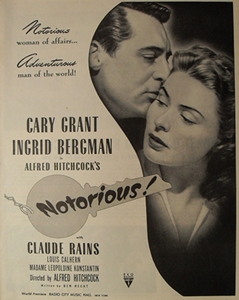
“Notorious” ranks as one of Alfred Hitchcock’s best films and Ingrid Bergman as Alicia Huberman is one of the most contemporary of all ’40s noir heroines. In this splendid 1946 suspense thriller, Bergman’s Alicia is a U.S. secret agent assigned to infiltrate a group of Nazis who have resurfaced in South America after WW2. Alicia risks her life to root out the Nazis’ source of uranium, an ingredient in atomic bombs. She also likes to throw parties, expose her midriff (love the sequin zebra-print top) and pursue her man, fellow secret agent T.R. Devlin (Cary Grant). Dev’s easy on the eyes, but he’s suspicious, uptight and seemingly unfeeling.
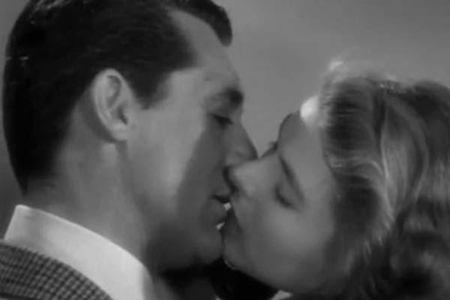
The Production Code stipulated that a kiss could not last more than three seconds.

Their “strange love affair” as she calls it, tinged with cynicism and mistrust, is decades ahead of its time. And their record-breakingly long kisses, which look tame now, were considered extremely racy in 1946.

The Production Code (ie, censors) stipulated that a kiss could not last more than three seconds. Hitchcock obeyed, but followed Bergman and Grant’s first swift kiss with another and another and another. Most importantly, she kisses him, noting that he hasn’t said, “I love you.”

The demands of their work (spying and info gathering) create pressure. Alicia must charm Alexander Sebastian (Claude Rains), a wealthy, suave and impeccably dressed Nazi. Even though Alex is a high-ranking fascist, we never see him hatching his evil plans, so it’s a bit easier for the audience to put his heinousness on the back burner. Alex dotes on Alicia and is far more emotionally available than the shut-down Dev.
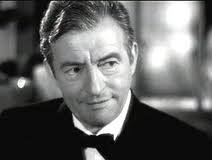
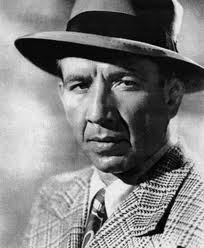
Claude Rains
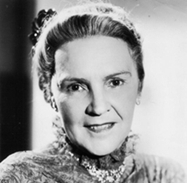
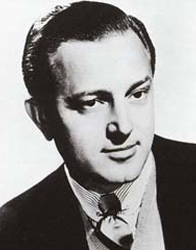
Leopoldine Konstantin

Before long, Alex proposes to Alicia and gives her quite the rock to seal the deal. Alicia accepts after getting the OK from her unsympathetic and cold boss, Captain Paul Prescott (Louis Calhern).

Living with Alex will let Alicia poke around his stately home, where Prescott reckons trouble is literally brewing, and bring her into frequent contact with baddies like ringleader Eric Mathis (Ivan Triesault), scientific mastermind “Dr. Anderson” (Reinhold Schünzel) and weak link, Emil Hupka (Eberhard Krumschmidt).

Living with Alex also means dealing with the other Mrs. Sebastian, Alex’s mother. Czech-born actress Leopoldine Konstantin, in her only American film, plays the hard and imperious Mrs. Anna Sebastian. When Alex asks Anna to be friendly to Alicia, the battle-ax tartly replies: “Wouldn’t it be a bit much for both of us to be grinning at her like idiots?”
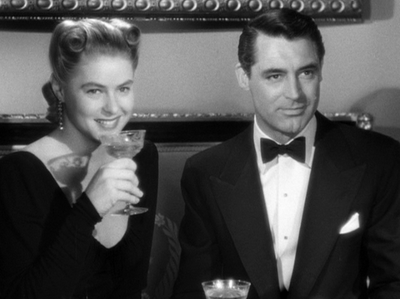
Alicia (Ingrid Bergman) and Dev (Cary Grant) are secret agents assigned to infiltrate a group of Nazis in South America after WW2.

Declaring a shortage of closet space (that’s our girl!), Alicia explores the nooks and crannies of the Sebastian mansion, but finds the wine cellar is off-limits. So, she decides to throw a champagne reception and steal the cellar key from her husband.

She invites Devlin, natch, and the two discover that wine is not the only thing stored in the cellar. (Hitchcock makes his cameo at the shindig, swigging some bubbly.)

Alex realizes the key has been stolen and that his secret is no longer safe, at which point he seeks maternal support. Anna’s fresh out of that, telling him: “We are protected by the enormity of your stupidity, for a time.”

The uranium angle is merely a MacGuffin, Hitchcock argot for a narrative device to advance the plot. The real story is whether Devlin and Alicia can work through their issues, such as his hypocrisy and lack of emotion, her drinking and their mutual game playing, which gets downright cruel. “Our all-too-human capacity for inhumanity is the dark mystery at the heart of ‘Notorious,’ ” writes film scholar William Rothman in his liner notes for the Criterion DVD edition. “And yet, in ‘Notorious,’ the possibility remains alive that the miracle of love can save us from our own perversity.”

This is one of the most beautiful films Hitch ever made, from his gorgeous leads to ravishing cinematography from Ted Tetzlaff – the closeups of Dev and Alicia at the racetrack and the famous crane shot at the mansion before Alicia’s champagne reception are standouts. I also like the imposing silhouettes of Alex and his mother after Alicia susses that they’ve been spiking her coffee. The lighting is magnificent throughout. Using rear-projection, Hitchcock combined footage of the principals filmed on a set with background shots taken in Rio.

The movie clocks in at 102 minutes but it glides by so gracefully that it feels half an hour. Ben Hecht’s sparkling script went through revisions and rewrites with input from Clifford Odets and Hitchcock. (David O. Selznick, on board as producer until he sold his rights to RKO in order to raise cash for another flick, likely tossed ideas around as well. Selznick had eyed Vivien Leigh for the Alicia role.) A few elements of “Notorious” came from a short story by John Taintor Foote called “The Song of the Dragon.”
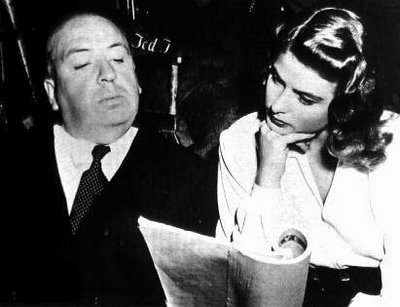
“Ingrid was very fond of my parents,” recalls Pat Hitchcock O’Connell in her book “Alma Hitchcock: The Woman Behind the Man.”

The entire cast dazzles and delights; the subtlety of the performances rewards multiple viewings. Hitch even accepted an idea from Bergman on shooting the dinner party scene.

In her book “Alma Hitchcock: The Woman Behind the Man,” the daughter of Alma and Alfred, Pat Hitchcock O’Connell, recalls that: “Ingrid was very fond of my parents. I remember, she’d finish one film with Daddy and she’d come over, sit on the couch, and say, ‘When do we start the next one?’ ” (Hitchcock O’Connell’s tribute to her mother makes a fun, chatty read and includes some of Alma’s favorite recipes and menus for home entertaining.)

In 1945, Bergman and Hitchcock made “Spellbound” co-starring Gregory Peck and in 1949 Hitch directed her in “Under Capricorn” opposite Joseph Cotten. Also in ’49, Bergman went to Italy to film “Stromboli” with Italian director Roberto Rossellini. Director and star fell in love, and Bergman left her husband Petter Lindstrom for Rossellini. Because of the scandal, Bergman’s reputation in the U.S. suffered, then rebounded; over the course of her career, she earned three Oscars (two for best actress and one for best supporting actress).

One of the most enjoyable and sophisticated films of the black and white era, “Notorious” strikes me as the film noir equivalent of an icy flute of Veuve Clicquot. Cheers!

MGM recently released “Notorious” along with “Rebecca” (1940) and “Spellbound” (1945) on Blu-ray.

‘Notorious’ quick hit

Notorious/1946/RKO, Vanguard Films/101 min.

One of Alfred Hitchcock’s best films and one of Ingrid Bergman’s best roles. Bergman plays Alicia Huberman, a secret agent working to break up a Nazi enclave in South America. She and fellow spy T.R. Devlin (Cary Grant) fall into a “strange affair” made even stranger when, as part of her spying, she marries Alexander Sebastian (Claude Rains), a Nazi masquerading as a playboy.

Excellent support from Leopoldine Konstantin as Alex’s bossy mom and Louis Calhern as Alicia and Dev’s cynical boss. An exquisitely beautiful Hitchcock gem.

“Notorious” is the prize in this month’s reader giveaway. To enter the random draw, just make a comment on any post.

Raymond Chandler on the big screen: ‘Brasher Doubloon’ and ‘Murder, My Sweet’ to play this Thursday at the Aero

I’ve never seen “The Brasher Doubloon” but I love the name! This 1947 film, directed by John Brahm and starring George Montgomery as Philip Marlowe, is based on a Raymond Chandler novel (“The High Window”). “The Brasher Doubloon,” on a double bill with “Murder, My Sweet,” starts at 7:30 p.m. Thursday at the Aero Theatre in Santa Monica, 1328 Montana Ave.

Also, three excellent neo noirs are coming up in Los Angeles. Woody Allen’s “Crimes and Misdemeanors” (1989) in a double bill with “Blood Simple” (1984) by the Coen brothers plays at 7:30 p.m. on Thursday, Feb. 23, at the Aero. Martin Scorsese’s “Taxi Driver” (1976) will show at 7:30 p.m. on Saturday, Feb. 25, at the Egyptian Theatre in Hollywood, 6712 Hollywood Blvd.

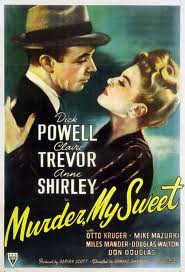
Murder, My Sweet/1944/RKO/95 min.

Dick Powell as Marlowe tells the story, in flashback, to police.

One of these days, I’ll get around to compiling my list of the Top 10 classic film noir movies. When I do, “Murder, My Sweet” (1944, RKO) will be on the roster because it’s a superb flick and a defining work of the genre, thanks to Edward Dmytryk’s directorial flair, top-notch acting and a terrific script (based on Raymond Chandler’s novel “Farewell My Lovely”) full of choice one-liners.

“Murder, My Sweet” stars Dick Powell as private eye Philip Marlowe, perhaps Chandler’s most famous character and one of the best-known screen detectives. The movie opens with Moose Malloy (Mike Mazurki) showing up at Marlowe’s office, wanting him to find his old girlfriend, Velma. Marlowe looks for clues at Florian’s, a dive bar, and at the home of widow Jessie Florian (Esther Howard). How to describe Mrs. Florian? Well, it’s hard to beat Marlowe’s take: “She was a charming middle-aged lady with a face like a bucket of mud. I gave her a drink. She was a gal who’d take a drink, if she had to knock you down to get the bottle.”

Meanwhile, Marlowe agrees to act as a sort of bodyguard for another client, fussy and effete Lindsay Marriott (Douglas Walton) who must deliver a ransom for stolen jewels. The exchange doesn’t go well – Marriott is murdered and Marlowe takes a crack on the head. Once back at the office, Marlowe is visited by a reporter asking questions about a stolen jade necklace. The “reporter” turns out be Ann Grayle (Anne Shirley), a cute, feisty Girl-Scout type from a wealthy family. Pretty quickly, Marlowe meets Ann’s cootish Daddy (Miles Mander) and her femme fatale stepmother Helen (Claire Trevor).

The introduction of Helen Grayle (Claire Trevor) and Philip Marlowe (Dick Powell) is one of film noir's great meetings.

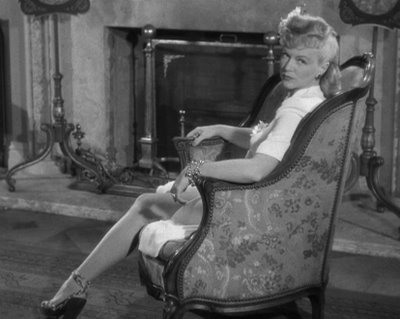
And a great meeting it is, a bit like Stanwyck and MacMurray in “Double Indemnity,” but here Trevor, dressed to the nines and sporting ankle-strap chunky heels, can’t really be bothered with coy flirtation. World-weary and blasé, she gives Marlowe the once-over without a word, just a great look of “another day, another guy.” A few minutes later she does fight the ennui enough to say pointedly, “Let’s dispense with the polite drinking, shall we?”

Besides drinking and shopping, Helen likes to dance and has no shortage of partners – guys who take her out on the town because Mr. G isn’t quite up to it. Turns out, Marriott was one of Helen’s companions and had been trying to help her buy back a stolen jade necklace. Now she thinks Marlowe might be up to the task.

But Marlowe isn’t easily seduced, even though he pretends to be if he thinks it will yield a clue or two. As he figures out who’s guilty of what, we meet Marriott’s suave, sinister chum Jules Amthor (Otto Kruger) and the nefarious Dr. Sonderborg (Ralf Harolde).

Dick Powell and Anne Shirley

With its constantly twisting plot, original music by Roy Webb and high-contrast, shadow-heavy visuals from cinematographer Harry J. Wild, “Murder, My Sweet” is awfully good fun to watch.

John Paxton’s sharp screenplay honors Chandler’s wit and many lines still seem fresh today. Ann rails against “big league blondes: beautiful, expensive babes who know what they’ve got – all bubble bath and dewy morning and moonlight. And inside: blue steel, cold – cold like that, only not that clean.” Helen’s retort is simple: “Your slip shows, dear.”

The movie fared well with critics and audiences – the popular appeal was at least in part because leading man Powell was a matinée idol and musical comedy star. Financially strapped RKO signed him to a contract hoping he could pull in much-needed cash at the box office; Powell signed with the condition that he could first play a straight dramatic role. The studio changed the movie’s name from “Farewell, My Lovely” so that viewers wouldn’t mistake it for a musical.

Mike Mazurki

Edward Dmytryk

Though Dmytryk wasn’t thrilled with this casting decision, Powell did a near-flawless job, earning approval from both the director and Chandler. Trevor and Shirley match his fine work as do Howard, Walton, Mander and Kruger. And Mazurki was perfectly cast. Trevor was quite the celluloid bad girl; most notably as the cold-blooded temptress in “Born to Kill” (1947, Robert Wise). She won the best supporting actress Oscar for her role as gangster Edward G. Robinson’s moll in the classic “Key Largo” (1948, John Huston).

Dmytryk deftly balances cynicism and anxiety with acerbic humor and lighthearted romance. Gifted at creating suspense and edgy moods, he is an undisputed master of film noir. After “Murder, My Sweet,” he helmed “Cornered” (1945), “Crossfire” (1947), “The Hidden Room” (1949), “The Sniper” (1952) and “Mirage” (1965).

His career was sidetracked, however, by the House Un-American Activities Committee (HUAC), and its unconstitutional efforts to eradicate a perceived Communist influence in Hollywood. Dmytryk was one of the Hollywood Ten who refused to cooperate with HUAC. But, after spending time in prison, Dmytryk changed his mind, testified before the committee and named names of supposed Communists.

Despite his decision to testify and the enmity it earned him, Dmytryk remains one of noir’s best directors.

‘Murder, My Sweet’ quick hit

Murder, My Sweet/1944/RKO/95 min.

“Murder, My Sweet” is a superb flick and a defining work of the film noir genre, thanks to Edward Dmytryk’s directorial flair, top-notch acting and a terrific John Paxton script (based on Raymond Chandler’s novel “Farewell, My Lovely”). Musical star Dick Powell took a gamble by playing private eye Philip Marlowe and the risk paid off.

Tracking down a showgirl for an ex-con ignites the action in a complicated plot; Chandlerian weirdos, well dressed hustlers and eloquent thieves abound. Also starring Claire Trevor, Anne Shirley, Mike Mazurki, Esther Howard and Otto Kruger.


Happy Valentine’s Day from FNB!

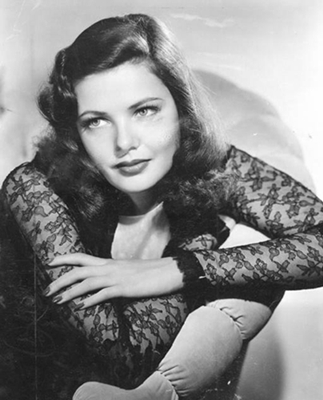
Gene Tierney

On Valentine’s Day, I’m reminded of a line from 1945’s “Leave Her to Heaven,” starring Gene Tierney as Ellen Berent, a socialite who marries writer Richard Harland (Cornel Wilde). “There’s nothing wrong with Ellen,” says her mother (Mary Philips). “It’s just that she loves too much.”

In this case, Mumsy’s really in denial because Ellen’s idea of love is flat-out obsession, which of course leads to trouble. But, no matter, “Leave Her to Heaven” is a wonderful film noir (directed by John M. Stahl, it also stars Jeanne Crain and Vincent Price) and, for today, too much seems just right.

As Oscar Wilde said, “Moderation is a fatal thing. Nothing succeeds like excess.”

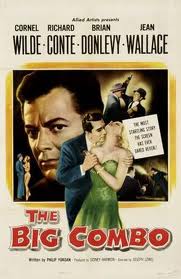
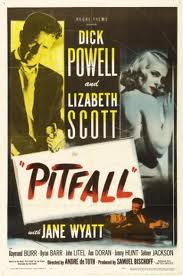
‘The Big Combo’ and ‘Pitfall’ to screen in downtown LA

The Million Dollar Theater in downtown Los Angeles will show two classics of film noir on Wednesday night.

“The Big Combo” (1955) by Joseph H. Lewis
Cornel Wilde plays Police Lt. Leonard Diamond, a cop on a mission to nail a badass gangster (Richard Conte). Jean Wallace (Wilde’s real-life wife) plays the woman they both love. Lewis, the auteur of  “Gun Crazy,” directed. Noir master John Alton (“T-Men”) was the cinematographer and David Raksin (“Laura”) composed the music. Leonard Maltin calls it “a cult item, stylishly directed.”

“Pitfall” (1948) by André De Toth
Murder is the last thing on John Forbes’ mind when he starts an affair with model Mona Stevens. He’s just bored with the insurance biz and married life. But this is film noir and things get complicated quickly, especially since Mona’s also involved with an embezzler.

“Pitfall” stars Dick Powell, Lizabeth Scott, Jane Wyatt as Mrs. Forbes and Raymond Burr as MacDonald, a nosy, lecherous ex-cop. MacDonald is one of noir’s slimiest villains and this is one of Burr’s best performances.

The show starts at 7:30 p.m. this Wednesday, Feb. 8. The theater is at 307 S. Broadway Ave., Los Angeles, 90013. Tickets are $10.

Free stuff from FNB: Win ‘Notorious’ by Alfred Hitchcock

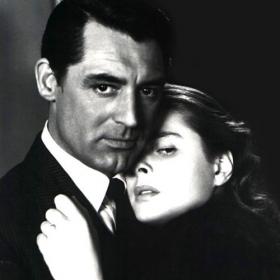
Cary Grant and Ingrid Bergman in "Notorious"

In honor of Valentine’s Day, I am giving away a DVD copy of the 1946 Alfred Hitchcock classic “Notorious,” starring Cary Grant, Ingrid Bergman and Claude Rains. Both an espionage thriller and a tortured love story, the movie is considered one of Hitchcock’s finest works and was François Truffaut’s fave. I will run a review in the next few weeks.

(Patricia is the winner of the January reader giveaway, a paperback copy of “We Need to Talk About Kevin” by Lionel Shriver. Congrats to Patricia and thanks to all who entered!)

To enter the February giveaway, just leave a comment on any FNB post from Feb. 1-29. We welcome comments, but please remember that, for the purposes of the giveaway, there is one entry per person, not per comment.

The winner will be randomly selected at the end of the month and announced in early March. Include your email address in your comment so that I can notify you if you win. Your email will not be shared. Good luck!

Honey, your February noir horoscope is here …

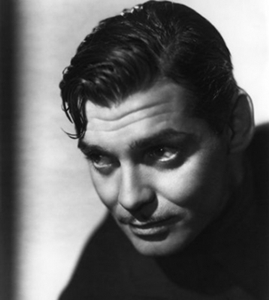
Clark Gable

Fate reigns supreme in film noir, but that doesn’t mean we don’t love us some zodiac fun. Hope your February is full of luscious roses and flashy rocks. And happy birthday, Aquarius and Pisces!

A special shout-out to Aquarians Clark Gable and John Ford (both Feb. 1), Lana Turner (Feb. 8), Jennifer Aniston (Feb. 11), Kim Novak (Feb. 13) and Pisces women Drew Barrymore (Feb. 22), Joan Bennett and Elizabeth Taylor (Feb. 27).

Lana Turner

Aquarius (January 21-February 19): As you mark your birthday or extend the celebration, remember to be patient with people who (yawn!) lack your vision and courage. Be creative, solve problems, then go with the flow while the rest of the world catches up with you. If you’ve just begun dating someone, you needn’t be available 24/7 but do make time to hang out. It’s surprising how both sides can lose interest if too many days go by without reconnecting. In a relationship? Take the lead this Valentine’s Day and make it a Monday to remember.

Pisces (February 20-March 20): This month is all about celebrating the youness of you, especially if it’s your birthday. There is a project that calls for your expertise and you are well placed to provide direction. Lovely! But do not get roped into executing the nitty-gritty tactics, just because someone asks you nicely. On the social front, keep in mind the old saying: If you can’t be good, don’t get caught. You may need Excel to track your suitors as Valentine’s Day approaches. If you’re in an exclusive relationship, a long romantic weekend may be in the cards. Pay special attention to details on the weekend of the 18th. [Read more…]

‘Marnie’ is a complex, thoughtful and satisfying story

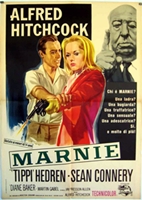
Marnie/1964/Universal Pictures/130 min.

In honor of Tippi Hedren’s 82nd birthday earlier this month (Jan. 19), I’m running this review of “Marnie.” In 1983, Hedren, a Minnesota native of Scandinavian descent, founded the Roar Foundation to support abandoned exotic felines at the Shambala Preserve in Acton, Calif.

Most cynics have romantic souls and if there’s one Hitchcock film that works on this premise it’s “Marnie.” Though the legendary auteur frequently featured redemptive, romantic endings, here a pair of feuding lovers must work through many an issue before they hit happily ever after. It’s also a portrait of a wayward woman struggling with a tortured psyche, stemming from an unresolved childhood trauma.

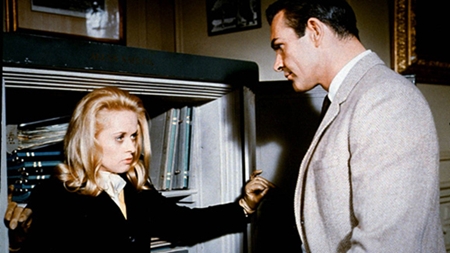
Marnie (Tippi Hedren) and Mark (Sean Connery) must work through many an issue.

In the opening scene we meet impeccably dressed, raven-haired career girl Marnie Edgar (Tippi Hedren) carrying a citron-colored handbag that’s as covetable today as it was in 1964. (Hedren starred in Hitchcock’s “The Birds” one year earlier.)

Marnie has just finished doing what she does best: stealing from her employer, then donning a new disguise so she can pull the same scam at another company.

Besides her sizable clothing and hair-color budget, Marnie wants money to give to her poor frumpy Mama (Louise Latham), telling her: “That’s what money’s for. To spend.” (Especially when it’s someone else’s cash.) But despite these handouts, which Marnie personally delivers, Mama’s uptight and hard to please, preferring to lavish her attention on a little girl from the neighborhood (Kimberly Beck) instead of on her daughter.

At her next job, Marnie sports auburn up-do’s and sensible shoes. It’s here that she meets devastatingly handsome businessman Mark Rutland (Sean Connery). Intense and domineering, Mark is quickly smitten but ice-queen Marnie has no interest in him or in any man, though she does weaken long enough to kiss him.

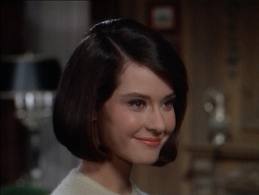
Diane Baker plays sassy Lil.

Not so impressed with Marnie is Mark’s sharp, sassy sister-in-law Lil (Diane Baker). Packed with interesting women, the cast also includes Mariette Hartley as Marnie’s office colleague and Melody Thomas Scott as young Marnie.

Marnie’s coldness just makes Mark more determined – he is used to getting what he wants – and once he finds out about her criminal past, he uses this info to hasten their marriage.

The fact that Marnie can’t stand his touch doesn’t make for the most romantic honeymoon. Perhaps if he were a tad less controlling …

Will Mark help Marnie confront her past before her spate of Dior-collar crime catches up with her? That’s the movie’s source of suspense. It’s loosely based on a novel by Winston Graham but Hitchcock typically used the literary source material as merely a starting point to create a tension-filled, sometimes terrifying, reality and render his unique vision. The script came from Jay Presson Allen, a former actress and writer, who also worked with Sidney Lumet.

Hitchcock enjoyed exploring psychosexual theory in his films, sometimes with a smirk, sometimes not. In this case, Dr. Hitch diagnoses frigidity, rescue fantasies, control issues bordering on obsession, repressed memories and of course a major power struggle.

The movie was trashed upon its release. Critics called Hitchcock sloppy and unfairly pounced on Hedren’s acting. The editing is occasionally choppy, some of the backdrops look fake, the screen goes red when Marnie sees the color red, there are thunderstorms aplenty. Though they might seem flawed or slightly old-hat, these noirish devices reflect Marnie’s off-kilter world, her confused and anguished psychological state.

And Hitchcock’s personality was too controlling and perfectionistic to have coasted through this movie. Conscious of every detail of every frame, he sometimes shopped for and selected accessories like hats and handbags because even these seemingly minor visual elements affected the color palette of each shot. He also wanted classic lines for the clothes so that in years to come they wouldn’t look dated.

Always engaging, sometimes thrilling, “Marnie” is a complex, thoughtful and satisfying story.

‘Marnie’ quick hit

Marnie/1964/Universal Pictures/130 min.

In Alfred Hitchcock’s “Marnie,” a twisted rescue fantasy meets a pretty passel of repressed memories. The wannabe rescuer is intense, domineering and drop-dead gorgeous Mark Rutland (Sean Connery). His damsel in distress, and often in disguise, is chic thief Marnie Edgar (Tippi Hedren), still dogged by a childhood trauma. Marnie is determined to buy a few new dresses for her fashion-challenged Mama (Louise Latham), just as Hitch was determined to make Tippi his new Grace Kelly. Always engaging, sometimes thrilling, “Marnie” is a complex, thoughtful and satisfying story.