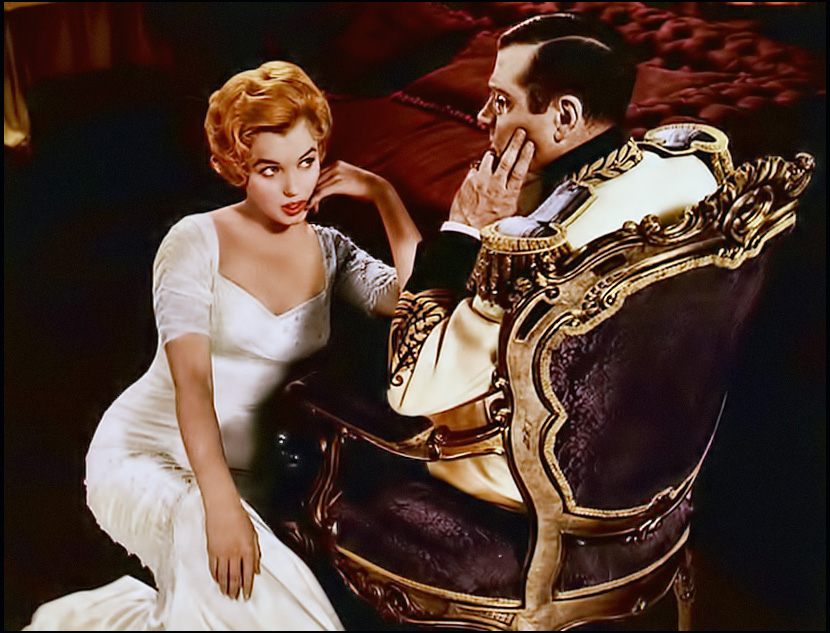
More Marilyn at the Cinematheque in Hollywood

Marilyn Monroe and Sir Laurence Olivier

The American Cinematheque will show a Marilyn Monroe double feature at 7:30 p.m. Sunday, Jan. 8, at the Egyptian Theatre in Hollywood. The movies are: 1957’s “The Prince and the Showgirl” (co-starring and directed by Sir Laurence Olivier) and Billy Wilder’s “Some Like It Hot” from 1959.

At 6:30 p.m., in the lobby, Susan Bernard will sign copies of her book, “Marilyn: Intimate Exposures.” The book consists of 125 photos by her father Bruno Bernard. The photos, ranging from 1946 to 1954, include 40 previously unpublished images. There will be a discussion between films with Susan Bernard.

Michelle Williams and Kenneth Branagh will appear at the Egyptian’s screening of “My Week with Marilyn,” directed by Simon Curtis, 7 p.m. Wednesday, Jan. 11.

General admission is $11; members pay $7. The Egyptian is at 6712 Hollywood Blvd.

FNB talks film noir with Paris-based critic Lisa Nesselson

Hope you are getting to your gatherings and getting ready to indulge!

This is a quick chat (shot quick and gritty and a tad noisy) that I had last month at the Chicago film festival with film critic Lisa Nesselson. A longtime resident of Paris, Lisa is a Chicago native. She is also charming, brilliant and delightfully funny. Lisa contributed to Variety from Paris from 1990 through 2007 and now writes for Screen International.

Additionally, from 1986-2001, she wrote the irreverent monthly film pages of the Paris Free Voice. A contributor to the BBC World Service and a former Radio France International anchor, her book-length translations from French to English include biographies of Clint Eastwood, Simone de Beauvoir and Cinémathèque Française founder Henri Langlois.

‘Nightmare Alley’ star and story dare to go against the grain

Nightmare Alley/1947/Twentieth Century Fox/110 min.

There’s a fateful moment in the beautifully lit “Nightmare Alley” in which cinematographer Lee Garmes creates a latticework of light, with neat bands of shadow slicing the room to bits. Performer/con artist Stan Carlisle (Tyrone Power) is at the height of his success, having built himself up from nothing, but he’s about to get trapped by a soigné spider woman who’s far sharper and more ruthless than he.

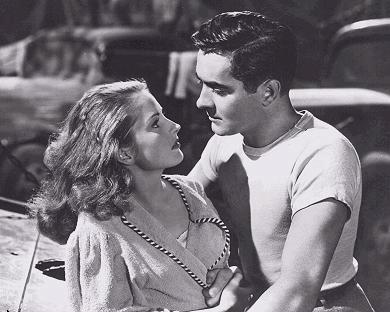
Molly (Coleen Gray) and Stan (Tyrone Power) take their code on the road.

Stan is handsome, charismatic and ambitious, a born player. He hones his craft by working in a seedy carnival and taking what he can from his fellow performers. He cozies up to Zeena (Joan Blondell), a matronly “mentalist” who’s seen better days, angling to get her secret code designed for a mindreader and an assistant.

Her former co-star and now-alcoholic husband Pete (Ian Keith) opposes the idea, but Zeena relents after Pete dies from drinking wood alcohol.

Helping Stan learn the code is Molly (Coleen Gray), easy on the eyes, eager to please and smitten with him. Zeena and Bruno the strong-man (Mike Mazurki) push Stan to marry Molly; the newlyweds form an act and leave the carnival for Chicago.

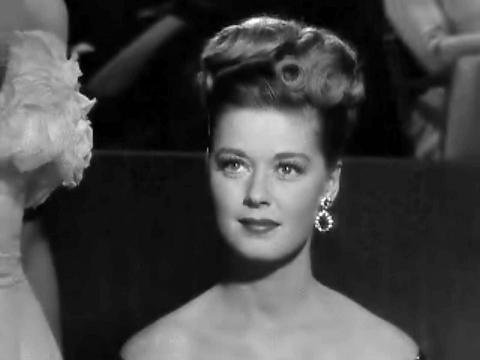
Helen Walker

At the upscale Spode Room, Stan does a reading for cooly elegant Lilith Ritter (Helen Walker), a psychologist with a roster of wealthy clients. He senses that, despite her diploma and pedigree, Lilith is a player just like he is. (Maybe it’s her slightly mannish outfits that tip him off.)

Together they see a way to cheat Lilith’s clients and rake in hundreds of thousands in cash as Stan morphs into a spiritual healer. The still-devoted Molly does her best to stand by him.

But Stan can’t compete with Lilith’s level of deception and treachery. The trap evoked in Lilith’s office by the latticework shadow is now real. Starting with a bottle of gin in a dingy hotel room, Stan begins to self-destruct.

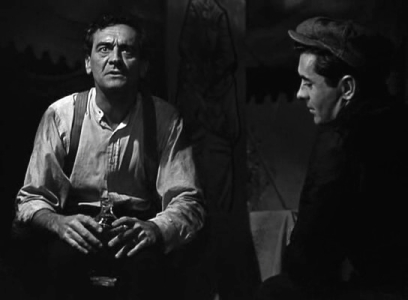
Pete (Ian Keith) talks shop with Stan (Tyrone Power).

Based on a novel by William Lindsay Gresham (Jules Furthman wrote the script) and directed by Edmund Goulding, this is an incredibly sophisticated and well made film, though it fared poorly at the box office. It may have been easy for viewers to dismiss as strange or sordid because Power plays an anti-hero and Goulding refuses to shy away from showing alcoholism and addiction.

The film revels in ambiguity and mystery, exploring questions of morality and spirituality, particularly when we see Stan layer his act with a preacher’s rhetoric, masking his cynicism and contempt for his faithful believers.

“Nightmare Alley” owes its existence and budget (this is not a B movie) to its leading man and his clout at Twentieth Century Fox. Hugely popular for his swashbuckler and romantic heroes, Tyrone Power was one of Fox’s top stars in the mid 1940s. Coming from a family of stage actors (his heritage was Irish and French), he craved more challenging projects and roles. In 1946, Power and Goulding made “The Razor’s Edge,” based on the W. Somerset Maugham novel.

Goulding, of “Grand Hotel” fame, was known as a women’s director and for throwing lavishly wild Hollywood parties. He gets outstanding work from the “Nightmare Alley” cast with Power giving subtlety and depth to a dark, complicated character. His performance as the unrepentant hustler likely helped pave the way for 1970s anti-heroes such as Jon Voight and Dustin Hoffman in “Midnight Cowboy.”

Power’s popularity and success continued, and he had another noir role in 1957’s “Witness for the Prosecution” by Billy Wilder. Sadly, it was the last film he completed. While filming “Solomon and Sheba” in Madrid, Power, 44, died from a heart attack on Nov. 15, 1958. Handsome opportunist Stan Carlisle in “Nightmare Alley” remains one of his greatest achievements.

On the radar: Battle of the Blondes begins, AFI fest kicks off, poets ponder Los Angeles noir

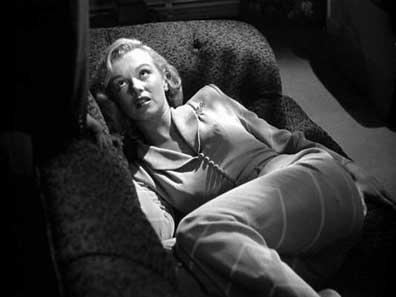
Marilyn in "The Asphalt Jungle" tops the TCM list.

One more reason to love Turner Classic Movies: The network has compiled a list of 10 favorite movie moments featuring Marilyn Monroe. The list comes as TCM gears up for its Battle of the Blondes this month, which kicks off Nov. 2 with a Marilyn Monroe double feature.

First on the fave moments list is Marilyn looking up at Louis Calhern in the classic noir “The Asphalt Jungle” from 1950 directed by John Huston. Third on the list is her sexy walk in “Niagara,” Henry Hathaway’s 1953 Technicolor noir. (“Niagara” and 1959’s “Some Like It Hot” by Billy Wilder are tonight’s double bill.)

Throughout November, TCM will celebrate Hollywood’s greatest blondes. Each Monday and Wednesday night’s lineup will feature two blondes going head-to-head in a pair of double features, including Marilyn Monroe and Jayne Mansfield on Nov. 2, Veronica Lake and Lana Turner on Nov. 7, Judy Holliday and Jean Harlow on Nov. 9, Marlene Dietrich and Ursula Andress on Nov. 14, Carole Lombard and Mae West on Nov. 16, Janet Leigh and Brigitte Bardot on Nov. 21, Betty Grable and Doris Day on Nov. 23, Julie Christie and Diana Dors on Nov. 28 and Grace Kelly and Kim Novak on Nov. 30.

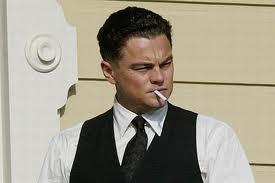
Leonardo DiCaprio

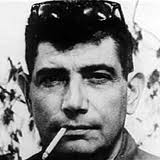
Best of the fest: The AFI FEST 2011, the American Film Institute’s annual celebration of international cinema from modern masters and emerging filmmakers, starts Nov. 3 with Clint Eastwood’s “J. Edgar,” starring Leonardo DiCaprio.

Noir gems include “Eyes Without a Face,” “The Killers,” “Nightmare Alley” “Le Cercle Rouge,” “Once Upon a Time in Anatolia” and “We Need to Talk About Kevin.” Topping my new-viewing list is: “Miss Bala,” “Art History,” “Carnage,” “Shame,” “Kill List” and “The Artist.”

The festival runs through Nov. 10 in Hollywood and I look forward to covering it.

Lines to remember: Continuing through Nov. 13, the Los Angeles Poetry Festival is hosting Night and the City: L.A. Noir in Poetry, Fiction and Film. There are readings, screenings and discussions in various locations. I’ve marked my calendar for the Raymond Chandler open reading on Nov. 6 in Hollywood.

‘Mulholland Dr.’ takes us through shiny dreams and devastating nightmares

Mulholland Dr./2001/Universal, Studio Canal/145 min.

Let’s face it, reality sucks. So, on second thought, let’s not face it.

David Lynch

Instead, pluck an image from your fantasy du jour, then jump into your limousine, Lamborghini roadster or sedan chair and head to “Mulholland Dr.” for poolside cocktails with your dear chum writer/director David Lynch.

Or just put your feet up and watch the movie. This terrific neo-noir mystery is a story within a story within a story within a story about Hollywood, its shimmering promise and dark secrets, its cut-throat power and caustic pain, and its huge cast of heroes, hopefuls, heavies and hangers-on. The film is also a visual poem and Lynch’s highly personal, surrealistic imagery resonates long after you see it.

Lynch’s Tinseltown reminds me of F. Scott Fitzgerald’s valley of ashes in “The Great Gatsby,” the famous Hollywood sign, like the eyes of Doctor T. J. Eckleburg, set amid wild delight and staggering decadence.

Lynch’s detractors complain that his motifs – portals and shadowy rooms, lurking danger beneath an innocent exterior, secret languages, nightclub singers and stages, for example – are shallow gimmicks that Lynch leans on from film to film. (His other work includes: “Eraserhead” 1977, “Blue Velvet” 1986, “Wild at Heart” 1990, the TV series “Twin Peaks” 1990-91, “Lost Highway” 1997, “Inland Empire” 2006).

Nevertheless, in each film, Lynch creates a unique cinematic world that takes your breath away with its striking beauty, sly humor, intense characters and uncommon depth. In “Mulholland Dr.” Lynch invites us into a shiny dream as well as a devastating nightmare. Though it’s a contemporary setting, there are so many retro references that the story almost feels like a period piece.

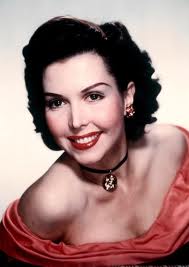
In part one, we meet golden girl Betty Elms (Naomi Watts), a young actress who’s just arrived in Hollywood. Sweet, perky and hopeful, Betty has a retro-chic apartment to live in and an audition set up for a role in a major movie. Just in case she needs to borrow a cup of sugar, her charming landlady Coco (Ann Miller, in her last movie role) is ready and waiting to help.

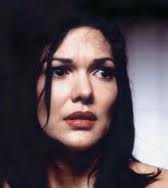
Laura Elena Harring

Ann Miller

Nothing throws this girl, not even finding a stranger using her shower. This particular mystery woman calls herself Rita (Laura Elena Harring) because she can’t remember her own name or anything else about her life. Arrestingly beautiful, with raven hair and ravishing features, Rita appears to be on the run from some nefarious mobsters but she doesn’t know why, natch.

Nor does she have any idea why she has a key and $50,000 in her handbag, which the girls hide in a hatbox. (Well done! If you’ve picked the right frock and got your lipstick on straight, why bother to carry cash?)

Betty decides that Rita needs to retrace her steps in order to regain her identity. But first Betty must prepare for her audition. Rita helps her rehearse and the next day Betty wows everyone in the room, including her debonair co-star Jimmy Katz (Chad Everett). Afterward, Betty is whisked away to meet edgy young director Adam Kesher (Justin Theroux), who’s casting a flick called “The Sylvia North Story.”

Later, over coffee at a diner (Lynch always loves a diner), Rita remembers the name Diane Selwyn; this leads them to an apartment where they make an unsettling discovery. That night, Rita has a few tricks up her sleeve for Betty – first a seduction, then a visit to a strange, nearly empty dive bar called Club Silencio, where Rebekah Del Rio, playing herself, performs a stunning a capella rendition of Roy Orbison‘s “Crying.” When they return home, Rita uses her key to open a box and Betty disappears.

Watts, Lynch, Harring and Theroux

There are several subplots involving a fantasy creature in a diner parking lot; a hitman (Mark Pellegrino) who steals an address book, then casually kills three people; and slick-suited heavies (including Dan Hedaya as Vincenzo Castigliane) pressuring Kesher to cast unknown blonde actress Camilla Rhodes (Melissa George) in his movie. Oh, and Kesher’s wife (Lori Heuring) is sleeping with the pool guy (Billy Ray Cyrus).

In part two, Lynch rejiggers this world. The glossy, fun-filled days and Betty’s wholesome aspirations are gone, replaced by pitch-black, sinister nights, acts of betrayal and quests for revenge.

“Mulholland Dr.” – whose abbreviated title may be a tribute to Billy Wilder’s “Sunset Blvd.” – deserves high praise, for its look, its performances, its humor, its risks, its weirdness. Angelo Badalamenti (he has a cameo as gangster Luigi Castigliane, a man who takes espresso extremely seriously) contributes a stellar soundtrack and Peter Deming’s cinematography, with bright light and saturated color, is a treat.

Most of all, though, Lynch’s direction is superb. So is the acting. Watts easily shifts from fluffy and fierce, graceful to gritty. Similarly, Harring makes a fluid transition from lost soul to lady in charge. Though the plot is sometimes thorny, the actors are breezy and believable.

To think that Renée Zellweger received a Best Actress Oscar nom for “Bridget Jones’s Diary” and Watts didn’t make the list is baffling. (Halle Berry won that year for “Monster’s Ball.” The other contenders were Sissy Spacek for “In the Bedroom,” Nicole Kidman for “Moulin Rouge” and Judi Dench for “Iris.”)

Lynch was nominated for a Best Director Oscar. Ron Howard won for “A Beautiful Mind,” which also won Best Picture. At Cannes, however, “Mulholland Dr.” received the Palme d’Or for best direction. (Lynch shared the honor with Joel Coen for “The Man Who Wasn’t There.”)

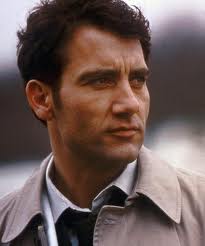
Don't want to keep Clive waiting ...

Of all that’s been written about “Mulholland Dr.” critic Stephanie Zacharek sums it up best: “‘Mulholland Dr.’ is the most womanly of David Lynch’s movies. … It’s wily and sophisticated, stylized like an art deco nude, and suffused with so much feline glamour and beauty and naked eroticism that its chief aim seems not to be to dazzle us with its typically Lynchian plot twists, but to seduce us into its sway and keep us there. This is a movie with hips.”

Speaking of seducing, I must dash back to my fantasyland. I’m meeting with my agent so I can sign that $3 million book deal. Then, I’m off to dinner and dancing with Clive Owen at the Stork Club. Ta ta!

Ann Savage in ‘Detour’ is the ultimate ‘dame with claws’

Detour/1945/PRC/67 min.

Edgar Ulmer

Luck so bad it borders on absurd, a story as flimsy as cardboard, a femme fatale who’s downright feral. That would be 1945’s “Detour,” a B classic that director Edgar Ulmer shot in less than a month for about $30,000.

Despite these limitations (or maybe because of them) Ulmer manages to work some visual miracles. Those foggy scenes where you can’t see the street? He didn’t have a street so he filled in with mist. Born in what is now the Czech Republic, Ulmer came to the US in 1923. He brought a high-art, painterly disposition to this tawdry little flick, as he did to most of his work. (Ulmer’s “The Black Cat” from 1934 is a must-see.)

With a screenplay by Martin Goldsmith (he also wrote the source story), you might say “Detour” is Ulmer’s meditation on Fate. As the film’s doomed hero puts it: “Whichever way you turn, Fate sticks out a foot to trip you.” And later: “Fate or some mysterious force can put the finger on you or me for no good reason at all.”

The doomed hero Al Roberts is memorably played by rugged, slightly boyish Tom Neal. Al plays piano in a New York nightclub; his girlfriend Sue Harvey (Claudia Drake) sings. Sue is the most wholesome nightclub singer you can imagine and maybe that’s the rub – they find it hard to make ends meet. She decides to leave New York and try her luck in Hollywood, only to end up slinging hash. (Look out for Esther Howard as a diner waitress; Howard played the haggard Jesse Florian in “Murder My Sweet” from 1944.)

To reunite with Sue, Al heads to California, hitching a ride with smug and chatty Charles Haskell Jr. (Edmund MacDonald), whose hands are mysteriously scratched. “There oughtta be a law against dames with claws,” says Haskell.

Ann Savage

When Haskell suddenly dies during Al’s turn at the wheel, Al panics and takes off with the car. Next, Al meets the striking but cheap Vera (Ann Savage), also thumbing rides and in need of a shower. (The hairdresser slathered her hair with cold cream to make it look dirty and stringy.)

Vera happens to know Haskell and she knows a good chance for blackmail when she sees one. She works one angle after another, including a scheme to steal Haskell’s inheritance money.

She. Runs. The. Show. As director Wim Wenders says in Michael Palm’s “Edgar G. Ulmer: The Man Off-Screen” documentary: “she’s 30 years ahead of her time … a revolutionary female character.” In the same documentary, actress Savage (who made five films with Neal) says of Vera: “She’s mean to the extent that she wants to be boss. She’s a real b-i-t-c-h.”

True, Vera is not the most complex character – she’s short on nuance and dimension. But then, Vera herself would sneer at the mention of nuance and complexity, and snipe something like, “Do I look like a dictionary to you?” And as a ruthless, conniving, raw femme fatale, Savage’s Vera is hard to match.

Ulmer amazes with his deft and daring handling of the material. It’s unfortunate that he didn’t get to unleash his imagination and talent on higher-level projects. Though he worked with directors such as Fritz Lang, F.W. Murnau, Max Reinhardt, Ernst Lubitsch, Cecil B. DeMille, Erich von Stroheim, Robert Siodmak, Fred Zinneman and Billy Wilder, he was never part of the Hollywood elite.

Ulmer has said he would’ve been unhappy with the constraints of mainstream, commercial productions, but it’s likely he still craved the recognition and respect that A-list status confers. Also, Ulmer was ostracized from the in-crowd when he fell in love with the wife of an independent producer. She left her husband, Max Alexander, the nephew of Universal president Carl Laemmle.

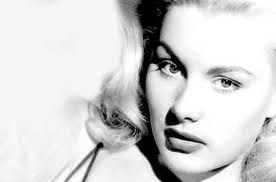
Barbara Payton

Still, it seems Ulmer fared a bit better than his leading man Tom Neal (1914-1972) whose off-screen life would be good fodder for a noir. Neal was born into a wealthy family in Evanston, Ill., and attended Northwestern University and Harvard Law.

In 1951, he attacked fellow actor Franchot Tone in a jealous fit over actress Barbara Payton, inflicting broken bones and a concussion, and damaging his own reputation to the point of ending his career. In 1965, he was convicted of involuntary manslaughter in the shooting death of his third wife; he was paroled after serving six years of a 10-year sentence.

“Detour” was remade in 1992, starring Tom Neal Jr.

The original is recognized as corner stone of the noir genre. Filmmaker Errol Morris counts it as a favorite film, noting that: “It has an unparalleled quality of despair, totally unrelieved by hope.”

Ann Savage photo from AP/Ann Savage Archive

On the radar: Books, a blogathon and a bash; Billy Wilder, Bono and Bogart

Must-read material: The Fatal Gift of Beauty: The Trials of Amanda Knox by Nina Burleigh. Knox and Raffaele Sollecito were convicted of murdering Meredith Kercher, a British student who died on Nov. 1, 2007 in Perugia, Italy. They are appealing their convictions. As Burleigh told Elle magazine: “She was investigated, arrested and convicted as part of a massive multicultural misunderstanding, abetted by her own quirky personality. … Your identity as a young, attractive woman does not belong to you.”

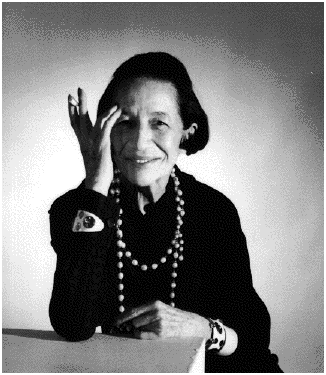
Diana Vreeland

Diana Vreeland invented the concept of a fashion editor, putting her indelible stamp on Harper’s Bazaar from 1936 to 1962 and Vogue, where she became editor-in-chief, from 1962 to 1971. In the September issue of Harper’s, Lisa Immordino Vreeland conjures a portrait of the famous sartorial icon. When Carmel Snow offered her the Harper’s job, Diana Vreeland replied, “But Miss Snow, except for my little lingerie shop in London, I’ve never worked. I’ve never been in an office in my life. I’ve never dressed until lunch.”

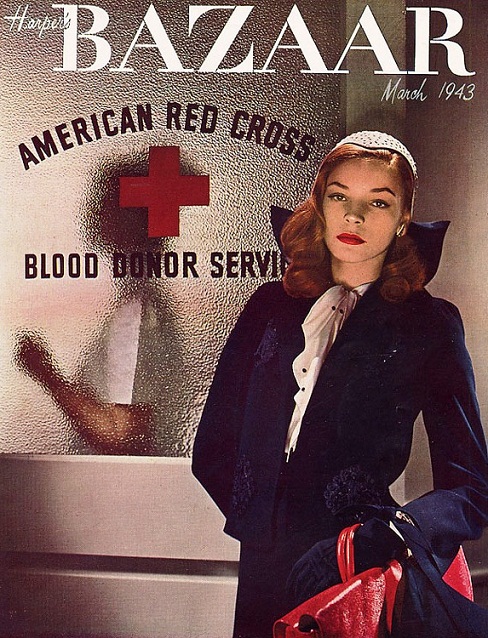
Lauren Bacall

Immordino Vreeland’s book, Diana Vreeland: The Eye Has to Travel will be published on Oct. 1. (I hope the copy editor for the book was better than the one at Harper’s; there were two glaring errors in that piece.) It was during Vreeland’s tenure at Harper’s that Lauren Bacall’s career was launched after appearing on the cover, shot by Louise Dahl-Wolfe, in March 1943.

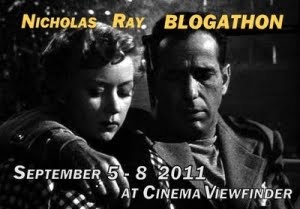
Happy birthday, Mr. Ray: In honor of director Nicholas Ray, who would have turned 100 on Aug. 7, Tony Dayoub of Cinema Viewfinder is running a Nicholas Ray Blogathon Sept. 5-8. Ray directed many noirs (“They Live By Night,” “Knock on Any Door,” “A Woman’s Secret,” “In a Lonely Place,” “Born to be Bad,” “On Dangerous Ground,” “Bigger Than Life”). I look forward to submitting my piece and reading other contributors’ work.

Go on, it’s good for the economy: FNO returns on Sept. 8! Fashion’s Night Out is a global initiative created in 2009 as a partnership between American Vogue, the Council of Fashion Designers of America, NYC & Company, and the City of New York to celebrate fashion, restore consumer confidence, boost the industry’s economy, and put the fun back in shopping. Find out what’s going on in your city and check out the merch.

With love from USPS: Billy Wilder gets his own stamp starting next year. Wilder won Academy Awards for directing “The Lost Weekend” and “The Apartment.”

Other Wilder favorites include: “Some Like It Hot,” “Double Indemnity,” “Sunset Blvd.,” “Ace in the Hole,” “Irma la Douce,” “Sabrina” and “The Seven Year Itch.” Part of a four-stamp Great Film Directors series, Frank Capra, John Ford and John Huston will also be honored.

Doc takes center stage: The Toronto International Film Festival runs from Sept. 8-18. The opening night film is “From the Sky Down,” Academy Award-winning filmmaker Davis Guggenheim’s documentary about Irish band U2. It’s the first time in 36 years that the festival will open with a documentary.

Bogey as Spade and Marlowe: The American Cinematheque’s Aero Theatre in Santa Monica is showing on Sept. 8: “The Maltese Falcon” (1941, John Huston) and “The Big Sleep” (1946, Howard Hawks). Double crossing, dubious motives and dry wit abound.

Diana Vreeland photo by Horst P. Horst

‘In a Lonely Place’ an ode to romantic, cynical noir love

In a Lonely Place/1950/Columbia Pictures/94 min.

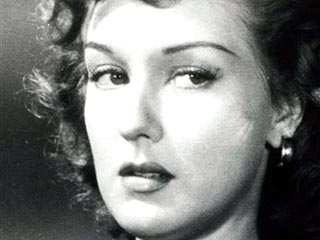
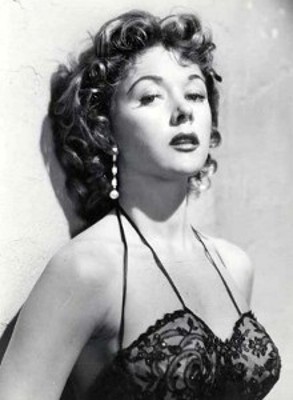
Gloria Grahame

One of Gloria Grahame’s most nuanced performances is as Laurel Gray in 1950’s “In a Lonely Place,” a noir love story from director Nicholas Ray. Laurel eschews any double-dealing or dark deeds in this film. She’s got enough on her hands trying to navigate a new romance: Does she like the way he kisses? Will he call when he says he will? Did he brutally kill a girl for no reason? You know, the usual dating stuff.

Her love interest is her neighbor, Dixon Steele (Humphrey Bogart), a volatile, sometimes violent, screenwriter, with a history of fights and scandals. Her cool affection seems the perfect salve for his simmering aggression.

The fly in the ointment is that Police Capt. Lochner (Carl Benton Reid) is convinced that Dix, in a fit of temper, murdered a hatcheck girl named Mildred Atkinson (Martha Stewart). He was, after all, the last person to see her alive. Dix professes his innocence and Laurel backs him up. But Dix’s erratic behavior gets worse and, when he proposes, Laurel’s too scared to say no.

“In a Lonely Place” is an exquisitely tender love story and it holds up incredibly well for contemporary audiences, who know the ropes of brief, ill-fated affairs. “It’s complicated” would be Laurel’s Facebook relationship status if she’d lived in the age of online communication.

On one hand, she tries to take it slow with Dix, telling him, “I don’t want to be rushed.” But she’s already lied to the police to give him an alibi for the night of the Atkinson murder. At first, the pair conveniently push the reality of Dix’s rage under the rug, though it becomes harder and harder as their shared fear (that he is capable of such a killing) slowly and steadily builds.

Much of the action takes place at the Beverly Patio Apartments complex, where Laurel and Dix both live, offering ample opportunity for skulking and spying.  Director Ray lived in a similar complex in West Hollywood and it served as the model for the film set.

If Ray is a poet as a director, this film is an ode to impossible love, a sensitive portrayal of a strong, egoic man succumbing to dark inner demons and the pain he inflicts on those around him. It might be just as apt to compare Ray to a painter so arresting and assured are his compositions (he studied architecture with Frank Lloyd Wright).

As with most of Ray’s films, “In a Lonely Place” offers powerful, sometimes blisteringly raw, performances all around. Grahame’s tear-stained face at the end is an image that never leaves you once you see it. (Ray and Grahame married in 1948, separated in 1950 and divorced in 1952).

Bogart, though he never loses his swagger, brilliantly conveys Dix’s growing desperation and alienation. Excellent in supporting parts are Frank Lovejoy as Dix’s friend and lone ally at the police station, Jean Marie “Jeff” Donnell as his friend’s wife and Art Smith as Dix’s agent.

Scripted by Andrew Solt, “In a Lonely Place” is based on a novel by Dorothy B. Hughes, which is well worth a read; it’s a very fast read by the way. In the book, Dix is a shadowy, psychopathic killer, not a successful screenwriter with a bad temper, and Hughes explores his psyche in great detail. She also conjures a gritty picture of LA after World War Two.

The movie contains a good dose of noir cynicism about Hollywood and how it treats its struggling denizens. “In a Lonely Place” would make an excellent double bill with Billy Wilder’s “Sunset Boulevard,” also from 1950.

Grahame played in many noirs (and won the best supporting actress Oscar in 1952 for her role in “The Bad and the Beautiful”) but by the early ’60s, her career was dragging and she saw for herself how Tinseltown’s chummy embrace could turn to cold shoulders and closed doors.

“In a Lonely Place” plays at 7:30 p.m. Friday, July 22, at the Los Angeles County Museum of Art (LACMA), 5905 Wilshire Blvd.

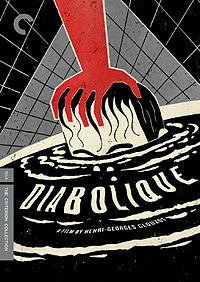
‘Diabolique’ is all surprise, all mystery, one twist after another

‘Diabolique’/1955/Cinédis/114 min.

Michael Wilmington

By Michael Wilmington

The worst kind of fictional horror, the kind that seeps into your psyche and stings into life your worst fears, sometimes springs from the seemingly mundane routines of life, when the placid world we know suddenly becomes a backdrop for darkness and evil.

In French filmmaker Henri-Georges Clouzot’s masterpiece of suspense, “Diabolique,” a school near Paris turns into the site for a cold-blooded murder and a den of everyday nightmares. “Diabolique,” called “Les Diaboliques,“ (“The Devils”) in France, is a movie about the mystery and terror of appearances, and the ways that they can ensnare us, drive us mad or destroy us.

If there was ever a movie review that needed a “Spoiler Alert” it’s “Diabolique,” a film that doesn’t have one surprise up its sleeve, but many. It’s all surprise, all mystery, one twist after the other, going off like firecrackers until the end of the film.

Vera Clouzot

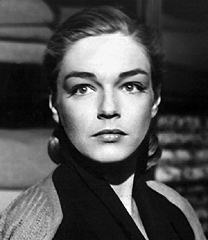
Simone Signoret

“Diabolique” takes place in a boarding school, an ugly, sprawling ex-chateau run by a ferret-faced brute of a headmaster, Michel Delassalle (Paul Meurisse) and his weak, ill and persecuted wife Christina (Vera Clouzot). Delassalle viciously exploits and abuses his wife, and is openly unfaithful to her, with the school’s science and math teacher, a sultry, smart blonde named Nicole Horner (Simone Signoret, in one of her most famous roles).

Headmaster Delassalle is an awful man and the school is an awful but believable place, with bleak dormitory rooms, rotten food, dark hallways, and a dirty swimming pool in which something terrible, we feel, will happen. Or maybe not.

In the first of the movie’s string of shocks, we discover that Christina and Nicole, wife and mistress, have formed an unholy alliance. Both seemingly disgusted by the swinish Michel, they are plotting to kill him and disguise it as an accident.

And Michel is such a cad and sadist – a brilliant performance by Meurisse, who was later just as fine for both Jean Renoir (“Picnic on the Grass”) and Jean-Pierre Melville (“Le Cercle Rouge”) – that we don’t condemn the women. Another brilliant actor of astounding longevity, Charles Vanel, plays superlatively well the retired detective Fichet, who starts sniffing around when he runs into Christina at the morgue.

The man who made this astonishing and frightening movie, writer-director Clouzot, seemed to be many things himself: a cynic and a sometime sadist to his actors (especially his own wife, Vera), a friend/collaborator of artistic greats like Pablo Picasso, a WW2 opportunist who worked for a company run by the occupying Germans, and, above all, a genius at making movies that tightened the vise of anxiety like a noose around the audiences’ throats.

Clouzot was, in fact, the only specialist in suspense who was ever plausibly bracketed with Alfred Hitchcock – and Hitchcock was one of “Diabolique” ’s biggest admirers. The wry British master of movie fear wanted to buy the novel, “Celle qui n’etait plus,” by Pierre Boileau and Thomas Narcejac, on which “Diabolique” was based.

When “Diabolique” became an international hit, Hitchcock bought another Boileau-Narcejac novel, and turned it into his masterpiece “Vertigo.” Hitch then acquired a Robert Bloch novel called “Psycho” and essentially made it his own “Diabolique,” shooting in black and white, playing up similar scenes and themes (including the idea of murder in a bathroom), borrowing liberally from the earlier movie’s style and execution, even reworking some of its advertising gimmicks. [Read more…]

Billy Wilder on Barbara Stanwyck’s ‘Double Indemnity’ wig, her wonderful brain, casting Fred MacMurray

 This post is part of the For the Love of Film (Noir) Preservation Blogathon, a fundraiser hosted by Ferdy on Films and The Self-Styled Siren to benefit the non-profit Film Noir Foundation; their event last year raised $30,000. I hope you will consider making a donation. If you give, you help save a film: 1950’s “The Sound of Fury” starring Lloyd Bridges and directed by Cy Endfield.

.

A Babs Stanwyck moment for FNB

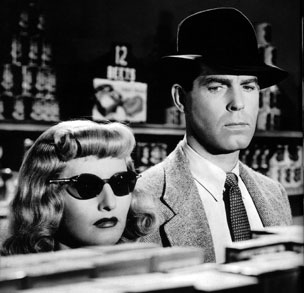
Looking through some photos the other day, I noticed that back in the late 90s, I often lost the fight with my fine, curly hair and just let it go wild (left). Not every day can be a good hair day. If I ever need assurance that every femme fatale has a styling glitch from time to time, I just look at Barbara Stanwyck’s awful wig in “Double Indemnity,” a quintessential noir from 1944, directed by Billy Wilder. 

Paramount production head Buddy DeSylva said of the stiff blonde ‘do, “We hired Barbara Stanwyck and here we get George Washington.”

It also reminded me that it had been ages since I’d looked at my copy of “Conversations with Wilder” by Cameron Crowe, published in 1999. The jacket states: “Here, in a Q&A format — a nod to Truffaut’s unforgettable Hitchcock — Billy Wilder, Hollywood’s legendary writer-director, talks to Cameron Crowe, one of today’s best-known writer-directors, about screenwriting and camera work, set design and the stars, his peers and their movies, the old studio system and filmmaking today.

Of course, I flipped right to Wilder’s answer to Crowe’s question about the direction given to Barbara Stanwyck in “Double Indemnity” for the silent shot on her face while the murder is occurring. 

Said Wilder: Sure, that was a highly intelligent actress, Miss Stanwyck. I questioned the wig, but it was proper, because it was a phony wig. It was an obviously phony wig. And the anklet — the equipment of a woman, you know, that is married to this kind of man. They scream for murder.

Barbara Stanwyck and Fred MacMurray star in "Double Indemnity" from 1944. Both played against type.

Yeah, naturally we rehearsed this thing. But I rehearsed it with her once or twice, that’s the maximum, and it was not that much different from the way she would have done it. She was just an extraordinary woman. She took the script, loved it, right from the word go, didn’t have the agent come and say, “Look, she’s to play a murderess, she must get more money, because she’s never going to work again.”

With Stanwyck, I had absolutely no difficulties at all. And she knew the script, everybody‘s lines. You could wake her up in the middle of the night and she’d know the scene. Never a fault, never a mistake — just a wonderful brain she had.

Crowe asked if the part had been written for Stanwyck. Wilder said: Yeah. And then there there was an actor by the name of Fred MacMurray at Paramount, and he played comedies. Small dramatic parts, big parts in comedies. I let him read it, and he said, “I can’t do that.” And I said, “Why can’t you?” He said, “It requires acting!” [Laughs.] I said, “Look, you have now arrived in comedy, you’re at a certain point where you either have to stop, or you have to jump over the river and start something new.” He said, “Will you tell me when I’m no good?” [He nods: a partnership is born.] And he was wonderful because it’s odd casting.

Paramount image of “Double Indemnity”