The ‘pulchritudinous and punctual’ Marilyn Monroe sings Happy Birthday, Mr. President … and more

After reading about Marilyn Monroe and watching some of her movies over her birthday weekend, I felt like sharing these video clips.


Marilyn sang on Saturday, May 19, 1962, for President John F. Kennedy at a celebration of his 45th birthday, 10 days before his actual birthday (Tuesday, May 29).

#

Marilyn sings in “Some Like It Hot,” from 1959, directed by Billy Wilder.

#

Marilyn sings “Diamonds are a Girl’s Best Friend” in the musical “Gentlemen Prefer Blondes,” directed by Howard Hawks and choreographed by Jack Cole. To read more about Cole and his career, visit dance critic Debra Levine’s wonderful arts meme.

#

And, while reading about Marilyn, I was struck by her insightful notes on Fox’s final cut of “The Prince and the Showgirl” (1957, Laurence Olivier): “I am afraid that as it stands it will not be as successful as the version all of us agreed was so fine. Especially in the first third of the picture the pacing has been slowed and one comic point after another has been flattened out by substituting inferior takes with flatter performances lacking the energy and brightness that you saw in New York. Some of the jump cutting kills the points, as in the fainting scene.

“The coronation is as long as before if not longer, and the story gets lost in it. American audiences are not as moved by stained glass windows as the British are, and we threaten them with boredom. I am amazed that so much of the picture has no music at all when the idea was to make a romantic picture. We have enough film to make a great movie, if only it will be as in the earlier version. I hope you will make every effort to preserve our picture.”

In the end, no changes were made to the picture.

From “The Secret Life of Marilyn Monroe” by J. Randy Taraborrelli

(Note: Film noir horoscopes will return next month.)

Happy birthday, Marilyn

For what would have been Marilyn Monroe’s 86th birthday, I’ve compiled quotations from her and about her. If you have a favorite quotation from or about MM, please send it and I will add it to the list. I have credited the photographers wherever possible; copyright of all photos belongs to the photographers and/or their estates/representatives. (Note: Film noir horoscopes will return next month.)

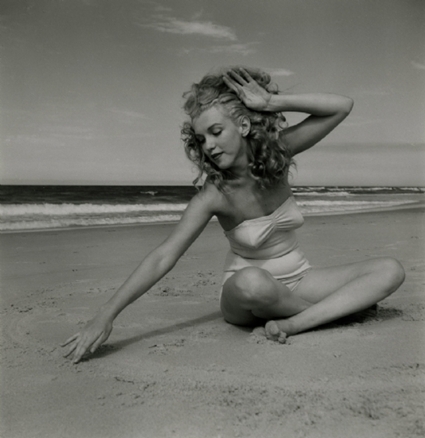
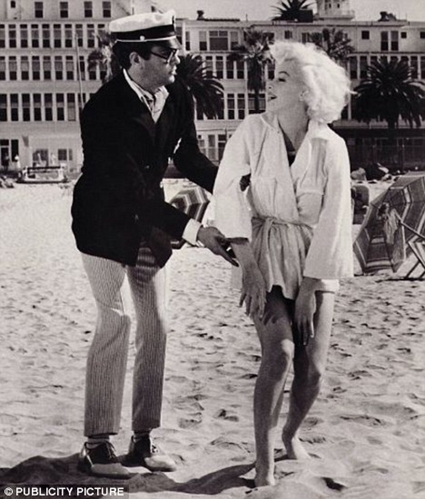
An early shot of Marilyn on the beach; she loved the water.

FROM MARILYN …

“The real lover is the man who can thrill you by touching your head or smiling into your eyes or just staring into space.”

“I love champagne – just give me champagne and good food, and I’m in heaven and love.”

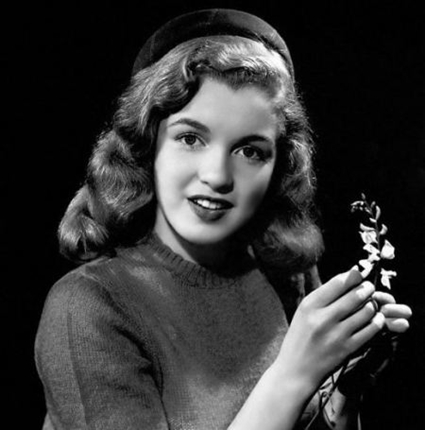
Marilyn started out as a model.

“The body is meant to be seen, not all covered up.”

“Sex is part of nature. I go along with nature.”

“My illusions didn’t have anything to do with being a fine actress, I knew how third rate I was. I could actually feel my lack of talent, as if it were cheap clothes I was wearing inside. But, my God, how I wanted to learn, to change, to improve!”

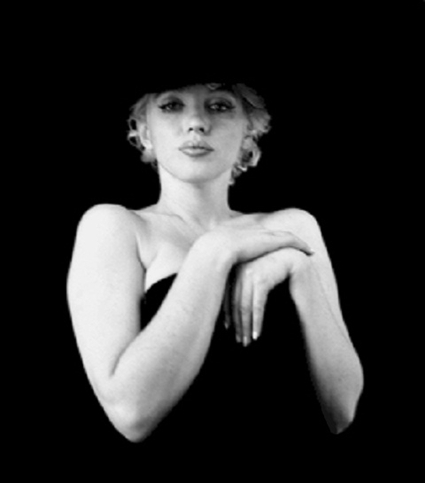
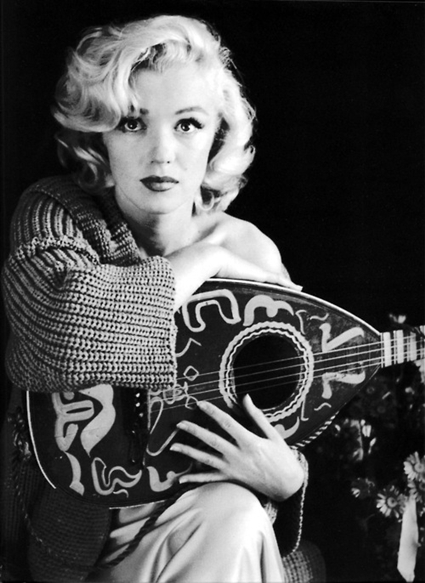
Marilyn shot by Milton Greene

“I don’t mind living in a man’s world as long as I can be a woman in it.”

“Husbands are chiefly good as lovers when they are betraying their wives.”

“People had a habit of looking at me as if I were some kind of mirror instead of a person. They didn’t see me, they saw their own lewd thoughts, then they white-masked themselves by calling me the lewd one.”

Marilyn shot by Milton Greene

“All the men I know are spending the day with their wives and families, and all the stores in Los Angeles are closed. You can’t wander through looking at all the pretty clothes and pretending to buy something.” – on why she hated Sundays

“Everyone’s just laughing at me. I hate it. Big breasts, big ass, big deal. Can’t I be anything else? Gee, how long can you be sexy?”

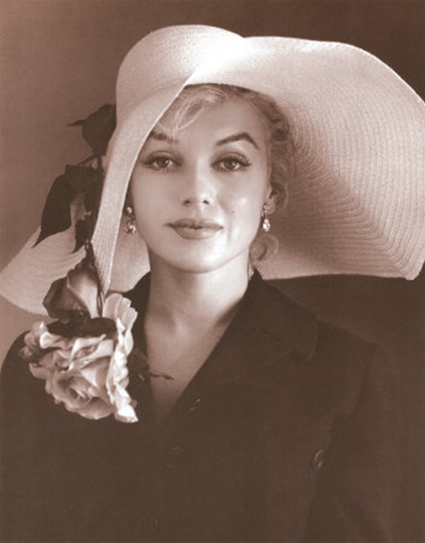
I love this shot and the elegant hat.

“Looking back, I guess I used to play-act all the time [as a child]. For one thing, it meant I could live in a more interesting world than the one around me.”

“No one ever told me I was pretty when I was a little girl. All little girls should be told they’re pretty, even if they aren’t.”

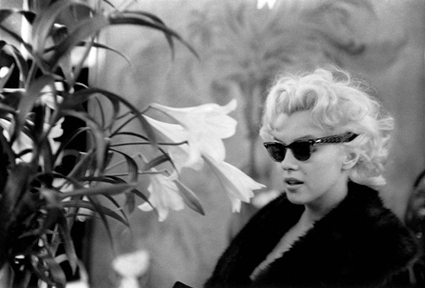
Marilyn in New York, shot by Ed Feingersh

“I’m selfish, impatient and a little insecure. I make mistakes, I am out of control and at times hard to handle. But if you can’t handle me at my worst, then you sure as hell don’t deserve me at my best.”

“My problem is that I drive myself … I’m trying to become an artist, and to be true, and sometimes I feel I’m on the verge of craziness. I’m just trying to get the truest part of myself out, and it’s very hard. There are times when I think, ‘All I have to be is true.’ But sometimes it doesn’t come out so easily. I always have this secret feeling that I’m really a fake or something, a phony.”

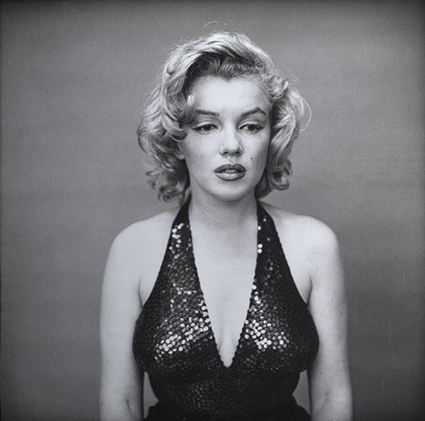
Marilyn shot by Richard Avedon

“Hollywood is a place where they’ll pay you a thousand dollars for a kiss and fifty cents for your soul.”

ABOUT MARILYN …

“Our marriage was a good marriage … it’s seldom a man gets a bride like Marilyn. I wonder if she’s forgotten how much in love we really were.” – Jim Dougherty talking to Photoplay magazine, 1953; they were married from 1942-46.

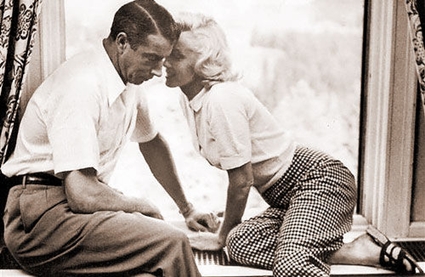
Marilyn and Joe DiMaggio were married less than a year.

“It’s like a good double-play combination. It’s just a matter of two people meeting and something clicks.” – Joe DiMaggio; he was married to Marilyn from Jan. 14, 1954 to Oct. 27, 1954

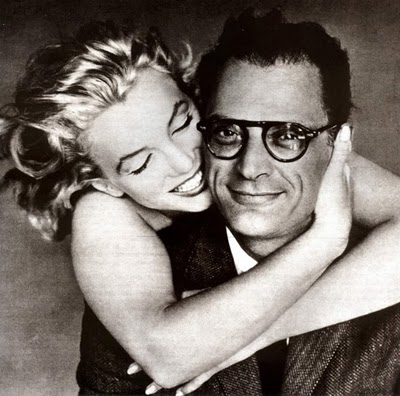
Marilyn and Arthur Miller, her third husband

“She was a whirling light to me then, all paradox and enticing mystery, street-tough one moment, then lifted by a lyrical and poetic sensibility that few retain past early adolescence. …

“She had no common sense, but what she did have was something holier, a long-reaching vision of which she herself was only fitfully aware: humans were all need, all wound. What she wanted most was not to be judged but to win recognition from a sentimentally cruel profession, and from men blinded to her humanity by her perfect beauty. She was part queen, part waif, sometimes on her knees before her own body and sometimes despairing because of it. …

“To have survived, she would have had to be either more cynical or even further from reality than she was. Instead, she was a poet on a street corner trying to recite to a crowd pulling at her clothes.” – Arthur Miller, her husband from 1956-61

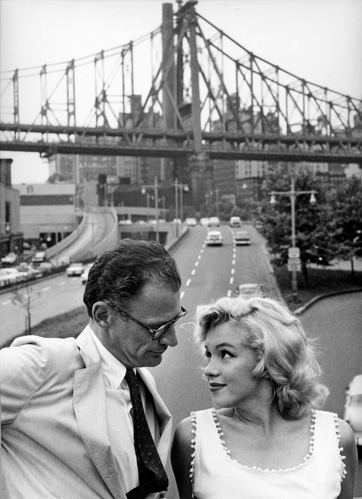
Marilyn Monroe and Arthur Miller in front of the Queensboro Bridge, New York, 1957. Sam Shaw/ Shaw Family Archives, Ltd.

“There’s a beautiful blonde name of Marilyn Monroe who makes the most of her footage.” xxxxxLiza Wilson of Photoplay magazine, writing about “The Asphalt Jungle,” 1950

She was, “a female spurt of wit and sensitive energy who could hang like a sloth for days in a muddy-mooded coma; a child girl, yet an actress to loose a riot by dropping her glove at a premiere; a fountain of charm and a dreary bore … she was certainly more than the silver witch of us all.” – Norman Mailer

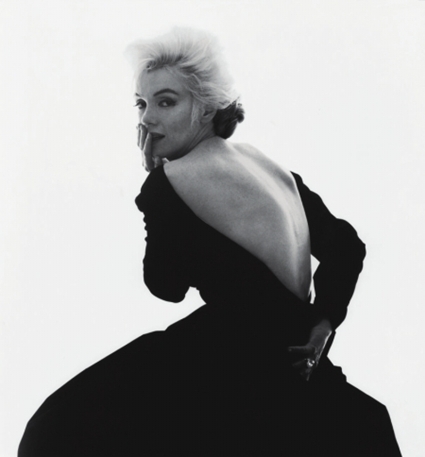
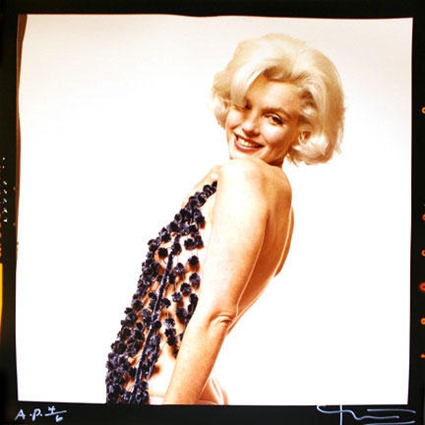
Marilyn shot by Bert Stern, 1962

‘‘From families that owned little but their own good names, she had inherited the fierce pride of the poor. Because she was sometimes forced to give in, to sell herself partially, she was all the more fearful of being bought totally.’’ – Gloria Steinem

“She deeply wanted reassurance of her worth, yet she respected the men who scorned her, because their estimate of her was her own.” – Elia Kazan

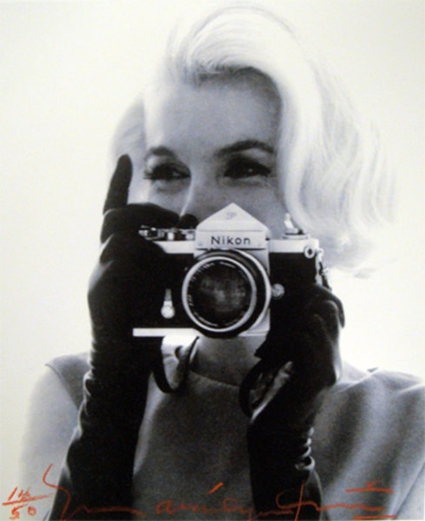
Marilyn shot by Bert Stern, 1962

All the sex symbols were endowed with a large portion of earthy coarseness. Marilyn had the most. … Only an inherent whore could walk like Marilyn and dress like Marilyn. … She had a trick of making all men feel she could be in love with them and I think she could be, a sort of saving each one for a rainy day, for when things would get tough again in her life and she would need help. … I saw the hope and the disappointments. The longing to give what the people wanted and, at the same time, to become a complete person herself. She was also selfish, rude, thoughtless, completely self-centered. She kept people waiting for hours.” – Hollywood columnist Sheilah Graham

Marilyn shot by Bert Stern, 1962

“The luminosity of that face! There has never been a woman with such voltage on the screen, with the exception of Garbo.” – Billy Wilder

“If she’d been dumber, she’d have been happier.” – Shelley Winters

“Everything Marilyn does is different from any other woman, strange and exciting, from the way she talks to the way she uses that magnificent torso.” – Clark Gable, her co-star of 1961’s “The Misfits,” about which he said: “This is the best picture I have made and it’s the only time I’ve been able to act.

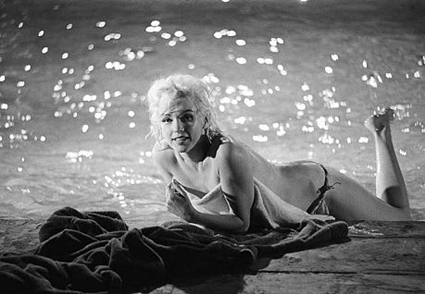
Marilyn shot by Lawrence Schiller on the set of “Something’s Got to Give,” 1962

“Her mixture of wide-eyed wonder and cuddly drugged sexiness seemed to get to just about every male; she turned on even homosexual men. And women couldn’t take her seriously enough to be indignant; she was funny and impulsive in a way that made people feel protective. She was a little knocked out; her face looked as if, when nobody was paying attention to her, it would go utterly slack – as if she died between wolf calls.” – Pauline Kael

“What I particularly liked about Marilyn was that she didn’t act like a movie star. She was down to earth. Although she was 28, she looked and acted like a teenager. … I was most impressed that Marilyn was always polite and friendly to everyone on the set. She was no phony or snob. … Marilyn always seemed determined to talk to me about her childhood. We would be discussing a subject of current interest to her and she would somehow bring up an incident from her bygone days.” – Photographer George Barris

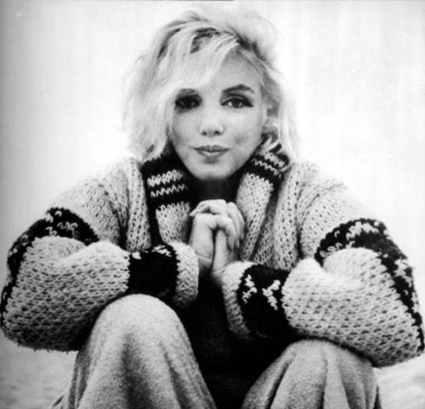
Marilyn shot by George Barris, 1962

“I liked her. She was a good kid. But when you looked into her eyes, there was nothing there. No warmth. No life. It was all illusion. She looked great on film, yeah. But in person … she was a ghost.” – Dean Martin, her co-star in 1962’s (unfinished) “Something’s Got to Give”

“Nobody could be as miserable as she was in such a loving, good-natured way. No matter how sad she may have been, she was never mean, never lashed out at me. Instead she just wanted to hug me and have me hug her and tell her it was all going to work out. That it didn’t, broke my heart.” – George Jacobs, who was Frank Sinatra’s valet

“Marilyn Monroe was a legend. In her lifetime she created a myth of what a poor girl from a deprived background could attain. For the entire world she became a symbol of the eternal feminine.” – Lee Strasberg in his eulogy

Marilyn Monroe honored with exhibits, Hollywood film festival

This summer marks the 50th anniversary of Marilyn Monroe’s death on August 5, 1962.

In New York, more than 50 photographs of Marilyn by Lawrence Schiller, many never-before-seen, go on public display this week at the Steven Kasher Gallery.

Tonight I am heading to a preview of Marilyn MonroeAn Intimate Look at the Legend at the Hollywood Museum. The exhibit opens Friday, June 1, which would have been Marilyn’s 86th birthday.

On display will be work by photographer George Barris, photos from her childhood, early modeling days and life as a star as well as famous wardrobe pieces, private documents and personal effects, such as cosmetics.

Also, on June 1, Playboy and Grauman’s Chinese Theatres are hosting a Marilyn Monroe Film Festival. Opening night is “Some Like It Hot” and one of my fellow fans has kindly provided this review.

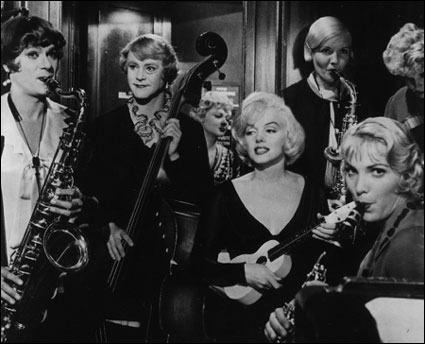
Writer/director Billy Wilder deliberately kept his two cross-dressing stars (Tony Curtis and Jack Lemmon, at left) straight in order to heighten the humor.

Ribald, jazzy, sexy joy and pure gold from the 20th century’s reigning sex symbol

SOME LIKE IT HOT/1959/MGM, UA/120 min.

By Michael Wilmington

The place: Chicago. The color: a film noirish black and white. The caliber: 45. The proof: 90. The time: 1929, the Capone Era and the Roaring Twenties, roaring their loudest.

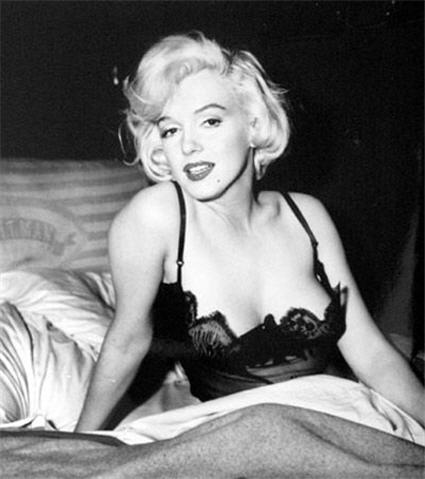
Sugar Kane of “Some Like It Hot” was one of Marilyn’s top roles.

We’re watching “Some Like It Hot” and Tony Curtis and Jack Lemmon are playing Joe and Jerry: two talented but threadbare Chicago jazz musicians working in a speak-easy fronted as a funeral parlor. Joe, who plays saxophone, is a smoothie and a champ ladies’ man. Jerry is your classic Jack Lemmon schnook, with a couple of kinks thrown in.

After getting tossed out of their speak-easy band jobs by a police raid and accidentally witnessing the St. Valentine’s Day Massacre (ordered by their ex-employer, George Raft as natty gangster Spats Colombo), they flee to Miami. They’re chased by the gangsters and the cops (Pat O’Brien as Detective Mulligan) but the guys are disguised as Josephine and Daphne, musicians in an all-female jazz orchestra.

The star of Sweet Sue and her Society Syncopators, songbird and ukulele player Sugar Kane, is the Marilyn Monroe of our dreams. Sugar has a weakness for saxophone players. Josephine and Daphne have a weakness, period. Director Billy Wilder, who made lots of gay jokes in his time, deliberately keeps his two cross-dressing stars straight.

In Miami, land of dreams and beaches and bathing beauties, the “ladies” meet millionaires, including Osgood Fielding III (Joe E. Brown), who marries chorus girls like some people catch trains. They also meet gangsters jumping out of birthday cakes, waving submachine guns. Miami, to quote Sugar Kane, is runnin’ wild. (“Runnin’ wild. Lost control. Runnin’ wild. Mighty bold. Feelin’ gay, reckless too! Carefree mind, all the time, never blue!”)

“Some Like It Hot” is full of playful references to classic gangster movies like “Little Caesar” and “Scarface.” (At one point, Edward G. Robinson, Jr. flips a coin just like Raft did in Howard Hawks’ “Scarface.” Raft grabs it and demands: “Where’d you learn that cheap trick?”)

Risqué, quick-witted, scathingly funny, unfazed by foibles and unfooled by phonies, Wilder and co-writer I. A. L. “Izzy” Diamond were two Hollywood moviemakers who could cheerfully rip up the establishment, and make the establishment love it – a pair of razor-sharp script wizards who understood our society to its core, relishing its delights and scorning its hypocrisies. And with “Some Like It Hot,” they broke the comedy bank.

The movie provided plum roles for Tony Curtis, Marilyn and their co-stars.

Jerry and C. C. Baxter, of “The Apartment,” were Lemmon’s two greatest performances, and they’re as good as any American movie actor ever gave. The movie also handed Tony Curtis and Joe E. Brown their best movie roles (well, for Tony, probably a tie with Sidney Falco in “Sweet Smell of Success”). Sugar Kane was one of Marilyn’s top roles as well.

Ah, Marilyn. Who could forget the country’s and the 20th century’s reigning sex symbol crawling all over Tony Curtis in a borrowed yacht and a skin-tight gown (while Tony does his best Cary Grant impression)? As Jerry says when he spots her doing her famous wiggle-walk in the train station: “Look at that, it’s like Jell-O on springs! I tell you, it’s a whole different sex.”

Marilyn had a little trouble with her lines in “Some Like It Hot,” but we’re talking about dialogue, not curves. Wilder insisted to his dying day, that although it may have taken a while with Marilyn, it was worth it. Always. What you got was pure gold. The movie is pure gold too. Pure hilarity, pure straight-up Billy Wilder. It’s a ribald, jazzy, sexy joy – an absolute delight. As Osgood would say: “Zowie!”

Silver and Ursini reflect on the mighty influence of film noir

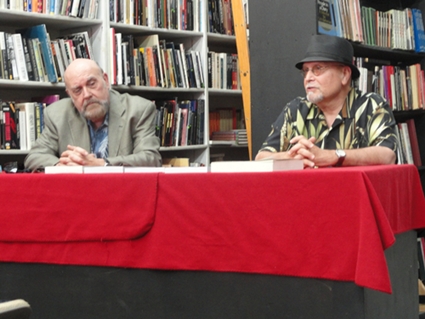
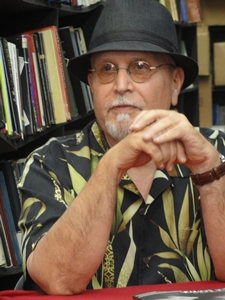
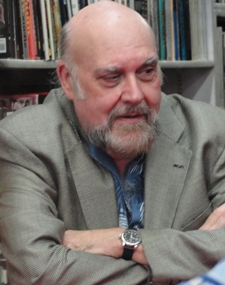
Alain Silver (left) and James Ursini discuss their book, “Film Noir: The Directors.”

Historians/authors/editors Alain Silver and James Ursini discussed and signed their new work, “Film Noir: The Directors” (Limelight Editions, $24.99, multiple contributors) on Saturday afternoon at Larry Edmunds Bookshop in Hollywood.

James Ursini

Ursini maintains that film noir is the most important artistic movement Hollywood has produced, and one that’s perfectly capable of jumping genres from Westerns to sci-fi to the traditional women’s picture.

Said Ursini: “Film noir is the overwhelming influence on directors today, in film, TV, comic books … in America and worldwide. Though it went into a sort of remission in the late ’50s, by the ’70s it was back and it never stopped. It’s an incredibly vibrant movement that’s as influential today as it was in the ’40s and ’50s.”

Though appreciated by French critics, most film noir titles (especially low-budget B movies) were widely snubbed by America’s cinematic elite. Ursini recalled that as a UCLA film-school student in the late ’60s, he had to push hard to be allowed to write a paper on director Henry Hathaway.

Alain Silver

Silver pointed out that though the two most frequently cited factors in film noir’s development are the exodus of European filmmaking talent to the U.S. starting in the 1930s and the canon of hard-boiled American literature by authors such as James M. Cain, Dashiell Hammett and Raymond Chandler, the real story is more complicated.

Specifically, it’s hard to pinpoint exactly what inspired these very different directors (the book covers 30) to pursue this unique aesthetic, often self-consciously borrowing and sharing ideas. One certainty, though: Billy Wilder’s “Double Indemnity” (1944) was the prototype for the genre.

He added that because of World War II, the production code loosened and the American public developed a taste for realism. Were audiences of the ’40s and ’50s shocked by these cynical, gritty, fateful stories on the screen? It’s hard to say. Silver said the most interesting contextual endeavor now would be to compare the audiences’ expectations against their reactions.

Photos copyright of Film Noir Blonde

Billy Wilder superbly skewers Tinseltown in ‘Sunset Blvd.’

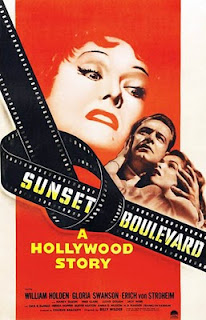
Sunset Blvd./1950/Paramount Pictures/110 min.

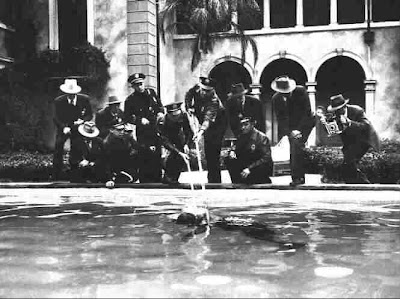
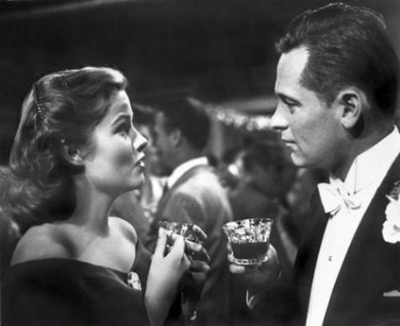
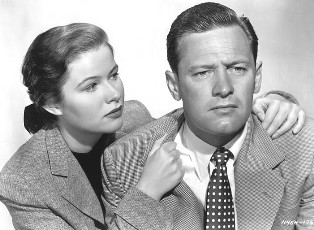
Joe Gillis (William Holden) is found dead in Norma Desmond’s pool.

Without a doubt, Billy Wilder’s “Sunset Blvd.” is one of the greatest movies ever made about Hollywood, perhaps one of the greatest movies ever made.

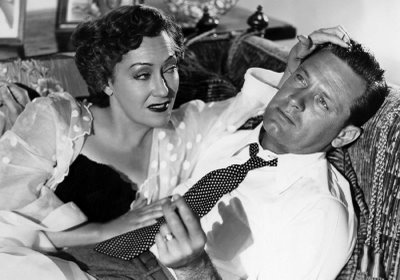
Aging Hollywood star Norma Desmond (Gloria Swanson) is admittedly a little cut off from reality. She fawns over her pet monkey, has rats in her pool, autographs pile after pile of 8 x 10 glossies for her fans, even though she hasn’t made a picture in years. But, like so many women of film noir, the “Sunset Blvd.” heroine was ahead of her time. She was a veteran movie star who wanted to create her own roles, look her best and date a younger, sexy man. Anything wrong with that?

Unfortunately, though, she spins out of control and winds up shooting this boy toy in a jealous pique. There’s always a downside to being a visionary, I guess. By mentioning the murder, I’m not spoiling anything because the movie opens with Joe Gillis (William Holden) floating lifelessly in Norma’s pool, having stumbled in after she plugged him. He then narrates the movie via flashback, a favorite film-noir technique, but Wilder was the first to let the voice belong to a dead guy. In fact, there are two (perfectly merged) narratives – dead Joe reflecting on the past and in-the-moment Joe, unaware of his fate.

Norma (Gloria Swanson) tries to keep Joe entertained.

An Ohio newspaperman, Joe has come to LA to be a screenwriter but his career has stalled and he’s short on money. Looking for a place to stash his car so that the finance company won’t repossess it, he spots an old mansion on Sunset Boulevard.

It’s an old home, but it’s not deserted – Norma lives there with her butler and former director, Max von Mayerling (real-life director Erich von Stroheim). Once she learns Joe is a writer – a tall, buff, gorgeous writer – she asks him to collaborate on a screenplay that she hopes will relaunch her career. They seal the deal over a glass of champagne and Norma decides he should move in with her. Joe agrees but occasionally sneaks away to slum it with his young, aspiring movie-maker friends, including earnest, ambitious and fresh-faced Betty Schaefer (Wisconsin-native Nancy Olson).

Aspiring writer Betty (Nancy Olson) connects with Joe at a party.

Betty and Joe decide to co-write a script in their free time, but Norma isn’t one to share her man. In her final dramatic encounter with Joe, Norma ironically achieves her long-held dream of hearing “Lights, camera, action!” once more.

“Sunset Blvd.” is rich with irony. Von Stroheim is just one of many Hollywood greats playing parts that were very close to their own lives. (Von Stroheim, a major silent-film director most renowned for “Greed” from 1924, directed Swanson in 1929’s “Queen Kelly,” a few frames of which are shown in “Sunset Blvd.”) Famed director Cecil B. DeMille and gossip columnist Hedda Hopper play themselves as do actors Buster Keaton, H. B. Warner and Anna Q. Nilsson as Norma’s friends from her glory days.

I’ve lost count of how many times I’ve watched “Sunset Blvd.” but each time I view, it seems fresh, funny and contemporary, which is the mark of a truly classic film. From the rich, shadow-laden visuals (I love the first time we see Norma – coiled like a viper, clutching her antique cigarette holder, peeking out from behind Venetian blinds) to the perfect, snappy pacing to the outstanding score by Franz Waxman, Wilder left not one detail to chance.

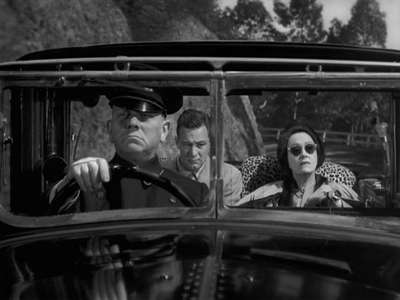
Butler and driver Max (Erich Von Stroheim) takes Norma and Joe to a meeting at Paramount with legendary director Cecil B. DeMille.

Most importantly, Wilder elicited tremendous performances from his actors – Swanson is not only deluded and desperate and vain, she’s funny (especially when she impersonates Charlie Chaplin) and determined and strangely endearing. Holden wins us over, even though there’s very little to like about his character. Of course, a big part of great acting is precise casting and Wilder was lucky on that front.

There was of course no way he could have foreseen how indelibly Swanson and Holden would stamp their parts on the pop-culture landscape. Mae West, Mary Pickford and Pola Negri reportedly turned down the Norma role. Montgomery Clift and Fred MacMurray passed on the chance to add Joe Gillis to their list of credits. (Marlon Brando and Gene Kelly were also considered.)
Wilder and his longtime creative partner Charles Brackett wrote the first-rate script with help from D.M. Marshman, Jr. Relentlessly cynical and unforgiving of Hollywood’s callous, cruel and exploitative side, the story ruffled studio- exec feathers but resonated with critics and audiences.

“Sunset Blvd.” received Oscar noms for best picture, director, actor (Holden), actress (Swanson), supporting actor (Von Stroheim) and supporting actress (Olson) as well as for editing and cinematography (John F. Seitz). It won three – for story/screenplay, art direction and score.
Though perhaps not quintessential film noir, Gloria Swanson as Norma Desmond is nonetheless an unforgettable femme fatale, whose life might’ve unfolded very differently had she but Botox enough and time.

“Sunset Blvd.” plays tonight at 7:30 p.m. (in a double bill with David Lynch’s “Mulholland Dr.”) at the Aero Theatre in Santa Monica.

‘Sunset Blvd.’ quick hit

Sunset Blvd./1950/Paramount Pictures/110 min.

“You have disgraced the industry that made and fed you. You should be tarred and feathered and run out of Hollywood,” said MGM’s Louis B. Mayer to writer/director Billy Wilder after a screening of “Sunset Blvd.”

In this magnificent skewering of Tinseltown, Gloria Swanson, a real-life silent film star, plays Norma Desmond, a fictional silent film star whom time has forgotten. William Holden is her sometime boyfriend and screenwriter of her comeback script; Erich von Stroheim is her ex-husband and ex-director, now a live-in butler.

Personally, I adore the idea of putting an ex-hubby on the payroll to do all my household chores, in a starched gray uniform, no less! “Sunset Blvd.” is a classic to be watched again and again.

Top 10 lines from Billy Wilder’s classic ‘Sunset Blvd.’

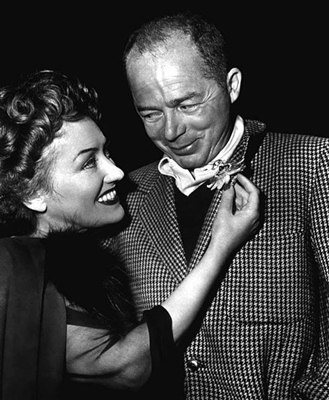
Gloria Swanson and Billy Wilder

“Sunset Blvd,” Billy Wilder’s scathing portrait of Hollywood, stars Gloria Swanson as silent film star Norma Desmond seeking a return to the screen, William Holden as her younger boyfriend, a writer named Joe Gillis, and Erich von Stroheim as her faithful servant and eyeshadow adjuster. Wisconsin-born Nancy Olson plays the smart, fresh-faced girl who wants to be a screenwriter and who falls in love with Joe.

Here are my favorite lines from this terrific film, widely considered to be one of the greatest American movies ever made. It was written by Wilder, Charles Brackett and D.M. Marshman Jr.

1. Norma Desmond: “I am big. It’s the pictures that got small.”

2. Joe Gillis: “Audiences don’t know somebody sits down and writes a picture; they think the actors make it up as they go along.”

3. Salesman at a men’s clothing store, to Joe: “As long as the lady is paying for it, why not take the Vicuna?”

4. Norma Desmond: “No-one ever leaves a star. That’s what makes one a star.”

5. Joe Gillis referring to Norma’s script: “Sometimes it’s interesting to see just how bad bad writing can be. This promised to go the limit.”

6. Cecil B. DeMille (playing himself): “You know, a dozen press agents working overtime can do terrible things to the human spirit.”

7. Norma Desmond: “Without me, there wouldn’t be any Paramount studio.”

Nancy Olson and William Holden

8. Nancy Olson as Joe’s friend Betty: “Where have you been keeping yourself? I’ve got the most wonderful news for you.”
Joe: “I haven’t been keeping myself at all, lately.”

9. Joe Gillis talking about his car: “I kept it across the street in a parking lot behind Rudy’s shoeshine parlor. Rudy never asked any questions about your finances – he’d just look at your heels and know the score.

10. Norma Desmond: “All right Mr. DeMille, I’m ready for my close-up.”

‘Anatomy of a Murder:’ Preminger’s crowning achievement

Anatomy of a Murder/1959/Columbia Pictures/160 min.

Criterion’s DVD rerelease of “Anatomy of a Murder” is this month’s giveaway prize. To be entered in the draw to win, just make a comment on any post this month.

By Michael Wilmington

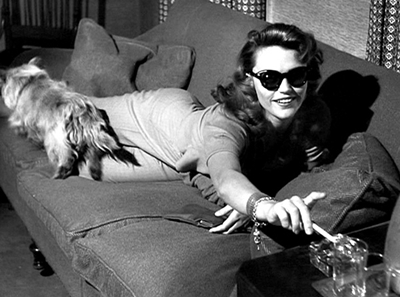
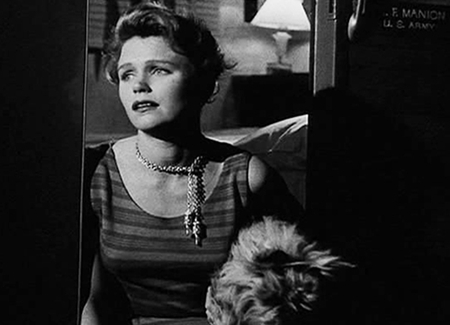
Lee Remick is sexy and flirtatious Laura Manion, a part originally intended for Lana Turner. Laura's dog Muff is frequently at her side.

One of the best and most true-to-life of all courtroom dramas, “Anatomy of a Murder” is also the best film producer-director Otto Preminger ever made. And he was a master – of film noir (“Laura,” “Fallen Angel,” “Whirlpool,” “Where the Sidewalk Ends,” “Angel Face”), of urban drama (“The Man with the Golden Arm”), of romance (“Bonjour Tristesse,” “Daisy Kenyon”), of historical epics (“Exodus”), of spy dramas (“The Human Factor”), of musicals (“Carmen Jones”) and, most characteristically, of dramas that examine big, complex institutions: “Advise and Consent,” “The Cardinal,” “In Harm’s Way.”

“Anatomy” is a great, realistic film on a great subject, with writing that cuts to the bone. It also has one of the most famous title sequences (by Saul Bass) in movie history. And one of the most influential scores, original jazz, composed and played by Duke Ellington.

The film’s source material was a best-selling book by John D. Voelker, a Michigan State Supreme Court Justice, using the pen name Robert Traver. He based the book on an actual murder case in which he’d been the prosecuting attorney. In that trial, an Army man shot and killed a popular small-town bar-owner who, he said, had raped his wife.

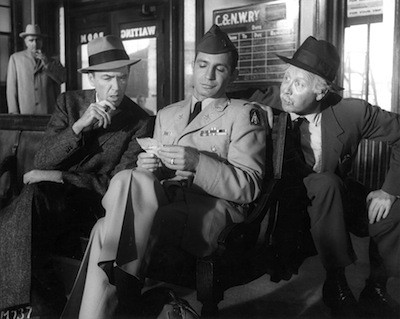
From left: James Stewart plays a lawyer defending an Army lieutenant (Ben Gazzara) with help from his old friend and fellow lawyer (Arthur O'Connell).

Voelker/Traver and Wendell Mayes adapted the book and a phenomenal cast brought the story to the screen. We see Jimmy Stewart at his best as the wily and ingenious old-school defense lawyer Paul Biegler, Ben Gazzara as his cocky murder-trial defendant/client Army Lieutenant Frederick Manion, Lee Remick as Manion’s sexy wife Laura, George C. Scott as the icily astute prosecutor Claude Dancer, Eve Arden and Arthur O’Connell as Paul’s sharp-tongued secretary Maida Rutledge and Paul’s amiably soused fellow counsel Parnell McCarthy. The trial’s owlish, chatty but punctiliously fair Judge Weaver is played unforgettably by famed attorney Joseph Welch. Kathryn Grant is also memorable as the sweet but mysterious Mary Pilant.

If Paul is going to get Manion off, the only defense that is likely to work is Not Guilty by Reason of Insanity – an “irresistible impulse” that drove Manion to kill his wife’s rapist. The movie makes clear that Paul is not necessarily seeking the truth, but a victory for his client. So the trial becomes, in some sense, a piece of theater. Paul is creating a dramatic scenario that we know is a slanted one. Judge Weaver is there to mediate, but also to be a kind of commentator and chorus.

At the same time, Preminger (the son of a Viennese trial lawyer and a law school graduate who never practiced law himself) gives us a course in what happens during a trial and why the American legal system, for all its seeming flaws, is a model of both legal science and human compassion.

We want Paul Biegler to win, but mostly because he’s played by Jimmy Stewart – who brilliantly manipulates his movie persona as the stammering, sincere, dryly funny hero, while also showing us a somewhat devious side beneath the mask. It’s an incredibly adroit performance, as good as Stewart’s signature roles as George Bailey in “It’s a Wonderful Life,” Scottie Ferguson in “Vertigo,” and Jeff Smith in “Mr. Smith Goes to Washington.”

And Stewart anchors an eminently satisfying cast. Remick is wonderful as Manion’s flirtatious, cheerfully brazen and narcissistic wife Laura, a part originally intended for Lana Turner. The prosecution’s arrogant head lawyer Claude Dancer is played with nerveless intensity by Scott. Stewart, O’Connell and Scott got Oscar noms for their work.

Preminger shot the movie in Michigan’s Upper Peninsula (Marquette, Ishpeming, Big Bay and Michigamme). The streets, the bar and the courthouse are real. And the scenes in Paul’s home (with its books, fishing gear and record collection) were shot in Voelker’s own house. “Anatomy” has the flavor of a semi-documentary, or of one of those Henry Hathaway crime dramas/noirs of the ’40s: “The House on 92nd Street,” “Call Northside 777” (with Stewart as a crusading Chicago reporter) and “Kiss of Death.”

Laura (Lee Remick) and her husband share pathology as well as passion.

Preminger’s filmmaking style is often called “objective.” He doesn’t try to force reactions on us, instead leaving us free to observe and judge. “Anatomy of a Murder” is especially ripe for such analysis, since the audience is essentially the jury.

But there’s a catch. Does anyone really watch a Preminger movie without knowing who the good guys and bad guys are? Even in “Anatomy of a Murder” we sense Paul might be defending a guilty client, but we also know he’s upholding the law, and his vision of it: the depth, mercy and grandeur of the law in which he deeply believes.

The fact is that Preminger is never completely objective. A lawyer as well as a man of the theater, he is always arguing a viewpoint, letting us know whom he likes and whom he doesn’t. He just does it in a subtler, more stylish, less forced manner than most other directors.

What’s special about Preminger’s cinematic style is his propensity for long takes and single shots with an unobtrusively moving camera. Preminger once said that, ideally, every scene should be done in a single shot. And that’s often what he often tries to do, for the sake of the actors (who don’t get their performances chopped up) and to preserve the feel of realism.

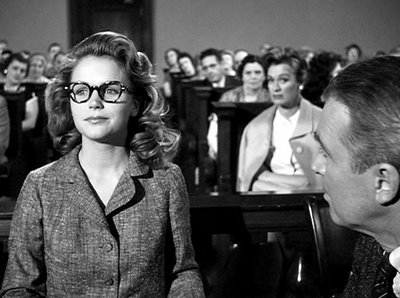
Lee Remick, Eve Arden and James Stewart appear in a courtroom scene.

To some in 1959, “Anatomy” looked like an opportunistic and deliberately sensational shocker, with a script that contained words such as “rape,” “bitch” and panties.” The film was even banned temporarily in Chicago. But Preminger played anti-censorship battles with such shrewd facility that it sometimes seemed he had gulled the censors into being his unofficial P.R. team.

“Anatomy of a Murder” may have raised hackles in its day, but it’s survived as a movie treasure and is one of the top films from 1959 – a year that also saw the release of classics like Billy Wilder’s “Some Like It Hot,” Alfred Hitchcock’s “North by Northwest,” William Wyler’s “Ben-Hur,” Howard Hawks’ “Rio Bravo,” George Stevens’ “The Diary of Anne Frank” and Vincente Minnelli’s “Some Came Running.”

Preminger’s trial drama can stand with any of them.

“Anatomy” will play Friday and Saturday at the New Beverly in LA.

On the radar: Revel in noir at the Aero, Egyptian and Lacma

There’s so much to see on the big screen this month in Los Angeles. See you at the movies!
#
AT THE AERO THEATRE
1328 Montana Ave., Santa Monica; shows start at 7:30 p.m.
#
Saturday, March 3: A sneak preview of the thriller/horror flick “Silent House” starring Elizabeth Olsen followed by 2003’s “Open Water,” a nerve-wracking story about a couple left stranded in the Caribbean after a day of scuba diving. There will be a discussion between films with co-directors Chris Kentis and Laura Lau.

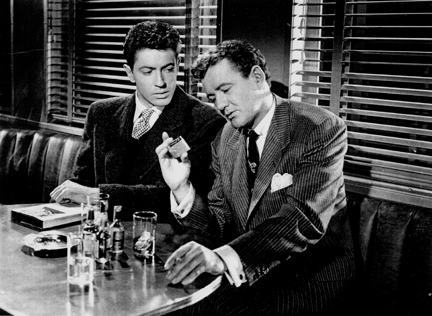
Farley Granger and Robert Walker in "Strangers on a Train"

Wednesday, March 7: One of my all-time favorite Alfred Hitchcock films, “Strangers on a Train” (1951) stars Robert Walker as a psycho playboy intent on committing a double murder with tennis champ Farley Granger. As Hitch shows us in the opening shot, never underestimate the importance of footwear.
#
Wednesday, March 14: Another Hitchcock work that draws on his lifelong love of trains, “The Lady Vanishes” from 1938 takes place on a train en route from the fictional country of Bandrika to Western Europe. Passengers Margaret Lockwood and Michael Redgrave attempt to find a mysterious Miss Froy.
#
Thursday, March 15: In “The Night of the Hunter” (1955, Charles Laughton) the great Robert Mitchum gives an unforgettable performance as a warped preacher with a knack for seducing trusting souls. Also starring Shelley Winters and Lillian Gish. At 6:30 p.m., author Preston Neal Jones will sign his book “Heaven and Hell to Play With: The Filming of The Night of the Hunter.”
#

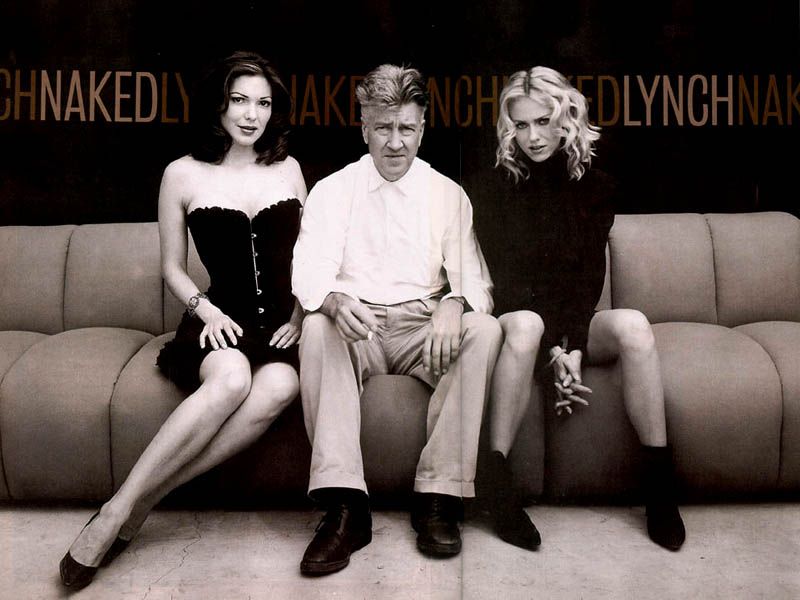
Laura Harring, director David Lynch and Naomi Watts of "Mulholland Dr."

Saturday, March 24: A top-notch double feature, starting with Billy Wilder’s masterpiece noir and scathing look at Hollywood, “Sunset Boulevard” (1950). William Holden, Gloria Swanson and Erich von Stroheim star in this must-see flick. Next up: Naomi Watts and Laura Harring lead the cast of David Lynch’s mesmerizing and surreal portrait of Tinseltown’s latent evil, “Mulholland Dr.” (2001).

Wednesday, March 28: Yet more Hitchcock! Joel McCrea plays reporter Johnny Jones, who encounters intrigue and danger in “Foreign Correspondent” from 1940.
#
Thursday March 29: “The Manchurian Candidate,” starring Frank Sinatra, Laurence Harvey and Angela Lansbury, celebrates its 50th anniversary. Superb direction from John Frankenheimer.
#
AT THE EGYPTIAN THEATRE
6712 Hollywood Blvd., Hollywood; shows start at 7:30 p.m. with multiple showings and one matinee for “The Snowtown Murders”

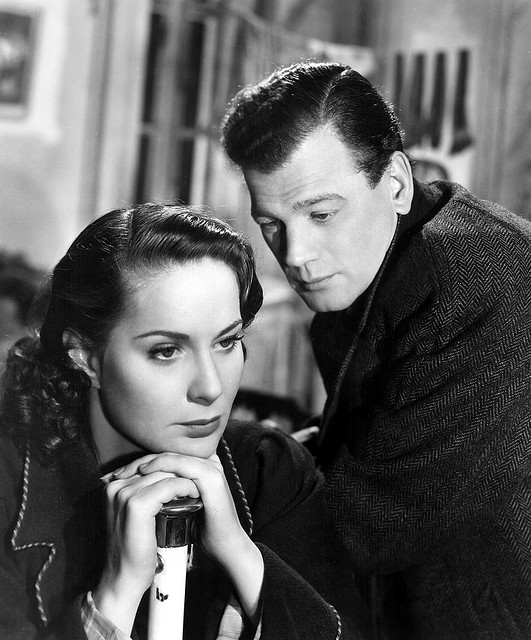
Alida Valli and Joseph Cotten in "The Third Man."

Wednesday, March 7: Carol Reed directs Joseph Cotten, Alida Valli and Orson Welles in 1949’s “The Third Man,” one of the finest thrillers ever made. Don’t miss it!
#
Wednesday, March 14: Orson Welles as auteur and actor. In “The Lady from Shanghai” (1948), an outstanding noir, he co-stars with Rita Hayworth and Everett Sloane. In “Confidential Report” (1955), Welles plays a dad in deep denial about his murky past.
#
Thursday, March 15-Sunday, March 18: Justin Kurzel makes his directorial debut with “The Snowtown Murders,” the story of Australia’s most infamous serial killer. Plays at 7:30 p.m. and 9:30 p.m. Thursday-Saturday and 4 p.m. Sunday.
#
Wednesday, March 28: More brilliance from Orson Welles in this knock-out double feature. “Touch of Evil,” a tale of corruption, is widely considered the last great work of classic film noir. Its unbeatable cast: Welles, Charlton Heston, Janet Leigh and Mercedes McCambridge. “The Trial” (based on Franz Kafka’s novel about paranoia and conspiracy) also boasts amazing talent: Welles, Anthony Perkins, Jeanne Moreau, Romy Schneider and Akim Tamiroff.
#
AT LACMA
5905 Wilshire Blvd.
At 7:30 p.m. Thursday, March 8: As a tribute to Wim Wenders, “The American Friend,” a stand-out neo noir from 1977 is paired with 1982’s “Chambre 666,” a doc with A-list directors about the future of filmmaking.
#
At 7:30 p.m. Friday, March 9: Film noir is partly rooted in French Poetic Realism and these two examples of the genre make an excellent night at the movies. To start: Cinematic genius and master of poetic realism Jean Renoir’s “The Rules of the Game” (1939) followed by Jacques Becker’s “Casque D’Or” (1952). Becker assisted Renoir on “Rules” and “Grand Illusion” (1937).
#

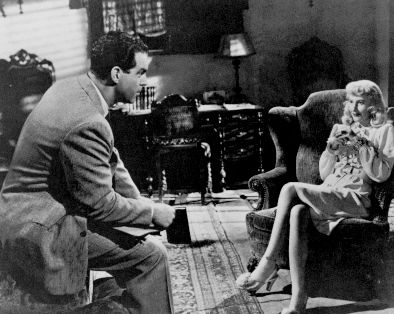
Fred MacMurray and Barbara Stanwyck star in Billy Wilder's "Double Indemnity" from 1944.

At 1 p.m. Tuesday, March 13: Billy Wilder’s “Double Indemnity” (1944) is one of the defining films of the noir genre. Femme fatale Barbara Stanwyck lures insurance agent Fred MacMurray into committing murder for a big payoff. Edward G. Robinson shines as MacMurray’s boss and friend.
#
At noon Saturday, March 24: Christian Marclay’s “The Clock,” winner of the Golden Lion at last year’s Venice Biennale, is a 24-hour single-channel montage constructed from thousands of moments of cinema and television history depicting the passage of time. Begins at noon Saturday and ends at noon on Sunday, March 25.
#
At 1 p.m. Tuesday, March 27: Another prime example of classic film noir, Robert Siodmak’s “The Killers” put Ava Gardner and Burt Lancaster on the track to super-stardom.
#

On the radar: ‘The Artist’ and inspiration; ‘Chinatown’ kicks off series; long gone Hollywood; Crawford goes a little crazy

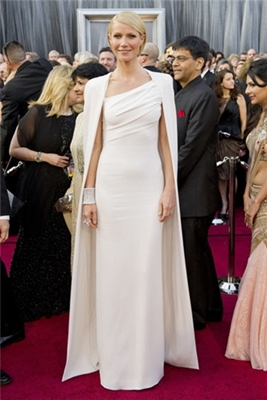
Gwyneth Paltrow looked super chic at the Oscars.

Now that “The Artist” won the Oscar for Best Picture, I’m hoping more people will feel inspired to explore black and white movies, especially Billy Wilder b&w flicks. (“The Artist” director Michel Hazanavicius thanked Wilder three times last night!) Overall, I enjoyed the show, though there were few surprises. Billy Crystal is always good and my favorite look of the night was Gwyneth Paltrow in the Tom Ford cape gown.

Meanwhile, this looks set to be a busy week for cinephiles. Starting tonight: Unique LA presents a monthly movie series at the Echoplex. First up is “Chinatown.” Doors open at 7 p.m. Movies start at 8 p.m. Tickets are $10 pre-sale online only.
#
At 7 p.m. this Wednesday (Feb. 29) at Larry Edmunds Bookshop in Hollywood, author Gregory Paul Williams will sign the paperback edition of his book “The Story of Hollywood.” He’ll also present a program on long gone Hollywood, featuring favorite haunts and spots of legend and lore.
#
At 7:30 p.m. this Wednesday (Feb. 29), the Million Dollar Theater and the UCLA Film & Television Archive co-present a double feature from director William Castle: 1964’s “Strait-Jacket,” starring Joan Crawford as a hatchet-wielding maniac released from prison after serving time for killing her husband, and “Homicidal” (1961) about a small-town killing and its effects on members of a family vying for an inheritance.
#
Gwyneth Paltrow photo: Heather Ikei / © A.M.P.A.S.
#