‘The Big Sleep’ and more on the big screen

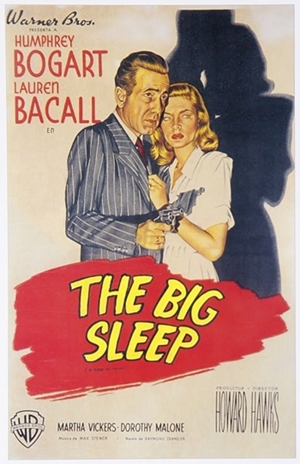
Tonight (Wednesday, June 13) at 8 p.m., the Film Noir Foundation’s Alan K. Rode will host a screening of “The Big Sleep” (1946, Howard Hawks) at the Los Angeles Theatre in downtown Los Angeles. Hawks’ adaptation of Raymond Chandler’s labyrinthine mystery stars Humphrey Bogart as private eye Philip Marlowe and Lauren Bacall as a rich girl who may be helping or hindering him.

The event is sold out, but there will be rush tickets available on a first-come first-serve basis at the box office. For more info on the screening, visit the Los Angeles Conservancy.

Additionally, the Pacific Film Archive, in Berkeley, Calif., is hosting One-Two Punch: Pulp Writers, a film series that explores movie adaptations of three divergent authors: Dorothy B. Hughes, Mickey Spillane and Elmore Leonard. The series comprises classic films noirs such as Nicholas Ray’s “In a Lonely Place” (1950) and George A. White’s “My Gun is Quick” (1957), as well as thrillers like Roy Rowland’s “The Girl Hunters” (1963), starring Spillane as Mike Hammer.

For full details about the series, running June 23-30, visit the Pacific Film Archive.

And on Thursday, the Los Angeles Film Festival begins downtown.

The ‘pulchritudinous and punctual’ Marilyn Monroe sings Happy Birthday, Mr. President … and more

After reading about Marilyn Monroe and watching some of her movies over her birthday weekend, I felt like sharing these video clips.


Marilyn sang on Saturday, May 19, 1962, for President John F. Kennedy at a celebration of his 45th birthday, 10 days before his actual birthday (Tuesday, May 29).

#

Marilyn sings in “Some Like It Hot,” from 1959, directed by Billy Wilder.

#

Marilyn sings “Diamonds are a Girl’s Best Friend” in the musical “Gentlemen Prefer Blondes,” directed by Howard Hawks and choreographed by Jack Cole. To read more about Cole and his career, visit dance critic Debra Levine’s wonderful arts meme.

#

And, while reading about Marilyn, I was struck by her insightful notes on Fox’s final cut of “The Prince and the Showgirl” (1957, Laurence Olivier): “I am afraid that as it stands it will not be as successful as the version all of us agreed was so fine. Especially in the first third of the picture the pacing has been slowed and one comic point after another has been flattened out by substituting inferior takes with flatter performances lacking the energy and brightness that you saw in New York. Some of the jump cutting kills the points, as in the fainting scene.

“The coronation is as long as before if not longer, and the story gets lost in it. American audiences are not as moved by stained glass windows as the British are, and we threaten them with boredom. I am amazed that so much of the picture has no music at all when the idea was to make a romantic picture. We have enough film to make a great movie, if only it will be as in the earlier version. I hope you will make every effort to preserve our picture.”

In the end, no changes were made to the picture.

From “The Secret Life of Marilyn Monroe” by J. Randy Taraborrelli

(Note: Film noir horoscopes will return next month.)

Happy birthday, Marilyn

For what would have been Marilyn Monroe’s 86th birthday, I’ve compiled quotations from her and about her. If you have a favorite quotation from or about MM, please send it and I will add it to the list. I have credited the photographers wherever possible; copyright of all photos belongs to the photographers and/or their estates/representatives. (Note: Film noir horoscopes will return next month.)

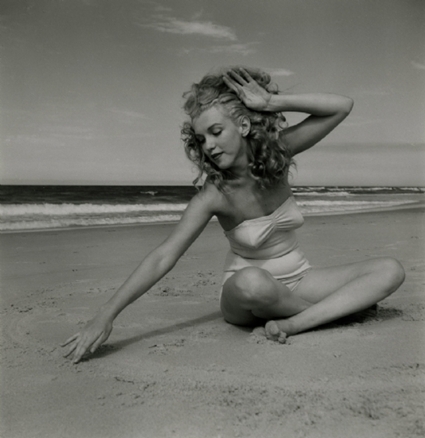
An early shot of Marilyn on the beach; she loved the water.

FROM MARILYN …

“The real lover is the man who can thrill you by touching your head or smiling into your eyes or just staring into space.”

“I love champagne – just give me champagne and good food, and I’m in heaven and love.”

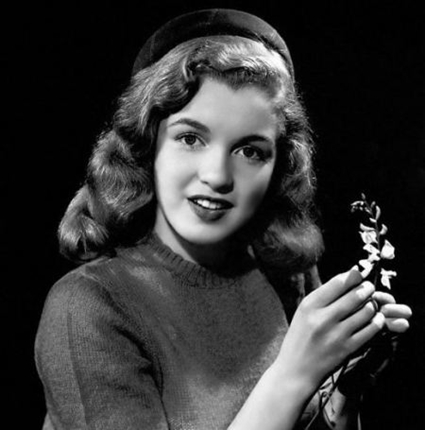
Marilyn started out as a model.

“The body is meant to be seen, not all covered up.”

“Sex is part of nature. I go along with nature.”

“My illusions didn’t have anything to do with being a fine actress, I knew how third rate I was. I could actually feel my lack of talent, as if it were cheap clothes I was wearing inside. But, my God, how I wanted to learn, to change, to improve!”

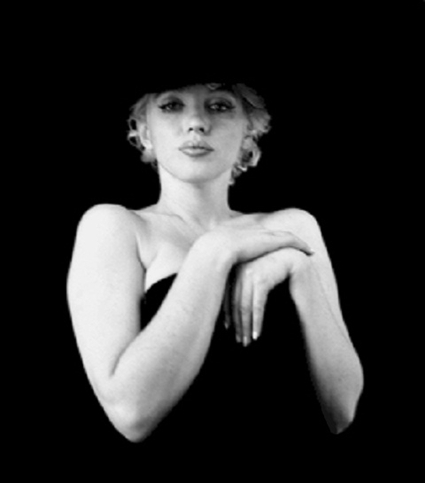
Marilyn shot by Milton Greene

“I don’t mind living in a man’s world as long as I can be a woman in it.”

“Husbands are chiefly good as lovers when they are betraying their wives.”

“People had a habit of looking at me as if I were some kind of mirror instead of a person. They didn’t see me, they saw their own lewd thoughts, then they white-masked themselves by calling me the lewd one.”

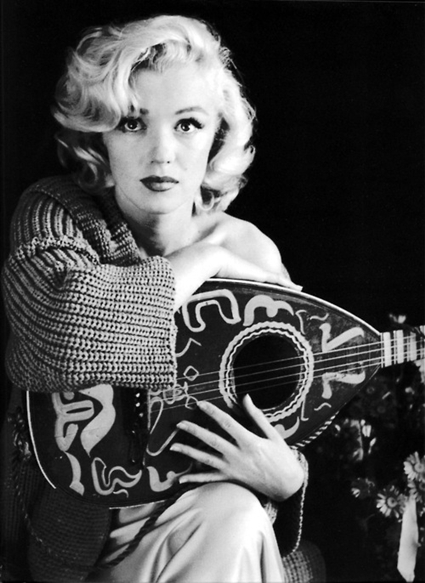
Marilyn shot by Milton Greene

“All the men I know are spending the day with their wives and families, and all the stores in Los Angeles are closed. You can’t wander through looking at all the pretty clothes and pretending to buy something.” – on why she hated Sundays

“Everyone’s just laughing at me. I hate it. Big breasts, big ass, big deal. Can’t I be anything else? Gee, how long can you be sexy?”

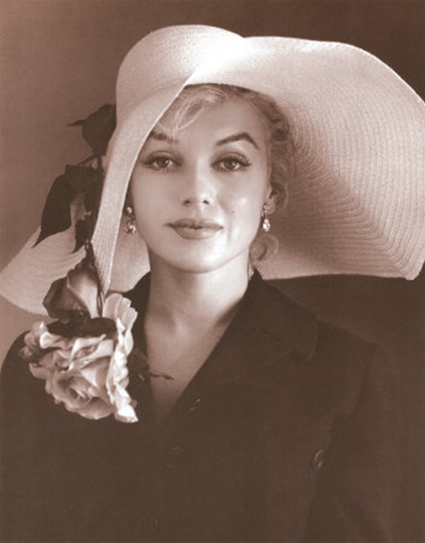
I love this shot and the elegant hat.

“Looking back, I guess I used to play-act all the time [as a child]. For one thing, it meant I could live in a more interesting world than the one around me.”

“No one ever told me I was pretty when I was a little girl. All little girls should be told they’re pretty, even if they aren’t.”

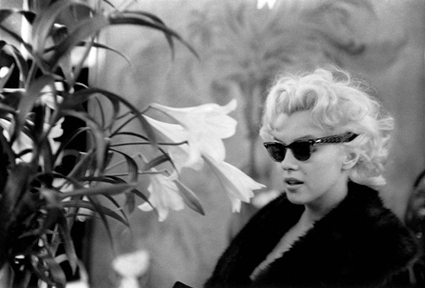
Marilyn in New York, shot by Ed Feingersh

“I’m selfish, impatient and a little insecure. I make mistakes, I am out of control and at times hard to handle. But if you can’t handle me at my worst, then you sure as hell don’t deserve me at my best.”

“My problem is that I drive myself … I’m trying to become an artist, and to be true, and sometimes I feel I’m on the verge of craziness. I’m just trying to get the truest part of myself out, and it’s very hard. There are times when I think, ‘All I have to be is true.’ But sometimes it doesn’t come out so easily. I always have this secret feeling that I’m really a fake or something, a phony.”

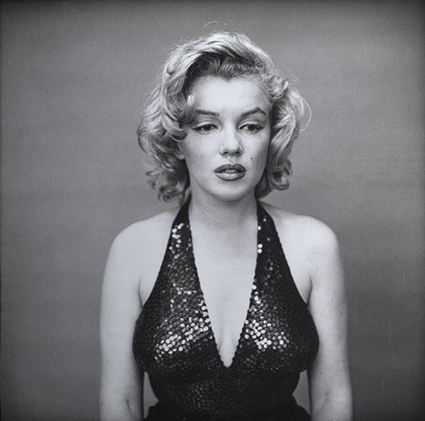
Marilyn shot by Richard Avedon

“Hollywood is a place where they’ll pay you a thousand dollars for a kiss and fifty cents for your soul.”

ABOUT MARILYN …

“Our marriage was a good marriage … it’s seldom a man gets a bride like Marilyn. I wonder if she’s forgotten how much in love we really were.” – Jim Dougherty talking to Photoplay magazine, 1953; they were married from 1942-46.

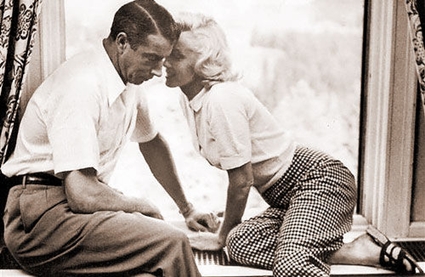
Marilyn and Joe DiMaggio were married less than a year.

“It’s like a good double-play combination. It’s just a matter of two people meeting and something clicks.” – Joe DiMaggio; he was married to Marilyn from Jan. 14, 1954 to Oct. 27, 1954

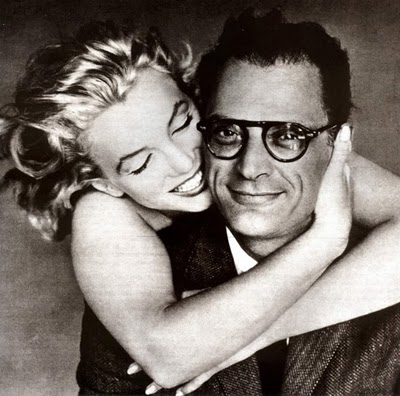
Marilyn and Arthur Miller, her third husband

“She was a whirling light to me then, all paradox and enticing mystery, street-tough one moment, then lifted by a lyrical and poetic sensibility that few retain past early adolescence. …

“She had no common sense, but what she did have was something holier, a long-reaching vision of which she herself was only fitfully aware: humans were all need, all wound. What she wanted most was not to be judged but to win recognition from a sentimentally cruel profession, and from men blinded to her humanity by her perfect beauty. She was part queen, part waif, sometimes on her knees before her own body and sometimes despairing because of it. …

“To have survived, she would have had to be either more cynical or even further from reality than she was. Instead, she was a poet on a street corner trying to recite to a crowd pulling at her clothes.” – Arthur Miller, her husband from 1956-61

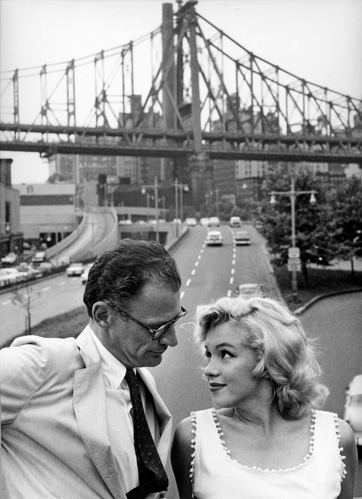
Marilyn Monroe and Arthur Miller in front of the Queensboro Bridge, New York, 1957. Sam Shaw/ Shaw Family Archives, Ltd.

“There’s a beautiful blonde name of Marilyn Monroe who makes the most of her footage.” xxxxxLiza Wilson of Photoplay magazine, writing about “The Asphalt Jungle,” 1950

She was, “a female spurt of wit and sensitive energy who could hang like a sloth for days in a muddy-mooded coma; a child girl, yet an actress to loose a riot by dropping her glove at a premiere; a fountain of charm and a dreary bore … she was certainly more than the silver witch of us all.” – Norman Mailer

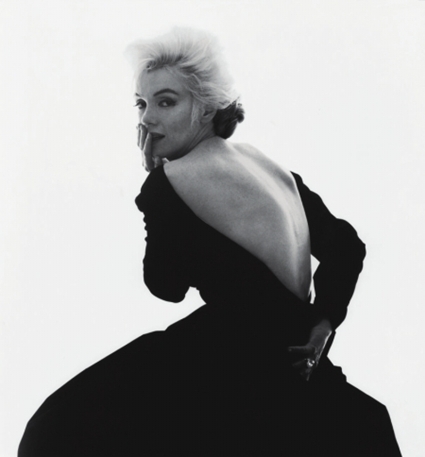
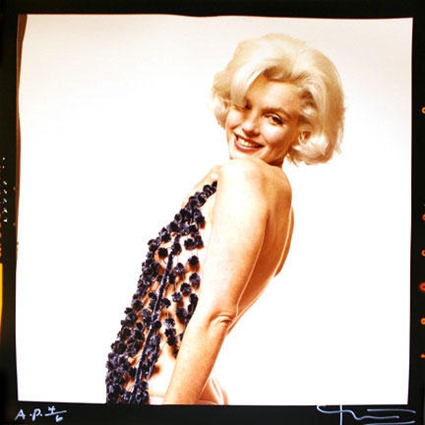
Marilyn shot by Bert Stern, 1962

‘‘From families that owned little but their own good names, she had inherited the fierce pride of the poor. Because she was sometimes forced to give in, to sell herself partially, she was all the more fearful of being bought totally.’’ – Gloria Steinem

“She deeply wanted reassurance of her worth, yet she respected the men who scorned her, because their estimate of her was her own.” – Elia Kazan

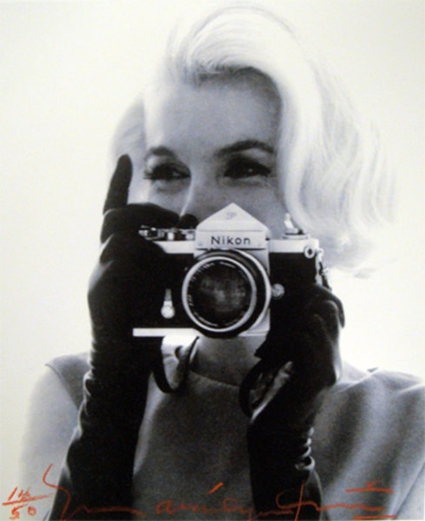
Marilyn shot by Bert Stern, 1962

All the sex symbols were endowed with a large portion of earthy coarseness. Marilyn had the most. … Only an inherent whore could walk like Marilyn and dress like Marilyn. … She had a trick of making all men feel she could be in love with them and I think she could be, a sort of saving each one for a rainy day, for when things would get tough again in her life and she would need help. … I saw the hope and the disappointments. The longing to give what the people wanted and, at the same time, to become a complete person herself. She was also selfish, rude, thoughtless, completely self-centered. She kept people waiting for hours.” – Hollywood columnist Sheilah Graham

Marilyn shot by Bert Stern, 1962

“The luminosity of that face! There has never been a woman with such voltage on the screen, with the exception of Garbo.” – Billy Wilder

“If she’d been dumber, she’d have been happier.” – Shelley Winters

“Everything Marilyn does is different from any other woman, strange and exciting, from the way she talks to the way she uses that magnificent torso.” – Clark Gable, her co-star of 1961’s “The Misfits,” about which he said: “This is the best picture I have made and it’s the only time I’ve been able to act.

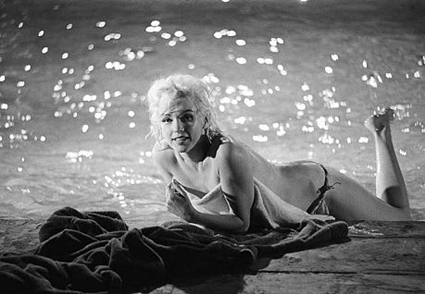
Marilyn shot by Lawrence Schiller on the set of “Something’s Got to Give,” 1962

“Her mixture of wide-eyed wonder and cuddly drugged sexiness seemed to get to just about every male; she turned on even homosexual men. And women couldn’t take her seriously enough to be indignant; she was funny and impulsive in a way that made people feel protective. She was a little knocked out; her face looked as if, when nobody was paying attention to her, it would go utterly slack – as if she died between wolf calls.” – Pauline Kael

“What I particularly liked about Marilyn was that she didn’t act like a movie star. She was down to earth. Although she was 28, she looked and acted like a teenager. … I was most impressed that Marilyn was always polite and friendly to everyone on the set. She was no phony or snob. … Marilyn always seemed determined to talk to me about her childhood. We would be discussing a subject of current interest to her and she would somehow bring up an incident from her bygone days.” – Photographer George Barris

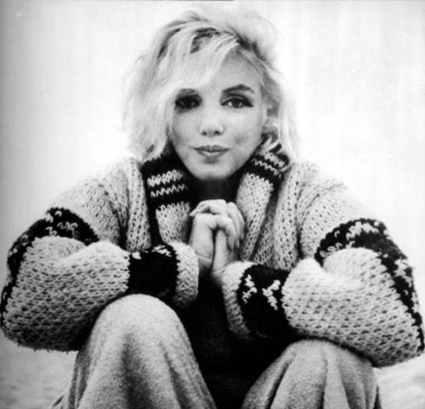
Marilyn shot by George Barris, 1962

“I liked her. She was a good kid. But when you looked into her eyes, there was nothing there. No warmth. No life. It was all illusion. She looked great on film, yeah. But in person … she was a ghost.” – Dean Martin, her co-star in 1962’s (unfinished) “Something’s Got to Give”

“Nobody could be as miserable as she was in such a loving, good-natured way. No matter how sad she may have been, she was never mean, never lashed out at me. Instead she just wanted to hug me and have me hug her and tell her it was all going to work out. That it didn’t, broke my heart.” – George Jacobs, who was Frank Sinatra’s valet

“Marilyn Monroe was a legend. In her lifetime she created a myth of what a poor girl from a deprived background could attain. For the entire world she became a symbol of the eternal feminine.” – Lee Strasberg in his eulogy

Highlights from Marilyn Monroe exhibit in Hollywood

Marilyn Monroe: An Intimate Look at the Legend opens today at the Hollywood Museum and runs through Sept. 2.

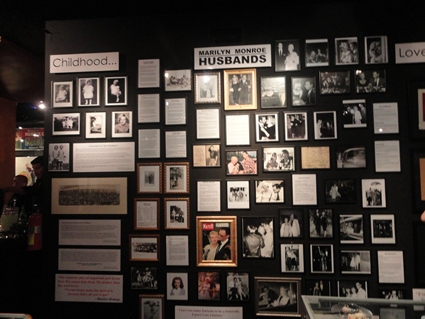
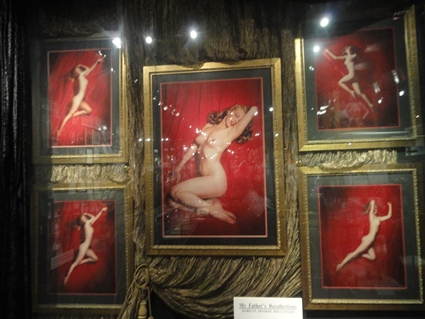
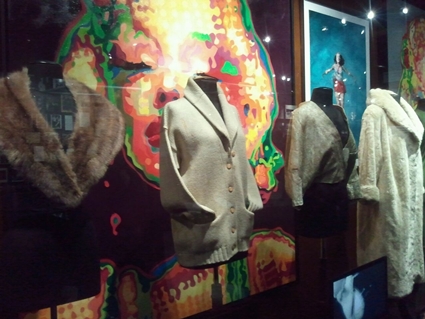
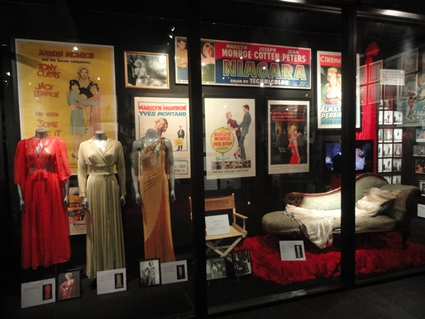
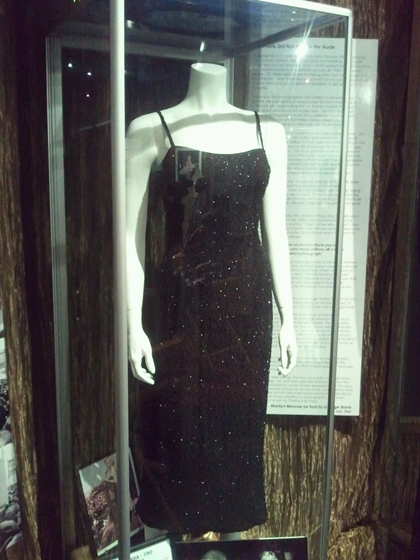
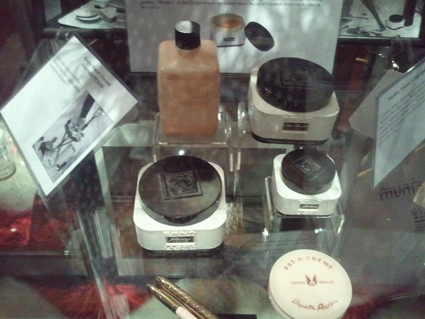
On display is work by photographer George Barris, photos from her childhood, early modeling days and life as a star as well as famous wardrobe pieces, private documents and personal effects, such as cosmetics. There is much to see … here are just a few pix from the show.

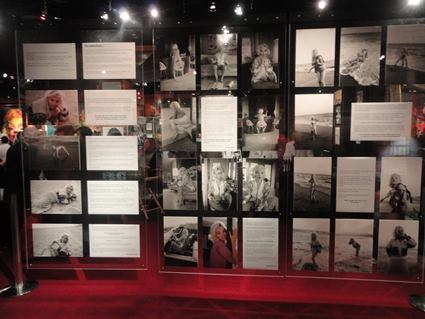
The show documents every chapter of MM's life.

The famous calendar shoot by Tom Kelley

Clothes from the movies and her personal wardrobe are on display.

More clothes ...

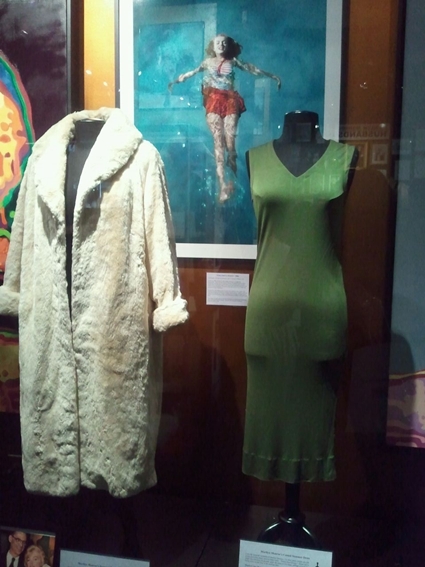
Love the casual green dress

This is the dress MM wore when singing to the U.S. troops in Korea, 1954.

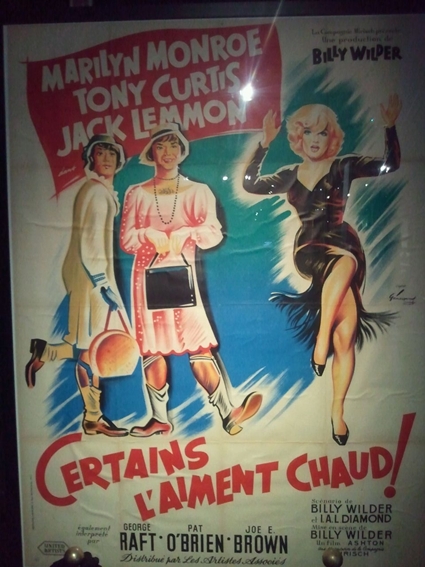
A French poster for “Some Like It Hot”

Marilyn was stunning in black and white as well as color shots.

Some of MM's makeup; her on-set makeup chair is also on display.

Photographer George Barris attended the event on Wednesday. There was cake and champagne to celebrate his 90th birthday on June 14.

Marilyn Monroe honored with exhibits, Hollywood film festival

This summer marks the 50th anniversary of Marilyn Monroe’s death on August 5, 1962.

In New York, more than 50 photographs of Marilyn by Lawrence Schiller, many never-before-seen, go on public display this week at the Steven Kasher Gallery.

Tonight I am heading to a preview of Marilyn MonroeAn Intimate Look at the Legend at the Hollywood Museum. The exhibit opens Friday, June 1, which would have been Marilyn’s 86th birthday.

On display will be work by photographer George Barris, photos from her childhood, early modeling days and life as a star as well as famous wardrobe pieces, private documents and personal effects, such as cosmetics.

Also, on June 1, Playboy and Grauman’s Chinese Theatres are hosting a Marilyn Monroe Film Festival. Opening night is “Some Like It Hot” and one of my fellow fans has kindly provided this review.

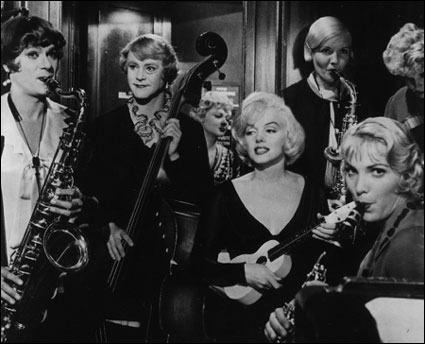
Writer/director Billy Wilder deliberately kept his two cross-dressing stars (Tony Curtis and Jack Lemmon, at left) straight in order to heighten the humor.

Ribald, jazzy, sexy joy and pure gold from the 20th century’s reigning sex symbol

SOME LIKE IT HOT/1959/MGM, UA/120 min.

By Michael Wilmington

The place: Chicago. The color: a film noirish black and white. The caliber: 45. The proof: 90. The time: 1929, the Capone Era and the Roaring Twenties, roaring their loudest.

Sugar Kane of “Some Like It Hot” was one of Marilyn’s top roles.

We’re watching “Some Like It Hot” and Tony Curtis and Jack Lemmon are playing Joe and Jerry: two talented but threadbare Chicago jazz musicians working in a speak-easy fronted as a funeral parlor. Joe, who plays saxophone, is a smoothie and a champ ladies’ man. Jerry is your classic Jack Lemmon schnook, with a couple of kinks thrown in.

After getting tossed out of their speak-easy band jobs by a police raid and accidentally witnessing the St. Valentine’s Day Massacre (ordered by their ex-employer, George Raft as natty gangster Spats Colombo), they flee to Miami. They’re chased by the gangsters and the cops (Pat O’Brien as Detective Mulligan) but the guys are disguised as Josephine and Daphne, musicians in an all-female jazz orchestra.

The star of Sweet Sue and her Society Syncopators, songbird and ukulele player Sugar Kane, is the Marilyn Monroe of our dreams. Sugar has a weakness for saxophone players. Josephine and Daphne have a weakness, period. Director Billy Wilder, who made lots of gay jokes in his time, deliberately keeps his two cross-dressing stars straight.

In Miami, land of dreams and beaches and bathing beauties, the “ladies” meet millionaires, including Osgood Fielding III (Joe E. Brown), who marries chorus girls like some people catch trains. They also meet gangsters jumping out of birthday cakes, waving submachine guns. Miami, to quote Sugar Kane, is runnin’ wild. (“Runnin’ wild. Lost control. Runnin’ wild. Mighty bold. Feelin’ gay, reckless too! Carefree mind, all the time, never blue!”)

“Some Like It Hot” is full of playful references to classic gangster movies like “Little Caesar” and “Scarface.” (At one point, Edward G. Robinson, Jr. flips a coin just like Raft did in Howard Hawks’ “Scarface.” Raft grabs it and demands: “Where’d you learn that cheap trick?”)

Risqué, quick-witted, scathingly funny, unfazed by foibles and unfooled by phonies, Wilder and co-writer I. A. L. “Izzy” Diamond were two Hollywood moviemakers who could cheerfully rip up the establishment, and make the establishment love it – a pair of razor-sharp script wizards who understood our society to its core, relishing its delights and scorning its hypocrisies. And with “Some Like It Hot,” they broke the comedy bank.

The movie provided plum roles for Tony Curtis, Marilyn and their co-stars.

Jerry and C. C. Baxter, of “The Apartment,” were Lemmon’s two greatest performances, and they’re as good as any American movie actor ever gave. The movie also handed Tony Curtis and Joe E. Brown their best movie roles (well, for Tony, probably a tie with Sidney Falco in “Sweet Smell of Success”). Sugar Kane was one of Marilyn’s top roles as well.

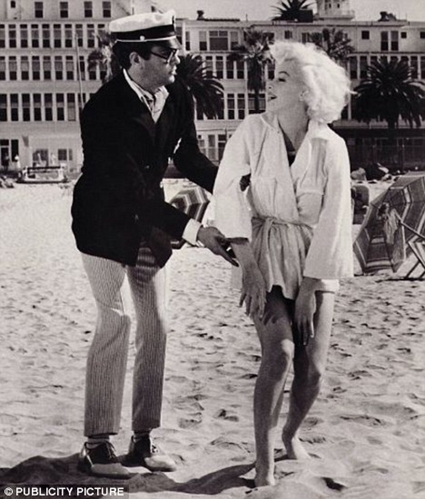
Ah, Marilyn. Who could forget the country’s and the 20th century’s reigning sex symbol crawling all over Tony Curtis in a borrowed yacht and a skin-tight gown (while Tony does his best Cary Grant impression)? As Jerry says when he spots her doing her famous wiggle-walk in the train station: “Look at that, it’s like Jell-O on springs! I tell you, it’s a whole different sex.”

Marilyn had a little trouble with her lines in “Some Like It Hot,” but we’re talking about dialogue, not curves. Wilder insisted to his dying day, that although it may have taken a while with Marilyn, it was worth it. Always. What you got was pure gold. The movie is pure gold too. Pure hilarity, pure straight-up Billy Wilder. It’s a ribald, jazzy, sexy joy – an absolute delight. As Osgood would say: “Zowie!”

For author Tere Tereba, mobster Mickey Cohen is the ultimate anti-hero and the story of Los Angeles

Of America’s many grand and gaudy cities, Los Angeles has long been the ultimate siren.

This is the noir metropolis, both sunny and sordid, that gangster Mickey Cohen made completely his own. Brooklyn-born and LA-raised, Cohen as a young adult was uneducated, illiterate and had difficulty counting. But he was smart, tough, ambitious, ruthless, immoral and wildly lucky.

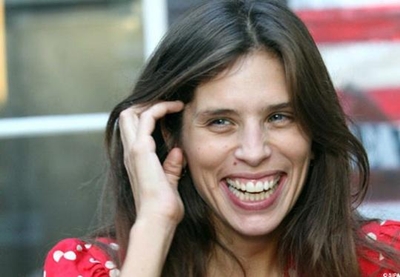
Model/designer/author Tere Tereba shot by Moshe Brakha

He was also the ne plus ultra dreamer, lured by seemingly limitless opportunity to reinvent himself by acquiring staggering amounts of money and clout. It’s hard to imagine his rise from grubby paper boy to one of the most prominent figures in the underworld taking place anywhere but the City of Angels.

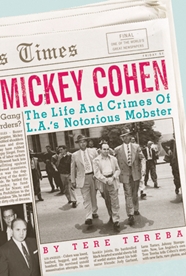
Indeed for author Tere Tereba, Cohen is Los Angeles. Her book “Mickey Cohen: The Life and Crimes of L.A.’s Notorious Mobster” (ECW, $16.95 paperback/$29.95 hardcover) outlines the history of the man and the city, from Prohibition to the mid ’70s. “He was LA’s top mobster for a generation,” Tereba recently told me over a glass of iced tea in her elegant living room.

“He terrorized, captivated and corrupted Los Angeles. He’s about to be introduced to the American public through ‘Gangster Squad’ (the upcoming movie in which Sean Penn plays Cohen) and people don’t know who Mickey Cohen really was.”

Tereba, an award-winning fashion designer and journalist, is a quintessential Angelino. Born in Warren, Ohio, she has lived here since childhood. As a teenager, Tereba frequently saw bands at Sunset Strip clubs and connected with Jim Morrison’s girlfriend, Pamela Courson, who jump-started her design career.

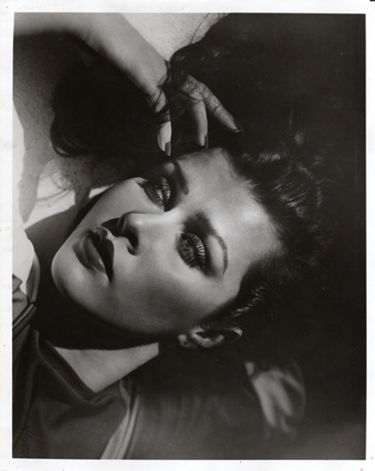
Tere Tereba shot by George Hurrell

Tereba’s account of Morrison in Paris was selected by The Doors to appear in their book, The Doors: An Illustrated History. In addition to her creative talent, Tereba’s classic features and stop-and-stare bone structure drew much attention, from the likes of famed Hollywood photographer George Hurrell for whom she modeled and Andy Warhol, who cast her in his 1977 black comedy “Bad.” Warhol described Tereba as looking like Hedy Lamarr and acting like Lucille Ball.

The day I met her, she wore a chic black dress, a vintage shrimp-pin and zebra-stripe pumps. “I could put on one of my Irene suits, if you want,” she offered, with a laugh.

Tereba’s book renders a portrait of a complex and compelling man in a city ripe with chances to strike it big, especially for unscrupulous players. Of Cohen’s return to the West Coast in 1937 after a stint in Cleveland and Chicago, Tereba writes: “He found Los Angeles to still be a big small town. The underworld setup, the 23-year-old learned, was not the eastern system.” Or as Cohen put it, “Gambling and everything … was completely run by cops and stool pigeons.”
Fast forward to the fall of 1955, when Cohen, 42, was released from McNeil Island Federal Penitentiary. Tereba describes Cohen’s turf this way: “The land of perpetual summer, carnal delights, and blue-sky ennui still captured the imagination of dreamers everywhere. But L.A. had changed. Bigger and bolder than ever, freeways linked the suburban sprawl. Hollywood’s old guard had lost their luster; a new and different breed was on the horizon.”

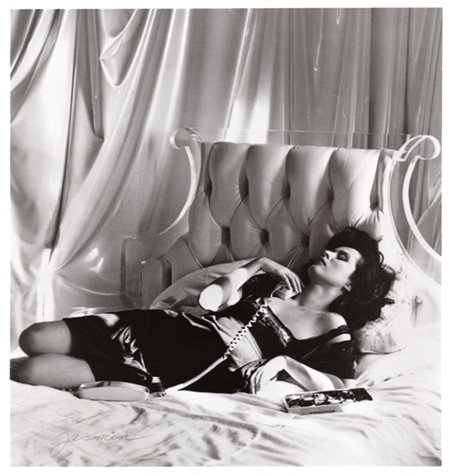
Tere Tereba shot by Paul Jasmin

Speaking of Hollywood, Tereba’s book explores the intersection between mafia characters and the Tinseltown elite, such as the 1958 fatal stabbing of Johnny Stompanato by Lana Turner’s daughter, Cheryl Crane.

Until Cohen’s death on July 29, 1976 (he died in his sleep, having survived 11 assassination attempts over the years), the brawny former boxer lived each moment intensely, often courting publicity and flaunting his power.

Said Tereba during our interview: “He was the ultimate anti-hero because he did what he wanted to do. He went against the cops, he fought city hall. He did all the things you’re not supposed to do and everybody’s afraid to do.

“You don’t get more outrageous and brazen than Mickey Cohen. Even his showy style of doing business. He dressed the way he wanted to, in a semi-Zoot suit. He knew what he liked and he followed it.”

Some facts are already well known. In setting the scene, Tereba reminds the reader: “After the [1938] scandal decimated the LAPD, the city of Los Angeles was closed to underworld activity. But Los Angeles County remained wide open.
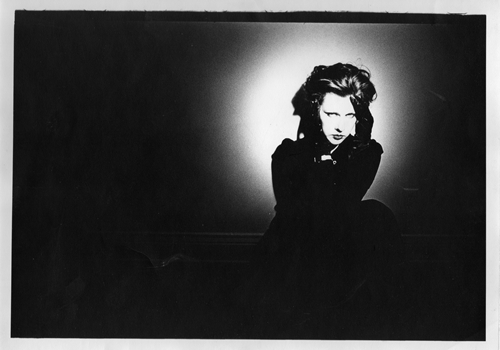
Tere Tereba shot by Moshe Brakha

“Sheriff Eugene Biscailuz’s mighty domain stretched from Lancaster in the north to Catalina Island, 26 miles off the coast, south to Orange County, and east to San Bernadino County – from the desert to the mountains to the sea.

“Geographically the largest county in the country, at more than 4,000 square miles, it was bigger than many eastern states and made up 43 percent of the state’s population.”

She also reveals never-before-released documents and information, such as the anxiety disorder Cohen struggled with for most of his life, his wife LaVonne’s unsavory background and his relationships with women after he and LaVonne divorced in 1958.

Much has been written, speculated, invented and whitewashed about Cohen and his city. Tereba spent more than 10 years researching and writing her book; she tells Cohen’s story swiftly and assuredly. Her page-turning and entertaining narrative neither glamorizes nor judges its subject.

Mickey Cohen

By the time “Gangster Squad” hits screens this fall and plants Mickey Cohen firmly in the spotlight (which he would have loved) Tereba’s readers will have already pierced through the shadows that have shrouded him for decades.

Tereba will discuss and sign her book at 7:30 p.m. on Thursday, June 14, at Skylight Books, 1818 N. Vermont Ave., Los Angeles, 90027.

Director Maïwenn on working with the actors of ‘Polisse’

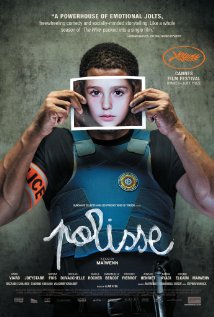
“Polisse,” a French cop drama, features truly outstanding performances, ones that linger in your memory long after the credits roll.

“When I felt that the kids were too much pushed by their parents, I wouldn’t take them,” said director/writer/actor Maïwenn.

How did director and co-writer Maïwenn (she also played Melissa the photographer) get this stunning work from her cast?

At a recent press conference in Beverly Hills, after first saying she was simply lucky, Maïwenn elaborated on her collaboration with actors. She said the key was to keep it simple and true. “I think the secret is the way you [the actors] listen to me, the way you listen to the script. All the cases were true, based on real cases.”

As for working with the children, Maïwenn said she was extremely careful to shield the kids from any negative impact that might result from playing characters in such traumatic situations. This included involvement from a French child-protection agency and a psychologist.

And recognizing their limits. “When the kids were on the set, we had to go fast. They want to have it fun so it has to be short. Otherwise, if they have to wait too much, they’re getting bored.

Additionally, she put much thought and effort into casting the children. “I am a mother so I’m used to talking with kids and I knew them a long time before the shoot and I met their parents. … When I felt that the kids were too much pushed by their parents, I wouldn’t take them. I was an actress child and my mother was pushing me too much. … I chose the kids when they were authentic and when they were not too much actors. … The kids I loved, when I asked them, ‘Why do you want to do this movie?’ they said because it’s true cases.”

Maïwenn discovered that fine-tuning the script to minimize lewd words and the suggestion of acts involving the kids improved the storytelling. “I discovered that the less you show, the more it’s powerful.”

Happy birthday, Jimmy Stewart

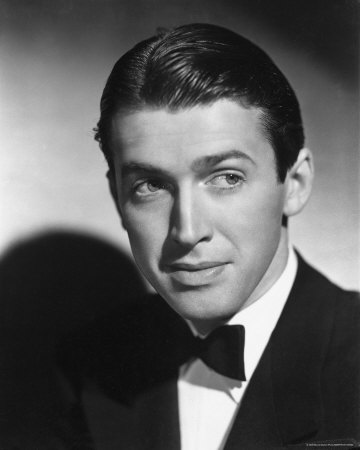
Remembering Jimmy Stewart: May 20, 1908 – July 2, 1997. What’s your favorite JS movie?

Robert Bresson retrospective starts tonight at the Aero

The Poetry of Precision: A Robert Bresson Retrospective starts tonight at the Aero Theatre in Santa Monica. Starting the series is a new 35 mm print of a superb prison drama based on actual events: “A Man Escaped” (1956). François Truffaut called Bresson’s work, upon its release, “the most important film of the last 10 years.”

Though Bresson, known for his spare, unflinching vision and for addressing religious and spiritual themes, is not a film noir director, several of his movies deal with crime, fate, entrapment and damnation. These include: “Les anges du péché” (1943), “Les dames du Bois de Boulogne” (1945), “Pickpocket” (1959), “Une femme douce”/“A Gentle Woman” (1969), “Le diable probablement”/“The Devil, Probably” (1977) and “L’Argent” (1983) – all of which are showing at the Aero. Bresson died on Dec. 18, 1999; he was 98.

The series runs through May 20. It is presented by the American Cinematheque in collaboration with the French Embassy, the Institut Français, and the French Film and TV Office of the French Consulate in Los Angeles. All films are in French with English subtitles.

The Aero Theatre is at 1328 Montana Ave., Santa Monica, 90403.

Dita Von Teese and Strip Strip Hooray! return to Los Angeles

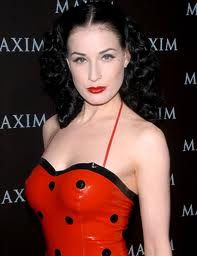
Dita Von Teese

Dita Von Teese and Burlesque: Strip Strip Hooray! return to the West Coast, starting in Los Angeles on Friday, May 11, at the House of Blues. The 90-minute revue also features MC Murray Hill and burlesque acts Dirty Martini, Catherine D’Lish, Selene Luna, Monsieur Romeo, Lada and Perle Noire.

Other stops on the tour include San Diego, Las Vegas, San Francisco, Seattle, Portland and Orange County. I went to her show last year and it’s terrific. Dita and I chatted via email last year; you can read my interview here and see a preview of the show here.

Additionally, on May 1, Dita launched her signature fragrance at Liberty of London and hosted a dinner at the Arts Club where she celebrated with guests, including Christian Louboutin, Roland Mouret and Jenny Packham.

The Dita Von Teese fragrance recently won the award for Best Lifestyle Fragrance at the German Fragrance Foundation‘s Duftstar awards. Her fragrance was up against fellow nominees Christina Aguilera, Bruce Willis and S Oliver.

Watch Dita on CNN’s “Quest Means Business” here: