Moving ‘Rust and Bone’ ranks as one of the year’s best films

Rust and Bone/2012/Sony Pictures Classics/120 min.

Streetwise and sublime, “Rust and Bone” is a contemporary melodrama beautifully told. In director and co-writer Jacques Audiard’s capable hands, what could have been a preposterous and sappy saga is human and moving.
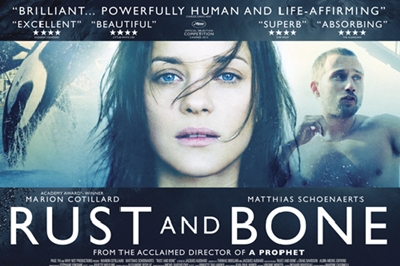
Bookended from a child’s point of view, the movie opens with fragments of a dream through which we enter a world marked by darkness and brutality as well as by joy and redemption. The child here is 5-year-old Sam (Armand Verdure) who travels by train with his father Ali (Matthias Schoenaerts) to Antibes, France. Ali scavenges among other passengers’ discarded food so that the two can eat.

In Antibes, they move in with Ali’s sister Anna (Corinne Masiero). Ali is able to find a job as a bouncer at a disco and later as a security guard and kickboxing combatant. One night at the disco, Ali encounters hauntingly seductive tough lady Stéphanie (Marion Cotillard), wiping blood from her face, as she’s leaving the place. Alarmed, Ali accompanies her home and, through their brief, stilted conversation, learns that she works as an orca whale trainer at Marineland. Ali also finds that she has a boyfriend but leaves his number anyway.

The next time he hears from Stéphanie, she reveals shocking news: she is confined to a wheelchair, having lost her legs in a horrific accident with a whale during a Marineland performance. The two begin a friendship, devoid of pity on his part, that sustains them as she tries to piece her life together again and as he struggles with fatherhood and finding true intimacy.

“What came first was the desire to tell a love story,” says Audiard, at a recent press conference in Beverly Hills. He and co-writer Thomas Bidegain added the love-story element to the foundation provided by Canadian author Craig Davidson’s collection of short stories. (Audiard’s other films include “A Prophet,” The Beat That My Heart Skipped,” and “Read My Lips.” He is the son of screenwriter/director/actor Michel Audiard.)

Subtle performances and stark, poetic imagery temper the melodrama of “Rust and Bone.” Audiard says he and cinematographer Stéphane Fontaine talked about the films of Lon Chaney, fairground films of the Great Depression, and especially Charles Laughton’s great film noir “The Night of the Hunter,” which begins with a father being arrested in front of his children because he has stolen money in order to feed them.
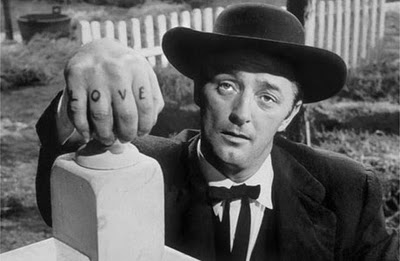
Robert Mitchum plays the sinister preacher in “The Night of the Hunter.”

There’s also an homage to Robert Mitchum’s love/hate hand tattoos from “Hunter.”

“Rust and Bone” seems a natural for Oscar nominations, particularly the work of Schoenaerts and Cotillard. (She won Best Actress for her role as Édith Piaf in “La Vie en Rose” from 2007.) The actors’ naturalness and understatement lend realness and dignity to the extreme, sometimes frightening, situations Ali and Stéphanie find themselves in.

Indeed, the characters themselves are unusual and complex. Says Cotillard: “I read the script and at the end Stéphanie was still a mystery… a mystery that was not to be solved because it was part of who she was.”

As shooting progressed, Cotillard says she came to see Stéphanie as a cowboy. “She turned anger into power. That’s a cowboy, right?”

“Rust and Bone” opens today in New York and LA.

The Noir File: Young lovers on the run in ‘They Live by Night’

By Michael Wilmington and Film Noir Blonde

The Noir File is FNB’s guide to classic film noir, neo-noir and pre-noir on cable TV. All movies below are from the schedule of Turner Classic Movies (TCM), which broadcasts them uncut and uninterrupted. The times are Eastern Standard and (Pacific Standard).

PICK OF THE WEEK

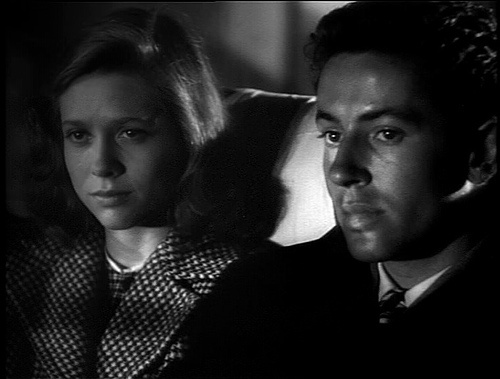
Cathy O’Donnell and Farley Granger play the beautiful young couple.

They Live by Night” (1949, Nicholas Ray). Wednesday, Dec. 5, 10:30 a.m. (7:30 a.m.). “Gentle” and “romantic” might seem odd words to apply to film noir. But Nicholas Ray’s “They Live By Night” is one of the gentlest, saddest and most romantic of all noirs, and an inarguable classic as well. It’s the familiar but potent story of two naïve young outlaw lovers-on-the-run: Bowie, a kid with a gun and Keechie, a girl with a heart to be broken (played by Farley Granger and Cathy O’Donnell, an unusually beautiful young movie couple). Bowie and Keechie are two nice, ordinary kids who‘ve fallen in with the crookedly paternal T-Dub (Jay C. Flippen) and his violent partner Chickamaw (Howard Da Silva) to form a gang of traveling thieves.

Ray was a famous American film outlaw romantic. He and producer John Houseman and screenwriter Charles Schnee derived their legendary gangster love story from Edward Anderson’s harder-bitten Depression novel “Thieves Like Us.” Robert Altman later remade “They Live By Night,” in 1974, under its original title, with Keith Carradine and Shelley Duvall as Bowie and Keechie (and Louise Fletcher as the two-faced Mattie). That was one of his neo-noir ’70s gems, but “They Live By Night” – often cited, with “Gun Crazy,” as a direct precursor of “Bonnie and Clyde” – has a tenderness and poetic quality that are unique for the crime movie genre. And never more so than in the remarkable nocturnal wedding-on-the-run of Bowie and Keechie, with Ian Wolfe as the wily justice of the peace reeling off a ceremony, paid witnesses, and the sense of a disappointed but wildly loving heart beating beneath it all.

Tuesday, Dec. 4

4 a.m. (1 a.m.):“Night and the City” (1950, Jules Dassin). Crooked fight promoter Harry Fabian (Richard Widmark) tries to outrace the night. One of the all-time best film noirs, from Gerald Kersh’s London novel. With Gene Tierney, Herbert Lom and Googie Withers.

Wednesday, Dec. 5

12:15 p.m. (9:15 a.m.): “Gun Crazy” (1949, Joseph H. Lewis).

Thursday, Dec. 6

8 p.m. (5 p.m.): “Casablanca” (1942, Michael Curtiz).

10 p.m. (7 p.m.): “The Third Man” (1949, Carol Reed).

Saturday, Dec. 8

10 p.m. (7 p.m.): “Autumn Leaves” (1956, Robert Aldrich). Cougar Joan Crawford falls for an unstable younger man (Cliff Robertson); co-starring Vera Miles.

Sunday, Dec. 9

3 p.m. (12 p.m.): “Harper” (1966, Jack Smight). Paul Newman, at his most attractively laid-back, plays one of detective literature’s most celebrated private eyes, Ross MacDonald’s Lew Archer, in this brainy thriller based on MacDonald’s novel “The Moving Target.” One catch: Archer has been renamed “Lew Harper,” so Newman could have (he hoped) another hit movie with an “H” title, like “The Hustler” and “Hud.” He got one. The stellar cast includes Lauren Bacall, Janet Leigh, Julie Harris, Shelley Winters, Robert Wagner, Arthur Hill, Robert Webber and Strother Martin. Scripted by William Goldman.

5:15 p.m. (2:15 p.m.): “Anatomy of a Murder” (1959, Otto Preminger).

10 p.m. (7 p.m.): “Lady in the Lake” (1947, Robert Montgomery).

Bleak, brutal ‘Killing’ a showcase for Pitt’s slow-burn intensity

Killing Them Softly/2012/Plan B Entertainment/97 min.

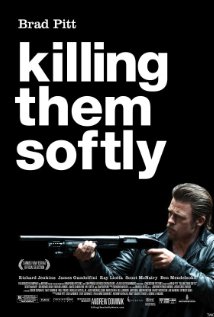
There’s a core of a really good movie inside the pale, pulpy flesh of “Killing Them Softly,” a neo noir by writer/director Andrew Dominik, based on George V. Higgins’ 1974 novel, “Cogan’s Trade.”

Changing the novel’s Boston setting to New Orleans in 2008, the film starts with two young-ish low lifes (played by Scoot McNairy and Ben Mendelsohn) accepting an offer from a veteran low life (Vincent Curatola) to hold up a card sharks’ gathering and put the blame on game organizer Markie Trattman (Ray Liotta).

Of course, this gambit is not cool with the ruling mob and glacially laconic hitman Jackie Cogan (Brad Pitt) is called in to dole out retribution. To help with the assignment, Jackie taps an old-timer assassin named Mickey (James Gandolfini) but bloated, broken-hearted Mick has problems of his own.

Dominik strikes a mood of cynical malaise, one that seems to stem from the country’s decline under the leadership of George W. Bush. Corporate America and the underworld, both big businesses, have much in common, we’re told several times. Gloomy, washed-out lighting and collages of carnage (cinematographer Greig Fraser impressively juxtaposes frenzied camerawork with slow motion) sustain the dour vibe as does the richly dark soundtrack.

But the thin story drags despite its dreadful, in-your-face violence. What unfolds, without much tension, is Jackie crossing off items on his to-do list. Still, Jackie is a character who is pretty compelling to watch. The title “Killing Them Softly” refers to Jackie’s professional style – he prefers to take his victims from a distance so as to avoid the stickiness (crying, begging, etc.) of a close-up killing – and Pitt effortlessly engages us every moment he’s on the screen.

Pitt’s brand of slow-burn intensity makes “Killing Them Softly” a showcase for his talent, whether or not that’s what the director had in mind (they worked together in 2007’s “The Assassination of Jesse James by the Coward Robert Ford”). Pitt is particularly well matched when paired with Gandolfini – the few scenes they have together are among the movie’s best. That said, the final scene, with Pitt and Richard Jenkins as a mob bureaucrat, is as hard to beat as Jackie’s bullets are tough to dodge.

“Killing Them Softly” opened Friday.

Highly entertaining ‘Hitchcock’ lacks inherent drama

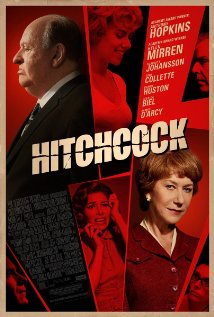
For me, the much-awaited “Hitchcock,” which had its world premiere at AFI Fest 2012 presented by Audi, is the cinematic equivalent of the curate’s egg: parts were good. And the actors were quite good (Oscar-worthy some say) in their parts: Anthony Hopkins as director Alfred Hitchcock, Helen Mirren as his wife Alma Reville and Scarlett Johansson as actress Janet Leigh.

We meet the Hitchcocks in 1959, enjoying the success of “North by Northwest,” Hitch and Alma having made the critical flop “Vertigo” the year before. At 60, the great auteur was at the height of his fame and yet was unable to convince Paramount to finance his next film, “Psycho,” a story based on Robert Bloch’s lurid novel about a serial killer. So the couple decide to finance it themselves – a huge gamble that paid off nicely at the box office and with critics. The movie was nominated for four Oscars.

Against this backdrop, director Sacha Gervasi depicts the artist as a brilliant, shrewd, canny and compulsive man with no end of personal peccadilloes (overeating and obsessing over elegant blondes top the list) and renders a portrait of a marriage that was at times strained but resilient enough to last 54 years.

Upon accepting the AFI Lifetime Achievement Award in 1979, Hitchcock said: “I beg permission to mention by name only four people who have given me the most affection, appreciation, and encouragement, and constant collaboration. The first of the four is a film editor, the second is a scriptwriter, the third is the mother of my daughter Pat, and the fourth is as fine a cook as ever performed miracles in a domestic kitchen. And their names are Alma Reville.”

Arguably, their ultimate bond was the work – making movies that masterfully blend high art, humor and entertainment in a way that has been often repeated and only rarely rivaled.

With its luscious looks, meticulous period details and engaging performances (even if Hopkins sometimes veers into a slightly mannered impersonation), Gervasi’s “Hitchcock” entertains, to be sure. The opening sequence and the scenes where we see Hitch directing Leigh are especially memorable.

But as I watched this glossy yarn, I couldn’t help wondering why this story was being told, what it was adding or subtracting to the legacy of Alfred and Alma. In other words, because “Hitchcock” lacks an inherent drama and an editorial stance by Gervasi, it also fails to involve us deeply or move us. That said, there’s an intrigue to the back story of a film as famous as “Psycho” and, to that end, “Hitchcock” doesn’t disappoint.

“Hitchcock” opens today in limited release.

The Noir File: Six gems by the all-time master of suspense

By Michael Wilmington and Film Noir Blonde

The Noir File is FNB’s weekly guide to classic film noir, neo-noir and pre-noir on cable TV. All the movies below are from the current schedule of Turner Classic Movies (TCM), which broadcasts them uncut and uninterrupted. The times are Eastern Standard and (Pacific Standard).

PICK OF THE WEEK

Six by Alfred Hitchcock (1941-59) Friday, Nov. 23, 6:30 a.m. – 6 p.m. (3:30 a.m.- 3 p.m.)

Hitchcock was the movies’ all-time master of suspense – the supreme chronicler of wrong men on the run and notorious ladies in distress, of psychos and vertigo, of scenic spy chases and excruciating murder scenes, of shadows and strangers and suspicion, and most of all, of expert suspense movies, pulse-pounding pictures that got you on the hook fast, and kept you there until the last minute.

He was also the master of film noir, as this six film mini-marathon of movies proves. Dating from the heyday of both Hitchcock and classic noir (1941 to 1959), they’re films that you may have seen before, but that are always welcome for a fresh viewing. Hitchcock was one of the most punctilious, painstaking and brilliantly inventive of all major movie artists and that’s why you can see these pictures over and over. While you’re in the mood, you’ll probably also want to catch the opening of the new movie “Hitchcock,” Sacha Gervasi’s bio-thriller about the making of “Psycho,” with Anthony Hopkins as the master of suspense himself.

Friday, Nov. 23, 6:30 a.m. (3:30 a.m.): “The Dick Cavett Show” (1972). Cavett interviews Hitch, for the release of “Frenzy.”

8 a.m. (5 a.m.): “Under Capricorn” (1949). In this somewhat stiff Australian-set period romance, Ingrid Bergman plays a reclusive alcoholic torn between bad-tempered husband Joseph Cotten and charming visitor Michael Wilding – with Margaret Leighton a scene-stealer as the obsessive housekeeper. One of the director’s rare commercial flops, “Under Capricorn” is still notable for its complex, long-take moving camera scenes (like the ones in “Rope”).

10 a.m. (7 a.m.): “Strangers on a Train” (1951).

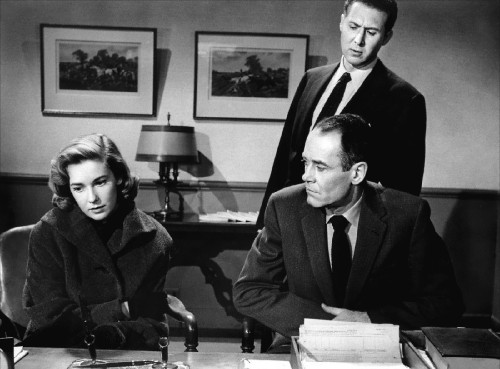
Vera Miles and Henry Fonda star in “The Wrong Man,” which is based on a true incident.

11:45 a.m. (8:45 a.m.) “The Wrong Man” (1956). Hitchcock takes a real-life episode –the arrest and conviction of New York musician Manny Balestrero (Henry Fonda) for a robbery he didn’t commit – and squeezes out as much suspense as he does from his fictional thrillers. Co-scripted by playwright Maxwell Anderson; with Vera Miles and Harold J. Stone.

1:45 a.m. (10:45 a.m.): “North by Northwest” (1959). One of Hitchcock’s two great spy-chase thrillers (the other is “The 39 Steps”), “North by Northwest” follows a suave but beleaguered Manhattan advertising executive (Cary Grant), who’s mistaken for a spy who doesn’t exist, charged with a murder he didn’t commit, pursued by bad guys (James Mason, Martin Landau) whose machinations bewilder him. Oh and he’s involved with a blonde beauty (Eva Marie Saint) who may want him dead. And then there’s that pesky crop-dusting plane “dustin’ where there ain’t no crops.” One of the best, most typical and most beautifully made Hitchcocks. Ingeniously scripted by Ernest Lehman.

4:15 p.m. (1:15 p.m.): “Suspicion” (1941).

6 p.m. (3 p.m.): “Dial M for Murder” (1954).

Sunday, Nov. 18

2 p.m. (11 a.m.): “Casablanca” (1942, Michael Curtiz).

Tuesday, Nov. 20

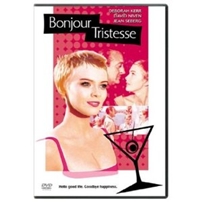
4 p.m. (1 p.m.): “Bonjour Tristesse” (1957, Otto Preminger). Smooth as silk and cool as champagne, Preminger’s adaptation of the young French writer Françoise Sagan’s cynical novel, focuses on a brainy young belle (Jean Seberg), whose intense relationship with her playboy father (David Niven) is disrupted by his perceptive fiancée (Deborah Kerr) – a clash that leads to darker currents and conflicts. Seberg’s chilly performance here inspired her role several years later in Jean-Luc Godard’s “Breathless.”

Carax’s noir dream carries us into the maddest of reveries

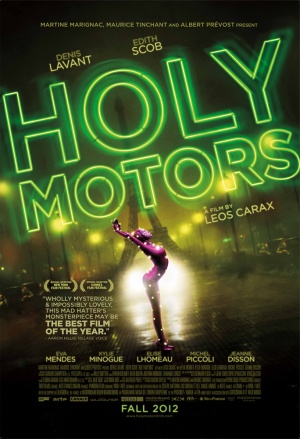
Holy Motors/2012/Indomina Releasing/116 min.

By Michael Wilmington

Behind “Holy Motors” – the strange, perverse and entertaining neo-noir film by Léos Carax – lies a near century of movie surrealism: of deliberately fantastic, illogical and sometimes pathological filmmaking in which the cineaste (whether it’s Luis Bunuel or Jean Cocteau or Maya Deren or Carax) tries to dream on screen and carry us into the maddest of reveries.

Here the reveries are mad indeed. A man and a dog wake up in a strange room with a door that opens into a theater showing a silent film. (Something by a Cocteau or a Bunuel?) The day is just beginning. For the rest of the film, we will follow the (apparently) workday rounds of a traveling player named M. Oscar played by the defiantly sullen and unsmiling anti-star and Carax regular Denis Lavant.

M. Oscar is driven around in a silver limousine by a chauffeur named Celine, played by Edith Scob, the actress who played the faceless girl in Georges Franju’s 1960 horror-fantasy classic “Eyes Without a Face.” As Celine takes him all around Paris (at the behest of a mysterious agency represented at one point by Bunuel favorite Michel Piccoli), M. Oscar appears at various places and plays various roles.

M. Oscar impersonates a financier, an old beggar-woman, a motion-capture lover/dancer in a black unitard, a wild sewer-dwelling hooligan named M. Merde, a tense father of a teenage daughter, a hired killer and his victim, a dying old man, and the old lover of a heart-breaking chanteuse played and sung (to the hilt) by Kylie Minogue. At the end of the day, night has fallen, the actor returns home (to an exceedingly weird household) and the limo joins other cars housed in a garage.

“Holy Motors,” beautifully shot by Caroline Champetier and Yves Cape, is a crazy poem about art and actors and their relation to the world. It would make an interesting double feature with David Cronenberg’s somewhat poetic limo movie, “Cosmopolis,” to which Carax’s film’s is slightly superior. Narrative-bound moviegoers will no doubt be incensed at the sheer oddness of “Holy Motors.” Art-lovers (and lovers of French cinema, from the reveries of Georges Méliès and Louis Feuillade on) may be entranced.

Carax is somewhat different than most of the other cinematic mad dreamers. He manages to get producers to give him larger budgets. Not that often, it’s true. “Holy Motors” is his first feature since “Pola X” (1999), and that was his first since “The Lovers on the Bridge” (1991).

When he shows up, though, he’s usually admired. (In French, with subtitles.)

“Holy Motors,” opens today in LA at Landmark’s Nuart Theatre.

The Noir File: Early Germanic examples, a wicked Western and noir through New Wave eyes

By Michael Wilmington and Film Noir Blonde

The Noir File is FNB’s weekly guide to classic film noir, neo-noir and pre-noir on cable TV. All the movies below are from the current schedule of Turner Classic Movies (TCM), which broadcasts them uncut and uninterrupted. The times are Eastern Standard and (Pacific Standard).

CO-PICKS OF THE WEEK

Breathless” (1960, Jean-Luc Godard). Thursday, Nov. 8, 6 p.m. (5 p.m.)

A guy named Michel Poiccard (Jean-Paul Belmondo) steals a car, drives from Marseilles to Paris, sings of a girl named Patricia (Jean Seberg), finds a gun and in the process reinvents film noir à la the New Wave.

That’s “Breathless,” the 1959 black-and-white Jean-Luc Godard French film that, like Orson Welles’ 1941 “Citizen Kane” – another masterpiece by a revolutionary cineaste still in his 20s – changed the ways we look at film. It changed also the way moviemakers shot movies and critics wrote about them, and perhaps a bit the ways we look at life too.

There’s a key difference though. Welles made us all believe that, if you could get all the tools of the movie industry at your disposal, you could tell stories so magical and deep, they’d open up a whole new world. Godard made us believe that, if you’d seen enough movies, you could grab a camera, walk out on the street, and just start shooting. You could make a movie not according to industry rules and protocols, but right out of your own life. (In French, with English subtitles.)

Stranger on the Third Floor” (1940, Boris Ingster). Saturday, Nov. 3, 7:45 a.m. (4:45 a.m.)

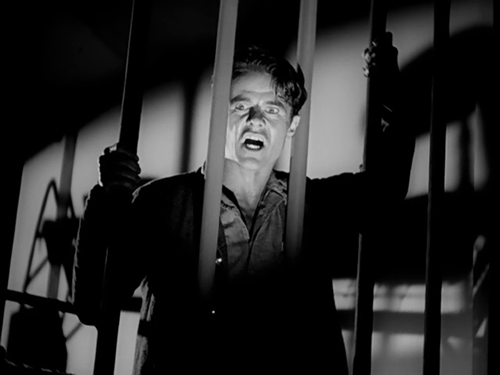
Elisha Cook Jr. plays a hapless patsy accused of murder in “Stranger.”

In this knockout of a B-movie, a breezy newspaper reporter (John McGuire) and his plucky lady friend (Margaret Tallichet, later Mrs. William Wyler) descend into a mad, bad dream. The reporter testifies against a hapless patsy accused of murder (Elisha Cook Jr.), sees him convicted and then finds himself facing a murder charge of his own. Meanwhile, the real murderer may just be that strange little man with a long scarf (Peter Lorre) who prowls around the streets, looking sad and mad and dangerous, as only Peter Lorre can.

Directed by Latvian émigré Boris Ingster, “Stranger” is often cited as the first film noir. And indeed, it has a lot of the elements, all suddenly jelling: the dark city streets, the pathological characters, the wise-cracking reporters, the tough cops and the sense of impending doom. It has Nicholas Musuraca cinematography, Roy Webb music and, as a bonus, art direction by Van Nest Polglase (“Citizen Kane”). Most of all, it has one of the screen’s truly memorable nightmare sequences: an eerie delve into crime and punishment, full of wild angles, dark shadows and insane persecutions.

Sunday, Nov. 4

12 a.m. (9 p.m.) “Pandora’s Box” (1929, G. W. Pabst). One of the great German silent films and one of the great precursors of film noir: G. W. Pabst’s somber, relentless tale of the playgirl-turned-prostitute Lulu (the sublime Louise Brooks), whose stunning, black-banged beauty helps make her one of the most appealing and tragic of femme fatales. (Silent, with music and intertitles.)

Thursday, Nov. 8

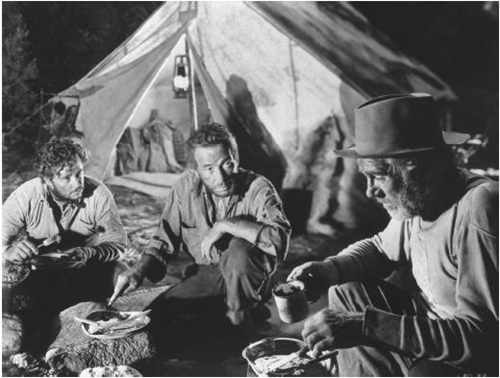
The three treasure hunters strike gold, but they also hit a vein of darkness.

9:45 a.m. (6:45 a.m.) “The Treasure of the Sierra Madre” (1948, John Huston).

Based on the classic novel by the mysterious B. Traven, a lacerating portrayal of greed, the movie is a classic as well. “Treasure” is perhaps the finest work by writer-director (and here, for the first time, actor), John Huston. It’s one of the great westerns, a supreme western noir, one of the best literary adaptations and one of the great Humphrey Bogart pictures.

Bogart is Fred C. Dobbs, a down and out American in 1925 in Tampico, Mexico, who hooks up with two other Yanks: tough but decent Bob Curtin (Tim Holt) and fast-talking, grizzled, expert prospector Howard (John’s father Walter Huston; he won the Oscar). The three treasure hunters strike gold in the Sierra Madre mountains, but they also hit a vein of darkness: the discord and violence that sudden riches can bring.

2 a.m. (11 p.m.): “Sunrise” (1927, F. W. Murnau). Murnau’s first film in Hollywood is a beautiful-looking cinematic ballad of a good wife (Oscar-winner Janet Gaynor), a bad woman (Margaret Livingston), a confused husband torn between them (George O’Brien) and the screen’s most poetic train journey from country to city. Selected in the last Sight and Sound film poll as one of the 10 greatest films of all time. It is. (Silent, with music and intertitles.)

The Noir File: Five greats include ‘M,’ ‘Repulsion,’ ‘D.O.A.’

By Michael Wilmington and Film Noir Blonde

The Noir File is FNB’s weekly guide to classic film noir, neo-noir and pre-noir on cable TV. All the movies below are from the current schedule of Turner Classic Movies (TCM), which broadcasts them uncut and uninterrupted. The times are Eastern Standard and (Pacific Standard).

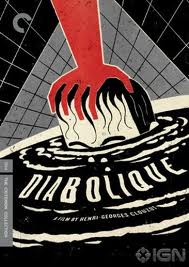
In one of the best film noir weeks ever, TCM offers five noir greats: “M,” “Diabolique,” “D. O. A.,” “The Big Heat” and “Repulsion.”

CO-PICKS OF THE WEEK

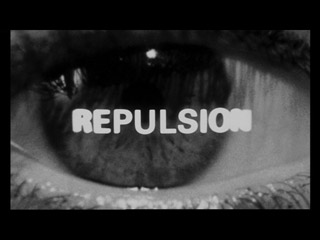
Repulsion” (1965, Roman Polanski). Wednesday, Oct. 31, 11 a.m. (8 a.m.)

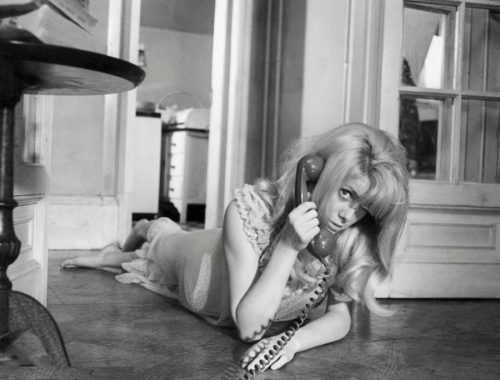
In Roman Polanski’s shiveringly erotic horror-suspense film “Repulsion,” the 22-year-old Catherine Deneuve plays Carol: a blonde French beauty, with a disarmingly lost-looking, childlike face – a girl who begins to go frighteningly mad when her older sister Helen (Yvonne Furneaux) leaves her alone a week or so. Soon, the beautiful, naïve and sexually skittish young Carol, the object of mostly unwanted desire from nearly every man in the neighborhood, starts sinking into alienation and insanity. When the outside world begins to intrude, Carol, repulsed, strikes back savagely, with a soon-bloody knife.

Catherine Deneuve’s nightmare becomes our own in “Repulsion” from 1965.

“Repulsion,” Polanski’s first English language movie and the first of his many collaborations with the reclusive, brilliant French screenwriter Gerard Brach (“Cul-de-Sac”), is one of the great ’60s black-and-white film noirs. It’s also one of the more frightening films ever made. Ultimately, “Repulsion” scares the hell out of us, because Polanski makes Carol’s nightmare so indelibly real, and so inescapably our own.

M” (1931, Fritz Lang) Sunday, Oct. 28, 2:45 a.m. (11:45 p.m.)

Fritz Lang’s great, hair-raising 1931 German crime thriller “M” is the masterpiece of his career, a landmark achievement of German cinema and a film that marks Lang as one of the most important cinematic fathers of film noir. “M” is a work of genius on every level.

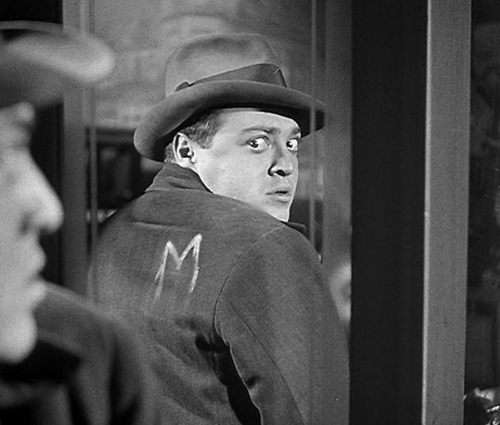
Written by Lang’s then-wife Thea von Harbou (who also scripted “Metropolis”), and directed by Lang, “M” stars the amazing young Peter Lorre as the compulsive child-murderer Hans Beckert aka “M.” Beckert is a chubby little deviate who throws Berlin into turmoil with his string of slayings – a sweet-faced serial killer modeled on the real-life Dusseldorf Strangler. It is a role and a performance that plunges into the darkest nights of a lost soul.

Young Peter Lorre is unforgettable in Fritz Lang’s 1931 masterpiece.

Lang shows us both the murders and the social chaos triggered by the killer’s rampage. When M’s string of murders causes the police to clamp down on organized crime too, the outlaws strike back. Led by suave gentleman-thief Schranker (Gustaf Grundgens), they pursue the murderer relentlessly through the shadowy, mazelike world of Berlin at night. Just as relentlessly, the cops, with cynical detective Inspector Lohmann (Otto Wernicke) in charge, pursue him by day.

“M,” in its own way, is as much a creative movie milestone as Orson Welles’ “Citizen Kane.” It’s one of the main progenitors of film noir and remains an all-time classic of suspense. (In German, with English subtitles.)

Saturday, Oct. 27

8 p.m. (5 p.m.) “Diabolique” (1955, Henri-Georges Clouzot).

10 p.m. (7 p.m.) “Games” (1967, Curtis Harrington). An American semi-remake of Clouzot’s “Diabolique,” with Simone Signoret starring again here, as an enigmatic interloper who moves in on New York married couple James Caan and Katharine Ross, unleashing a string of increasingly deadly games.

Sunday, Oct. 28

6: 30 a.m. (3:30 a.m.) “D.O.A.” (1950, Rudolph Maté).

8 a.m. (5 a.m.): “Kind Hearts and Coronets” (1949, Robert Hamer). From Ealing Studio with love: One of the best of the high-style British dark comedies of manners and murder. Silken schemer Dennis Price is the vengeful climber trying to kill his way to the Dukedom of D’Ascoyne. Alec Guinness plays all eight of his aristocratic victims or victims-to-be. Valerie Hobson and Joan Greenwood are the fetching ladies whom the would-be Duke is torn between. The peerless cinematographer was Douglas Slocombe.

Tuesday, Oct. 30

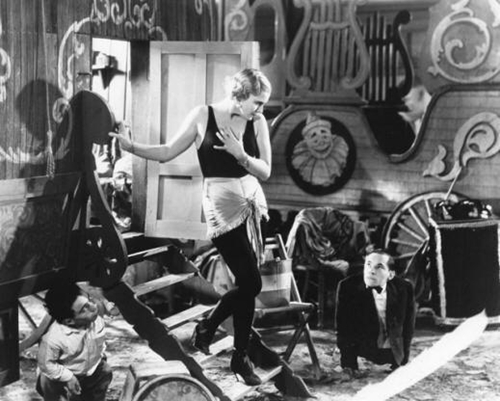
In 1932’s “Freaks,” by Tod Browning, Olga Baclanova plays a trapeze artist.

9:15 p.m. (6:15 p.m.): “Freaks” (1932, Tod Browning). Tod (“Dracula”) Browning’s macabre classic features a troupe of real-life circus freaks, all of them unforgettable camera subjects, in the bizarre story of a heartless trapeze artist (Olga Baclanova) who seduces a lovelorn midget (Harry Earle), marries him, and has to face the consequences.

Wednesday, Oct. 31

6:30 p.m. (3:30 p.m.): “The Body Snatcher” (1945, Robert Wise). Boris Karloff, Bela Lugosi and Henry Daniell fight over corpses and medical experiments in this gripping adaptation of a Robert Louis Stevenson tale.

Thursday, Nov. 1

8 p.m. (5 p.m.): “The Big Heat” (1953, Fritz Lang).

9:45 p.m. (6:45 p.m.); “Bullitt” (1968, Peter Yates). One of the more stylish cop-movie thrillers. With Steve McQueen at his coolest, Jacqueline Bisset at her loveliest, Robert Vaughn at his slimiest – plus the car chase to end all car chases.

11:45 p.m. (8:45 p.m.): “The Racket” (1951, John Cromwell, plus Nicholas Ray, Mel Ferrer and Tay Garnett, the last three uncredited). A battle of two Bobs, both film noir giants: good cop Robert Mitchum vs. gangster Robert Ryan, with Lizabeth Scott watching. From Howard Hughes’ RKO studio-head tenure, “The Racket” is a remake of Lewis Milestone’s 1928 mobster movie, based on Bartlett Cormack’s play, and also produced by Hughes.

Highs outweigh the lows in London-set ‘Pusher’

Pusher/2012/Radius TWC/87 min.

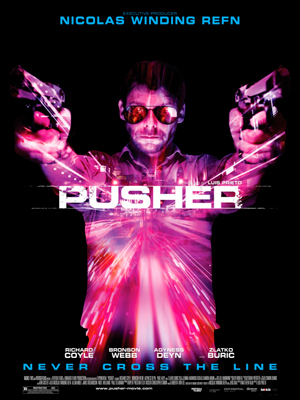
“Pusher,” by director Luis Prieto, is a fun romp through familiar territory. Maybe romp isn’t quite the right word, given that this is a drug dealer’s violent, watch-your-back world full of sketchy thugs with extremely bad teeth, gorgeous strung-out girls and vicious power-brokers with very short tempers.

Prieto’s movie is based on Nicolas Winding Refn’s 1996 Danish film trilogy, also called “Pusher.” Winding Refn, who captivated American audiences last year with “Drive” starring Ryan Gosling and Carey Mulligan, is executive producer here.

This “Pusher” follows a dealer named Frank (Richard Coyle) as he goes about his illegal business over the course of a week in his home base of London. (The original was set in Copenhagen.)

When a big sale is interrupted by the cops, Frank improvises and saves his skin. But now he owes a wad of cash to a supplier and he tries to cobble together the cash under a looming deadline.

The story, scripted by Matthew Read, is formulaic and doesn’t probe much beyond the surface. But there’s so much energetic camerawork and such assured performances that I had a good time immersing myself in the seedy, sleazy glitz of London’s SE1.

Coyle’s Frank likely tells himself that this too shall pass, that soon he’ll be done with dealing once and for all. Frank is exactly the kind of guy – smart, cocky, very cute and fully deluded – who thinks he can breeze through the badness and eventually live a different life. Emphasis on eventually. Did I mention he was very cute?

Just as interesting to watch is blonde glamazon Agyness Deyn as Flo, his dancer girlfriend; she brings a depth to the part that also signals mystery and muted pain. It is perhaps a little hard to buy that Frank would choose as his sidekick a chattery simpleton like Tony (Bronson Webb) but Tony comes from a long line of nervous, weasely, all-talk henchmen, most memorably played by classic film-noir great Elisha Cook, Jr.

Croatian-Danish actor Zlatko Burić plays Milo, the portly crime lord who happily juggles chats over buttery pastries with sending his boys to bash people’s knees in. Burić played the same role in the 1996 trilogy and he effortlessly nails the part.

“Pusher” isn’t the most original movie you could watch, but perfection isn’t everything. Look at the awkward, seemingly incompetent, sidekick thugs I mentioned above. Sometimes just being psycho is enough.

“Pusher” opens today in New York and LA (at the Sundance Sunset Cinema in West Hollywood). It is also available via video on demand.

Pitch-black ‘Seven Psychopaths’ charms, then disappoints

About halfway through “Seven Psychopaths,” I remembered this old joke: What’s an Irish seven-course dinner? A six pack and a potato. It’s an apt comparison for this a pitch-black, neo-noir comedy written, co-produced and directed by Martin McDonagh (acclaimed playwright and writer/director of 2008’s “In Bruges”). Watching “Seven Psychopaths” lures you with some great lines and foamy laughs. Great!

And we get to see a terrific cast: Colin Farrell, Sam Rockwell, Woody Harrelson, Christopher Walken, Tom Waits, Harry Dean Stanton, Linda Bright Clay, Abbie Cornish, Gabourey Sidibe and Olga Kurylenko. Even better!

When we want to sink our teeth into something really satisfying, though, McDonagh disappoints with this fare. Clearly, in his movie-within-a-movie, he wants to riff on crime movie clichés, point out that Hollywood is a fatuous land and pay tribute to Martin Scorsese and Quentin Tarantino. Unfortunately, the story becomes skimpy and yet annoyingly tangled. As for McDonagh’s direction, he’s either trying too hard or not trying hard enough, I’m not sure which. But, if it’s a banquet you’re after, beware: this plate is both messy and meager.

For a more extensive review, read Stephanie Zacharek’s take here.