‘Purple Noon’ marked milestone for Clément and Delon

“Purple Noon,” recently released by Criterion, is the prize for FNB’s January-February reader giveaway. Michael Wilmington reviews.                                                                          

Purple Noon/1960/Robert and Raymond Hakim/118 min.

“Plein Soleil,” or “Purple Noon” is a classic thriller and an exceptionally riveting and beautiful movie about desire and cruelty, murder and malice. It’s a smoke-and-mirrors game of make-believe played by a psychopathic killer, a villain from a classic of 20th Century crime fiction – 1955’s “The Talented Mr. Ripley” by the brilliant American novelist Patricia Highsmith.
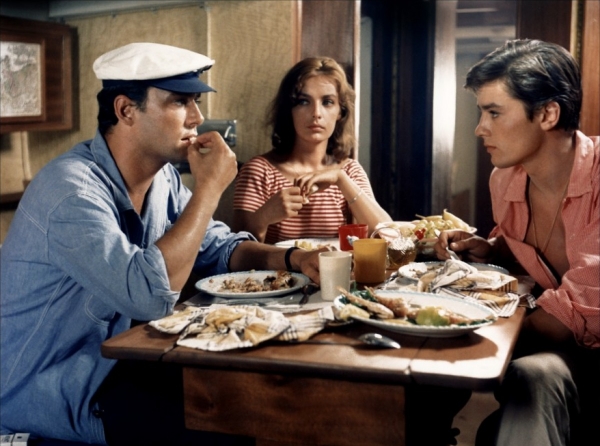
Alain Delon (right) plays Tom Ripley, a conman who fools a reckless playboy named Philippe (Maurice Ronet) and his girl, Marge (Marie Laforêt). The movie was adapted from Patricia Highsmith’s novel.

Shot in Italy, we first meet Ripley in the Bay of Naples, on a sailboat, surrounded by blazing sunlight (“plein soleil”). Two good-looking young men are laughing and smiling. The joke is that one of them, a handsome, penniless hanger-on named Tom Ripley (Alain Delon), will kill the other one, a rich, reckless playboy named Philippe Greenleaf (Maurice Ronet), assume his identity, take his money, and maybe seduce his girl, Marge (Marie Laforêt).

They are both laughing (but Philippe’s eyes are wary, Tom’s predatory), smiling with the special joie de vivre and cruel merriment of the young and careless – the high giddy spirits of, say, Robert Walker as Bruno Anthony planning his criss-cross murder with Farley Granger as Guy Haines in Highsmith and Alfred Hitchcock’s “Strangers on a Train.” But then Tom really kills Philippe. A knife thrust. A scream. “Marge!” cries the victim, the knife stuck in his chest. When the murder comes, it’s so swift, so effortless, so unexpected, yet so oddly inevitable, that it’s hard to believe we’ve seen what we’ve seen.
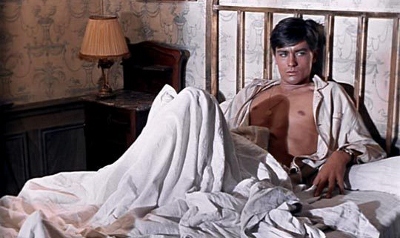
Ripley (Alain Delon) is a man trying to live a life that isn’t his.

Released in 1960, the same year as “Psycho” and “La Dolce Vita,” “Purple Noon” was an off-type movie for French filmmaker René Clément, a gifted and highly regarded director, who, by 1960, had won two major Cannes Film Festival awards, two Oscars (for 1949’s “The Walls of Malapaga” and 1952’s “Forbidden Games”) and two Golden Lions at Venice. In 1946, Clement had served as Jean Cocteau’s “technical adviser” (his co-director, some think) on the romantic fantasy masterpiece “Beauty and the Beast.”

Clement was a technical genius who chose challenging subjects. But he had been famously attacked in an influential article by the young François Truffaut. Writing in Cahiers du Cinema, Truffaut accused Clement and other filmmakers of being pretentious, over-praised mediocrities. Truffaut was a great filmmaker and a great film critic, but he sometimes said nasty and unfair things (as he admitted in later years) to draw attention to himself and kick up controversy. His dismissal of Clement was one of his bigger critical injustices.

Did Clement take it to heart? Most tellingly, “Purple Noon” is obviously influenced by Hitchcock, whom all the young Cahiers du Cinema critic/directors loved (they called themselves the “Hitchcocko-Hawksians”). “Purple Noon” is a film that most of them would probably have liked to have directed, but didn’t. Couldn’t?
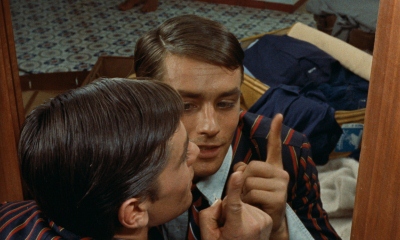
Delon plays a love scene with his reflection in a mirror.

There is, however, a notable deviation from the Hitchcock thematic pattern. “Purple Noon” is not a movie about a wrong man falsely accused of a crime he hasn’t committed, like Cary Grant in “North by Northwest,” or Robert Donat in “The 39 Steps.”

In “Purple Noon,” Ripley is guilty. He’s a man trying to live a life that isn’t his, a life that belonged to the man he killed. “Purple Noon” is about the idle rich, and Ripley is a conman who wants to be idle and rich. Both Highsmith and Clement are unusually successful in getting us immersed in a story where most of the people are rich and selfish, where the leading man is irredeemably evil and the only really likeable character is Philippe’s abused girlfriend Marge, a writer with bad taste in men.

Ripley is in Italy at the behest of Philippe’s parents to talk Philippe into coming home. Instead, the guys become carousing hell-raising buddies. After the murder, Ripley takes Philippe’s bank records, fakes a passport, forges Philippe’s signature, imitates his voice on the phone, and lays a paper trail of hotel receipts to pretend that the dead man is still alive, still joy-riding somewhere around Italy.

Ripley is the real killer, constantly being mistaken for his own victim. It’s a brilliant Highsmith idea, and one that generates near-constant suspense, especially in the great scene when Ripley, disguised as Philippe, is confronted by Philippe’s suspicious friend Freddy Miles (Bill Kearns). That Tom-and-Freddy chase was also the only great scene in Anthony Minghella’s 1999 American movie version of “The Talented Mr. Ripley,” with Matt Damon miscast as Ripley. And the only reason that scene was great was because of Philip Seymour Hoffman’s marvelously snide performance as Freddy.

There’s a great performance in “Purple Noon” too: the tigerishly seductive Alain Delon, in his first important part. Delon is one of those impossibly good-looking actors who get careers they seemingly don’t really deserve (and that Delon said he initially didn’t want), but whose looks the movies feed on, and whom, it is said, the camera loves.

Delon, a working-class Adonis, is one of the few actors who could play, as he does here, a believable love scene with his own reflection in the mirror. We may not want Ripley to escape, but he generates unusual simpatico for a cold-blooded swindler and killer. And Maurice Ronet, with his haunted eyes and bedazzled smile, is just right as the irresponsible Philippe.

Delon, of course, was wrong for the part of Ripley in one major respect. It is impossible to believe that he (or Ronet) is an American. But in other respects, he’s an apt choice, and once you see him in the part, it’s hard to discard his image. (Damon, by contrast, though he’s played some movie villains, seems inherently too nice a guy for Ripley.)

Clement made the kind of thriller Truffaut would have loved to have made, but never did. And for the rest of Clement’s career, he was often typed as a thriller specialist, because of “Purple Noon,” which became one of the most influential of all French crime/suspense movies.

It deserves to be. “Purple Noon” still plays beautifully, especially in the scenes where Ripley battles the elements after the murder. Two years later, in 1962, a talented young Polish film director, Roman Polanski, made a thriller, set on a sailboat, that reminds you greatly of the bay scenes in “Purple Noon.” (“Knife in the Water” became an international hit and eventually brought Polanski to Hollywood where he made superb mass-audience thrillers like “Rosemary’s Baby” and “Chinatown.”)

I wish Clement had had a few more opportunities like Polanski did. Maybe Truffaut wished it as well. Maybe the maker of “The Four Hundred Blows” wished he hadn’t been so quick to thrust in the knife.

Extras: Interviews with Patricia Highsmith, Alain Delon and Clement scholar Denitza Bantcheva; Trailer; Booklet with a fine essay by Geoffrey O’Brien and a 1981 interview with René Clément.

The Noir File: Beatty and Dunaway go gun crazy in ‘Bonnie and Clyde,’ Arthur Penn’s 1967 noir gangster classic

By Michael Wilmington & Film Noir Blonde

The Noir File is FNB’s guide to classic film noir, neo-noir, sort of noir and pre-noir on cable TV. All movies below are from the schedule of Turner Classic Movies (TCM), which broadcasts them uncut and uninterrupted. The times are Eastern Standard and (Pacific Standard).

PICK OF THE WEEK

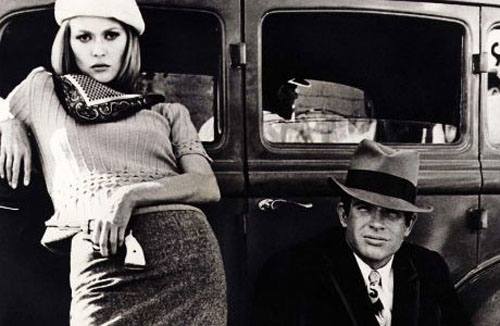
Faye Dunaway and Warren Beatty are the noir lovers on the run.

Bonnie and Clyde“ (1967, Arthur Penn). Monday, Feb. 4, 8 p.m. (5 p.m.). It begins with a sexy small town pickup – a fast-talking ex-con named Clyde Barrow (Warren Beatty) talks a bored blonde waitress named Bonnie Parker (Faye Dunaway) into taking a stroll, witnessing an armed robbery, and then taking a spin in a stolen car that he steals right in front of her. It ends with one of the most emotionally overpowering scenes in all of the movies. In between, we watch Bonnie, Clyde, Clyde’s cornball brother Buck (Gene Hackman), Buck’s wife Blanche-the-preacher’s-daughter (Estelle Parsons) and a wayward gas station jockey named C. W. Moss (Michael J. Pollard), run amok in the south and middle west, often accompanied by banjo picker Earl Scruggs’ rousing “Foggy Mountain Breakdown,” in one of the movies’ great crime sprees and gang sagas.

Among the inspirations for Robert Benton and David Newman’s script, which they intended for one of the ‘60s French New Wave directors, like Francois Truffaut or Jean-Luc Godard, were the ’40s love-on-the run film noirs “Gun Crazy” and “They Live By Night,” two classics also based on the legend of The Barrow Gang. Director Arthur Penn, at his peak, turned the movie into an ironic blend of twisted love story, dark comedy, caustic social portrait and breezy romantic crime thriller, with Bonnie and Clyde as a pair of deadly innocents, caught up in the poverty of the Depression and the turbulence of the ’30s gangster period. The movie is shot by Burnett Guffey in a style reminiscent of Depression-era photographer Walker Evans.

Gun-toting Bonnie and Clyde are sociopathic criminals but attractive, likable, mostly unmalicious ones. (Beatty’s Clyde believes naively that they’re helping the poor by robbing banks that are foreclosing mortgages.) Bonnie and Clyde are also, in a way, counter-culture stars – creating their own real-life movie as they race along. What they’re racing toward, though – something poetess Bonnie realizes – is the end of the line. With Gene Wilder, Denver Pyle and Dub Taylor. Oscars went to Parsons (Supporting Actress) and Guffey (Cinematography). [Read more…]

The Noir File: Lee Marvin is a thief betrayed in ‘Point Blank’

By Michael Wilmington & Film Noir Blonde

The Noir File is FNB’s guide to classic film noir, neo-noir, sort of noir and pre-noir on cable TV. All movies below are from the schedule of Turner Classic Movies (TCM), which broadcasts them uncut and uninterrupted. The times are Eastern Standard and (Pacific Standard).

PICK OF THE WEEK

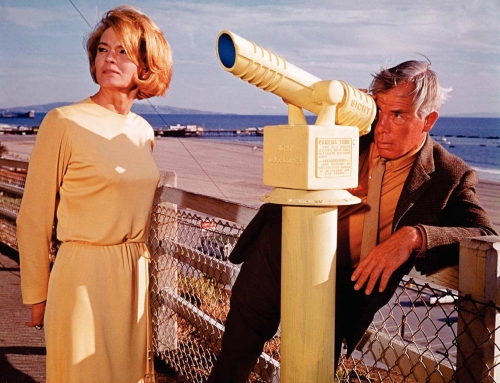
Angie Dickinson and Lee Marvin star in “Point Blank.”

Point Blank” (1967, John Boorman). Thursday, Jan. 31, 2:45 a.m. (11:45 p.m.) “Point Blank,” with Lee Marvin as a thief betrayed and left for dead in Alcatraz, is, like “Chinatown,” one of the quintessential neo-noirs. Directed with sizzle and panache by John Boorman (“Deliverance”), the movie’s source is one of the super-tough Parker novels by Donald Westlake, with the main character’s name changed to “Walker.” (It’s changed back in the current, and disappointing, movie adaptation, “Parker,” starring Jason Statham and Jennifer Lopez, directed by Taylor Hackford.)

When the unstoppable Walker, his face deadly and determined, takes off after his treacherous old associates (including John Vernon, Carroll O’Connor and Lloyd Bochner) with the help of a mysterious guide (Keenan Wynn), and a glamorous pal (Angie Dickinson), it’s a magnetic, terrifying sight.

“Point Blank” steeps you in its L. A. locale: a surprisingly beautiful sunlit vision circa 1967. With Boorman going all out, this classic movie plays like a grand collaboration among Don Siegel, Alain Resnais and Jean-Pierre Melville. As for Lee Marvin, he’s at the top of his game. So is Angie.

Tuesday, Jan. 29

7:45 a.m. (4:45 a.m.): “The Man with the Golden Arm” (1955, Otto Preminger). With Frank Sinatra and Kim Novak.

3:15 p.m. (12:15 p.m.): “Anatomy of a Murder” (1955, Otto Preminger). With James Stewart and Lee Remick.

1:45 a.m. (10:45 p.m.): “Armored Car Robbery” (1950, Richard Fleischer). Fast, punchy heist thriller; with Charles McGraw as the tough cop on the trail of half a million. Also with William Talman (the brains) and Adele Jergens (the broad).

Wednesday, Jan. 30

Orson Welles

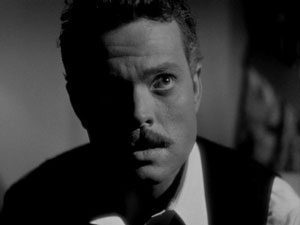
9:45 p.m. (6:45 p.m.): “The Stranger” (1946, Orson Welles). Orson Welles is a post-war Nazi fugitive hiding in a small town, affianced to the lovely but gullible Loretta Young. Edward G. Robinson is the government man on his trail. That cast and this movie’s virtuosic staging and camerawork (by Russell Metty), would make it a gem for almost any other director. For Welles, it’s average, but gripping.

Saturday, Feb. 2

3:15 p.m. (12:15 p.m.): “Key Largo” (1948, John Huston). With Humphrey Bogart and Lauren Bacall. Blurbed August 10, 2012.

8 p.m. (5 p.m.): “Casablanca” (1942, Michael Curtiz). With Humphrey Bogart and Ingrid Bergman.

10 p.m. (7 p.m.) “The Maltese Falcon” (1941, John Huston). With Humphrey Bogart and Mary Astor.

12 a.m. (9 p.m.): “Mildred Pierce” (1945, Michael Curtiz). With Joan Crawford and Ann Blyth.

4 a.m. (1 a.m.): “The Treasure of the Sierra Madre” (1948, John Huston). With Humphrey Bogart and Walter Huston.

Languid, noirish ‘Tabu’ blends romantic drama, visual beauty

Tabu/2012/Adopt Films/118 min.

“I was interested in characters we don’t usually meet in films, female characters with distinguishing temperaments and peculiarities” says Portuguese director Miguel Gomes of his film “Tabu.”

Indeed, the finely drawn yet ordinary characters are what drive the story in this languid, sometimes lyrical, film with a neo-noir love triangle at its core. “Tabu” starts slowly, introducing us to newly retired and somewhat restless Pilar (Teresa Madruga) and Santa (Isabel Cardoso), a maid to the elderly Aurora (Laura Soveral), who asks to see a mysterious man from her past once more before she dies.

Her request spurs an exploration of the dramatic life she led and the memorable men she charmed (Ivo Müller and Carloto Cotta) 50 years ago on a colonial farm in Africa, at the foothill of Mount Tabu. (Ana Moreira plays young Aurora.)

The flashback deftly mixes poetry, rock ’n’ roll, amour, adultery and, of course, societal taboos in a compelling and ultimately poignant yarn. By the end, we know Aurora, and the people around her, past and present.

Shot in black and white (35 mm for the first part, 16 mm for the second), “Tabu” has been snaring international awards for its unique blend of romantic drama and visual beauty. Though its unhurried pacing may not be everyone’s cup of tea, Gomes’ “Tabu” rewards the patient viewer.

“Tabu” opens today at Laemmle’s Royal in West LA and Laemmle’s Playhouse 7 in Pasadena.

‘Gangster Squad’ goes for gorgeous gloss over true grit

Gangster Squad/2013/Warner Bros./113 min.

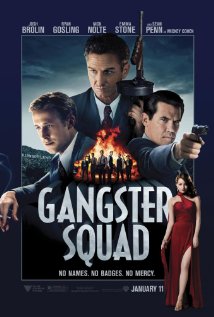
The much-hyped new neo-noir “Gangster Squad,” set in 1949 Los Angeles, falls prey to the same stereotypical failing that marks some Angelinos, then and now: It’s a wannabe. On the plus side, the movie is glossy looking and elegantly styled (many famous locations, from Slapsy Maxie’s to Clifton’s Cafeteria, are stunningly presented) with a star-studded cast.

Directed by Ruben Fleischer, there’s action aplenty, though it never feels like there’s much at stake. And its superficial, often cartoonish, virtues are undercut by a weak script, uneven performances and tepid emotion.

That’s too bad, given the long-standing allure of vintage LA and the fascinating source material for the film: Paul Lieberman’s crime saga, “Gangster Squad: Covert Cops, the Mob, and the Battle for Los Angeles,” which was based on the work of a secret LAPD unit that aimed to guard the city against gangsters. (The book began as a 2008 LA Times series.)

Their primary target: the ruthless and immensely powerful mob leader Mickey Cohen, portrayed in the film by Sean Penn. Josh Brolin plays ambitious good cop Sgt. John O’Mara (married and devoted to his wife); Ryan Gosling turns in another spare, cool performance as the wayward Sgt. Jerry Wooters who tangles with Cohen’s supposed mistress (Emma Stone). A growling, leonine Nick Nolte as police chief William H. Parker must muddle through lines like this one, addressed to O’Mara: “Los Angeles is a damsel in distress. And I need you to save her.”

Penn’s Cohen has similar clunkers. He tells us: “Back east, I was a gangster, out here I’m God.”

The strong cast does what it can, with Brolin, Gosling and Stone making the best of what they are given. But, thanks to Will Beall’s cliche-ridden script, Nolte starts to get mannered and Penn gives us a 2-D Cohen, unrelentingly brutal and ever-menacing. As talented as Penn is, he doesn’t seem to connect with this character and physically he’s an odd choice to play a brawny baby-faced former boxer. In 1949, Cohen was 36; Penn is 52. And if you know much of Cohen’s backstory (he avoided sex because of his OCD disorder), it’s hard to buy into the love-triangle element of this story, which is only very loosely based on fact.

“L.A. Confidential” this is not. But if you fancy gorging on some glitzy eye candy, this should do nicely.

“Gangster Squad” opens today nationwide. You can read author Tere Tereba’s piece Beyond the Gangster Squad: the Real Mickey Cohen here. Tere’s book on Cohen was selected  by KCET as one of the best books of 2012. 

The Noir File: ‘Spellbound’ and George Raft Day

By Michael Wilmington & Film Noir Blonde

The Noir File is FNB’s guide to classic film noir, neo-noir and pre-noir on cable TV. All movies below are from the schedule of Turner Classic Movies (TCM), which broadcasts them uncut and uninterrupted. The times are Eastern Standard and (Pacific Standard).

PICK OF THE WEEK

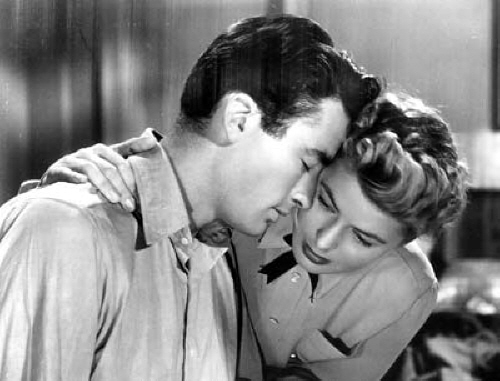
Gregory Peck and Ingrid Bergman star in “Spellbound.”

Spellbound” (1945, Alfred Hitchcock). Sunday, Jan. 13; 4 p.m. (1 p.m.). At a famed psychiatric hospital, the head doctor (Leo G. Carroll) is being replaced by a younger man, Dr. Edwardes (Gregory Peck) – to the surprise and delight of his new colleague Constance Petersen (Ingrid Bergman), who falls in love with him almost at first sight. Unfortunately, this new boss soon proves to be an impostor, an amnesiac, and maybe even a murderer, wanted by the police. Soon, Constance and “Dr. Edwardes” are on the run. As they try to elude the law, Constance also tries to delve into the dark, traumatized recesses of her lover’s mind, in an attempt to clear him that may wind up condemning them both.

Both “Spellbound” Hitchcock and screenwriter Ben Hecht were deeply interested in Freudian psychiatry, and this “wrong man” thriller was initially intended at least partly as a serious look at psychiatry and psychoanalysis –even though the movie’s source is the somewhat baroque mystery novel, “The House of Dr. Edwardes,“ by Francis Beeding. But the powerful allure of Hitch’s two supremely photogenic co-stars, Bergman and Peck, swerved Spellbound more toward stylish romance than serious analysis. “Spellbound” proved to be one of Hitchcock‘s biggest box-office successes of the ’40s. The famous theremin-laced score is by Miklos Rosza, Rhonda Fleming and Michael Chekhov co-star, David O. Selznick produced, and the film’s hauntingly surreal nightmare sequence was originally designed by surrealist painter Salvador Dali (“Un Chien Andalou“).

Thursday, Jan. 10

4:15 p.m. (1:15 p.m.): “Crime in the Streets” (1956, Don Siegel). With John Cassavetes and Sal Mineo. Reviewed Oct. 13, 2012.

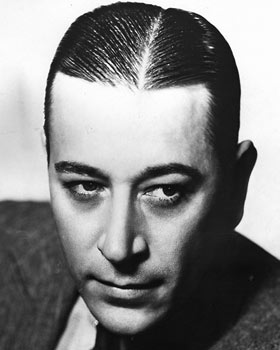
George Raft

Friday, Jan. 11: George Raft Day

7:15 a.m. (4:15 a.m.): “Each Dawn I Die” (1939, William Keighley). With James Cagney and George Raft. Reviewed Aug. 10, 2012.

9 a.m. (6 a.m.) “They Drive By Night” (1940, Raoul Walsh). With George Raft and Humphrey Bogart. Reviewed July 7 2012.

12:30 p.m. (9:30 a.m.): “Background to Danger” (1943, Raoul Walsh). Based on one of Eric Ambler’s first-rate espionage novels, this on-the-edge anti-Nazi thriller, set in Turkey, backs up Raft (an unlikely Ambler hero) with Peter Lorre and Sydney Greenstreet.

Other Raft noirs on Friday include “Johnny Angel” (2 p.m. E.T.), “Nocturne” (3:30 p.m.) and “Race Street” (5 p.m.). [Read more…]

Noir master Nolan wrings cinema riches from next to nothing

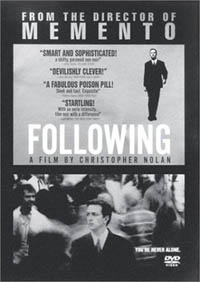
Director Christopher Nolan will appear at the Los Angeles County Museum on Friday, Jan. 4, for a special presentation of his first feature film, “Following,” which was recently released on Blu-ray by Criterion. Michael Wilmington reviews.

Following/1999/ Next Wave Films/70 min.

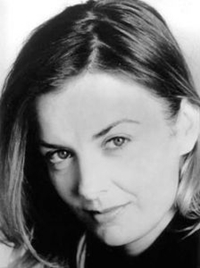
Lucy Russell

A black and white British neo-noir shot on the cheap, with unknown actors, by a then-unknown writer-director, Christopher Nolan, “Following” is the often-fascinating tale of a thief and a voyeur playing dangerous games. Nolan likes tricks and the Wellesian magicians who play them, and the whole movie is something of a conjuring act.

Done with scant resources and slender means, “Following” grabs you, keeps you guessing and casts its own little spell. It’s an underground movie by a director just about to make his break into the mainstream – with another, more expensive and even trickier film called “Memento.”

You might say that this daring precursor itself was a memento mori. What it reminds us is that, if you cross over the line too far, all kinds of unpleasantness, including death, may be just behind you, following. We start with a nervous young man in trouble (Jeremy Theobald as Bill) relating his story to a policeman. An impoverished writer, Bill has begun to play detective and to follow strangers in the streets of London, seemingly unobserved, as research for his writing. When one of his “subjects,” a slick young operator named Cobb (Alex Haw), turns the tables and confronts his shadow in a coffee shop, Bill is pulled into Cobb’s shady world, the life of a professional burglar.

Bill slides into that world, even changing his persona into something slicker and more Cobb-like, with disturbing ease. Also part of the action is a mysterious nameless blonde (Lucy Russell), who mingles with gangster types and may be involved with both Bill and Cobb. After Bill pursues the Blonde and catches her, bad things begin to happen, and out of chronological order. “Following,” like Nolan’s later work, is told in a non-linear fractured-chronology style.

In this moody, brainy thriller, the seeds of Nolan’s later films (“Memento,” “The Prestige,” “Inception,” and “The Dark Knight” trilogy) are nestled under the gritty, cheapo surface. There’s everything Nolanesque here: alternate worlds, a life out of joint, time running backward, locks and keys, deception and betrayal. The film teases, tricks and gratifies us, the way a good thriller should.

It’s an object lesson in how to wring cinema riches from practically nothing. Nolan, who also photographed “Following,” gets monochrome images worthy of both ’50s American noirs and the ’60s French New Wave. The writing is sharp, literate and good at double-shuffling us. The acting is super (though only Russell went on later to a busy career). The movie doesn’t really haunt your mind afterward and the last slamming door of the plot may feel too open-and-shut, but “Following” is a game worth playing.

Extras: Nolan’s nifty1997 short “Doodlebug,” a Mélièsian-Kafkaesque trick film also starring Theobald (“Doodlebug” is a definitive riposte to critics who think Nolan has no sense of humor). Commentary by and interview with Nolan. The second, chronological edit of “Following.” Side-by-side comparison of Nolan’s shooting script and film scenes. Trailers and booklet with an essay by Scott Foundas.

A few of FNB’s fave posts from 2012

Happy 2013, all! Here’s a look at FNB highlights from 2012.

Marilyn Monroe shot by Bert Stern

Top 10 FNB posts (misc.)

Remembering Beth Short, the Black Dahlia, on the 65th anniversary of her death

TCM festival in Hollywood

Interview with Tere Tereba, author of “Mickey Cohen: The Life and Crimes of L.A.’s Notorious Mobster”

Marilyn Monroe birthday tribute

Marilyn Monroe exhibit in Hollywood

Film noir feline stars: The cat in “The Strange Love of Martha Ivers”

Famous injuries in film noir, coinciding with my fractured toe, or broken foot, depending on how dramatic I am feeling

Panel event on author Georges Simenon with director William Friedkin

History Channel announcement: FNB to curate film noir shop page

Retro restaurant reviews: Russell’s in Pasadena

x

REVIEWS: 2012 neo-noirs or films with elements of noir

Crossfire Hurricane” documentary

Hitchcock

Holy Motors

Killing Them Softly

Momo: The Sam Giancana Story” documentary

Polisse

Rust and Bone

Searching for Sugar Man” documentary

Unforgivable

Wuthering Heights

x

REVIEWS: Classic film noir

Anatomy of a Murder

Criss Cross

Decoy

Gilda

Gun Crazy

Murder, My Sweet

The Postman Always Rings Twice

Possessed

Sunset Blvd.

They Drive By Night

x

REVIEWS: Directed by Alfred Hitchcock

Dial M for Murder

The Lady Vanishes

Marnie

Notorious

The 39 Steps

The Noir File: Dark treats from Preminger, Dassin and Lang

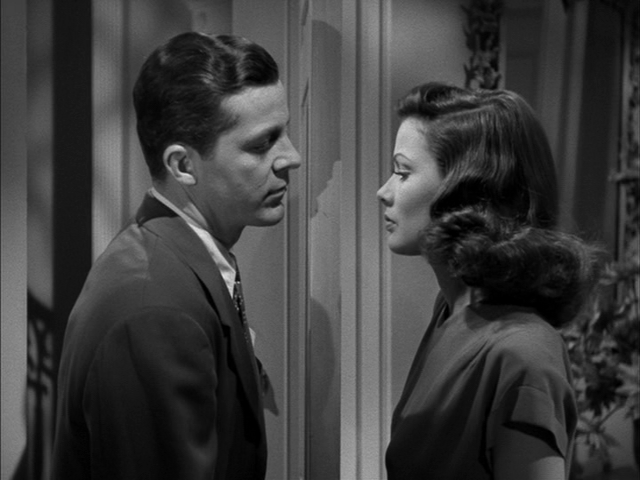
Dana Andrews and Gene Tierney are one of film noir’s great couples.

By Michael Wilmington & Film Noir Blonde

The Noir File is FNB’s guide to classic film noir, neo-noir and pre-noir on cable TV. All movies below are from the schedule of Turner Classic Movies (TCM), which broadcasts them uncut and uninterrupted. The times are Eastern Standard and (Pacific Standard).

PICK OF THE WEEK

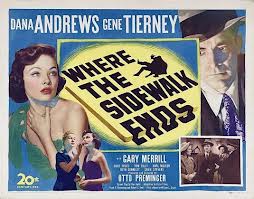
Where the Sidewalk Ends” (1950, Otto Preminger). Thursday, Dec. 27, 1:15 a.m. (10:15 p.m.).
While investigating a murder, a smart but sometimes savage Manhattan police detective named Mark Dixon (Dana Andrews) accidentally kills an innocent suspect (Craig Stevens). Dixon tries to cover it up, but his relentless new boss Lt. Thomas (Karl Malden) keeps pushing the evidence toward an affable cabbie named Jiggs (Tom Tully). And Dixon has fallen in love with Jiggs’ daughter, model Morgan Taylor (Gene Tierney). Gary Merrill plays a crook/gambler.

Scripted by Ben Hecht from William Stuart’s book “Night Cry.” If you want to know what film noir is all about, check this one out.

Thursday, Dec. 27

8 p.m. (5 p.m.): “Black Widow” (1954, Nunnally Johnson). Crime among the Broadway elite, from one of Patrick Quentin’s mystery novels. Not much style, but the cast includes Van Heflin, Ginger Rogers, Gene Tierney, George Raft and Peggy Ann Garner.

4:30 a.m. (1:30 a.m.): “Night and the City” (1950, Jules Dassin). In shadow-drenched, dangerous London, crooked fight promoter Harry Fabian (Richard Widmark) double-crosses everyone he encounters as he tries to outrace the night. The night is faster. This is a top film noir, a masterpiece of style and suspense. From Gerald Kersh’s novel; with Gene Tierney, Herbert Lom, Francis L. Sullivan and Googie Withers.

Sunday, Dec. 30

8:15 a.m. (5:15 a.m.): “Bunny Lake is Missing” (1965, Otto Preminger). Bunny Lake is an American child kidnapped in London, Carol Lynley her terrified mother, Keir Dullea her concerned uncle, Anna Massey her harassed teacher, Noel Coward her sleazy landlord, and Laurence Olivier the brainy police detective trying to put the pieces of the puzzle together. The most important of those pieces: Was Bunny ever really there at all? A neglected gem; based on Evelyn Piper’s novel.

4 a.m. (1 a.m.): “Ministry of Fear” (1944, Fritz Lang). Ray Milland, just released from a British mental institution, wins the wrong cake at a charity raffle and becomes ensnared in a nightmarish web of espionage and murder. The source is one of novelist Graham Greene’s “entertainments.” Co-starring Marjorie Reynolds and Dan Duryea.

The Noir File: John Ford’s ‘The Informer’ is a great precursor

By Michael Wilmington & Film Noir Blonde

The Noir File is FNB’s guide to classic film noir, neo-noir and pre-noir on cable TV. All movies below are from the schedule of Turner Classic Movies (TCM), which broadcasts them uncut and uninterrupted. The times are Eastern Standard and (Pacific Standard).

PICK OF THE WEEK

The Informer” (1935, John Ford). Friday, Dec. 14, 6:30 a.m. (3:30 a.m.). Gypo Nolan – a hulking, good-natured, almost childlike brute of a Dubliner (played by Victor McLaglen) – has betrayed his I.R.A. friend to the British police. Now, with the reward in his pocket, he prowls the dark, fog-shrouded streets of his city.

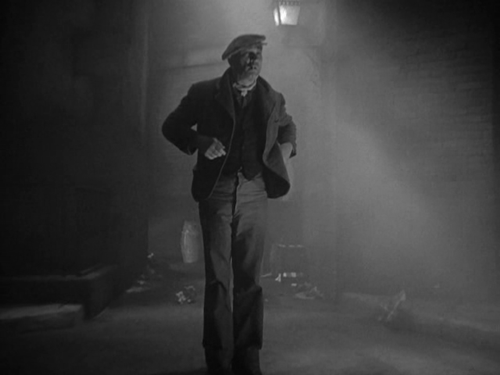
Victor McLaglen plays Gypo, a hulking, good-natured, almost childlike brute of a Dubliner.

At first Gypo pushes aside his anxiety and remorse, and spends the blood money, carousing and drinking with his instant new “friends.”

But gradually, fate and darkness, along with Gypo’s old comrades and his conscience, begin to close in – as the I.R.A. and their just but relentless commander (Preston Foster) track down the informer.

Of all the great film noir precursors of the ’30s – “M,” “The 39 Steps,” “You Only Live Once,” “Scarface,” “Le jour se lève” and “Public Enemy” – John Ford’s Oscar-winning masterpiece, “The Informer,” is one of the darkest, most powerful and most noirish.

Based on the much-admired Irish novel by Liam O’Flaherty, “The Informer” won Oscars for Ford’s superb direction, for Dudley Nichols’ taut, dramatic script, for Max Steiner’s haunting music and for McLaglen’s unforgettable performance as Gypo – a doomed man alone, surrounded by danger, tormented by his own guilt-ridden, fear-lashed soul. (In 1968, Jules Dassin remade “The Informer,” not as effectively, as “Up Tight.”)

Wednesday, Dec. 12

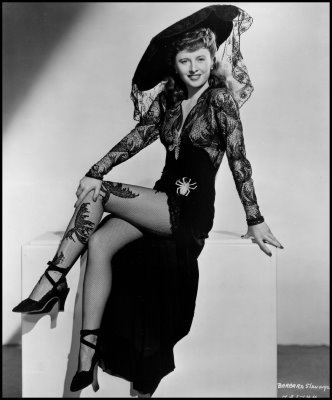
Barbara Stanwyck as Dixie Daisy in “Lady of Burlesque.”

11:15 a.m. (8:15 a.m.): “The Man I Love” (1947, Raoul Walsh). Jack Warner once said “Raoul Walsh’s idea of a tender love scene is to burn down a whorehouse.” Here is Walsh’s idea of a tender love story: the tough, racy tale of a sultry, wised-up night club singer (Ida Lupino) and the man who loves her: slick gangster Robert Alda.

5 a.m. (2 a.m.): “Lady of Burlesque” (1943, William Wellman). A salty murder mystery set in the world of strip-tease shows, with Barbara Stanwyck as the stripper-sleuth. Based on the best-seller “The G-String Murders,” a book credited to legendary peeler Gypsy Rose Lee, ghosted by crackerjack comedy/mystery writer Craig Rice (“Home Sweet Homicide”).

Friday, Dec. 14

1:45 p.m. (10:45 a.m.): “Citizen Kane” (1941, Orson Welles).

Saturday, Dec. 15

8:45 a.m. (5:45 a.m.): “Impact” (1949, Arthur Lubin). Infidelity and murder plots, with Brian Donlevy, Ella Raines, Helen Walker, Anna May Wong and Charles Coburn.

Sunday, Dec. 16

2 p.m. (11 a.m.): “Wait Until Dark” (1967, Terence Young). From the hit stage play by Frederick (“Dial M for Murder”) Knott. Blind woman Audrey Hepburn sees no evil and tries to stave off Alan Arkin, Richard Crenna and Jack Weston.

12 a.m. (9 p.m.): “The Unholy Three” (1925, Tod Browning). A shivery thriller about three crooks who meet at the circus and form an unholy gang: a strong man (Victor McLaglen), a midget (Harry Earles) and a cross-dressing ventriloquist (Lon Chaney). One of the eeriest of all Browning’s macabre collaborations with Chaney (Silent with music track.)