‘The Last Seduction’ is smart, funny and unforgettable

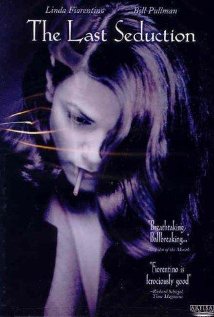
The Last Seduction/1994/ITC/ 110 min.
Years ago, I wrote a weekly column for the Chicago Tribune. I interviewed experts on ways women could work smart and climb the corporate ladder. Most of the time, no matter what the obstacle or dilemma was – job hunting, negotiating a raise, getting a promotion – the bottom line was: do your homework, highlight your achievements and ask for what you want.

In 1994’s “The Last Seduction” by director John Dahl and writer Steve Barancik, Linda Fiorentino as Bridget Gregory takes this advice to dazzling new heights. As the story unfolds, this career maven excels in not just one job, but several. In the opening scene, she’s a supervisor at a telemarketing sales firm in New York City, where she doesn’t ask, she demands. Then she needles her hapless sales guys mercilessly, calling them “maggots, eunuchs and bastards.”

At least they know where they stand. That pat-on-the-back stuff is way overrated.

Later she becomes Director of Lead Generation at an insurance company in a small town in New York state. Under her own steam (at night, of course, this being a noir) she researches prospects for a telemarketing murder business. Hey, it’s not like there isn’t a market.

And she launches an entrepreneurial venture in which she steals a boatload of cash from her husband, malleable Clay (Bill Pullman) and taps loyal-to-a-fault Mike, her lover/investment partner (Peter Berg), to help her. Neither of these dudes is much of a match for her – their chief virtue (besides being good looking) is that they are good at following orders, which is especially true in Mike’s case.
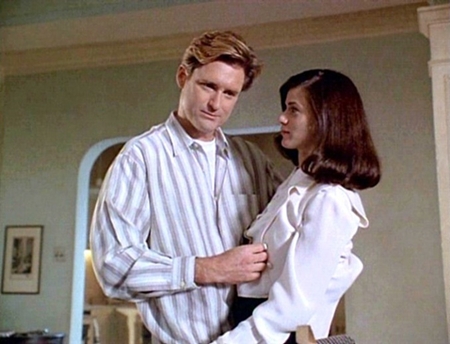
Bill Pullman and Linda Fiorentino play husband and wife.

When one of Mike’s friends asks him: “whadd’ya see in her?” he replies: “a new set of balls.” Her résumé also includes legs that never stop, bedroom eyes and a ready laugh, especially at the expense of doofuses or dumpy small-town mores. Just when you think an interfering man is going to impede her climb to the top, she flicks him away like a speck of lint from her sleek pinstripe suit.

Having done her due diligence, she’s hoping to close the deal in such a way that neither Clay nor Mike can claim a penny of the profit. Talk about multi-tasking. It’s understandable that so much juggling might make Bridget a little irritable from time to time.

Luckily, Mike is nothing if not supportive and just turns the other (butt) cheek when she calls him a rural Neanderthal. When he suggests they go on a date and chat sometime; she asks: “What for?”
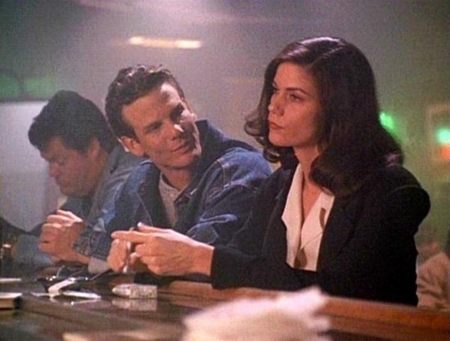
When Mike (Peter Berg) suggests going on an actual date, Bridget (Linda Fiorentino) asks, “What for?”

To say that Fiorentino, a Philly native with a fiery intensity, nails the part is an understatement. She is one of the fiercest femmes fatales in all of neo-noir moviemaking. If I were a guy, I think seeing this performance would surely give me an uneasy night’s sleep. I would have loved to see Fiorentino work with Quentin Tarantino, but her career short-circuited fairly early. I have heard she was a tad hard to work with – shocker! Pullman, Berg and the rest of the cast more than hold their own, underplaying their parts and letting Fiorentino hold bitchy court.

Director Dahl is a neo-noir specialist (he also directed “Red Rock West,” “Kill Me Again” and “Rounders”) and the sharp, funny script is peppered with references to noir classics. For instance, Dahl tips his hat to “Double Indemnity” by having Bridget and Mike both work at an insurance company and, when Bridget calls the police to falsely accuse a guy of exposing himself (so she can make a getaway), she gives her name as “Mrs. Neff.”

I suppose that could be evidence of her truly tender heart – in her imagination, the doomed lovers Walter Neff and Phyllis Dietrichson get married and live happily ever after. Yeah, right. But, if Bridget said it, you’d believe her.

The Noir File: A toast to Truffaut’s elegant, edgy dark side

By Film Noir Blonde and Mike Wilmington

The Noir File is FNB’s guide to classic film noir, neo-noir and pre-noir from the schedule of Turner Classic Movies (TCM), which broadcasts them uncut and uninterrupted. The times are Eastern Standard and (Pacific Standard).

PICK OF THE WEEK: François Truffaut Film Noir on Fridays

As a movie loving juvenile delinquent – the life that he later fictionalized in “The Four Hundred Blows” – the young François Truffaut was an aficionado of all kinds of movies.

But his favorite genre was film noir. Truffaut, the “most feared” French film reviewer of the ‘50s, star critic of the famed film magazine Cahiers du Cinema and an international directorial sensation after he premiered “Four Hundred Blows” at the Cannes Film Festival, was a noir devotee. He especially liked films made by director-auteurs like Alfred Hitchcock, Fritz Lang, Orson Welles, Max Ophuls and Nicholas Ray.

Truffaut was also partial to the genre as a moviemaker. He made all kinds of movies himself, mostly romances in various keys, but he was obviously very inspired by the dark side of cinema.

He adapted two noir novels by Cornell Woolrich, one by Charles Williams and one by David Goodis (“Shoot the Piano Player”), giving each of them his special romantic spin. Tonight on TCM’s Friday Night Spotlight, David Edelstein looks at the work of this influential filmmaker.

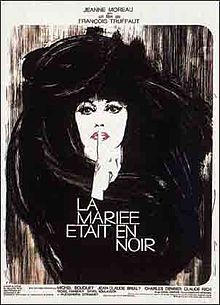
The Bride Wore Black” (1968, François Truffaut). Friday, July 12: 8 p.m. (5 p.m.). One of Truffaut’s favorite actresses, Jeanne Moreau (“Jules and Jim”) is at her most sullenly sexy and mercurial here. Moreau plays Julie, a bereaved bride in black whose husband was unintentionally killed by five men, all of whom she intends to track down and murder. The men include those splendid French film actors Jean-Claude Brialy, Claude Rich, Charles Denner, Michel Lonsdale and Michel Bouquet. The music is by Hitchcock’s maestro of terror Bernard Herrmann. The source is one of Cornell Woolrich’s best known novels.

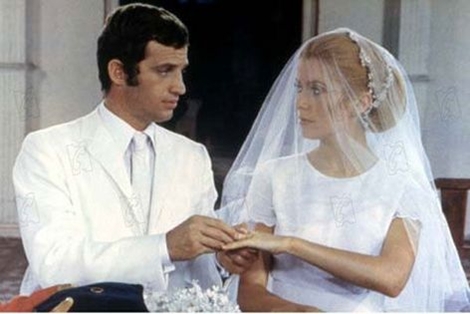
Jean-Paul Belmondo and Catherine Deneuve star in “Mississippi Mermaid.”

Confidentially Yours” (1983, François Truffaut), Friday July 12: 10 p.m. (7 p.m.). Jean-Louis Trintignant is a businessman suspected of murder, hiding from the flics. Fanny Ardant (Truffaut‘s last lover) is his smart, love-bitten secretary, who is trying to find the real murderer. The plot may sound like Woolrich’s “Phantom Lady,” but the treatment is light and comic, like a “Thin Man” movie. Based on Charles Williams’ novel “The Long Saturday Night.”

Mississippi Mermaid” (1969, François Truffaut). Friday, July 12, 12 a.m. (9 p.m.). Jean-Paul Belmondo and Catherine Deneuve are a plantation owner and his mail order bride, who get involved in murder and become lovers-on-the-run. Strange casting for two of the sexiest French stars, but the movie grows on you. It’s adapted from a first-rate Cornell Woolrich novel, “Waltz into Darkness,” which would have been a much better title for the movie.

Such a Gorgeous Kid Like Me” (1972, François Truffaut). Friday, July 12, 2:15 a.m. (11:15 p.m.). A saucy, dark little comedy about the romance of an unrepentant murderess named Camille Bliss (played by Bernadette Lafont, who’s wonderful) and a smitten sociology student named Stanislas (Andre Dussollier), who wants to figure her out. (Fat chance.) The men Camille entices are Charles Denner, Philippe Leotard, Claude Brasseur and Guy Marchand.

Shoot the Piano Player” (1960, François Truffaut). Saturday, July 13, 4 a.m. (1 a.m.). With Charles Aznavour, Marie Dubois and Nicole Berger. Reviewed on FNB June 13, 2013.

Saturday, July 13

7:30 a.m. (4:30 a.m.): “No Orchids for Miss Blandish” (1948, St. John Legh Clowes). With Jack La Rue and Linden Travers. Reviewed on FNB October 6, 2012. [Read more…]

The Noir File: ‘The Big Heat’ tells a searing story

By Film Noir Blonde and Mike Wilmington

The Noir File is FNB’s guide to classic film noir, neo-noir and pre-noir on Turner Classic Movies (TCM), which broadcasts them uncut and uninterrupted. The times are Eastern Standard and (Pacific Standard).

PICK OF THE WEEK

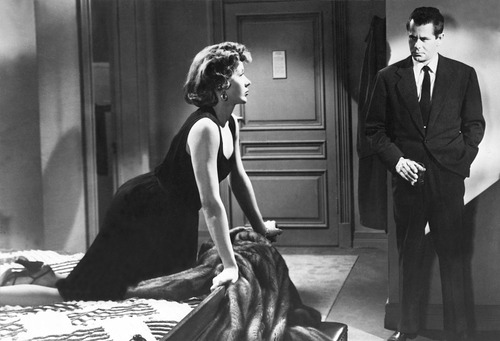
Gloria Grahame and Glenn Ford star in “The Big Heat.”

The Big Heat” (1953: Fritz Lang). Tuesday, July 9: 9:15 a.m. (6:15 a.m.).

“When a barfly gets killed, it could be for any one of a dozen crummy reasons,” says Police Lt. Ted Wilks (Willis Bouchey) in “The Big Heat.” Fritz Lang’s grim but gratifying crime drama from 1953 is laced with violence that’s still a bit shocking even by today’s standards.

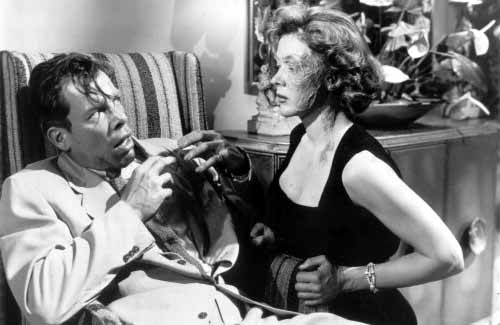
Lee Marvin plays Gloria Grahame’s gangster boyfriend.

Easy on the eyes Glenn Ford, the incomparable Gloria Grahame and ever-glowering Lee Marvin star in this unforgettable noir.

You can read the full FNB review here.

Friday, July 5

2:30 p.m. (11:30 a.m.): “Hangmen Also Die!” (1943, Fritz Lang). With Brian Donlevy, Walter Brennan and Anna Lee. Reviewed on FNB Feb. 27, 2012.

8 p.m. (5 p.m.): “The Four Hundred Blows” (1959, François Truffaut). Noir-lover Truffaut’s astonishing Cannes prize-winning feature film debut: the semi-autobiographical tale of the write-director’s boyhood life of parental neglect, explorations of Paris, street play, movie-going and petty crime, with Jean-Pierre Léaud as the young Truffaut character, Antoine Doinel. Truffaut and Doinel made four more Doinel films, and they might be making them still, but for the great French filmmaker’s untimely death in 1984. (In French, with English subtitles.)

The beginning of a month-long Friday night Truffaut retrospective, hosted by New York Magazine movie critic David Edelstein.

Saturday, July 6

8 p.m. (5 p.m.): “Key Largo” (1958, John Huston). With Humphrey Bogart, Lauren Bacall, Edward G. Robinson and Claire Trevor. Reviewed on FNB August 10, 2012.

Sunday, July 7

4 p.m. (1 p.m.): “Rebel Without a Cause” (1955, Nicholas Ray). With James Dean, Natalie Wood and Sal Mineo. Reviewed on FNB April 18, 2013.

4:30 a.m. (1:30 a.m.): “The Fugitive” (1947, John Ford). With Henry Fonda, Dolores Del Rio and Ward Bond. Reviewed on FNB July 28, 2012. [Read more…]

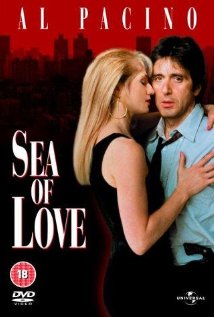
‘Sea of Love’ is a neglected neo-noir with hidden depth

Sea of Love/1989/Universal Pictures/113 min.

“Sea of Love” is what you might call a neurotic and erotic thriller, dealing as it does with one of the most terrifying settings imaginable: the New York City singles scene.

Deftly directed by Harold Becker, with a magnificent script by Richard Price, “Sea of Love” is a deeply satisfying neo-noir, which has been oddly neglected since its 1989 release.

One of the movie’s many strengths is a knock-out lead performance by Al Pacino as veteran NYC police detective Frank Keller. Frank is feisty, hard-working and intense, but he’s got weaknesses aplenty: he drinks too much, as does his elderly father (William Hickey), he’s sick of his job, and his ex-wife left him to hook up with his fellow cop, Gruber (Richard Jenkins).

Meanwhile, Frank’s got a crime to solve: Two men have been shot in the head in their bedrooms. Lipstick-smeared cigarette butts point to a female killer. Said killer apparently finds her victims by answering singles’ ads in a magazine.

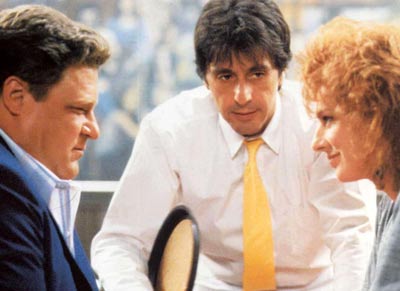
Frank figures: why not place an ad and see if the murderess shows up for a get-to-know-you drink? So, aided by jovial chubster Det. Sherman Touhey (John Goodman), they meet a procession of available women, including one who quips, lest you forget you’re watching a neo-noir: “Fate sucks, I swear!”

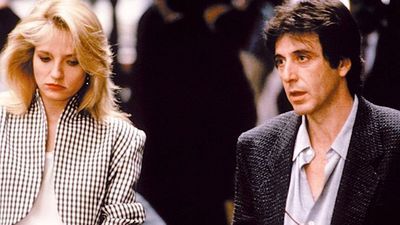
The most intriguing candidate, though, is a slim, flinty blonde in a red-leather jacket named Helen Cruger (Ellen Barkin). Finding that he’s attracted to her, Frank puts her name at the bottom of the suspect list, and the two begin an uneasy love affair. We learn that Helen runs a shoe store on 57th Street and that she’s divorced with a young daughter.

The passion grows and the police work proceeds, but neither are smooth sailing especially when another man (this one married, with a family) turns up dead, with the same MO. No one likes to put pressure on a relationship in those early, heady days, but at the same time it’s best to know asap if firearms are tucked inside a gal’s baggage.

It’s a tense wait to see how Frank rates as a judge of character. But I didn’t mind the wait one bit; in fact, I didn’t want this flick to end. Even though the plot is fairly straightforward, there are many layers of subtext to the central narrative and there’s an earthy realness in every scene. For example, the opening is a police bust that has nothing to do with the imminent murders – don’t blink and you’ll see young Samuel L. Jackson.

All in a day’s work: Sherman (John Goodman) and Frank (Al Pacino) go on fake dates to catch a killer who targets victims through the singles pages.

In the DVD commentary, director Becker, a New York native, calls these slightly off-track parts “moments that build the rich texture of New York life.” To that end, Becker took particular care casting the many smaller roles, choosing “New York actors who would give authenticity and richness to the scene.”

Pacino’s wonderful in this part, his first screen role after a several-year hiatus during which he worked in theater, his first love. Though it’s not much of a stretch for him, the always-engaging Goodman makes the ideal partner for Pacino. Barkin effortlessly inhabits Helen – a tough working girl who gives as good as she gets, as Becker puts it. (Becker further describes Barkin as being beautiful with a boxer’s nose, which might not exactly endear him to her.)

Of course, Gotham City itself also serves as a major character, with brash, bold attitude and cheeky swagger, that has lent an air of mystery to many a noir. Becker says he tapped cinematographer Ronnie Taylor to help him tell a story with light and shadow.

Harold Jones’ sax-drenched score helps conjure the mood of a New York nightscape: thrilling and sad; transient and eternally alluring. (The soundtrack also includes a Tom Waits cover of “Sea of Love.” The original was a 1959 Phil Phillips song.)

Helen (Ellen Barkin) and Frank (Pacino) deal with each other’s baggage.

Another key ingredient: “Sea of Love’s” first-rate script by Richard Price, a precise and accurate rendering of police work and their lingo as well as a sympathetic take on singles seeking other singles.

And it’s funny. There are many LOL moments – for instance, when Frank and Sherman are assessing their lonely-heart suspects, Sherman asks Frank: “Think you could go for a babe with a dick?” to which Frank replies: “Depends on her personality, really.”

I suspect that “Sea of Love” served as inspiration for 1992’s “Basic Instinct,” written by Joe Eszterhas, who reportedly snagged a $3 million paycheck for the story of police detective Michael Douglas falling in love with murder suspect Sharon Stone. I’d bet $3 million that Price didn’t get nearly as much Eszterhas. “Basic Instinct” can boast high gloss, inventive cinematography and a famous shot of Stone without underwear, but “Sea of Love” is a smarter, far more human, and funnier movie.

Does anyone know what Richard Price is doing these days? In this era of online dating, maybe we need a Sea-quel.

“Sea of Love” is available on DVD and Blu-ray from Universal on Amazon.

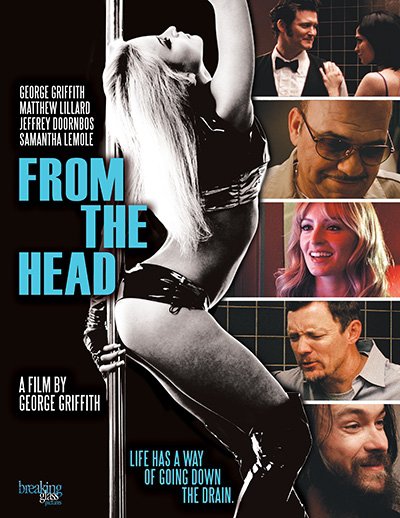
‘From the Head’ intrigues, but doesn’t live up to its potential

From the Head/2013 VoD/Breaking Glass Pictures/95 min.

Three years at a job can feel like a milestone or a miracle. Working as a bathroom attendant at a seedy strip club, it’s an eternity.

In “From the Head,” a film made by and starring George Griffith, we spend a day in the life of Shoes, a wry, worldly grifter on his third anniversary of hanging out behind the men’s room door of a Times Square club, drinking, smoking and secretly smirking at patrons as they pause to leave their tips.

We see him interact with customers, joking, advising, observing – even solicitously plucking a stray blonde hair off a man’s suit. Shoes has literary aspirations and all of these moments might be fodder for his work.

The film, impressionistic and candid, snags the harsh look and tawdry feel of the place. Griffith deftly shows the camaraderie among co-workers (shared drinks, a casual display of a brand-new boob job) and seamlessly orchestrates the parade of memorable customers in and out of the men’s room – from the guys who refuse to tip to those who reveal their genuine (mostly unrequited) feelings for the strippers.

Griffith has a gem of an idea here – a sly insider’s view of a “hell hole” fairly bursting with potential for drama. Unfortunately, the film’s drama doesn’t quite get off the ground – despite the tawdry, titillating backdrop, “From the Head” feels oddly flat and sluggish.

Griffith’s main character (Shoes) must distance himself to survive the hostility, sadness and desperation around him, but we don’t get much of a glimpse beyond the wall he has built. The constant cold sneer needs to be tempered by at least a suggestion of vulnerability in order for viewers to feel his depth of pain and connect with his plight.

“From the Head” is available on cable VOD. It releases July 9 on DVD.  

The Noir File: Bogie, Bacall shine in quirky ‘Dark Passage’

By Film Noir Blonde and Mike Wilmington

The Noir File is FNB’s guide to classic film noir, neo-noir and  pre-noir from the schedule of Turner Classic Movies (TCM), which broadcasts them uncut and uninterrupted. The times are Eastern Standard and (Pacific Standard).

PICKS OF THE WEEK

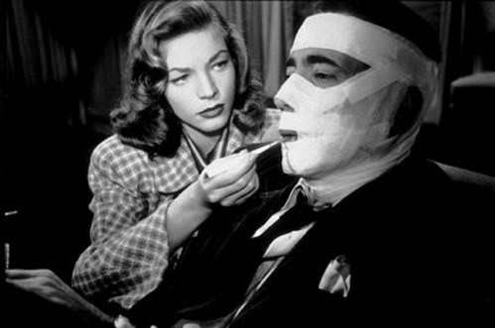
“Dark Passage” was the third of four films Bogart and Bacall made together.

Dark Passage” (1947, Delmer Daves). Friday, June 14:  8 p.m. (5 p.m.)

I recently wrote about 1947’s “Lady in the Lake,” a Raymond Chandler/Philip Marlowe tale, starring and directed by Robert Montgomery. Its chief claim to fame is the experimental subjective camera – the story is told entirely from Marlowe’s point of view.

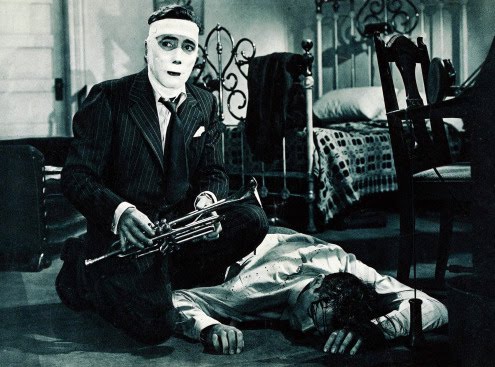
In that review, I noted that “Dark Passage,” starring Humphrey Bogart and Lauren Bacall, also from 1947, uses a subjective camera as well, though just for the first half-hour of the movie. The limited use of the technique in “Dark Passage” pays off much better than the full-on treatment in “Lady.” Though “Dark Passage” wasn’t a huge hit in its day – audiences weren’t crazy about being deprived of Bogart – it’s a film noir treasure that rarely gets its due.

You can read the full FNB review here.

NOIR WRITERS SERIES: DAVID GOODIS
All this month on its Friday Night Spotlight screenings,  TCM is presenting a series of classic film noirs, with each Friday night devoted to movies based on or written by (or both) one of  six top-notch noir authors: Dashiell Hammett, Raymond Chandler, James M. Cain, David Goodis, Jonathan Latimer and Cornell Woolrich.

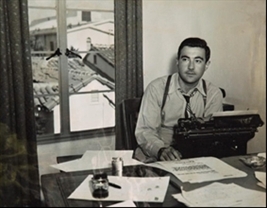
Tonight the spotlight is on David Goodis, one of the strangest and most poignantly self-destructive of the great film noir novelists. Goodis, a well-educated  Philadelphian, and an outsider for most of his life, came to Hollywood when his best-selling novel, “Dark Passage” was sold to Warner Brothers as a vehicle for the red hot movie team of Humphrey Bogart and Lauren Bacall. “Dark Passage” allowed Bogie and Bacall to shine, and is now considered a classic.

“Dark Passage” uses a subjective camera for the first half-hour of the movie.

But Goodis, who liked to explore the lower depths,  proved too weird even for Movieland, and he soon returned East where he spent the rest of his relatively brief life (1917-1967) writing pulp novels for paperback publishers, which he occasionally sold to the movies. (See below.)

They were cheap, supposedly trashy books, churned out fast. Goodis filled them with a  keen insight into darkness, loneliness and the underworld, a flair for strong perverse characterization and a poetic command of language few writers in his genre could match. “Dark Passage” remains his most famous novel. The most personal and revealing  may be “The Burglar,” directed by his Philly friend Paul Wendkos. It’s a powerful film, but the book is better.

David Goodis was weird, even for Hollywood.

(The “Noir Writers” films, all of which show on Friday evening, June 14, were curated and will be introduced by film noir expert Eddie Muller.)

8 p.m. (5 p.m.): “Dark Passage” (See Above.)

10 p.m. (7 p.m.): “Nightfall” (1956, Jacques Tourneur). With Aldo Ray, Anne Bancroft and Brian Keith. Reviewed on FNB, May 29, 2012.

11:30 p.m. (8:30 p.m.): “The Burglar” (1957, Paul Wendkos). David Goodis’  eerie, haunting novel about a gang of burglars, inlcuding platonic lovers Dan Duryea and Jayne Mansfield, and how they come apart. The diretcor, Paul Wendkos (“The Mephisto Waltz”) was another Philadelphia guy and a friend of Goodis’, and he did very well by the book, which is one of the great pulp paperback novels of the ’50s. The movie isn’t on that level, but, in its way, it’s a neglected, if melancholy, gem.

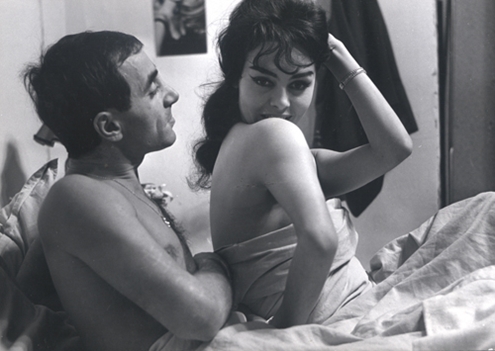
Charles Aznavour and Michèle Mercier in François Truffaut’s “Shoot the Piano Player.”

1:15 a.m. (10:15 p.m.): “Shoot the Piano Player” (1960, François Truffaut). The greatest movie ever made from a David Goodis novel is also the ultimate fusion of film noir with the French New Wave. Noir-lover François Truffaut (“Jules and Jim”) takes one of Goodis’ best novels, “Down There,” resets it in a Paris dive, and comes up with melancholy black-and-white movie magic. Truffaut makes the material his own. He keeps the original  tale of a concert pianist (legendary torch singer Charles Aznavour) who, heartbroken at the loss of his love, goes down there to the depths of show biz – tinkling the keys in a neighborhood bar, until, despite his best efforts, he falls in love again and falls in with criminals. Like most Goodis stories, it’s a bluesy tale touched with terror.  But Truffaut opens it up with innovative filmmaking and breezy, saucy, seemingly off-the-cuff scenes that shoot vibrant life into a very dark subject. [Read more…]

‘The Bling Ring’ brings you inside a baffling world

The Bling Ring/2013/American Zoetrope, et al/87 min.

Writer/director Sofia Coppola (“The Virgin Suicides,” “Lost in Translation,” “Marie Antoinette,” “Somewhere”) has a knack for creating richly textured worlds, capturing the precise look of a place, feeling of a moment and mood of the characters.

In her latest film, “The Bling Ring,” a noirish tale based on real events, the milieu she so deftly depicts is one she presumably knows pretty well from her own experience – a chapter of high school for a group of five privileged kids from suburban Los Angeles. This clique, however, has an unusual gambit for getting a high – they like to steal stuff from celebrities.

These primp-prowl-and-pilfer kids from Calabasas made international headlines in 2009 after breaking into homes and absconding with more than $3 million in jewelry, clothes and accessories from celebrities including Paris Hilton (who appears in the film), Lindsay Lohan, Orlando Bloom, Rachel Bilson and Audrina Patridge. The movie is a fictionalized version of a Vanity Fair feature story (now a book) by Nancy Jo Sales.

After tracking their targets’ whereabouts via gossip and news sites, then finding their addresses on search engines, the gorgeous “gang” nonchalantly sets about quietly letting themselves into these stylish residences, snooping around the celebs’ red-carpet-ready stuff and making off with whatever catches their eyes. Oh and then flaunting their swag, glorious swag, and posting about it on Facebook.

These stunningly self-absorbed Angelenos – played by Emma Watson, Israel Broussard, Claire Julien, Taissa Farmiga and Katie Chang as the brazen ringleader – are observed more than they are judged. Their aberrant behavior, it appears, is fueled by a near-lethal cocktail of hyper-materialism, rampant narcissism, obsession with celebrity (real and fake), hollow spirituality and social media, not to mention actual booze and drugs.

And that constant of high-school angst: a hunger for popularity, attention and belonging. “In ‘The Bling Ring,’ the kids are trying to figure out their identity. I could understand that age and wanting to be part of a group,” said Coppola at a recent event at the Aero Theatre in Santa Monica. “I like stories about people in transition or figuring out their place. I like stories about internal struggle.”

“The Bling Ring,” starts out like a B crime movie – crickets breaking the silence of a peaceful night just before a sleek, secluded home is burgled – but soon sheds any inkling of a low-budget vibe. We are immediately immersed in what feels like a glossy, baffling and fascinating game. It’s hard not to indulge your inner-voyeur. [Read more…]

‘Wish You Were Here’ thriller/drama is a mixed bag

Image from Entertainment One Films. From left: Joel Edgerton, Teresa Palmer, Felicity Price and Antony Starr.

The Australian thriller/domestic drama “Wish You Were Here,” directed by Kieran Darcy-Smith, opened last weekend in New York and LA. Unfortunately, I found it dull, despite strong performances. You can read the NYT review by Stephen Holden here.

The Aero hosts an evening with Sofia Coppola in person

Sofia Coppola

Having just seen “The Bling Ring,” Sofia Coppola’s terrific new neo-noir based on real events, I am especially excited about An Evening with Sofia Coppola, presented by the American Cinematheque.

The night begins with 2003’s “Lost in Translation,” starring Bill Murray and Scarlett Johansson, as two Americans who cross paths one night in a luxury hotel bar in Tokyo and form an unlikely friendship. The film earned Coppola an Oscar for Best Original Screenplay.

Next up is “The Virgin Suicides,” Coppola’s adaption of Jeffrey Eugenides’ novel exploring adolescent repression and rebellion in an upper-class Detroit suburb in the 1970s. The local boys are mesmerized by the mysterious Lisbon sisters, who are kept on a short leash by overprotective parents James Woods and Kathleen Turner. When one of the girls (Kirsten Dunst) strikes up a relationship with one of the guys (Josh Hartnett), it sets in motion a chain of events that ends in tragedy.

There will be a discussion between films with Coppola.

An Evening with Sofia Coppola takes place on Wednesday, June 5 at 7:30 p.m. at the Aero Theater in Santa Monica.

More Burt on the big screen at UCLA’s Billy Wilder Theater

The Billy Wilder Theater at UCLA will present a choice double bill on Sunday, June 2, at 7 p.m.: two film-noir titles starring Burt Lancaster. First is the prison drama “Brute Force” (1947, Jules Dassin), in which Lancaster plays an angry inmate desperate to escape his sadistic captors.

Variety’s review of “Brute Force” noted that “Yvonne De Carlo, Ann Blyth, Ella Raines and Anita Colby are the women on the ‘outside’ whose machinations, wiles or charms accounted for their men being on the ‘inside.’ ” Natch. (Lancaster and De Carlo were paired again in 1949’s “Criss Cross,” directed by Robert Siodmak.)

“Brute Force” will be followed by “Kiss the Blood Off My Hands” (1948, Norman Foster). Lancaster plays a traumatized and violent ex-prisoner of war living in London and trying, unsuccessfully of course, to get his life together. Co-starring Joan Fontaine.

The evening is part of the Lancaster centennial celebration presented by the UCLA Film & Television Archive and the Hugh M. Hefner Classic American Film Program. The celebration of Lancaster’s movies runs through June 30. Author Kate Buford is the special guest on June 2.

Additionally, on Monday, June 3, at 7:30 p.m., the Archive’s look at emerging voices in Czech cinema comes to a close with director David Ondříček in person for his taut neo-noir police thriller, “In the Shadow” (2012), which was the Czech Republic’s official Oscar entry for 2013.