Neo-noir ‘Ain’t Them Bodies Saints’ is a pretty tone poem that skimps on story

Ain’t Them Bodies Saints/2013/IFC Films/105 min.

“Ain’t Them Bodies Saints,” by writer/director David Lowery, opens with a quarrel between a pair of young lovers, ambling along the hills of desolate central Texas. Ruth (Rooney Mara with a Plain Jane, ’70s vibe) frets that her restless boyfriend Bob (Casey Affleck) is going to take off on his own and leave her behind.

He reassures her but her fears are not unfounded – when a robbery goes wrong, Bob goes to jail and Ruth must fend for herself. But knowing that Ruth is pregnant, Bob determines to escape and return to his wife and child.

Lowery creates and sustains a languid mood tinged with loneliness, frustration, guilt and longing, underscored by steady dread, thanks particularly to cinematographer Bradford Young’s pretty camerawork and Daniel Hart’s plaintive music. The director also draws subtle performances from Mara as a teen transformed by motherhood and a tenderly expressive Ben Foster as the cop who forms the third side of the love triangle.

Lowery’s work essentially belongs to the lovers-on-the-run tradition that mixes film noir, poetic realism and grisly fairy tale – presumably attempting to join the ranks of movies like “Gun Crazy,” “Bonnie and Clyde” and “Badlands.”

“Ain’t Them Bodies Saints” has impressed many critics, but I found it hard to connect with and the more I thought about it, the less I liked it. Lowery seems uncomfortable letting a simple tale unfold. Several narrative threads felt clunky and tacked on, without adding anything of substance. Some of the storytelling was hard to follow; other parts were boring (though, to be fair, action isn’t the aim here) and hollow.

Pretentious and plodding more than heartfelt and contemplative,“Ain’t Them Bodies Saints” failed to move me.

“Ain’t Them Bodies Saints” opens nationwide today.

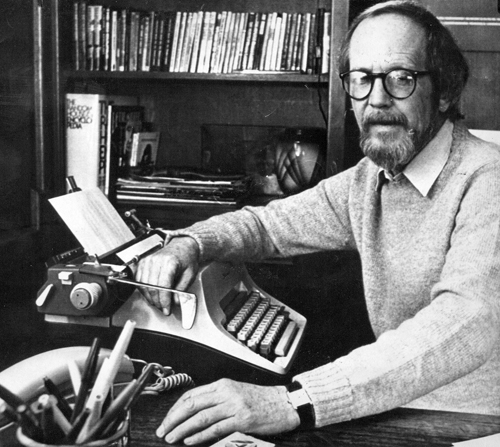
RIP Elmore Leonard

Noir great Elmore Leonard, author of “Get Shorty,” “Freaky Deaky” and “Glitz” (among many others) died Tuesday at his home in Bloomfield Township, Mich. He was 87. You can read his NYT obituary here.

Film Noir File: ‘Mildred Pierce’ shows Crawford at her peak

By Film Noir Blonde and Mike Wilmington

The Noir File is FNB’s guide to classic film noir, neo-noir and  pre-noir from the schedule of Turner Classic Movies (TCM), which broadcasts them uncut and uninterrupted. The times are Eastern Standard and (Pacific Standard). 

PICK OF THE WEEK

Mildred Pierce” (1945, Michael Curtiz). Friday, Aug. 16, 8 p.m. (5 p.m.). With Joan Crawford, Jack Carson and Ann Blyth.

I saw “Mildred Pierce” for the first time nearly 20 years ago on a Sunday afternoon in my small, studenty London flat – pale gray walls, Venetian blinds, a Victor Skrebneski print opposite the TV. Just before the opening scene unfolded – a shooting in a shadow-drenched California beach house with a sinister vibe – I remember popping a batch of popcorn in oil on the stovetop and making fresh lemonade. Such wholesome snacking for the decadence on the little screen.

Directed by Michael Curtiz, “Mildred Pierce” is based on James M. Cain’s 1941 novel, adapted by Ranald MacDougall with uncredited help from William Faulkner. Joan Crawford plays the title character, a wife and mother, who tries to buy the love of her spoiled and ungrateful teenage daughter Veda (Ann Blyth). Her younger daughter Kay (Jo Ann Marlowe) is easy to love, but Mildred is determined to win Veda over as well.

You can read FNB’s full review here.

Friday, Aug. 16

3 p.m. (12 p.m.): “Brute Force” (1947, Jules Dassin). One of the prototypical prison pictures, with Burt Lancaster as the indomitable convict and Hume Cronyn as the sadistic captain – plus a cast that includes Yvonne De Carlo, Charles Bickford, Ann Blyth and Howard Duff, and a taut script by Richard Brooks.

8 p.m. (5 p.m.): “Mildred Pierce” (See Pick of the Week).

2 a.m. (11 p.m.): “The Helen Morgan Story”  (1957, Michael Curtiz). “Mildred Pierce” co-star Ann Blyth and director Curtiz reunite for this tangy, noirish bio-drama of the tragic popular songstress, with Paul Newman as Helen’s brash gangster lover.

Sunday, Aug. 18

1:45 p.m. (10:45 a.m.): “Rebel Without a Cause”  (1955, Nicholas Ray). With James Dean, Natalie Wood and Sal Mineo.

Clumsy filmmaking causes ‘Lovelace’ to fall flat

Lovelace/2013/Millennium Films/93 min.

“Lovelace,” the story of the porn star’s rise and fall, presents a strange creative paradox: the film’s chief virtue is its strong acting, yet the characterizations are also uniformly one-note. In other words, the actors do their very best with what they have and deliver compelling work. But overall, “Lovelace” feels unsatisfying, superficial and obvious.

We first meet Linda Lovelace (Amanda Seyfried) as a jaded star, dragging on a cigarette as she lounges in a marble bathtub. She’s been used and abused. Via flashback, we see that before she became famous as the star of 1972’s “Deep Throat,” the first porn movie to play in mainstream theaters, Linda Boreman was a Bronx-born girl (relocated to Florida) who liked to lie out in the sun with her friend (Juno Temple) and dance at the local roller-skating rink.

When she meets sleazy Chuck Traynor (Peter Sarsgaard) at the rink, her life changes forever. They flirt, fall in love and marry, and through Chuck’s contacts she lands the lead role in the groundbreaking “Deep Throat.” Not only a schmoozer, Chuck appears to have a talent for controlling and abusing Linda as well as borrowing money on her behalf. (According to the filmmakers, “Deep Throat” grossed $600 million; Lovelace received $1,250.)

Meanwhile, Linda aspires to become a mainstream actress but these dreams are never fulfilled and she leaves Chuck. Her parents (Sharon Stone nearly unrecognizable as Linda’s frumpy cold-hearted mother and Robert Patrick as her disapproving Milquetoast dad) don’t offer much sympathy or support. Several years later, Linda remarries, has a kid and writes a book about her experiences called “Ordeal.”

While my gut feeling is that Chuck Traynor was more than likely a lowlife, he also likely possessed some kind of skulking magnetism or sly charm. By the same token, Linda Lovelace, portrayed here as a victim with a capital V, was probably not as pure as driven snow. I think she must have had a dash of femme fatale.

But Seyfried, while engaging, beams naïve girl-next-door cuteness throughout (wonder what Mila Kunis would have brought to the role?) just as Sarsgaard’s unmitigated dirtball oozes menace from start to finish. Even the scene where Chuck aims to charm Linda’s parents fails to convince. As mentioned, Stone and Patrick are excellent in supporting roles, as are Chris Noth, Bobby Cannavale, Hank Azaria and James Franco (as Hugh Hefner).

Still, Lovelace’s thorny story has been disputed and none of that complexity comes through in this film. The filmmakers Rob Epstein and Jeffrey Friedman and writer Andy Bellin would have done well to take a page from Alfred Hitchcock’s book, remembering the disturbing truth that even full-on psychos often have a charismatic side and that most sane people mask a little darkness when you scratch under the surface.

“Lovelace” opened in limited release Aug. 9.

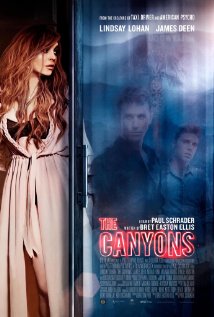
Noir writer/director Paul Schrader dishes on ‘The Canyons,’ guerilla filmmaking and Lindsay Lohan

Is the low-budget neo-noir thriller “The Canyons,” starring Lindsay Lohan and James Deen, a cold, dead movie? Director Paul Schrader certainly hopes so.

“Well what did you expect?” said Schrader at a screening and Q&A Monday night at UCLA’s Billy Wilder Theater in Westwood. “Brett [Easton Ellis] and I have track records. If we can’t make a cold, dead movie, who can?”

The film’s release (VOD and a smattering of theaters) has been preceded by bad publicity, stemming from the crazed production and the erratic Lohan. Schrader said the “cold, dead” epithet came from “the nincompoop that runs the South by Southwest Film Festival,” which rejected the film.

The Sundance festival also took a pass but “The Canyons” has been picked up out-of-competition at the Venice Film Festival. (According to several media sources, the S x SW quote was: “There’s an ugliness and a deadness” to “The Canyons.” Regardless of the exact wording, when a movie is rejected from a festival, staff typically refrain from making any public comment.)

That the film, which novelist Brett Easton Ellis wrote and Alexander Pope produced, was finished at all is a minor miracle. Schrader said the total budget was about $500,000 and was intended from the outset for VOD.

“I’ve always enjoyed pushing people’s buttons. The button I’m trying to push now is the on-demand button on your remote,” said Schrader in response to a comment during the Q&A from Robert Rosen, former dean of UCLA’s School of Theater, Film and TV. Rosen lauded Schrader for “the pride we have in [Schrader] as a trouble-making filmmaker.”

Schrader calls his latest foray into “guerilla” filmmaking “an exhilarating experience.” As he put it: “It’s the mystery of could you do such a thing? Could I pull off such a thing?” Yes and yes. The film is already in profit, Schrader said, thanks to a distribution deal with IFC.

The movie came together through a combination of good luck and false starts, including online auditions via LetItCast, Ellis’ “promiscuous twitter finger” that lured porn star James Deen to the project, writer/novelist Kirsten Smith’s stunning Malibu Canyon home (aka the film’s third star) that fell into Schrader’s lap courtesy of Kickstarter, as well as his “high-maintenance” lead actress, who “lives in a cone of crisis.”

“If a crisis doesn’t exist, she makes one up,” Schrader said. “It’s exhausting. I told her, ‘It must be so exhausting to be you.’”

Schrader sums up the movie as “beautiful people doing bad things in nice rooms.”

A case in point: Schrader said Lohan recently made a last-minute call to Deen (even though they didn’t get along on the set) and asked him to drop what he was doing (in the Valley) to join her on the set while she co-hosted “Chelsea Lately” with Chelsea Handler on the E! channel (taped on the west side, at Olympic and Bundy).

Schrader said: “She has the ability to make you care. She suckered me and I’m a big fan. But there are people who live to hate this girl. There’s an extraordinary predisposition in the media to say something negative about this girl or to satisfy a [need for] media cruelty which we in our culture now thrive on.”

During “The Canyons” shoot, Schrader reportedly stripped off his clothes to coax her to do a nude scene. He didn’t mention this Monday night. Nevertheless, it was a bare-bones operation, made without insurance or permits. Actors worked for $100/day (with Lohan getting a bigger cut of profits later on) and provided their own makeup, hair and transportation.

Paul Schrader (Image from Indiewire)

The filmmakers also decided to skip asking the MPAA for a rating because they knew the film would play in a few theaters only. Said Schrader: “The MPAA is just another one of the dinosaurs wandering around La Brea. They’re all going to the swamps.”

Set in Los Angeles, “The Canyons” examines the, um, complicated love lives of Christian (Deen), a sneering twentysomething with a trust-fund, and his trophy girlfriend Tara (Lohan), a once-aspiring actress now looking for men to take care of her in high style. A dilettante moviemaker, Christian casts a sweet and caring corn-fed actor named Ryan (Nolan Funk) in his upcoming sleazy flick.

Ryan is also Tara’s ex-boyfriend and he’s still hot for her, even though he now lives with Gina (Amanda Brooks), who is Christian’s assistant. Christian and Ryan form another lust triangle with Cynthia (Tenille Houston), an actress-turned-yoga-instructor. But Tara is the object of Christian’s obsession. At his whim, he and Tara indulge in threesomes and foursomes with partners culled from apps such as Blendr and Grindr. Christian records these trysts on his phone; later he turns to violence for kicks.

Schrader, who was a film student at UCLA in the late 1960s/early 70s, sums up the movie as “beautiful people doing bad things in nice rooms. … This film is not about Hollywood or making movies, it’s about the hookup generation.”

Lindsay Lohan

To the extent that that generation is made up of grasping, one-note Angelenos, “The Canyons” feels chillingly, depressingly truthful. Your enjoyment of this movie will likely depend on your tolerance for seeing slick, superficial portraits of Hollywood pretty people who, for the most part, are soulless, self-serving and vacuous. “This is an art movie and doesn’t play the empathy card that strong,” Schrader says.

Fair enough. Yet it struck me as short on insight. Images of dilapidated theaters symbolize changes in the way we watch movies. Texting and apps and other tech-savvy ways of derailing human connection are second nature to the hookup generation. Right. And?

On the plus side, the performances are somewhat compelling because they are infused with so much stark reality. By the same token, the roles don’t exactly stretch the actors. Visually, to be sure, the movie delivers. Shot by John DeFazio, “The Canyons” looks pretty amazing, whether capturing Hollywood Boulevard by night or showing off the majestic Malibu hills bathed in white light. Overall, though, the film is at best uneven.

Would Schrader take another gamble on a low-budget project? “I made my money and I should probably leave the casino,” said Schrader. “But I probably won’t.”

“The Canyons” is available on VOD and is showing at select theaters.

Film Noir File: Deneuve, Buñuel cast spell with ‘Belle de Jour’

By Film Noir Blonde and Mike Wilmington

The Noir File is FNB’s guide to classic film noir, neo-noir and pre-noir from the schedule of Turner Classic Movies (TCM), which broadcasts them uncut and uninterrupted. The times are Eastern Standard and (Pacific Standard).

PICK OF THE WEEK: Two by Luis Buñuel as part of Catherine Deneuve Day

Tristana” (1970, Luis Buñuel). Monday, Aug. 12, 10 p.m., (7 p.m.).

Belle de Jour” (1967, Luis Buñuel ). Monday, Aug. 12, 2:15 a.m. (11:15 p.m.).

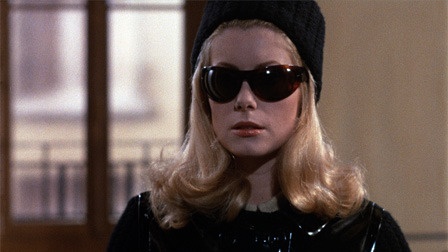
Icy, ravishing Catherine Deneuve stars in “Belle de Jour.”

The most beautiful movie actress alive paired with the most brilliantly rebellious filmmaker.

That was the incendiary match-up of star Catherine Deneuve and director Luis Buñuel – who were most famous for their 1967 French erotic drama “Belle de Jour.” In that great film, Deneuve – so lovely and so classically, radiantly, sexily blonde that she took up residence in male dreams forever – played Severine, a Parisian wife, who becomes a prostitute during the day to escape her boring bourgeois life and her handsome but boring husband (Jean Sorel). Severine then falls into a world of crime, hypocrisy, dreamlike perversity and peril. It was the most popular, and the best-remembered, film of Buñuel’s entire career.

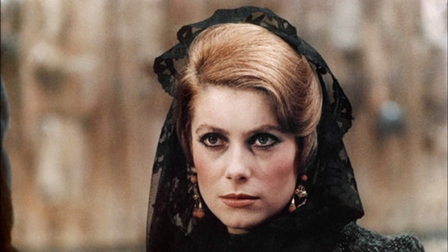
But they made another film that Buñuel preferred and is one of his most personal: “Tristana (1970). Shot in Spain, based on a novella by famed author Benito Perez Galdos (adapted by Buñuel and Julio Alejandro), this not underrated but definitely underseen film starred Deneuve in a role just as alluring and frightening as the wayward Severine: Tristana, the young orphan seduced, exploited and virtually imprisoned by her guardian Don Lope (Fernando Rey). Don Lope, worldly and egocentric, is an aristocrat of radical political beliefs, whose desire for his ward undermines his ethics – even as Tristana, a seeming victim, turns exploiter herself and exacts a terrible revenge.

“Tristana” earned the admiration of Alfred Hitchcock.

“Tristana” is a masterpiece, but it’s also a grimmer, sadder, more psychologically disturbing picture than “Belle de Jour.” Buñuel, notorious for his audacity, has directed some of the cruelest scenes in cinema, in films like “Un Chien Andalou,” “Los Olvidados” and “Viridiana.“ But he never filmed a more wounding scene than Tristana on the balcony: a sequence that delighted no less an epicure of sadism than Alfred Hitchcock. “Tristana! That leg! That leg!” Hitch exclaimed when the two directors met at a party. Buñuel probably only smiled.

Other Deneuve Day highlights include: “Repulsion” (1965, Roman Polanski), “Mississippi Mermaid” (1969, François Truffaut) and “Un Flic” (1972, Jean-Pierre Melville). See TCM for the full list. Films are in French (“Tristana” in Spanish) with English subtitles. [Read more…]

Film Noir File: ‘Paths of Glory’ seduces you with its beauty, shatters you with its horror

By Film Noir Blonde and Mike Wilmington

The Noir File is FNB’s guide to classic film noir, neo-noir and pre-noir from the schedule of Turner Classic Movies (TCM), which broadcasts them uncut and uninterrupted. The times are Eastern Standard and (Pacific Standard).

PICK OF THE WEEK

Paths of Glory” (1957, Stanley Kubrick). Saturday, July 27: 1:30 p.m. (10:30 a.m.)

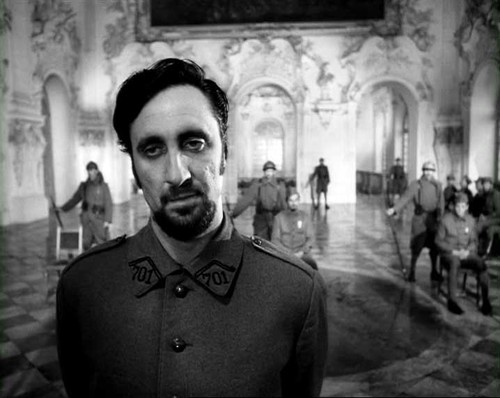
In 1957, Stanley Kubrick, still in his 20s – with “Dr. Strangelove,” and “2001: A Space Odyssey” still in his future – made one of the greatest of all anti-war movies: his grim, stylish and incredibly moving adaptation of Humphrey Cobb’s World War I novel, “Paths of Glory.”

Kubrick may not have known war first hand. But, in that film, he created an indelible image of war’s inhumanity and horror. “Paths of Glory” is a compelling, wrenching nightmare of a movie with a brilliant (and very noir) cast including Kirk Douglas, Ralph Meeker, George Macready and (at his best, or worst) Timothy Carey.

Based on a real-life episode, the movie was made on location in Bavaria and is set in the French trenches, where the infantry soldiers eat and sleep in the cold, dirt, and mud – and from which they charge forth to fight and die. It’s also set in an elegant chateau, far from the battlefield, where rich, ambitious generals plot the sometimes-insane strategies that will get their men killed.

Michael Douglas plays Dax, the regiment’s idealistic commanding officer.

When one ill-advised attack against the Germans fails, Macready, as the vainglorious Gen. Mireau, flies into a murderous rage and demands that his own men be executed for cowardice. His superior, the wily Gen. Broulard (Adolphe Menjou), argues the number of the condemned down to three soldiers: Meeker, Carey and Joe Turkel. Defending them is Colonel Dax, the regiment’s courageous and idealistic commanding officer (played by Douglas, one of the leading Hollywood liberals of the ’50s and ’60s). Outraged by the mad injustice of the trumped-up court-martial , Dax – a famous criminal lawyer in civilian life – argues eloquently and fearlessly for the lives of those three guiltless men.

What a great movie this is! “Paths of Glory” is a film to see when you’re young and more innocent, like the three soldiers. And to see again when you’re stronger, more mature and full of fiery ideals, like Dax. And finally to watch yet again when you’re even older and have witnessed a lifetime of the awful compromises and vile injustices that “Paths of Glory” paints with such absolute lucidity, such deadly, inexorable narrative force.

Timothy Carey had worked with Kubrick in 1956’s “The Killing.”

By the time he directed and co-wrote “Paths of Glory,” Kubrick, 29, had three features already under his belt (including the classic 1956 film noir, “The Killing”). His partner on “The Killing,” James B. Harris, produced “Paths of Glory.” Douglas – then at the height of his Hollywood stardom and power – made it happen.

Two great American novelists collaborated with Kubrick on the screenplay: Oklahoma-born noir ace Jim Thompson (author of the crime classics “The Killer Inside Me,” “The Grifters” and “The Getaway”) and the acidly funny Southern novelist Calder Willingham (“End as a Man,” “Eternal Fire”) Probably thanks to those two, “Paths of Glory” has one of the darkest visions, some of the richest characters and some of the most pungent dialogue of any American movie of that era.

Kubrick’s masterpiece of war’s injustice seduces you with its beauty, shatters you with its horror. The battle scenes are shot with a black and white grit and shock reminiscent of Lewis Milestone’s “All Quiet on the Western Front,” but also with the Max Ophuls-like grace and romanticism that Kubrick loved and that ironically permeates his film.

War is hell. It’s also noir.

Paths of Glory” is available in DVD on Criterion. [Read more…]

Di Leo Italian Crime Collection Vol. 2 releases Tuesday

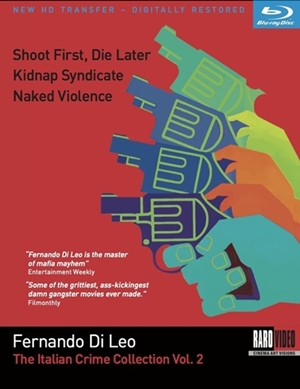
Famous for his bold, intricately plotted, ultra-violent stories about pimps and petty gangsters, director and writer Fernando Di Leo perfected the genre with an uncanny accuracy that prefigured the works of Quentin Tarantino and John Woo.

Raro Video U.S. collects some of his finest work in Fernando Di Leo: The Italian Crime Collection Volume 2, a three-DVD set that includes Di Leo’s lost masterpiece, “Shoot First, Die Later,” which has never been available on DVD or Blu-ray before, along with “Kidnap Syndicate” and “Naked Violence.”

The set, which also contains an impressive list of bonus features, will arrive on DVD and Blu-ray on Tuesday, July 30.

Down the road from Raro Video: DVD and Blu-ray versions of The Conformist directed by Bernardo Bertolucci, restored from the original 35mm negative. Stay tuned for release date and bonus features.

Film noir gem ‘Murder by Contract’ highlighted in new book

This summer, my friend Rob Elder released a new book (his sixth): The Best Film You’ve Never Seen: 35 Directors Champion the Forgotten or Critically Savaged Movies They Love.

As Roger Ebert put it: “How necessary this book is! And how well judged and written! Some of the best films ever made, as Robert K. Elder proves, are lamentably all but unknown.”

It’s a great read and an invaluable reference tome for any serious film lover. To give you an idea of the treasures you will discover, Rob has kindly agreed to let me run an excerpt of the chapter in which he discusses “Murder by Contract” (a taut and chilling film noir) with director Antonio Campos.

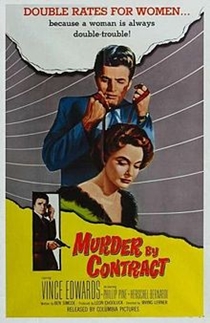
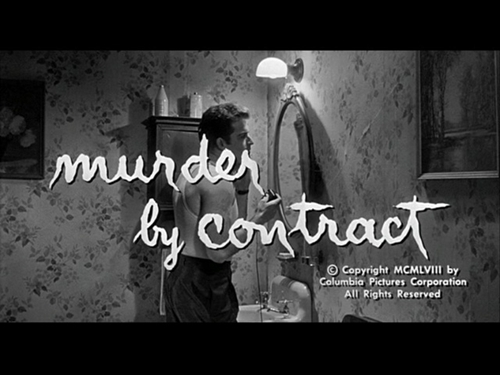
Murder by Contract
1958, Directed by Irving Lerner. Starring Vince Edwards, Phillip Pine and Herschel Bernardi.

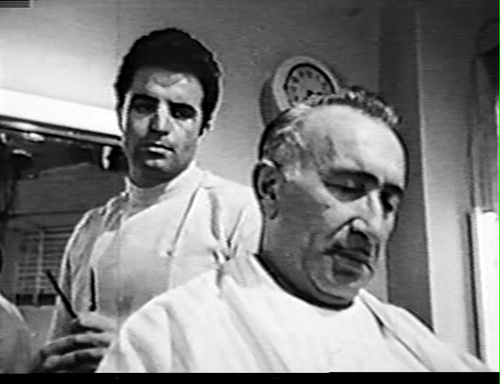
Claude (Vince Edwards) is an unusual hit man. He wasn’t born to the life, but instead he made himself a resourceful, calculating contract killer with an existentialist worldview. “He is so committed to his point of view and his philosophy that he’s developed—you respect that,” says Antonio Campos, who champions Murder by Contract. Campos praises the stylized off-camera hits, the economy of shots, and Edwards’s lead performance in this B-level noir film, shot in eight days.

That’s not to say he thinks it’s a perfect film. “What’s also charming about the film is that it is kind of a diamond in the rough,” Campos says. “Whatever rough edges Murder by Contract has are ultimately completely overshadowed by the brilliant dialogue and the commitment to a tone that was so ballsy.”

Antonio Campos, selected filmography:
Afterschool (2008), Simon Killer (2012)

Robert K. Elder: How would you describe Murder by Contract to someone who’s never seen it?
Antonio Campos: It’s a faithful noir film about a contract killer, from a time when not many films were made like that.

What made it special?
Campos: I remember vividly, I’d seen it at the Film Forum, and I remember feeling like I hadn’t seen anything like that in the program, and also I’d never seen anything like that outside of even contemporary film. Obviously there are contract-killer films now, but there was something about it, and the lightness, the light touch that it had, that really struck me as something very unique.

Let’s talk about the star, Vince Edwards, who was best known as the lead in TV’s hospital drama Ben Casey. Can you talk about him as a leading man?
Campos: The first time I ever saw Vince Edwards was in Stanley Kubrick’s The Killing (1956). And I think he’s one of these B actors from that period. I was thinking about Vince Edwards and I was thinking about Timothy Carey in The Killing—they’re very specific kind of actors but could never be the classic leading man. Vince Edwards could be the leading man in that film, but he couldn’t be—he would never be—the movie star that he probably wanted to be. And I find those kinds of actors fascinating.

What does Edwards do in this role that makes him so magnetic, that pulls us through the film?
Campos: It’s his charisma as an actor. As a character, it’s the fact that he believes in something. As fickle as it may be, he has this amazing control. He is so committed to his point of view and his philosophy that he’s developed—you respect that.

If the film was made today, you’d have a little bit more violence to make the character a little more complex. You’re kind of rooting for him from the beginning.

Claude (Vince Edwards) is misanthropic but he has a heart and certain principles.

This is Edwards’s first film with Irving Lerner, a former documentarian, and shot in eight days.
Campos: What I find really interesting is that it isn’t a perfect film. It’s not a film that you watch and you think, “This guy is some brilliant unknown director!” What’s interesting is, for example, the first scene where Claude meets the character of Mr. Moon, that long shot that plays out. That felt like a very strong choice. It felt like Irving Lerner was in complete control of the way this film was made.

In Afterschool, many of your characters are also kept out of frame, especially in that first twenty minutes. Am I right to draw that parallel to Murder by Contract?
Campos: It wasn’t necessarily a direct influence. There was a certain kinship, I felt, with the way that he was approaching his composition.

My feeling about offscreen action and that fragmentation of characters is that you heighten the mystery and the tension because you’re holding back someone who feels very important to the story. Those moments in which the characters are offscreen or, for lack of a better word, decapitated by the frame, you almost make the universe of the film larger. In terms of Afterschool, you always felt like there was a bigger world outside of the frame that you wanted to see and also a bigger world outside of the frame that you couldn’t see. That, to me, is one of the things that can make a smaller film or a lower-budget film feel bigger.

Claude’s solitary nature is similar to Travis Bickle’s loner life in “Taxi Driver” by Martin Scorsese.

And one of the other parallels is the solitary nature of Vince’s character, especially inside his room—something it shares with the protagonist in Afterschool. Was that sequence influential?
Campos: Murder by Contract definitely could’ve played a sort of subconscious influence on me. I find that there are the filmmakers whose body of work I’ve become very familiar with, but then I’m aware of them influencing me. And then there are those one-off films that I see that subconsciously have made a greater effect on me that I don’t realize.

That particular sequence also influenced Martin Scorsese. Lerner’s austere training montage is reflected in Taxi Driver.
Campos: For Claude, it’s a job, and he’s had to train himself. He says many times that this is not the way he was born. He’s developed a certain coldness intentionally so that he can be a contract killer. Obviously, film noir was so much about antiheroes, and this is about someone who is a very cold-blooded killer and so calculated. The other thing that struck me is his point of view of the world that was quite misanthropic and quite cynical, but at the same time, he had a heart and he had certain principles that he was struggling with.

Why do you think we, as viewers, are drawn to the charismatic psychopath or sociopath?
Campos: We’re drawn to them when they’re done a certain way. Taxi Driver, for example, has Travis Bickle, and Bickle is the charismatic sociopath. At first, you sympathize with the fact that he is so disconnected and confused.

I don’t feel like they’re completely sociopaths. They have sociopathic tendencies or something, but deep down inside, there is a heart and humanity. [Read more…]

Can Ryan Gosling save ‘Only God Forgives’?

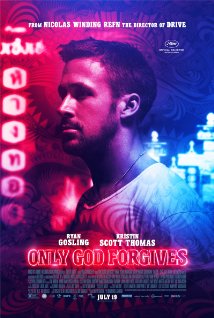
“Only God Forgives,” starring Ryan Gosling and Kristin Scott Thomas, opened on Friday to mixed (mostly negative) reviews. This art house/crime thriller film, written and directed by Nicolas Winding Refn, was nominated for the Palme d’Or at this year’s Cannes Film Festival.

In 2011, Refn, Gosling and Carey Mulligan teamed up for the eloquent and extremely violent “Drive.” You can read Stephanie Zacharek’s review of “Only God Forgives” here.

And on the small screen: The success of political-intrigue TV dramas such as “Scandal,” “House of Cards” and “Homeland” means the Beltway has displaced Manhattan and Los Angeles as the capital of noir, says James Wolcott in next month’s Vanity Fair. You can read the full story here.