What’s new at the Aero and the Egyptian in January

There’s much for noir aficionados to see this month at the American Cinematheque in Los Angeles. Highlights at the Aero Theatre in Santa Monica and the Egyptian Theatre in Hollywood include:

That Special Something: A Tribute to Great Screen Icons, spotlighting “film actors [who] transcend the realm of mere celebrity, reaching a more profound level of cultural significance.” The series honors Marilyn Monroe, Clark Gable, Humphrey Bogart, Bette Davis, John Wayne, James Dean, Grace Kelly, Frank Sinatra and Elvis.
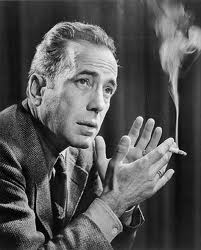
Humphrey Bogart

Film noir entries include: “In a Lonely Place,” 7:30 p.m. Jan. 7 at the Egyptian as well as Hitchcock gems “Rear Window” and “Dial M for Murder” starting at 7:30 p.m. Jan. 14 at the Egyptian. The Screen Icons series runs Jan. 5-29.

“Chinatown” and “The Tenant” will show at 7:30 p.m. Friday, Jan. 28, at the Egyptian as part of Traumatic Rendition: A Roman Polanski Retrospective.

William Friedkin’s “The French Connection” and “To Live and Die in L.A.,” will run at 7:30 p.m. Saturday, Jan. 22, at the Aero. This double-bill is part of Strangle-Hold: The Gripping Films of William Friedkin.

This is just scratching the surface, so be sure to check complete schedule. The Egyptian Theatre is at 6712 Hollywood Blvd. The Aero Theatre is at 1328 Montana Ave. General admission is $11; members pay $7.

Meanwhile, I just booked my ticket to attend the Film Noir Foundation’s Noir City 9 in San Francisco, Jan. 21-30 at the Castro Theatre. Looking forward to the excellent lineup of films!

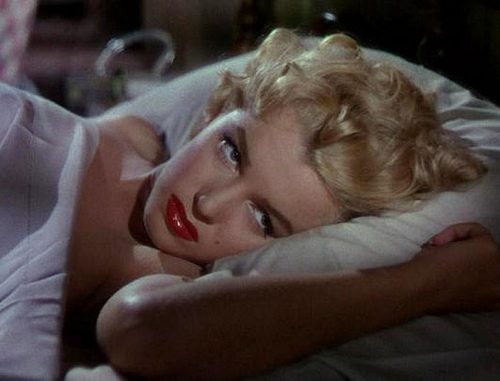
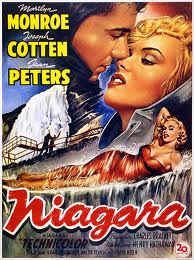
Marilyn Monroe takes noir plunge in ‘Niagara’

Niagara/ 1953/ 20th Century Fox/ 90 min

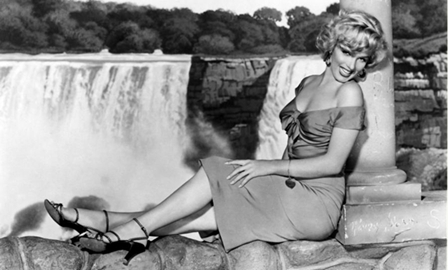
Marilyn tackles the role of devious vamp.

Screen legend and pop-culture icon Marilyn Monroe is known for many things (her amazing looks, bright talent and troubled personal life) but noir does not spring immediately to mind. And yet in “Niagara,” Monroe brilliantly tackles the role of devious vamp.

Directed by Henry Hathaway, this film is a bit hard to classify – the flashy Technicolor screams neo-noir while its 1953 release date puts it firmly in the classic noir camp. I suppose purists would argue that date trumps color and that neo noir doesn’t start until the 1970s, but I am nothing if not impure. Either way you want to label it, the characters, mood and color are irresistible, just like Monroe herself. We even get to see her sing.

In “Niagara,” we meet a wholesome good girl with a killer tan who’s on a “delayed” honeymoon (Jean Peters, as Polly Cutler) and a restless bad girl (Monroe as bored wife Rose Loomis), both staying at a Niagara Falls resort.

Polly and her husband Ray Cutler (Max Showalter, billed in this movie as Casey Adams) are the perky foils to Rose and her husband George Loomis (Joseph Cotten). George is fond of grousing about Rose’s slinky sartorial choices, especially the famous red dress with a bikini-esque bustline). Perhaps crabbing about Rose’s hemline gets his mind off darker problems. George spent some time in a psychiatric ward after the war.

Rose hopes that by returning to the site of their honeymoon, George can pop a few pills and chill. But that doesn’t seem to be working and everyone knows that a voluptuous blonde is easily distracted. 😉 Enter Rose’s delicious young lover and soon-to-be accomplice (Richard Allan) as she makes her bid for freedom by getting rid of cranky George.

It seems divorce would not be enough to permanently dissolve their union. If Rose walks, George will run after her. But the good news for Rose is: accidents happen, especially at Niagara Falls …

Essentially, “Niagara” warns The American Man: It might be fun to ogle a centerfold hottie, but she’ll burn you if you get too close. Sex equals sin, after all, in a puritanical worldview. Then there’s the tedious symbolism of the falls for passion’s highs and lows. Even the trailer hammers home the warning: Monroe is a “tantalizing temptress who lures men on to their eternal destruction.”

All right, already, we get it!

Still, “Niagara” is a fascinating product of its time. It was a box-office hit and fared reasonably well with critics. As the New York Times put it: “The producers are making full use of both the grandeur of the Falls and its adjacent areas as well as the grandeur that is Marilyn Monroe.”

Monroe, though not at the height of her dramatic power, sparkles as the femme fatale, a role that is a bit more complicated than arm candy or ditzy ingénue; Cotten is great, as always, as the brooding, war-torn vet. Monroe’s wardrobe is terrific, even her shiny yellow raincoat for visiting the falls, and it’s impossible to take your eyes off of her. (According to imdb.com’s trivia section, because Monroe was still under contract to 20th Century Fox as a stock actor at a fixed salary, she made less money than her make-up man Allan Snyder.) [Read more…]

‘Niagara’ quick hit

Niagara/1953/20th Century Fox/90 min.

When Marilyn Monroe plays the femme fatale in full Technicolor what man could resist? Burdened with a grumpy husband (Joseph Cotten), Marilyn and her lover (Richard Allan) attempt to engineer an “accident” over the falls. Shame about her nosy neighbors. Henry Hathaway directs.

‘Double Indemnity’ proves accessories are make or break

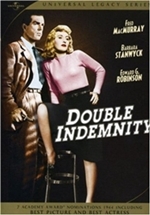
Double Indemnity/1944/Paramount/106 min.

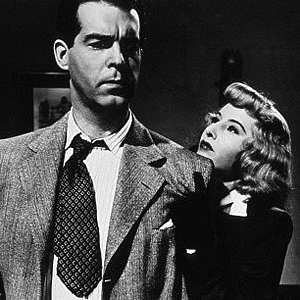
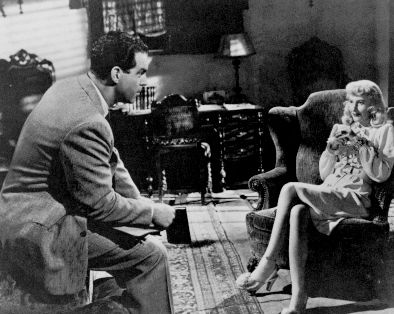
Fred MacMurray and Barbara Stanwyck

She’s got a plan, she just needs a man. And that’s a welcome challenge for a femme fatale, especially one with an ankle bracelet.

In Billy Wilder’s film noir masterpiece, “Double Indemnity,” from 1944 Phyllis Dietrichson (Barbara Stanwyck) wants out of her marriage to rich, grumpy oldster, Mr. Dietrichson (Tom Powers). Poor Phyllis doesn’t get much love from Dietrichson’s adult daughter, Lola (Jean Heather) either. Fresh-faced and feisty, Lola is hung up on her temperamental boyfriend Nino Zachetti (Byron Barr).

For Phyllis, seducing a new guy to help make hubby disappear is so much more cost-effective than hiring a divorce lawyer. A smart insurance man is even better. Along comes Walter Neff (Fred MacMurray) trying to sell a policy, just as Phyllis finishes a session of sunbathing, wearing an ankle bracelet and not much more. That’s about as much bait as Walter needs.

They flirt, fall for each other and eventually arrange to bump off Mr. Dietrichson, making it look like he fell from a train. It’s a one-in-a-million way to go with a huge payoff from a double-indemnity insurance policy issued by Walter’s company. After that, they play it cool and wait for the check. They’ve planned it like a military campaign, so they’re in the clear until Walter starts to suspect that he’s not the only guy who’s been drooling at Phyllis’ ankles.

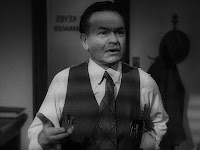
Edward G. Robinson

Besides his lust for the blonde (and their chemistry truly sizzles), Walter’s real love is the platonic father/son relationship he has with his boss at the insurance company, Barton Keyes, sharp, cynical and married to his job, played brilliantly by Edward G. Robinson.

Critic Richard Schickel says “Double Indemnity” is the first true noir. I disagree – what about 1941’s “The Maltese Falcon” and “Stranger on the Third Floor” from 1940? Or even Fritz Lang‘s “M” from Germany in 1931? But the point is “Double Indemnity” was the standard against which every subsequent noir was measured. It’s a glorious treat visually. John Seitz’s luscious lighting and captivating use of shadow bring to mind Vincent Van Gogh’s observation: “There are no less than 80 shades of black.” The score by Miklos Rozsa works perfectly with the visuals to build and sustain atmosphere.

The performances (Stanwyck, MacMurray and Robinson) are tremendous. Though Stanwyck was nominated for the best actress Oscar and “Double Indemnity” was also nominated in six other categories (picture, director, screenplay, cinematography, sound recording and score), MacMurray and Robinson were not in the running and the film didn’t win any Oscars. In retrospect, their work in this movie is some of the best acting of the decade. MacMurray (who might be most familiar as the father in TV’s “My Three Sons”) is such a natural as the easily tempted yet very likeable Neff, it’s surprising now to learn that the role was a major departure from his usual nice-guy parts.

As James Pallot of “The Movie Guide” writes: “Robinson … beautifully gives the film its heart. His speech about death statistics, rattled off at top speed, is one of the film’s highlights.” When Keyes realizes that Walter has betrayed him, it’s heartbreaking in a way that few other noirs are.

Wilder co-wrote the script with Raymond Chandler, based on the taut little novel by James M. Cain, published in 1936. (The novel was inspired by the real-life 1927 Snyder-Gray case.) In the book “Double Indemnity,” smitten Walter says of Phyllis’ physical charms, “I wasn’t the only one that knew about that shape. She knew about it herself, plenty.”

The dark, witty script follows the book pretty closely, but Chandler’s contributions are key. For example, check out this bit of simmering dialogue:

Phyllis: There’s a speed limit in this state, Mr. Neff, 45 miles an hour.

Walter: How fast was I going, Officer?

Phyllis: I’d say around 90.

Walter: Suppose you get down off your motorcycle and give me a ticket.

Phyllis: Suppose I let you off with a warning this time.

Walter: Suppose it doesn’t take.

Phyllis: Suppose I have to whack you over the knuckles.

Walter: Suppose I bust out crying and put my head on your shoulder.

Phyllis: Suppose you try putting it on my husband’s shoulder.

Walter: That tears it…

Chatting things over while Mr. Dietrichson is away.

Now it seems egregious that Wilder (1906-2002) and “Double Indemnity” were snubbed at the Oscars. Born in what is now Poland, Wilder escaped the Nazis, but his mother and other family members perished in a concentration camp. He knew firsthand the dark, sometimes horrific, side of life and that knowledge imbued his work with an unparalleled richness and depth. He was also hilarious. If I could have martinis with any film noir director, living or dead, it would be Billy.

I’ve seen interview footage of him where he punctuated his conversation with deep and frequent laughter. And I’ve heard stories about him playing practical jokes – apparently he when he lost the 1944 best director Oscar to Leo McCarey (who won for “Going My Way” starring Bing Crosby) Billy stuck out his foot and tripped McCarey as he walked down the aisle to pick it up. Maybe if I get that fantasy date with the spirit of Billy, I’ll bring Dick Schickel along too. He might benefit from a girly martini and tagging along with Billy and me.

So, suppose you do yourself a favor and watch “Double Indemnity” the first chance you get. You won’t be sorry.

‘Double Indemnity’ quick hit

Double Indemnity/1944/Paramount/106 min.

A hands-down noir favorite. Fred MacMurray and Barbara Stanwyck are adulterous lovers who plot to get rid of Stanwyck’s husband in a seamless “accident” and pounce on his insurance policy. Knock-out performances and marvelous direction from Billy Wilder. Based on a James M. Cain novel, the script, by Wilder and Raymond Chandler, crackles with wit and innuendo.

A noir meow for the holidays


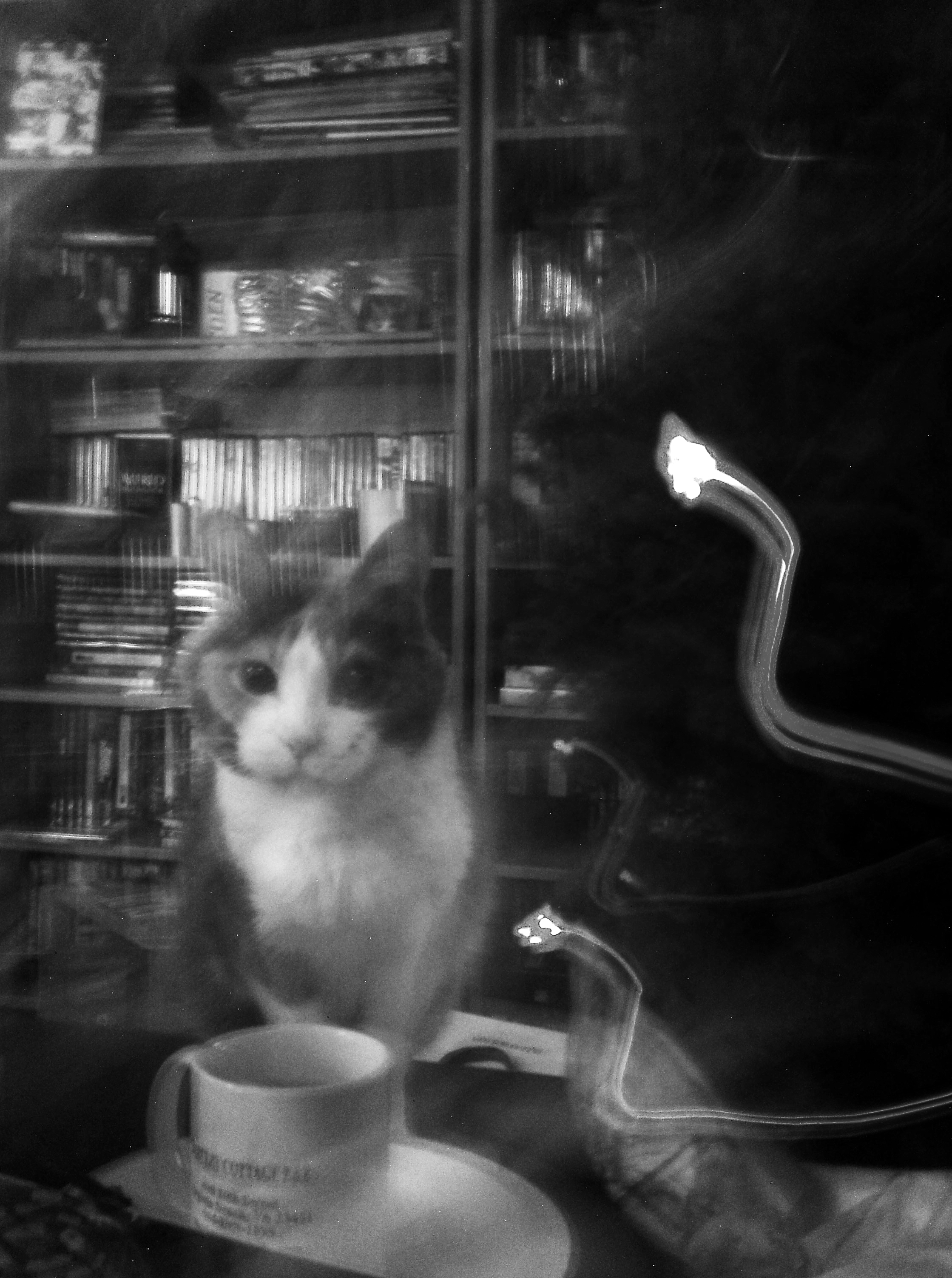
My boss, Pica, perhaps evaluating my performance. Fingers crossed for a bonus!

Wilmington unwraps noir in ‘Wonderful Life’

It’s a Wonderful Life/ 1946/ Paramount/130 min
 
So far, I’ve written 16 blog posts. Damn! It’s high time for some vaca and R&R. Luckily, I can call on my noir network to feed my little blog. Today, I am tapping veteran film critic and old friend Michael Wilmington to provide a fresh look at essential Christmas Eve viewing: “It’s a Wonderful Life.” If you’ve dismissed this film as sappy, watch the last act one more time and you’ll likely appreciate anew its noir mood and atmosphere.
 

Michael Wilmington

Scenario for Christmas: A whimsical guardian angel shows a good-hearted small-town guy, on the brink of suicide, what would have happened if he’d never lived and what a difference his life really made to everyone around him. You’ve seen it before, but it always works. And it always will.

Frank Capra‘s holiday masterpiece “It’s a Wonderful Life” is an exhilarating mix of angelic fantasy and small-town comedy, of political fable and poetic license, of Norman Rockwell and film noir.

The last act of this beloved Christmas classic — where George Bailey (James Stewart, in his favorite role) sees his beloved hometown of Bedford Falls turned into a dark semi-urban nightmare, as it would have been if it were run by George’s rich, greedy nemesis, Old Man Potter (Lionel Barrymore) — is a pure film-noir nightmare, with a tormented protagonist, a world bent into bad-dreams-come-true and a fate that (temporarily) can’t be escaped.

There are lots of real film-noir mainstays in the cast, people who fit easily into the noir universe — notably Gloria Grahame (“In a Lonely Place,” “Human Desire,” “The Big Heat”) as the town’s blonde bombshell Violet; Thomas Mitchell (“Dark Waters,” “The Dark Mirror,” “While the City Sleeps”) as George’s absent-minded Uncle Billy; Barrymore (“Key Largo”) as the evil banker Potter; and Sheldon Leonard (“Decoy”) as tough Nick the bartender.

The movie’s crack Capra ensemble also boasts Ward Bond (“The Maltese Falcon,” “On Dangerous Ground,” “Kiss Tomorrow Goodbye”) and Frank Faylen (“The Blue Dahlia,” “Detective Story,” “The Sniper”) as cop and cabbie (and “Sesame Street” namesakes) Bert and Ernie. And of course there’s the great, shy, stammering Stewart himself, who went on to make such classic noirs as “Call Northside 777,” plus, for Hitchcock, “Rope,” “Rear Window” and “Vertigo.”

The script, by turns witty and sentimental, was adapted from a Christmas fable by poet Philip Van Doren Stern. “Life” had a raft of A-list writers, namely Frances Goodrich and Albert Hackett, the husband-wife team who adapted Dashiell Hammett‘s “Thin Man” for the movies. On “Life,” they received uncredited assistance from such stalwart noir writers as Jo Swerling (“Leave Her to Heaven”), Dalton Trumbo (“Gun Crazy”), Clifford Odets (“Sweet Smell of Success”) and the famously acerbic Dorothy Parker (you heard me right).

Lead cinematographer Joe Biroc (“Cry Danger,” “The Killer That Stalked New York”) gives the movie a distinctly nightmarish look.

The point of cataloging “Life’s” noir vets is that most of the talent in the movie were known more for film noir than the simplistic goody-two-shoes stuff people mistakenly feel is the essence of both “It’s a Wonderful Life” and Capra-corn. Capra wanted smart, sophisticated collaborators who knew what happened when the lights went off. Noir people.

Capra had already experimented with a mixture of humor, sentiment and noir in his 1944 comedy of murders, with Cary Grant, “Arsenic and Old Lace” but “Wonderful Life” has the style down pat. We see George’s kindness, generosity and sometimes-antic humor shining throughout his difficult but rewarding life as recounted up above to his guardian angel Clarence (Henry Travers). But then we see him in a downpour of terror and anguish when he suddenly faces financial ruin, flees his family, wrecks his car, stands on a bridge and contemplates suicide. And finally at the “Auld Lang Syne” end, we get the Bailey family pride and joy when the nightmare ends. Well, some great noirs have happy endings too …

In many ways, of course, “It’s a Wonderful Life” is Charles Dickens‘ “A Christmas Carol” in reverse. (Barrymore was famous for his interpretation of Ebenezer Scrooge, which he reprised every year at Christmas on radio and which he probably would have played for the 1938 MGM movie, had he not been wheelchair-bound by the time of its production.)

Anyway, it all jelled into a movie and an experience, both spinetingling and heartwarming, that nobody ever forgets: On a magical Christmas Eve, a good man understands the meaning of his life and the effects of selflessness, just as Dickens’ Scrooge sees the consequences of his own selfishness.

Most importantly, “Life” had Frank Capra, a directorial magician who could mix comedy and drama, move audiences deeply and also make them laugh, like almost no one else in Hollywood history. Capra always thought this was his best movie, even though it was a horrible disappointment to him financially and professionally. The original 1946 audiences and critics were mixed, and the film’s receipts failed to support the new company, Liberty Films, that Capra was trying to set up with his friends George Stevens, William Wyler and John Huston. Largely because of “Life,” they lost their Liberty.

“It’s a Wonderful Life” takes you right over the edge. Almost. It’s a wonderful picture: a very funny, often charming, but also terrifying movie about life’s most horrible disappointments, about all your nightmares coming true and all your dreams being torn apart. And that was echoed in real life. George Bailey failed (for a while), and Frank Capra failed (for a while) too.

But Capra was right. This is his best movie. I can’t keep a dry eye when George’s brother Harry (Todd Karns) toasts him under the Christmas tree as “the richest man in town,” the Bedford Falls crowd sings “Auld Lang Syne” and they find Zuzu’s petals. I don’t even want to.

If you’ve never been moved, even slightly, when Harry raises that glass, everybody sings and George hears the bell — well, the hell with you. “Bah, Humbug,” as Potter would say. But the Bedford Falls folks are still going to shout: “Merry Christmas everyone!”

Noir people too.

You can read more of Michael Wilmington’s reviews at Movie City News.

Author photo by Victor Skrebneski; copyright Victor Skrebneski

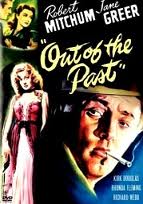
Jacques Tourneur, Robert Mitchum and Jane Greer make ‘Out of the Past’ required viewing

Out of the Past/1947/RKO/97 min.

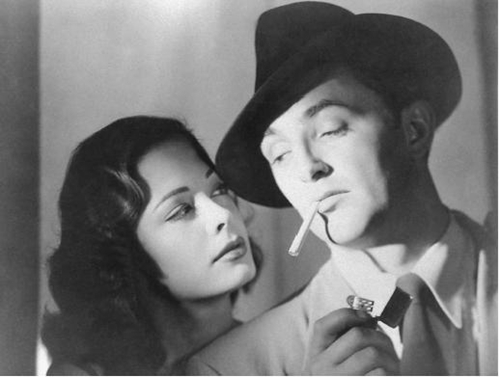
As famed critic James Agee put it: “Robert Mitchum is so sleepily self-confident with the women that when he slopes into clinches you expect him to snore in their faces.”

While none of my Robert Mitchum fantasies involve snoring, I can’t say I’d kick him out of bed just for a few noisy ZZZs. One of Mitchum’s finest vehicles is “Out of the Past” (1947) by French-born director Jacques Tourneur.

If I happened to meet someone who wanted to know film noir and only had 97 minutes to live, this is the film I’d recommend. But pay close attention, little dying chum, because there are plot twists aplenty.

Mitchum plays Jeff Bailey (aka Jeff Markham) who runs a gas station in a small town. He’s seeking a quiet life, where he can put his messed-up past behind him. Ha! Free will doesn’t stand much of a chance in film noir, so when menacing Joe Stephanos (Paul Valentine) comes to town looking for Jeff, we know he’s about to be plunged back into the darkness.

Mitchum tells his shadowy tale to good girl Virginia Huston.

Once Jeff learns that his former nemesis, gangster Whit Sterling (Kirk Douglas), wants a reunion, he decides to bring his pure and wholesome girlfriend Ann Miller (Virginia Huston) up to speed on his shady past and so launches a filigree of flashbacks with some of the most haunting images in all of noir.

Before he pumped gas, Jeff was a gumshoe whom Whit hired to find his double-dealing girlfriend Kathie Moffat (Jane Greer). Jeff finds her in Mexico, having escaped from Whit with a little help from a gun and a bigger helping of his money. It’s a long time into the flick before we see this fabulous femme fatale but when we finally do, she’s breathtaking. James Pallot in “The Movie Guide” calls Greer’s appearance “one of the greatest entrances in film history.”

Jeff, a self-confessed sucker, falls for her in about 3 seconds and decides that Whit Sterling can go to hell. As far as Whit’s cash, Kathie says she didn’t touch it and asks him: “Won’t you believe me?”

He replies: “Baby, I don’t care.”

The two relocate to San Francisco where they can hang incognito and go to movies (sounds divine!). Still, there’s that niggling bother of Whit, brilliantly played by Douglas, and he cares quite a bit.

Jane Greer is the girl who changes everything for Mitch.

Meanwhile, Jeff’s ex-partner in the detective biz Jack Fisher (Steve Brodie) catches up with the couple, angling for a pay-off to keep his mouth shut re: their new life. Jeff and Fisher come to blows, but Kathie decides to cut to the chase and shoot him dead.

Earlier Fisher comments: “A dame with a rod is like a guy with a knitting needle.” In fact, a knitting needle can double as a handy weapon but it’s far less efficient than a gun, as Kathie clearly knew.

Whit figures Jeff still owes him, and makes him part of the scheme to steal incriminating documents from attorney Leonard Eels (Ken Niles). In on the set-up is Eels’ secretary Meta Carson (Rhonda Fleming) a Jane Greer lookalike and good-time girl. Over drinks with Jeff and Meta, Eels remarks: “All women are wonders because they reduce all men to the obvious.”

“And so do martinis,” Meta says.

When Eels ends up dead, Jeff appears to be the fall guy, but he staves that off by hiding the body. The next snag? Kathie signed an affidavit (at Whit’s insistence, she says) that Jeff killed Fisher. But Jeff doesn’t give up easily and, after tracking the above-mentioned documents, is happy to exchange them for $50,000 and the affidavit.

As the treachery escalates and the bodies start piling up, Kathie has all her men exactly where she wants them, but then noir guys are awfully recalcitrant…

“Out of the Past” is director Jacques Tourneur’s noir masterpiece. In a series of celluloid paintings almost baroque in their intensity, Tourneur and director of photography Nicholas Musuraca create a seamless and sinister world that captivates from the first shot to the last. As Eddie Muller in “Dark City: The Lost World of Film Noir” describes it: Musuraca achieves “the richest chiaroscuro cinematography of any noir.” And as Michael Wilmington wrote in the Chicago Tribune, the movie is: “Moody and poetic, filled with some of the most strangely beautiful images ever to grace a crime movie.” [Read more…]

‘Out of the Past’ quick hit

Out of the Past/1947/RKO Radio Pictures/97 min.

Juggling men is a key skill for any femme fatale. Jane Greer tries to keep seductive gangster and ex-boyfriend Kirk Douglas at bay while she explores new opportunities with laconic, cavalier Robert Mitchum. Not as easy as it sounds, given that Douglas hires Mitchum to track her down. See Jane work all the angles in French-born director Jacques Tourneur’s seminal film noir.

Wishing for non-stop noir? SF film fest will oblige

Something splendid is going on next month: The Film Noir Foundation’s Noir City 9, San Francisco’s annual film festival celebrating classic dark-side flicks.

The schedule of films and the new poster will be revealed Wednesday at the first Noir City Xmas double feature. The films are: “Remember the Night” 1940 and “Mr. Soft Touch” 1949.

“Remember the Night” stars Barbara Stanwyck and Fred MacMurray (they reunited for the ultra-famous noir classic “Double Indemnity” 1944) as well as Beulah Bondi. Preston Sturges wrote the original screenplay and Mitchell Leisen directed.

“Mr. Soft Touch,” a comedy-drama set in San Francisco, stars Glenn Ford and Evelyn Keyes. It was directed by Gordon Douglas and Henry Levin.

Film Noir Foundation founder and president Eddie Muller always does an amazing job with the festival and I can’t wait to hear the details for next year.

Noir City Xmas is Wednesday Dec. 15 and Noir City 9 runs Jan. 21-30, 2011, both at the Castro Theatre. For full details, visit www.noircity.com.

Last year’s highlights included:

Marilyn is both steamy and scheming in "Niagara" from 1953 by Henry Hathaway.

Marilyn Noir: “Niagara” 1953 and “The Asphalt Jungle” 1950.

Bad Girls of Film Noir: “One Girl’s Confession” 1953 and “Women’s Prison” 1955.

The Magnificent Gloria Grahame: “Human Desire” 1954 and “Odds Against Tomorrow” 1959.

Image from pixdaus.com