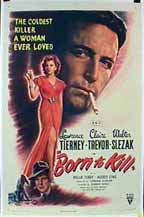
Noir greats Trevor and Tierney flirt with doom in ‘Born to Kill’

Trevor and Tierney are perfectly matched.

Born to Kill/1947/RKO/83 min.

Most men are turnips.

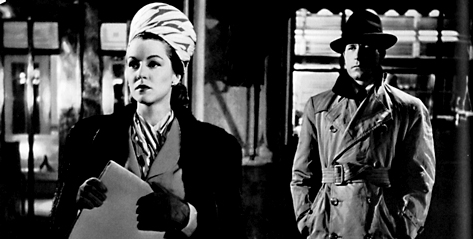
So says soigné and sassy femme fatale Helen Brent (Claire Trevor) in RKO’s “Born to Kill” from 1947, directed by Robert Wise.

Most men, perhaps, but not the homme fatale she falls for. No, strapping tough-guy Sam Wild (Lawrence Tierney) isn’t a turnip. What’s the word I’m looking for? Parsnip? Potato? I know: Psycho! And in Helen he finds his ideal match.

This damned and dirty pair meet on a train from Reno to San Francisco. Helen’s just gotten a divorce (as her lawyer puts it, the bonds of matrimony can weigh heavily on one’s soul). Sam’s a little stressed as well, having just murdered his girlfriend du jour Laury Palmer (Isabel Jewell) and her date in a fit of jealousy.
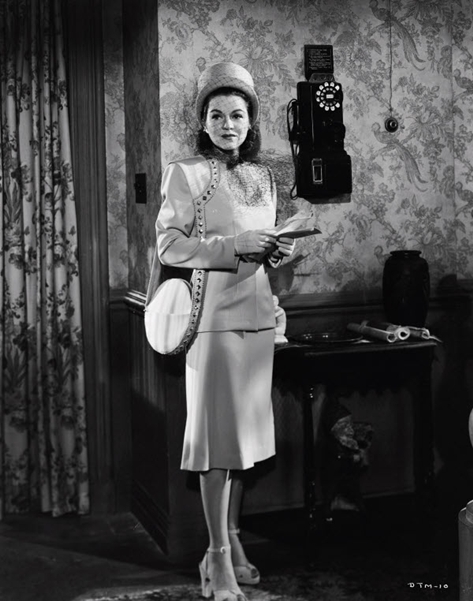
Look good or report some “messy” murders? Helen knows what’s important.

In San Fran, Sam shows up uninvited (well, sort of) at her place. Helen neglected to mention that she’s engaged to boring but wealthy and well-bred Fred Grover (Phillip Terry, married to Joan Crawford from 1942 -46 and stepfather to Christina Crawford). So Sam pursues Helen’s upper-crust foster sister Georgia Staples (Audrey Long).

They’re joined in San Francisco by Sam’s sidekick, Marty Waterman (the ever-eerie Elisha Cook Jr.). Also stirring things up is delightfully sleazy private eye Albert Arnett (Walter Slezak) who’s been hired by Laury’s friend, Mrs. Kraft (the always-great Esther Howard as the hard-drinking floozy), to investigate the murders.

Helen and Sam make no pretense of actually loving Fred and Georgia – they want to share their partners’ wealth and keep their secret lust alive. “Your roots are down where mine are,” Sam tells Helen. So they flirt, fight, and play games, natch. For example, after Helen figures out that Sam killed poor Laury and her hapless date, they share a passionate embrace in which they exchange grisly details from the crime, clearly a turn-on for them both. Of course, a relationship this demented is bound to burn out sooner rather than later and their road to self-destruction makes a pretty good yarn.
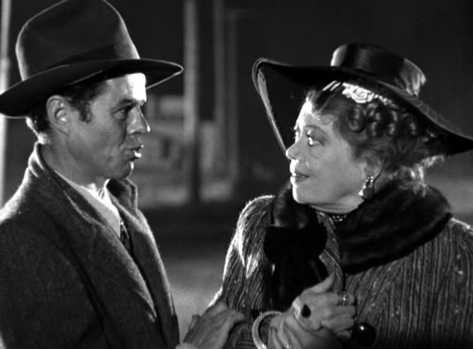
Cook and Howard round out a great cast.

Produced by Dore Schary and written by Eve Greene and Richard Macaulay from James Gunn’s novel “Deadlier than the Male,” the movie failed to impress American critics upon its release. Wise, who also directed the noirs “The Set-Up” and “Odds Against Tomorrow” along with many other films (most notably Oscar winners “West Side Story” and “The Sound of Music”) started as an editor (“Citizen Kane”). He does not show enormous visual flair in “Born to Kill.”

But on the plus side, the characters and cast along with a sharp dialogue, make this worth watching. (It’s also a good example of a film noir title that explores American class tensions, something that most Hollywood movies consistently overlooked.)

Noir stalwart Trevor (perhaps most famous for her similar role in “Murder, My Sweet”) shines here as Helen, lavishing her lines with comely cynicism. Tierney’s a bit one-note as the cold-blooded killer but he brings a riveting intensity and realness to the part. Apparently, Brooklyn-born Tierney, son of an Irish cop, was known as a bit of a thug offscreen as well, prone to heavy drinking and fighting, which damaged his career. On the DVD commentary, director Wise describes him as a “good actor but a rough character.”

Still, Tierney didn’t vanish into the Hollywood mist and he continued to act in smaller roles. Quentin Tarantino recruited him for “Reservoir Dogs” and he showed up on “Seinfeld” as Elaine’s father. Time didn’t do much to mellow him – he was reportedly difficult and belligerent.

But it’s Esther Howard who steals the show. My favorite scene comes when Marty tries to put her out of the picture by luring her out to a remote sand dune. Mrs. Kraft might be sloshed a lot of the time but Marty learns the hard way that she’s no pushover.

At a mere 83 minutes, “Born to Kill” is crisp, fast and fun.

‘Born to Kill’ quick hit

Born to Kill/1947/RKO/83 min.

When the sole witness to a double murder, Claire Trevor as Helen Brent, decides not to report the crime because it would be “messy and a lot of bother,” you know you’re dealing with a chilly lady. She’s looking for a man who can match her heartlessness and finds him in mixed-up tough guy Sam Wild (Lawrence Tierney).

They sizzle in their own warped way, but Esther Howard as the beer-chugging landlady steals the show in this early work by director Robert Wise. Also stars noiristo Elisha Cook Jr.

Free stuff from FNB: Win ‘Sunset Blvd.’

The winner of the October giveaway has been contacted. (The prize is “Body and Soul.”)

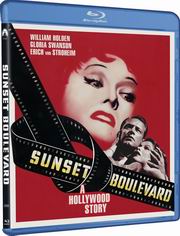
The November giveaway is an undisputed masterpiece, a stellar noir and one of the best-ever insider looks at Hollywood: “Sunset Blvd.” (1950, Billy Wilder) released today on Blu-ray. Starring William Holden and Gloria Swanson, “Sunset Blvd.” was nominated for 11 Academy Awards and won three. I’ve lost track of how many times I’ve seen this, but I had it on the brain this week because it was a special presentation at AFI Fest.

To enter this month’s giveaway, just leave a comment on any FNB post from Nov. 1-30. We welcome comments, but please remember that, for the purposes of the giveaway, there is one entry per person, not per comment.

The November winner will be randomly selected at the end of the month and announced in early December. Include your email address in your comment so that I can notify you if you win. Also be sure to check your email – if I don’t hear from you after three attempts, I will choose another winner. Your email will not be shared. Good luck!

The Noir File: Early Germanic examples, a wicked Western and noir through New Wave eyes

By Michael Wilmington and Film Noir Blonde

The Noir File is FNB’s weekly guide to classic film noir, neo-noir and pre-noir on cable TV. All the movies below are from the current schedule of Turner Classic Movies (TCM), which broadcasts them uncut and uninterrupted. The times are Eastern Standard and (Pacific Standard).

CO-PICKS OF THE WEEK

Breathless” (1960, Jean-Luc Godard). Thursday, Nov. 8, 6 p.m. (5 p.m.)

A guy named Michel Poiccard (Jean-Paul Belmondo) steals a car, drives from Marseilles to Paris, sings of a girl named Patricia (Jean Seberg), finds a gun and in the process reinvents film noir à la the New Wave.

That’s “Breathless,” the 1959 black-and-white Jean-Luc Godard French film that, like Orson Welles’ 1941 “Citizen Kane” – another masterpiece by a revolutionary cineaste still in his 20s – changed the ways we look at film. It changed also the way moviemakers shot movies and critics wrote about them, and perhaps a bit the ways we look at life too.

There’s a key difference though. Welles made us all believe that, if you could get all the tools of the movie industry at your disposal, you could tell stories so magical and deep, they’d open up a whole new world. Godard made us believe that, if you’d seen enough movies, you could grab a camera, walk out on the street, and just start shooting. You could make a movie not according to industry rules and protocols, but right out of your own life. (In French, with English subtitles.)

Stranger on the Third Floor” (1940, Boris Ingster). Saturday, Nov. 3, 7:45 a.m. (4:45 a.m.)

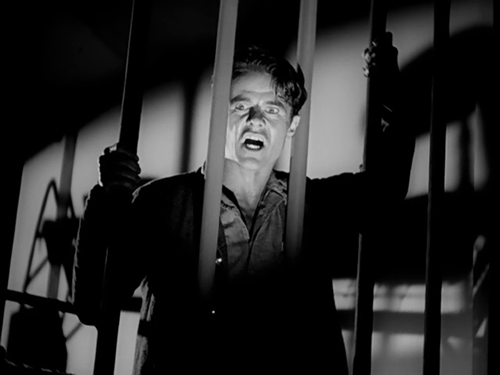
Elisha Cook Jr. plays a hapless patsy accused of murder in “Stranger.”

In this knockout of a B-movie, a breezy newspaper reporter (John McGuire) and his plucky lady friend (Margaret Tallichet, later Mrs. William Wyler) descend into a mad, bad dream. The reporter testifies against a hapless patsy accused of murder (Elisha Cook Jr.), sees him convicted and then finds himself facing a murder charge of his own. Meanwhile, the real murderer may just be that strange little man with a long scarf (Peter Lorre) who prowls around the streets, looking sad and mad and dangerous, as only Peter Lorre can.

Directed by Latvian émigré Boris Ingster, “Stranger” is often cited as the first film noir. And indeed, it has a lot of the elements, all suddenly jelling: the dark city streets, the pathological characters, the wise-cracking reporters, the tough cops and the sense of impending doom. It has Nicholas Musuraca cinematography, Roy Webb music and, as a bonus, art direction by Van Nest Polglase (“Citizen Kane”). Most of all, it has one of the screen’s truly memorable nightmare sequences: an eerie delve into crime and punishment, full of wild angles, dark shadows and insane persecutions.

Sunday, Nov. 4

12 a.m. (9 p.m.) “Pandora’s Box” (1929, G. W. Pabst). One of the great German silent films and one of the great precursors of film noir: G. W. Pabst’s somber, relentless tale of the playgirl-turned-prostitute Lulu (the sublime Louise Brooks), whose stunning, black-banged beauty helps make her one of the most appealing and tragic of femme fatales. (Silent, with music and intertitles.)

Thursday, Nov. 8

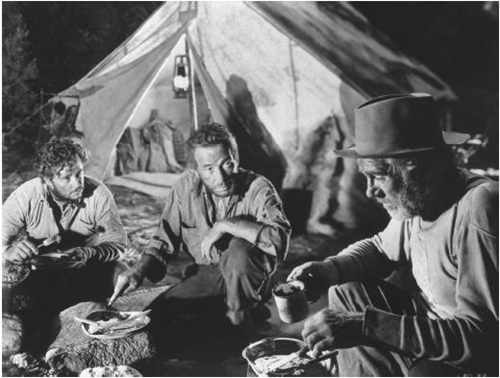
The three treasure hunters strike gold, but they also hit a vein of darkness.

9:45 a.m. (6:45 a.m.) “The Treasure of the Sierra Madre” (1948, John Huston).

Based on the classic novel by the mysterious B. Traven, a lacerating portrayal of greed, the movie is a classic as well. “Treasure” is perhaps the finest work by writer-director (and here, for the first time, actor), John Huston. It’s one of the great westerns, a supreme western noir, one of the best literary adaptations and one of the great Humphrey Bogart pictures.

Bogart is Fred C. Dobbs, a down and out American in 1925 in Tampico, Mexico, who hooks up with two other Yanks: tough but decent Bob Curtin (Tim Holt) and fast-talking, grizzled, expert prospector Howard (John’s father Walter Huston; he won the Oscar). The three treasure hunters strike gold in the Sierra Madre mountains, but they also hit a vein of darkness: the discord and violence that sudden riches can bring.

2 a.m. (11 p.m.): “Sunrise” (1927, F. W. Murnau). Murnau’s first film in Hollywood is a beautiful-looking cinematic ballad of a good wife (Oscar-winner Janet Gaynor), a bad woman (Margaret Livingston), a confused husband torn between them (George O’Brien) and the screen’s most poetic train journey from country to city. Selected in the last Sight and Sound film poll as one of the 10 greatest films of all time. It is. (Silent, with music and intertitles.)

Honey, your November noir horoscope is here

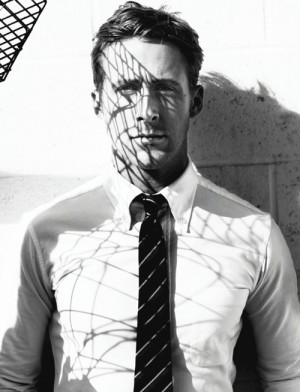
Ryan Gosling turns 32 on Nov. 12.

Fate reigns supreme in film noir, but that doesn’t mean we don’t love us some zodiac fun. Hope your November is full of smooth travel and tremendous turkey. And happy birthday, Scorpio and Sag! A special shout-out and remembrances to smokin’ Scorpios Tilda Swinton (Nov. 5), Leonardo Di Caprio (Nov. 11), Ryan Gosling and Grace Kelly (both Nov. 12), Veronica Lake (Nov. 14), Martin Scorsese (Nov. 17), Jodie Foster (Nov. 19) and Scarlett Johansson (Nov. 22) and stunning Sagittarians Gloria Grahame (Nov. 28) and Diane Ladd (Nov. 29).

Scorpio (October 24-November 22): Claim your power, b’day girl! This looks set to be a stellar month full of glitz and glamour so make the most of it. Take the lead on a work project, you will shine. Take the chance to be romantic, you will glow. Midmonth, a friend seeks advice on a thorny issue that may take you aback at first. You will find a way to provide counsel with empathy and wit, as usual. On the 10th, don’t make a decision until you have analyzed all factors.

Sagittarius (November 23-December 22): It’s so good to be you this month as things fall into place in a number of areas. You ace your work projects with nary a long night, you may have a lovely cushion of cash from scaling back this summer, you’re the toast of the town socially. Again? Well, so be it, there is just something inherently wonderful about you. As men fall under your spell, try to be fair with your attention and be sure to make time for sleep and exercise.

Scarlett Johansson will be 28 on Nov. 22. She plays Janet Leigh in “Hitchcock,” which had its world premiere last night at AFI Fest in Hollywood. She didn’t attend because she is in NYC rehearsing “Cat on a Hot Tin Roof.” Photo: Picture Perfect/Rex Features/Guardian newspaper

Capricorn (December 23-January 20): Don’t romanticize a situation that recently went South – those red flags were blazing crimson, doll, and you were right to move on. You often see things others miss, after all. At work, though you’re already crazy busy, a colleague needs to lean on you. Let him, especially if he’s tall, dark and handsome. Be grateful all month long for the important things in life – champagne, lip gloss, pedicures, massages – what would we do without them? The 14th and 23rd are lucky.

Aquarius (January 21-February 19): Take a retro approach to financial management and save, save, save. Get with your French press and brown-bag it three days a week, and you will accrue extra dollars. If you are having a rocky road at work, document everything. If you later need to defend yourself or point out that a treacherous nincompoop “borrowed” your idea, you’ll be glad you have a written record of your efforts. Also, keep communication open with your boss, always being positive and to the point. Re: romance, sexy is as sexy does on the 12th.

Pisces (February 20-March 20): The holidays are around the corner. Does that mean shopping for everyone on your list, cooking for 20 and making small talk with deadly dull relatives? Hell no, it means shopping for a new LBD, a bubble bath before dinner cooked by someone else and going to the movies. To make that happen, get some help from a personal shopper, chef or sitter – whatever it takes for you to feel like a pampered femme fatale. At work, do your homework, then dare to solve a problem with an unconventional approach. [Read more…]

‘Stanley Kubrick’ opens today at LACMA

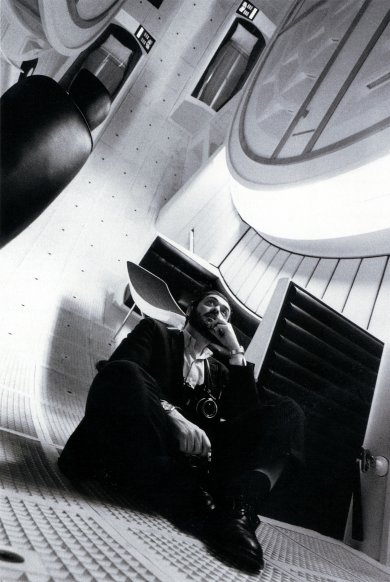
Director Stanley Kubrick sits in the interior of the space ship Discovery from “2001.” © Warner Bros. Entertainment

Acclaimed filmmaker Stanley Kubrick’s storytelling sometimes leaves me cold, but I’ve always admired his arresting images and balletic camera. I think his best movies are his classic noir and neo-noir titles – “Killer’s Kiss,” “The Killing,” “Lolita,” “Dr. Strangelove” and “The Shining.”

Born in New York in 1928, Kubrick began as a photographer. He had his first photograph published in Look magazine when he was 16 (he was paid $25). Later, as a Look staffer, he shot on city streets, often swathes of nighttime blackness pierced by patches of light. His desire for precision and painstaking quest for technical innovation started early and stayed with him for the next 55 years.

The range and richness of his art are explored in the first U.S. retrospective of his work, co-presented by the Los Angeles County Museum of Art (LACMA) and the Academy of Motion Picture Arts and Sciences.

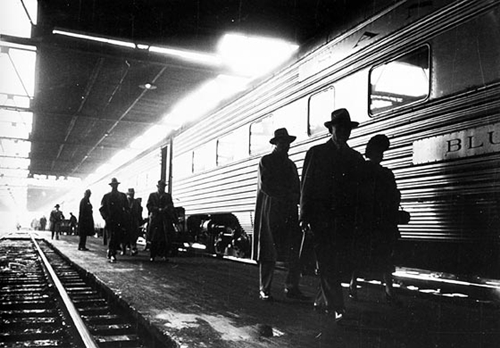
Railroad station, Chicago 1949. Stanley Kubrick photo for Look magazine/Library of Congress

The exhibition highlights Kubrick’s bond with film noir, noting: “In the title of his first feature film, ‘Fear and Desire’ (1953), Kubrick declared two themes that he would return to throughout his career. The atmosphere of film noir – its claustrophobia, paranoia and hopelessness – creates a worldview made more tangible through style: low-key lighting, high-contrast and silhouetted images, the blackest shadows. These characteristics of noir, together with the camera movements that would soon be identified with the director, were coherently articulated in Kubrick’s three early features.”

And later: “What Kubrick began with ‘Lolita’ (1962) – disrupting the conventions of film noir – he accomplished completely with “Dr. Strangelove” (1964). Kubrick made the decision to treat the story as nightmare comedy.”

Kubrick’s films, including “Paths of Glory,” “Spartacus,” “Dr. Strangelove,” “2001: A Space Odyssey,” “A Clockwork Orange,” “Barry Lyndon,” “Full Metal Jacket” and “Eyes Wide Shut,” among others, are represented through archival material, annotated scripts, photography, costumes, cameras and equipment, set models, original promotional materials and props.

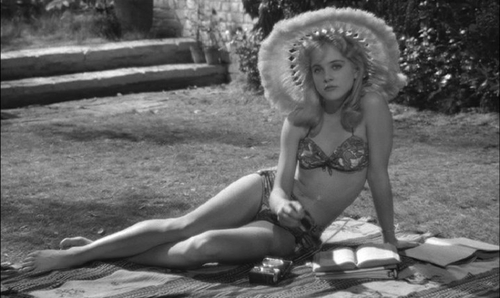
Sue Lyon stars in “Lolita,” based on the novel by Vladimir Nabokov.

In one of several letters rebuking Kubrick over the making of “Lolita,” the Bible Presbyterian Church of Tampa, Fla., decries that the movie “is based upon sex appeal. And that appeal is quite degenerate in its nature.”

There are also sections on Kubrick’s special effects and an alternate beginning to “2001” as well as displays about projects that Kubrick never completed (“Napoleon” and “The Aryan Papers”).

Kubrick died in 1999 in England, at the age of 70. He garnered 13 Academy Award nominations and “2001” (1968) won the Best Effects Oscar.

The exhibition, which runs through June 30, 2013, will be accompanied by a film retrospective at LACMA’s Bing Theater beginning this month.

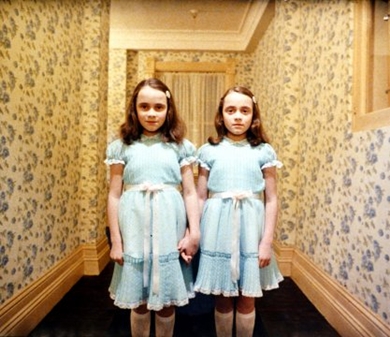
From “The Shining” (1980): The daughters of Grady (Lisa and Louise Burns). © Warner Bros. Entertainment

To kick off the film retrospective, on Wednesday, Nov. 7, the Academy will present an evening of clips and tributes to honor Kubrick, hosted by actor Malcolm McDowell. The event will also launch the Academy’s Kubrick exhibition, which will be open to the public through February 2013.

As for the LACMA/Academy collaboration: “It is a taste of things to come when we open the Academy Museum of Motion Pictures in the historic Wilshire May Company building on the LACMA campus,” said Dawn Hudson, Academy CEO.

Happy Halloween, everyone!

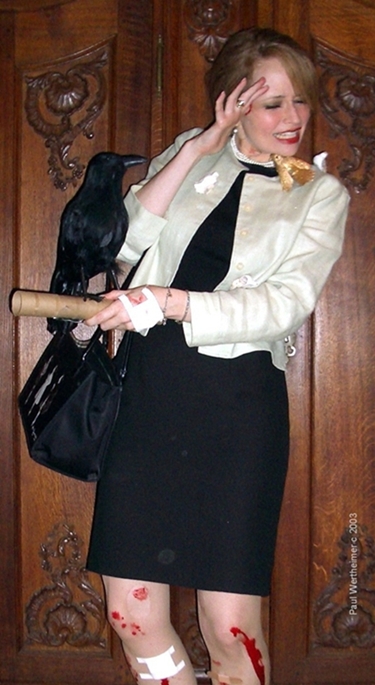
Here’s a shot of one of my fave costumes – a Hitch/Tippi homage.

Speaking of Hitchcock, this topic came up last night at a Writers Bloc Presents discussion with film critic and historian David Thomson. “Vertigo,” which flopped upon its release in 1958, recently ousted “Citizen Kane” for the No. 1 spot on the BFI’s Sight & Sound poll of the greatest films of all time.

The question: Does “Vertigo” work with an audience or is it best appreciated at home/without a crowd?

Thomson, whose latest book is “The Big Screen,” was enthralling and I particularly enjoyed his assessment of why film noir continues to captivate. Said Thomson: “It’s about the lonely hero who may be going crazy. Many men have had that feeling in the last 60 years.”

The Noir File: Five greats include ‘M,’ ‘Repulsion,’ ‘D.O.A.’

By Michael Wilmington and Film Noir Blonde

The Noir File is FNB’s weekly guide to classic film noir, neo-noir and pre-noir on cable TV. All the movies below are from the current schedule of Turner Classic Movies (TCM), which broadcasts them uncut and uninterrupted. The times are Eastern Standard and (Pacific Standard).

In one of the best film noir weeks ever, TCM offers five noir greats: “M,” “Diabolique,” “D. O. A.,” “The Big Heat” and “Repulsion.”

CO-PICKS OF THE WEEK

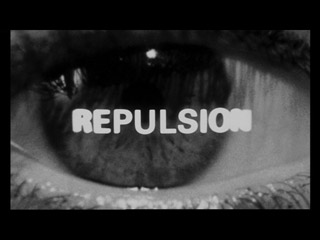
Repulsion” (1965, Roman Polanski). Wednesday, Oct. 31, 11 a.m. (8 a.m.)

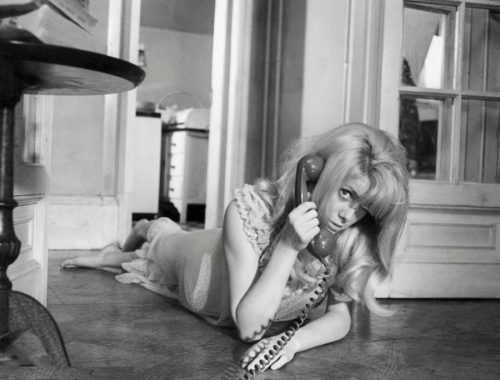
In Roman Polanski’s shiveringly erotic horror-suspense film “Repulsion,” the 22-year-old Catherine Deneuve plays Carol: a blonde French beauty, with a disarmingly lost-looking, childlike face – a girl who begins to go frighteningly mad when her older sister Helen (Yvonne Furneaux) leaves her alone a week or so. Soon, the beautiful, naïve and sexually skittish young Carol, the object of mostly unwanted desire from nearly every man in the neighborhood, starts sinking into alienation and insanity. When the outside world begins to intrude, Carol, repulsed, strikes back savagely, with a soon-bloody knife.

Catherine Deneuve’s nightmare becomes our own in “Repulsion” from 1965.

“Repulsion,” Polanski’s first English language movie and the first of his many collaborations with the reclusive, brilliant French screenwriter Gerard Brach (“Cul-de-Sac”), is one of the great ’60s black-and-white film noirs. It’s also one of the more frightening films ever made. Ultimately, “Repulsion” scares the hell out of us, because Polanski makes Carol’s nightmare so indelibly real, and so inescapably our own.

M” (1931, Fritz Lang) Sunday, Oct. 28, 2:45 a.m. (11:45 p.m.)

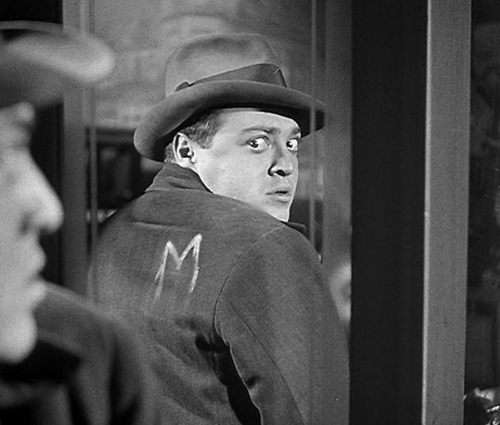
Fritz Lang’s great, hair-raising 1931 German crime thriller “M” is the masterpiece of his career, a landmark achievement of German cinema and a film that marks Lang as one of the most important cinematic fathers of film noir. “M” is a work of genius on every level.

Written by Lang’s then-wife Thea von Harbou (who also scripted “Metropolis”), and directed by Lang, “M” stars the amazing young Peter Lorre as the compulsive child-murderer Hans Beckert aka “M.” Beckert is a chubby little deviate who throws Berlin into turmoil with his string of slayings – a sweet-faced serial killer modeled on the real-life Dusseldorf Strangler. It is a role and a performance that plunges into the darkest nights of a lost soul.

Young Peter Lorre is unforgettable in Fritz Lang’s 1931 masterpiece.

Lang shows us both the murders and the social chaos triggered by the killer’s rampage. When M’s string of murders causes the police to clamp down on organized crime too, the outlaws strike back. Led by suave gentleman-thief Schranker (Gustaf Grundgens), they pursue the murderer relentlessly through the shadowy, mazelike world of Berlin at night. Just as relentlessly, the cops, with cynical detective Inspector Lohmann (Otto Wernicke) in charge, pursue him by day.

“M,” in its own way, is as much a creative movie milestone as Orson Welles’ “Citizen Kane.” It’s one of the main progenitors of film noir and remains an all-time classic of suspense. (In German, with English subtitles.)

Saturday, Oct. 27

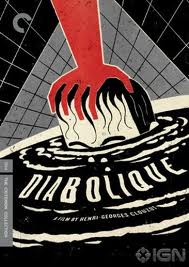
8 p.m. (5 p.m.) “Diabolique” (1955, Henri-Georges Clouzot).

10 p.m. (7 p.m.) “Games” (1967, Curtis Harrington). An American semi-remake of Clouzot’s “Diabolique,” with Simone Signoret starring again here, as an enigmatic interloper who moves in on New York married couple James Caan and Katharine Ross, unleashing a string of increasingly deadly games.

Sunday, Oct. 28

6: 30 a.m. (3:30 a.m.) “D.O.A.” (1950, Rudolph Maté).

8 a.m. (5 a.m.): “Kind Hearts and Coronets” (1949, Robert Hamer). From Ealing Studio with love: One of the best of the high-style British dark comedies of manners and murder. Silken schemer Dennis Price is the vengeful climber trying to kill his way to the Dukedom of D’Ascoyne. Alec Guinness plays all eight of his aristocratic victims or victims-to-be. Valerie Hobson and Joan Greenwood are the fetching ladies whom the would-be Duke is torn between. The peerless cinematographer was Douglas Slocombe.

Tuesday, Oct. 30

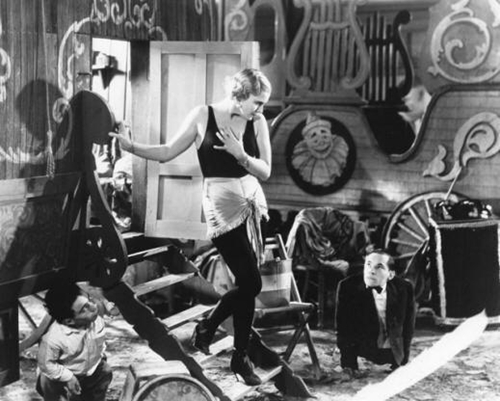
In 1932’s “Freaks,” by Tod Browning, Olga Baclanova plays a trapeze artist.

9:15 p.m. (6:15 p.m.): “Freaks” (1932, Tod Browning). Tod (“Dracula”) Browning’s macabre classic features a troupe of real-life circus freaks, all of them unforgettable camera subjects, in the bizarre story of a heartless trapeze artist (Olga Baclanova) who seduces a lovelorn midget (Harry Earle), marries him, and has to face the consequences.

Wednesday, Oct. 31

6:30 p.m. (3:30 p.m.): “The Body Snatcher” (1945, Robert Wise). Boris Karloff, Bela Lugosi and Henry Daniell fight over corpses and medical experiments in this gripping adaptation of a Robert Louis Stevenson tale.

Thursday, Nov. 1

8 p.m. (5 p.m.): “The Big Heat” (1953, Fritz Lang).

9:45 p.m. (6:45 p.m.); “Bullitt” (1968, Peter Yates). One of the more stylish cop-movie thrillers. With Steve McQueen at his coolest, Jacqueline Bisset at her loveliest, Robert Vaughn at his slimiest – plus the car chase to end all car chases.

11:45 p.m. (8:45 p.m.): “The Racket” (1951, John Cromwell, plus Nicholas Ray, Mel Ferrer and Tay Garnett, the last three uncredited). A battle of two Bobs, both film noir giants: good cop Robert Mitchum vs. gangster Robert Ryan, with Lizabeth Scott watching. From Howard Hughes’ RKO studio-head tenure, “The Racket” is a remake of Lewis Milestone’s 1928 mobster movie, based on Bartlett Cormack’s play, and also produced by Hughes.

Highs outweigh the lows in London-set ‘Pusher’

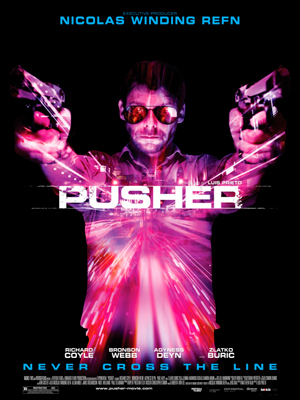
Pusher/2012/Radius TWC/87 min.

“Pusher,” by director Luis Prieto, is a fun romp through familiar territory. Maybe romp isn’t quite the right word, given that this is a drug dealer’s violent, watch-your-back world full of sketchy thugs with extremely bad teeth, gorgeous strung-out girls and vicious power-brokers with very short tempers.

Prieto’s movie is based on Nicolas Winding Refn’s 1996 Danish film trilogy, also called “Pusher.” Winding Refn, who captivated American audiences last year with “Drive” starring Ryan Gosling and Carey Mulligan, is executive producer here.

This “Pusher” follows a dealer named Frank (Richard Coyle) as he goes about his illegal business over the course of a week in his home base of London. (The original was set in Copenhagen.)

When a big sale is interrupted by the cops, Frank improvises and saves his skin. But now he owes a wad of cash to a supplier and he tries to cobble together the cash under a looming deadline.

The story, scripted by Matthew Read, is formulaic and doesn’t probe much beyond the surface. But there’s so much energetic camerawork and such assured performances that I had a good time immersing myself in the seedy, sleazy glitz of London’s SE1.

Coyle’s Frank likely tells himself that this too shall pass, that soon he’ll be done with dealing once and for all. Frank is exactly the kind of guy – smart, cocky, very cute and fully deluded – who thinks he can breeze through the badness and eventually live a different life. Emphasis on eventually. Did I mention he was very cute?

Just as interesting to watch is blonde glamazon Agyness Deyn as Flo, his dancer girlfriend; she brings a depth to the part that also signals mystery and muted pain. It is perhaps a little hard to buy that Frank would choose as his sidekick a chattery simpleton like Tony (Bronson Webb) but Tony comes from a long line of nervous, weasely, all-talk henchmen, most memorably played by classic film-noir great Elisha Cook, Jr.

Croatian-Danish actor Zlatko Burić plays Milo, the portly crime lord who happily juggles chats over buttery pastries with sending his boys to bash people’s knees in. Burić played the same role in the 1996 trilogy and he effortlessly nails the part.

“Pusher” isn’t the most original movie you could watch, but perfection isn’t everything. Look at the awkward, seemingly incompetent, sidekick thugs I mentioned above. Sometimes just being psycho is enough.

“Pusher” opens today in New York and LA (at the Sundance Sunset Cinema in West Hollywood). It is also available via video on demand.

Hitch bio-flix premieres, ‘Psycho’ and ‘Dressed to Kill’ at Aero

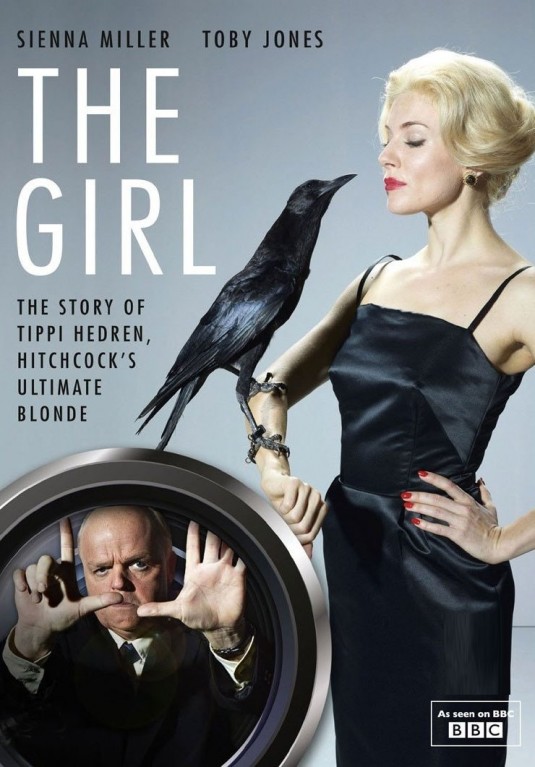
Decades after making “The Birds” (1963) and “Marnie” (1964) with Alfred Hitchcock, actress Tippi Hedren said the director harassed her and hindered her career, after she rebuffed his advances. “The Girl,” a recounting of her side of the story, premieres Saturday at 9 p.m. (8 p.m. Central) on HBO.

Directed by Julian Jarrold and written by Gwyneth Hughes, “The Girl” stars Sienna Miller and Toby Jones. If other Hitchcock blondes, such as Eva Marie Saint, Kim Novak, Ingrid Bergman and Grace Kelly, received similar treatment, they did not publicly reveal it. You can read Richard Brody’s excellent review of the movie here.

Writing for HuffPo, TV critic Lynn Elber describes the “stunned silence” after a private screening of the “The Girl,” held for Hedren, her friends and family, including daughter Melanie Griffith.

According to Elber, Hedren had this to say after the event in Beverly Hills: “I’ve never been in a screening room where nobody moved, nobody said anything. Until my daughter jumped up and said, ‘Well, now I have to go back into therapy.'”

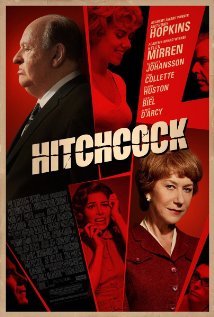
It will be interesting to compare that treatment to “Alfred Hitchcock and the Making of Psycho,” which opens the AFI Fest 2012 on Thursday, Nov. 1. (General release is Nov. 23.)

Directed by Sacha Gervasi, the film highlights Hitchcock’s relationship with his wife Alma Reville and her contributions to his work, particularly 1959’s “Psycho.” The film stars Anthony Hopkins as Hitch, Helen Mirren as Alma and Scarlett Johansson as Janet Leigh. (Imelda Staunton plays Alma in HBO’s “The Girl.”)

And, tonight at the Aero Theatre in Santa Monica, there is a great double bill: “Psycho” and “Dressed to Kill” (1981, Brian De Palma), starring Michael Caine and Angie Dickinson.