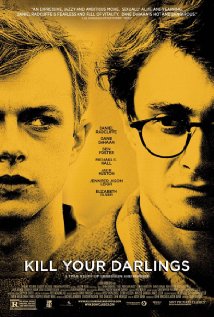
‘Kill Your Darlings’ tells noirish backstory of beat poets

Kill Your Darlings posterKill Your Darlings/2013/Killer Films/104 min.

Thinking about the 1940s, an era largely defined by World War II vets and the women they came home to, it’s easy to forget the generation just after – the post-war crop of young people on the cusp of adulthood as the long battles finally ended and the course of history forever changed.

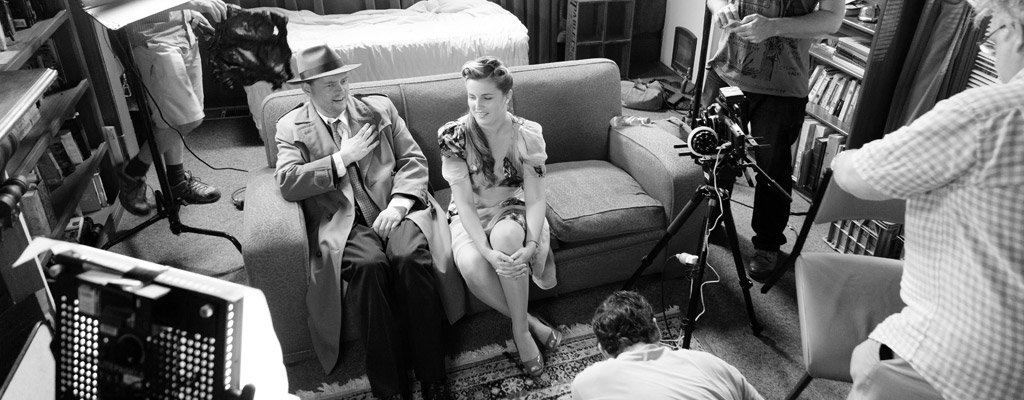
I was reminded of that watching “Kill Your Darlings,” a dark story about poet Allen Ginsberg (Daniel Radcliffe), the relationships he forged with other beat-generation writers while at Columbia University and his connection to a 1944 murder.

As a student, Ginsberg clashes with academic convention. On the personal front, he quickly falls under the romantic spell of fellow student Lucien Carr (Dane DeHaan), a feline beauty: polished, urbane, subversive and jaded. Through Carr, Ginsberg meets the rugged and dynamic, as well as older and more established, Jack Kerouac (Jack Huston) and the bizarre, dope-addicted literateur William Burroughs (Ben Foster). On the fringe of their circle is Carr’s mentor-turned-stalker (and one-time lover?), academic David Kammerer (Michael C. Hall).

Director and co-writer John Krokidas masterfully renders the period and its prejudices, and elicits exceptionally good performances from his energetic cast – they are all memorable, especially Ben Foster as Burroughs. Jennifer Jason Leigh, as Ginsberg’s mother Naomi, is also a standout. Though it doesn’t play as a thriller (it’s not trying to, particularly), “Kill Your Darlings” tells the tense, disturbing, sometimes-moving backstory of a few inspired and reckless geniuses who redrew the boundaries of literary expression.

“Kill Your Darlings” opens today in LA.

Lake, Ladd and Chandler script help ‘Blue Dahlia’ bloom

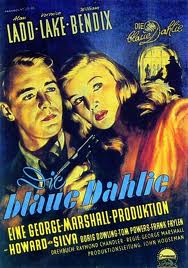
Blue Dahlia posterThe Blue Dahlia/1946/Paramount/96 min.

Sitting here waiting for the Tigers game to start and for the bf to make dinner, I keep thinking of food metaphors. For instance: watching “The Blue Dahlia” is like ordering a blue-cheese burger at a steakhouse – tasty fare, but not quite as satisfying as filet mignon. So I have a one-track mind. I’m hungry.

That does, however, sum up “The Blue Dahlia” – it’s a pretty good yarn and in the hands of a more stylish director, instead of comedy specialist George Marshall, it might have been a true gem. In Marshall’s hands, the visuals are ho-hum, there’s not much atmosphere and there are several moments where the pace seems to idle. Overall, it feels a bit dated.

On the plus side, Veronica Lake and Alan Ladd lead a strong cast and Raymond Chandler received an Oscar nom for his original screenplay. (It lost to the British psychological drama “The Seventh Veil” by Muriel and Sydney Box.) Also, “The Blue Dahlia” has several famous location shots, such as the Brown Derby, and in 1947 the film’s title gave rise to the name of one of Hollywood’s most nefarious real-life mysteries.

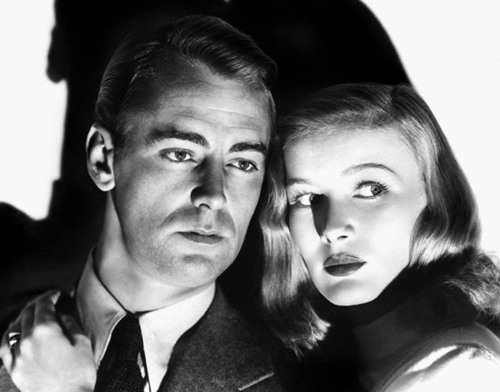
This was Alan Ladd and Veronica Lake's third movie together.

This was Alan Ladd and Veronica Lake’s third movie together.

Ladd plays an ex-Navy bomber pilot named Johnny Morrison, who arrives in Los Angeles with two pals from the Navy. The three jump off the bus at Hollywood Boulevard and head to the nearest bar. Buzz (William Bendix) has sustained war injuries (he has a plate in his skull) and isn’t thinking too clearly; his foil is calm and level-headed George (Hugh Beaumont, aka Ward Cleaver on “Leave it to Beaver.”)

Next up for Johnny is a reunion with his wife Helen (Doris Dowling) at her bungalow apartment on Wilshire Boulevard. Not exactly a picture of wifely devotion, raven-haired, rye-chugging Helen is hosting a raucous party that night. (Doris Dowling’s real-life older sister Constance Dowling played shady lady Mavis Marlowe in the film noir “Black Angel,” also from 1946, based on a Cornell Woolrich novel and directed by Roy William Neill.)

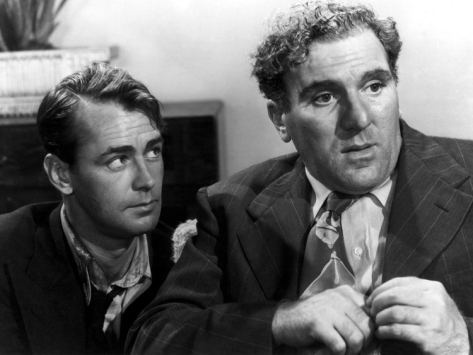
Johnny (Alan Ladd) watches out for fellow vet Buzz (William Bendix).

Johnny (Alan Ladd) watches out for fellow vet Buzz (William Bendix).

After Helen confesses that her drinking led to the death of their son, Johnny pulls his gun out and considers using it, but changes his mind. Instead he drops the gun on an armchair, next to a blue dahlia flower from Helen’s, um, companion, slick and sleazy Eddie Harwood (Howard Da Silva). Harwood owns the Blue Dahlia nightclub, hence he hands out flowers.

Johnny heads out into the rainy night and hitches a ride with Joyce Harwood (Lake), a chilly blonde goddess with an air of mystery. She’s also Eddie Harwood’s estranged wife.

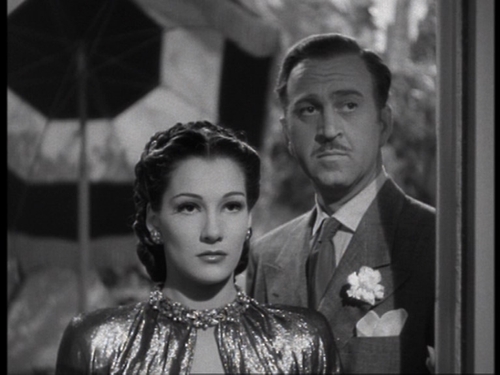
Helen (Doris Dowling) would rather drink a beer than win Mother of the Year. Her chum Eddie (Howard Da Silva) owns the Blue Dahlia nightclub.

Helen (Doris Dowling) would rather drink a beer than win Mother of the Year. Her chum Eddie (Howard Da Silva) owns the Blue Dahlia nightclub.

Well, as you know, no good deed goes unpunished in film noir and leaving the gun behind wasn’t the wisest decision on Johnny’s part. The next morning Helen is dead and Johnny tops the list of suspects. Others on the list include disloyal Eddie Harwood, the oft-confused and easily excited Buzz, who paid Helen a visit the night of her death, and ‘Dad’ Newell (Will Wright), the seedy house detective at Helen’s apartment complex.

In Chandler’s original script, Buzz did the deed but painting a vet in bad light would be courting disaster with the censors so Chandler had to revamp the story and find a new villain. Reportedly, Chandler, who was fond of drinking like a fish, locked himself away one weekend and got even more smashed than usual in order to cobble together the revised script, which the studio needed in a hurry because Ladd was called for military service.

A highlight of the flick is the wry banter between Ladd and Lake – this was the third of four films they made together (preceded by “This Gun for Hire” and “The Glass Key,” and followed by 1948’s “Saigon”) and by this time they have it down. Ladd snarls and pushes her away, Lake purrs and turns her nose up, aloof and amused.

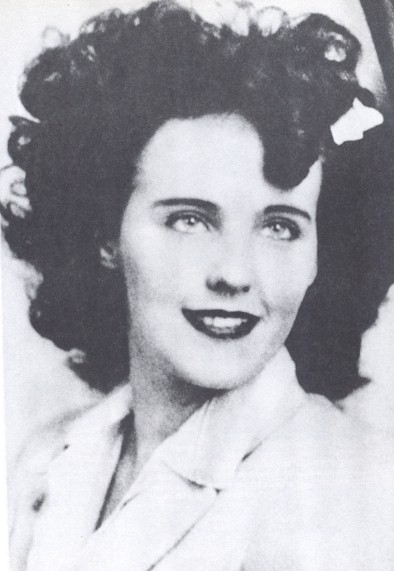
Elizabeth Short became known as the Black Dahlia.

Elizabeth Short became widely known as the Black Dahlia after her death.

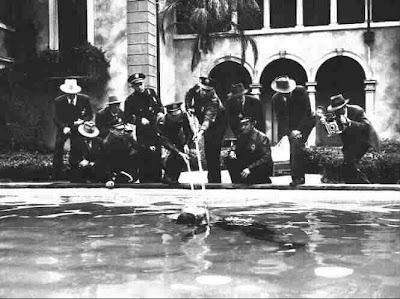
“The Blue Dahlia” also played a part in the aftermath of Hollywood’s most famous unsolved murder: Elizabeth Short, a pretty girl from a Boston suburb who came to Hollywood looking for adventure or a husband, whichever came first. Short was brutally killed; her mutilated body was found on Jan. 15, 1947.

As the police investigation progressed, Short became widely known as the Black Dahlia. Some say a Long Beach bartender dubbed her the Black Dahlia in 1946 because of her sometimes-theatrical appearance (acquaintances said she liked wearing heavy makeup and flowers in her hair when she dressed up); others attribute the moniker to journalists covering the grisly case. Either way, “The Blue Dahlia” movie triggered the nickname.

“The Blue Dahlia,” with its smart writing and solid acting, is required film noir viewing, despite its flaws. And I almost forgot  – there’s a great dry moment when the maid finds Helen’s body. No screaming or wringing of hands for this hard-living broad, just an “Oh brother” and a long sigh.

‘Noirhouse’ short comedy series launches online

NoirhouseA hard-boiled detective, sultry femme fatale, and a sentimental Russian thug share a house in present-day suburbia. They would have killed one another already, but the dead don’t pay the rent. That’s the premise of “Noirhouse,” a new film-noir comedy series from Tim Logan, Nathan Spencer and Shaun Wilson. It was produced in Tasmania, Australia, and funded by Screen Tasmania, a government agency.

“Noirhouse” launched online with three short episodes you can watch here: http://noirhouse.com/watch/episode1/. Enjoy!

Film noir events crowd the calendar this month

There is much to entice noiristas this month in Los Angeles and elsewhere. So much, in fact, that I’ve compiled this handy list.

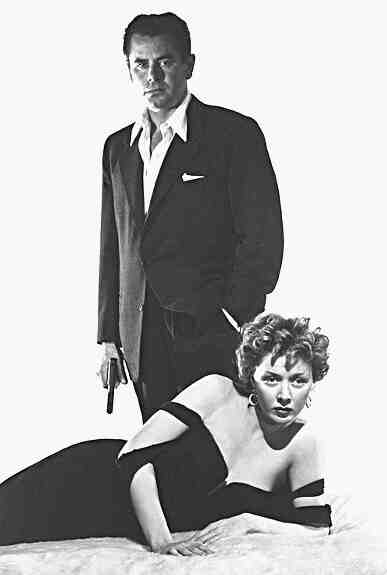
Glenn Ford and Gloria Grahame star in "The Big Heat."

Glenn Ford and Gloria Grahame star in “The Big Heat.”

Tues., Oct. 8 @ 1 p.m.: “The Big Heat” (1953, Fritz Lang) plays on the big screen at the Bing Theater, Los Angeles County Museum of Art (LACMA), 5905 Wilshire Blvd., Los Angeles, CA 90036.

Additionally, “The Golden Age of Mexican Cinema,” featuring the work of cinematographer Gabriel Figueroa, runs at LACMA through Oct. 11. “Luis Buñuel and Gabriel Figueroa: A Surreal Alliance” runs Oct. 12-19.

Wed., Oct. 9 @ 7:30 p.m.: Writers Bloc hosts a conversation with Valerie Plame, memoir author and former CIA Operations Officer. At the Ann and Jerry Moss Theater at New Roads School, 3131 Olympic Blvd., Santa Monica, CA 90404.

Also starting Oct. 9: The Aero and Egyptian theaters host the inaugural Beyond Fest, “an international buffet of badass cinema” that showcases recent horror gems along with classics. In-person guests, live music. Beyond Fest runs through Oct. 31.

Thurs., Oct. 10: The 49th Chicago International Film Festival opens with a gala screening of “The Immigrant.” This year’s fest is dedicated to the late great Roger Ebert. The CIFF runs through Oct. 24. The fest’s After Dark slate of titles never fails to intrigue.

"Sunset Blvd." will screen Oct. 19.

“Sunset Blvd.” will screen Oct. 19 at the Egyptian Theatre in Hollywood.

Sat., Oct. 12 @ 6 p.m.: Redcat in downtown LA hosts a panel discussion on the controversial French filmmaker Henri-Georges Clouzot and his contribution to 1960s aesthetics. Screening of “La Vérité” (1960 Oscar nominee and Golden Globe winner for Best Foreign Language Film).

Sat., Oct. 12 & Sun. Oct. 13: The Vintage Fashion Expo premieres at its new home in Los Angeles at The LA Convention Center.

Thurs., Oct. 17 @ 7:30 p.m.: Writers Bloc hosts a conversation with Norwegian author Jo Nesbø (“Headhunters”) whose new novel is Police: A Harry Hole Novel. At the Goethe-Institut, 5750 Wilshire Blvd., Los Angeles, CA 90036.

“Moonrise” plays Oct. 21 at the Billy Wilder Theater at UCLA in Westwood.

“Moonrise” plays Oct. 21 at the Billy Wilder Theater at UCLA in Westwood.

Sat., Oct. 19 @ 2 p.m.: Illustrated presentation on “The Corner” and screening of “Sunset Blvd.” (1950, Billy Wilder) at the Egyptian Theatre (part of the Egyptian’s 91st anniversary weekend). Los Angeles historian Marc Chevalier will discuss the social nexus of Hollywood in the golden age: Sunset Boulevard and Crescent Heights (now West Hollywood). Followed by “Sunset Blvd.,” which features Schwab’s Pharmacy as a location.

Mon., Oct. 21 @ 7:30 p.m.: “Moonrise” (1948, Frank Borzage) at the Billy Wilder Theater at UCLA in Westwood. A luminous and rarely screened crime drama starring Dane Clark, Gail Russell and Ethel Barrymore.

Tues., Oct. 22 @ 1 p.m.: “Shockproof” (1949, Douglas Sirk) plays at LACMA’s Bing Theater. Written by Helen Deutsch and Samuel Fuller; starring Cornel Wilde and Patricia Knight.

Alfred Hitchcock by the numbers

This terrific chart appeared in The Guardian in August; copyright Adam Frost and Zhenia Vasilev.

hitch_10 copy4

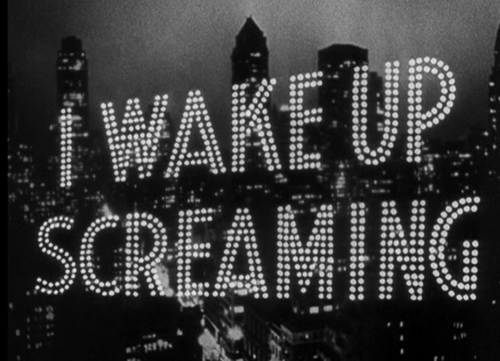
Stylish sleeper ‘I Wake Up Screaming’ deserves a little love

IWUS 1I Wake Up Screaming/1941/Twentieth Century-Fox/82 min.

In the Neglected Works of Noir department, “I Wake Up Screaming” from 1941 is just crying out for attention.

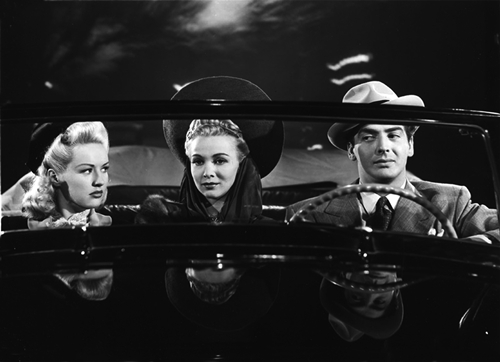
Director H. Bruce Humberstone made a fun and taut whodunit that’s also a treat for the eyes. The film stars Betty Grable (singer, dancer and pin-up legend in her first dramatic role) and Carole Landis as sisters Jill and Vicky Lynn, who quickly shed their homespun sensibilities as they fend for themselves in New York City, Jill working as a stenographer and Vicky waiting tables.

IWUS 2Naturally, it’s only a matter of time before the fine-boned fair-haired creatures are discovered. Vicky’s in the spotlight first after PR guru Frankie “Botticelli” Christopher (Victor Mature) stops into the diner one night with some friends and decides, as he puts it, to make her The Next Big Thing. (At one point, Frankie asks how expensive she is; she replies he couldn’t afford her. To circumvent censors, that risqué line was reportedly added while shooting.)

Frankie’s pals Jerry (William Gargan), Robin (Alan Mowbray) and Larry (Allyn Joslyn) also jockey for her attention and lend their support to her quest to be a model/actress. But, just as she’s about to jet off to Hollywood for a screen test, Vicky is murdered, and all her pals are under suspicion as is the creepy clerk at her apartment building, Harry, played by noir great Elisha Cook Jr.

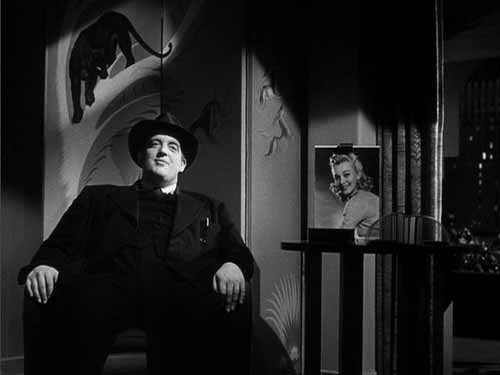
Laird Cregar spent time with cops to lend realism to his role.

Laird Cregar spent time with cops to lend realism to his role.

Matching Cook’s seediness is hefty Police Insp. Ed Cornell (Laird Cregar). Cregar caught critics’ attention with his dark, skulking, mysterious presence; his name is probably a hat-tip to writer Cornell Woolrich.

Also, look out for “Black Mask,” the famous pulp magazine, for sale on a newsstand.

As the story unfolds, a romance develops between Frankie Christopher and Jill, and the movie proceeds at a nice clip, clocking in at 82 minutes. “I Wake Up Screaming” makes significant strides in noir style and technique, though it rarely gets credit for its achievements. One of the films that eclipsed it was director John Huston’s mightily famous “The Maltese Falcon,” also from 1941. A big-budget release from Warner Bros., the now classic movie is often cited as the first film noir.

IWUS 5“I Wake Up Screaming,” a much smaller project than “Falcon,” was the first film noir made at Twentieth Century-Fox. Humberstone incorporated arresting compositions and lighting – note the dramatic, single-source lighting in the police interrogation room scenes. The scene in which Cornell pays Christopher a night-time visit virtually defines noir, with its exaggerated shadows, grim faces, a black cat and a neon sign in the distance. Edward Cronjager was director of photography. Noir czar and author Eddie Muller points out in his excellent DVD commentary that, in visual terms, “The Maltese Falcon” is pedestrian compared with the creativity in “I Wake Up Screaming.”

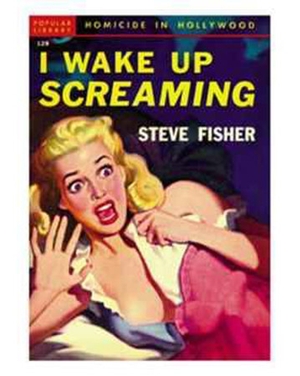
Additionally, scriptwriter Dwight Taylor conceived the story as a series of flashbacks – a hallmark of film noir storytelling – though Steve Fisher’s pulpy novel is not structured that way. And, long before it became common for actors, Cregar hung out with L.A. police to lend realism to his performance. The score is interesting too – featuring “Over the Rainbow” as well as “Manhattan Street Scene,” which was also used in “The Dark Corner.” (“I Wake Up Screaming” was remade in 1953 as “Vicki,” starring Jeanne Crain, Jean Peters and Elliott Reid; it was directed by Harry Horner.)


"I Wake Up Screaming" is visually spectacular.

“I Wake Up Screaming” is visually spectacular.

So why did “Screaming” get such short shrift? Well, it wasn’t a prestige picture and, while Humberstone made the best of this low-budget B movie, it’s tough to compete with John Huston, one of Hollywood’s finest talents ever. Also, “I Wake Up Screaming” contains a generous dollop of fluffy romantic comedy, which pairs a bit uneasily with the sly, wry humor and cynical entanglements of film noir at its grittiest. Btw, I love the scene where Frankie and Jill take a dip in a public pool – both flaunting their great shape, of course – Frankie puffing away merrily on a cigarette.

I don’t think I’m spoiling anything by saying that “I Wake Up Screaming” has a happy ending. Sadly, though, two of its actors died not long after the movie was released. In 1944, Cregar’s promising career was cut short at age 30 when the Philly-born actor had a heart attack, likely spurred by crash dieting for a part. Four years later, Wisconsin native Carole Landis, 29, died of a drug overdose. Her career had dead-ended and she was in bad shape, having been dismissed by the industry as a pretty airhead.

Unfortunately, that’s a story that’s been told and retold in Hollywood.

Film noir delights in the Golden Age of Mexican Cinema

"Another Dawn" will play Saturday night at the LA County Museum of Art.

“Another Dawn” will play Saturday night at the LA County Museum of Art.

I am greatly looking forward to seeing the LA County Museum of Art (LACMA) exhibition and film program Under the Mexican Sky: Gabriel Figueroa—Art and Film.

Mexico was home to a vibrant, commercially stable film industry in the early 1930s through the 1950s. The Golden Age of Mexican Cinema series will explore Figueroa’s contributions as a groundbreaking cinematographer, a master of light and contrast.

Figueroa spent time on the set of Soviet master Sergei Eisenstein’s “¡Que Viva México!,” had an apprenticeship with Hollywood cinematographer Gregg Toland, and was friends with painters such as Diego Rivera. (The series is co-presented by the Academy of Motion Pictures Arts and Sciences.)

"Autumn Days" will screen first on Saturday.

“Autumn Days” will screen first on Saturday night.

This weekend, two film noir delights are screening: “Dias de Otoño” (Autumn Days, 1963, Roberto Gavaldón) and “Distinto Amanecer” (Another Dawn, 1941, Julio Bracho). You can read the museum’s synopses here.

Upcoming film series will highlight Figueroa’s work with Spanish surrealist Luis Buñuel, the Hollywood films that the cinematographer shot over his 50-year career for directors such as John Huston and John Ford, the films of the early 1930s that spurred Figueroa, and contemporary Mexican filmmakers whose work invokes Figueroa’s legacy.

Meanwhile, the New York Film Festival opened today with “Captain Phillips.” Manohla Dargis of the New York Times gives her assessment here.


‘Chinatown’ screens to mark aqueduct’s 100th anniversary

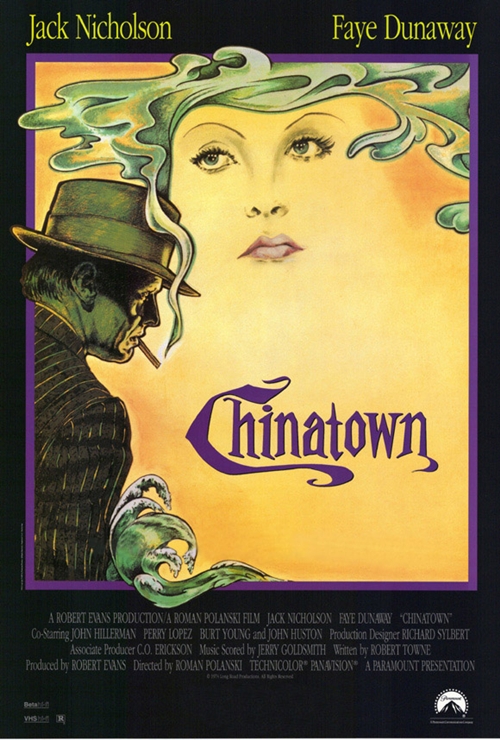
Chinatown posterThe Natural History Museum in downtown Los Angeles will mark the 100th anniversary of the Los Angeles Aqueduct by hosting a screening of the neo-noir masterpiece “Chinatown,” directed by Roman Polanski and written by Robert Towne. Doors open at 6 p.m. Friday, Sept. 27; the screening starts at 7 p.m.

David Ulin, book critic of the Los Angeles Times, will moderate a brief panel discussion with history professor William Deverell, cultural commentator Sandra Tsing Loh and Christine Mulholland. They will discuss the facts and fiction in Polanski and Towne’s iconic look at greed, power, lust and the rise of modern Los Angeles. This event is free, but space is limited. RSVP HERE. Use the Exposition entrance. You can bring a picnic or buy dinner from on-site food trucks.

We love this film so much we reviewed it twice: FNB’s review and Mike Wilmington’s review.

Film Noir Blonde’s beauty picks for fall 2013

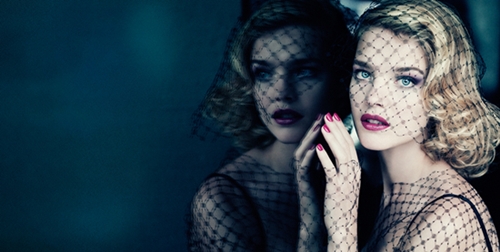
Guerlain's 2013 collection clearly channels film noir. Love the berry-colored lips and nails.

Guerlain’s 2013 collection clearly channels film noir. Love the berry-colored lips and nails.

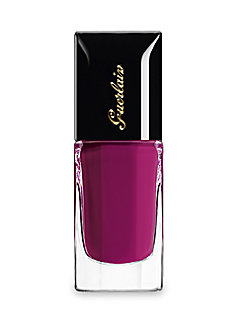
Try pairing a half-moon manicure in this sumptuous shade with nude polish on the toenails.

Try pairing a half-moon manicure in this sumptuous shade with nude polish on the toenails.

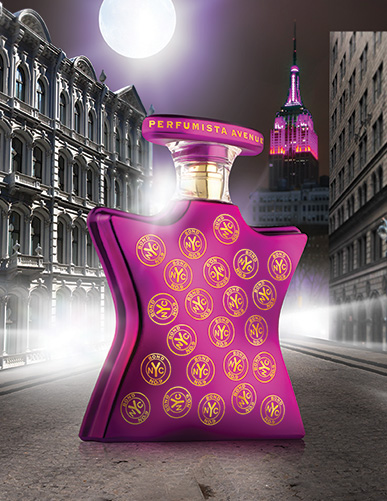
Bond No. 9's latest New York City swoon: Perfumista Avenue.

Bond No. 9’s latest New York City swoon: Perfumista Avenue.

Designer Tory Burch said her mother's vanity table inspired her new fragrance and beauty collection.

Designer Tory Burch said her mother’s vanity table inspired her new fragrance and beauty collection.

Phylia de M, a hair restorer/thickener, is receiving rave reviews.

Phylia de M, a hair restorer/thickener, is receiving rave reviews.

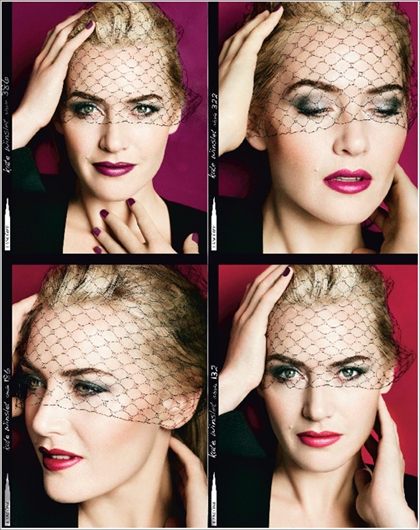
Kate Winslet for Lancome is inspiration for any femme fatale.

Kate Winslet for Lancome is inspiration for any femme fatale.

Add a pop of bright color to emphasize your eyes with Lancome's Art Liner 24H.

Add a pop of bright color to emphasize your eyes with Lancome’s Art Liner 24H.

After a five-year hiatus, Jo Malone is back with Jo Loves. Gift-buying dilemma now over.

After a five-year hiatus, fragrance guru and former florist’s apprentice Jo Malone is back with Jo Loves. Gift-buying dilemma now over.

Dior first introduced Dior #9 in 1953. This classic red was recently relaunched as #999.

Christian Dior first introduced Dior #9 lipstick in 1953. This classic red was recently relaunched as #999.

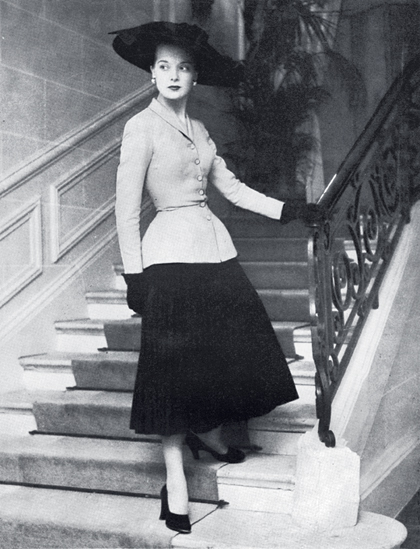
Dior's New Look photographed for Vogue.

Dior’s New Look photographed by Serge Balkin for Vogue.

Chanel's gorgeous Cast a Spell collection is new this fall.

Chanel’s gorgeous Cast a Spell collection is new this fall.

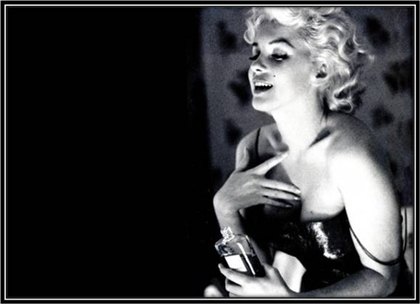
When Marilyn Monroe was asked what she wore to bed, her answer was Chanel No. 5.

When reporters asked Marilyn Monroe what she wore to bed, her answer was Chanel No. 5.

Looking forward to a spritz of Estée Lauder's Modern Muse and, I hope, a surge of creativity. ;)

Looking forward to a spritz of Estée Lauder’s Modern Muse.

Since the '90s, Lorraine Massey has been helping those with hard-to-tame tresses embrace their inner curl. But her products are new to Space NK in Brentwood. Cheers, Lorraine!

Since the ’90s, Lorraine Massey has been helping those with hard-to-tame tresses embrace their inner curl. But her products are new to Space NK in Brentwood. Cheers, Lorraine!

The nice girls at Space NK in Brentwood recommended Life Daily Fix Foot Cream to heal my dry cracked heels. Perfect for a post-yoga slather. Take that, Warrior 3 and Reverse Half Moon!

The nice girls at Space NK in Brentwood recommended Life Daily Fix Foot Cream to heal my dry and cracked heels. Perfect for a post-yoga slather. Take that, Warrior 3 and Reverse Half Moon!

Lipstick Queen founder Poppy King says she had vintage Hollywood in mind when she created her Velvet Rope lipstick collection. Shown here is Star System, a nude with A-list oomph.

Lipstick Queen founder Poppy King says she had vintage Hollywood in mind when she created her Velvet Rope lipstick collection. Shown here is Star System, a nude with A-list oomph.

Laura Mercier's Dark Spell Collection looks truly divine.

Laura Mercier’s Dark Spell Collection looks truly divine.

Hitchcockian thriller ‘Prisoners’ calls for multiple viewings

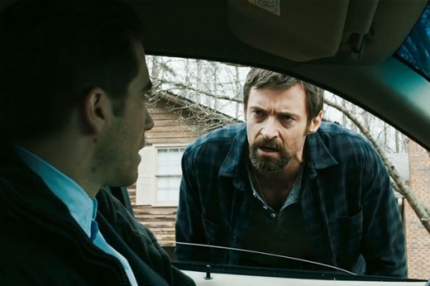
Jake Gyllenhaal and Hugh Jackman star in "Prisoners."

Jake Gyllenhaal and Hugh Jackman star in “Prisoners.”

Prisoners/2013/Warner Bros./153 min.

Tense and absorbing, “Prisoners” ranks as a solid three-star flick. When two 6-year-old girls go missing, one of the fathers – a carpenter and hunter named Keller Dover (Hugh Jackman) – quickly reveals himself to be a brutal vigilante, intent on beating information out of a mentally disabled man brought in for questioning and then released (Paul Dano).

Jake Gyllenhaal, as the obsessive cop assigned to the case, pursues another suspect and eventually Jackman chases yet another – all of the suspects, we learn, share a shattering connection. Terrence Howard, Viola Davis, Maria Bello and Melissa Leo round out the cast. Aaron Guzikowski wrote the screenplay.

Québec-born director Denis Villeneuve thoughtfully tells a complex, Hitchcockian tale and elicits memorable performances from the cast, especially from Gyllenhaal (perhaps his best work since “Zodiac.”)

On the downside, there are some rather drafty plot holes, the pacing is slightly off and, while Jackman is very watchable, the script’s characterization of Keller Dover proves more facile than fascinating. Still, it’s engrossing enough that you might feel like watching it twice to catch all the clues. And the ending is superb.