Noir City fest gets a passport, Anthony Mann films at UCLA, Alex Prager photography at M + B Gallery

The darkness, dahlings, just doesn’t stop. And who’s complaining? Not us! There is much for noiristas to relish, starting today:
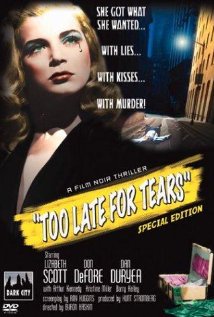
Too Late for Tears posterNOIR CITY’s flagship festival in San Francisco returns to its home at the historic Castro Theatre Jan. 24-Feb. 2, 2014. The 12th edition of the popular film noir festival is going international and the lineup is downright sumptuous. Films include: “The Third Man,” a restoration of “Too Late for Tears” (with Lizabeth Scott and Dan Duryea), “Drunken Angel,” “It Always Rains on Sunday,” “Brighton Rock,” “The Wages of Fear,” “Rififi” and “Pépé le Moko,” just to name a few.

We can’t wait until the fest hits Los Angeles in April!

ANTHONY MANN is being celebrated by the UCLA Film & Television Archive at the Billy Wilder Theater in Westwood. The series Dark City, Open Country: The Films of Anthony Mann runs Jan. 31 to March 30.

Says UCLA: Director Anthony Mann’s reputation is now grounded in his 1940s crime melodramas, many of them film noirs, and his 1950s Westerns (eight with Jimmy Stewart at Universal). … The conflicted heroes of Mann’s Westerns are cut from the same cloth as his noirish crime dramas, often attempting to outrun a past that weighs heavily on their actions, morally ambivalent, as they vacillate between individual desire and communal responsibility. …
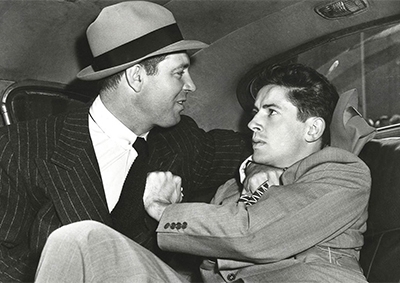
"Side Street," starring Farley Granger, plays March 15 at UCLA.

“Side Street,” starring Farley Granger, plays March 15 at UCLA.

Mann often dismissed his early career in Hollywood’s poverty row, cranking out low-budget crime features for Republic, PRC and Eagle-Lion, but a number of critics have begun to re-evaluate his early work. Indeed, this series was inspired in part by the publication of The Crime Films of Anthony Mann (2013) by Max Alvarez, who will also appear as a guest on Wednesday, March 12.

ALEX PRAGER, a Los Angeles-based photographer who draws from vintage Hollywood and neo-noir imagery, has a show opening Saturday, Jan. 25, at M+B Gallery, 612 North Almont Drive in LA. Face in the Crowd features new large-scale color photographs of elaborately staged crowd scenes and a film by the same name. This body of work was created for Prager’s first major museum exhibition in the United States at the Corcoran Gallery of Art in Washington, D.C., which opened in November 2013. Alex Prager: Face in the Crowd will run at M+B Jan. 25 to March 8, 2014, with an opening reception on Saturday, Jan. 25, from 6 to 8 p.m.

Also of note: Director David Cronenberg wrote the intro to a new translation of Franz Kafka’s “The Metamorphosis:” http://lat.ms/1c9cU60. And a report on Paris haute couture: Butterflies and Dita Von Teese at Gaultier: http://lat.ms/1aO0csu.

The Film Noir File: A queen of the screen has her day

By Film Noir Blonde and Mike Wilmington

The Noir File is FNB’s guide to classic film noir, neo-noir and pre-noir from the schedule of Turner Classic Movies (TCM), which broadcasts them uncut and uninterrupted. The times are Eastern Standard and (Pacific Standard).

Pick of the Week

Joan Crawford Film Noir Day (Thursday, Jan. 23)

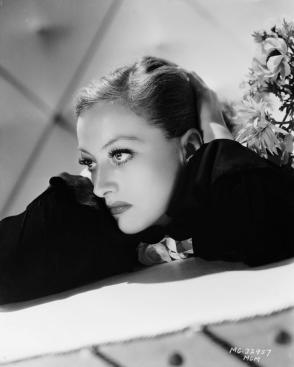
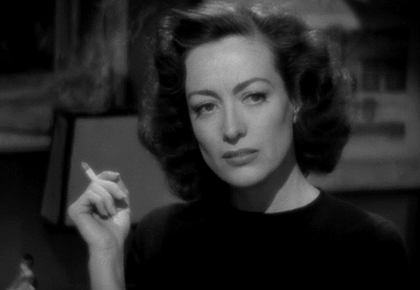
Joan Crawford was a muse for photographer George Hurrell.

Crawford was a muse for photographer George Hurrell.

Joan Crawford – she of the huge dark burning eyes, limber legs and mighty shoulder pads – was a Queen of Film Noir, as well as a dancing daughter, a headstrong hottie and a Grande Dame of the movies. She had an unusually long career, during which she remained remarkably popular.

Crawford started in the silent era as one of the last great flappers and continued as a reigning lady of the MGM and then the Warner lot, making classic film noirs and neo noirs like “Mildred Pierce” (her 1945 “Best Actress” Oscar winner), “Flamingo Road,” “Sudden Fear” and “Whatever Happened to Baby Jane?” She worked all the way up to the ’70s when one of her last directors, on a TV episode of Rod Serling’s “Night Gallery,” was a young up-and-comer named Steven Spielberg.

Right to the end, when she looked at men (and sometimes women) with her cool, appraising stare, her dark eyes could drill into them. Through it all – with her flawless screen beauty and sexy presence – she memorably played women in love, women besieged, women at war, women in business, women dancing, women in peril, women who held their own in dark days and light. TCM has devoted Thursdays in January to Joan Crawford, highlighting some of the finest, darkest hours and best film noirs of a superstar who excelled in all-American allure and ultimate glamour.

Mildred Pierce

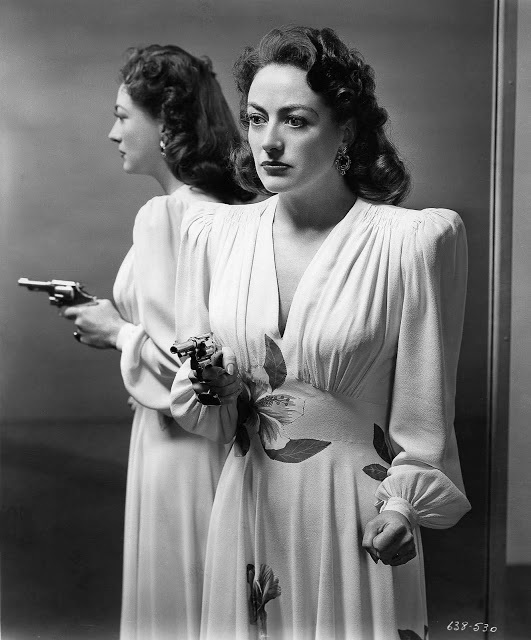
Crawford won an Oscar for "Mildred Pierce."

Joan Crawford won a Best Actress Oscar for “Mildred Pierce” from 1945.

(1945, Michael Curtiz). 8 p.m. (5 p.m.) Thursday, Jan. 23. With Joan Crawford, Jack Carson, Ann Blyth and Zachary Scott.

Flamingo Road” (1949, Michael Curtiz). 12:15 a.m. (9:15 p.m.). With Crawford, Zachary Scott and Sydney Greenstreet.

The Damned Don’t Cry” (1950, Vincent Sherman.). 2 a.m. (11 p.m.). With Crawford, David Brian and Steve Cochran.

Possessed” (1947, Curtis Bernhardt). 3:45 a.m. (12:45 a.m.). With Crawford, Van Heflin and Raymond Massey.  

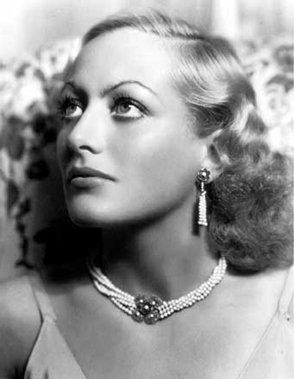
Another Joan Crawford portrait shot by George Hurrell.

Another Joan Crawford portrait shot by George Hurrell.

Bonus Crawford Noir on Friday, Jan. 24:
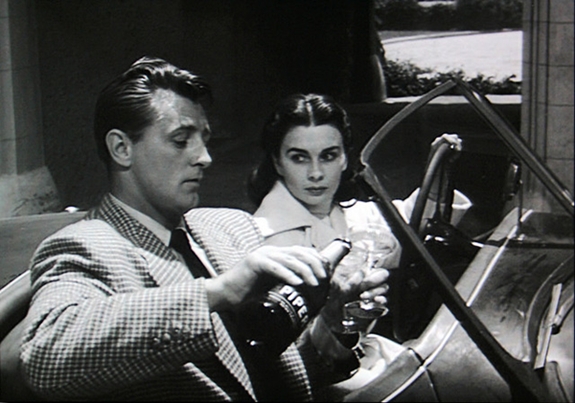
Autumn Leaves” (1956, Robert Aldrich). 4:15 p.m. (1:15 p.m.). With Crawford, Cliff Robertson and Vera Miles.

Wednesday, Jan. 22

10:45 a.m. (7:45 a.m.): “Scarlet Street” (1945, Fritz Lang). With Edward G. Robinson, Joan Bennett and Dan Duryea Reviewed in FNB on Nov. 24, 2011.

4 p.m. (1 p.m.). “Clash by Night” (1952, Fritz Lang). With Barbara Stanwyck, Robert Ryan and Marilyn Monroe.

6 p.m. (3 p.m.): “The Wrong Man” (1956, Alfred Hitchcock). With Henry Fonda, Miles and Anthony Quayle. Reviewed in FNB on Nov. 17, 2012.

Saturday, Jan. 25

6 p.m. (3 p.m.): “Bonnie and Clyde” (1967, Arthur Penn). With Warren Beatty, Faye Dunaway, Gene Hackman and Estelle Parsons. Reviewed in FNB on Feb, 4, 2013.

Sunday, Jan. 26

3:30 a.m. (12:30 a.m.): “Strangers on a Train” (1951, Alfred Hitchcock). With Farley Granger, Robert Walker and Ruth Roman. Reviewed in FNB on April 40, 2011. [Read more…]

The Film Noir File: Belafonte and Ryan bet it all on ‘Odds’

By Film Noir Blonde and Mike Wilmington

The Noir File is FNB’s guide to classic film noir, neo-noir and pre-noir from the schedule of Turner Classic Movies (TCM), which broadcasts them uncut and uninterrupted. The times are Eastern Standard and (Pacific Standard).

Pick of the Week

“Odds Against Tomorrow”
(1959, Robert Wise). 1 a.m. (10 p.m.) Monday, Jan. 20

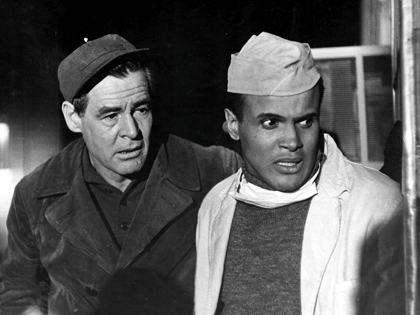
Robert Ryan and Harry Belafonte lead a stellar cast in "Odds Against Tomorrow."

Robert Ryan and Harry Belafonte lead a stellar cast in “Odds Against Tomorrow.”

Here is one of the great, underrated film noirs – a movie whose reputation and stature was recognized early on by French critics and has continued to grow over the past half century.

Based on a novel by suspense specialist William McGivern (“The Big Heat”), “Odds Against Tomorrow” boasts a riveting and exciting story, unforgettable characters and a social/political allegory that’s pointed and powerful. With Harry Belafonte, Robert Ryan, Shelley Winters and Gloria Grahame. Read the full review here.

Thursday, Jan. 16

Joan Crawford plays a crime boss in this remake of a 1939 Swedish thriller.

Joan Crawford plays a crime boss in this remake of a 1939 Swedish thriller.

12:30 a.m. (9:30 p.m.): “A Woman’s Face” (1941, George Cukor). A crime boss (Joan Crawford) with a ruined face has her physical damage repaired by plastic surgery. Embarking on another crime, she must decide whether to pursue the evil she knows or the good that beckons. Remade from the 1939 Swedish thriller by director Gustaf Molander, with Ingrid Bergman in Crawford’s part. The original was better, but the remake is good. The supporting cast includes Melvyn Douglas, Conrad Veidt (in his Hollywood specialty, a smooth sadistic villain), Reginald Owen, Marjorie Main and Henry Daniell. Script by Donald Ogden Stewart and mystery writer Elliot Paul.

4:15 a.m. (1:15 a.m.): “These are the Damned” (1963, Joseph Losey). Expatriate American director Losey, a Black List victim, was still in Britain when he made this scintillatingly shot mix of neo-noir, juvenile delinquent thriller, and “Village of the Damned”-style anti-war science fiction. MacDonald Carey is the boat enthusiast/ businessman at a coastal British city, who falls for a Teddy Girl (Shirley Anne Field). Her gang-boss brother (played by sullen young Oliver Reed) is touchy, jealous and dangerous. Chased by the gang (whose signature song is the bizarrely uncatchy psychotic-sounding pseudo-rock ballad “Black Leather! Black Leather! Kill! Kill! Kill!”), the couple escapes to an island in the grip of a doomsday scientific experiment with irradiated children, run by Alexander Knox. It’s a pretty crazy show, but it really grips you, and it looks great. Written by Losey regular Evan Jones (“Eva” and “King and Country”).

Saturday, Jan. 18

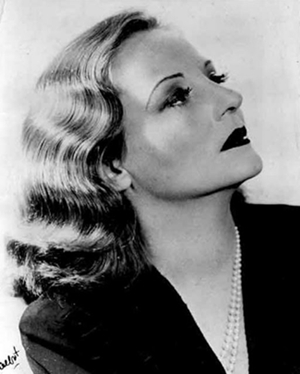
The one and only Tallulah Bankhead stars in "Lifeboat."

The one and only Tallulah Bankhead stars in “Lifeboat.”

8 p.m. (5 p.m.): “Lifeboat” (1944, Alfred Hitchcock). During World War II, an American ocean liner is torpedoed by a Nazi submarine. The survivors – now trapped in the lifeboat and in the vast waters – have to decide whether to trust the only person among them who knows how to navigate the boat: the Nazi captain of the sub that sunk them (Walter Slezak). This anti-Fascist parable/thriller and character study, the most political and left-wing movie Alfred Hitchcock ever made, was originally written by John Steinbeck; Ben Hecht and Jo Swerling also had hands in it. Shot basically in one studio tank and in the lifeboat, this underrated flick features a shocker of an ending and a first-rate cast, including Tallulah Bankhead, John Hodiak, William Bendix, Canada Lee, Hume Cronyn and Henry Hull.

Sunday, Jan. 19

6 a.m. (3 a.m.): “The Two Mrs. Carrolls” (1947, Peter Godfrey). With Humphrey Bogart, Barbara Stanwyck and Alexis Smith. Reviewed in FNB on June 27, 2012. [Read more…]

Bleak but stylish ‘The Grifters’ lets Anjelica Huston sparkle

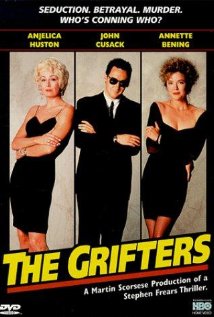
Grifters posterThe Grifters/1990/Miramax Films/119 min.

“I’m lucky,” actress Anjelica Huston once said. “The people who tell me they like my work tend to be the kind of people I might be friends with anyway. I have a really nice audience.”

She definitely had a really nice audience last month at the book-signing party at Bookmarc in West Hollywood for her new memoir, “A Story Lately Told: Coming of Age in Ireland, London and New York.”

The FNB team got off the sofa for this one and we had a lovely time. It made us think of our favorite Anjelica Huston roles and “The Grifters” from 1990 (Yikes! Was it really that long ago?) was at the top of the list. Director Stephen Frears’ bleak but very stylish neo-noir about a family that grifts together and sticks together is a far cry from all that holiday/togetherness stuff, which can sometimes be a tad saccharine for our tastes.

The cold and cut-throat mother here is Lilly Dillon as played by the incomparable Ms. Huston (daughter of John Huston, who directed the classic noirs “The Maltese Falcon” and “The Asphalt Jungle.”) Rail thin, hard as fake nails and damaged as her ash blonde locks, Lilly works for the mob by wedging bad bets at the racetrack.

Her estranged son Roy Dillon (John Cusack) is a small-time con artist who says he can quit the grift any time he wants. Sure, Roy, whatever you say. Feeling a little guilty about never winning Mother of the Year and hoping she might help to set him straight, Lilly starts by paying Roy’s hospital bill after he’s in a dust-up that leaves him with internal hemorrhaging.

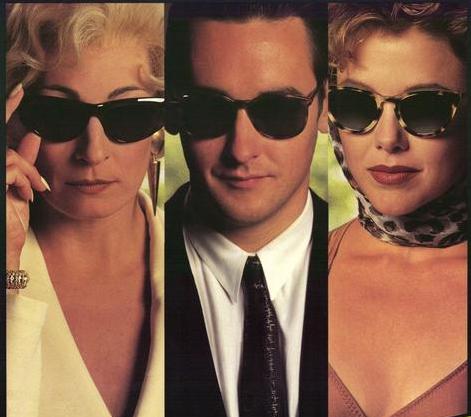
Anjelica Huston, John Cusack and Annette Bening play the members of a sordid trio.[/

Anjelica Huston, John Cusack and Annette Bening play the members of a sordid trio.

Roy’s not rushing back into her arms – at least not right away. He’s busy with his girlfriend Myra Langtry (Annette Bening). Myra used to be a “roper” for big-time money-bilking schemes, meaning she’d lure victims into parting with chunks of cash, falsely promising a big payoff down the line. But the roping biz has slow for Myra so she makes a living any way she can.

Meanwhile, while this strange version of a love triangle does its stuff, there’s another fly in the ointment: Lilly’s boss Bobo (Pat Hingle) who doesn’t write his staffers up – he prefers to inflict intense physical pain. When questioning Lilly after she slips up, he asks: “Do you want to stick to that story, or do you want to keep your teeth?” What a charming guy.

But charming is not what you’d associate with the mind behind “The Grifters” novel, on which the film is based. Writer Jim Thompson (1906-1977) was a troubled alcoholic who recorded his desolate vision of life on the pages of his pulpy but powerful novels. Thompson has been described as a dimestore Doestyevsky and as bringing Greek tragedy to the underclass.

“The Grifters” screenwriter Donald E. Westlake initially turned down the offer to write the script because he thought the novel was “too gloomy. … the characters all go to hell.” Director Frears (an English talent who directed Judi Dench in the terrifically funny and moving “Philomena” and directed Helen Mirren to an Oscar for 2006’s “The Queen”) talked Westlake into it, arguing that the crux of the story was not the son’s defeat, but the mother’s survival.

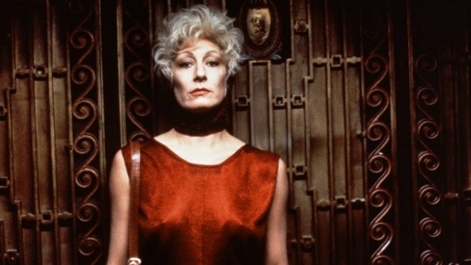
Lilly's long ride down the elevator, swathed in scarlet, symbolizes her descent into hell.

Lilly’s long ride down the elevator, swathed in scarlet, symbolizes her descent into hell.

Westlake accepted the challenge and wrote a sparkling, if sad and twisted, script. (“You really do like B movies,” Westlake told Frears, after hearing which scenes from the book Frears wanted in the movie. Well, the film’s producer Martin Scorsese is certainly a huge fan of B’s.)

Frears, who refers to the film as an “eccentric melodrama” said he was surprised at the film’s popularity, given its grim tone. The popularity surely stems from the fact that Frears still manages to entertain on some level and the leads all deliver searing performances. There are lots of funny one-liners, such as when Lilly addresses Roy’s doctor as they enter the hospital. She matter-of-factly informs him: “My son is going to be all right. If not, I’ll have you killed.”

Huston’s performance will make your skin crawl – Myra has long resigned herself to a lonely life that includes giving and taking violence as an inevitable part of the bargain. She’s tough, sometimes desperate, but also regal with the odd glimpse of warmth.

Bening lets her natural smarts show through, whether she’s coyly conning or clowning around in the nude. Frears says that while making the flick, he turned Bening on to the work of Gloria Grahame, gangster moll extraordinaire, and that Bening “went mad about her.” Bening brings Grahame gals into the ’90s in her own fresh, provocative way. Though Huston and Bening share only two scenes, their rivalry infuses the whole film.

The Grifters got four Oscar nods: Huston for best actress, Bening for best supporting actress, Frears for best director, and Westlake for adapted screenplay. (They lost to: Kathy Bates in “Misery,” Whoopi Goldberg in “Ghost,” Kevin Costner for “Dances With Wolves,” and Michael Blake for “Dances With Wolves.”) Huston and Bening did, however, win honors from several critics’ groups.

Cusack, who previously had played mainly all-American types, relished the chance to play a perverse cheater, who’s not above hitting women. Look out for his Chicago chum: actor Jeremy Piven in the scene with the sailors on the train.

Set mostly in sunny Southern California, the film looks glossy and glaring, just like its heroines. The movie is not a period piece, but Frears plays with time elements – we see Art Deco buildings and a ’50s-era motel. The characters drive ’70s cars like big old Caddys. The Elmer Bernstein score also deftly draws from a number of musical styles.

Cusack wears ’80s suits and rips people off at a Bennigans. Myra and Lilly wear a mixture of ’40s eveningwear, shift dresses, skin-tight animal prints and mini-skirts. Lilly’s wardrobe has special significance: the color red tracks her slide into total wretchedness. Frears says her long ride down the elevator, swathed in scarlet, symbolizes her descent into hell.

You know, maybe motherhood just isn’t for every woman.

A very happy 2015 to all lovers of film noir

I am so behind with posts and so late in wishing you a happy 2014 that I decided to fast-forward and be ahead in wishing you a happy 2015. Way ahead. 😉

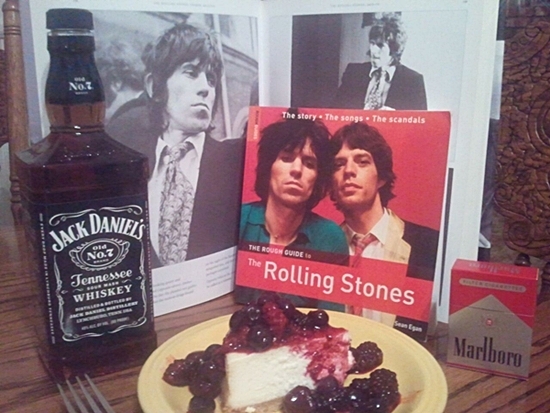
I have no good excuse for my getting behind other than it was an extra-busy holiday season: first came Keithmas (Keith Richards’ birthday is Dec. 18, 1943, and the FNB team decided to make it a party – it was his 70th after all), then Christmas and New Year’s. Much fun to see friends and family but I guess travel, time zones and opening gift after gift after gift (life is hard for a gold-digger) got the best of us.

We are now back in LA and grateful for the warm weather. As Keith Richards would say: “It’s great to be here. It’s great to be anywhere.”

KEITHMAS 2013

The Film Noir File: The Postman rings twice for Turner, Garfield

By Film Noir Blonde and Mike Wilmington

The Noir File is FNB’s guide to classic film noir, neo-noir and pre-noir from the schedule of Turner Classic Movies (TCM), which broadcasts them uncut and uninterrupted. The times are Eastern Standard and (Pacific Standard).

Pick of the Week

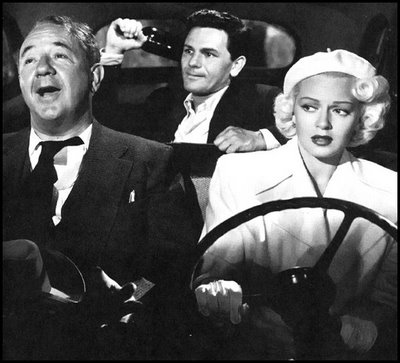
Cecil Kellaway, John Garfield and Lana Turner play the members of the love triangle in "Postman."

Cecil Kellaway, John Garfield and Lana Turner play the members of the love triangle in “The Postman Always Rings Twice.”

The Postman Always Rings Twice” (1946, Tay Garnett). Monday, Jan. 6. 1 p.m. (10 a.m.). With Lana Turner, John Garfield and Hume Cronyn. Read the full review here.

Monday, Jan. 6

9 a.m. (6 a.m.): “To Have and Have Not” (1944, Howard Hawks). With Humphrey Bogart, Lauren Bacall, Walter Brennan and Marcel Dalio. Reviewed in FNB on July 21, 2012.

1 p.m. (10 a.m.): “The Postman Always Rings Twice” (1946, Tay Garnett). See “Pick of the Week.”

3 p.m. (12 p.m.): “The Locket” (1946, John Brahm). With Laraine Day, Robert Mitchum and Brian Aherne. Reviewed in FNB, on May 1, 2013.

4:30 p.m. (1:30 p.m.): “The Reckless Moment” (1949, Max Ophuls). With James Mason, Joan Bennett and Geraldine Brooks. Reviewed in FNB on July 12, 2012.

6 p.m. (3 p.m.): “Lady in the Lake” (1946, Robert Montgomery). With Montgomery, Audrey Totter and Lloyd Nolan. Reviewed in FNB on Dec. 3, 2012.

9:30 p.m. (6:30 p.m.): “The Third Man” (1949, Carol Reed). With Joseph Cotten, Orson Welles, Alida Valli and Trevor Howard. Reviewed in FNB on Oct. 13, 2012.

5 a.m. (2 a.m.): “The Band Wagon” (1953, Vincente Minnelli). With Fred Astaire, Cyd Charisse, Jack Buchanan and Oscar Levant. Reviewed in FNB on Aug. 8, 2012.

Gilda poster smallTuesday, Jan. 7

12:15 p.m. (9:15 a.m.): “His Girl Friday” (1940, Howard Hawks). With Cary Grant, Rosalind Russell and Ralph Bellamy. Reviewed in FNB on Jan. 22, 2013.

4 p.m. (1 p.m.): “Gilda” (1946, Charles Vidor). With Rita Hayworth, Glenn Ford and George Macready. Reviewed in FNB on Sept. 19, 2012.

8 p.m. (5 p.m.): “On the Waterfront” (1954, Elia Kazan). With Marlon Brando, Eva Marie Saint, Lee J. Cobb, Karl Malden and Rod Steiger. Reviewed in FNB on Feb. 20, 2013.

The Noir File: Superb sizzle in ‘The Lady from Shanghai’

By Film Noir Blonde and Mike Wilmington

The Noir File is FNB’s guide to classic film noir, neo-noir and  pre-noir from the schedule of Turner Classic Movies (TCM), which broadcasts them uncut and uninterrupted. The times are Eastern Standard and (Pacific Standard).

Pick of the Week

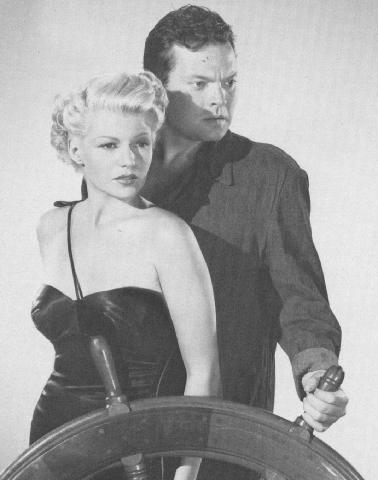
Stars Rita Hayworth and Orson Welles were married from 1943 to 1948.

Stars Rita Hayworth and Orson Welles were married from 1943 to 1948.

The Lady from Shanghai  (1948, Orson Welles). Sunday, Dec. 29. 12:15 p.m. (9:15 a.m.). With Rita Hayworth, Orson Welles and Everett Sloane.

“Citizen Kane” is hallowed cinematic ground, I know, but my favorite Orson Welles film is “The Lady from Shanghai” (1948), which he wrote, produced, directed and starred in, playing opposite his real-life wife Rita Hayworth, one of the most popular entertainers of the 1940s.

In “The Lady from Shanghai” Welles plays Michael O’Hara, an Irish merchant seaman, in between ships in New York. By chance, or so he thinks, he meets the wily blonde operator Elsa Bannister (Hayworth) and saves her from being mugged in the park.

Elsa invites Michael to join her as she sets sail for Acapulco. The boat belongs to her husband, a wizened, creepy criminal lawyer named Arthur Bannister (Everett Sloane), and he’ll be on the trip too. So will his partner, the moon-faced and sinister George Grisby (Glenn Anders). O’Hara agrees regardless. “Once I’d seen her,” he says, “I wasn’t in the right frame of mind.”

Read the full FNB review here.

Friday, Dec. 27

2 p.m. (11 a.m.): “Across the Pacific” (1942, John Huston). With Humphrey Bogart, Mary Astor and Sydney Greenstreet. Reviewed in FNB on June 6, 2012.

4 p.m. (1 p.m.): “We Were Strangers” (1949, John Huston). Intrigue and rebellion, long before Castro, in ’40s Cuba. With John Garfield, Jennifer Jones, Gilbert Roland and Pedro Armendariz. Co-scripted by Huston and  Peter Viertel (who later dissed his boss in the tell-all novel (about the shooting of “The African Queeen,”  “White Hunter, Black Heart”).

9:45 p.m. (6:45 p.m.): “Out of the Past” (1947, Jacques Tourneur). With Robert Mitchum, Jane Greer and Kirk Douglas.

2 a.m. (11 p.m.): “Klute” (1971, Alan Pakula). Jane Fonda as a brainy hooker (her first Oscar-winning performance) being pursued by a psycho killer. Donald Sutherland plays Klute, the cop who tries to help and save her. A classy, first-class neo-noir.

Saturday, Dec. 28

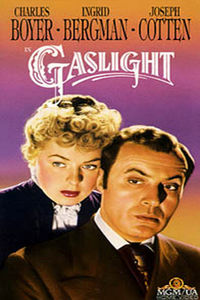
Boyer drives Bergman nuts in "Gaslight."

Boyer drives Bergman nuts in “Gaslight.”

8 p.m. (5 p.m.): “Gaslight” (1944, George Cukor). With Ingrid Bergman, Charles Boyer, Joseph Cotton and Angela Lansbury. Reviewed in FNB on Aug. 25, 2012.

10 p.m. (7 p.m.): “Suspicion” (1941, Alfred Hitchcock). With Cary Grant, Joan Fontaine and Nigel Bruce. Reviewed in FNB on Sept. 21, 2012.

12 a.m. (9 p.m.): “Leave Her to Heaven” (1945, John M. Stahl). With Gene Tierney, Cornel Wilde, Jeanne Crain and Vincent Price. Reviewed in FNB on Aug. 8, 2013.

Sunday, Dec. 29

12:15 p.m. (9:15 a.m.): “The Lady from Shanghai.“  See Pick of the Week.

Monday, Dec. 30

1:15 a.m. (10:15 p.m.): “The Loved One” (1965, Tony Richardson). Novelist Evelyn Waugh’s (“Brideshead Revisited”) delicious dark comedy about a posh Los Angeles pet cemetery (modeled on Forest Lawn) and the vagaries and deadly eccentricities of the British community in Hollywood, — turned into a Strangelovian satire/farce by director Tony Richardson and screenwriter Terry Southern. One of the campiest casts imaginable is headed by Robert Morse as the Candidesque protagonist, and includes Rod Steiger, Jonathan Winters, Tab Hunter, Robert Morley and Liberace.

‘A Christmas Carol,’ with Alastair Sim as Ebenezer Scrooge, has touches of noir darkness

The FNB team wishes everyone a joyful holiday season. But that doesn’t stop us from relishing the dark side. Here, Mike Wilmington dishes on this psychologically acute, tormented version of Charles Dickens’ classic tale.

CAROL DVDAlmost everyone’s nominee for best of the many film adaptations of Charles Dickens’ Yuletide evergreen “A Christmas Carol,” is this 1951 cinematic gem, directed by the underrated Brian Desmond Hurst and scripted by the underrated Noel Langley.

The movie is shot by the neglected near-genius cinematographer (later a prolific director), C. M. Pennington-Richards, whose other great photographic job was for documentarian Humphrey Jennings in his WW2 masterpiece “Fires Were Started.” “A Christmas Carol,” shot at the very height of the prime film noir period, looks like noir and feels like noir. (So, at the end, does that other great Christmas movie inspired by “A Christmas Carol,” Frank Capra’s “It’s a Wonderful Life.”) And it has what are usually film noir politics and social views.

This is the one of the most faithful of all Carol adaptations and also one of the least sentimental, one of the most stylishly crafted and one of the more psychologically acute. That’s in part because Hurst and Langley have deftly resisted the obvious temptations of the material. It’s beyond question a film for adults more than for children, which is almost never how “A Christmas Carol” is played.

When the Ghosts of Christmas Past (Michael Dolan) and Christmas Present (Francis De Wolff,  decked out like a plum pudding) show up on a horrific, dark Christmas Eve (it’s black as pitch outside even when it should be afternoon) to escort Scrooge though his sad, frustrated past and his greedy, cheerless present, they’re almost like a team of Freudian (Jungian? Scroogian?) psychiatrists covered with mistletoe, digging into the roots of Scrooge’s neuroses and compulsions. (That’s always been the modus operandi of Scrooge’s Ghosts, but never more so than here.)

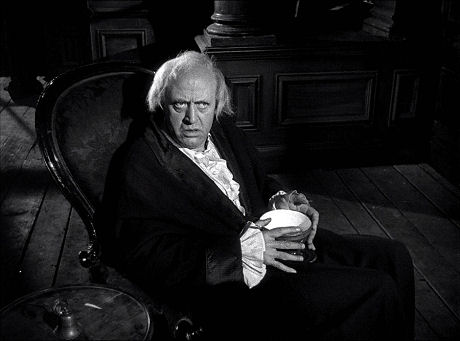
Sim is unforgettable as Scrooge in a film that's for adults more than for children, which is almost never how “A Christmas Carol” is played.

Sim is unforgettable as Scrooge in a film that’s for adults more than for children, which is almost never how “A Christmas Carol” is played.

Of course, key to this movie’s lasting appeal is its star: juicily eloquent comic actor Alastair Sim as the pathologically stingy Ebenezer Scrooge – the mean, miserly London businessman who considers Christmas a humbug. It was Sim (otherwise best known for the thriller “Green for Danger” and various comedies) who became the Scrooge of all Scrooges, just as the film is deservedly ranked as the Christmas Carol of all Christmas Carols.

With his baleful eyes and snarling smile, Sim had a gift for playing men who know too much and are rather annoyed at the silliness of the world. His diction was shatteringly perfect and it’s the foundation of his comic style.

All the acting is expert, deliciously British and delightfully (but never annoyingly) exaggerated. Sim is supported by an excellent cast: the fantastic Michael Hordern as Jacob Marley, the touching Mervyn Johns and Hermione Baddeley as Mr. and Mrs. Bob Cratchit, Jack Warner as the youthful Scrooge’s big-hearted boss, Fezziwig, Glyn Tearman as the mild but never saccharine Tiny Tim, George Cole as young Ebenezer, Patrick Macnee as the young Marley, Brian Worth as Scrooge’s ebullient nephew Fred, and Peter Bull as both the film’s narrator and an even colder-blooded financier than Scrooge.

In the “Carol,” the eggnog is a little spiked, the tale a little darker than in other versions. And more truthful, more penetrating. It’s amazing, in fact, how modern this story and its message, and particularly Scrooge’s philosophy, now seem. Greed? Business? Save the rich? Eat the poor? Are there no jails? Are there no workhouses? Bah, humbug!

The Film Noir File: Polanski goes to Towne in ‘Chinatown’

By Film Noir Blonde and Mike Wilmington

The Noir File is FNB’s guide to classic film noir, neo-noir and pre-noir from the schedule of Turner Classic Movies (TCM), which broadcasts them uncut and uninterrupted. The times are Eastern Standard and (Pacific Standard).

Pick of the Week

“Chinatown” (1974, Roman Polanski). Friday, Dec. 13. 1 a.m. (10 p.m.)

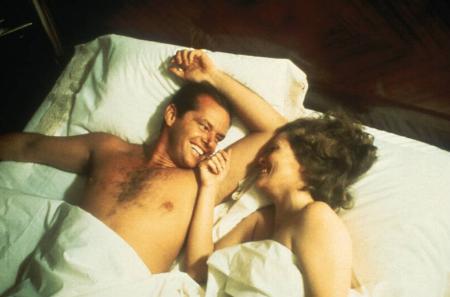
Jack Nicholson and Faye Dunaway sizzle in "Chinatown."

Jack Nicholson and Faye Dunaway sizzle in “Chinatown.”

A nervous femme fatale with a slight stutter. A stocky PI with a hot temper and a bandage plastered on his face.

Perhaps not the most promising characters at first glance; in fact they are among noir’s finest. Faye Dunaway and Jack Nicholson deliver knockout performances in 1974’s “Chinatown,” a neo-noir that ranks as one of the greatest films ever made. Certainly, it’s among the top 10 movies of the 1970s.

With an Oscar-winning screenplay by Robert Towne, directed by Roman Polanski, and produced by Robert Evans, “Chinatown” clearly has roots in classic noir, but also reinvents and subverts the tradition. The movie’s intelligence, artistry and uniquely dark vision elevate it beyond a simple homage.

Read the rest of FNB’s review here or read Michael Wilmington’s review here.

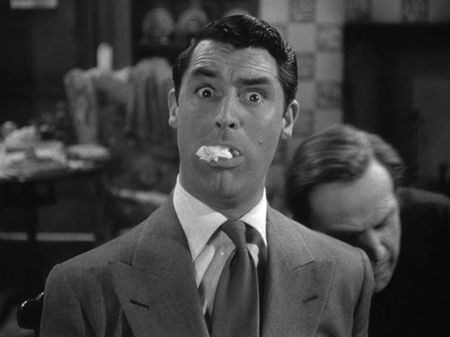
Cary Grant cracks us up in "Arsenic and Old Lace."

Cary Grant cracks us up in “Arsenic and Old Lace.”

Sunday, Dec. 15

8 a.m. (5 a.m.): “Arsenic and Old Lace” (1944, Frank Capra). Two sweet little old spinsters who run a Brooklyn boarding house (Josephine Hull and Jean Adair) also help elderly bachelors into another, better world with their specialty: poisoned elderberry wine. Their frantic theater- critic nephew Mortimer Brewster (Cary Grant, in his wildest performance ever), who’s just discovered their secret (on Halloween), tries desperately to keep them out of jail. Meanwhile two murderous professional criminals on the lam (Raymond Massey and Peter Lorre) show up to further envenom the brew.

This mad farce is not the kind of movie Frank Capra usually makes but the pace and energy (as well as the Coen Brothers-ish dark humor) never flag. The movie also has Priscilla Lane as the Ginger Rogers-ish love interest, and those three yeoman comic supporting players Jack Carson, James Gleason and Edward Everett Horton. Of the loony sub-genre comedy noir, this is a prime example: the least sentimental, least Capra-corny and maybe the craziest-funniest of all Capra’s films. Adapted by brothers Julius and Philip Epstein (“Casablanca”), from Joseph Kesselring’s hit Broadway play.

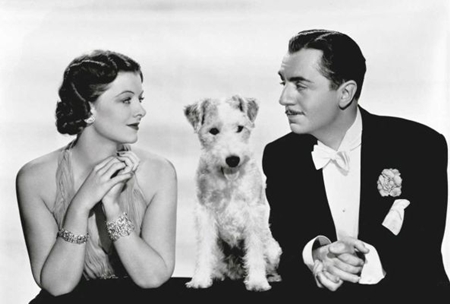
Photo credit: Warner Bros. Entertainment/ Myrna Loy as Nora Charles, Asta the dog and William Powell as Nick Charles in "After the Thin Man" (1936)

Photo credit: Warner Bros. Entertainment
Myrna Loy as Nora Charles, Asta the dog and William Powell as Nick Charles star in “After the Thin Man” (1936).

6 p.m. (3 p.m.): “The Thin Man” (1934, W.S. Van Dyke). With William Powell, Myrna Loy and Asta. Reviewed in FNB on July 28, 2012.

12 a.m. (9 p.m.): “The Unholy Three” (1925, Tod Browning). With Lon Chaney, Harry Earles and Victor McLaglen. Reviewed in FNB on Dec. 12, 2012.

2 a.m. (11 p.m.): “Pickpocket” (1959, Robert Bresson). An ascetic looking, light-fingered young man who looks like, and is, a starving artist (played by the thin, visually impeccable Martin Lasalle), lives out a Parisian Dostoyevsky tale, when he begins picking pockets at racetracks and metros. Together with Diary of a Country Priest and A Man Escaped, this is one of the untouchable black-and-white masterpieces of a true master, France’s austere film genius Robert Bresson. (In French, with subtitles.)

3:30 a.m. (12:30 a.m.): “Crime and Punishment, U.S.A.” (1959, Denis Sanders). Like “Pickpocket,“ this is another ’50s film modernization of Dostoyevsky’s themes of guilt, spirituality and redemption. And we can only thank God that the movie’s young star, George Hamilton wasn’t, after this, typecast as a Dostoyevskian anti-hero.

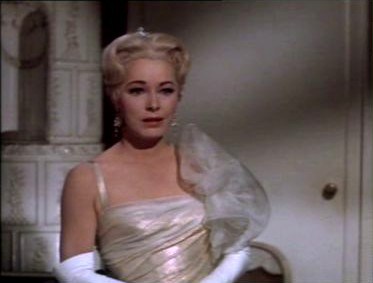
Eleanor Parker is most famous for playing the Baroness in Robert Wise’s “The Sound of Music” (1965), but film noir fans remember her from “Caged.”

Eleanor Parker is most famous for playing the Baroness in “The Sound of Music” (1965), but film noir fans remember her from “Caged.”

Tuesday, Dec. 17

ELEANOR PARKER TRIBUTE

Eleanor Parker, the notable auburn-haired Hollywood star of the ’40s and ’50s, passed away Monday at the age of 91. TCM will pay tribute to legendary leading lady on Tuesday, Dec. 17, with a 14-hour marathon, featuring seven of her films.

Parker earned Best Actress Oscar nominations for her performances in “Interrupted Melody” (1955) and John Cromwell’s classic prison picture “Caged” (1950) in which she co-stars with Agnes Moorehead and Hope Emerson. She was especially admired by film noir fans for her leading role in “Caged” as a brutalized prisoner. “Caged” plays at 11:45 a.m. (8:45 a.m.). Reviewed in FNB on July 13, 2012.

Check the TCM web site for the full list of titles and times.

The Film Noir File: Czar of Noir Otto Preminger has his day

By Film Noir Blonde and Mike Wilmington

The Noir File is FNB’s guide to classic film noir, neo-noir and  pre-noir from the schedule of Turner Classic Movies (TCM), which broadcasts them uncut and uninterrupted. The times are Eastern Standard and (Pacific Standard).

Pick of the Week:
Otto Preminger Day

Robert Mitchum and Jean Simmons star in “Angel Face.”

Robert Mitchum and Jean Simmons star in “Angel Face.”

His nickname was “Otto the Ogre.” He was one of the most colorful and feisty of all the star Golden Age Hollywood directors. His verbal abuse of actors, including beautiful actresses and children, was legendary. Robert Mitchum once slugged him on the set for his vile treatment of co-star Jean Simmons. (He and Mitchum later made up and even made another film together, with Marilyn Monroe.) But Otto Preminger – known for his hot temper, thick German accent, bald bullet head, defiance of taboos  and long camera takes – was also one of the czars of film noir in the 1940s and early ’50s, when he directed classics like “Laura,” “Where the Sidewalk Ends” and “Angel Face.” Later on, he made one of the best of all trial dramas, 1959’s  “Anatomy of a Murder,” and directed the neglected 1965 British thriller “Bunny Lake is Missing.”

Otto was the son of a renowned and well-respected attorney general in the old Austrian-Hungarian Empire (Markus Preminger). He grew up in Vienna, where, instead of the law, he became enamored of the theatre and eventually was a protégé and assistant of the legendary stage maestro Max Reinhardt. During Hitler’s rise, the Jewish Preminger emigrated to America where he fairly quickly became a notable Broadway and Hollywood director, as well as an actor who played especially nasty Nazis (as he did in Billy Wilder’s “Stalag 17“).

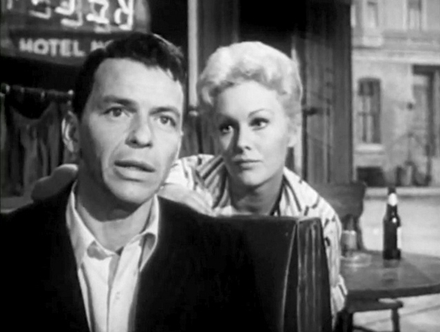
"The Man with the Golden Arm," starring Frank Sinatra and Kim Novak, plays at 5.

“The Man with the Golden Arm,” starring Frank Sinatra and Kim Novak, plays Thursday at 7:45 a.m. PST.

After his huge success directing the classic mystery “Laura” in 1944, Preminger became a 20th Century contract director and an A-lister. He was also the bane of censors and blue noses, whose limits and “rules” he constantly tested and attacked: crossing the boundaries that held back candid screen portrayals of sex, drug addiction, politics and the legal system. He had an “open” marriage and long unpublicized liaisons with both the tragic black actress Dorothy Dandridge and gilt-edged stripper Gypsy Rose Lee. He helped break the black list in 1960, by hiring  Dalton Trumbo, the long  black-listed scriptwriter who used aliases on his ’50s screenplays, to write “Exodus” (1960) under his real name.

Some serious critics, offended by what they saw as his publicity-mongering, tended to dismiss him as a phony, except in France, where  he was one of the admired auteurs of the Cahiers du Cinema crowd. Preminger’s greatest years, 1959 to 1965, when he produced and directed a series of epic bestseller adaptations on big political and social themes, were succeeded by a decade in which his movies were almost all mercilessly savaged by critics and ignored by the public. His nadir, in 1968, was an unfunny pseudo-hip Jackie Gleason prison comedy called “Skidoo,” in which everyone took LSD, Groucho Marx played God, and all the credits were sung. I like Preminger, but words fail me.

Lee Remick in "Anatomy of a Murder."

Lee Remick in “Anatomy of a Murder.”

He was a stylist. Perhaps because of his lifelong love of the theater, he liked to shoot his scenes in extremely long takes; he once said that, ideally, every film should be made in one unbroken shot. Late in his career, from the 1967 movie “Hurry Sundown” on, reviewers tended to beat up on him. But Otto the Ogre, in public, never lost his acerbic tongue, his feistiness or his capacity for verbal abuse until the end, when he died of cancer and Alzheimer’s disease at 80. Late in his life, he was interviewed about his contributions to film noir, and he professed to have no idea what film noir was, and proceeded to ridicule, abuse and hector his interviewer. That was pure Preminger — and Mitchum wasn’t there to slug him.

9 a.m. (6 a.m.) “Angel Face (1953, Otto Preminger). Robert Mitchum and Jean Simmons tumble into one of those awful noir twisted affairs, where a nice handsome guy is entrapped by an  evil, obsessed, gorgeous woman who won’t take “no” or even “maybe,”  for an answer. She’s a rich spoiled girl, he’s a straight-arrow ambulance driver  and Herbert Marshall is also one of her victims. In the ’50s, critic-cineaste Jean-Luc Godard put “Angel Face” on his Cahiers du Cinema list of the Ten Best American Sound Films, along with another classic film noir: Orson Welles’ ‘The Lady from Shanghai.” And yes, this is the movie where Mitchum decked Preminger.

10: 45 a.m. (7:45 a.m.): “The Man with the Golden Arm” (1955, Preminger). With Frank Sinatra, Kim Novak and Eleanor Parker. Reviewed in FNB on November 10, 2012.

12:45 p.m. (9:45 a.m.): “Anatomy of a Murder” (1959, Preminger). With James Stewart, Lee Remick, Ben Gazzara and George C. Scott. Reviewed in FNB on March 14, 2012.

3:30 p.m. (12:30 p.m.): “Advise and Consent” (1962, Preminger). This star-studded, non-flag-waving  adaptation of Allen Drury’s political novel about a fiercely contentious U.S. Senate confirmation battle has a stellar cast that includes Henry Fonda, Charles Laughton, Don Murray, Walter Pidgeon, Gene Tierney, Burgess Meredith and  Franchot Tone — and it may not exactly be classic pure film noir.

But, shot by Preminger in knife-sharp black and white on actual government and Washington D.C. locations with the co-operation of the Kennedy White House —  it looks like noir, feels like noir, and is as murderously frank and coolly unabashed about taboo subjects as  “Double Indemnity” or  “The Maltese Falcon.“  Preminger, a liberal director filming Drury’s very conservative novel, shows us D. C.‘s dirtiest linen in one of the nastiest, most vicious mud-slinging confirmation battles ever.

6 p.m. (3 p.m.): “Bunny Lake is Missing”  (1965, Preminger). With Laurence Olivier, Carol Lynley and Noel Coward. [Read more…]