Film Noir File: A star-studded week of Oscar darkness

By Film Noir Blonde and Mike Wilmington

The Film Noir File is FNB’s guide to classic film noir, neo-noir and pre-noir on Turner Classic Movies (TCM). The times are Eastern Standard and (Pacific Standard). Films listed without a review can be searched in the FNB archive on the right side of the page.

Pick of the Week

A Place in the Sun” (1951, George Stevens). Friday, Feb. 13, 2:15 a.m. (11:15 p.m.).
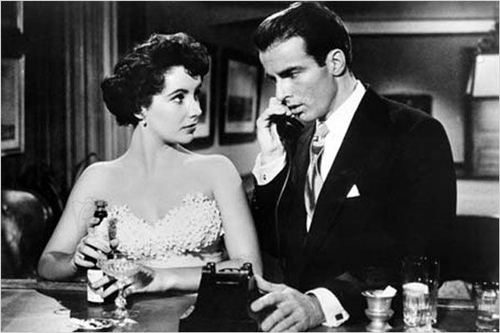
Elizabeth Taylor as Angela and Montgomery Clift as George are one of the most ravishing star couples of the American cinema.

Elizabeth Taylor as Angela and Montgomery Clift as George are one of the most ravishing star couples of the American cinema.

George Stevens’ adaptation of Theodore Dreiser’s classic crime novel “An American Tragedy.” It’s a melancholy look at a rising young working-class guy named George Eastman, who seems on the path to riches and romance, but whose dark impulses bend him toward destruction.

A great critical favorite in its time and still highly influential, “Place in the Sun” is a moody masterpiece about the wayward side of the American dream. Stevens’ movie also showcases one of the most ravishing (and ultimately sad) star couples of the American cinema: Montgomery Clift as George and Elizabeth Taylor as his dream, Angela. Also in the cast: film noir mainstays Shelley Winters and Raymond Burr.
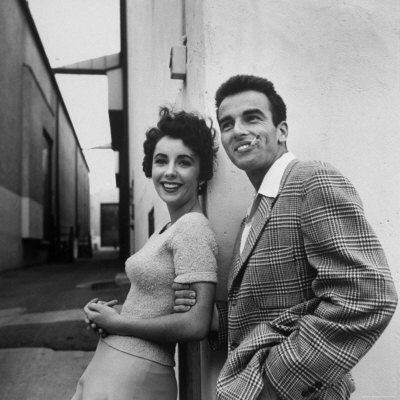
Taylor and Clift were close friends off the screen as well.

Taylor and Clift were close friends off the screen as well.

Among the picture’s six Academy Awards were Oscars for Stevens’ direction and to screenwriters Michael Wilson and Harry Brown.

Thursday, Feb. 12
9:30 p.m. (6:30 p.m.) “The Third Man” (1949, Carol Reed).

5:30 a.m. (2:30 a.m.): “The Lavender Hill Mob” (1951, Charles Crichton).

Friday, Feb. 13
9 a.m. (6 a.m.): “The Picture of Dorian Gray” (1945. Albert Lewin).

11 a.m. (8 a.m.): “The Bad Seed” (1956, Mervyn LeRoy).

1:15 p.m. (10:15 a.m.): “What Ever Happened to Baby Jane?” (1962, Robert Aldrich).

3:45 p.m. (12:45 p.m.): “The Birds” (1963, Alfred Hitchcock).

Saturday, Feb. 14
8:45 p.m. (5:45 p.m.): “The Harder They Fall” (1956, Mark Robson).
2:45 a.m. (11:45 p.m.): “The Blackboard Jungle” (1955, Richard Brooks).
4:45 a.m. (1:45 a.m.): “The Man with the Golden Arm” (1955, Otto Preminger).

Sunday, Feb. 15 (Film Noir Day)
7 a.m. (4 a.m.): “Johnny Eager” (1941, Mervyn LeRoy).
9 a.m. (6 a.m.): “T-Men” (1948, Anthony Mann).
10:45 a.m. (7:45 a.m.): “The Naked City” (1948, Jules Dassin).
12:30 p.m. (9:30 a.m.): “The Asphalt Jungle” (1950, John Huston).
2:30 p.m. (11:30 a.m.): “The Blue Dahlia” (1946, George Marshall).
4:15 p.m. (1:15 p.m.): “The Maltese Falcon” (1941, John Huston).
6 p.m. (3 p.m.): “Key Largo” (1948, John Huston).
11 p.m. (8 p.m.): “The Defiant Ones” (1958, Stanley Kramer).
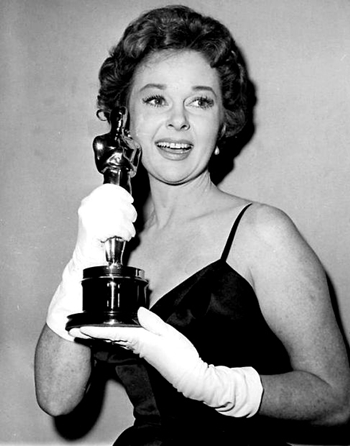
Susan Hayward with her Oscar.

Susan Hayward with her Oscar.

1 a.m. (10 p.m.): “I Want to Live!” (1958, Robert Wise). Susan Hayward won her Oscar for playing Barbara Graham, a real-life hard-nosed San Francisco prostitute. Graham was convicted of murder and facing the gas chamber.

But, according to Frisco crime reporter Ed Montgomery (played in this movie by “Psycho’s” psychiatrist Simon Oakland), she was innocent, the framed victim of a faulty justice system.

This riveting chronicle proves that Wise, a great favorite of French noir expert and Hollywood film aficionado Jean-Pierre Melville, was an absolute master of crime movies. The images are searing black and white. The acting is tough, smart, pungent. The jaunty modern jazz score is by Johnny Mandel, with the formidable Gerry Mulligan on baritone sax.

The ending is wrenching, unforgettable. So is Hayward.

Monday, Feb. 16
8 p.m. (5 p.m.): “Anatomy of a Murder” (1959, Otto Preminger).
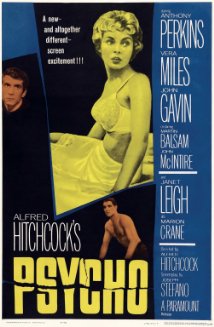
Psycho poster 214Tuesday, Feb 17 (Crime Day)
7:30 a.m. (4:30 a.m.): “Fury” (1936, Fritz Lang).
9:15 a.m. (6:15 a.m.): “Monsieur Verdoux” (1947, Charles Chaplin & Robert Florey).
11:30 a.m. (8:30 a.m.): “Big Deal on Madonna Street” (1958, Mario Monicelli).
1:45 p.m. (10:45 a.m.) “In Cold Blood” (1967, Richard Brooks).
4:15 p.m. (1:15 p.m.): “The Thomas Crown Affair” (1968, Norman Jewison).
6 p.m. (3 p.m.): “Bullitt” (1968, Peter Yates).
12 a.m. (9 p.m.): “Psycho” (1960, Alfred Hitchcock).

Wednesday, Feb. 18
8 p.m. (5 p.m.): “The Apartment” (1960, Billy Wilder).
12:30 a.m. (9:30 p.m.): “The Hustler” (1961, Robert Rossen).
5:15 a.m. (2:15 a.m.): “Lolita” (1962, Stanley Kubrick).

Skirball Cultural Center shows ‘The File on Thelma Jordon’ starring the grande dame of film noir

The Intriguante—Women of Intrigue in Film Noir series at the Skirball Cultural Center continues at 8 p.m. Thursday, Feb. 12, with a movie starring the grande dame of film noir: Barbara Stanwyck.

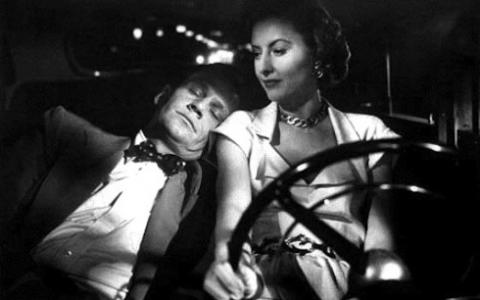
Thelma Jordon (Barbara Stanwyck) asks: Why evade the law when you can simply seduce a lawman?

Thelma Jordon (Barbara Stanwyck) asks: Why bother to evade the law when you can simply seduce a lawman? Wendell Corey plays her snoozing companion.

In “The File on Thelma Jordon” (1950, Robert Siodmak), a film-noir melodrama, Stanwyck’s Thelma is a woman with a past and an ex-boyfriend who convinced her walk on the bad side. But rather than try to evade the law, she decides instead to seduce a married district attorney (Wendell Corey). When Thelma’s aunt is murdered, the DA is definitely the dude to have on her side. Still, guilt has a way of getting the best of a person, and it even gets to the cool, clever and mightily destructive Ms. Jordon.

Siodmak’s crisp, stylish directing paired with a tight script and Stanwyck’s powerful characterization make “The File on Thelma Jordon” a delightful big-screen treat.

Six years before “Thelma Jordon,” Stanwyck made “Phantom Lady” with Siodmak. Of course, one of Stanwyck’s most famous roles was as the murderous Phyllis Dietrichson in 1944’s “Double Indemnity,” directed by Billy Wilder.  Stanwyck and co-star Fred MacMurray took a risk by playing such dark characters in that they might alienate their fan base. But the risk paid off and they proved remarkably capable of playing a range of roles.

The exhibitions close on Sunday, March 1.

The exhibitions close on Sunday, March 1.

Stanwyck went on to star in many more film-noir titles, including “The Strange Love of Martha Ivers,” “The Two Mrs. Carrolls,” “Sorry, Wrong Number,” “No Man of Her Own,” “Clash by Night,” and “Crime of Passion.”

Admission is $10 general; $7 seniors and full-time students; $5 members. The exhibitions Light & Noir: Exiles and Émigrés in Hollywood, 1933–1950 and The Noir Effect will remain open until 8 p.m.

The exhibitions close on Sunday, March 1. If you haven’t seen them yet, what are you waiting for?! At 11 a.m. on March 1, the center will screen the PBS documentary Cinema’s Exiles: From Hitler to Hollywood, which explores the impact of movie icons such as Wilder, Fritz Lang, Fred Zinnemann and Marlene Dietrich.

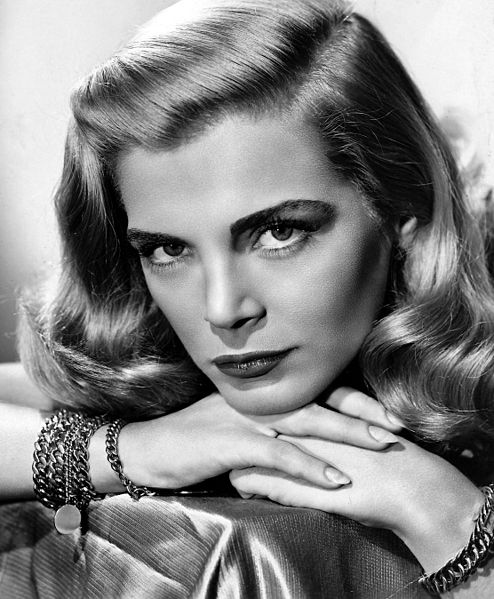
Remembering Lizabeth Scott, a film noir stalwart

Lizabeth Scott was born Emma Matzo on Sept. 29, 1922, in Scranton, Pa.

Lizabeth Scott was born Emma Matzo on Sept. 29, 1922, in Scranton, Pa.

Actress Lizabeth Scott died Jan. 31 of congestive heart failure at Cedars-Sinai Medical Center in Los Angeles. She was 92.

Dead_Reckoning poster

Scott was born Emma Matzo on Sept. 29, 1922, in Scranton, Pa., one of six children. Her parents emigrated from the Ukraine.

Sculpted, slim and statuesque, Scott was a film noir stalwart, known for such classics as “Dead Reckoning,” “Pitfall andThe Strange Love of Martha Ivers.” Other notable ’40s flicks include: “Desert Fury,” “I Walk Alone,”  “Too Late for Tears” and “The Racket.”

Scott tended to play alluring, brassy girls who lived by their wits and worldly charms, having been born on the wrong side of the tracks. That said, she was equally adept at portraying tough cookies who revealed hearts of gold. Underrated in her time, she was able to lend complexity to many of her roles.

Simply put, she was a trooper.  Her other credits include: “Easy Living,” “Paid in Full,” “Dark City,” “The Company She Keeps,” “Two of a Kind,” “Red Mountain,” “A Stolen Face,” “Scared Stiff,” “Bad for Each Other” and “Silver Lode.”

You can read a full obituary here.

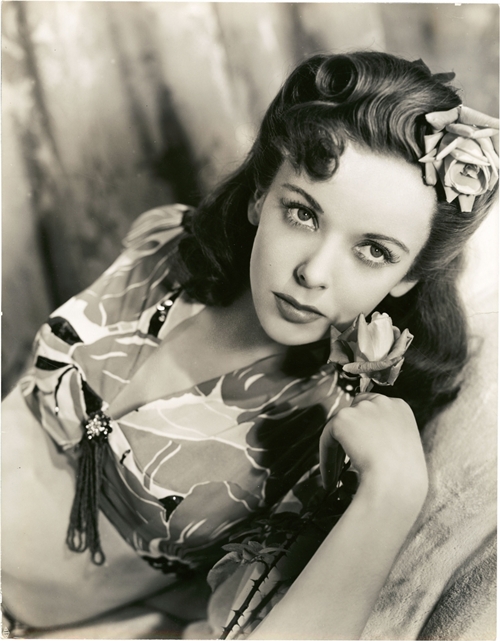
Happy birthday, Ida Lupino!

Ida Lupino in halterIda Lupino was born Feb. 4, 1918 in London and died, age 77, on Aug. 3, 1995 in Los Angeles.

Says the New Yorker’s Richard Brody on Lupino: “As an independent producer, director and screenwriter, she exercised an exceptional degree of authority over her films, and it shows in their coherence, consistency and originality.”

‘Libeled Lady’ is funny and fresh at 79 years old

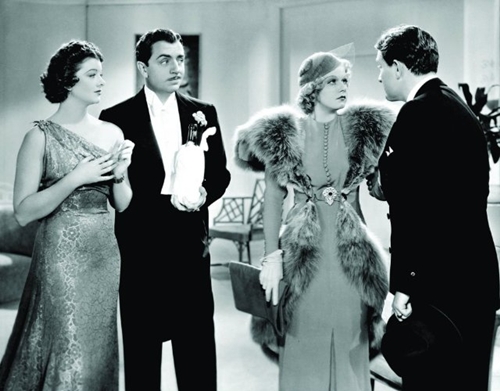
Myrna Loy, William Powell, Jean Harlow and Spencer Tracy in “Libeled Lady.”

Myrna Loy, William Powell, Jean Harlow and Spencer Tracy in “Libeled Lady.”

The ever-delightful “Libeled Lady” (1936, Jack Conway) kicked off a private screening series from the lovely people at Black Maria on Friday night at the Cinefamily in Los Angeles. The idea is to show films on the big screen in unique venues around the country.

The inaugural event included free food (plus popcorn and soda), drinks, a raffle with great prizes, free DVDS from Warner Bros. Archives and music from Elana James.

Femmes fatales x 2 Sunday at the Skirball Cultural Center

The Intriguante—Women of Intrigue in Film Noir series at the Skirball Cultural Center (2 p.m. Sunday, Jan. 25) features a superb lineup: “Pitfall” (1948, André de Toth) and “Criss Cross” (1949, Robert Siodmak). Veteran critic Dave Kehr once described “Criss Cross” as “an archly noir story replete with triple and quadruple crosses, leading up to one of the most shockingly cynical endings in the whole genre.” 

You can read more about “Pitfall” here.

Criss Cross/1949/Universal Pictures/88 min.

What would film noir be without obsessive love? (Or “amour fou” as the French would say.) Just a bunch of caring and sharing among equal partners with no cause for discontent? How frightfully dull.

My favorite example is “Criss Cross” from 1949. Director Robert Siodmak helped define noir style and in this flick you can see what an unerring eye he had.

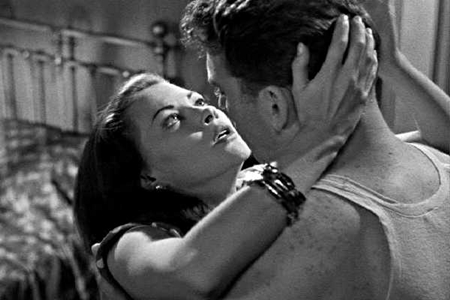
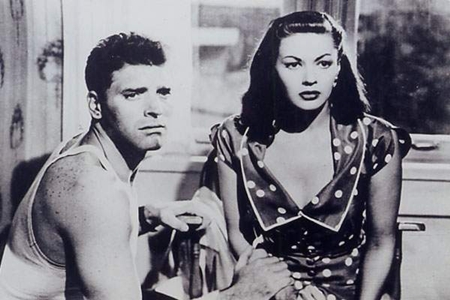
Anna (Yvonne De Carlo) and Steve (Burt Lancaster) find it impossible to say goodbye.

“Criss Cross” tells the story of a nice guy from a modest background who, try as he might, just cannot break ties with his sexy but venal ex-wife. They are one of noir’s most stunningly gorgeous couples.

Burt Lancaster as Steve Thompson takes your breath away with his arresting features and beautiful build. Equally captivating is exquisite Yvonne De Carlo (Lily Munster on the ’60s TV show, “The Munsters”) as Anna.

Lancaster and De Carlo were also paired in Jules Dassin’s prison film “Brute Force” from 1947. And in 1946, Siodmak helped catapult Lancaster and Ava Gardner to stardom in “The Killers,” another seminal film noir. Miklós Rózsa wrote original music for both Siodmak films.

Back to “Criss Cross.” Having returned to his native Los Angeles after more than a year of roaming around the country, working odd jobs, Steve’s convinced that he’s over Anna and can move on from their failed marriage.

He gets his old job back (as a driver for Horten’s, an armored car service) and reconnects with his family (a very unusual touch – most noir heroes are total loners). There’s Mom (Edna Holland), brother Slade (Richard Long) and his brother’s fiancée Helen (Meg Randall). They’re all anti-Anna, natch, and so is Steve’s childhood friend Det. Lt. Pete Ramirez (Stephen McNally).

Anna likes the perks that her sugar daddy Slim Dundee (Dan Duryea) can provide.

It’s only a matter of time (and fate, of course) before Steve sees Anna again, only to learn she has a new love interest, an unctuous gangster and sugar daddy named Slim Dundee (Dan Duryea), whom she abruptly marries.

But Anna can’t quite tear herself away from Steve – he is Burt bloody Lancaster, after all. When Slim catches the pair together, Steve stays calm and says he’s figured out a way to pull a heist – an inside job at Horten’s – but he needs some help to carry it out. Things don’t go quite according to plan, however, and the caper turns into a smoke-filled shootout, which lands Steve in the hospital and launches Slim on the lam.

Noir master Daniel Fuchs adapted “Criss Cross” from a Don Tracy novel. While the script’s references to Steve’s imminent doom are a little over the top, the movie is still an excellent showcase for the talents of German-émigré Siodmak, an auteur largely underrated in postwar Hollywood, as well as for his cast and crew. “Criss Cross” is both a tense, lean crime thriller and a textured, haunting story about relationships and human nature.

Much as I like “The Killers,” I prefer “Criss Cross” and its probing into questions of fate, our inherent human capacity for perversity and self-destruction, our tendencies toward paranoia, greed and guilt, and our willingness to trust, trick and manipulate others and ourselves. Basically, everything we hate to think about and try to repress.

We see romantic relationships that run the gamut from sweet to steamy to sadistic, with Siodmak and Fuchs reminding us of the violence that can lurk just under a tranquil surface. It’s also interesting to speculate, upon repeat viewings, just how far back Steve might have been hatching his plan and to what extent it grew out of Slim’s wider and stickier web of deceit.

When Slim and his gang invade Steve’s place, Steve outlines his plan.

Beginning with a magnificent shot that lands us in the middle of the story, we witness a clandestine meeting, a few minutes in a parking lot, of lovers Steve and Anna.

Then, as Siodmak backtracks to fill us in on their story, it’s one ravishing chiaroscuro composition after another, often shot from high above and suggesting a sense of encroaching peril or shot low to create a feeling of dominance, danger and power. Entrapping shadows abound.

Siodmak and cinematographer Franz Planer were at the top of their game in “Criss Cross. “ It’s hard to beat the panoramic opening scene and the pieta-like closing shot. Another striking scene: when Steve sees Anna dancing the rhumba (with an uncredited Tony Curtis) as Esy Morales’ band gives it their all. I also love the alternating high and low shots as Anna and Steve discover that Slim and his gang have infiltrated Steve’s place, quiet as cats, save for the refrigerator that pounds shut as they help themselves to beers. “You know,” says Dan Duryea’s Slim, in a cool, silky voice, “it don’t look right. You can’t exactly say it looks right now can you?”

Was there anyone better in 1940s than Duryea as the cheap, sleazy, misogynistic gangster-type who never failed to be dressed to the nines in the flashiest and gaudiest of garb?

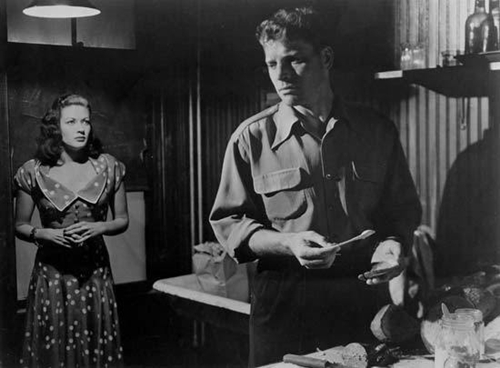
Steve and Anna hope to reunite after she extricates herself from Slim.

Additionally, it’s a testament to Lancaster’s power of expression – his graceful physicality, measured, calm voice and what seems to be an innate kindness and intelligence – that you continue to root for him knowing that every step he takes is the wrong one.

And you can see how De Carlo as Anna could sear a man’s heart. (De Carlo later starred as the quirky matriarch in TV’s “The Munsters,” 1964-66.) While some would write Anna off as a conniving shrew who causes Steve’s downfall, and it’s pretty hard to argue otherwise, she at least never plays too coy – she wants him, yes, but she wants money too and she’s entirely clear that she’ll get it with or without him. It’s his choice (as much as you have a choice in film noir) to execute a heist to get a bunch of cash. As for the heist, particularly the planning of, I think there is much here that influenced John Huston when he made “The Asphalt Jungle” (1950).

Also memorable in their performances are Percy Helton as the bartender, Alan Napier as Finchley, the stately, dignified crook consultant who works for liquor and Griff Barnett as Pop, the co-worker whom Steve betrays. “Criss Cross” also features Raymond Burr, uncredited, as a gangster.

Steven Soderbergh remade “Criss Cross” as “The Underneath” in 1995 and it’s a good film. But just as Lancaster’s Steve likens his love to getting a bit of apple stuck in his teeth, “Criss Cross” similarly lodges in your psyche. Like a lurking temptation, it’s hard to let go.

Skirball Cultural Center offers a double dose of intrigue on the big screen this Sunday

The Intriguante—Women of Intrigue in Film Noir series at the Skirball Cultural Center continues at 2 p.m. Sunday, Jan. 25, with an excellent double feature.

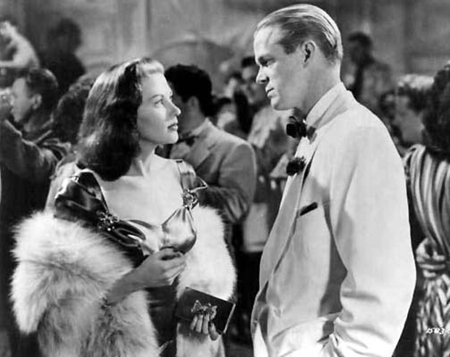
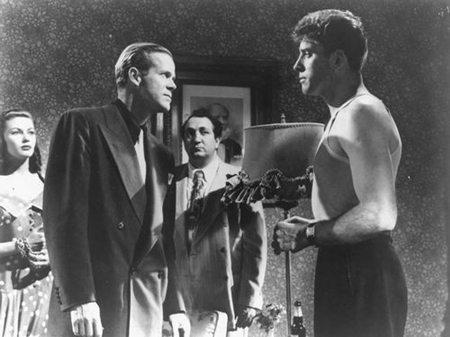
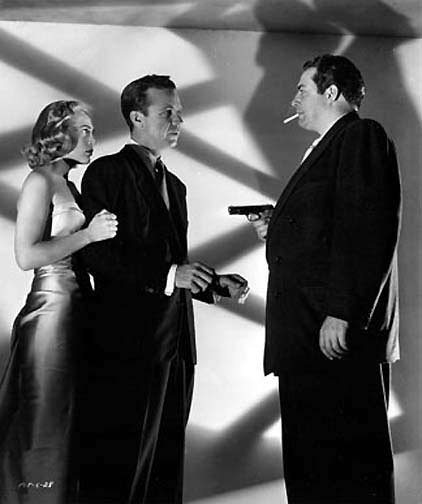
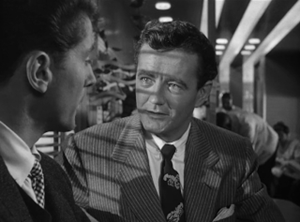
Dick Powell and Lizabeth Scott face Raymond Burr in “Pitfall.”

Dick Powell and Lizabeth Scott face Raymond Burr in “Pitfall.”

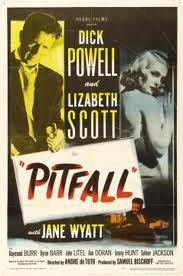
The first film is “Pitfall” (1948, André de Toth), featuring Dick Powell, Lizabeth Scott and Jane Wyatt in a classic noir love triangle. Just a few years before, Powell, a song and dance man, reinvented his screen persona when he played detective Philip Marlowe in “Murder, My Sweet” (1944, Edward Dmytryk). Powell then became a regular on the film noir slate.

In “Pitfall,” he plays John Forbes, a happily married husband and father with a good job. Problem is, John is bored and it’s not long before he risks everything by getting tangled up with an irresistible femme fatale named Mona Stevens (Scott).

Further complicating the situation is Raymond Burr as a private investigator who also covets Ms. Stevens. Powell and Wyatt are spot-on, Scott lends humanity to what could be a two-dimensional role and this is one of Burr’s best performances.

You can read the full FNB review here.

Yvonne De Carlo and Burt Lancaster can’t stay away from each other in “Criss Cross.”

Yvonne De Carlo and Burt Lancaster can’t stay away from each other in “Criss Cross.”

Next up: “Criss Cross” (1949, Robert Siodmak) is a spare, chilling story that zooms along at breakneck speed with characters you’ll never forget.

Here, the stunning Yvonne De Carlo (whom you might remember from TV’s “The Munsters”) lures her ex-husband Burt Lancaster into a high-stakes heist. The sleazy bad guy is played perfectly by Dan Duryea.

Lancaster’s Steve is essentially a good guy who just can’t get his ex-wife out of his system. Some would call him crazy. The French would term it “amour fou.” But what would film noir be without obsessive love? This somewhat neglected movie completely holds its own with any other title from the film noir canon. “Criss Cross” plays particularly well on the big screen and it’s great fun to see the Los Angeles locales. The opening shot is tremendous and look out for a young Tony Curtis.

You can read the full FNB review here.

Admission is $10 general; $7 seniors and full-time students; $5 members.

The exhibitions Light & Noir: Exiles and Émigrés in Hollywood, 1933–1950 and The Noir Effect will remain open until 8 p.m.

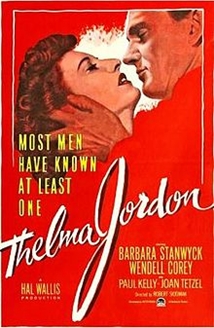
The File on Thelma Jordon posterThe Intriguante series concludes on Feb. 12 with “The File on Thelma Jordon” (1950, Robert Siodmak), a crime drama starring the inimitable Barbara Stanwyck.

Additionally, there are two more free Tuesday matinees at the Skirball Cultural Center. On Feb. 3 is 1939’s “Confessions of a Nazi Spy,” directed by Anatole Litvak and starring Edward G. Robinson as an FBI investigator. On Feb. 10, “Act of Violence” (1948, Fred Zinnemann) looks at the plight of returning World War II vets in a captivating film noir brimming with dark secrets, betrayal and revenge. Van Heflin, Robert Ryan and Janet Leigh lead the cast.

Oscar nominations are announced!

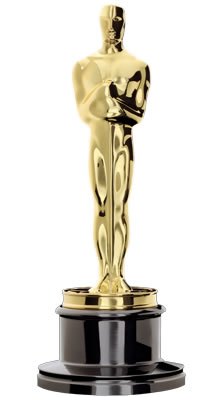
Oscar statuetteDirectors Alfonso Cuarón and J.J. Abrams, actor Chris Pine and Academy President Cheryl Boone Isaacs announced the nominations for the 87th Academy Awards® today (Jan. 15).  For the first time, nominees in all 24 categories were announced live.

Academy members from each of the 17 branches vote to determine the nominees in their respective categories.  In the Animated Feature Film and Foreign Language Film categories, nominees are selected by a vote of multi-branch screening committees.  All voting members are eligible to select the Best Picture nominees.

The 87th Academy Awards ceremony will take place at 7 p.m. (EST)/4 p.m. (PST) Sunday, Feb. 22, at the Dolby Theatre in Hollywood. Produced by Craig Zadan and Neil Meron, the show will be broadcast live on ABC and televised live in more than 225 countries worldwide.

See the full list here.


Film noir news: Come out & see her this time, Noir City opens, ‘Dog Day’ turns 40, Poverty Row book party, Cecil B. DeMille showcased and ‘Sunset’ in Sherman Oaks

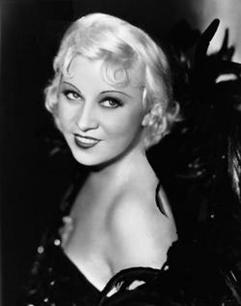
Mae West

Mae West

“It’s not the men in my life, it’s life in my men.” The original bad girl Mae West will be honored at 7:30 p.m. Wednesday, Jan. 14., with a special program at the Hollywood Heritage Museum.

Happily ever after. Not. Noir City: The Film Noir Festival returns to the Castro Theatre in San Francisco, Jan. 16–25, with a program of 25 titles depicting the darker side of marriage. The fest will travel to several other cities, including Los Angeles, later in the year.

Catch this dog. The singular neo-noir “Dog Day Afternoon” (1975, Sidney Lumet), starring Al Pacino, screens at 7:30 p.m. Friday night at the Egyptian Theatre in Hollywood. It’s on a double bill with “The Dog,” (2013, Allison Berg, Frank Keraudren). The story behind “Dog Day Afternoon” (a man robbing a bank to pay for his lover’s sex-change operation) was true, and this doc explores the off-screen drama, providing a riveting look at New York in the 1970s and the early days of the gay liberation movement.

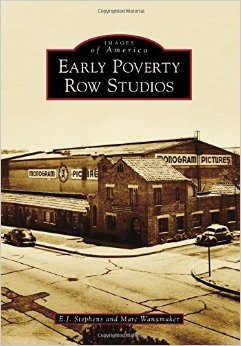
Early Poverty Row StudiosLocation, location, location. Though it’s a myth that the classic film noir canon consisted entirely of B-movies, the genre’s writers, directors, cinematographers and set designers often worked on minuscule budgets. Hey, it wasn’t all bad. They had more room to experiment and defy the censors that way – just look at Edgar Ulmer.

Many of them were regular denizens of the scrappy little Hollywood studios known as Poverty Row and so we are eagerly looking forward to Marc Wanamaker and E.J. Stephens’ new book: “Early Poverty Row Studios.”

The authors will discuss the book at 4 p.m. Saturday, Jan. 17, at Larry Edmunds Bookshop in Hollywood. See you there!

UCLA honors DeMille, a Hollywood pioneer. Starting Sunday, Jan. 18, the UCLA Film & Television Archive presents the film series, “The Greatest Showman: Cecil B. DeMille,” at the Billy Wilder Theater in Westwood Village.

This retrospective of one of cinema’s greatest storytellers will showcase 10 films restored by the archive, including “The Ten Commandments” (1956), “The Plainsman” (1937) and “The Buccaneer” (1938). A legendary producer and director, DeMille (1881-1959) helped put Hollywood on the map and set a high bar in terms of both artistry and showmanship. The series ends Feb. 28.

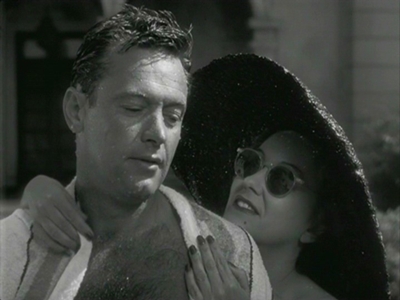
Joe (William Holden) lets Norma (Gloria Swanson) dry him after a swim.

Joe (William Holden) lets Norma (Gloria Swanson) dry him after a swim.

“I’m ready for my closeup, Mr. DeMille.” Arguably, Billy Wilder’s “Sunset Blvd.” is the finest movie ever made about Hollywood. Inarguably, it’s deliciously noir. Aging Hollywood star Norma Desmond (Gloria Swanson) is admittedly a little cut off from reality. She fawns over her pet monkey, has rats in her pool, autographs pile after pile of 8 x 10 glossies for her fans, even though she hasn’t made a picture in years. But, like so many women of film noir, she was ahead of her time. Norma was a veteran movie star who wanted to create her own roles, look her best and date a younger, sexy man. Anything wrong with that?

Robert Walker is hard to top in 1951’s “Strangers on a Train.” So is co-star Farley Granger.

Robert Walker is hard to top in 1951’s “Strangers on a Train.” So is co-star Farley Granger.

Luscious William Holden plays Joe, Norma’s younger lover, and it’s worth watching just to lust after Holden. See it on the big screen at 7:30 p.m. Monday, Jan. 19, at the ArcLight Cinema in Sherman Oaks. Co-presented with the Skirball Cultural Center, in conjunction with its outstanding film noir exhibitions.

Read the FNB review here.

Just the ticket? Meanwhile, Ben Affleck and others from the “Gone Girl” team are remaking Alfred Hitchcock’s “Strangers on a Train.” Hmm. Hope they can do it justice. Or at least give the Robert Walker character a few flashy suits. 😉

The Intriguante—Women of Intrigue in Film Noir series starts Thursday at the Skirball Cultural Center

If you’re feeling slightly sluggish after a whirlwind of holiday activity, remember that watching a feisty femme fatale on the big screen might be just what you need to feel newly energized and thoroughly entertained.

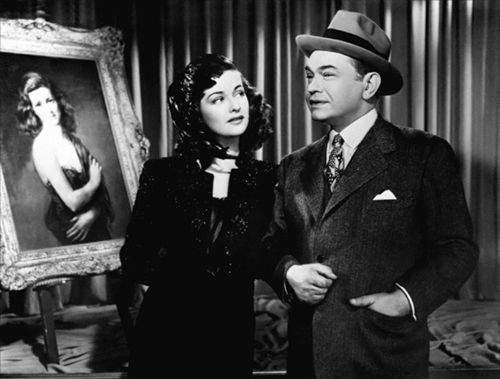
Alice (Joan Bennett) has Professor Richard Wanley (Edward G. Robinson) wrapped around her little finger in “The Woman in the Window.”

Alice (Joan Bennett) has Professor Richard Wanley (Edward G. Robinson) wrapped around her little finger in “The Woman in the Window.”

You can start this Thursday, Jan. 8, at 8 p.m., when the Skirball Cultural Center in West Los Angeles starts its four-film series, The Intriguante—Women of Intrigue in Film Noir. As the organizers note: “During World War II, many women took up jobs in previously male-dominated industries, which imbued them with a new sense of independence. These four movies – all made by émigré directors and featuring strong female leads – widely appealed to this newly empowered audience, as well as soldiers abroad.”

The series starts with 1944’s “The Woman in the Window,” directed by Fritz Lang. When you least expect your life to unravel is exactly when your life will unravel, at least in a Lang film. That’s the lesson Professor Richard Wanley (Edward G. Robinson) learns the hard way after he’s lured into the depraved world of street hustlers Joan Bennett and Dan Duryea. “Woman” is an excellent film and well worth seeing. You can read the full FNB review here.

Pitfall posterAdmission is $10 general; $7 seniors and full-time students; $5 members. The exhibitions Light & Noir: Exiles and Émigrés in Hollywood, 1933–1950 and The Noir Effect will remain open until 8 p.m.

The Intriguante series continues on Jan. 25 with an afternoon double-feature: “Pitfall” (1948, André de Toth), featuring Dick Powell, Lizabeth Scott and Jane Wyatt in a classic noir love triangle, and the taut thriller “Criss Cross” (1949, Robert Siodmak), in which a temptress (Yvonne De Carlo) leads her ex (Burt Lancaster) to his doom.  The series concludes on Feb. 12 with “The File on Thelma Jordon” (1950, Robert Siodmak), a crime drama starring the inimitable Barbara Stanwyck.

Additionally, the Skirball Cultural Center is hosting a series of free film-noir matinees on Tuesday afternoons, starting Jan. 6 with “Somewhere in the Night” (1946, Joseph L. Mankiewicz), starring John Hodiak as an amnesic World War II soldier.