Paris Photo Los Angeles starts Friday at Paramount Studios

Stefania Fersini

Stefania Fersini

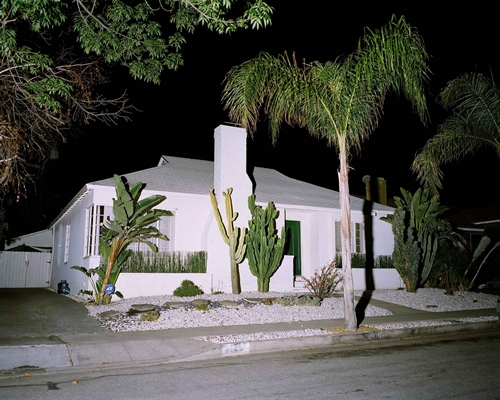
Jane O’Neal On Location in LA (To Live and Die in LA), 1984
Jane O’Neal
On Location in LA (To Live and Die in LA), 1984

William Mebane

William Mebane

This weekend you can stroll around a storied studio and see work from some of the world’s finest photographers. The third edition of Paris Photo Los Angeles runs Friday, May 1, to Sunday, May 3, at Paramount Pictures Studios in Hollywood.

Featuring exhibitors from 17 countries, Paris Photo Los Angeles shows work from nearly 80 art galleries and specialized art book dealers. In addition to still photos, moving images will be displayed.

New this year is the INTRODUCING! Young California Photographer Award, in partnership with J.P. Morgan. After the success of last year’s UNEDITED! Archives of the LAPD exhibition, the program returns with CALIFORNIA UNEDITED!: a collection of 19th Century photographs from the R.J. Arnold Archive.

The exhibition also includes a conversation series called SOUND & VISION.

Film noir costume design and ‘Gilda’ highlighted this Saturday in Hollywood

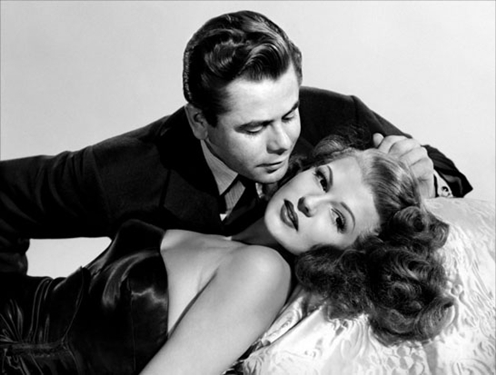
Gilda,” arguably Rita Hayworth’s most famous role, will screen this Saturday, April 25, at the Egyptian Theatre in Hollywood. Preceding the movie, costume historian Kimberly Truhler will give a one-hour presentation called: “Femmes Fatales, Innocents and Intrigantes: Can the Costume Design of Film Noir Tell Us the Difference?” The talk will start at 2 p.m.

.

‘Gilda’ shows that if you’ve got it, you might as well flaunt it

First published on FilmNoirBlonde.com on Sept. 19, 2012

“Gilda” is all about Gilda and that’s the way it should be – for any femme fatale and particularly for Rita Hayworth the most popular pinup girl of WWII, a talented entertainer and Columbia Pictures’ top female star in the mid-1940s. This 1946 movie by director Charles Vidor is essentially a vehicle for the drop-dead gorgeous Hayworth to play a sexy free spirit who lives and loves entirely in the present moment.

Longtime friends Glenn Ford and Rita Hayworth had a brief affair during the making of “Gilda.”

Hayworth revels in the sexual power she wields over any man who crosses her path, despite the fact that in post-war America a woman with a mind (and body) of her own spelled nothing but trouble. As the Time Out Film Guide points out: “Never has the fear of the female been quite so intense.” That said, the “independent” Gilda is only briefly without a husband and has to endure a lengthy punishment from her true love.

She first appears, after a devastatingly dramatic hair toss, as the wife of husband Ballin Mundson (George Macready). Suave, but aloof and asexual, Ballin runs a nightclub in Buenos Aires. Gilda passes the time plucking out tunes on her guitar and propositioning other men. Nice work if you can get it.

Enter Johnny Farrell (Glenn Ford), an American gambler who runs Ballin’s club. Johnny’s job extends to keeping an eye on Gilda when she’s carousing on the dance floor. Ballin isn’t around much because he’s off trying to form a tungsten cartel with some ex-Nazi pals. But babysitting the boss’ wife (Ballin calls her a “beautiful, greedy child”) is especially tough for Johnny because he and Gilda used to be an item and endured a bitter breakup.

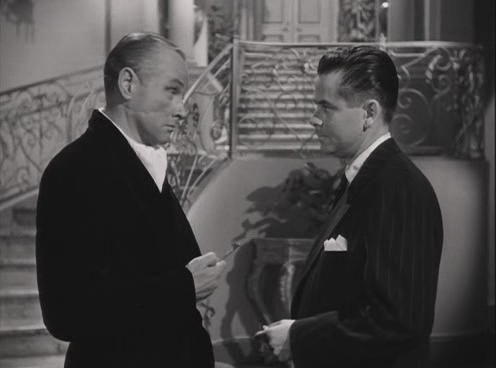
Ballin (George Macready) and Johnny (Glenn Ford) have a tense relationship.

The script is laced with taunts, barbs and innuendo. For example, Gilda tells him: “Hate is a very exciting emotion, hadn’t you noticed? I hate you, too, Johnny. I hate you so much I think I’m going to die from it.” (And some see homosexual undertones in Farrell and Ballin’s relationship.)

Director Vidor, whose other films include 1944’s “Cover Girl” (also starring Hayworth), “A Farewell to Arms” and “The Joker Is Wild” (both 1957), holds his own in the noir genre. “Gilda” is a dark tale (alluding to sexual perversion and repression) and there’s some moody cinematography, courtesy of Rudolph Maté. But Marion Parsonnet’s script, despite many sharp, clever lines, doesn’t hold together and that throws off the pacing. The first third meanders along too slowly while the ending seems abrupt and slapped together.

The plot is thin and vaguely confusing – Ballin is up to no good and at one point is thought to be dead, only to turn up later at a pivotal point in Johnny and Gilda’s romance. They reunite of course and their push-pull tension is the engine that drives the story. Luckily, that tension, combined with solid direction and acting, save the movie.

(The legendary Ben Hecht is an uncredited writer on “Gilda” and if the storyline rings a bell, you might be thinking of “Notorious” also from 1946, written by Hecht, which is another story of ex-Nazis up to no good in South America. Ingrid Bergman and Cary Grant play the wary, mistrustful lovers in Alfred Hitchcock’s superior rendering of similar material.)

The chemistry between Ford and Hayworth is about as real as it gets. Longtime friends, they had a brief affair during the making of the movie. In his book, “A Life,” Glenn Ford’s son Peter writes that Vidor coached Glenn and Rita with “outrageously explicit suggestions.” Peter Ford quotes his father as saying: “[Vidor’s] instructions to the two of us were pretty incredible. I can’t even repeat the things he used to tell us to think about before we did a scene.”

Hayworth performs “Put the Blame on Mame,” choreographed by Jack Cole.

According to Peter Ford, this off-screen fling stemmed from Hayworth’s unhappy marriage to Orson Welles. The romance also drew the ire of Columbia Pictures chief Harry Cohn, who reportedly lusted after Hayworth and whom Hayworth rejected. “Gilda” was the second film Hayworth and Ford appeared in together; they worked together three more times afterward as well.

“Gilda” wasn’t a critical hit, but it proved popular with audiences, especially the famous “Put the Blame on Mame” scene.

Choreographed by Jack Cole, a bold and brilliant innovator, the number is as close to a strip tease as was possible in 1946. Hayworth was dubbed by Anita Ellis in that number, though there is some debate as to whether it’s Hayworth’s voice when she runs through the song with Uncle Pio (Steven Geray) earlier in the movie.

Though “Gilda” cemented Hayworth’s celebrity status, her fame came at a price. “Every man I’ve known has fallen in love with Gilda and wakened with me,” she said. But, despite her career ups and downs, five failed marriages and a long struggle with Alzheimer’s, she kept her sense of humor. In the 1970s, Hayworth was asked, “What do you think when you look at yourself in the mirror after waking up in the morning?” Her reply: “Darling, I don’t wake up till the afternoon.”

COLCOA French fest opens and Noir City Hollywood closes

It’s a busy time for film buffs in Los Angeles.

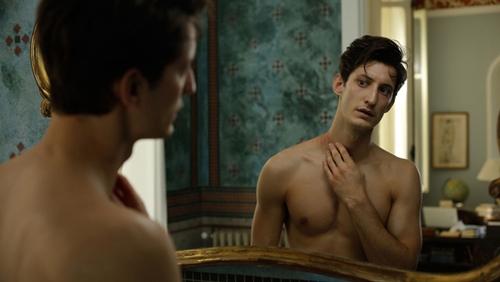
The COLCOA French Film Festival opens tonight, Monday, April 20, with an elegant reception and the opening night film, a thriller called “A Perfect Man,” directed and co-written by Yann Gozlan and starring Pierre Niney and Ana Girardot.

Pierre Niney plays the wily writer in  “A Perfect Man.”

Pierre Niney plays the wily writer in “A Perfect Man.”

It’s a story of shifting identities as a struggling author stumbles upon a wildly unethical way to make the best-seller list.

With echoes of Patricia Highsmith’s Mr. Ripley, “A Perfect Man” strikes us as a divinely decadent way to kick off this wonderful festival, now in its 19th year.

There is much to see this year (check the COLCOA site for info on free screenings and cool events) and we are counting the days until Friday’s Film Noir Series.

The fest takes place at the Directors Guild of America, 7920 Sunset Blvd., Los Angeles, 90046.

Sunday was the closing day of an essential film fest, for noiristas and others: Noir City Hollywood, presented by the American Cinematheque in collaboration with the Film Noir Foundation. The foundation’s urbane noirphiles Eddie Muller and Alan K. Rode were on hand throughout the fest to introduce the movies. This year, they brought another excellent selection (heavy on adaptations of the great master of pulp suspense Cornell Woolrich).

The lineup included a real find: the American debut of three almost unknown but brilliantly done and stunningly visualized film noirs from Argentina: “The Black Vampire” (Roman Vinoly Barreto, 1953), a remake of Fritz Lang’s “M,” and superb adaptations of Woolrich stories in “Never Open That Door” (Carlos Hugo Christensen, 1952) and “If I Should Die Before I Wake” (Christensen, 1952).

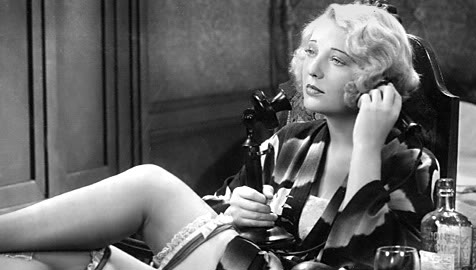
Dorothy MacKaill lights up the screen in “Safe in Hell” (1931, William Wellman).

Dorothy MacKaill lights up the screen in “Safe in Hell” (1931, William Wellman).

The fest wrapped up with a four-movie proto-noir marathon:

The Ninth Guest” (1934, Roy William Neill) a mystery with a generous dollop of Deco glam.

Let Us Live” (1939, John Brahm) featuring the great Henry Fonda as a wrongly identified killer and a riveting performance from Maureen O’Sullivan as his girlfriend.

Heat Lightning” (1934, Mervyn LeRoy) a pre-Code delight about two sisters (Aline MacMahon and Ann Dvorak) running a garage and car-repair shop in the desert and ridding the place of rats, such as fleeing criminal and old flame (Preston Foster).

Safe in Hell” (1931, William Wellman) Dorothy MacKaill is unforgettable as a sparkling blonde siren who spends the entire movie fighting off men as she waits in vain on a Caribbean island to be with the guy she truly loves (Donald Cook).

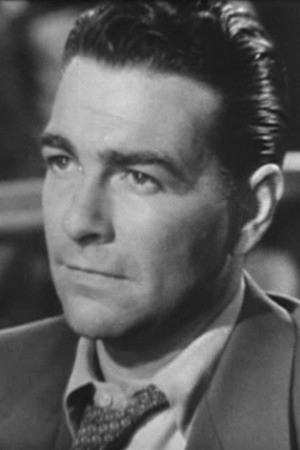
Don Castle was a Clark Gable lookalike.

Don Castle was a Clark Gable lookalike.

My attendance was spotty this year because I had to leave town unexpectedly (such is life for a femme fatale) but my colleague Mike Wilmington caught quite a few.

Other highlights from this year’s fest were: “Woman on the Run,” “The Underworld Story,” “Abandoned,” “Circle of Danger,” “Berlin Express,” “Ride the Pink Horse,” “The Fallen Sparrow,” and “The Guilty” as well as that triple bill of Argentinian film noir.

The closing-weekend party was loads of fun, especially since I won a nifty raffle prize! I definitely needed my drink tickets that night. Why? By the small but mighty curveball in “The Guilty” when the lead character (Don Castle) reveals that he is studying “commercial geography” to land a good job.

What??? Education and hard work to get ahead? Was the movie going to start preaching about the virtues of a work ethic? Aaargh! Thankfully, this was, in fact, a temporary glitch and the character turned out to be crazy-bad.

Phew! I was freaked out there for a moment but everything was just as it should be in Noirville.

Film noir makes a fascinating chapter in TCM’s film fest

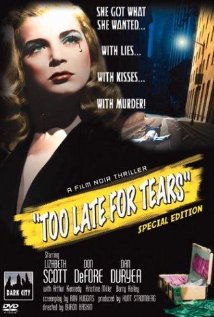
Too Late for Tears poster

There’s nothing quite like a history lesson from the TCM Classic Film Festival. No dull tomes or dreary lectures here. The fest, which chose history as its theme, instead connected us with the past through first-rate storytelling, movie craft and visual splendor.

We at Film Noir Blonde are very pleased that film noir’s popularity continues to grow and so our favorite genre was well represented at the fest, which ran March 26-29 in Hollywood.

It was a treat to see “Too Late for Tears” (1949, Byron Haskin), starring Lizabeth Scott, Arthur Kennedy and Dan Duryea. The film has been newly restored by the Film Noir Foundation. Scott and Duryea did not disappoint.

Nor did the rest of the slate.

Reign of Terror” (1949, Anthony Mann) took us back to the French Revolution in a perfect melding of history and noir.

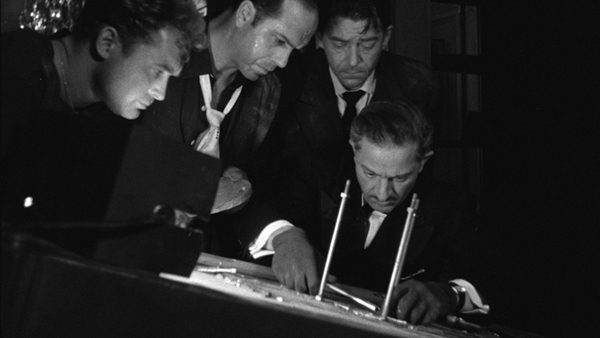
“Rififi” by Jules Dassin influenced countless other films.

“Rififi” by Jules Dassin influenced countless other films.

The unforgettable “Rififi” (1955, Jules Dassin) thoroughly captivated its audience. We loved this union of an American noir director and a French setting. François Truffaut named “Rififi” as the best film noir of all time.

One of the finest films of the 1950’s was also part of the program. “Rebel Without a Cause” (1955, Nicholas Ray), starring James Dean, is both a daring neo-noir and a visual poem.

It was exciting to see “Nightmare Alley” (1947, Edmund Goulding) get its due. The film is truly a masterpiece that should have more recognition.

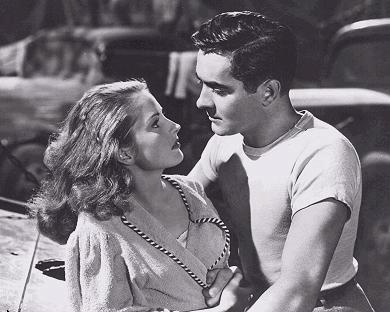
Tyrone Power and Coleen Gray star in “Nightmare Alley.”

Tyrone Power and Coleen Gray star in “Nightmare Alley.”

Psycho” (1960, Alfred Hitchcock) retained its power to chill us and while watching Hitchcock’s plushly romantic “Rebecca” (1940) we were reminded of the impressive tradition of British noir.

No matter how many times we’ve seen “The Apartment” (1960, Billy Wilder), it’s still fresh, darkly funny and heartbreaking. Who else but a noir master like Wilder could rattle the cage of Corporate America so adroitly? And screen legend Shirley MacLaine shared memories before the screening at the TCL Chinese Theatre.

Out of Sight” (2001, Steven Soderbergh)is a top-notch contemporary noir, adapted from Elmore Leonard’s novel and starring George Clooney and Jennifer Lopez.

Also memorable was the groundbreaking cop thriller “The French Connection” and Q&A with director William Friedkin and Alec Baldwin at the TCL Chinese Theatre.

Friedkin is great with an audience and Baldwin came out of his shell just a bit. 😉

Noir City Hollywood kicks off with Ann Sheridan double bill

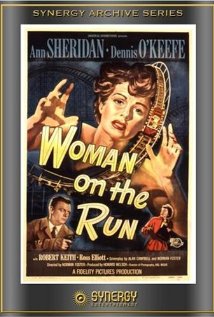
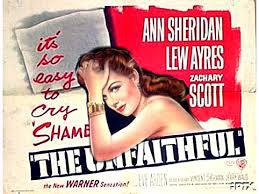
Woman on the Run posterNoir City Hollywood starts Friday at the Egyptian Theatre in Hollywood. The famed fest, now in its 17th year, kicks off with an Ann Sheridan double feature: “Woman on the Run” (1950, Norman Foster) and “The Unfaithful” (1947, Vincent Sherman).

In “Woman on the Run,” police believe Sheridan can lead them to a key witness in a San Francisco gangland killing. The snag is she doesn’t want to feed them info. The witness is her husband (Ross Elliott), but she’s done with him. To hell with helping out! Dennis O’Keefe plays an enterprising (is there any other kind?) newspaperman.

In “The Unfaithful,” Sheridan has a dalliance that leads to death. Not hers, natch. David Goodis and James Gunn wrote the script (based on W. Somerset Maugham’s “The Letter”) and set the story in Los Angeles. Featuring Zachary Scott, Lew Ayres and the always-delightful Eve Arden.

The Unfaithful posterNoir City Hollywood will screen 26 films over 12 nights! The fest, which is presented by the American Cinematheque in collaboration with the Film Noir Foundation, runs through April 19. Eddie Muller and Alan K. Rode of the Film Noir Foundation will introduce the movies.

Woman on the Run” was restored in 2014 by the Film Noir Foundation in conjunction with the UCLA Film & Television Archive. Restoration funding for “Woman on the Run” was provided by the Hollywood Foreign Press Association’s Charitable Trust through the Film Noir Foundation. “The Unfaithful” screens in a 35mm print.

Film Noir Series at COLCOA celebrates 10th anniversary with Jean Dujardin’s new film

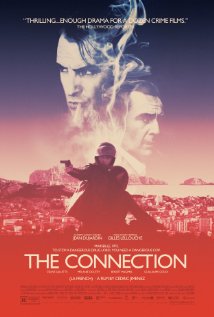
The Connection posterThe Franco-American Cultural Fund Tuesday night announced the lineup for this year’s COLCOA French Film Festival. The fest, now in its 19th year, runs April 20-28 at the Directors Guild of America in Los Angeles.

Speaking at the Consul General of France in Beverly Hills, COLCOA’s executive producer and artistic director François Truffart revealed that 68 films (including three world premieres and 14 U.S. premieres) will be shown over nine days. Additionally, COLCOA will introduce a new competition dedicated to films and series produced for television.

The festival will open with the North American premiere of “A Perfect Man,” a thriller co-written and directed by Yann Gozlant. It stars Pierre Niney and Ana Girardot.

COLCOA will celebrate the 10th anniversary of its Film Noir Series with Academy Award winner Jean Dujardin’s new film “The Connection,” co-written and directed by Cédric Jimenez. The other two films in the series are: “SK1,” co-written and directed by Frédéric Tellier, and “Next Time, I’ll Aim For the Heart,” written and directed by Cédric Anger.

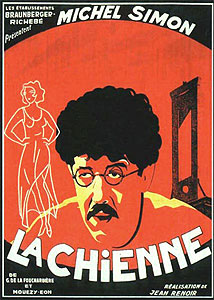
La Chienne posterAs part of the COLCOA Classics Series, an exclusive program of digitally restored premieres, master director Jean Renoir’s first-rate pre-noir from 1931 “La Chienne” will screen. This was remade in the U.S. in 1945 by Fritz Lang as “Scarlet Street.”

All other series are back as well: the After 10 Series (April 21-25); the Happy Hour Talk Panel Series in association with Variety (April 21-25); the French NeWave 2.0 Series presented in association with IndieWire (Saturday, April 25); the Short Film Competition (Sunday, April 26); the Focus on a Filmmaker (Michel Hazanavicius) (Thursday, April 23) and the Focus on Two Producers: Maxime Delauney and Romain Rousseau (Saturday, April 25).

Another outstanding TCM Classic Film Fest!

A huge thank you to everyone at the TCM Classic Film Fest for another great event. TCM staff outdid themselves in terms of top-notch programming and events, and volunteers went out their way to be pleasant, helpful and polite.

We had a great time binge-watching! One of many highlights was “The French Connection” and Q&A with director William Friedkin and Alec Baldwin at the TCL Chinese Theatre.

I will run a more detailed roundup story at a later date.

What to see, what to see: TCM Classic Film Fest starts today

The TCM Classic Film Festival is in full swing today and runs through Sunday in Hollywood. “There’s nothing like watching a movie on a screen with a big audience,” said head programmer Charlie Tabesh at yesterday’s press conference. This year’s theme is history and Tabesh added that he is particularly looking forward to the film “1776,” directed by Peter H. Hunt, who will be in attendance along with stars William Daniels and Ken Howard.

Last night, I stopped by the Formosa Café to mingle with fellow scribes. Several people shared my view that it’s tough to decide what to see and to strike a balance between longtime favorites and exciting new discoveries. I know, I know – what a good problem to have!

One thing’s for sure: I will attend the opening party and will see the newly restored film noir “Too Late for Tears” (1949, Byron Haskin), starring Lizabeth Scott, Arthur Kennedy and Dan Duryea.

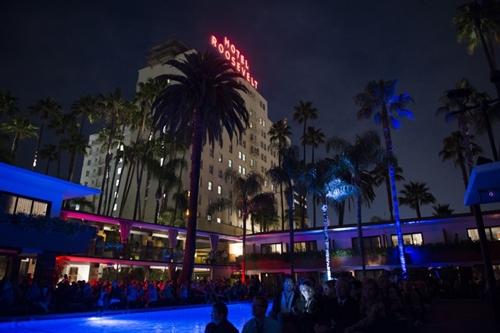
For now, I will leave you with this shot from one of last year’s poolside screenings at the Hollywood Roosevelt. (Photo courtesy of TCM.) Life is good!

Poolside screenings at the Hollywood Roosevelt are a special treat.

Poolside screenings at the Hollywood Roosevelt are a special treat.

Miss Crawford would have been pleased … I think

A fun time was had by all Monday night at the Joan Crawford birthday party and screening at Laemmle NoHo 7 in North Hollywood! Thanks to Greg Laemmle and his staff, Warner Archive and Shakar Bakery. And of course everyone who attended!

In case you missed it, here are some vids, pix and a trivia fix.

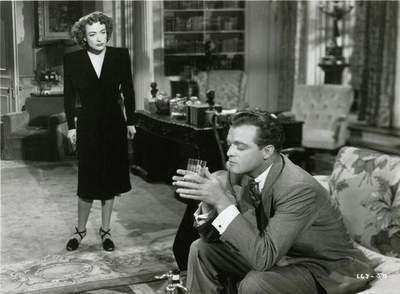
We showed “Possessed” (1947, Curtis Bernhardt):

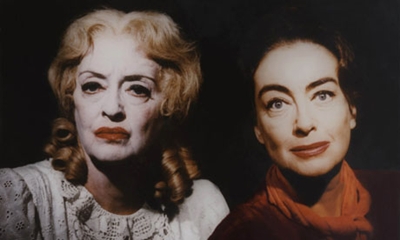
and “What Ever Happened to Baby Jane?” (1962, Robert Aldrich):

Trivia Questions

1. What was Joan’s given name and where was she born?

2. The name Joan Crawford was the second-place winner from a contest held by MGM to rename their new star. The top choice was rejected because it already belonged to another actress. What was it?

3. Joan won the Best Actress Oscar for her 1945 performance in “Mildred Pierce.” That was the only time she won but she was nominated for Best Actress two other times. Name the movies.

4. What did Joan’s professional resume have in common with Bette Davis’s as young women?

5. Joan starred with Clark Gable in eight films. Name the first one.

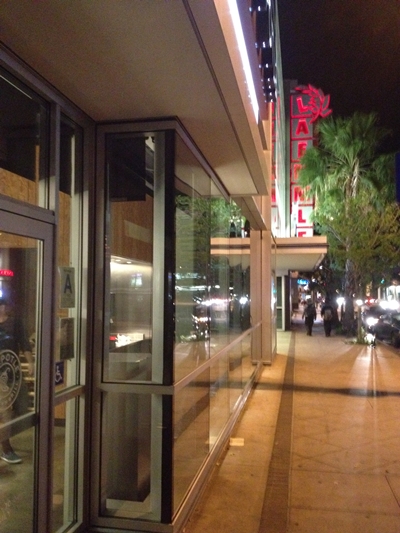
The Laemmle NoHo 7 at night

The Laemmle NoHo 7 at night

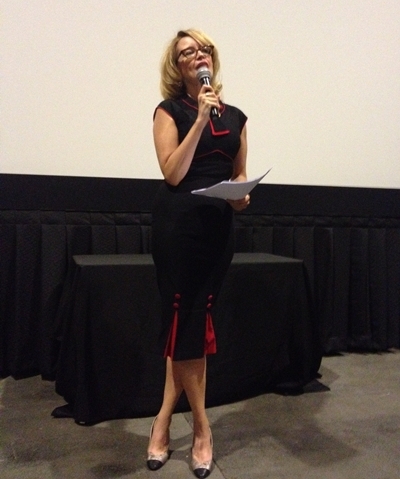
Film Noir Blonde gushing re: JC

Film Noir Blonde gushing re: JC

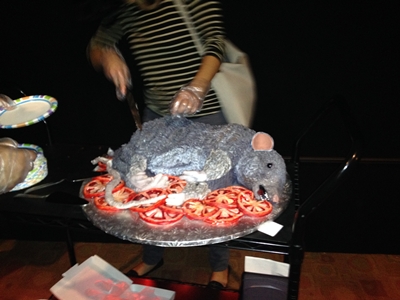
Rat cake anyone?

Rat cake, anyone?

Eek! Greg Laemmle reacts to the cake, a superb creation by Shakar Bakery. The cake references an unforgettably gross moment in “Baby Jane.”

Eek! Greg Laemmle reacts to the cake, a superb creation by Shakar Bakery. The cake references an unforgettably gross moment in “Baby Jane.”

Trivia Answers

1. Lucille Fay LeSueur, San Antonio, Texas.

2. Joan Arden.

3. “Possessed” 1947 and “Sudden Fear” 1952

4. They were both dancers – Joan was a Broadway showgirl who came to Hollywood to play flappers (“Our Dancing Daughters” 1928 was a breakout film). She was Fred Astaire’s first on-screen dance partner. Bette Davis studied dance with Martha Graham.

5. “Dance, Fools, Dance” 1931. Their last was “Strange Cargo” 1940. Both married, their affair was called: “the affair that nearly burned Hollywood down.”

Happy Birthday to a noir grande dame, Lady Joan

By Film Noir Blonde and Mike Wilmington

Film Noir Blonde

Film Noir Blonde

Laemmle NoHo7 - 140The Film Noir File is FNB’s guide to classic film noir, neo-noir and pre-noir on Turner Classic Movies (TCM). The times are Eastern Standard and (Pacific Standard). All films without a new review have been covered previously in Film Noir Blonde and can be searched in the FNB archives (at right).

Pick of the Week: Joan Crawford Marathon &
Laemmle’s NoHo 7 Party, Monday, March 23

Warner Archive - SmallerShakar Bakery - SmallerNext Monday is Joan Crawford’s birthday; she was born March 23, 1905. And, if you’re an Angeleno, you can celebrate all day – first by catching one or more of the seven Crawford movies, including three noirs, running on Turner Classic Movies on Pacific time from 3:30 a.m. to 5 p.m. (And on Eastern time, from 6:30 a.m. to 8 p.m.).

Then, head to Laemmle’s NoHo 7 in North Hollywood (5240 Lankershim Blvd.), and watch two of Crawford’s very best noirs on the big screen starting at 7:30 p.m.: 1947’s too often neglected “Possessed” and 1962’s Robert Aldrich-directed masterpiece, “What Ever Happened to Baby Jane?” co-starring the one and only Bette Davis and

“He’s just not that into you …” does NOT go over well with Miss Crawford. The very talented Van Heflin plays the heel in “Possessed.”

“He’s just not that into you …” does NOT go over well with Miss Crawford. The very talented Van Heflin plays the heel in “Possessed.”

The event will be co-hosted live (with cake, a trivia contest and prizes) by Film Noir Blonde. Shakar Bakery is providing the cake.

Tickets are $11 for one film or $15 or both. Prizes are courtesy of Warner Archive.

Happy Birthday, Joan!

Film noir titles

8:15 a.m. (5:15 a.m.): “What Ever Happened to Baby Jane?(Robert Aldrich, 1962)

2 p.m. (11 a.m.): “Flamingo Road” (Michael Curtiz, 1949).

6 p.m. (3 pm.): “Mildred Pierce” (Michael Curtiz, 1945).

Other JC titles: “The Caretakers” (Hall Bartlett, 1963); “Torch Song” (Charles Walters, 1953); “Goodbye, My Fancy” (Vincent Sherman, 1951), “Humoresque” (Jean Negulesco, 1946).

The real-life rivalry of Bette Davis and Joan Crawford infused “Baby Jane” with extra tension.

The real-life rivalry of Bette Davis and Joan Crawford infused “Baby Jane” with extra tension.


Saturday, March 21

8:45 a.m. (5:45 a.m.): “White Zombie” (Victor Halperin, 1932).

Sunday, March 22

8 a.m. (5 a.m.): “Gilda” (Charles Vidor, 1946).

2:30 a.m. (11:30 p.m.): “Torment” (Alf Sjoberg, 1944). This psychological thriller about a sadistic teacher (Stig Jarrel) tormenting two young lovers (Mai Zetterling, Alf Kjellin), filmed in pseudo-German expressionist-style, was the first big hit by its young screenwriter: enthusiastic film-noir fan Ingmar Bergman. (In Swedish, with subtitles.)

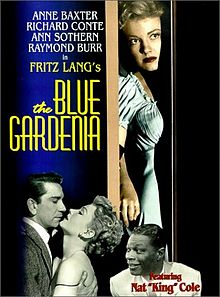
Blue Gardenia poster4:15 a.m. (1:15 a.m.): “Miss Julie” (Alf Sjoberg, 1951). The famous prize-winning film version of playwright August Strindberg’s dark, terror-filled theatrical classic about a sadomasochistic romance between a susceptible aristocrat (Anita Bork) and a brutal groom (Ulf Palme). (In Swedish, with subtitles.)

Tuesday, March 24

2:15 a.m. (11:15 p.m.): “Wait Until Dark” (Terence Young, 1967).

Wednesday, March 25

10 p.m. (7 p.m.): “The Blue Gardenia” (Fritz Lang, 1953).