Seeking ‘recline’ inspiration from film noir’s injured characters

I recently experienced a little setback: I fractured my toe (one in from the pinkie on the right foot). I didn’t teeter as I tried on Loubou’s or tumble on a treacherous chunk of pavement. Nor was I hang-gliding or training for a 5k run. Please. Have we met? No, in typical femme fatale fashion, à la Mae West, I tripped over a pile of men.

Sporting hideous footwear.

Of course I don’t mind being ordered by doctors to rest and relax. In fact, I relish the opportunity. And if ever there were a time to be waited on hand and foot, bark out orders and be completely catered to, honey this is it! I’m also grateful that the toe (underrated little body part that it is) wasn’t broken or more severely damaged – it should heal nicely as long as I’m patient.

But the thing I really miss is going to yoga. Feeling a little blue and kicking myself (pun intended) for not being more careful, I called my friend Anne who pointed out that what’s bad in life is good on the page. She suggested that as I recuperate I commiserate with noir characters – like nostril-impaired Jake Gittes (Jack Nicholson) in “Chinatown” – who sustain and recover from injuries. (You can always trust a Gemini to come up with a creative approach.)

As I lounge on my sofa, I also find myself pondering existential questions, such as: Can I now fulfill my long-held fantasy of going to yoga and resting in child’s pose for the entire class? Will wine and ice cream provide the same benefits as shavasana? What about cupcakes? Does Susie Cakes deliver? Is it possible to dance while using crutches? How long can a girl go without shaving her legs?

Aah, more than my peabrain can process right now. So, with many thanks to Anne, here are my favorite mending moments of film noir.
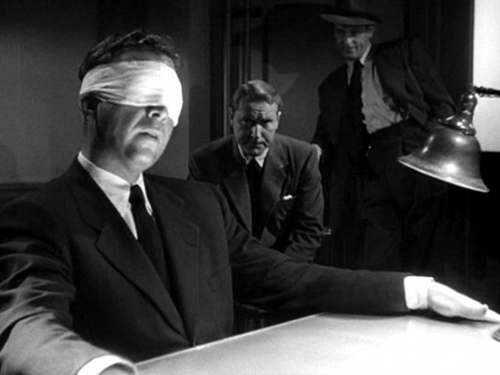
Dick Powell as Philip Marlowe is temporarily blinded in “Murder, My Sweet.”
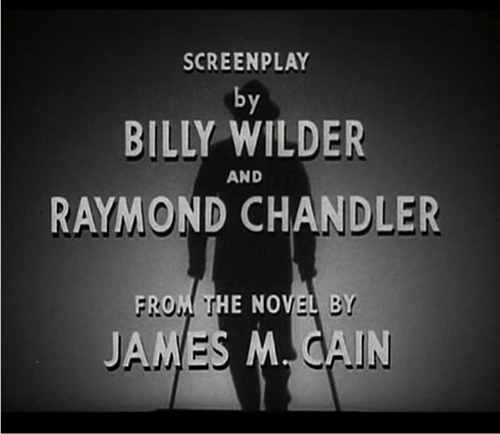
 

Phony, schmony. The dude still hobbled around on crutches: Fred MacMurray in “Double Indemnity.”
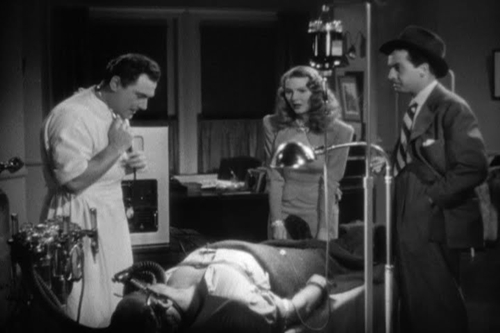
 

Decoy”’s Frank Armstrong recovers from the ultimate “accident.” Cold-hearted Jean Gillie sees a way to get her hands on a wad of cash by bringing her criminal boyfriend back to life following his visit to the gas chamber. Absurd? Absolutely. Still, it’s all in a day’s work for film noir’s toughest femme fatale.
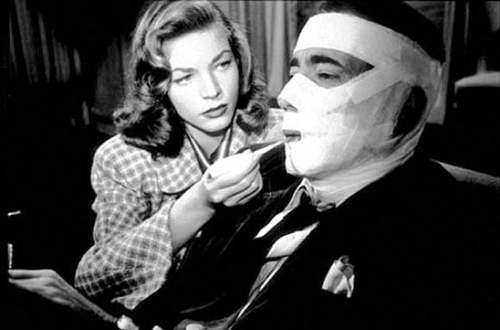
 

“Dark Passage”: Unjustly sentenced prison escapee Humphrey Bogart undergoes plastic surgery to alter his looks. He co-stars with real-life wife Lauren Bacall.
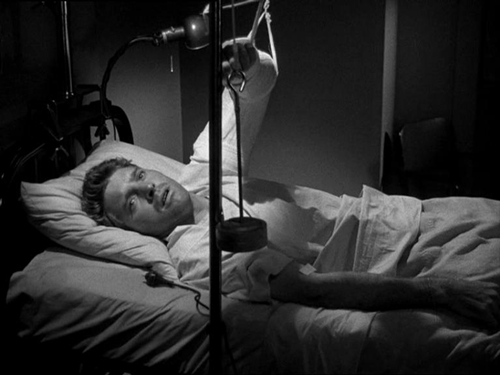
 

Burt Lancaster sustains major injuries after a heist gets fouled up in “Criss Cross.” (In “The Killers” Lancaster plays a boxer whose career folded after hurting his hand.)
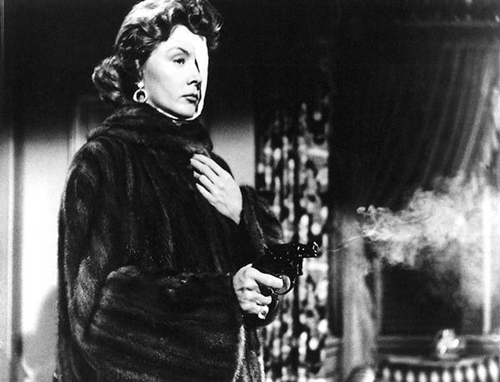
 

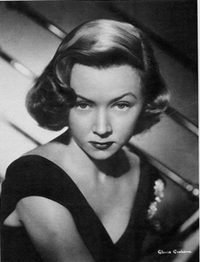
The Big Heat” contains one of film noir’s most famous violent scenes. Lee Marvin throws a pot of boiling coffee at Gloria Grahame and disfigures her face. She gets even in the end.
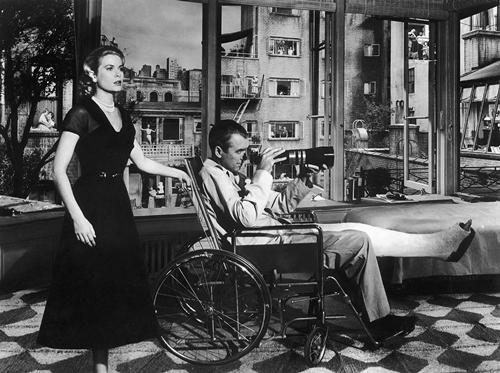
 

Jimmy Stewart is a photojournalist who watches his neighbors to pass the time (with gorgeous Grace Kelly for company) while his leg heals in “Rear Window.”
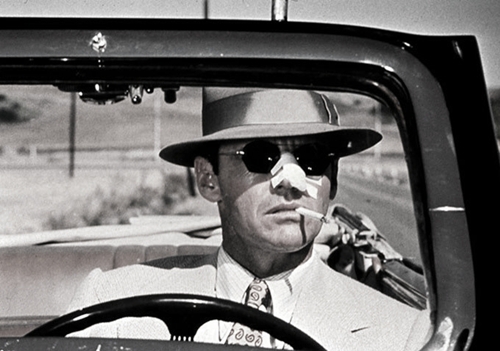
 

Jack Nicholson wears his bandage for most of “Chinatown.” Director Roman Polanski plays the menacing punk who cuts Nicholson’s nose.


“Misery”’s Kathy Bates is the nurse-from-hell to wounded writer James Caan.
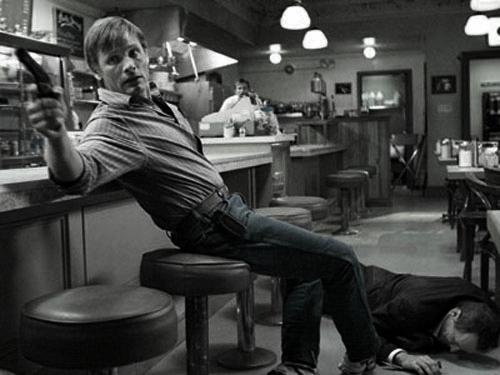
 

Viggo Mortensen gets stabbed in his foot after fending off two thugs in “A History of Violence.”

Noir City festival returns to Chicago with darkness aplenty

The Music Box Theatre will host Noir City: Chicago.

The Film Noir Foundation’s Noir City festival returns for the fourth time to Chicago’s Music Box Theatre, from Aug. 17-23.

The FNF’s Alan K. Rode and noted writer/historian Foster Hirsch will share hosting duties. All titles are presented on the big screen in glorious 35mm prints.

This year’s lineup looks great! Highlights include:

William Castle’s “Undertow” (1949), which was shot on location in the Windy City.

Alan Ladd x 2: “The Great Gatsby” (1949, Elliot Nugent) and “This Gun for Hire” (1942, Frank Tuttle).

Jean Negulesco’s “Three Strangers” (1946) starring Geraldine Fitzgerald, Sidney Greenstreet and Peter Lorre. Screenplay by John Huston and Howard Koch.

Cornell Woolrich x 3: Noir master Robert Siodmak directs Ella Raines and Elisha Cook Jr. in “Phantom Lady” (1944). Based on a Woolrich novel. “Black Angel” (1946, Roy William Neil) More suspense from Woolrich, this time starring Dan Duryea, June Vincent, Broderick Crawford and Peter Lorre. “The Window” (1949) Ted Tetzlaff directs an adaptation of Woolrich’s “The Boy Who Cried Wolf.”

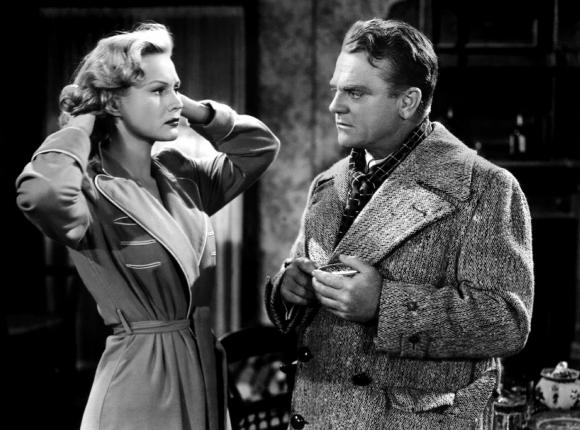
Virginia Mayo and James Cagney star in "White Heat," directed by Raoul Walsh.

Phil Karlson’s “99 River Street” (1953) Evelyn Keyes comes to the rescue when her buddy John Payne, a washed-up boxer, is framed for the murder of his wife.

Robert Ryan x 2: “Caught” (Max Ophuls, 1949) and “On Dangerous Ground” (Nicholas Ray, 1952).

Kiss Me Deadly” (1955, Robert Aldrich) Screenwriter A. I. Bezzerides adapted Mickey Spillane’s detective novel to create this film noir classic. Ralph Meeker stars.

White Heat” (1949, Raoul Walsh) James Cagney is unforgettable in one of noir’s greatest roles, outlaw and killer Cody Jarrett. The superb cast also includes Edmond O’Brien, Virginia Mayo, Steve Cochran and Margaret Wycherly as the bad-ass mama at the core of it all.

Also, be sure to check out the FNF’s Marsha Hunt interview. The actress joined Eddie Muller and Alan K. Rode at the 14th annual Noir City: Hollywood for a rare screening of “Mary Ryan, Detective” (1950, Abby Berlin). Hunt discussed her work with Fred Zinnemann, Jules Dassin, Orson Welles and others. I watched the event live and it’s terrific – it’s hard to believe she is 94! You can watch the interview at the FNF Video Archives.

Marilyn Monroe memorial to be held Sunday in Westwood

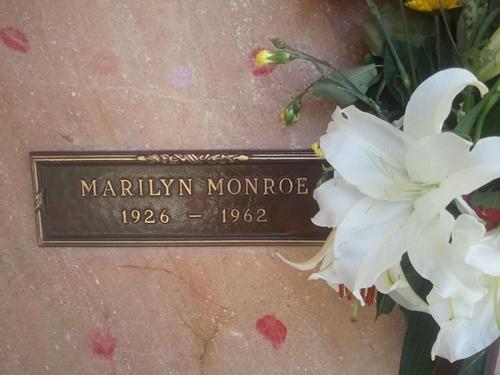
Sunday, Aug. 5, marks the 50th anniversary of Marilyn Monroe‘s death. Several events will be held this week, including a memorial service at noon on Sunday at Westwood Memorial Park in Los Angeles.

Additionally, Saturday, Aug. 4, is Marilyn Monroe day on TCM. On Sunday, Aug. 5, at 7:30 p.m., the Egyptian Theatre is showing “River of No Return.”

‘Searching for Sugar Man’ documentary – a man-hunt, a meditation and a fairy tale – is a must-see

Searching for Sugar Man/2012/Sony Pictures Classics/85 min.

“Cause I lost my job two weeks before Christmas,” goes a line in “Cause” by the Detroit-born singer/songwriter Rodriguez. If you’ve never heard of the song or the singer, he’s used to that. And he’s long been accustomed to the fickle tastes of the music business, having been dropped from the Sussex record label two weeks before Christmas of 1971.

He continued to write and play his songs of political protest, but for the most part faded from the American music scene after his albums “Cold Fact” (1970) and “Coming From Reality” (1971) both tanked in the U.S. Win some, lose some.

"Coming From Reality" was the second of two albums that flopped in the U.S.

In South Africa, however, through bootlegged copies of his music, he shot to stardom, inspiring young Afrikaners in their opposition to Apartheid and a repressive government. “He gave [us] permission to free our minds. To many South Africans, he was a soundtrack to our lives,” says South African journalist Craig Bartholomew-Strydom, adding that the three essential records in those days were “Abbey Road,” “Bridge Over Troubled Water” and “Cold Fact.”

Despite his enormous popularity, his loyal fans knew little about him. By the ’90s, he ranked as a mysterious urban legend, owing to persistent and widespread rumors that he’d committed suicide on-stage. Trying to piece together the details of his demise, Bartholomew-Strydom and Stephen Segerman, a fellow fan/record seller, decided to probe what really happened.

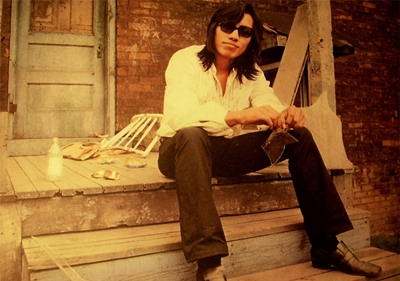
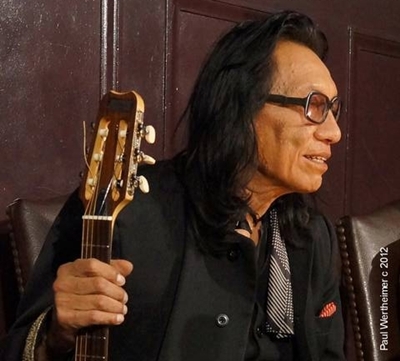
Singer/songwriter Rodriguez at a June press conference in Los Angeles.

And in “Searching for Sugar Man,” by Stockholm-based documentary filmmaker Malik Bendjelloul, we find out. A man-hunt, a meditation and a fairy tale, it’s an unforgettable story, by turns bafflingly suspenseful and deeply moving. Says Rodriguez, now 70: “In rock ’n’ roll, there’s always disappointment, criticism, rejection. That’s part of it. And that it all worked out like this, it’s all right with me.”

Bendjelloul paints a contemplative, joyful and visually sumptuous portrait of an artist. We meet music and media insiders such as Motor City producers Dennis Coffey and Mike Theodore who discovered Rodriguez in the late 1960s in a local bar and Sussex Records founder Clarence Avant as well as longtime Detroiters and Rodriguez’s three daughters. “They put me on the map,” says Rodriguez of his kids.

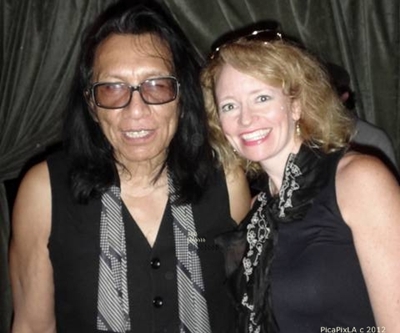
Rodriguez performed recently in Hollywood; I met him after the show.

Shot by Camilla Skagerström with a Sony EX1, Super 8 and a Super 8 iPhone app and punctuated with animation, the film perfectly captures atmosphere: follow-the-money, investigative tension in sunny Cape Town contrasted with the grittily poetic qualities of Detroit – a nightscape pregnant with thunder and rain; slow, careful footsteps over snow-and-ice encrusted streets in a desolate city; neon signs lighting up bars like the Sewer and in-store posters announcing “We accept food stamps.”

And Bendjelloul precisely renders his subject, showing us Rodriguez’ prophetic but elusive spirit and letting us hear the voice – plaintive, searing and soulful – that’s as capable of inspiration today as it was 40 years ago.

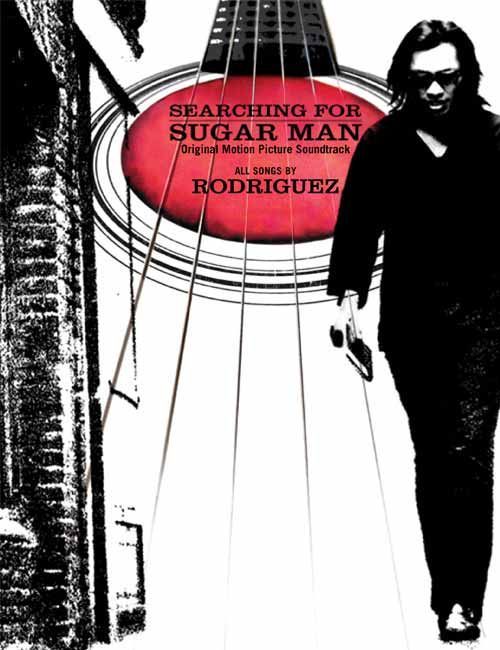
“Searching for Sugar Man” opens Friday in New York and LA. The soundtrack is available at: http://myplay.me/u3e.

Who Shot Rock & Roll shows photographers’ role in rock

Southern California National Public Radio (NPR) affiliate KCRW is hosting one more free night of outdoor live music, DJs and photography at the Annenberg Space for Photography in Century City. Moby played on July 14; on Saturday night, Portugal. The Man celebrated the 40th anniversary of T.Rex‘s “The Slider” and on Aug. 4 Raphael Saadiq & Band of Skulls will perform the songs of Bob Dylan.

The concerts are in conjunction with Who Shot Rock & Roll: A Photographic History, 1955 to the Present, organized by the Brooklyn Museum with guest curator and author Gail Buckland. Show organizers say it is the first major museum exhibit on rock and roll to spotlight the creative and collaborative role that photographers have played in the history of rock music. The show features 166 prints from iconic photographers, a Henry Diltz slideshow, several videos and a short doc film. Who Shot Rock & Roll runs at the Annenberg through Oct. 7.

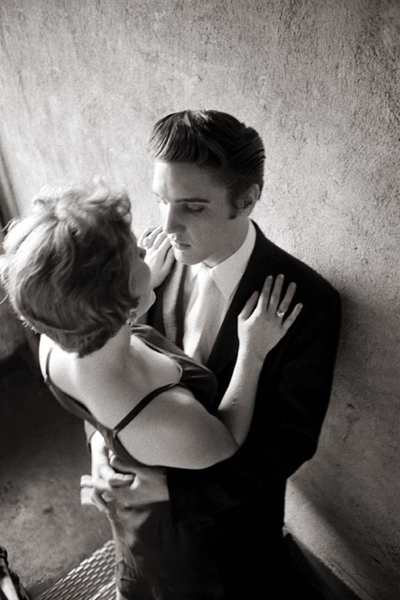
This is one of 1,500 shots that Alfred Wertheimer took of Elvis in 1956.

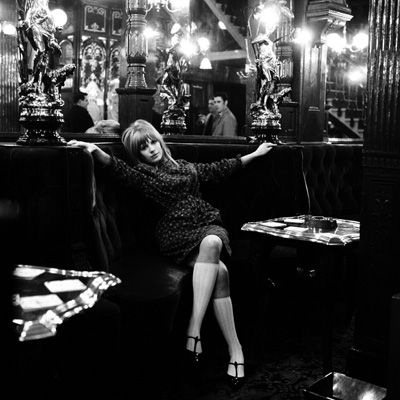
Marianne Faithfull at a London pub, 1964, by Gered Mankowitz. This shot was considered too provocative to use as an album cover.

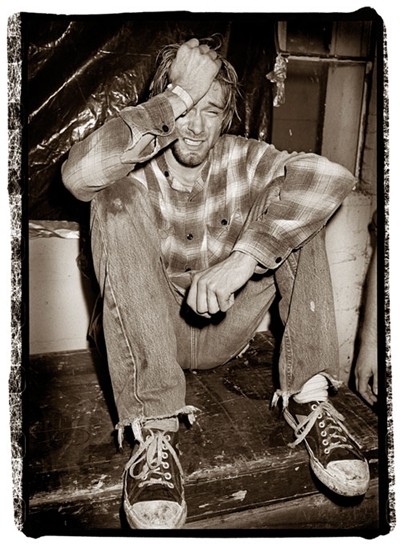
Kurt Cobain photographed by Ian Tilton at a Seattle venue, 1990.

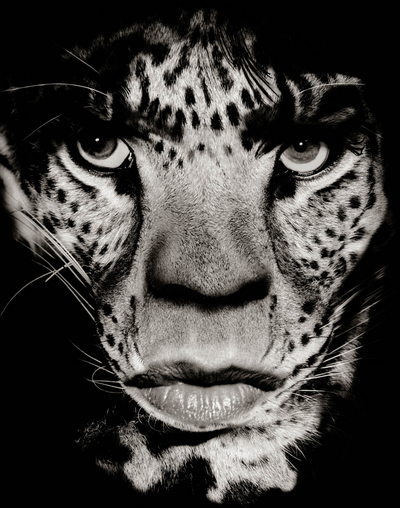
Mick Jagger shot by Albert Watson in Los Angeles, 1992.

The Noir File: Hawks, Hemingway, Bogie and Bacall Have it

By Michael Wilmington

A noir-lover’s guide to classic film noir on Turner Classic Movies (TCM). The times are Pacific Standard (listed first) and Eastern Standard.

Saturday, July 21

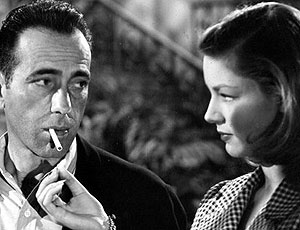
Bogie and Bacall create one of the most magical moments in movies.

5 p.m. (8 p.m.): “To Have and Have Not” (1944, Howard Hawks). One of my all-time favorite movies is this crackling adaptation of Ernest Hemingway’s novel of boating and gunplay, reset in wartime Martinique and legendary for its incendiary love scenes between co-stars Humphrey Bogart and Lauren Bacall. (They met on the set here and later married.) Bogie is at his toughest and most likeable as Harry Morgan, a charter fishing boat captain torn between Vichy government thugs and French partisans.

The sensational 19-year-old Bacall plays singer/adventuress Marie (a.k.a. Slim), who memorably asks Harry “You know how to whistle, don’t you?” The supporting cast includes piano man Hoagy Carmichael, Marcel Dalio (“Grand Illusion”), Dan Seymour and Walter Brennan (great as Harry’s pal, Eddie the Rummy). Two Nobel Prize winners, both friends of Hawks, were among the writers here: original author Hemingway (whose book was considerably changed) and screenwriter William Faulkner.

Tuesday, July 24

7:15 a.m. (10:15 a.m.): “Strangers on a Train” (1951, Alfred Hitchcock). Two strangers meet on a train: social-climbing tennis pro Guy Haines (Farley Granger) and charming rich-kid psychopath Bruno Anthony (Robert Walker). Since they both have someone “ruining” their lives (Guy’s estranged wife and Bruno’s father) Bruno proposes, seemingly playfully, that they swap murders. Guy thinks it’s a joke, but Bruno is dead serious. One of Hitchcock’s best: a superb noir adapted from Patricia Highsmith’s classic literary thriller, with an amazing performance – blood-chilling, hilarious and strangely moving – by Walker. Ruth Roman, Leo G. Carroll, Marion Lorne and Hitch’s daughter Patricia Hitchcock are in the supporting cast. Raymond Chandler was one of the screenwriters.

9 a.m. (12 p.m.): “Jeopardy” (1953, John Sturges). Barbara Stanwyck, desperately trying to save endangered hubby Barry Sullivan – trapped by an accident and the rising tide under a Pacific Ocean pier – is herself kidnapped by Ralph Meeker, a ruthless outlaw with a yen for Stanwyck. A real nail-biter, directed by John Sturges (“The Great Escape,” “The Magnificent Seven”). Scripted by Mel Dinelli.

1:30 p.m. (4:30 p.m.): “D.O.A.” (1950, Rudolph Maté). Quintessential noir. Edmond O’Brien, as an accountant visiting San Francisco, is slipped a dose of slow-acting poison; he has only a day to find his mysterious killers. With Luther Adler, Pamela Britton, Beverly Garland and Neville Brand. Co-scripted by Russell Rouse.

Film noir treats this weekend at the American Cinematheque

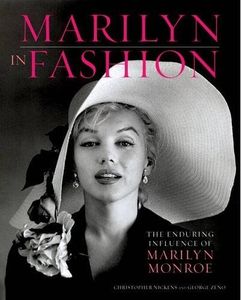
Authors Christopher Nickens and George Zeno will sign their book “Marilyn in Fashion,” today at the Egyptian Theatre, before a screening of 1952’s “Don’t Bother to Knock” starring Marilyn Monroe and Richard Widmark.

Using many rare photographs, the book traces the evolution of Marilyn’s style. The signing starts at 1 p.m. and the film at 2 p.m. The Egyptian Theatre is at 6712 Hollywood Blvd. in Hollywood.

Additionally, “Citizen Kane,” Orson Welles’ masterpiece, plays tonight at 7:30 p.m. at the Aero Theatre in Santa Monica.

On Sunday, July 22, at 7:30 p.m., there’s a great Otto Preminger double-bill: “Laura” (1944) and “Bonjour Tristesse” (1958). Don’t miss it!

The Aero Theatre is at 1328 Montana Ave. in Santa Monica.

Happy Gloria Grahame Day from FNB

FNB is a big fan of film-noir great Gloria Grahame. Photo by Halstan Williams, www.halstan.com

For the second year running, we at Film Noir Blonde are celebrating one of film noir’s great treasures, Gloria Grahame (Nov. 28, 1923 – Oct. 5, 1981). Why? Because we feel like it. Though she played a number of iconic parts in the late 1940s and 1950s, and won a Best Supporting Actress Oscar for her work in “The Bad and the Beautiful” (1952, Vincente Minnelli), co-starring with Lana Turner, Kirk Douglas and Dick Powell, Grahame typically wasn’t considered a top-tier actress in her day.

Gloria Grahame

“I don’t think I ever understood Hollywood,” she once said. Nevertheless, in addition to her film résumé, she worked regularly in TV and theater.

No stranger to scandal (she married her stepson several years after her divorce from director Nicholas Ray), Grahame was unconventional and liked to do things her way. Whether she was flirtatious and tough (remember good girl/bad girl Violet Bick in “It’s a Wonderful Life”?) or the ultimate victim (“The Big Heat”), her parts are often informed by her playful intelligence and sly sense of humor. Maybe that’s why we like her so much.

Anyway, here’s to singular, sexy, supremely talented Ms. Grahame! To read more and to see reviews of her films, click here.

The Noir File: Lusty? Low-budget? We’re in!

By Michael Wilmington

A noir-lover’s guide to classic film noirs (and neo-noirs) on cable TV. Just Turner Classic Movies (TCM) so far, but we’ll add more stations as more schedules come in. The times are Pacific Standard (listed first) and Eastern Standard.

Friday, July 13: Sam Fuller Day

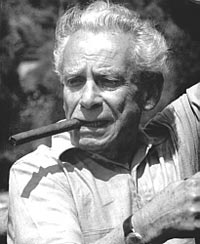
Samuel Fuller

The following four films were all written and directed by noir master Fuller.

5 p.m. (8 p.m.): “I Shot Jesse James” (1949, Samuel Fuller). Western noir, with Preston Foster and John Ireland (as the “dirty little coward … who laid poor Jesse in his grave”). (TCM)

6:30 P.M. (9:30 p.m.): “Park Row” (1952, Samuel Fuller). Fuller’s personal favorite of all his movies was this lusty low-budget period film, set in the 1880s, about newspapering in New York. With Gene Evans (“The Steel Helmet”) as a two-fisted editor and Mary Welch as a femme fatale of a publisher. (TCM)

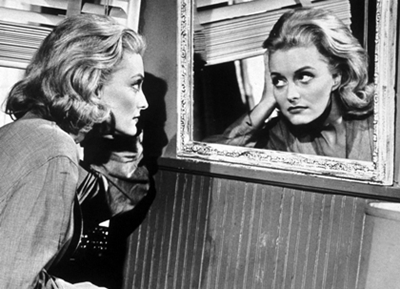
8 p.m. (11 p.m.): “Shock Corridor” (1963, Samuel Fuller). Aggressive, Pulitzer-hunting reporter Johnny Barrett (Peter Breck) feigns madness and gets himself committed to a mental institution to track down a murderer. Constance Towers is the stripper masquerading as his sister. Quintessential Fuller. (TCM)

Constance Towers plays in “Naked Kiss” (shown here) and “Shock Corridor.”

9:45 p.m. (12:45 a.m.): “The Naked Kiss” (1964, Samuel Fuller). A hooker, a pervert, and a sleazy cop get involved in small-town scandal and murder. Stanley Cortez (“Night of the Hunter”) photographs noirishly, both here and in “Shock Corridor.” (TCM)

Also on Friday:

3 a.m. (6 a.m.) “Séance on a Wet Afternoon” (1964, British, Bryan Forbes). Acting fireworks from Oscar nominee Kim Stanley and Richard Attenborough as a crooked spiritualist and her meek husband, tangled up in crime. Based on Mark McShane’s novel. (TCM)

3 p.m. (6 p.m.): “Wait Until Dark” (1967, Terence Young). From the hit stage play by Frederick (“Dial M for Murder”) Knott. Blind woman Audrey Hepburn sees no evil and tries to stave off Alan Arkin, Richard Crenna and Jack Weston. (TCM)

Saturday, July 14

4 a.m. (7 a.m.): “The Black Book” (“Reign of Terror”) (1949, Anthony Mann). French Revolution noir, with Robert Cummings, Arlene Dahl, Richard Basehart and Beulah Bondi. Photographed by John Alton. (TCM)

Sunday, July 15

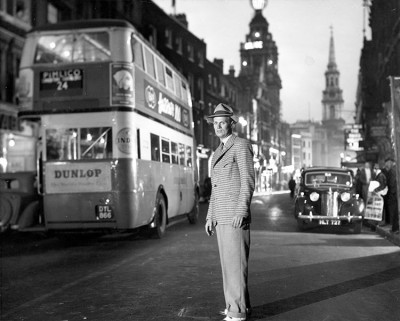
Richard Widmark is unforgettable in “Night and the City,” set in London.

5:30 a.m. (8:30 a.m.): “Night and the City” (1950, Jules Dassin). Crooked fight promoter Harry Fabian (Richard Widmark) tries to outrace the night. One of the all-time best film noirs, from Gerald Kersh’s London novel. With Gene Tierney, Herbert Lom and Googie Withers. (TCM)

7:30 a.m. (10:30 a.m.): “The Reckless Moment” (1949, Max Ophuls). Blackmail and murder invade a “happy” bourgeois home. Based on Elizabeth Sanxay Holding’s novel, “The Blank Wall,” and directed by one of the cinema’s greatest visual/dramatic stylists, Max Ophuls (“Letter from an Unknown Woman,” “Lola Montes,” “The Earrings of Madame de…”) With James Mason, Joan Bennett and Shepperd Strudwick. (TCM)

11 p.m. (2 a.m.): “Sawdust and Tinsel” (“The Naked Night”) (1953, Swedish, Ingmar Bergman). Film master Ingmar Bergman once said that his major early cinematic influences were “the film noir directors, Howard Hawks, Raoul Walsh and Michael Curtiz.” Here is one of the most noir of all Bergman’s films (along with “Hour of the Wolf” and “The Serpent’s Egg”): a German Expressionist-style nightmare of a film about life at a circus, in three rings of adultery, jealousy and torment. (In Swedish, with English subtitles.) (TCM)

Thursday, July 19

Orson Welles and Joseph Cotten star in “Citizen Kane.”

8:15 a.m. (11:15 a.m.): “Caged” (1950, John Cromwell). One of the best and grimmest of the “women’s prison” pictures. A grim look at life locked up, with Eleanor Parker, Agnes Moorehead, Hope Emerson, Jan Sterling and Jane Darwell. (TCM)

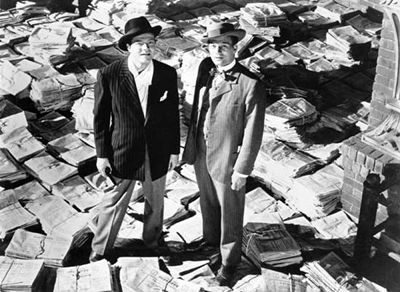
11:15 p.m. (2:15 a.m.): “Citizen Kane” (1941, Orson Welles). A dark look at the sensational, profligate life of one of the world’s most powerful and egotistical newspaper magnates, the late Charles Foster Kane (modeled on William Randolph Hearst and acted by George Orson Welles). Still the greatest movie of all time, it’s also a virtual lexicon of film-noir visual and dramatic style, as seminal in its way as “The Maltese Falcon” or “M.” Scripted by Welles and one-time Hearst crony Herman Mankiewicz, photographed by Gregg Toland, with music by Bernard Herrmann and ensemble acting by the Mercury Players: Welles, Joseph Cotten, Everett Sloane, Dorothy Comingore, Agnes Moorehead, George Coulouris, Ruth Warrick, Paul Stewart, et al. (“Rosebud? I tell you about Rosebud…”) (TCM)

Weinstein hosts Gallery for the People’s summer preview

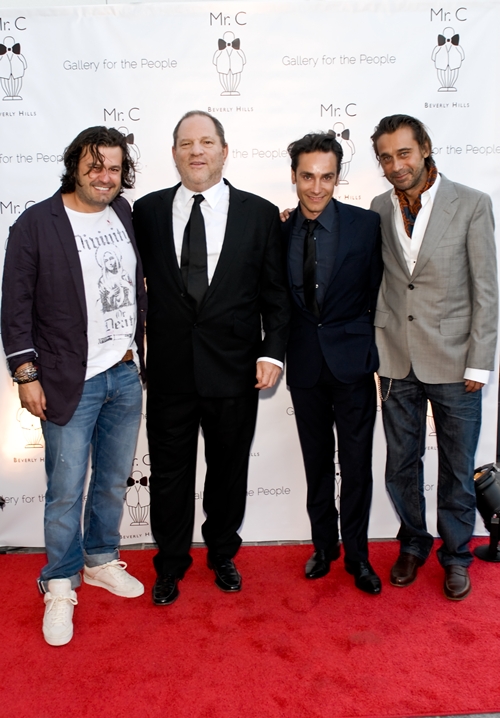
Studio-chief and producer Harvey Weinstein recently hosted the Gallery for the People’s summer preview at Mr. C Hotel in Beverly Hills. Held June 28, the evening benefited Art of Elysium, a non-profit arts organization. The event featured work from artists including Antonio “Nino” Del Prete, Davyd Whaley, Domingo Zapata, Jordi Mollà, Sage Vaughn and Vanessa Prager. Actresses Emma Roberts, Dakota Johnson, Erika Christensen and Gossip Girl director Joe Lazarove attended the benefit.

After the preview, the art is available for purchase online. The online gallery, curated by Eva Maria Daniels and Ally Canosa, displays seasonal collections of work designed to fuse cinema and art.

Mr. C Beverly Hills is Ignazio Cipriani’s new signature hotel.

From left: Domingo Zapata, Harvey Weinstein, Nino Del Prete and Jordi Molla at the event.

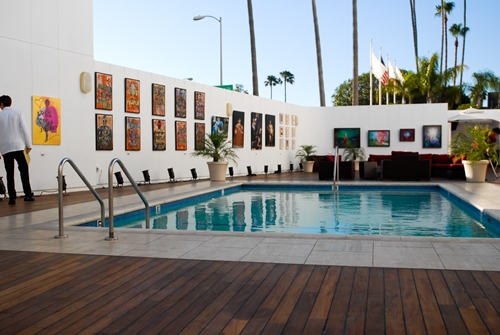
Art was displayed poolside.

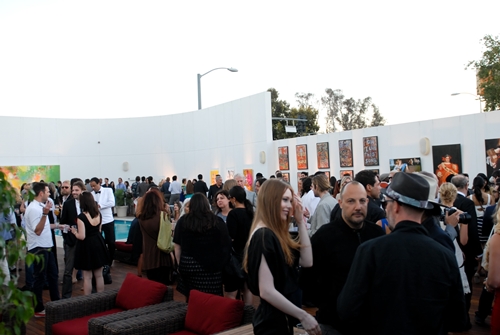
Guests mingled as they took in the art.

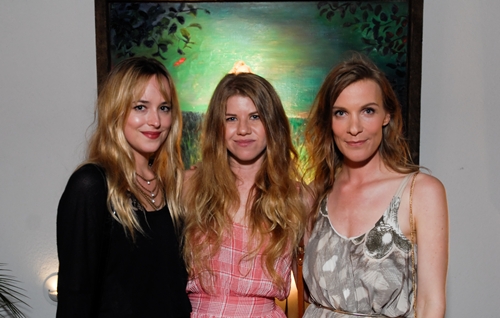
From left: Actress Dakota Johnson, artist Vanessa Prager and Gallery for the People co-founder Eva Maria Daniels took time out for a photo.