AFI Fest 2012 starts tonight with ‘Hitchcock’ world premiere

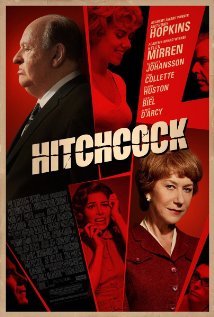
I’m very much looking forward to the 26th annual AFI Fest, which starts tonight in Hollywood with the world premiere of “Hitchcock” directed by Sacha Gervasi and starring Anthony Hopkins, Helen Mirren and Scarlett Johansson.

Other galas include: “Life of Pi” (in 3D), “Lincoln,” “On the Road,” “Rise of the Guardians” (in 3D) and “Rust and Bone.” For an overview of the festival, read Anne Thompson and Sophia Savage’s nifty preview piece here. AFI Fest 2012 is presented by Audi.

‘Stanley Kubrick’ opens today at LACMA

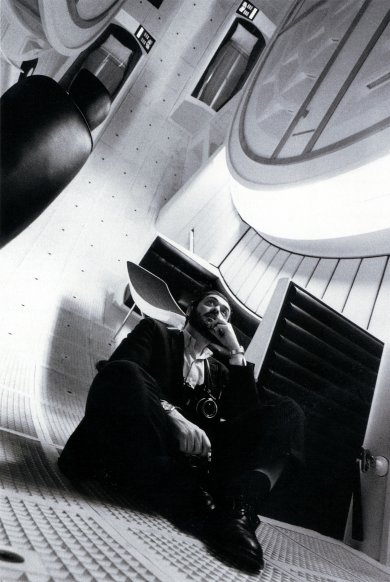
Director Stanley Kubrick sits in the interior of the space ship Discovery from “2001.” © Warner Bros. Entertainment

Acclaimed filmmaker Stanley Kubrick’s storytelling sometimes leaves me cold, but I’ve always admired his arresting images and balletic camera. I think his best movies are his classic noir and neo-noir titles – “Killer’s Kiss,” “The Killing,” “Lolita,” “Dr. Strangelove” and “The Shining.”

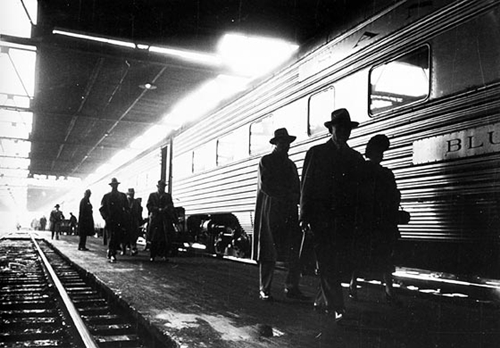
Born in New York in 1928, Kubrick began as a photographer. He had his first photograph published in Look magazine when he was 16 (he was paid $25). Later, as a Look staffer, he shot on city streets, often swathes of nighttime blackness pierced by patches of light. His desire for precision and painstaking quest for technical innovation started early and stayed with him for the next 55 years.

The range and richness of his art are explored in the first U.S. retrospective of his work, co-presented by the Los Angeles County Museum of Art (LACMA) and the Academy of Motion Picture Arts and Sciences.

Railroad station, Chicago 1949. Stanley Kubrick photo for Look magazine/Library of Congress

The exhibition highlights Kubrick’s bond with film noir, noting: “In the title of his first feature film, ‘Fear and Desire’ (1953), Kubrick declared two themes that he would return to throughout his career. The atmosphere of film noir – its claustrophobia, paranoia and hopelessness – creates a worldview made more tangible through style: low-key lighting, high-contrast and silhouetted images, the blackest shadows. These characteristics of noir, together with the camera movements that would soon be identified with the director, were coherently articulated in Kubrick’s three early features.”

And later: “What Kubrick began with ‘Lolita’ (1962) – disrupting the conventions of film noir – he accomplished completely with “Dr. Strangelove” (1964). Kubrick made the decision to treat the story as nightmare comedy.”

Kubrick’s films, including “Paths of Glory,” “Spartacus,” “Dr. Strangelove,” “2001: A Space Odyssey,” “A Clockwork Orange,” “Barry Lyndon,” “Full Metal Jacket” and “Eyes Wide Shut,” among others, are represented through archival material, annotated scripts, photography, costumes, cameras and equipment, set models, original promotional materials and props.

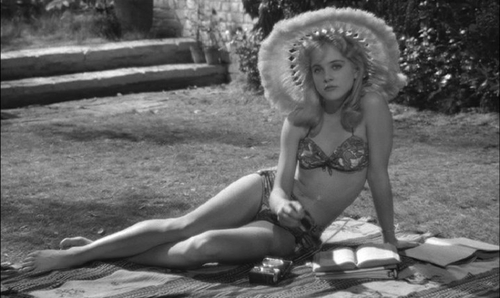
Sue Lyon stars in “Lolita,” based on the novel by Vladimir Nabokov.

In one of several letters rebuking Kubrick over the making of “Lolita,” the Bible Presbyterian Church of Tampa, Fla., decries that the movie “is based upon sex appeal. And that appeal is quite degenerate in its nature.”

There are also sections on Kubrick’s special effects and an alternate beginning to “2001” as well as displays about projects that Kubrick never completed (“Napoleon” and “The Aryan Papers”).

Kubrick died in 1999 in England, at the age of 70. He garnered 13 Academy Award nominations and “2001” (1968) won the Best Effects Oscar.

The exhibition, which runs through June 30, 2013, will be accompanied by a film retrospective at LACMA’s Bing Theater beginning this month.

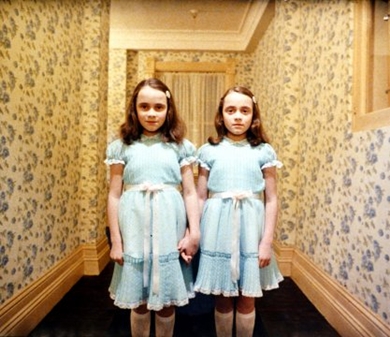
From “The Shining” (1980): The daughters of Grady (Lisa and Louise Burns). © Warner Bros. Entertainment

To kick off the film retrospective, on Wednesday, Nov. 7, the Academy will present an evening of clips and tributes to honor Kubrick, hosted by actor Malcolm McDowell. The event will also launch the Academy’s Kubrick exhibition, which will be open to the public through February 2013.

As for the LACMA/Academy collaboration: “It is a taste of things to come when we open the Academy Museum of Motion Pictures in the historic Wilshire May Company building on the LACMA campus,” said Dawn Hudson, Academy CEO.

Happy Halloween, everyone!

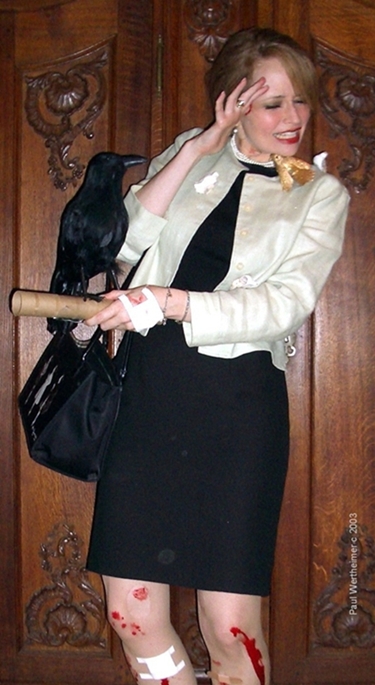
Here’s a shot of one of my fave costumes – a Hitch/Tippi homage.

Speaking of Hitchcock, this topic came up last night at a Writers Bloc Presents discussion with film critic and historian David Thomson. “Vertigo,” which flopped upon its release in 1958, recently ousted “Citizen Kane” for the No. 1 spot on the BFI’s Sight & Sound poll of the greatest films of all time.

The question: Does “Vertigo” work with an audience or is it best appreciated at home/without a crowd?

Thomson, whose latest book is “The Big Screen,” was enthralling and I particularly enjoyed his assessment of why film noir continues to captivate. Said Thomson: “It’s about the lonely hero who may be going crazy. Many men have had that feeling in the last 60 years.”

‘Holy Motors’ picks up three awards at Chicago film fest

By Michael Wilmington

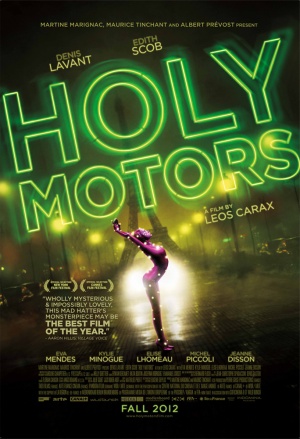
“Holy Motors,” Leos Carax’s surreal French fantasy-drama-thriller-romance (and then some) about a chameleonic actor and his weird limousine journey through nearly a dozen alternate lives, was the big winner at last week’s award ceremony of the 48th annual Chicago International Film Festival. The festival closed tonight.

Carax’s film, his first since “Pola X” in 1999, won the fest’s top prize, the Gold Hugo for Best Film, from the festival jury. “Holy Motors” also took Silver Hugos for Best Actor – Carax regular Denis Lavant – and Best Cinematography, awarded to Yves Capes and Caroline Champetier for their poetic and eerie view of Paris.

Ulla Skoog of Sweden was named Best Actress for her moving role as Puste, the tragic wife of the uncompromising anti-Nazi Swedish journalist Torgny Segerstedt in writer-director Jan Troell’s superb biographical drama, “The Last Sentence.”

The other awards in the international competition went to Michel Franco’s Mexican-French entry, “After Lucia,” a wounding indictment of high-school bullying that took the Special Jury Prize, and to Merzak Allouache’s “The Repentant” (Algeria/France), which won a Silver Hugo Special Mention.

The New Directors Competition Gold Hugo went to Peter Bergendy’s “The Exam,” a thriller about the dangers of police state surveillance set in ’50s Hungary. The runner-up Silver Hugo was awarded to Zdenek Jiraski’s “Flowerbirds,” a dark look at contemporary family life in the Czech Republic.

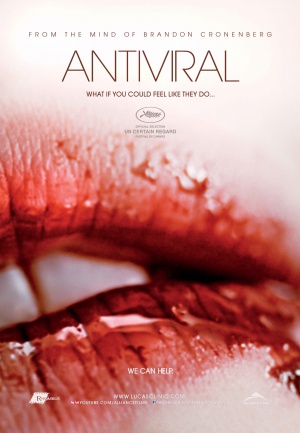
The winner of the After Dark Competition, devoted to horror movies, was a familiar name. Brandon Cronenberg, the son of David Cronenberg, took the Gold Hugo for “Antiviral” (Canada/USA), his dystopian futuristic shocker about an industry devoted to celebrity disease. The runner-up was Jaume Balaguero’s “Sleep Tight” (Spain), a psychological thriller about a Barcelona doorman with too many apartment keys.

The Career Achievement Award was given to one-time Chicago-based movie actress Joan Allen.

This year’s festival, an excellent one, offered 175 films from more than 50 countries. The CIFF award ceremony was held in festive surroundings at the Renaissance Blackstone Hotel, and featured presentations by ebullient CIFF founder/artistic director Michael Kutza and others. The main feature jury included directors Patrice Chereau of France and Joe Maggio of the U.S., actress Alice Krige of the UK and South Africa, actor/producer Amir Waked of Egypt, and Daniele Cauchard of Canada, general director of the Montreal World Film Festival. As usual, it was a great time.

Good evening: Antenna’s ‘Hitch-O-Ween: Alfred Hitchcock Presents’ marathon

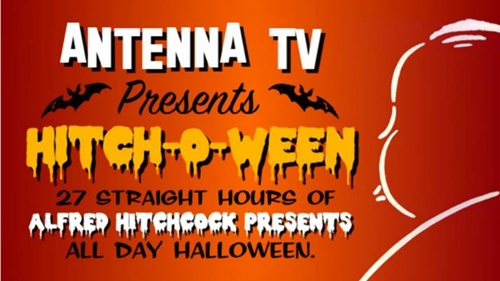
Beginning at 5 a.m. EST (8 a.m. PST) on Halloween, Antenna TV will air “Hitch-O-Ween,” a 54-episode/27-hour “Alfred Hitchcock Presents” marathon. You can see the list of episodes here.

Antenna runs “Alfred Hitchcock Presents” Monday-Thursday nights 12 a.m. EST (9 p.m. PST) and Saturdays 11 p.m. EST (8 p.m. PST).

Happy Halloweeen!

Hitch bio-flix premieres, ‘Psycho’ and ‘Dressed to Kill’ at Aero

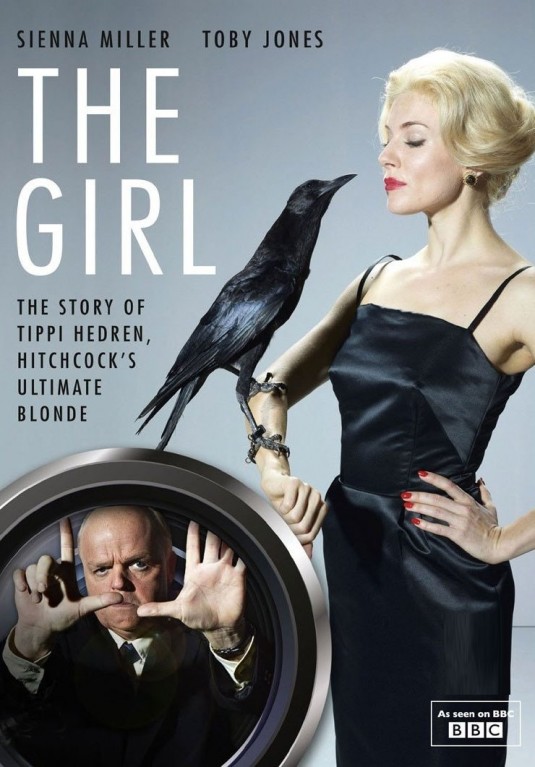
Decades after making “The Birds” (1963) and “Marnie” (1964) with Alfred Hitchcock, actress Tippi Hedren said the director harassed her and hindered her career, after she rebuffed his advances. “The Girl,” a recounting of her side of the story, premieres Saturday at 9 p.m. (8 p.m. Central) on HBO.

Directed by Julian Jarrold and written by Gwyneth Hughes, “The Girl” stars Sienna Miller and Toby Jones. If other Hitchcock blondes, such as Eva Marie Saint, Kim Novak, Ingrid Bergman and Grace Kelly, received similar treatment, they did not publicly reveal it. You can read Richard Brody’s excellent review of the movie here.

Writing for HuffPo, TV critic Lynn Elber describes the “stunned silence” after a private screening of the “The Girl,” held for Hedren, her friends and family, including daughter Melanie Griffith.

According to Elber, Hedren had this to say after the event in Beverly Hills: “I’ve never been in a screening room where nobody moved, nobody said anything. Until my daughter jumped up and said, ‘Well, now I have to go back into therapy.'”

It will be interesting to compare that treatment to “Alfred Hitchcock and the Making of Psycho,” which opens the AFI Fest 2012 on Thursday, Nov. 1. (General release is Nov. 23.)

Directed by Sacha Gervasi, the film highlights Hitchcock’s relationship with his wife Alma Reville and her contributions to his work, particularly 1959’s “Psycho.” The film stars Anthony Hopkins as Hitch, Helen Mirren as Alma and Scarlett Johansson as Janet Leigh. (Imelda Staunton plays Alma in HBO’s “The Girl.”)

And, tonight at the Aero Theatre in Santa Monica, there is a great double bill: “Psycho” and “Dressed to Kill” (1981, Brian De Palma), starring Michael Caine and Angie Dickinson.

On the radar: ‘WW II & NYC,’ noir fest in DC, vintage expo

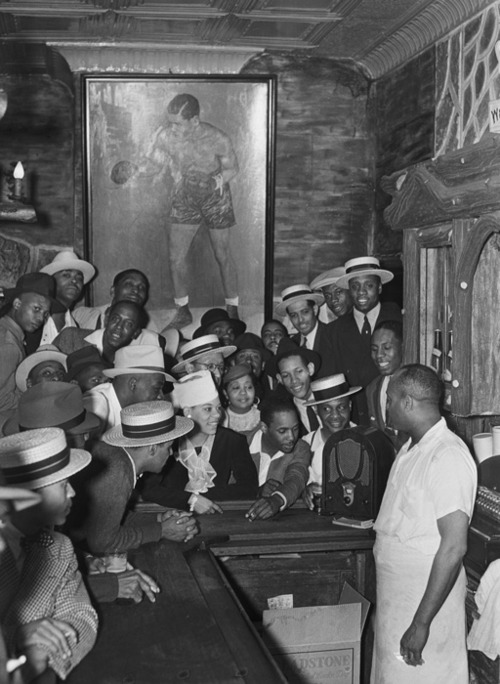
“Fans Listening to a Boxing Match over the Radio, June 22, 1938” is part of “WWII and NYC,” at the New-York Historical Society. The exhibition runs through May 27, 2013.

At the New-York Historical Society: “WWII & NYC” explores the impact of the war on the metropolis, which played a critical role in the national war effort, and how the city was forever changed.

Visit the site to access more images as well as lectures, films and behind-the-scenes stories. The exhibition runs through May 27, 2013.

An image from the “WWII & NYC” show.

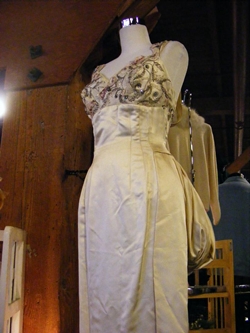
A dress from the vintage expo.

Noir fest journeys east: NOIR CITY returns to Washington DC on Saturday. The festival kicks off with a three-film celebration of Humphrey Bogart’s multifaceted noir career: Richard Brooks’ “Deadline U.S.A.” (1952) John Huston’s “Key Largo” (1948), and Delmer Daves’ “Dark Passage” (1947). Attendees will also have the rare chance to see Elliott Nugent’s “The Great Gatsby” (1949), starring Alan Ladd, as well as Jerry Hopper’s “Naked Alibi” (1954) starring Gloria Grahame and Sterling Hayden. The fest runs from Oct. 20 through Nov. 1.

Santa Monica hosts a vintage fashion expo: On Saturday, Oct. 20, and Sunday, Oct. 21, more than 95 dealers from across the country will be selling vintage clothing and accessories for men and women. The event is held at the Santa Monica Civic Auditorium, 1855 Main St.

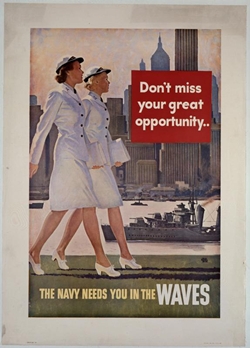
Waves lithograph by John Philip Falter/Library of Congress

Richly textured ‘Wuthering Heights’ reinvents a dark classic

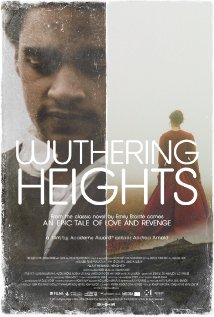
Wuthering Heights/2011/Oscilloscope Laboratories/128 min.

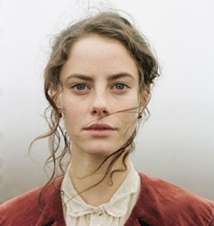
Kaya Scodelario plays older Cathy.

I often think of Scarlett O’Hara as the 19th Century prototype for a femme fatale. But I could just as easily make a case for Cathy Earnshaw, the willful, pragmatic and unconventional heroine of “Wuthering Heights,” Emily Brontë’s 1847 novel, set in the remote and mysterious English moors in the late 1700s.

Though lots of literature’s leading ladies (including Scarlett) have juggled two men on the sly, Cathy is completely up front in her decision to have her cake and eat it too. She will marry wealthy local landowner Edgar Linton in order to live in comfort and style. But she sees no reason to forsake her intimate friendship with Heathcliff, her treasured companion from childhood, a gypsy orphan whom her father adopts. So, she doesn’t.

And in some ways, the characters in “Wuthering Heights,” a strange, visceral love story that’s also a tale of revenge with an undercurrent of violence, prefigure some of the warped relationships we see 100 years later in film noir.

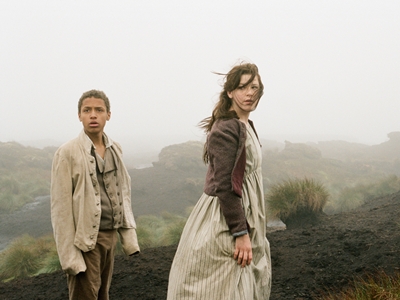
Solomon Glave and Shannon Beer play Heathcliff and Cathy as children.

Director Andrea Arnold’s version of what she calls “an unsettling, troubling book” is a spare, stark and unrelenting depiction of the dark classic. “I wanted to honor the essence of the book but give myself some room to explore and meander in their childhood,” said Arnold at a recent roundtable. “I try my best not to explain everything.”

Brontë’s novel has been adapted many times in many forms – most famously by William Wyler in 1939, with Sir Laurence Olivier and Merle Oberon, and in 1992 by Peter Kosminsky, starring Juliette Binoche and Ralph Fiennes. There’s also a Monty Python version called “The Semaphore Version of Wuthering Heights.”

In Arnold’s film, the young, madly devoted lovers are played by Shannon Beer and Solomon Glave. Kaya Scodelario and James Howson play the older Cathy and Heathcliff. Lee Shaw is particularly chilling as the abusive Hindley (Cathy’s brother). Beer, Glave and Howson make their acting debuts here. Says Arnold: “I have this fascination with authentic faces. I trust in cinema that a face can tell you things.”

This “Wuthering Heights” has minimal dialogue, no score, rough camerawork and a great deal of cruelty, to animals as well as people. Arnold makes the decision not to focus on exposition and thankfully avoids shaping the story to be “accessible.” Instead, with rugged images, rich textures and stinging performances, Arnold evokes a feeling of what life might have been like at that time – wild and brutal, isolated and tedious, and often short (Brontë died in 1848 at 30) – but also perhaps coolly purposeful and fiercely in the moment.

“Get over it, move on,” a modern audience might urge Heathcliff. But taking that attitude misses the point. In choosing to cling so stubbornly to the raw, singularly flawed passion he feels, he surrenders to the fact that its failure and triumph define him.

“Wuthering Heights” opens today at the Nuart Theatre in Los Angeles.

Chicago film fest opens Thursday with ‘Stand Up Guys’

The Chicago International Film Festival, the oldest competitive film festival in North America, starts tonight at the Harris Theater in Millennium Park with “Stand Up Guys,” a crime comedy about retired gangsters who reunite for one epic last night. The fest, now in its 48th year, runs through Oct. 25.

Produced by Chicagoan Tom Rosenberg (Academy Award winner, “Million Dollar Baby”) and directed by Chicagoan Fisher Stevens (Academy Award winner, “The Cove”), the film features an all-star cast including Academy Award winners Al Pacino, Christopher Walken and Alan Arkin as well as Emmy and Golden Globe-winner Julianna Margulies, all of whom will be in Chicago to celebrate opening night.

“This is without a doubt the most exciting opening night for the Chicago International Film Festival in many years,” says Michael Kutza, CIFF founder and artistic director.

This year’s fest features 175 films, representing 50 countries. The After Dark competition is a selection of the most chilling films from around the world. There are also panels, parties, discussions and tributes.

‘Where Danger Lives’ should reside in your film noir library

Boldly over the top and irresistibly campy, film noir posters are endlessly fascinating and fun. So, I’m very excited to tell you about a terrific new study of classic movie posters and lobby cards that were used to entice viewers around the world.

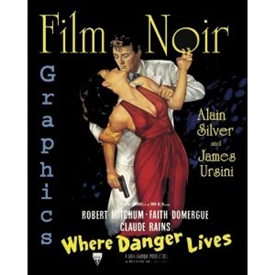
Film Noir Graphics: Where Danger Lives” (CreateSpace, $39.95) by Alain Silver and James Ursini is an essential book for any noir library. The esteemed historians and authors of “The Noir Style” – as well as eight other volumes about film noir – here focus on a commercial art form that memorably represents the moods and mores of its era.

Says Ursini: “We have always wanted to do a book on noir posters and lobby cards. The graphics in these ads reflect many of the themes and iconography of noir in a very vivid way.”

Using more than 300 color illustrations never before reproduced in book form, Silver and Ursini trace the sometimes-lurid line of graphics from pulp magazines like Black Mask and the dust jackets of hard-boiled novels to the earliest examples of film noir. They also touch on sidebar topics such as fashion and Humphrey Bogart’s face on posters in the U.S. and abroad.

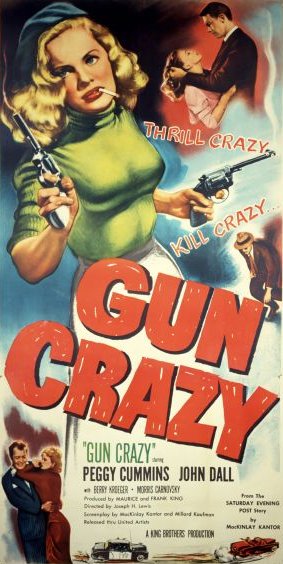
Primarily, though, the authors use these striking visuals to explore the genre’s context and subtext in an entertaining way. For example, in the chapter titled “Deadly is the Female,” they write: “There are some brunettes, the occasional red-head, but … the deadliest females in film noir are most often blonde.

“They don’t all have cigarettes dangling from their lips, a jaunty beret, or a pair of six guns in their hands, but the poses leave no question about what they’re selling. For the hapless victims, the dim-witted guys who take the bait and get caught in their mantraps, it really is ‘the kind of mistake a man can make only once!’ ”

Consider yourself warned. 😉 And definitely consider buying this book that is a rare combination: dazzling eye candy and compelling commentary from two of the best in the business.