Dita Von Teese to appear at perfume event in Los Angeles

Dita Von Teese photo by Ali Mahdavi

Dita Von Teese will appear at an in-store perfume event in Los Angeles this Saturday, Dec. 15. The event runs from 2-6 p.m. at Fred Segal, 8118 Melrose Ave., West Hollywood, 90046, 323-651-1800. This will be the launch of the second DVT fragrance, Rouge. As Dita puts it: “Perfume sets the mood and I’m in the mood to seduce.”

Dita Von Teese perfume is available online in most countries from RonRobinson.

On Sunday, Dec. 16, makeup artist Julie Hewett, who created Scarlett Johansson’s Janet Leigh look in “Hitchcock” and draws from film noir in her product line, is scheduled to give 30-minute private consultations from 10 a.m. to 5 p.m. at Blushington, a makeup studio at 8591 Sunset Blvd., West Hollywood, 90069. Call 310-652-5874 to make an appointment. You’ll be charged a $50 deposit at the time of booking, which can be used toward product purchases.

Giancana doc snares awards, screens Friday in Hollywood

Tony Curtis, John Turturro and Rod Steiger portrayed him in TV dramas. He appears as a character in Norman Mailer’s historical fiction. His name pops up in rappers’ songs. His fame and power rivaled that of Al Capone. And, nearly 40 years after his death, Chicago born and bred mob leader Sam Giancana(1908-1975) continues to garner attention.

Lately, the public’s desire to know more has been sated on the big screen. “Momo: The Sam Giancana Story” has played at film festivals and won two awards – best doc at the Hollywood Reel Independent Film Festival (which runs through Dec. 12) and the jury award for best doc at the Bel Air Film Fest in October.

Directed by Dimitri Logothetis, “Momo” was co-produced by Logothetis and Nicholas Celozzi, the grandnephew of Giancana. Logothetis and Celozzi have completed an episodic television project about Giancana and are scripting a new feature film as well.

Growing up in Giancana’s extended family meant tolerating a “controlled insanity,” said Celozzi in a recent phone interview. “It was high anxiety. There was a lot of whispering, some yelling, a lot of in and out. There were funerals. There was a lot of energy in that kitchen.

“But he took care of his family. If you needed money or advice, you went to him.”

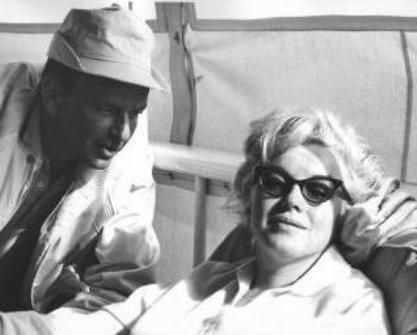
Frank Sinatra and Marilyn Monroe were friendly with power-broker Sam Giancana. The Outfit controlled labor unions in Hollywood.

Bright, ambitious and charismatic, Giancana (or Momo as he was nicknamed) is remembered as a standup father by his two daughters Bonnie and Francine, speaking on-camera about their father for the first time in 30 years. They clearly adored him. (Giancana’s eldest daughter Antoinette, who published 1984’s “Mafia Princess: Growing Up in Sam Giancana’s Family,” is not part of the film.)

He was also coldly lethal. “The thing that made him dangerous… was the willingness and ability to kill,” says FBI agent Ross Rice, one of many insiders featured in the doc, most of whom are longtime Chicagoans.

“Momo” explores Giancana’s impoverished childhood and bloody rise through the ranks of Chicago’s underworld (known as the Outfit), his alleged CIA connections (the filmmakers assert he was contracted to assassinate Fidel Castro), his influence in Hollywood and his relationships with Frank Sinatra and Marilyn Monroe, among others. The film also posits theories regarding Monroe’s death and the assassination of John Fitzgerald Kennedy.

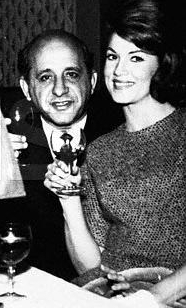
Sam Giancana and Phyllis McGuire in London, 1961

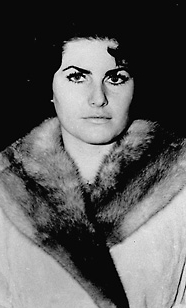
Judith Campbell Exner photographed in 1960; AP image

Giancana liked the limelight and, after his wife Angeline died in 1954, he was romantically involved with singer Phyllis McGuire (of the McGuire Sisters). He courted her by making her gambling debt disappear. He was also reportedly linked with Monroe and Judith Campbell Exner, both of whom were widely believed to have had affairs with JFK. Giancana’s fondness for good times and headlines (anathema for the underworld) also contributed to his downfall. “His arrogance was his Achilles’ heel,” says Celozzi.

On the evening of June 19, 1975, in the kitchen of his Oak Park home, as Giancana was cooking sausage and peppers, likely for a dinner guest, he was shot multiple times. The filmmakers say they show “finally and irrefutably” who killed the storied gangster.

Some of the film’s arguments are more convincing than others and Francine’s wish that her father be remembered as a genuine, gentle person seems a little naïve. But what’s beyond doubt is that Giancana at the height of his “career” had immense power and throughout his life had a knack for making money, even after he alienated himself from the Outfit. Following his death, his stash was never located. Each year in June a rose mysteriously arrives at his grave.

“Momo: The Sam Giancana Story” will screen Friday, Dec. 7, at the Hollywood Reel Independent Film Festival.

Retro restaurants> FNB dishes on dining: Russell’s in Pasadena

Might noir master James M. Cain have drawn inspiration from Russell’s?

Russell’s
30 N. Fair Oaks Ave.
Pasadena, CA 91103
626-578-1404

Hours: Open 7 a.m.-9 p.m. Sunday through Thursday; 7 a.m.-10 p.m. Friday and Saturday.
Parking: Street or garage at 30 E. Union St.
Price: Lunch/dinner entrees: $10-$18; separate breakfast menu

The Set Up: Russell’s is a cozy, upscale diner that’s been around since 1930. James M. Cain’s novel “Mildred Pierce” (published in 1941 and made into a movie with Joan Crawford in 1945) was set in nearby Glendale. Mildred made her small fortune in the restaurant biz; perhaps Cain drew some culinary inspiration from this spot.

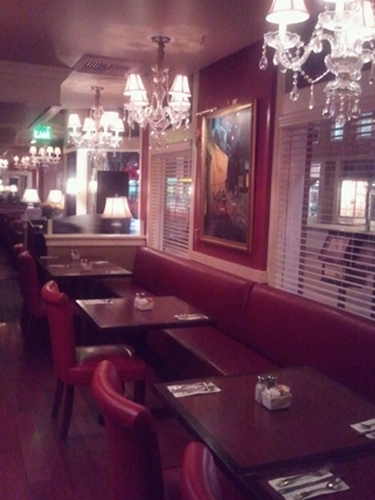
The Style: In terms of décor, Russell’s, with its red leather seats and chandeliers, feels more American bistro than trad diner, but then what’s wrong with some swank while you sup? Nothing in our book.

A slice of pie to make Mildred Pierce proud.

The Stuff: The lunch/dinner menu has a nice variety of meat, fish and pasta dishes along with burgers, sandwiches and salads. We tried the grilled salmon salad (the fillet comes on a generous bed of pristine romaine lettuce, tomatoes and vinaigrette dressing) and a glass of The Crossings New Zealand Sauvignon Blanc. For dessert: cherry pie à la mode mode with coffee. Delicious, fresh and packed with fruit, the best slice of pie we’ve tried in quite a while.

The Sting: Would be nice to see a cocktail list, but Russell’s is licensed for wine and beer only.

The Standout: The food is top-notch and the service is excellent – friendly, attentive and relaxed. When we asked the server what kind of coffee was used, he went to the kitchen to check and brought out a small package of Apffels for us to take home. Lovely!

Btw, this weekend is the last chance to see “A Conversation with Edith Head,” starring Susan Claassen, at the Pasadena Playhouse. This great show closes Dec. 1.

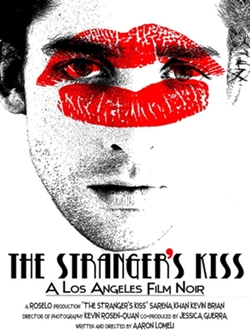
Director looks at intimacy, anonymity in ‘Stranger’s Kiss’ short

“Noir’s almost like a support group,” jokes LA-based filmmaker Aaron Lomeli. “It’s a way of saying ‘Oh, there are other people out there who feel the same way I do.’ Noir is more than pulp magazines and crime films, it’s an attitude I identify with. I’m attracted to the darker side of human nature.”

Lomeli brings his attitude to the screen in his first short film (outside of USC), “The Stranger’s Kiss,” about two young strangers (Sarena Khan and Kevin Brian) who meet outside a bar and quickly become involved – in more ways than one.

Besides wanting to evoke the feeling of classic noir, the writer/director says he wanted to express something about his experience with the LA dating scene, “I find there’s an odd balance between anonymity and intimacy with dating. Young men and women want to get close to someone without giving away too much of themselves just in case the next best thing is right around the corner. It’s hard to ever really know someone out here.”

“The Stranger’s Kiss” will play Saturday, Dec. 1, as part of the Los Angeles Neo Noir Erotic Film Fest, which touts itself as hosting the world’s sexiest and darkest crime short films. The fest plays at 8 p.m. at the Independent Theater, 251 S. Main St., in downtown LA. You can see a trailer of “The Stranger’s Kiss” here.

Happy Thanksgiving, everyone!

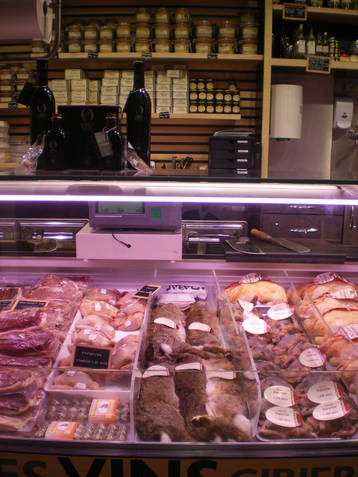
Besides film, one of my great loves is food and in particular French food. (Not that I don’t love the classics, turkey, dressing, pumpkin pie & the rest.) For the feasting holiday, I’m sharing these gorgeous pictures from my treasured friend of many years and beyond-gracious hostess, Veronique Tourneux. Veronique lives in Paris – she shot these on a recent trip to Toulouse.

If, after stuffing, you are inclined to read some movie reviews, I refer you to my Thanksgiving special from last year where I gave thanks for the film noir talents of Fritz Lang, Joan Bennett, Edward G. Robinson and Dan Duryea in “The Woman in the Window” and “Scarlet Street.”

For the rest of the weekend, I am following the lead of Bennett’s character in “Scarlet Street” a.k.a. Lazy Legs and letting the dishes pile up in the sink while I lounge around eating bonbons.

Some of the local specialties, not yet all tested.

Foie gras is just one of the goodies at the covered market.

Terrific those cèpes, especially with a magret de canard and a Cahors red wine.

The open-air market and its seasonal products.

FNB joins History Channel’s new community curator section

I’m very excited to announce that I’ve been selected as one of the History Channel’s Community Curators! Along with several other genre experts, I created a list of my all-time favorite movies in my special category (film noir). Each of them has a short synopsis.

My recommendations for the Best of Film Noir can be found on the site’s shop section, home to a rich variety of contemporary and classic films.

I’m really happy to be associated with the History Channel (HISTORY®), which describes itself as the leading destination for top quality entertainment programming, with award-winning original series and event specials that connect viewers with history in an informative, immersive and engaging manner across multiple platforms. The network’s all-original hit series includes American Pickers®, Ice Road Truckers® and Swamp People® as well as epic specials such as the Emmy® Award-winning Gettysburg.

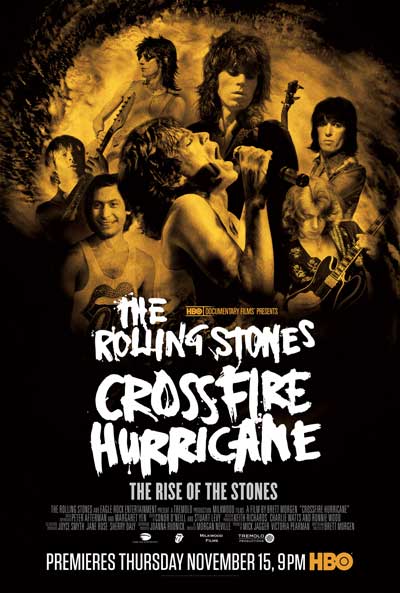
‘Crossfire Hurricane’ a kaleidoscopic tour of Stones history

Crossfire Hurricane/2012/111 min.

“Crossfire Hurricane: The Rise of the Rolling Stones” the new HBO film by and about the Rolling Stones marks the 50th anniversary of the musicians who went from badass to beloved, from “moronic cavemen” to the greatest rock ‘n’ roll band in the world.

The enduring appeal of the Stones stems from superb music, a capacity to reinvent themselves and the forceful personalities of the players – by turns outspoken, irreverent, shy, clownish, sensitive, clever, acerbic, funny and raw.

The Stones’ quick trajectory to fame was, as Keith Richards notes, kaleidoscopic. So is this must-see doc. Images are culled from more than 1,000 hours of film and “Crossfire” zips through the days at lightning speed.

Early on, we see a label (July 25, 1972, a day before Mick Jagger’s 29th birthday) and not much is time-stamped after that. But the chronology isn’t hard to follow, given the film’s tight pacing and focus on the early years.

As narration, you hear the voices (but don’t see the faces) of originals Richards, Jagger, Charlie Watts and Bill Wyman (he left the Stones in 1993) as well as Mick Taylor, who replaced Brian Jones (Jones died July 3, 1969) and was with the band until 1974, and Ronnie Wood, who replaced Taylor in 1975. There are no talking heads, i.e. rock critics, industry types or pop-culture commentators.

Drawing on more than 80 hours of new interviews with the band, “Crossfire,” directed by Brett Morgen, is the Stones talking about the Stones. They discuss their nearly-overnight success and chaotic early tours (“A chemical reaction seems to have happened,” says a young Jagger in an archival interview), the genesis of Jagger and Richards’ song-writing collaboration, the decline and death of Jones, the 1967 drug bust at Richards’ Redlands estate and subsequent run-ins with the law over drugs, the disastrous violence at the Altamont Speedway Free Festival in 1969, their days in the South of France recording 1972’s “Exile on Main Street” and their transition from “the band everybody hated to the band everybody loves,” as Jagger puts it.

Richards sounds craggy and wry. Charlie doesn’t remember much and sees himself as a loner, not truly a part of the band somehow. Jagger’s intelligence and charm is just as fresh as they were in his first interviews – a motif throughout “Crossfire” is the extent to which Jagger’s live performances can be likened to that of an actor’s craft. There is also never-before-seen footage as well as previously unheard versions of Stones’ songs and rare live performances.

Collectively, the Stones seem to have two Zen traits that in addition to heaps of talent, chemistry and supremely lucky timing, have held them in good stead for five decades. They exist in the moment and they’re authentic, whether they’re composing in a makeshift studio, performing at a stadium or just plain debauching, Keith’s specialty. They also don’t appear to take themselves 100 percent seriously. That could be why so many people around the world have loved them for so many years. In addition to being wildly entertaining, they act as an inspiration – to be creative, to be oneself, to question authority, to enjoy life, to swagger.

“When we got together,” says Wyman, “something magical happened.” A half-century later, the magic shows no sign of stopping.

“Crossfire Hurricane: The Rise of the Rolling Stones” will play several times on HBO and HBO2 through Nov. 29. (It debuted Nov. 15.)

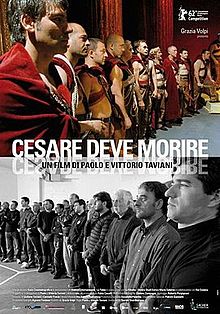
Taviani Brothers to be honored at Cinema Italian Style 2012

Cinema Italian Style 2012, showcasing classic Italian films and contemporary productions, starts Tuesday at the Egyptian Theatre in Hollywood.

Playing Tuesday night is “Two Women” (1960, Vittorio De Sica) starring Sophia Loren. The legendary Italian actress won a Best Actress Oscar for her work – the first awarded for a non-English performance. The screening is dedicated to Loren’s husband, producer Carlo Ponti (1912-2007).

On Wednesday, I look forward to seeing Italy’s official entry for the 2012 Best Foreign Language Film Oscar: “Caesar Must Die,” a drama about inmates in an Italian prison who are staging Shakespeare’s “Julius Caesar.”

Also that night, the directors of “Caesar Must Die,” Paolo and Vittorio Taviani, will receive this year’s Cinema Italian Style Award. I’ll be attending with my documentary filmmaker friend Michael Reano, who is visiting from Minneapolis, and it should be a great time. “Caesar Must Die” has been generating much buzz; the film won the Golden Bear at 2012 Berlin International Film Festival.

The style prize is awarded to a person who has promoted exchange between the Italian and international film industry. Previous recipients include George Clooney, Penelope Cruz, Terry Gilliam, Vittorio Storaro, Milena Canonero, John Turturro and Douglas Kirkland.

In addition to the Taviani brothers, several Italian filmmakers and stars will attend screenings at this year’s festival: Ivan Cotroneo, Michele Riondino, Carolina Crescentini, Claudia Potenza and Andrea Bosca.

Cinema Italian Style runs Nov. 13-18 at the Egyptian and Aero Theatres. There is also a special documentary night at the Italian Cultural Institute in Los Angeles. (All films in Italian with English subtitles.)

Director William Friedkin reveals the father of film noir

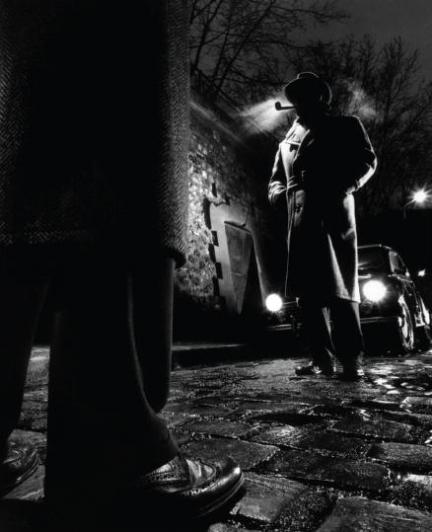
Mystery writer Georges Simenon “probably invented film noir,” said Academy Award-winning director William Friedkin on Thursday at a tribute to the famed Belgian author. The panel discussion and cocktail party at the W Hotel in Hollywood was hosted by Georges Simenon Ltd. and the Ile de France Film Commission.

An image from the Simenon tribute invitation

One of the best-selling writers of the 20th century, Simenon (1903-89) was uncommonly prolific – he produced 191 novels and 160 short stories, in addition to other writing.

His spare, minimalist crime stories (particularly his tales of the pipe-smoking café-frequenting Inspector Jules Maigret) clicked with millions of readers and the likes of William Faulkner, Gabriel Garcia Marquez, Jean Renoir, Claude Chabrol and Akira Kurosawa.

Simenon’s work inspired 70 feature films and 500 hours of TV worldwide.

“I started reading Simenon around the time I made ‘The French Connection,’ ” said Friedkin. “I certainly was influenced by his writing. He’s thought of as a thriller writer but he defies genre. The ‘romans durs’ [tough novels] were the ones that most resonated with me. They’re so simple and yet complex in their portrayal of character.”

Friedkin pointed to “The Man on the Eiffel Tower” (1949, Burgess Meredith) as one of the most exciting Simenon adaptations. Based on the novel “A Battle of Nerves” and starring Charles Laughton as Maigret, Friedkin said the scene in a crowded restaurant as the murderer and detective get into a heated talk amid ever-louder violins is “absolutely magnificent and may be my favorite scene in the movies.”

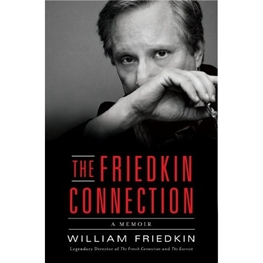
(More of Friedkin’s cinematic influences and inspirations likely will be revealed in his forthcoming book, “The Friedkin Connection: A Memoir,” which he confirmed at the party is scheduled for publication in March 2013.)

Joining Friedkin on the panel were John Simenon (one of the author’s sons), scriptwriter John Brian King and Olivier-René Veillon of the Ile de France Film Commission.

John Simenon confirmed that his father’s friendships with cops, criminals and doctors (he also read medical journals regularly) lent his work a gritty authenticity. Furthering the inventor-of-film-noir description, Veillon explained that the city of Paris, which was radically rebuilt and modernized in the 1860s according to Baron Haussmann’s vision, served as a gift to artists, especially Simenon.

“All the characters are defined by their location and their relationship with the city,” Veillon said. Just as the reconceived Paris and its denizens provided rich fodder for Simenon’s imagination, his fiction is ripe for new adaptations on screen.

Friedkin also asked John Simenon to recount his relationship with his father. “He was demanding in terms of how to conduct yourself and how to be a man. But he was there and he was very present, much more present than many fathers are today and more present than I can be for my son.”

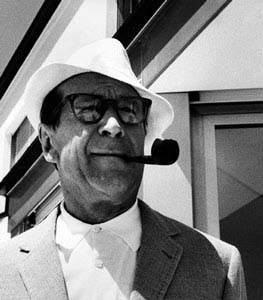
Georges Simenon, 1963, by Erling Mandelmann.

One of the first questions from the audience came from a sly Brit, who wanted to know the secrets to Simenon’s sex life, referencing the notion that Simenon was one of the great Casanovas of his time and claimed to have slept with 10,000 women.

First noting that he had not inherited this trait, John Simenon said this comment was “totally overblown” and “more of a joke” stemming from a reported conversation with director Federico Fellini. Between his work, his children and his love for food and cooking, that much bed-hopping would have been a mighty scheduling challenge.

His personal life aside, one of the most important women Georges Simenon knew was the French novelist Colette (1873-1954), whom he met early in his career and who advised him to eschew the literary, to cut his stories to the bone.

AFI Fest 2012 announces award winners

AFI Fest 2012 presented by Audi wrapped up today with the gala screening of “Lincoln” by Steven Spielberg and encore showings of some of the winning films. The program included 140 films (84 features, 56 shorts) from 3,400 submissions across 28 countries, with France, UK and Germany topping the international selections.

“Our desire is to have these films reach an even wider audience after these eight festival days, and that our jury and audience awards contribute to building an audience for these films,” said festival director Jacqueline Lyanga at the awards brunch.

The event was held in the Blossom Room of the Roosevelt Hotel, which was the venue for the first Academy Awards presentation on May 16, 1929.

AUDIENCE AWARDS
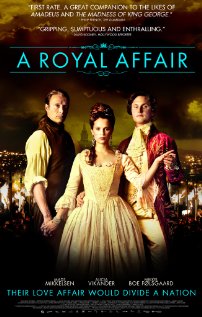
World Cinema: “A Royal Affair,” by Nikolaj Arcel, Denmark/Sweden/Czech Republic/Germany.

New Auteurs: “A Hijacking,” by Tobias Lindholm, Denmark.

Young Americans: “Only the Young,” by Jason Tippet, Elizabeth Mims, US.

Breakthrough: “Nairobi Half Life,” by David Tosh Gitonga, Kenya/Germany.

Mati Diop

GRAND JURY AWARDS, NEW AUTEURS
Grand Jury Award: “Eat Sleep Die,” by Gabriela Pichler, Sweden.

Special Mention for Performance: Mati Diop for her contribution to “Simon Killer” as both an actress and screenwriter. (“Simon Killer,” by Antonio Campos, US.)

Special Mention: “Here and There,” by Antonio Mendez Esparza, for its honest depiction of lives that are otherwise often invisible in our society. Mexico/Spain/US.

You can see the full list of winners here.