‘The Boudoir Bible’ author Betony Vernon shares secrets of sacred sexual pleasure

Betony Vernon

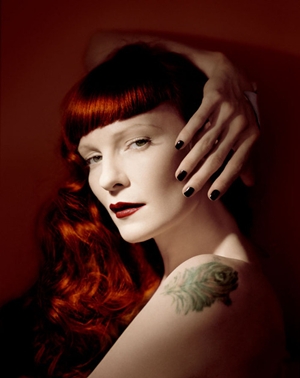
In her headshot by Ali Mahdavi, author Betony Vernon holds a come-hither gaze worthy of an Old Master courtesan. No girl next door is she – flame-red tresses frame alabaster skin, voluptuous cheekbones and pouty lips. Her dark fingernails drape over her ear; a lush green tattoo wraps around her shoulder. She is sultry and severe, alluring and mysterious.

In person, however, this modern-day femme fatale – more precisely a jet-setting jewelry designer as well as a writer/sex educator – is equal parts elegant and down to earth. We are in a back room at Bookmarc in West Hollywood, moments before the signing party for her book, “The Boudoir Bible: The Uninhibited Sex Guide for Today” (Rizzoli, $35).

I got the feeling she slipped into her fuchsia cocktail dress and Louboutins as easily as she might throw on a favorite pair of jeans. Her pale-pink back-seam tights are from a shop she loves in London. It was in London that Vernon started her educational sex salons in November 2002. She felt compelled to teach after retail buyers rejected her fine erotic jewelry collection in late 2001. The snub was a sign that there was a vast need for knowledge, among the fashion elite and everyday people alike.

Vernon is friendly and approachable, green eyes playfully glinting, lashes fluttering as she makes a point. Other times her words are punctuated with an easy laugh as fizzy as the champagne she is sipping. I can picture her growing up in the mountains of Tazewell, Va., in the ’70s, then heading to Florence to launch her design career.
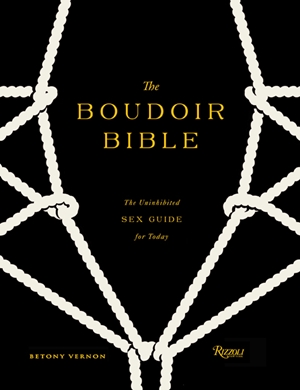
I’m curious about the fact that “The Boudoir Bible” is dedicated to her mother and father who, she says, made her extraordinary life possible. Says Vernon: “I grew up with very little parental guidance. I was sort of a free agent. Sometimes absence has a greater impact than presence.”

While we live in a sex-sells society, that doesn’t mean we are truly liberated, much less enlightened, Vernon believes. Where there are hook-ups, there are hang-ups, along with taboos, repression and fear. “We’re in a country where billions of dollars are made through porn,” she says. “Sex is very accessible but pleasure’s really not.”

Vernon recommends taking a holistic approach to sexual pleasure. For starters, she suggests setting aside time to experience a sacred sexual ceremony. In her book, she explains as follows: “By creating a ritualized context for sexual exploration, extending the duration of the time of the sexual encounter, and engaging the entire body as a sexual whole, the ceremony aims to broaden the horizons of pleasure beyond that which may be experienced through ‘normal’ everyday sex.”

Or as she put it during our chat: “Fast sex is a killer.”
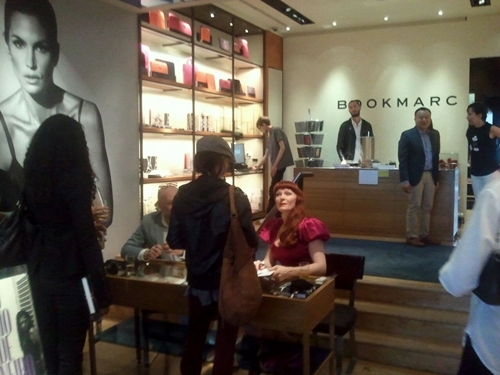
Betony Vernon greets guests at Bookmarc in West Hollywood.

The beautifully laid out book (with illustrations by François Berthoud) covers basics, such as anatomy and hygiene, as well as more risqué topics such as bondage, flagellation, role playing, restraints and cutting-edge sex toys.

Also central to satisfaction: empathy and communication. “There’s still the belief that a woman’s pleasure is very much like a man’s. It’s not. People tend to consider the act a performance and make orgasm their only goal. Goal-oriented is really dangerous. It’s better if you let go and not use a script.”

Speaking of scripts, Vernon possesses a healthy irreverence for the language we use to broach the subject of sex. She has banned words such as guilty pleasure, dirty and naughty from her vocabulary. And, for those playing the field, she doesn’t like the word single. “It signals alone when in fact you could be multiple.”

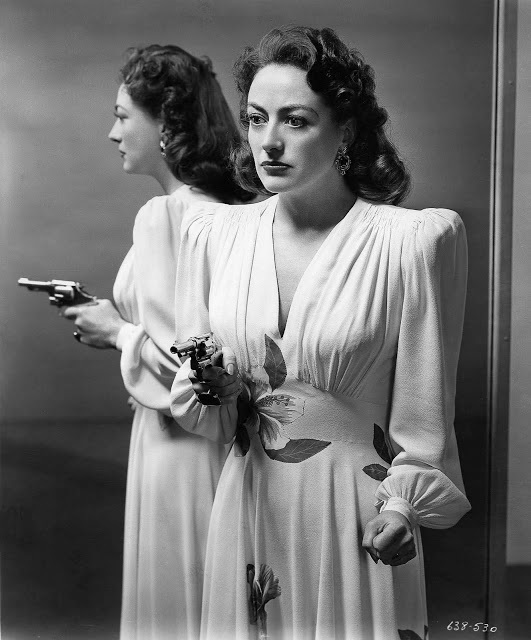
Happy (film noir) Mother’s Day, everyone!

“I’d do anything for those kids, do you understand?” — Joan Crawford as Mildred Pierce.

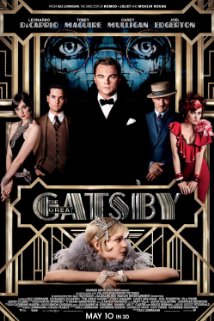
Baz Luhrmann and Catherine Martin create a gorgeously over-the-top Gatsby for the new millennium

The Great Gatsby/2013/Warner Bros. Pictures/143 min.

By Michael Wilmington

Director Baz Luhrmann’s razzle-dazzle, ultra-snazzy movie of novelist F. Scott Fitzgerald’s Jazz Age masterpiece, “The Great Gatsby” – which has been unjustly trashed by a number of critics – is a sometimes sensational movie that may not match the aesthetic brilliance and roaring ’20s allure of the book. (How could it? )

But it gives us plenty to enjoy anyway: a great story, much of Fitzgerald’s matchlessly lyrical narration and memorable dialogue, and a strong cast. Leonardo DiCaprio makes one of the best Gatsbys possible in a part that now seems perfect for him. Tobey Maguire plays Nick Caraway, Carey Mulligan is Daisy Buchanan and Joel Edgerton is her husband Tom.

There’s also a truly spectacular visual realization – by Luhrmann and his wife, Catherine Martin, who is the film’s production and costume designer – set in a dreamy fabrication of 1922 Long Island and Manhattan (actually shot in Luhrmann’s and Martin’s native Australia) that knocks your eyes out again and again.

This is Luhrmann’s (and Martin’s) Gatsby, as much as Fitzgerald’s: a romantic musical Gatsby, a hip-hop Gatsby, a gorgeously over-the-top Gatsby for the new millennium. But Luhrmann so obviously loves and admires the book that it becomes not only a beautiful movie and the best Gatsby film adaptation of the several made so far (1926’s with Warner Baxter, 1949’s with Alan Ladd, and 1974’s with Robert Redford), but, for me, one of the best movies of the year so far. It’s also a picture that deserves far more appreciation than it’s getting from a lot of my colleagues.

“The Great Gatsby” opens today.

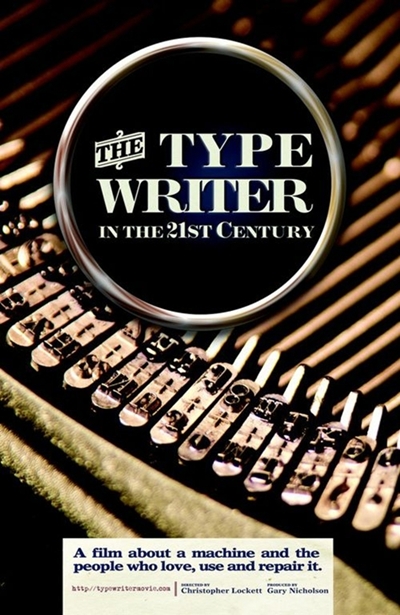
Doc taps the typewriter’s mighty impact, enduring appeal

As a retro-obsessed scribe, I often dream of steno pads, fountain pens and carbon copies. (Think “Mad Men” or Tippi Hedren’s office job in “Marnie.”) And of course I recall the marvelous clack, smack and ding of a vintage Smith Corona.

I am not alone in my nostalgia. Turns out, the good old-fashioned typewriter is experiencing a revival of popularity with users young and old. Just ask director Christopher Lockett and producer Gary Nicholson. Their documentary, “The Typewriter in the 21st Century,” opens in Los Angeles on Friday.

Inspired by a 2010 Wired magazine story called “Meet The Last Generation of Typewriter Repairman,” Lockett and Nicholson interviewed more than 30 typewriter devotees – writers, collectors, journalists, teachers, students, artists, inventors and repair men and women.

Among these old-school loyalists are non-fiction authors Robert Caro and David McCullough, who between them claim four Pulitzer Prizes, three National Book Awards and a Presidential Medal of Freedom. For Caro and McCullough (he has been writing on the same machine since 1965), the thoughtfulness and precision that a typewriter demands is integral to the writing and editing process.

And perhaps the creative process. It stands to reason that typewriters might have influenced the way literary heavyweights wrote, back in the day when a wordsmith might form a visceral connection with keys, carriage and ribbon. The film shows us machines once owned by the likes of Ernest Hemingway, Jack Kerouac, Tennessee Williams, John Steinbeck, Jack London, Sylvia Plath, George Bernard Shaw, John Updike, Ray Bradbury and Ernie Pyle. Certainly, all the great film noir novelists and screenwriters composed on typewriters.

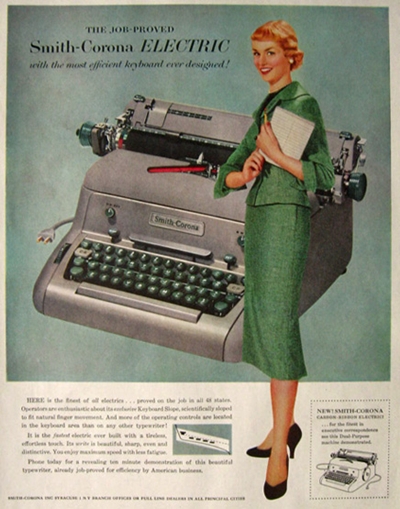
Smith Corona introduced the electric typewriter in 1955.

The filmmakers also explore the history (typewriters with a QWERTY keyboard date from 1873) and societal impact of these trusty devices. It’s easy to forget in our contemporary plugged-in cocoons, but typewriters changed the landscape of the business world. “The typewriter is the one piece of office technology that allowed women to move from the home to the professional work force,” says author Lynn Peril.

Whether drafting a work of art or just embracing a low-tech lifestyle, the connection to these machine endures. Singer-songwriter Marian Call uses a typewriter as a percussion instrument. “Nothing else makes that sound,” she says. “And it brings with it a flood of memories.”

Soldiers Peter Meijer and Alan Beck sent typewritten letters from the front lines in Afghanistan and Iraq. As Meijer put it: “One woman I sent letters to, when I visited her on leave, carried those letters around with her in her purse. You don’t get that with email.”

“The Typewriter in the 21st Century” runs May 10-16 at the Downtown Independent, 251 S. Main St., 213-617-1033. On May 10, the filmmakers will hold a Q&A between the 8 p.m. and 10 p.m. screenings.

Arthur Lyons Film Noir Festival in Palm Springs kicks off with ‘Three Strangers,’ a cynical tale of a trio bonded by fate

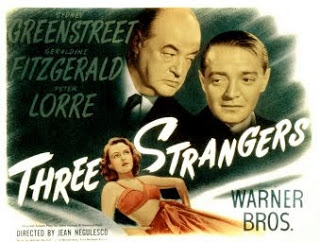
Three Strangers” (1946, Jean Negulesco) will open the Arthur Lyons Film Noir Festival in Palm Springs on Thursday, May 16. The fest, which runs through Sunday, May 19, will close with “The Asphalt Jungle” (1950, John Huston); a total of 12 films is scheduled. The lineup is a mix of landmark and obscure vintage movies from the classic film noir era.

Negulesco’s “Three Strangers” tells the cynical tale of a trio bonded by fate and a winning lottery ticket: Sydney Greenstreet, Peter Lorre and Geraldine Fitzgerald star. To read more about this film, I recommend this piece by my friend, writer/producer Barry Grey.

In addition to the screenings, the festival will include special guests and receptions. Ticket and festival information are available online or by calling 760-325-6565. Producer and host Alan K. Rode will be there to introduce films and make sure everyone is having a dark and decadent good time. Having attended in 2011, I can highly recommend this fest.

Film noir flourishes at TCM film festival in Hollywood

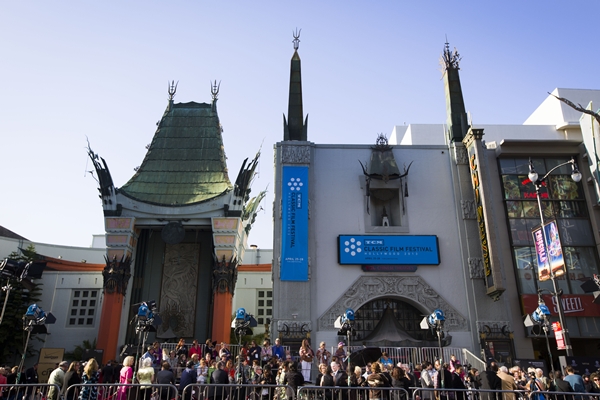
Grauman’s Chinese Theatre was a prime location at the TCM fest. Photo by John Nowak

From Marie Windsor’s character in “The Killing” telling her wounded husband (played by Elisha Cook, Jr.) to cab to the hospital because she doesn’t feel like calling an ambulance to Grace Kelly fending off her attacker and foiling the eponymous plot in “Dial M for Murder,” on-screen femmes fatales claimed their power at the TCM Classic Film Festival April 25-28 in Hollywood.

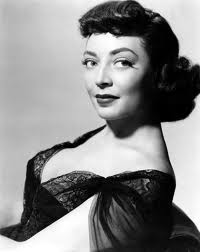
Marie Windsor

The film noir slate was particularly rich as was the experience of seeing these film on the big screen – the lighting, the compositions, the close-ups all popped in a way that just doesn’t happen when you watch these titles on TV. Additionally, the festival does a splendid job of finding guests to introduce the films.

At Thursday’s screening of “The Killing,” actress Coleen Gray shared memories of working with director Stanley Kubrick on what would turn out to be his break-though movie. “I knew he was good,” she said. “The cast is wonderful. The story, the director and the actors are in tune. And look at the cutting – it was cut to create a masterpiece. You go and see it and you bow to Mr. Kubrick.” She added that Kubrick spent much of his directorial energy working with Marie Windsor on her hard-as-nails dame Sherry Peatty.

There was film noir aplenty at the TCM festival as well as special guests, panels, a poolside screening and parties. Photo by Edward M. Pio Roda

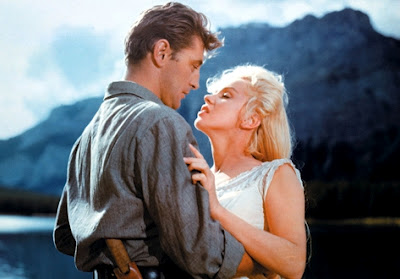
Fans of Ms. Windsor’s got another chance to connect with her at Friday’s screening of “The Narrow Margin.” The special guest was actress Jacqueline White. Also during that time slot producer Stanley Rubin reminisced about Marilyn Monroe, Robert Mitchum and Otto Preminger before a showing of 1954’s “River of No Return,” a stunning example of CinemaScope’s capabilities.

“[Marilyn] and Otto didn’t like each other and so we became very friendly. She was a perfect lady,” he said, adding that she was friendly and professional with Mitchum as well.

Robert Mitchum and Marilyn Monroe in “River of No Return.”

Watching Monroe and Mitchum, at the height of their physical radiance in this picture, ignited in me a newfound passion for Westerns. (Believe me, this is quite a feat.)

It’s always a toss-up when deciding between a beloved classic and a little-screened rarity. We at FNB decided to mix it up a little and forgo “Notorious,” which I often liken to a glass of Veuve Clicquot, for the chance to see a 1956 Jean Gabin black comedy “La Traversée de Paris.” Gabin is always good, but the film is uneven, without much tension or humor, a bit like a flabby claret.

A much better rare treat was the definitive British film noir “It Always Rains on Sunday,” (1947, Robert Hamer), set in London’s East End, featuring a Jewish family and starring John McCallum as prison escapee Tommy Swann and tough yet oddly dainty Googie Withers as his ex-gf. The Film Noir Foundation’s Eddie Muller introduced the film, noting that it was less a crime flick than an effective portrayal of the plight of the poor and downtrodden.

We watched this with our friend Debra Levine of artsmeme.com. Our verdict: It’s a good, engaging film but what makes it great is the sleek, striking cinematography. “Tommy made some poor choices,” Ms. Levine overheard someone saying as we left the theater. Aah, but we all know that “choice” is but a futile joke in the world of film noir!

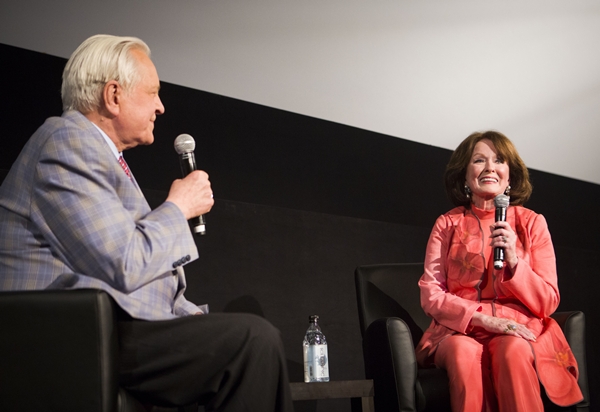
Eva Marie Saint discussed “On the Waterfront” with Bob Osborne on Friday night. Photo by John Nowak

Another Friday highlight: the lovely and gracious Eva Marie Saint discussing “On the Waterfront.”

The next morning, early birds were rewarded with a talk by Polly Bergen at the screening of “Cape Fear,” one of Robert Mitchum’s most menacing roles. Later-risers could head to the Egyptian Theatre for the West Coast restoration premiere of 1929’s “The Donovan Affair” with live actors (from Bruce Goldstein and company) and sound effects to recreate the lost soundtrack.

Eddie Muller interviewed Susan Ray at the screening of “They Live by Night.” Photo by John Nowak

Next up was a film noir must-see: “They Live by Night” (1949, Nicholas Ray), the quintessential young-lovers-on-the-run story, with an appearance by his widow Susan Ray and introduction by Eddie Muller. Commenting on Ray’s exploratory directing style, she said: “He did not go in with a preconceived idea of what should happen in a scene. He would set it up, light a fuse and watch. He would prod or provoke if necessary. He didn’t impose truth, he looked for it.”

And on Ray’s interest in telling the stories of young people, often loners or societal outcasts, she noted: “He saw the juice, potential, openness and flexibility of youth and he loved it.” Nick Ray’s gift as a visual poet is never more apparent than when you see “They Live by Night” on the big screen.

Continuing the noir mood was “Tall Target” (1951, Anthony Mann), a period noir, starring Dick Powell, Paula Raymond and Ruby Dee, based on an actual plot to assassinate Abraham Lincoln before he could take the oath office in 1861. Film historian Donald Bogle gave an insightful introduction.

Bob Osborne chats with Ann Blyth before Saturday night’s screening of “Mildred Pierce.” Photo by John Nowak

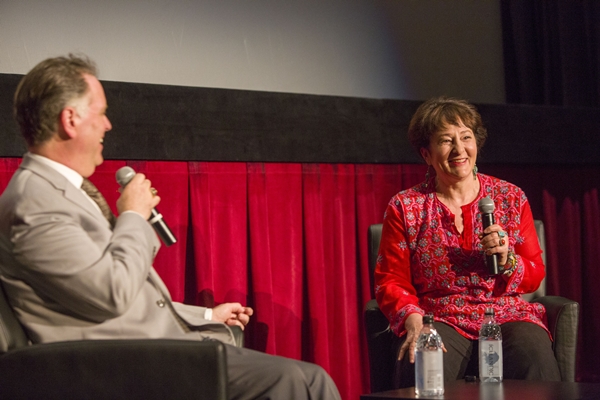
Then it was back to the Egyptian, where the line for “Mildred Pierce,” snaked down a busy side street of Hollywood Boulevard. Special guest actress Ann Blyth said of Joan Crawford, the film’s mega-star: “I have nothing but wonderful memories of her. She was kind to me during the making of the movie and she was kind to me for many years after.”

Popcorn, Coke, Raisinets and watching Crawford pull out all the shoulder-padded stops – what more could a noirista wish for?

Sunday morning kicked off with a choice between “Badlands,” “Gilda,” or sleeping in a bit and we hit snooze. Sorry. They don’t call me Lazy Legs for nothing. Our first movie was 1973’s “Scarecrow,” starring Al Pacino and Gene Hackman – it was one of the best and most resonant films we’ve seen in a long time. The acting is tremendous in this great-looking film, which won the Palme d’Or at Cannes. Director Jerry Schatzberg discussed his work in a pre-film chat with Leonard Maltin.

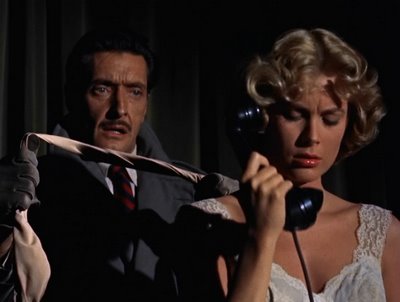
Anthony Dawson and Grace Kelly in “Dial M for Murder.”

Afterward, we managed to catch the very noirish “Safe in Hell” (1931, William Wellman), starring Dorothy Mackaill as a streetwise blonde who holds her own among a slew of unsavory men while she’s hiding out in the Caribbean. Donald Bogle introduced the movie and William Wellman, Jr. answered questions afterward.

A great way to wrap up the fest, before heading to the after-party at the Roosevelt Hotel, was a 3-D presentation of “Dial M for Murder.” Leonard Maltin and the always-entertaining actor-producer-director Norman Lloyd, 98, discussed 3-D and the working methods of Alfred Hitchcock. This Hitchcock gem, a perfect example of his subversive casting, is often underrated so we particularly enjoyed seeing it; we noticed that just about every seat was taken.

Hats off to TCM for another superb film festival! The staff does an excellent job running every aspect of this event and it is much appreciated.

‘Scatter My Ashes at Bergdorf’s’ hits theaters today

“The energy in ‘Scatter My Ashes at Bergdorf’s’ – what a great title! – is genuine, infectious and superabundant.

Joe Morgenstern, Wall Street Journal

You can read the full WSJ review here and view the film trailer here. Looking forward to seeing this. : )

Burt Lancaster on the big screen: ‘The Killers’ and ‘Criss Cross’

UCLA’s Billy Wilder Theater will present a terrific double bill on Saturday, May 4: two works from film-noir master Robert Siodmak, starring Burt Lancaster.

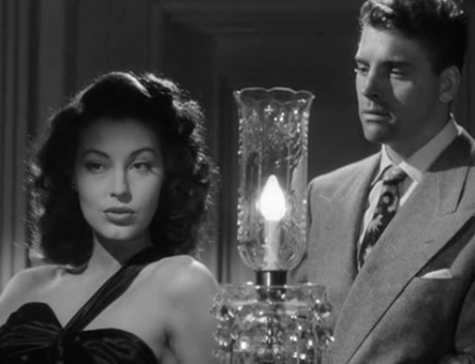
Burt Lancaster made his screen debut in “The Killers,” co-starring Ava Gardner.

In addition to being handsome and lithe, Lancaster projected intelligence, sensitivity and depth. He made his screen debut in “The Killers” (1946), adapted from an Ernest Hemingway short story and co-starring Ava Gardner. Lancaster can’t break Yvonne De Carlo’s spell in “Criss Cross” (1949), a brooding narrative of betrayal set in the back alleys of post-war downtown Los Angeles.

The evening is part of the Lancaster centennial celebration presented by the UCLA Film & Television Archive and the Hugh M. Hefner Classic American Film Program. The celebration of Lancaster’s movies runs through June 30. The Film Noir Foundation’s Alan K. Rode is the special guest on May 4.

Osborne shares highlights of this year’s TCM Film Festival

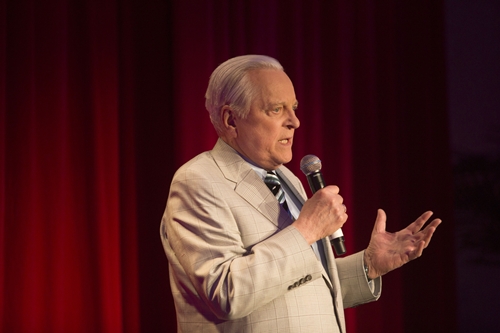
TCM host Robert Osborne speaks Wednesday at the TCM Classic Film Festival in Hollywood. Photo by John Nowak

“She’s so beautiful, you can’t believe she’s in her ’80s, and she’s so nice,” said TCM’s Robert Osborne about actress Ann Blyth, who co-starred with Joan Crawford in the classic domestic film noir “Mildred Pierce.”

Blyth will discuss the role when the movie screens at the TCM Film Festival, which starts Thursday at the Roosevelt Hotel in Hollywood. Osborne told journalists at a roundtable on Wednesday that he was surprised that Blyth wasn’t typecast. “She was so effective as the mean daughter [Veda] that you hated. Why didn’t that affect her career? She played sweet ingénues after that.”

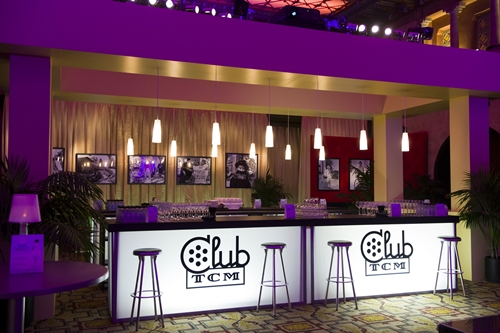
Club TCM at the Roosevelt Hotel in Hollywood. Photo by John Nowak

Other festival highlights for Osborne include interviews with other guests and screenings of “Funny Girl,” “Razor’s Edge,” “Cluny Brown,” and “Desert Song.”

The schedule features a strong film-noir component. “The mood is so rich, it’s a prominent part of the festival,” said TCM’s head programmer Charlie Tabesh. “We noticed that it was immensely popular last year. The theme was style and it fit in very well so we wanted to keep it up this year. People like to see these films on the big screen.”

Inside Club TCM at the Roosevelt. Photo by Edward M. Pio Roda

TCM host Ben Mankiewicz also touched on the popularity of noir and guest programming by the Film Noir Foundation’s Eddie Muller. Mankiewicz said he wants to suggest a night dedicated to neo-noir director John Dahl (“Kill Me Again,” “Last Seduction” and “Red Rock West.”)

“Dahl clearly had a keen appreciation of ’40s and ’50s noir,” Mankiewicz said.

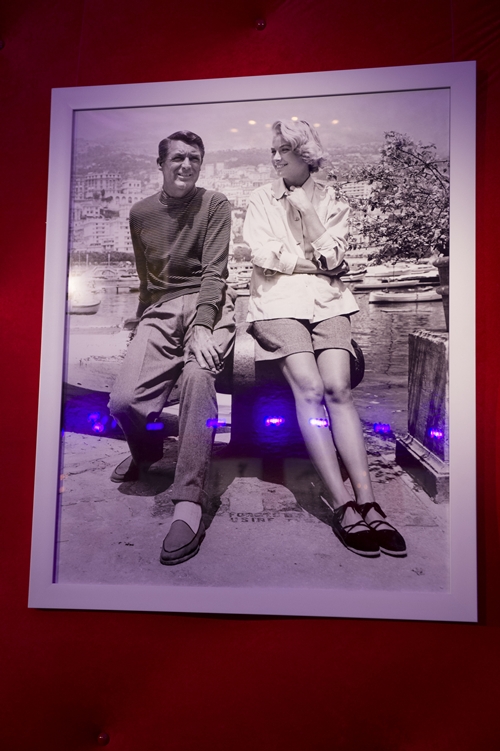
A vintage photo of Cary Grant and Grace Kelly at Club TCM. Photo by Edward M. Pio Roda

We at FNB would love to see a Dahl night. Until then, we can get our fill of these fantastic screenings. And there’s a plethora of photos and memorabilia on display at the Roosevelt. For example, today, before opening night, there’s a special presentation of a suit Humphrey Bogart wore in “The Big Sleep.”

So now it’s back to the Roosevelt! We will be updating on twitter for the rest of the fest.

All photos TM & (C) Turner Entertainment Networks, Inc.

On the radar: Paris pleasures, the Plaza goes ‘Gatsby’ and film fixes in Los Angeles

The City of Lights City of Angels (COL•COA) film fest at the Directors Guild in Los Angeles ends Monday night. On the slate are free screenings as well as announcements about awards and contest winners.

In the mood for a trip to Paris? In addition to the City of Light’s usual coolness, I found out about these two shows. Also, as always, there are noteworthy noirista events in New York and Los Angeles.

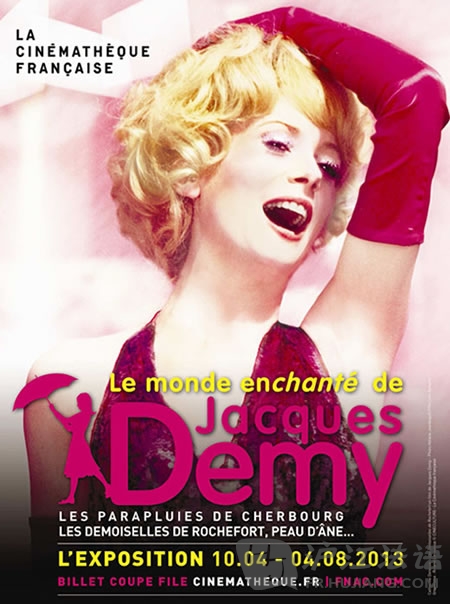
The Enchanted World of Jacques Demy,” at Cinémathèque française, presents film clips alongside costumes, photographs, paintings, drawings and sculptures created by artists who were influenced by the New Wave director. Closes Aug. 4.

A 200-foot long garden, created by landscape designer Piet Oudolf, marks the entrance to “No. 5 Culture Chanel,” an exhibition opening May 5 at the Palais de Tokyo. Coco Chanel launched No. 5, now a world-famous fragrance, in 1921. This show surveys art, photographs, films and music from that era, and highlights her plummy social network. (High-profile chums included Picasso and Jean Cocteau). Curated by Jean-Louis Froment. Closes June 5.

The Plaza Hotel in New York is hosting “The Great Gatsby Getaway” contest. One winner and a guest will win film-premiere tickets, a night at The Plaza, plus an f&b credit. The movie hits theaters May 10. Broadway nitty gritty: Alec Baldwin plays a gangster on the lam in “Orphans,” a revival of Lyle Kessler’s 1985 play at the Gerald Schoenfeld Theatre. Closes June 30.

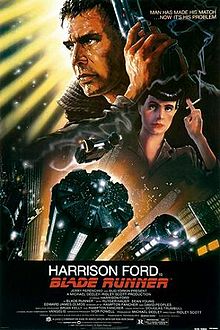
“Blade Runner” is one of many great movies showing as part of AFI’s event.

The American Film Institute (AFI) Night at the Movies, a one-night-only event, takes place Wednesday, April 24, at the ArcLight Hollywood, 6360 W. Sunset Blvd. This is a chance to see classic movies with the filmmakers and stars who made them. It’s a great lineup, boasting some top-notch noirs. You can also see the schedule for Classics in the Dome, eight films that will show early next month.

The much-anticipated Turner Classic Movies Film Festival starts Thursday, April 25, and runs through Sunday, April 28. This year’s theme is cinematic journeys. We at FNB will be out at this fest in full force, natch.

The Los Angeles Visionaries Association (LAVA) will host a Dashiell Hammett evening on Saturday, April 27, at the Los Angeles Athletic Club (downtown). Hammett is remembered for for his contributions to hard-boiled crime fiction and his stand against McCarthyism. Join Hammett scholar and granddaughter Julie M. Rivett as she explores her grandfather’s controversial political life, his relationship with Lillian Hellman, and the decades of consequent troubles that have tangled Hammett’s estate. Ticket includes dinner and parking; cash bar.