Happy birthday, Coco Chanel

“The most courageous act is still to think for yourself. Aloud.”

“Dress shabbily and they remember the dress; dress impeccably and they remember the woman.”

“You live but once; you might as well be amusing.”

“Fashion is not something that exists in dresses only. Fashion is in the sky, in the street, fashion has to do with ideas, the way we live, what is happening.”

“Simplicity is the keynote of all true elegance.”

“A woman who doesn’t wear perfume has no future.”

“I don’t understand how a woman can leave the house without fixing herself up a little – if only out of politeness. And then, you never know, maybe that’s the day she has a date with destiny. And it’s best to be as pretty as possible for destiny.”

“You can be gorgeous at thirty, charming at forty, and irresistible for the rest of your life.”

“How many cares one loses when one decides not to be something but to be someone.”

“Some people think luxury is the opposite of poverty. It is not. It is the opposite of vulgarity.”

“I wanted to give a woman comfortable clothes that would flow with her body. A woman is closest to being naked when she is well dressed.”

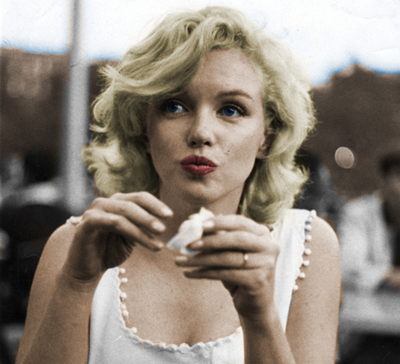
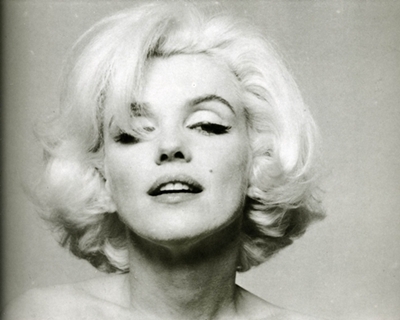
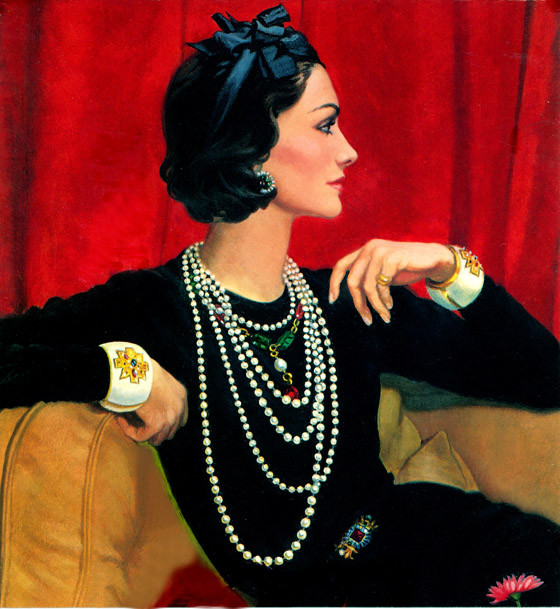
Coco Chanel: Aug. 19, 1883 – Jan. 10, 1971. Image: My Vintage Vogue

ThreadCrawl taps the allure of bricks-and-mortar buying

After noticing a number of lonely storefronts and seeing his favorite Melrose Avenue boutique close last winter, Joshua Jordison decided to take action. Says the Los Angeles native: “I am a music industry guy and have been involved in producing hundreds of events. I started to ask myself what I could do to get people excited about shopping again.”

That’s when he got the idea for ThreadCrawl, a citywide sale from Aug. 19-25 that he hopes will lure shop-a-holics away from their screens and onto their feet. Jordison says his foray into the fashion realm involves hundreds of stores, most of which will off 20 percent off all merchandise. Many stores are offering a bigger discount on select items.

Restaurants, bars, salons, spas and other merchants are also participating.

ThreadCrawl tickets are $17 and are good for the entire event. There is no limit on how much you can buy. Also, says Jordison,  $2 from every ticket sold will be donated to City of Hope.

While shopping, get inspired by Jordison’s carpe-diem approach. If you think, “I’m not sure I have anywhere to wear this,” then find somewhere fun to go!

Memories of Marilyn: ‘She gave everything she had’

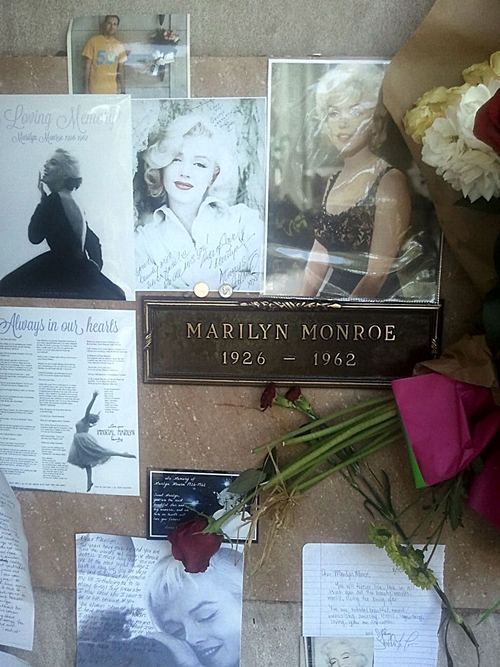
Flowers, photos and letters at Marilyn Monroe’s crypt in Westwood.

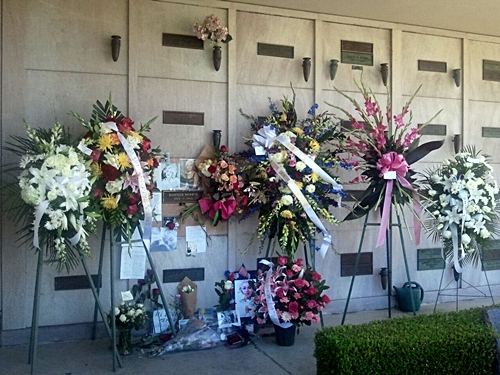
About 50 people attended the memorial service for Marilyn Monroe at Westwood Village Memorial Park Cemetery on Aug. 5, the 51st anniversary of her death.

Marilyn Remembered fan club president Greg Schreiner gave opening remarks before introducing the speakers: actresses Marian Collier Neuman and Joan Nicholas, biographer James Spada, Hollywood Museum founder and president Donelle Dadigan, and photographers George Barris and Douglas Kirkland.

All of the speakers said Marilyn had touched their lives and some shared memories of their encounters with the iconic actress. Neuman and Nicholas, both of whom had small parts in “Some Like It Hot,” recalled Marilyn’s stunning physical beauty and natural charm. It was also clear, they said, that Marilyn was struggling with personal problems during the shoot.

Fans from around the world sent flowers.

“She was stunning, lovely, nice and a very warm person,” said Neuman. “She was great fun. She didn’t hang out with us much but we knew she liked us.”

As a 10-year-old growing up on Staten Island, Spada saw his first image of Marilyn in the New York Daily News. “It was love at first sight,” he said. That pivotal moment inspired him to become a writer.

Dadigan touched on Marilyn’s timeless appeal, her “power beyond the blondeness” and her continuing popularity with young people. “Despite feeling lonely and unloved, Marilyn could project the feeling of love and give everyone the feeling of joy,” Dadigan said.

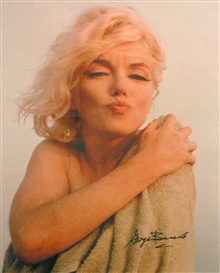
Marilyn shot by George Barris

Barris recalled attending a press event in New York in 1954. Marilyn had her back to him, he said, and he decided to start shooting. Suddenly turning around, she told him, “I’ll take a dozen of those.” He also remembered celebrating her 36th birthday (June 1, 1962) on the set of “Something’s Got to Give.” She was in good spirits, he said, but was unwell the following week.

Barris said 20th Century Fox “became hysterical” over Marilyn’s illnesses and inability to work on the movie, claiming that she’d “destroyed the studio,” which was running overbudget on “Cleopatra.” The studio fired her on June 8, 1962.

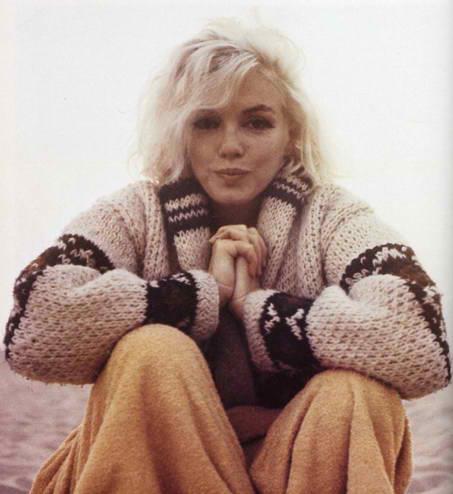
On July 13, 1962, Barris shot his famous series on Santa Monica beach. “She was magnificent, she worked so hard, she was trying so hard,” he said. At the end of the afternoon, when it got cold, he coaxed her into one more shot. “She sat down, puckered her lips and blew a kiss, telling me, ‘It’s just for you.’ She was the sweetest, most wonderful person to work with. She gave everything she had.”

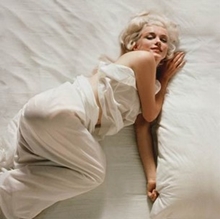
Marilyn shot by Douglas Kirkland

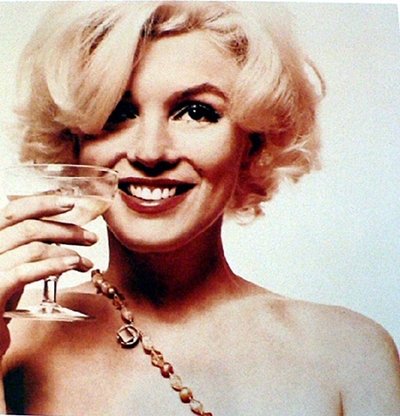
Kirkland photographed Marilyn in 1961 for Look magazine. He described her as kind, caring, playful and fun. She also took charge, said Kirkland, who was 27 at the time. “She said we need a bed and white sheets, Dom Pérignon champagne and Frank Sinatra records. Marilyn made the pictures I took. I did the technology but I give her the credit. She managed the shoot.”

The service concluded with a video tribute and audio of Lee Strasberg’s eulogy from Marilyn’s funeral in 1962 as well as a performance from vocalist Sue Ann Pinner. Greg Schreiner hosted lunch at his house after the service.

From crushing emptiness to eternal star: Remembering Marilyn Monroe on the anniversary of her death

Marilyn Monroe (June 1, 1926-Aug. 5, 1962) will be honored at a memorial service on Monday, Aug. 5, in Westwood.

Born and raised in Los Angeles, Marilyn modeled to support herself.

Bugs. Dogs. God. Since childhood, she was quick to ask questions about the everyday and the esoteric. This little girl named Norma Jean, as curious and proud as she was lonely and neglected, grew up to be Marilyn Monroe, the world’s most iconic and enduring sex symbol. Her love affair with the public still burns bright more than 50 years after her death on Aug. 5, 1962. She was 36.

Perhaps she sought answers and collected facts as a distraction from the grinding poverty and desperate uncertainty she faced as a kid. Her mother, Gladys, who fought bouts of mental illness, was unable to take care of her and her father had long been absent from their lives.

Norma Jean bounced between friends’ places and foster homes in Los Angeles. She was treated poorly for the most part, made to bathe in dirty water, molested by a man named Mr. Kimmel, pushed into marriage at 16 to Jim Dougherty, whom she barely knew, to avoid returning to the orphanage.

She was physically as well as intellectually precocious, fully developed by 12, and she knew her looks would open doors for her. There was a way, she believed, she could parlay her games of make believe into something refined, meaningful and artistic. If she got training and made the right connections, she could escape from her harrowing childhood.

“The truth was that with all my lipstick and mascara and precocious curves, I was as unsensual as a fossil. But I seemed to affect people quite otherwise.” — MM on her school days

Groucho Marx described Marilyn as Mae West, Theda Bara and Little Bo Peep all rolled into one.

“In Hollywood a girl’s virtue is much less important than her hair-do.” — MM

“After a few months, I learned how to reduce the boredom [at a Hollywood party] considerably. This was to arrive around two hours late.” — MM

As a struggling model and actress, Marilyn would spend Sundays at Union Station in downtown Los Angeles, watching people walk from the trains to be greeted, hugged and kissed, wondering what it would feel like to be cared about, to be missed and wanted.

“I could never be attracted to a man who had perfect teeth. I don’t know why, but I have always been attracted to men who wore glasses.” — MM

She got a few small parts in the pictures, studied acting and attended Hollywood parties, carefully crossing her legs to hide the holes in her nylons, quietly watching other guests play cards and win money.

“When the men laughed and pocketed the thousands of dollars of winnings as if they were made of tissue paper, I remembered my Aunt Grace and me waiting in line at the Holmes Bakery to buy a sackful of stale bread for a quarter to live on a whole week,” she recalled in her memoir (co-written with Ben Hecht), “My Story.”

The studio suits weren’t encouraging. Darryl Zanuck and Dore Schary told her that she was unphotogenic, that she didn’t have the right look. She persevered. Eventually, it was her enraptured fans (she garnered 7,000 letters a week) who fueled her fame and propelled her rise to the top. “I knew I belonged to the public and to the world, not because I was talented or even beautiful but because I had never belonged to anything or anyone else.”

“We were the prettiest tribe of panhandlers that ever overran a town.”         — MM on her early years as a Hollywood actress.

One of her most important movies, early on, was a film noir: “The Asphalt Jungle” (1950, John Huston). “Don’t Bother to Knock” (1952, Roy Ward Baker) and “Niagara” (1953, Henry Hathaway) also showcased her talent for playing dark, dangerous women.

The studio pushed her toward lighter fare – musicals and comedies – where she played frothy flirts and bubble-headed gold diggers: “Gentlemen Prefer Blondes” (1953, Howard Hawks), “How to Marry a Millionaire” (1953, Jean Negulesco) and “There’s No Business Like Show Business” (1954, Walter Lang).

Marilyn pushed back, wanting more complex parts and sometimes she got them. She teamed up with some of Hollywood’s greatest directors: Huston, Hawks, Otto Preminger in “River of No Return” (1954), Joshua Logan in “Bus Stop” (1956), twice with Billy Wilder, in 1955’s “The Seven Year Itch” and four years later in the black-comedy classic “Some Like It Hot.”

In 1960, she worked with George Cukor in “Let’s Make Love.” Cukor also directed her in the unfinished “Something’s Got to Give” (1962). She co-starred with Sir Laurence Olivier (he also directed) in “The Prince and the Showgirl” (1957) and earned acclaim for her work, especially from European critics.

“In a daydream you jump over facts as easily as a cat jumps over a fence.” — MM

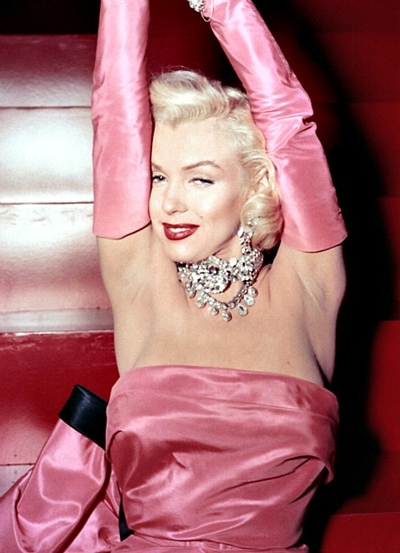
It was choreographer Jack Cole’s idea to pair pink and red in the color scheme of 1953’s “Gentlemen Prefer Blondes.”

Marilyn was the favorite movie actress of the French philosopher/novelist/playwright Jean-Paul Sartre, and he wrote the lead female part in his original script “Freud” (1962) for her. (Susannah York played it.)

“I’ve often stood silent at a party for hours listening to my movie idols turn into dull and little people.” — MM

Her boyfriends reportedly included Marlon Brando, Frank Sinatra, Elia Kazan, Orson Welles, Yves Montand, John F. Kennedy and Robert Kennedy; her best girlfriend (and one-time roommate) was Shelley Winters. During the height of her fame, Marilyn married two more times – to Yankee baseball great Joe DiMaggio (January-October 1954) and to playwright Arthur Miller (1956-1961).

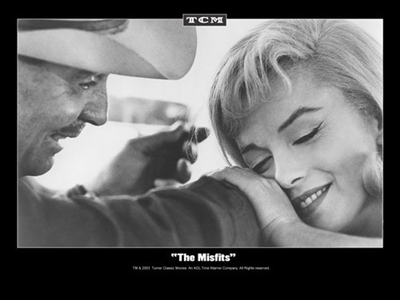
Miller wrote “The Misfits” (1961) for her. In that ill-fated film, Marilyn co-starred with Clark Gable, the movie star she’d so often pretended was her father, and was directed by Huston, whom she considered a genius. During the arduous shoot in the Nevada desert, the Monroe-Miller marriage came apart. Gable died from a heart attack days after the filming ended. Said Huston of Marilyn: “She went right down into her own personal experience for everything, reached down and pulled something out of herself that was unique and extraordinary. She had no techniques. It was all the truth, it was only Marilyn.”

Marilyn once implored a LIFE reporter: “Please don’t make me a joke.”

Her vulnerability and little-girl-lost quality, coupled with her stunning looks and glamour, are often cited as the reasons for her widespread, lasting appeal.

There’s no doubt she faced a litany of lingering problems: a family history of mental illness; emotional instability and physical maladies; a dependency on drugs and alcohol; endometriosis, abortions and miscarriages; difficulty remembering lines and showing up on time; broken marriages and failed affairs as well as frustration and fights with 20th Century-Fox (the studio refused to let her see scripts in advance of a shoot, then relented).

Some of her early work is slightly cloying – the breathy voice a little too mannered, her demeanor a little forced. And despite critical recognition for “Bus Stop,” “Prince” and “Some Like It Hot,” she remained pigeonholed as a blonde bombshell, a sexy joke.

“When you’re a failure in Hollywood – that’s like starving to death outside a banquet hall with the smells of filet mignon driving you crazy.” — MM

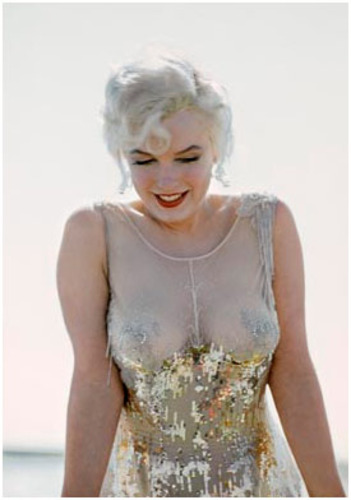
Orry-Kelly designed Marilyn’s clothes in “Some Like It Hot.”

“When you’re broke and a nobody and a man tells you that you have the makings of a star, he becomes a genius in your eyes.” — MM

Marilyn’s marriage to playwright Arthur Miller came apart while making “The Misfits.” Co-star Clark Gable died days after shooting ended.

Yet it was her precise and subtle comic timing that set her apart from other actresses. As Wilder put it: “She was an absolute genius as a comic actress, with an extraordinary sense for comic dialogue. … Nobody else is in that orbit; everyone else is earthbound by comparison.”

“To love without hope is a sad thing for the heart.” — MM

Humor was likely a coping mechanism she’d honed in an effort to ward off the crushing emptiness she’d known since childhood. Norma Jean saw movies again and again at Hollywood theaters; play-acting with other kids, she thought up the good stuff, the drama.

Marilyn liked her body and, some days, she enjoyed the attention she got from her looks. But she also gave the impression that her beauty could be swiftly forgotten, that she got bored too fast to dwell on her appearance. Underneath the surface, right alongside the troubled soul, was a well of pure bliss that wasn’t hard to reach, if she had a receptive audience, whether it was a likeminded bookworm friend or a movie palace packed with people.

When the fantasy was in full, giddy swing, she laughed sweetly and cynically, sometimes at herself. She could be funny with a look, a gesture or a makeshift prop – sparking joy from nothing at all.

Sir Laurence Olivier said of Marilyn: ”Look at that face – she could be five years old.”

Photographers include: George Barris, Richard Avedon, Philippe Halsman, Milton Greene, Sam Shaw and Bert Stern.

Los Angeles honors Marilyn Monroe with memorial tributes

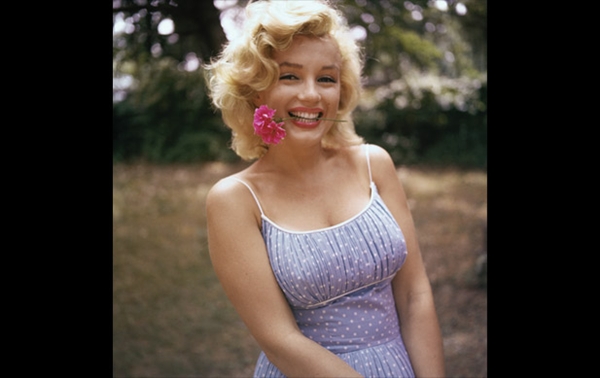
Marilyn Monroe in 1957; shot by Sam Shaw. Copyright Sam Shaw

Several special events in Los Angeles are slated to mark the 51st anniversary of Marilyn Monroe’s death on Aug. 5, 1962. Monroe overcame tremendous adversity to become one of the most iconic movie stars of all time. She died alone at her Brentwood home from a drug overdose; she was 36.

In conjunction with Marilyn Monroe: The Exhibit, which runs through Sept. 8, the Hollywood Museum will host two onsite events. At a meet-and-greet from 1- 3 p.m. on Saturday, Aug. 3, Marilyn collectors Greg Schreiner and Scott Fortner will share the history behind items on display in the exhibit.

From 1-3 p.m. on Sunday, Aug. 4, there will be a book signing with authors Lois Banner, Douglas Kirkland and James Spada. Banner, a professor at the University of Southern California, wrote Marilyn: The Passion and the Paradox, which explores Marilyn’s life from a feminist perspective. Photographer/writer Kirkland’s book An Evening with Marilyn includes a series of Marilyn photos he took as well as details of the shoot. Spada produced the coffee-table book Marilyn Monroe: Her Life in Pictures.

The Hollywood Museum is located in the historic Max Factor Building at 1660 N. Highland Ave.

On Saturday night, dance critic Debra Levine and Oscar-winning actor, singer and dancer George Chakiris will introduce the 60th anniversary screening of “Gentlemen Prefer Blondes,” part of the Academy’s Oscars Outdoors series in Hollywood. The event is sold out but there will be a standby line.

Additionally, the annual “Marilyn Remembered” memorial service, co-sponsored by the Hollywood Museum, takes place at 11 a.m. Monday, Aug. 5, at the Westwood Village Memorial Park Cemetery, 1218 Glendon Ave. in Westwood.

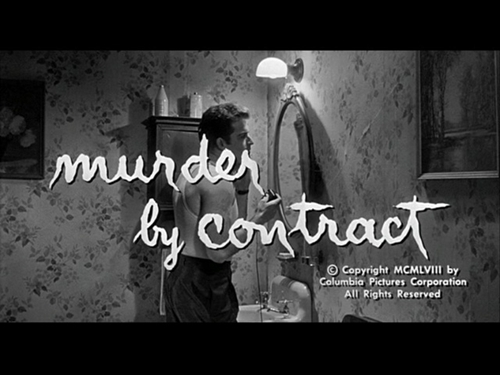
Film noir gem ‘Murder by Contract’ highlighted in new book

This summer, my friend Rob Elder released a new book (his sixth): The Best Film You’ve Never Seen: 35 Directors Champion the Forgotten or Critically Savaged Movies They Love.

As Roger Ebert put it: “How necessary this book is! And how well judged and written! Some of the best films ever made, as Robert K. Elder proves, are lamentably all but unknown.”

It’s a great read and an invaluable reference tome for any serious film lover. To give you an idea of the treasures you will discover, Rob has kindly agreed to let me run an excerpt of the chapter in which he discusses “Murder by Contract” (a taut and chilling film noir) with director Antonio Campos.

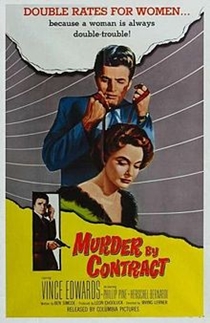
Murder by Contract
1958, Directed by Irving Lerner. Starring Vince Edwards, Phillip Pine and Herschel Bernardi.

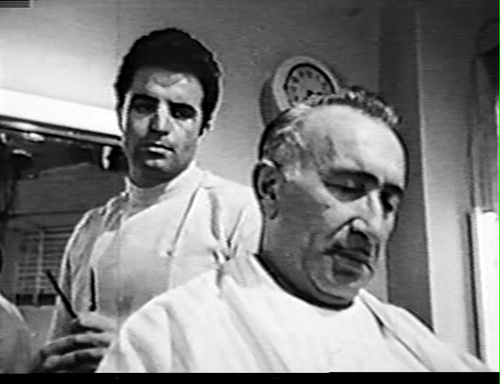
Claude (Vince Edwards) is an unusual hit man. He wasn’t born to the life, but instead he made himself a resourceful, calculating contract killer with an existentialist worldview. “He is so committed to his point of view and his philosophy that he’s developed—you respect that,” says Antonio Campos, who champions Murder by Contract. Campos praises the stylized off-camera hits, the economy of shots, and Edwards’s lead performance in this B-level noir film, shot in eight days.

That’s not to say he thinks it’s a perfect film. “What’s also charming about the film is that it is kind of a diamond in the rough,” Campos says. “Whatever rough edges Murder by Contract has are ultimately completely overshadowed by the brilliant dialogue and the commitment to a tone that was so ballsy.”

Antonio Campos, selected filmography:
Afterschool (2008), Simon Killer (2012)

Robert K. Elder: How would you describe Murder by Contract to someone who’s never seen it?
Antonio Campos: It’s a faithful noir film about a contract killer, from a time when not many films were made like that.

What made it special?
Campos: I remember vividly, I’d seen it at the Film Forum, and I remember feeling like I hadn’t seen anything like that in the program, and also I’d never seen anything like that outside of even contemporary film. Obviously there are contract-killer films now, but there was something about it, and the lightness, the light touch that it had, that really struck me as something very unique.

Let’s talk about the star, Vince Edwards, who was best known as the lead in TV’s hospital drama Ben Casey. Can you talk about him as a leading man?
Campos: The first time I ever saw Vince Edwards was in Stanley Kubrick’s The Killing (1956). And I think he’s one of these B actors from that period. I was thinking about Vince Edwards and I was thinking about Timothy Carey in The Killing—they’re very specific kind of actors but could never be the classic leading man. Vince Edwards could be the leading man in that film, but he couldn’t be—he would never be—the movie star that he probably wanted to be. And I find those kinds of actors fascinating.

What does Edwards do in this role that makes him so magnetic, that pulls us through the film?
Campos: It’s his charisma as an actor. As a character, it’s the fact that he believes in something. As fickle as it may be, he has this amazing control. He is so committed to his point of view and his philosophy that he’s developed—you respect that.

If the film was made today, you’d have a little bit more violence to make the character a little more complex. You’re kind of rooting for him from the beginning.

Claude (Vince Edwards) is misanthropic but he has a heart and certain principles.

This is Edwards’s first film with Irving Lerner, a former documentarian, and shot in eight days.
Campos: What I find really interesting is that it isn’t a perfect film. It’s not a film that you watch and you think, “This guy is some brilliant unknown director!” What’s interesting is, for example, the first scene where Claude meets the character of Mr. Moon, that long shot that plays out. That felt like a very strong choice. It felt like Irving Lerner was in complete control of the way this film was made.

In Afterschool, many of your characters are also kept out of frame, especially in that first twenty minutes. Am I right to draw that parallel to Murder by Contract?
Campos: It wasn’t necessarily a direct influence. There was a certain kinship, I felt, with the way that he was approaching his composition.

My feeling about offscreen action and that fragmentation of characters is that you heighten the mystery and the tension because you’re holding back someone who feels very important to the story. Those moments in which the characters are offscreen or, for lack of a better word, decapitated by the frame, you almost make the universe of the film larger. In terms of Afterschool, you always felt like there was a bigger world outside of the frame that you wanted to see and also a bigger world outside of the frame that you couldn’t see. That, to me, is one of the things that can make a smaller film or a lower-budget film feel bigger.

Claude’s solitary nature is similar to Travis Bickle’s loner life in “Taxi Driver” by Martin Scorsese.

And one of the other parallels is the solitary nature of Vince’s character, especially inside his room—something it shares with the protagonist in Afterschool. Was that sequence influential?
Campos: Murder by Contract definitely could’ve played a sort of subconscious influence on me. I find that there are the filmmakers whose body of work I’ve become very familiar with, but then I’m aware of them influencing me. And then there are those one-off films that I see that subconsciously have made a greater effect on me that I don’t realize.

That particular sequence also influenced Martin Scorsese. Lerner’s austere training montage is reflected in Taxi Driver.
Campos: For Claude, it’s a job, and he’s had to train himself. He says many times that this is not the way he was born. He’s developed a certain coldness intentionally so that he can be a contract killer. Obviously, film noir was so much about antiheroes, and this is about someone who is a very cold-blooded killer and so calculated. The other thing that struck me is his point of view of the world that was quite misanthropic and quite cynical, but at the same time, he had a heart and he had certain principles that he was struggling with.

Why do you think we, as viewers, are drawn to the charismatic psychopath or sociopath?
Campos: We’re drawn to them when they’re done a certain way. Taxi Driver, for example, has Travis Bickle, and Bickle is the charismatic sociopath. At first, you sympathize with the fact that he is so disconnected and confused.

I don’t feel like they’re completely sociopaths. They have sociopathic tendencies or something, but deep down inside, there is a heart and humanity. [Read more…]

Happy b’day, Babs! FNB joins Barbara Stanwyck Blogathon

Very few actresses truly deserve accolades like stellar, peerless, magnificent and amazing. Barbara Stanwyck, who had a stage, film and TV career spanning more than 50 years, is surely one of that select group. She might have cringed at such lofty praise, however, referring to herself as “a tough old broad from Brooklyn.”

Adjectives aside, Stanwyck stands out for the range of parts she played, her discipline as an artist, and the subtlety and strength of her performances. That’s why I was so pleased when Aubyn at The Girl with the White Parasol let me join this month’s Barbara Stanwyck Blogathon, which runs through July 22.

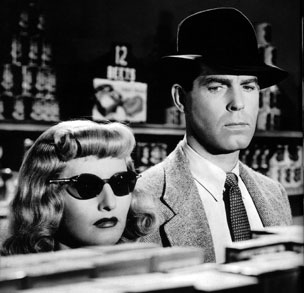
For my contribution, I’m highlighting a fluffy detail from the great “Double Indemnity” (1944): Phyllis Dietrichson’s tawdry blonde wig. The piece also includes some observations from master director Billy Wilder on working with Barbara – born Ruby Catherine Stevens on July 16, 1907, and later nicknamed Babs, Missy and The Queen. She still rules today.

A Babs Stanwyck moment for FNB

On Phyllis Dietrichson’s wig: Looking through some photos the other day, I noticed how often I lost the fight with my fine, curly hair and let it go wild (left). Not every day can be a good hair day.

If I ever need assurance that every femme fatale has a styling glitch from time to time, I look at Barbara Stanwyck’s awful wig in “Double Indemnity,” a quintessential noir from 1944, directed by Billy Wilder.

Paramount production head Buddy DeSylva said of the stiff blonde ’do, “We hired Barbara Stanwyck and here we get George Washington.”

It also reminded me that it had been ages since I’d looked at my copy of “Conversations with Wilder” by Cameron Crowe, published in 1999. Of course, I flipped right to Wilder’s answer to Crowe’s question about the direction given to Barbara Stanwyck in “Double Indemnity” for the silent shot on her face while the murder is occurring.

Said Wilder: Sure, that was a highly intelligent actress, Miss Stanwyck. I questioned the wig, but it was proper, because it was a phony wig. It was an obviously phony wig. And the anklet – the equipment of a woman, you know, that is married to this kind of man. They scream for murder.

Barbara Stanwyck and Fred MacMurray star in “Double Indemnity” from 1944. Both played against type.

Yeah, naturally we rehearsed this thing. But I rehearsed it with her once or twice, that’s the maximum, and it was not that much different from the way she would have done it. She was just an extraordinary woman. She took the script, loved it, right from the word go, didn’t have the agent come and say, “Look, she’s to play a murderess, she must get more money, because she’s never going to work again.”

With Stanwyck, I had absolutely no difficulties at all. And she knew the script, everybody‘s lines. You could wake her up in the middle of the night and she’d know the scene. Never a fault, never a mistake – just a wonderful brain she had.

Crowe asked if the part had been written for Stanwyck. Wilder said: Yeah. And then there there was an actor by the name of Fred MacMurray at Paramount, and he played comedies. Small dramatic parts, big parts in comedies. I let him read it, and he said, “I can’t do that.” And I said, “Why can’t you?” He said, “It requires acting!” [Laughs.] I said, “Look, you have now arrived in comedy, you’re at a certain point where you either have to stop, or you have to jump over the river and start something new.” He said, “Will you tell me when I’m no good?” [He nods: a partnership is born.] And he was wonderful because it’s odd casting.

Paramount image of “Double Indemnity”

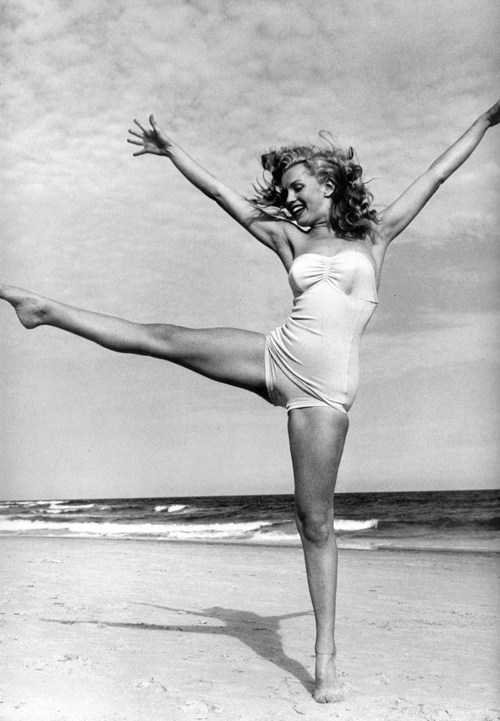
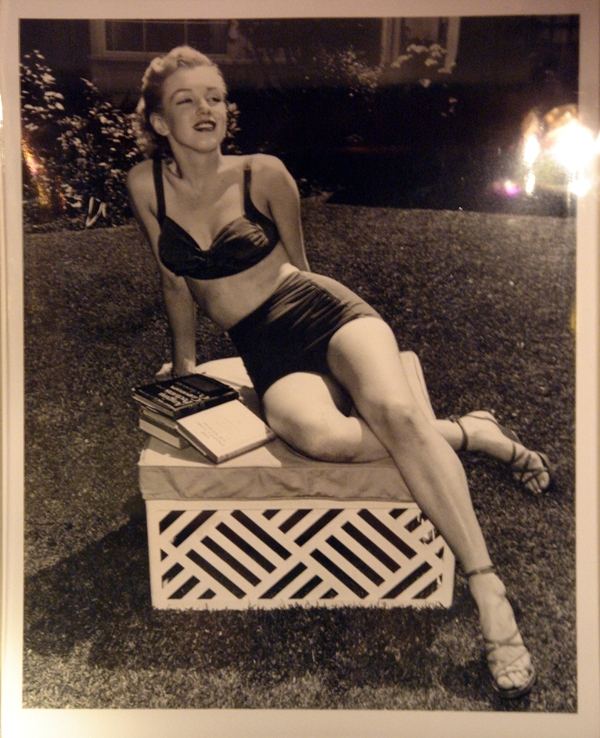
Marilyn in her modeling days

Marilyn Monroe on her childhood: “As I grew older I knew I was different from other children because there were no kisses or promises in my life. … I would try to cheer myself up with daydreams. I never dreamed of anyone loving me as I saw other children loved. That was too big a stretch for my imagination. I compromised by dreaming of attracting someone’s attention (besides God), of having people look at me and say my name.”

Celebrating 50 years of splendid Stones!

Great to be back in the Detroit area!

Friday: Heading to the Rock Hall of Fame in Cleveland to see the Rolling Stones exhibit! http://rockhall.com/exhibits/rolling-stones-50-years-of-satisfaction/

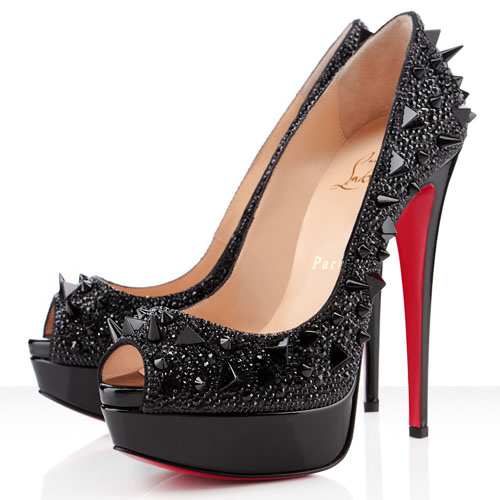
Christian Louboutin shoe exhibition hits Toronto

The exhibition is set to run at the Design Exchange from June 21 to Sept. 15.

You can read more here.