On Valentine’s Day: 14 reasons we love ‘Double Indemnity’

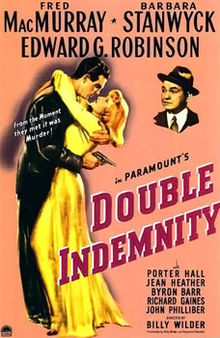
Double Indemnity poster

Yes, we’re still gushing about “Double Indemnity,” the film noir classic from 1944. Deal with it. Oh, and happy Valentine‘s weekend, btw!

Billy Wilder‘s great prototype film noir turns 70 this year and yet it never gets old. Starring Barbara Stanwyck, Fred MacMurray and Edward G. Robinson, the movie boasts a screenplay that Wilder co-wrote with Raymond Chandler, based on James M. Cain‘s novel, which was inspired by actual events.

Here’s why we hold the picture dear to our hearts, dearies.

14. As film noir historian and author Foster Hirsch put it, at a recent screening at the Aero Theatre in Santa Monica, “It’s the quintessential film noir. This is the mother lode, primary source film noir. It’s the basis for every film noir you’ve ever loved.”

13. Someone with the name Walter Neff turns out to be a tough guy.

12. All Walter has to do to escape punishment is sit tight. Yet, his ego drives him toward a final confrontation with his lover/partner in crime. He’s so damn human.

11. Barbara Stanwyck’s Phyllis Dietrichson is a fashion victim. She’s so damn human.

10. The first time Phyllis shows up at Walter’s apartment, she says she is returning his hat (which he supposedly left at her house) but the previous scene clearly shows him taking his hat as he leaves. Still, there’s so much tension between them, who cares?!

9. The door to Walter’s apartment opens the wrong way (it shields Phyllis on one of her visits) but you’re so caught up in the story you hardly notice.
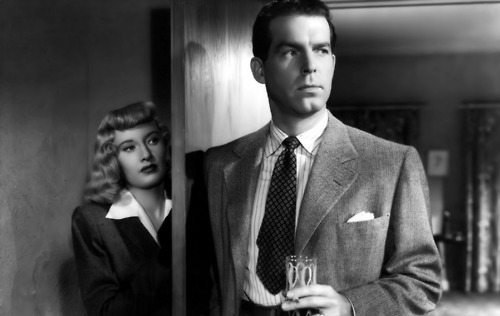
As Billy Wilder acknowledged, no door in the world would open this way.

As Billy Wilder acknowledged, no door in the world would open this way.

8. You could buy Phyllis Dietrichson’s house for $30,000.

7. You could have a beer at a drive-in restaurant, served by a car-hop, no less.

6. The look of supreme satisfaction on Phyllis’s face at the moment her husband is murdered.

5. Stanwyck and MacMurray both took a risk and played against type.

4. Edward G. Robinson almost steals the show and it’s really a bromance between his character and MacMurray’s Walter Neff.

3. Raymond Chandler makes a cameo appearance, about 16 minutes into the movie, at Walter’s office building.

2. It’s perfectly paced – you can watch it over and over and it moves along lickety split every time, leaving you wanting more.

1. It truly ranks as a classic flick – it’s as fresh, sexy and funny today as it was in 1944. The writing, acting, directing cinematography, lighting, art direction are matchless.

Do you love “Double Indemnity” as much as we do? Then let us know!

New York’s Ziegfeld Theater celebrates film collaboration of Martin Scorsese and Leonardo DiCaprio

By Mike Wilmington and Film Noir Blonde

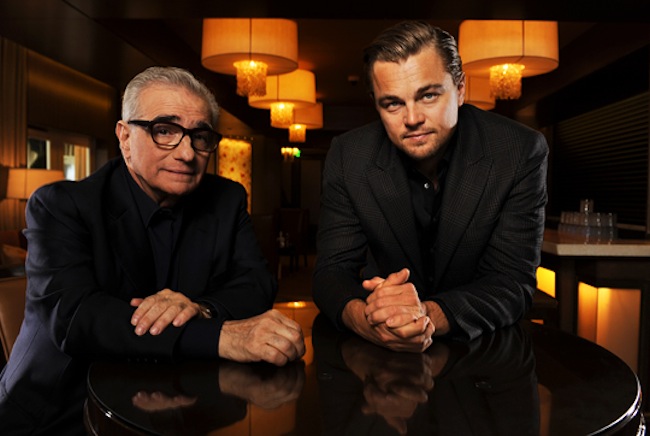
Few actor-director collaborations have generated more cinematic excitement and sheer brilliance than the team of director Martin Scorsese and star actor Leonardo DiCaprio – two kings of neo-noir. In their five films together, they have left an indelible stamp on our movies and on our pop culture.

Martin Scorsese and Leonardo DiCaprio around the time of "Shutter Island." Photo by Robert Hanashiro, USA TODAY Staff

Martin Scorsese and Leonardo DiCaprio publicize the release of “Shutter Island.” Photo by Robert Hanashiro, USA TODAY

DiCaprio was first recommended to Scorsese by the director‘s other long-term actor-collaborator Robert De Niro, who was impressed by Leonardo after playing his father in the 1993 family drama “This Boy’s Life.” DiCaprio and Scorsese joined up in 2002 for the explosive period gangster saga “Gangs of New York” and the rest is neo-noir history.

DiCaprio and Scorsese and their chemistry will be celebrated this Thursday and Friday (Feb. 13 and 14) in New York City at Bowtie Cinema’s storied Ziegfeld Theater, with a five-film retrospective.

The retrospective begins on Thursday with afternoon screenings of “The Aviator” (2004) with DiCaprio as Howard Hughes and their Oscar-winning all-star gangster drama “The Departed“ (2006).

The program also includes a live panel discussion at 7 p.m. Thursday with DiCaprio and two other key Scorsese collaborators on “The Wolf of Wall Street“: screenwriter Terence Winter and longtime Scorsese editor Thelma Schoonmaker. Their talk will be followed by a screening of “Wolf of Wall Street,” one of the most controversial of all 2013 American movies, and a multiple Oscar nominee. The discussion will be moderated by critic-filmmaker Kent Jones, a Scorsese collaborator as well.

On Friday, the retrospective continues with showings of the psychological thriller “Shutter Island” (2010) and “Gangs of New York” (2002).

DiCaprio is one actor who’s used his stardom well. And we can’t think of another director who has done more for film noir appreciation and history than Scorsese. The guy has been watching noirs since his Little Italy boyhood and making neo-noirs since 1973’s classic “Mean Streets” (and, arguably, since 1968’s “Who’s That Knocking at my Door”). He also shares his love for the genre with lectures, introductions for box sets and in his “Scorsese Screens” column for TCM’s Now Playing. All that and “Boardwalk Empire” too.

For showtimes and ticket information, visit www.bowtiecinemas.com. The Ziegfeld Theater is located at 141 W. 54th St. in Manhattan.

Stanwyck a fashion victim? Heck yeah, look at the wig

Very few actresses truly deserve accolades like stellar, peerless, magnificent and amazing. Barbara Stanwyck, who had a stage, film and TV career spanning more than 50 years, is surely one of that select group. She might have cringed at such lofty praise, however, referring to herself as “a tough old broad from Brooklyn.”

Adjectives aside, Stanwyck stands out for the range of parts she played, her discipline as an artist, and the subtlety and strength of her performances. Tonight, she is honored at the Aero Theatre with a screening of  Double Indemnity” (1944, Billy Wilder) and “The Bitter Tea of General Yen” (1933, Frank Capra). Before the movies, Victoria Wilson, author of a new Stanwyck biography, will discuss and sign her book, “A Life of Barbara Stanwyck: Steel-True 1907-1940.

It is the 70th birthday of Double Indemnityand so I am rerunning this post on Phyllis Dietrichson’s tawdry blonde wig. The piece also includes some observations from master director Billy Wilder on working with Barbara – born Ruby Catherine Stevens on July 16, 1907, and later nicknamed Babs, Missy and The Queen. She still rules today.

Double Indemnity posterIf I ever need assurance that every femme fatale has a styling glitch from time to time, I look at Barbara Stanwyck’s awful wig in “Double Indemnity,” a quintessential noir from 1944, directed by Billy Wilder.

Paramount production head Buddy DeSylva said of the stiff blonde ’do, “We hired Barbara Stanwyck and here we get George Washington.”

It also reminded me that it had been ages since I’d looked at my copy of “Conversations with Wilder” by Cameron Crowe, published in 1999. Of course, I flipped right to Wilder’s answer to Crowe’s question about the direction given to Barbara Stanwyck in “Double Indemnity” for the silent shot on her face while the murder is occurring.

Said Wilder: Sure, that was a highly intelligent actress, Miss Stanwyck. I questioned the wig, but it was proper, because it was a phony wig. It was an obviously phony wig. And the anklet – the equipment of a woman, you know, that is married to this kind of man. They scream for murder.

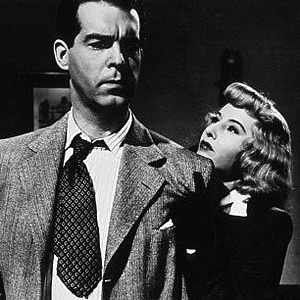
Barbara Stanwyck and Fred MacMurray star in "Double Indemnity" from 1944. Both played against type.

Barbara Stanwyck and Fred MacMurray star in “Double Indemnity” from 1944. Both played against type.

Yeah, naturally we rehearsed this thing. But I rehearsed it with her once or twice, that’s the maximum, and it was not that much different from the way she would have done it. She was just an extraordinary woman. She took the script, loved it, right from the word go, didn’t have the agent come and say, “Look, she’s to play a murderess, she must get more money, because she’s never going to work again.”

With Stanwyck, I had absolutely no difficulties at all. And she knew the script, everybody‘s lines. You could wake her up in the middle of the night and she’d know the scene. Never a fault, never a mistake – just a wonderful brain she had.

Crowe asked if the part had been written for Stanwyck. Wilder said: Yeah. And then there there was an actor by the name of Fred MacMurray at Paramount, and he played comedies. Small dramatic parts, big parts in comedies. I let him read it, and he said, “I can’t do that.” And I said, “Why can’t you?” He said, “It requires acting!” [Laughs.] I said, “Look, you have now arrived in comedy, you’re at a certain point where you either have to stop, or you have to jump over the river and start something new.” He said, “Will you tell me when I’m no good?” [He nods: a partnership is born.] And he was wonderful because it’s odd casting.

Paramount image of “Double Indemnity”

Face in the Crowd reveals a beguiling portrait-maker

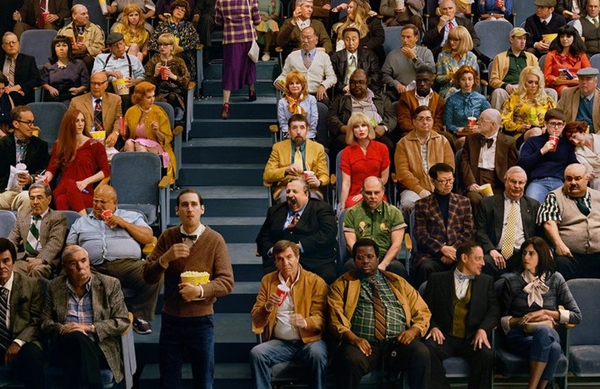
Crowd #9 (Sunset 5), 2013, by Alex Prager

Crowd #9 (Sunset 5), 2013, by Alex Prager

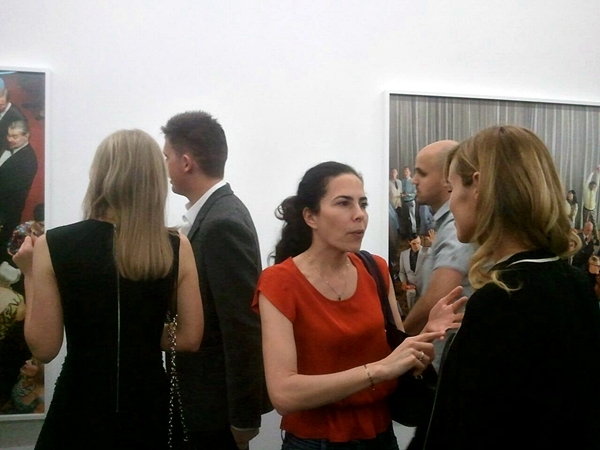
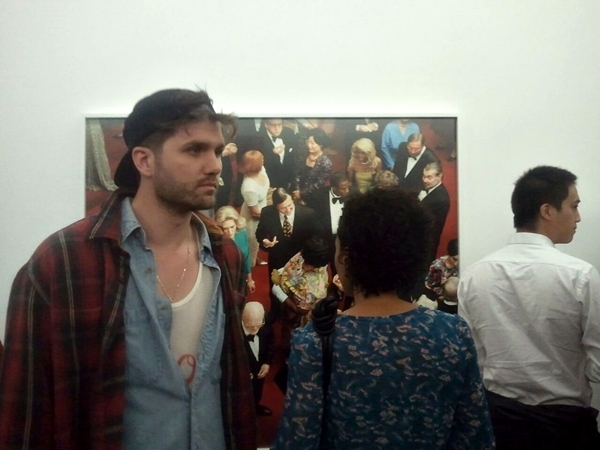
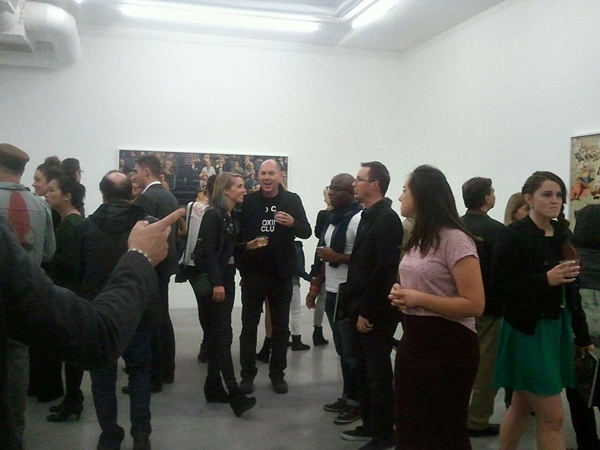
Alex Prager: Face in the Crowd at M+B Gallery in West Hollywood is well worth a visit; the FNB team attended the opening on Saturday night and snapped a few candids (below). The exhibition reveals an artist with an eye for sublime color and masterful compositions as well as a beguiling portrait-maker who deftly mixes kitsch and mystery with humor and poignancy.

Prager, 34, is a self-taught photographer and filmmaker who started shooting after seeing William Eggleston’s color images. A Los Angeles native, her work frequently draws on vintage Hollywood, retro advertising and neo-noir imagery. The new show features large-scale color photographs of elaborately staged crowd scenes that explore the psychological complexities of human interaction, specifically the dynamics of an individual within a mass of people.

“I’m fascinated by the experience of being involved in other people’s lives accidentally,” Prager said, noting that her work has been influenced by time spent in busy cities such as New York and London. “Crowds have always been an interest of mine. It may look like a sea of people, but there are so many interesting stories, all colliding silently.”

Prager directed hundreds of costumed actors on specially constructed sets, creating congested public spaces including an airport terminal, a city hall lobby, a beach and the Sunset 5 movie theater. The stories of the various characters within these crowds culminate in a new film, featuring actress Elizabeth Banks.

Alex Prager: Face in the Crowd will run at M+B through March 8.

AP crowd 1

AP crowd 3

AP crowd 7

AP crowd 8

AP crowd 9

AP crowd 10

‘Laura’ and ‘Blue Velvet’ to screen at the Egyptian Theatre

Laura 1944 posterThe delightful, urbane and unapologetically posh film noir “Laura” (1944, Otto Preminger) screens tonight at 7:30 p.m. at the Egyptian Theatre in Hollywood, part of the American Cinematheque.

“Laura” makes me nostalgic for a life I never led — the adventures of a 1940s career girl living in Manhattan: landing a job on Madison Avenue, buying suits and silk stockings for work, renting a place for $40/month, meeting handsome men, dinner and drinks at the Stork Club, weekend trips to the country.

Of course, “Laura” does have a few downsides — murder and mistaken identity, for starters. Seems that turning every head and being the toast of the town, as is the case with the charming and lovely Laura (Gene Tierney), may prove very dangerous. In a series of flashbacks, we learn the details of Laura’s life and it appears that in addition to having many admirers, she attracted an enemy or two as well. You can read the full review here.

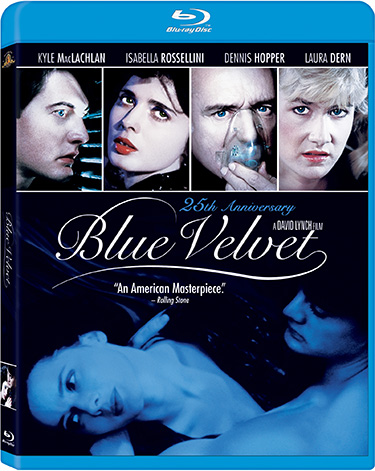
Blue Velvet posterAnd Thursday night: Thomas Ethan Harris presents a seminar on deconstructing writer/director David Lynch’s “Blue Velvet” (1986). This detailed look inside Lynch’s masterpiece takes place in the Spielberg Theatre of the Egyptian.

In “Blue Velvet,” Lynch dazzles and disturbs us as he probes the evil beneath the surface of sunny small-town Americana. Twenty-eight years later, its trippy shimmer has not dimmed, reminding us of Lynch’s auteur power. You can read the full review here.

Noir City fest gets a passport, Anthony Mann films at UCLA, Alex Prager photography at M + B Gallery

The darkness, dahlings, just doesn’t stop. And who’s complaining? Not us! There is much for noiristas to relish, starting today:

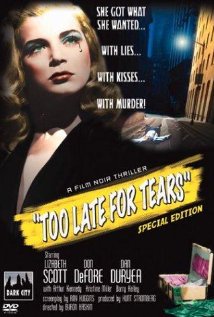
Too Late for Tears posterNOIR CITY’s flagship festival in San Francisco returns to its home at the historic Castro Theatre Jan. 24-Feb. 2, 2014. The 12th edition of the popular film noir festival is going international and the lineup is downright sumptuous. Films include: “The Third Man,” a restoration of “Too Late for Tears” (with Lizabeth Scott and Dan Duryea), “Drunken Angel,” “It Always Rains on Sunday,” “Brighton Rock,” “The Wages of Fear,” “Rififi” and “Pépé le Moko,” just to name a few.

We can’t wait until the fest hits Los Angeles in April!

ANTHONY MANN is being celebrated by the UCLA Film & Television Archive at the Billy Wilder Theater in Westwood. The series Dark City, Open Country: The Films of Anthony Mann runs Jan. 31 to March 30.

Says UCLA: Director Anthony Mann’s reputation is now grounded in his 1940s crime melodramas, many of them film noirs, and his 1950s Westerns (eight with Jimmy Stewart at Universal). … The conflicted heroes of Mann’s Westerns are cut from the same cloth as his noirish crime dramas, often attempting to outrun a past that weighs heavily on their actions, morally ambivalent, as they vacillate between individual desire and communal responsibility. …

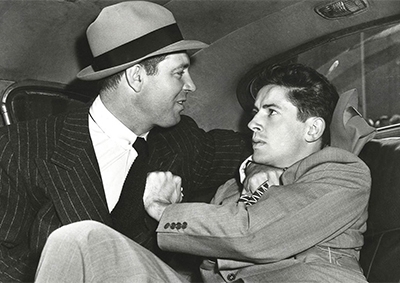
"Side Street," starring Farley Granger, plays March 15 at UCLA.

“Side Street,” starring Farley Granger, plays March 15 at UCLA.

Mann often dismissed his early career in Hollywood’s poverty row, cranking out low-budget crime features for Republic, PRC and Eagle-Lion, but a number of critics have begun to re-evaluate his early work. Indeed, this series was inspired in part by the publication of The Crime Films of Anthony Mann (2013) by Max Alvarez, who will also appear as a guest on Wednesday, March 12.

ALEX PRAGER, a Los Angeles-based photographer who draws from vintage Hollywood and neo-noir imagery, has a show opening Saturday, Jan. 25, at M+B Gallery, 612 North Almont Drive in LA. Face in the Crowd features new large-scale color photographs of elaborately staged crowd scenes and a film by the same name. This body of work was created for Prager’s first major museum exhibition in the United States at the Corcoran Gallery of Art in Washington, D.C., which opened in November 2013. Alex Prager: Face in the Crowd will run at M+B Jan. 25 to March 8, 2014, with an opening reception on Saturday, Jan. 25, from 6 to 8 p.m.

Also of note: Director David Cronenberg wrote the intro to a new translation of Franz Kafka’s “The Metamorphosis:” http://lat.ms/1c9cU60. And a report on Paris haute couture: Butterflies and Dita Von Teese at Gaultier: http://lat.ms/1aO0csu.

Carole Lombard author gets two parties from Larry Edmunds

The nice guys at Larry Edmunds Bookshop are back in the swing of events with two book parties for Robert Matzen, author of “Fireball: Carole Lombard & the Mystery of Flight 3.”

Carole Lombard died  in a plane crash in 1942. She was 33.

Actress Carole Lombard died in a plane crash on Jan. 16, 1942. She was 33.

Matzen takes a fresh look at Hollywood’s Queen of Screwball Comedies, Carole Lombard, and examines the plane crash that took her life on Jan. 16, 1942. With TWA’s most experienced pilot flying a 10-month-old aircraft on a clear night, why did the flight crash into the side of a Nevada mountain?

Having just completed the first sale of war bonds and stamps, following the U.S. entry into World War II, Lombard became the first Hollywood star to sacrifice her life in the war. “Fireball” tells multiple stories: the passengers (including 15 members of the U.S. Army Air Corps), the friends and families left behind (such as Lombard’s husband Clark Gable) and the first responders who struggled up a mountain hoping to perform a miracle rescue.

There will be two signings this week:

From 8-10 p.m. Thursday, Jan. 16 at the Museum of Flying, 3100 Airport Ave. in Santa Monica.

At 4 p.m. Saturday, Jan. 18 at Larry Edmunds Bookshop, 6644 Hollywood Blvd., Hollywood, 323-463-3273.

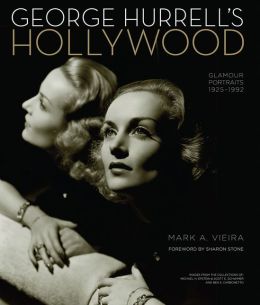
Hurrell's HollywoodAlso available at the bookshop is this essential book for any film lover’s library: “George Hurrell’s Hollywood: Glamour Portraits 1925-1992” by Mark A. Vieira, with a foreword by Sharon Stone.

Known as the Rembrandt of Hollywood, Hurrell (1904–1992) was the creator of the glamour portrait and played a crucial role in establishing the star power of Tinseltown’s elite. Perhaps most famous for his work with Joan Crawford, he also photographed Marlene Dietrich, Norma Shearer, Bette Davis, Jane Russell, Clark Gable, Gary Cooper, Warren Beatty and, as you can see from the book’s cover, the stunning blonde goddess, Carole Lombard.

Golden Globes draws largest audience in 10 years

The Golden Globe Awards telecast is required viewing for us film and fashion junkies. The show drew its largest audience in 10 years and its largest young-adult audience in seven years, according to Variety. You can read the list of winners here.

Looks we loved: Cate Blanchett (the Best Actress in a Drama winner wore a lace Armani Prive gown), Mila Kunis, Lupita Nyong’o, Margot Robbie, Uma Thurman and Reese Witherspoon.

Trends we spotted: Bold lips, lots of eyeliner, stylishly messy waves, piecey buns and slicked-back up-do’s.

Surprises we savored: Matthew McConaughey’s win for Best Actor in a Drama; “12 Years A Slave” snaring Best Picture/Drama and Jacqueline Bisset’s bumbling acceptance speech when she won Best Supporting Actress in a Series, Miniseries or TV Movie.

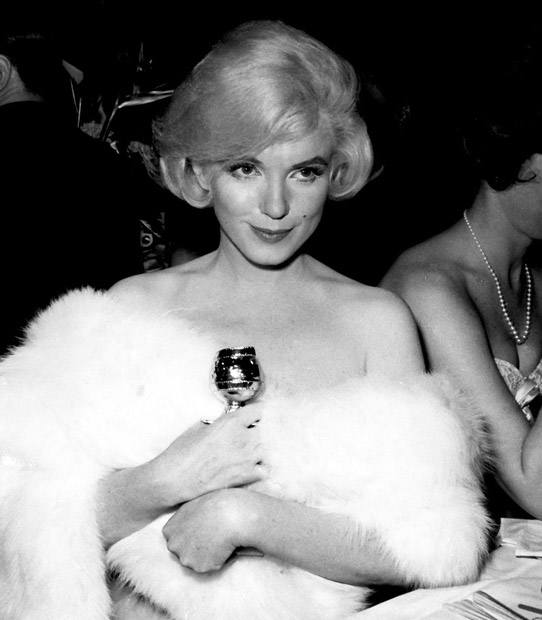
Marilyn Monroe with the Golden Globe she won for 1959’s "Some Like It Hot."

Marilyn Monroe with the Golden Globe she won for 1959’s “Some Like It Hot.”


A very happy 2015 to all lovers of film noir

I am so behind with posts and so late in wishing you a happy 2014 that I decided to fast-forward and be ahead in wishing you a happy 2015. Way ahead. 😉

I have no good excuse for my getting behind other than it was an extra-busy holiday season: first came Keithmas (Keith Richards’ birthday is Dec. 18, 1943, and the FNB team decided to make it a party – it was his 70th after all), then Christmas and New Year’s. Much fun to see friends and family but I guess travel, time zones and opening gift after gift after gift (life is hard for a gold-digger) got the best of us.

We are now back in LA and grateful for the warm weather. As Keith Richards would say: “It’s great to be here. It’s great to be anywhere.”

KEITHMAS 2013

‘Bettie Page Reveals All’ hits theaters

Bettie Page Reveals AllNow playing at the Nuart Theatre in LA: ‘Bettie Page Reveals All.’ It’s just here for a week so see it while you can.