A sip of Hollywood history: Cocktails at Yamashiro

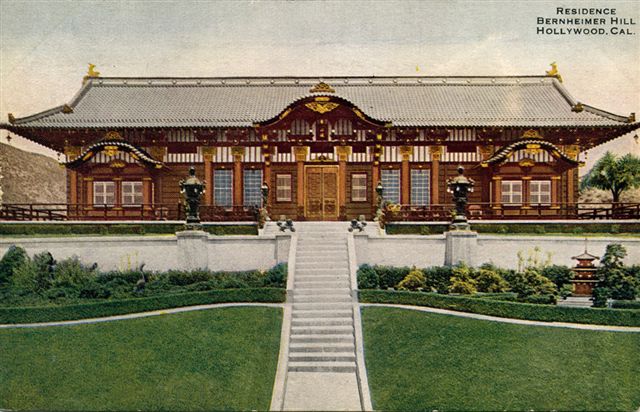
The Bernheimer brothers began building the hilltop mansion in 1911. The residence was completed in 1914.

The Bernheimer brothers began building the hilltop mansion in 1911. The residence was completed in 1914.

The Art Deco Society of Los Angeles is hosting Cocktails in Historic Places from 6-8 p.m. Friday, Aug. 8, at Yamashiro in Hollywood! The “mountain palace” was completed in 1914 as a residence for the Bernheimer brothers, who were major collectors of Asian artwork. In the late 1920s, the property served as headquarters for the exclusive 400 Club, which catered to Hollywood’s motion picture industry elite. The Glover family opened Yamashiro Restaurant in the late 1940s.  The storied spot has a gorgeous garden and offers outstanding views of Los Angeles.

Ahead of her time: An exceptional talent who made an art form of dressing the stars

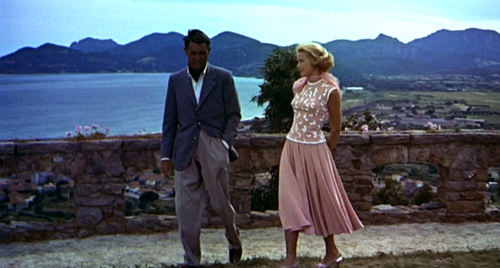
Cary Grant and Grace Kelly take a stroll in "To Catch a Thief" (1955, Alfred Hitchcock).

Cary Grant and Grace Kelly take a stroll in “To Catch a Thief” (1955, Alfred Hitchcock).

“If it’s a Paramount film, I probably worked on it.”

So said the legendary costume designer Edith Head (Oct. 28, 1897-Oct. 24, 1981), who won eight Oscars over the course of her Hollywood career, dressing everyone from Barbara Stanwyck to Grace Kelly to Jackie Bisset. A peerless expert at marrying character and clothes as well as a master of disguising even a hint of a figure flaw, Head was a Tinseltown fashion tour de force.

She will be honored with a film series starting Friday, Aug. 8, at UCLA’s Billy Wilder Theater in Westwood. The UCLA Film & Television Archive and the Hugh M. Hefner Classic American Film Program, in association with the Academy of Motion Pictures Arts and Sciences, are presenting: What I Really Do Is Magic: Edith Head and Hollywood Costume Design. The series runs through Saturday, Sept. 27.

Films include: “Dead Men Don’t Wear Plaid,” “She Done Him Wrong,” “The Jungle Princess,” “The Lady Eve,” “Roman Holiday,” “To Catch a Thief,” “Sunset Blvd.,” “The Country Girl,” “A New Kind of Love,” “Artists and Models” and “Sweet Charity.”

In-person guests include: Carl Reiner, costume designer Deborah Nadoolman Landis and authors David Chierichetti and Paddy Calistro.

On the radar: Hollywood Redux exhibition in Santa Monica, film noir faves, remembering the blonde goddess

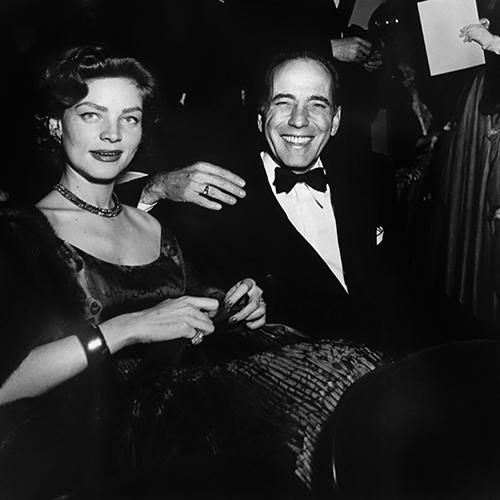
Love this photo of a (smiling!) Bogart & Bacall. Shot by Murray Garrett and on display at the Robert Berman Gallery in Santa Monica.

Love this photo of a (smiling!) Bogart & Bacall. Shot by Murray Garrett and on display at the Robert Berman Gallery in Santa Monica.

Murray Garrett: Hollywood Redux, a selection of black-and-white photographs including never-before-seen silver-gelatin prints from the artist’s archive, runs through Aug. 23 at the Robert Berman Gallery in Santa Monica. The Brooklyn-born Garrett, who worked in the Golden Age, typically used medium-format cameras, such as the Speed Graphic and Rolleiflex, to capture iconic moments from the lives of the entertainment industry’s elite and other popular figures of American culture and high society.

Taschen has released a must-read tome: Film Noir: 100 All-Time Favorites. From “The Cabinet of Dr. Caligari” to “Drive,” editors Paul Duncan and Jürgen Müller present their top film-noirs and neo-noirs. Director, film noir scholar and “Taxi Driver screenwriter Paul Schrader provides the introduction.

Also, Tuesday, Aug. 5 marks the 52nd anniversary of Marilyn Monroe’s death. RIP, Marilyn. See more images and read more about her life here.

Jules Dassin dazzles with double bill in Hollywood Exiles series

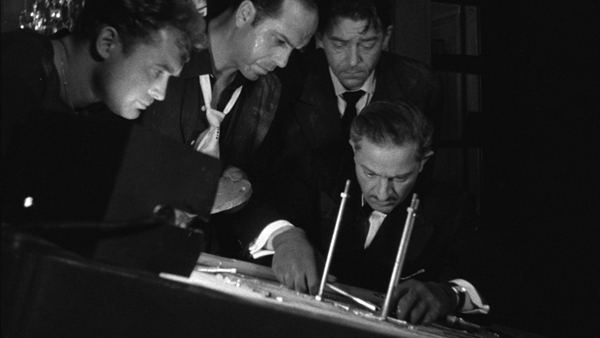
Jules Dassin’s ‘Rififi,’ a heist film set in Paris, is a cinematic masterpiece.

Jules Dassin’s ‘Rififi,’ a heist film set in Paris, is a cinematic masterpiece.

Paranoia marks many a film noir masterpiece. One reason in particular is that in the late 1940s, Hollywood directors, writers and actors faced political persecution as a result of Senator Joseph McCarthy and his harrowing witch hunt to uncover Communists. One of his most damning tools was a blacklist of people thought to be active in the Communist party, which, in his mind, was tantamount to threatening democracy and the American way.

Many of those under fire became voluntary exiles, hoping to rebuild their lives and careers abroad. While some left for Mexico, others, including Jules Dassin, Joseph Losey, Cy Endfield, Ben and Norma Barzman, and Donald Ogden Stewart, relocated in London, Paris and Rome. Drawing on film noir, neo-realism and modernist art cinema influences, Dassin and Losey were standout success stories. But, still hounded by the U.S. government and exploited by European producers looking for Hollywood talent on the cheap, the exiles found it was not an easy road.

To explore this unique era of filmmaking, UCLA is hosting the series Hollywood Exiles in Europe, which opens Friday, July 25, and runs to Sunday, Aug. 17. This series was co-curated by Rebecca Prime, author of the book “Hollywood Exiles in Europe: The Blacklist and Cold War Film Culture.” Prime and Norma Barzman will attend Friday’s opening feature: Christ in Concrete (1950, UK/US, Edward Dmytryk), a depiction of hardships endured by Italian-American construction workers.

On Saturday, July 26, there’s a top-notch film noir offering from Dassin: “Rififi” (France, 1955) and “Night and the City” (UK/US, 1950). In shadow-drenched, dangerous London, crooked fight promoter Harry Fabian (Richard Widmark) double-crosses everyone he encounters as he tries to outrace the night. The night is faster. This is a top film noir, a stunning achievement of style and suspense. From Gerald Kersh’s novel; with Gene Tierney, Herbert Lom, Francis L. Sullivan and Googie Withers.

Femmes Noirs series hits NYC’s Film Forum

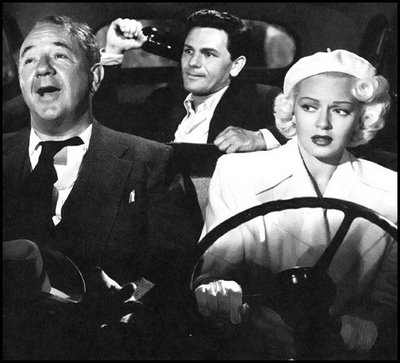
“Postman” kicks off the Femmes Noirs series this weekend in NYC.

“Postman” kicks off the Femmes Noirs series this weekend in NYC.

I’ll go to Manhattan at the drop of a hat. And my stylish chapeau is now officially earthbound because there’s a three-week Femmes Noirs series running at Film Forum! Yes, my silver-screen sisters in crime are radiating duplicity and depravity in classic flicks, programmed by Bruce Goldstein, through Aug. 7.

Titles include: “The Postman Always Rings Twice,” “Mildred Pierce,” “Leave Her to Heaven,” “Out of the Past,” “Pandora’s Box,” “Niagara,” “Angel Face” “The Killers,” “Gilda,” “The Lady from Shanghai,” “Scarlet Street,” “Murder, My Sweet,” “The Maltese Falcon,” “Kiss Me Deadly,” “The Killing,” “Gun Crazy,” “Detour,” “Dead Reckoning,” “Pitfall,” “Sudden Fear,” “Tension,” “Body Heat,” “Fatal Attraction,” “The Strange Love of Martha Ivers,” “Too Late for Tears” and the prototype for the genre, “Double Indemnity.”

It pains me to write this list and think I might miss some of these! And, to top it off, the forum’s neighboring restaurant, Clarkson, is offering a complimentary Manhattan Noir cocktail when patrons present a ticket stub. And here I am left to rough it in LA, sipping champagne poolside. But maybe I can finagle a way to head east on someone else’s dime or lure Goldstein to LA for a second run of the series. There is of course one major omission in the forum’s lineup: the irredeemably bad Jean Gillie in “Decoy.” As Leonard Maltin put it: She makes Barbara Stanwyck’s character in “Double Indemnity” look like Snow White.”

Ballet noir: Pretty and pernicious in pink

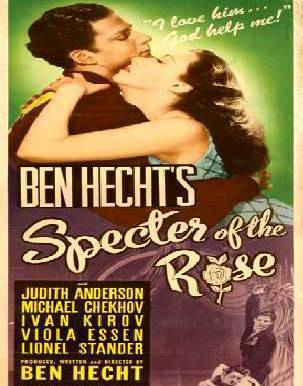
Specter of the Rose posterTrue film noir fans know that back alleys, lonely streets and bar rooms aren’t the only place for angst-ridden protagonists to play out their sagas of doom and struggles against Fate.

In fact, dance critic Debra Levine over at http://artsmeme.com has coined a name for a new sub-genre: ballet noir. Well, I can attest that most femmes fatales and their fall guys have done their pirouettes with temptation and pas de deux with The Law. And of course I’ve always been partial to pink.

For her main proof point, Levine points to “Specter of the Rose,” a 1946 passion project of legendary Hollywood screenwriter Ben Hecht and a rare “prestige” offering from Republic Pictures.

Set in the world of classical ballet, “Specter” is a psychological melodrama about an aging dance instructor and a scurrilous impresario who promote the comeback of a stupendous dancer, also suspected to be mad—and possibly murderous.

Judith Anderson, Michael Chekhov, Ivan Kirov star. Hecht wrote, directed and produced. Cinematographer Lee Garmes co-produced and shot the flick.

See “Specter of the Rose” for yourself this Saturday, July 19, at 7:30 p.m. at the Billy Wilder Theater in Westwood. Levine and her partner in crime Bryan Cooper of the Hollywood Heritage Museum will introduce the film. http://www.cinema.ucla.edu/events/2014-07-19/specter-rose-1946

The late great Sharon Tate receives tribute at the Egyptian

SharonTate_jacket.inddGet your blonde on this Sunday at the Egyptian Theatre in Hollywood. Debra Tate will sign copies of her book “Sharon Tate: Recollection” ($30) and introduce a bombshell double bill of “Valley of the Dolls” (1967, Mark Robson) and “The Fearless Vampire Killers” (1967, Roman Polanski). Tate was nominated for a Golden Globe for Most Promising Newcomer in her role as a B-movie queen in “Valley of the Dolls.”

The event starts at 6:30 p.m. in the lobby. The book features a foreword by Polanski and never-before-seen images of the ethereal beauty and talented actress, who was murdered in 1969 in her Benedict Canyon home by the Charlie Manson family. She was 26, married to Polanski and pregnant at the time of her death.

Tate was an icon of the ‘60s innate elegance and charm continue to draw admirers today. In the photo book, Sharon Tate’s story emerges through quotes and short essays by her sister, Debra Tate, as well as by those who knew and have been influenced by her, including:

A foreword by Sharon’s husband Polanski

Previously unseen childhood photos from the Tate family album

Original quotes and recollection essays written specially for this book by Jane Fonda, Kelly Osbourne, Bert Stern, Michelle Phillips, Patty Duke, Lee Grant, Elke Sommer, Joan Collins, Viva, Tony Scotti and Trina Turk.

Retrospective quotes by Truman Capote, Diana Vreeland, Richard Avedon, Dominick Dunne, Warren Beatty, Mia Farrow, Orson Welles, Barbara Parkins, George Harrison, David Niven, Deborah Kerr, Yul Brynner and Kirk Douglas.

Rare and classic photographs by David Bailey, Milton Greene, Philippe Halsman, Shahrokh Hatami, Terry O’Neill, Peter Basch, John Engstead, Peter Brüchmann, Neal Barr and Jean Jacques Bugat.

‘Life Itself’ Roger Ebert doc offers insight, candor, inspiration

Billy Wilder doesn’t go for the obvious arc. He isn’t interested in the same things the characters are interested in. He wants to know what happens to them after they do what they think is so important. He doesn’t want truth but consequences. Few other directors have made so many films that were so taut, savvy, cynical, and, in many ways and tones, funny. …

Double Indemnity’ was his third film as a director. That early in his career, he was cocky enough to begin a thriller with the lines ‘I killed him for money – and for a woman. I didn’t get the money. And I didn’t get the woman.’ And end it with the hero saying ‘I love you too’ to Edward G. Robinson.”

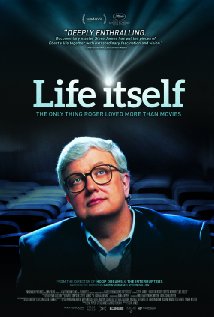
Life Itself posterSo writes Roger Ebert (1942-2013), the Pulitzer-prize-winning film critic of the Chicago Sun-Times, in his book “The Great Movies.” If you knew Ebert mainly from his hugely successful and world-famous TV show “Two Thumbs Up” (co-starring Gene Siskel), it might surprise you to know quite what a prolific writer he was. He published more than 20 books as well as many collections of reviews. (He started at the Sun-Times in 1966.)

Ebert used his staggering intelligence and covert sensitivity to get under the skin of a movie, to approach a film as both a tenacious reporter and a Spartan poet –baldly pointing out flaws, rapturously praising beauty and incisively assessing the director, cast and crew. He also championed little-known filmmakers and obscure movies, including more than a few film-noir titles.

In 2002, Ebert was diagnosed with thyroid cancer and, though it was removed, his battles with cancer would continue over the next decade. Ebert took his health problems in stride, refusing to let his mighty passion wane.

But it wasn’t just movies that he was enthusiastic about. He was passionate about politics and social justice, sports and travel, and he was deeply devoted to his wife Chaz Ebert (a trial attorney whom he met in AA) and their family. In 2011, Ebert published “Life Itself: A Memoir,” which spurred director Steve James to make a movie about Ebert’s extraordinary life journey.

The result is a film that is engaging, entertaining, fiercely honest and truly inspiring.

“Life Itself” opens Friday in theaters, on iTunes and on Demand.

A centennial party for the Man who set the movies in motion

The Squaw Man posterAny idea who Dustin Farnum, Monroe Salisbury and Winifred Kingston were? In fact, they hold a prestigious claim in Hollywood history. They starred in 1914’s “The Squaw Man,” co-written and co-directed by Cecil B. DeMille. The 74-minute flick was the first U.S. feature-length movie.

DeMille, the brilliant (now legendary) director, was somewhat reluctant to take on the project. The best jobs come through networking and, in this case, DeMille had a great contact – his mother got him the gig.

But, once he agreed to make the picture, he was quick to recognize the potential of Los Angeles’ dramatically beautiful scenery for exterior shots. For interiors, DeMille rented a barn at Selma and Vine streets in Hollywood for $200 a month. DeMille’s western saga turned out to be a commercial success and helped establish Hollywood as the world’s top spot for movie making.

The old barn now stands at 2100 N. Highland Ave. and is home to the Hollywood Heritage Museum, which is hosting a “Squaw Man” centennial party on Tuesday, July 1, from 5-8 p.m. The event will include a continuous screening of the movie, special presentations from authors and historians, and a party with retro touches, such as antique cars. Barbeque and beverages will be served.

Border Incident posterThe Hollywood Chamber of Commerce is co-hosting the event. Admission for chamber and museum members is free. Tickets for the general public are $10 for adults (free for kids under 10). There is free parking in Lot D off of Odin St. Register for the party here.

Also of note: “Border Incident” (1949, Anthony Mann), starring Ricardo Montalban, George Murphy and Howard Da Silva, plays tonight at the Ricardo Montalban Theatre, 1615 Vine St., in Hollywood! And there’s more Montalban noir next month. See the site for more info. 

Power suits, stylin’ pumps: Working girls’ wardrobes on display

I have a retro kitchen magnet that declares: “It’s not whether you win or lose, it’s how you do your hair.” And how you wear your clothes.

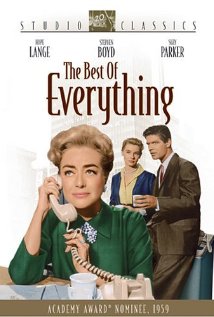
The Best of Everything posterFor proof, just look at “The Best of Everything” (1959, Jean Negulesco), which screens at 3 p.m. Saturday at Hollywood’s Egyptian Theatre. In this slick and sexy melodrama, based on a Rona Jaffe novel, Joan Crawford holds court in a New York City publishing house. She’s dressed to the nines in every scene, natch. Her perfectly appointed co-stars are Hope Lange, Diane Baker and Suzy Parker (and look out for a young Robert Evans).

At 2 p.m., there will be an illustrated talk called “Working Women’s Fashion,” which organizers describe as follows:  From Rosie the Riveter to Mary Tyler Moore, explore how working women have influenced fashion from the 1940s to the 1970s. Using period images from myvintagevogue.com and a runway show of vintage examples from clevervintageclothing.com, clothing historian Dave Temple will discuss how working women changed the fashion landscape forever.

A fashion show will follow the talk. Additionally, there will be a clothing sale in the Egyptian’s courtyard from noon to 6 p.m.

Now put it in your planner and don’t be late!