The Film Noir File: Polanski goes to Towne in ‘Chinatown’

By Film Noir Blonde and Mike Wilmington

The Noir File is FNB’s guide to classic film noir, neo-noir and pre-noir from the schedule of Turner Classic Movies (TCM), which broadcasts them uncut and uninterrupted. The times are Eastern Standard and (Pacific Standard).

Pick of the Week

“Chinatown” (1974, Roman Polanski). Friday, Dec. 13. 1 a.m. (10 p.m.)
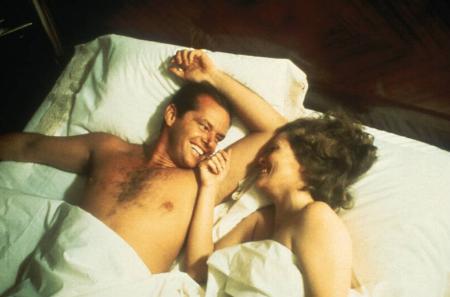
Jack Nicholson and Faye Dunaway sizzle in "Chinatown."

Jack Nicholson and Faye Dunaway sizzle in “Chinatown.”

A nervous femme fatale with a slight stutter. A stocky PI with a hot temper and a bandage plastered on his face.

Perhaps not the most promising characters at first glance; in fact they are among noir’s finest. Faye Dunaway and Jack Nicholson deliver knockout performances in 1974’s “Chinatown,” a neo-noir that ranks as one of the greatest films ever made. Certainly, it’s among the top 10 movies of the 1970s.

With an Oscar-winning screenplay by Robert Towne, directed by Roman Polanski, and produced by Robert Evans, “Chinatown” clearly has roots in classic noir, but also reinvents and subverts the tradition. The movie’s intelligence, artistry and uniquely dark vision elevate it beyond a simple homage.

Read the rest of FNB’s review here or read Michael Wilmington’s review here.
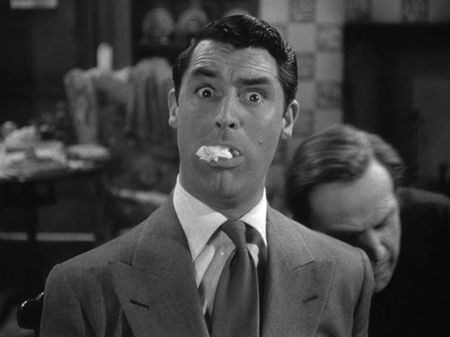
Cary Grant cracks us up in "Arsenic and Old Lace."

Cary Grant cracks us up in “Arsenic and Old Lace.”

Sunday, Dec. 15

8 a.m. (5 a.m.): “Arsenic and Old Lace” (1944, Frank Capra). Two sweet little old spinsters who run a Brooklyn boarding house (Josephine Hull and Jean Adair) also help elderly bachelors into another, better world with their specialty: poisoned elderberry wine. Their frantic theater- critic nephew Mortimer Brewster (Cary Grant, in his wildest performance ever), who’s just discovered their secret (on Halloween), tries desperately to keep them out of jail. Meanwhile two murderous professional criminals on the lam (Raymond Massey and Peter Lorre) show up to further envenom the brew.

This mad farce is not the kind of movie Frank Capra usually makes but the pace and energy (as well as the Coen Brothers-ish dark humor) never flag. The movie also has Priscilla Lane as the Ginger Rogers-ish love interest, and those three yeoman comic supporting players Jack Carson, James Gleason and Edward Everett Horton. Of the loony sub-genre comedy noir, this is a prime example: the least sentimental, least Capra-corny and maybe the craziest-funniest of all Capra’s films. Adapted by brothers Julius and Philip Epstein (“Casablanca”), from Joseph Kesselring’s hit Broadway play.
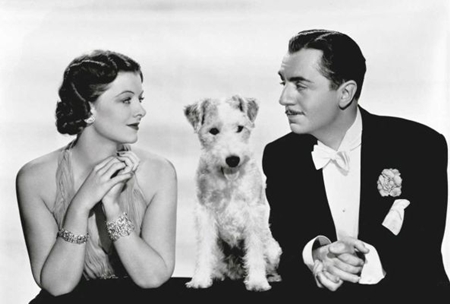
Photo credit: Warner Bros. Entertainment/ Myrna Loy as Nora Charles, Asta the dog and William Powell as Nick Charles in "After the Thin Man" (1936)

Photo credit: Warner Bros. Entertainment
Myrna Loy as Nora Charles, Asta the dog and William Powell as Nick Charles star in “After the Thin Man” (1936).

6 p.m. (3 p.m.): “The Thin Man” (1934, W.S. Van Dyke). With William Powell, Myrna Loy and Asta. Reviewed in FNB on July 28, 2012.

12 a.m. (9 p.m.): “The Unholy Three” (1925, Tod Browning). With Lon Chaney, Harry Earles and Victor McLaglen. Reviewed in FNB on Dec. 12, 2012.

2 a.m. (11 p.m.): “Pickpocket” (1959, Robert Bresson). An ascetic looking, light-fingered young man who looks like, and is, a starving artist (played by the thin, visually impeccable Martin Lasalle), lives out a Parisian Dostoyevsky tale, when he begins picking pockets at racetracks and metros. Together with Diary of a Country Priest and A Man Escaped, this is one of the untouchable black-and-white masterpieces of a true master, France’s austere film genius Robert Bresson. (In French, with subtitles.)

3:30 a.m. (12:30 a.m.): “Crime and Punishment, U.S.A.” (1959, Denis Sanders). Like “Pickpocket,“ this is another ’50s film modernization of Dostoyevsky’s themes of guilt, spirituality and redemption. And we can only thank God that the movie’s young star, George Hamilton wasn’t, after this, typecast as a Dostoyevskian anti-hero.
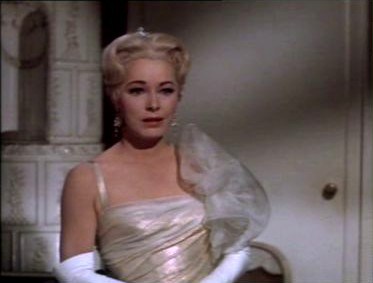
Eleanor Parker is most famous for playing the Baroness in Robert Wise’s “The Sound of Music” (1965), but film noir fans remember her from “Caged.”

Eleanor Parker is most famous for playing the Baroness in “The Sound of Music” (1965), but film noir fans remember her from “Caged.”

Tuesday, Dec. 17

ELEANOR PARKER TRIBUTE

Eleanor Parker, the notable auburn-haired Hollywood star of the ’40s and ’50s, passed away Monday at the age of 91. TCM will pay tribute to legendary leading lady on Tuesday, Dec. 17, with a 14-hour marathon, featuring seven of her films.

Parker earned Best Actress Oscar nominations for her performances in “Interrupted Melody” (1955) and John Cromwell’s classic prison picture “Caged” (1950) in which she co-stars with Agnes Moorehead and Hope Emerson. She was especially admired by film noir fans for her leading role in “Caged” as a brutalized prisoner. “Caged” plays at 11:45 a.m. (8:45 a.m.). Reviewed in FNB on July 13, 2012.

Check the TCM web site for the full list of titles and times.

The FIlm Noir File: neo-noir master Chabrol scores twice

By Film Noir Blonde and Mike Wilmington

The Noir File is FNB’s guide to classic film noir, neo-noir and  pre-noir from the schedule of Turner Classic Movies (TCM), which broadcasts them uncut and uninterrupted. The times are Eastern Standard and (Pacific Standard).

PICK OF THE WEEK: Two by Claude Chabrol: Les Cousins, Le Beau Serge

“Les Cousins”  (France: 1959, Claude Chabrol). Sunday, Nov. 24, 2:30 a.m. (11:30 p.m.)

Le Beau Serge (France: 1958, Claude Chabrol). Sunday, Nov. 24, 4:30 a.m. (1:30 a.m.)

Brialy and Blain in Les Cousins

By the time he died in 2010, at 80, with at least 80 directorial credits behind him, Claude Chabrol had become the most prolific and, in some ways, the most successful of all the great directors/friends of the old French Nouvelle Vague (or “New Wave“) – those arrogant young cinematic firebrands, prodigies and know-it-alls who traded barbs, blurbs and bon mots in Parisian cafes in the ‘50s while they were mounting their assaults on the French film industry from the pages of the legendary film journal Cahiers du Cinema.

Chabrol, by the time of his death, was still making movies and TV and had outstripped, in production and longevity, his famed compatriots Jean-Luc Godard (“Breathless“), Eric Rohmer (“Claire’s Knee”), Jacques Rivette (“La Belle Noiseuse”), and, the most popular New Waver of them all, and the first to die (three decades ago, in 1984), Francois Truffaut (“Jules and Jim“)..

In the ‘50s, before their directorial careers began, these five were called the Holy Family: out of envy perhaps, but perhaps too out  of secret high regard. They all became famous and revered French cineastes. As for Chabrol, the first of them to make a feature film — well, he was a specialist. Chabrol primarily made crime dramas, thrillers, film noirs. (“Les Bonnes Femmes,” “Le Boucher,” “Violette Noziere,” “La Ceremonie”).  He adapted or was inspired by Patricia Highsmith, Ruth Rendell, Ellery Queen, Stanley Ellin, Georges Simenon — mystery thriller specialists all.

Critics often called him the French Hitchcock, though, as Chabrol liked to point out, his own visual and dramatic style was far closer to that other great crime movie specialist, Fritz Lang. A man who seemed himself a model of high spirits, goodness and humanity, Chabrol understood evil very, very well. He once said that he couldn’t imagine shooting a script that didn’t have a murder in it, and he rarely did.

Chabrol was a funny-looking, fun-loving little man, with glasses, a thick French accent and a frequent smile. He looked playful and professorial, and when I interviewed him once in New York City, he joked and laughed continuously. He seemed to work continuously too. Almost every year, like clockwork, out would come a new Chabrol film (or two). They were (almost) always good, always well and elegantly-crafted, always intelligent, often highly critical of the provincial or Parisian bourgeoisie, the classes in which Chabrol had grown up (the provinces) or later lived (Paris). And almost always, they had a murder (or two).

TCM is showing Chabrol’s first two films Sunday night and Monday morning: both noir gems in black and white: the riveting “Le Beau Serge” (1958) and the masterly “Les Cousins” (1959). They make a complementary double feature: two classic film noirs, with the same co-stars (suave Jean-Claude Brialy, feisty Gerard Blain) in the same kind of dark, chatty, stylish, psychologically complex drama — both about people unwittingly destroying themselves.

In Le Beau Serge, set (and shot) in Chabrol’s home town of Sardent, Brialy, as Francois, plays a young intellectual who left Sardent for Paris, and now has come back, sick, to recuperate and also to revisit his old friend Serge a.k.a. “Le Beau Serge” (Blain), a village beau who is now an alcoholic in an unhappy marriage. They spend much of their time in the local bar, drinking and talking. The two probably love each other, are attracted to the same women — Serge’s wife (Michelle Meritz) and her sister (Bernadette Lafont) — and they seem to push each other to dissolution.

In  “Les Cousins,” set (and shot) in Paris, Blain, as shy country cousin Charles, travels to The City of Light to revisit his urbane and hedonistic city cousin Paul (Brialy), and to join him at law school — where Paul spends most of his time drinking and throwing decadent parties for decadent people, including some women (Michelle Meritz and Juliette Mayniel) whom they both like. (Stephane Audran, later Chabrol’s wife and frequent star, is a regular party guest.) Paul rarely studies, yet seems to know everything; Charles studies constantly, yet seems to forget it all. They also seem to love each other, somewhat, and one of them seems to be pushing the other toward dissolution.

The two movies, in other words, almost seem to be inversions of each other, with the Brialy/Blain team returning as different versions of the same characters. Not quite though. One of the main differences between the pictures, is that, though Chabrol wrote both screenplays, the dialogue for The Cousins was written by Paul Gegauff, an urbane and hedonistic,  cynical right-wing novelist who writes very good dialogue and who went on writing for Chabrol, and once starring for him (in Une Partie de Plaisir) until Gegauff was stabbed and killed by his second wife in 1983. (Remember that when you watch “Les Cousins,” one of whose protagonists is named “Paul.”)

Though they were the first two features Chabrol made, both show the hand of a master. Both also have beautiful and highly mobile, black and white cinematography by the superb Henri Decae. And, after seeing the pictures again, all I can say is that it makes you wish Chabrol had been able to shoot in black and white always, or at least most of the time, and more often with Decae. Black and white suits him: this New Wave master of film noir et blanc. (In French, with English subtitles.) [Read more…]

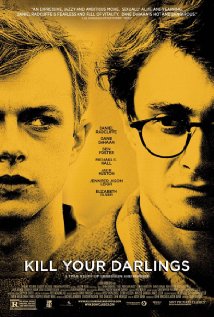
‘Kill Your Darlings’ tells noirish backstory of beat poets

Kill Your Darlings posterKill Your Darlings/2013/Killer Films/104 min.

Thinking about the 1940s, an era largely defined by World War II vets and the women they came home to, it’s easy to forget the generation just after – the post-war crop of young people on the cusp of adulthood as the long battles finally ended and the course of history forever changed.

I was reminded of that watching “Kill Your Darlings,” a dark story about poet Allen Ginsberg (Daniel Radcliffe), the relationships he forged with other beat-generation writers while at Columbia University and his connection to a 1944 murder.

As a student, Ginsberg clashes with academic convention. On the personal front, he quickly falls under the romantic spell of fellow student Lucien Carr (Dane DeHaan), a feline beauty: polished, urbane, subversive and jaded. Through Carr, Ginsberg meets the rugged and dynamic, as well as older and more established, Jack Kerouac (Jack Huston) and the bizarre, dope-addicted literateur William Burroughs (Ben Foster). On the fringe of their circle is Carr’s mentor-turned-stalker (and one-time lover?), academic David Kammerer (Michael C. Hall).

Director and co-writer John Krokidas masterfully renders the period and its prejudices, and elicits exceptionally good performances from his energetic cast – they are all memorable, especially Ben Foster as Burroughs. Jennifer Jason Leigh, as Ginsberg’s mother Naomi, is also a standout. Though it doesn’t play as a thriller (it’s not trying to, particularly), “Kill Your Darlings” tells the tense, disturbing, sometimes-moving backstory of a few inspired and reckless geniuses who redrew the boundaries of literary expression.

“Kill Your Darlings” opens today in LA.

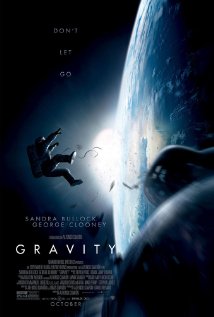
‘Gravity’ ranks as a visual and technical tour de force

Gravity posterGravity/2013/Warner Bros./91 min.

“Gravity,” the much-hyped 3-D thriller starring Sandra Bullock and George Clooney, deserves the high praise it’s been garnering. Words like mind-blowing, amazing and magnificent seem apt for this visual and technical tour de force co-written, co-produced, co-edited and directed by Alfonso Cuarón (“Y Tu Mamá También,” “Harry Potter and the Prisoner of Azkaban” and “Children of Men”).

Bullock plays Dr. Ryan Stone, a somber workaholic who has left Earth for the first time and thinks she could get used to the complete silence of space. She is on a Space Shuttle mission with breezy and jocular Matt Kowalski, a veteran astronaut (Clooney). As he floats, he chats with mission control (Ed Harris’ voice) about partying on Bourbon Street.

But suddenly the mission is aborted and the two are left to fend for themselves. With oxygen running out, they must find their way back home. Seeing “Gravity” in 3-D IMAX sucks you into the stunningly suspenseful story of their quest – you experience on a visceral level Ryan’s struggle to stay calm as she attempts to operate an abandoned Russian spacecraft, Matt’s finesse as he plucks out the bottle of vodka hidden near the control panel.

You might also puzzle, as I did, as to how this movie can look so astonishingly, so frighteningly, realistic and how Earth can look breathtakingly grand and tenderly beautiful. A slight letdown on the narrative front is the unspooling of Ryan’s clichéd personal story (we learn why she’s a workaholic). Also, it’s a little hard to buy Matt staying blasé, almost bored, throughout.

Ultimately, though, it’s almost impossible not to connect on some level with Cuarón’s contemplation of adversity, transience and spirituality.

‘Gravity’ opens today nationwide.

Hitchcockian thriller ‘Prisoners’ calls for multiple viewings

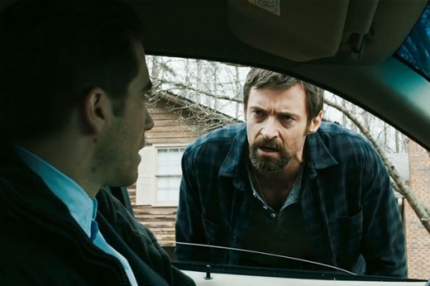
Jake Gyllenhaal and Hugh Jackman star in "Prisoners."

Jake Gyllenhaal and Hugh Jackman star in “Prisoners.”

Prisoners/2013/Warner Bros./153 min.

Tense and absorbing, “Prisoners” ranks as a solid three-star flick. When two 6-year-old girls go missing, one of the fathers – a carpenter and hunter named Keller Dover (Hugh Jackman) – quickly reveals himself to be a brutal vigilante, intent on beating information out of a mentally disabled man brought in for questioning and then released (Paul Dano).

Jake Gyllenhaal, as the obsessive cop assigned to the case, pursues another suspect and eventually Jackman chases yet another – all of the suspects, we learn, share a shattering connection. Terrence Howard, Viola Davis, Maria Bello and Melissa Leo round out the cast. Aaron Guzikowski wrote the screenplay.

Québec-born director Denis Villeneuve thoughtfully tells a complex, Hitchcockian tale and elicits memorable performances from the cast, especially from Gyllenhaal (perhaps his best work since “Zodiac.”)

On the downside, there are some rather drafty plot holes, the pacing is slightly off and, while Jackman is very watchable, the script’s characterization of Keller Dover proves more facile than fascinating. Still, it’s engrossing enough that you might feel like watching it twice to catch all the clues. And the ending is superb.

On the big screen: Style doc ‘Mademoiselle C’ and three neo-noir titles: ‘A Single Shot,’ ‘Prisoners, ‘The Family’

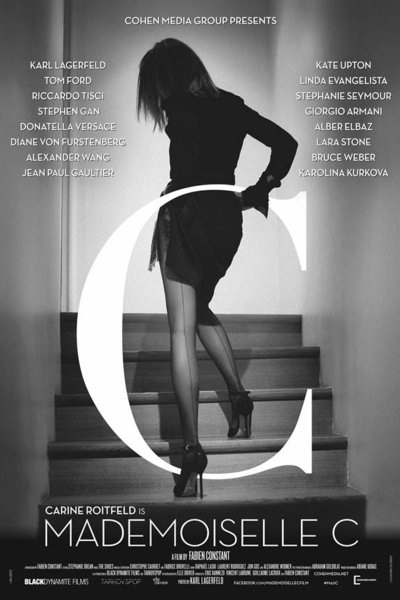
Mademoiselle CMademoiselle C/90 min.

In defense of full-on glamour, Joan Crawford once said, “If you want to see the girl next door, go next door.”

Fashion insider Carine Roitfeld, the subject of a new documentary called “Mademoiselle C,” echoes that view and takes it up a notch. Running French Vogue for 10 years, Roitfeld became known for her edgy “porno-chic” aesthetic.

After her Vogue gig ended, Roitfeld decided to launch her own mag in New York, CR Fashion Book, and the film chronicles this experience. Interestingly, unlike Crawford, Roitfeld has a tranquil home life, complete with adoring husband and two gorgeous, grown-up children.

Fashionistas will likely enjoy watching Roitfeld at work and seeing her rub elbows with celebs such as Tom Ford, Karl Lagerfeld and Diane Von Furstenberg. And Roitfeld exemplifies Parisian chic style, stateside. Director Fabien Constant’s touch is light and lively, though overall it feels quite superficial – a bit like browsing through Vogue, glancing at all the glossy pictures and skipping the stories.

“Mademoiselle C” opened Sept. 11 in New York and opens Sept. 20 in LA at Laemmle Music Hall in Beverly Hills.

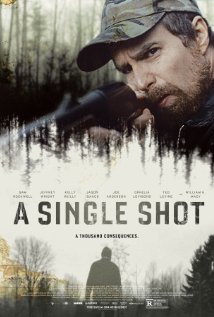
A Single Shot posterA Single Shot/116 min.

John (Sam Rockwell) is backwoods/country guy trying to make ends meet and looking to patch things up with his estranged wife and son. It’s when he resorts to poaching that his troubles begin and he’s quickly caught in a noirish trap – there’s a big pile of cash, sleazy lowlifes aplenty and a dead body, natch.

Director David M. Rosenthal’s haunting visuals help create a moody atmosphere but the film is undercut by its draggy pace and characters who feel less than authentic, particularly John and his blasé reaction to his own pivotal act of violence. Matthew F. Jones wrote the novel and screenplay. William H. Macy, master of the unctuous interloper, wears a scary toupee and preposterous plaid to great effect. Opens Sept. 20 in New York and in LA at Laemmle’s NoHo 7 in North Hollywood.

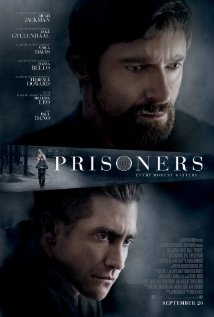
Prisoners movie posterPrisoners/153 min.

“Prisoners” looks set to be one of the fall’s best offerings, especially with such a stellar cast: Hugh Jackman, Jake Gyllenhaal, Viola Davis, Melissa Leo, Maria Bello and Paul Dano. Québec-born Denis Villeneuve directs. Am seeing it this weekend and will come back soon to update. Opens Sept. 20.

The Family/111 min.

In case it’s not clear from the cloying ads and previews, “The Family,” should do everyone a favor and stay at home. Despite a strong cast (Robert De Niro, Michelle Pfeiffer, Tommy Lee Jones) who manage to eke out good performances, the film is weighed down by a weak script and a story that is both illogical and predictable.

This is a crime comedy? Really? Sadly, it’s just not funny. Snazzy camerawork eventually became distracting as did the trying-too-hard-to-be-cool score. I expected more from director Luc Besson. Opened Sept. 13.

Highlights from the next Sunday with Hitch on TCM

Sundays with Hitch smaller sizeTCM’s monthlong celebration of the Master of Suspense, Alfred Hitchcock, and his stellar filmmaking continues on Sunday, Sept. 15.

Here’s what we at FNB are especially looking forward to. Must pop copious quantities of corn. Yum!

“The Man Who Knew Too Much” (1956)

Vertigo

“Rear Window”

“To Catch a Thief”

You can see the full schedule here.

‘Partly Fiction’ is fully compelling, beautifully shot

Partly Fiction/2013/Adopt Films/77 min.

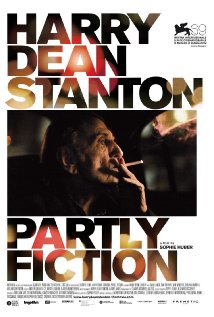
Partly Fiction posterAt 87 years old, Harry Dean Stanton is just as interesting to watch as he was 50 years ago, when he first started appearing on movie screens.

Perhaps that’s because the actor and veteran of neo noir has a look — like Keith Richards of the Rolling Stones — that ages for sure but never really gets old, no matter how many decades pass. Classically handsome, not so much but Stanton’s rugged, weathered face is singularly expressive. Or as Sam Shepard puts it in a wonderful new documentary on Stanton: “His face is the story.”

Directed by Sophie Huber, “Partly Fiction,” is an of-the-moment glimpse into an iconic actor’s oeuvre and a mysterious man’s heart. Through interview footage, clips from some of his 250 films and his own renditions of American folk songs, we see a loner, an artist and a Hollywood survivor. Stanton is someone who has been steadily successful on his own terms in a cut-throat industry famous for using, abusing and discarding talent. Maybe his secret is he doesn’t seem to take Tinseltown or himself too seriously.

At least that was my impression as Stanton discussed his early days, working with his friends, acting greats Marlon Brando and Jack Nicholson. We see him at home and at a longtime hangout, Dan Tana’s in West Hollywood as he talks a bit about his roots in West Irvine, Ky., the craft of acting and a relationship that left him “broken-hearted.”

Offering their takes are on what makes Stanton tick along with Shepard are David Lynch, Wim Wenders, Kris Kristofferson and Debbie Harry. Seamus McGarvey provides luminous camerawork (black and white at Stanton’s home, color when he ventures out).

“Partly Fiction”’s  story is rich, resonant and real.

“Partly Fiction” opened Wednesday in New York. It opens today in LA with select cities to follow. Director Sophie Huber and Harry Dean Stanton will be doing a Q&A tonight (Friday, Sept. 13) following the 7:30 p.m. show at Landmark’s The Nuart in West LA.

Flaws in ‘You Will Be My Son,’ are easy to forgive

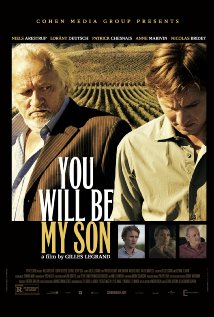
You Will Be My Son/2011/Cohen Media Group/102 min.

I have a soft spot for French family dramas – they are usually very well made, the stories often conceal a sharp edge within an elegant setting and, more often than not, the acting is excellent. So it’s pretty easy to overlook flaws – even glaring ones.

That’s the case with “You Will Be My Son,” a contemporary father-son saga, set in a Saint Emilion vineyard. The blustery, boisterous father, Paul, (Niels Arestrup) has dedicated his life to making wine and wants to groom his successor. One candidate is his weak-willed son Martin (Lorànt Deutsch), who wants the job but lacks true passion and talent.

On the other hand, family friend Philippe (Nicolas Bridet) is just the ticket. Philippe’s his ailing father François (Patrick Chesnais) is Paul’s right-hand man and charming Philippe also has the glitzy credential of being a star at the Coppola vineyard in California.

Directed and co-written by Gilles Legrand, “You Will Be My Son” is an engrossing melodrama (that sometimes veers into silliness) with elements of a good old-fashioned thriller – male rivalry, bromance, suspense, high stakes, deadly consequences.

Now the flaws: While the script probes the characters fairly deeply, the father-son relationship is extremely heavy-handed. It seems that when Baby Martin came bouncing into the world, it was hate at first sight for the not-so-proud papa. Everything the son does (even jogging) irritates Dad. Both actors are well cast and Arestrup gives a particularly great performance but the script could have used more subtlety in shading this fraught bond between the principal characters. Couldn’t we see at least one scene where they connect on some level?

Also, the final twist hits a false note, stemming more from expediency than from inevitability.

Still, this engaging flick is easy on the eyes with good dialogue and strong acting.

“You Will Be My Son” opens today in Los Angeles.

Everyone enjoying Sundays with Hitch on TCM?

Sundays with Hitch this month on TCM is a gold mine of film-noir viewing opps. The master of suspense is celebrated with TCM’s most comprehensive Alfred Hitchcock festival yet, from premieres of several British silent films to Hollywood classics that defined the thriller genre.

Which ones will make your must-see list?