Noirish sci-fi ‘Under the Skin’ is both artful and annoying

Under the Skin posterUnder the Skin/2013/Film4, BFI et al/108 min.

“Under the Skin,” a noirish sci-fi film by Jonathan Glazer (“Sexy Beast,” “Birth”) is austere and visually striking, inscrutable and haunting. It’s also a meditation on what it’s like to be a woman in contemporary society. Or not.

The “woman” here is an alien in disguise, played by Scarlett Johansson, who has come to Earth to hunt men. After climbing into the pretty skin of an expired human, she dons a fluffy black wig and tarty clothes, and applies a bright pop of color to those famous pouty lips.

Her trap set, she drives a van through the streets of Glasgow and seduces her victims, leading them, zombielike, into pools of black gunk. Then the tables turn; she shows vulnerability and becomes the hunted.

Shot on a low-budget often with hidden cameras and using a mix of professionals (like Johansson) and non-actors, “Under the Skin” feels dually creepy – it tells a strange story and, reportedly, the everyday Scotsmen she picks up didn’t recognize the raven-haired, English-accented Johansson or know that a movie was being made.

Glazer artfully creates a mood of anxiety, dread and mystery – to that end, he puts dashes of Polanski, Hitchcock, Kubrick, DePalma, Scorsese, Cocteau and Buñuel into this cinematic stew. What’s not in the recipe is meat – we get virtually nothing in the way of back story, exposition or even a suggestion as to why any of this is happening (a question that is answered in the source novel by Michel Faber).

Though the spare dialogue adds to the tension, it also keeps us in the dark in terms of a traditional narrative. But perhaps that is Glazer’s point: since we are watching a story of an alien it’s fitting that it unfolds not in a common language but in ambiguous images.

Depending on your taste, “Under the Skin” will be exquisitely harrowing or peculiarly maddening.

“Under the Skin” opens April 4 in New York at the Regal Union Square 14 and AMC Empire 25 and in Los Angeles at the ArcLight Hollywood and AMC Century City 15. On April 4 and April 5, at the Regal in NYC, director Jonathan Glazer will do a Q&A after the 7:20 p.m. shows. The film will expand nationwide throughout April.

The Film Noir File: Sam Fuller takes us down ‘Shock Corridor’

By Film Noir Blonde and Mike Wilmington

The Film Noir File is FNB’s guide to classic film noir, neo-noir and pre-noir from the schedule of Turner Classic Movies (TCM), which broadcasts them uncut and uninterrupted. The times are Eastern Standard and (Pacific Standard).

Pick of the Week

Shock Corridor” (1963, Samuel Fuller). 10 p.m. (7 p.m.), Saturday, March 29.

Reviewed in FNB on Nov. 16, 2011.

Friday, March 28

12:15 p.m. (9:15 a.m.): “The Racket” (1928, Lewis Milestone). The first movie version of playwright/screenwriter/Chicago crime reporter Bartlett Cormack’s tense play about the war of nerves between a tough, obsessed police captain and a brutal mob boss. With Thomas Meighan, Louis Wolheim and Marie Prevost. The movie was remade in 1951 at Howard Hughes’ RKO (by director John Cromwell), with Robert Mitchum and Robert Ryan.

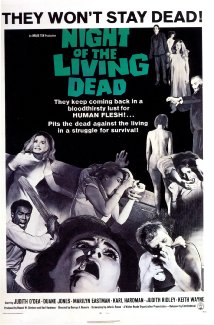
Night of the Living Dead poster1:45 a.m. (10:45 p.m.): “Night of the Living Dead” (1968, George Romero). With a plague of blood-thirsty, lurching, relentlessly oncoming zombies rampaging all over the Pittsburgh area, a group of bickering and sometimes hysterical survivors barricade themselves in a suburban house near a graveyard, and try to survive the longest night of their lives. One of the most noirish – and certainly one of the scariest – of all low-budget horror classics, directed (and written) by George Romero with nerve-rending, savage black-and-white pseudo-realism and some macabre humor. Starring Duane Jones and Judith O’Dea.

3:30 a.m. (12:30 a.m.): “What Ever Happened to Baby Jane?” (1962, Robert Aldrich). With Bette Davis, Joan Crawford, Victor Buono and Anna Lee. Reviewed in FNB on July 28, 2012.

Saturday, March 29

8 p.m. (5 p.m.): “His Girl Friday” (1940, Howard Hawks). With Cary Grant. Rosalind Russell, Ralph Bellamy, Gene Lockhart and John Qualen. Reviewed in FNB on Jan. 22, 2013.

10 p.m. (7 p.m.): “Shock Corridor” (1963, Samuel Fuller). See Pick of the Week.

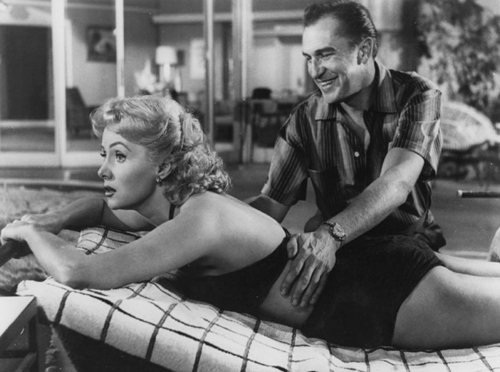
Rhonda Fleming and Vincent Price are supporting players in "While the City Sleeps."

Rhonda Fleming and Vincent Price are supporting players in “While the City Sleeps.”

12 a.m. (9 p.m.): “While the City Sleeps” (1956, Fritz Lang). The great film noir director Fritz Lang worked even longer in Hollywood than he did in Germany, and of all the pictures of his American career, his two favorites were reportedly the 1936 lynch-mob classic “Fury” (starring Spencer Tracy and scripted by Bartlett Cormack), and the lesser-known crime thriller “While The City Sleeps.” Set in a big metropolitan newspaper which is in the throes of transition and a possible take-over, the movie’s complex plot revolves around both the corporate battles at the paper, and the big news story that is consuming the city and the newsroom: a series of vicious serial slayings by an unknown psychopathic killer. It’s an engrossing melodrama, steeped in stark, boozy, big-city ’50s atmosphere.

The remarkable cast is headed by noir mainstays Dana Andrews and Ida Lupino (as star reporters). Andrews and Lupino bring a whole raft of urban noir memories along with them. So does the supporting cast of journalists, executives and crime-fighters, played by George Sanders, Vincent Price, Thomas Mitchell, Howard Duff, Rhonda Fleming, James Craig, Sally Forrest and Mae Marsh. The young leather-jacketed psycho-killer they’re after is played by John Barrymore, Jr. (aka John Drew Barrymore, John Barrymore’s son and Drew Barrymore’s dad.)

That all-star cast and Lang’s moody mastery of big-city tension and cynicism keep you on the hook. Though we wouldn’t rank this picture above “Scarlet Street” and “The Big Heat” (which Lang apparently did), it’s an underseen, underrated gem of film noir, hot off the presses, from the genre’s heyday.

The Lady from Shanghai posterSunday, March 30

12:15 p.m. (9:15 a.m.): “The Lady from Shanghai” (1948, Orson Welles). With Welles, Rita Hayworth, Everett Sloane and Glenn Anders. Reviewed in FNB on Dec. 26, 2013.

Monday, March 31

9 p.m. (6 p.m.): “On the Waterfront” (1954, Elia Kazan). With Marlon Brando, Eva Marie Saint, Lee J. Cobb, Karl Malden and Rod Steiger. Reviewed in FNB on Feb. 20, 2013.

3:30 a.m. (12:30 a.m.): North by Northwest” (1959, Alfred Hitchcock). With Cary Grant, Eva Marie Saint, James Mason and Martin Landau. Reviewed in FNB on Nov. 17, 2012.


The Film Noir File: Capote’s true-crime shocker still chills

By Film Noir Blonde and Mike Wilmington

The Noir File is FNB’s guide to classic film noir, neo-noir and pre-noir from the schedule of Turner Classic Movies (TCM), which broadcasts them uncut and uninterrupted. The times are Eastern Standard and (Pacific Standard).

Pick of the Week

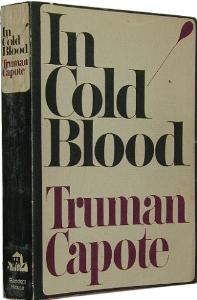
In Cold Blood bookIn Cold Blood” (1967, Richard Brooks). Tuesday, Feb. 25; 10:15 a.m. (7:15 a.m.). It was one of the literary sensations of the mid-‘60s: Truman Capote’s “non-fiction novel,” “In Cold Blood” – a beautifully written study of two drifter ex-con killers, Dick Hickok and Perry Smith, who murder an ordinary, nice Kansas family, the Clutters, while robbing their home. After the crime, the murderers are pursued through bleak Midwestern landscapes by the tenacious F.B.I. detective Alvin Dewey.

Capote researched the book with his childhood friend, novelist Harper Lee (“To Kill a Mockingbird“), digging deeply and raptly into both the blameless family who were killed and the misfit outlaws who killed them, in cold blood. It’s a perfectly shaped but deeply disturbing book, and more than a few critics have suggested that Capote was a bit in love with one of the murderers, Perry Smith, and a bit over-fascinated with Perry’s and Dick’s under-the radar, maybe covertly homo-erotic criminal life.

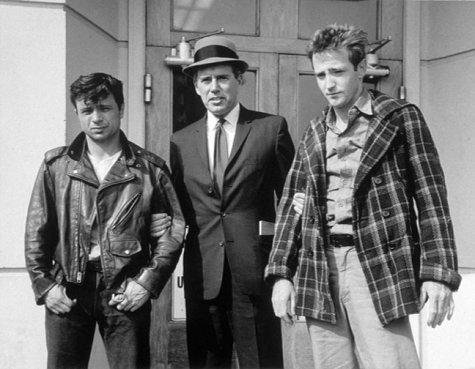
Maybe. Maybe not. In the film, which was written and directed by Richard Brooks (”The Blackboard Jungle,“ “Elmer Gantry”), actor John Forsythe, an Alfred Hitchcock favorite, plays detective Dewey, and two young on-the-rise actors play (superbly) Dick and Perry. Scott Wilson absolutely nails crew-cut conman Dick’s jock veneer and sharpie amorality and Robert Blake catches Perry’s deadly sadness and wounded grace – like a bird trembling in a hand.

Brooks is a more self-consciously tough writer than Capote and the movie is different, and harder, in tone and mood, than its source – though Capote said he loved it, and Conrad Hall’s stunning black and white cinematography of roads and small towns and the icy faces of the two killers, is a good equivalent for Capote’s lyrical prose.

The film by Richard Brooks is harder in tone than Truman Capote’s novel.

The film by Richard Brooks is harder in tone than Truman Capote’s novel.

Hall’s photography, along with Wilson‘s and Blake‘s performances, make “In Cold Blood” a major neo-noir. It‘s also a fine adaptation of an unforgettable book, and one of the great true-crime movies – even though it’s hard to accept the deep-voiced, cynical-sounding Paul Stewart, one of the old Orson Welles Mercury stock company, as the movie‘s writer-figure, its equivalent for Capote. Perhaps they should have cast Truman himself in the role. Ham that he was, he probably would have taken it. The back-story of how Capote and Harper Lee researched the book, provides the subject matter for two more good neo-noirs: the biopics “Infamous“ (2006), in which Toby Jones plays Capote, and “Capote” (2005), in which Philip Seymour Hoffman plays him.

Somewhat eerily, “In Cold Blood” has a number of bizarre links to the great, dark gold-hunting saga, “The Treasure of the Sierra Madre.” (See below.) It was Perry Smith’s favorite movie, and he watched it repeatedly. Perry also thought that Walter Huston, in his “Treasure” role of grizzled old prospector Howard, was the dead image of Perry’s own father.

Additionally, actor Robert Blake (Perry in the 1967 film) as a child played the little Mexican boy who sells Bogart the winning lottery ticket in “Treasure.”

Friday, Feb. 21                                                               

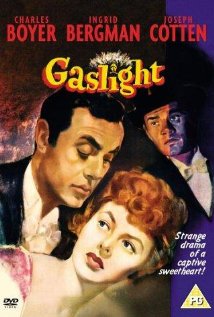
Gaslight poster1 a.m. (10 p.m.); “Gaslight” (1944, George Cukor). With Ingrid Bergman, Charles Boyer, Joseph Cotten and Angela Lansbury. Reviewed in FNB on August 25, 2012.

Saturday, Feb. 22

3:30 a.m. (12:30 a.m.): “The Treasure of the Sierra Madre” (1948, John Huston). With Humphrey Bogart, Walter Huston and Tim Holt. Reviewed in FNB on November 3, 2012.

Monday, Feb. 24

1:15 a.m. (10:15 p.m.): “The Spy Who Came in from the Cold,” (1965, Martin Ritt). Richard Burton is sodden and defeated Alec Leamas, a seedy, sad British intelligence man trapped in a world of cruelty, deception and betrayal. This is international intrigue as the game is really played. In the ‘60s, this was the anti-Bond spy movie, based on author (and ex-intelligence man) John le Carre’s first big critical-commercial success. It’s a meticulous portrait of unheroic men and women in an unheroic profession, amid a Cold War that may kill them, and almost certainly will debase them. Shot in monochrome in a sea of grays, with a tremendous cast: Burton (at his best), Oskar Werner, Claire Bloom, Cyril Cusack, Michael Hordern, Sam Wanamaker and Bernard Lee (James Bond’s “M,” trading with the enemy).

Tuesday, Feb. 23

8:30 a.m. (5:30 a.m.) “Lifeboat” (1944, Alfred Hitchcock). With Tallulah Bankhead, Walter Slezak and John Hodiak. Reviewed in FNB on Jan. 10, 2014.

10: 15 a.m. (7:15 a.m.): “In Cold BloodSee Pick of the Week.

New York’s Ziegfeld Theater celebrates film collaboration of Martin Scorsese and Leonardo DiCaprio

By Mike Wilmington and Film Noir Blonde

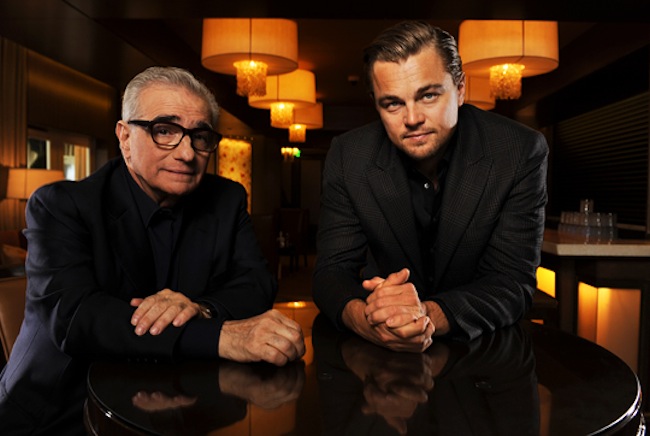
Few actor-director collaborations have generated more cinematic excitement and sheer brilliance than the team of director Martin Scorsese and star actor Leonardo DiCaprio – two kings of neo-noir. In their five films together, they have left an indelible stamp on our movies and on our pop culture.

Martin Scorsese and Leonardo DiCaprio around the time of "Shutter Island." Photo by Robert Hanashiro, USA TODAY Staff

Martin Scorsese and Leonardo DiCaprio publicize the release of “Shutter Island.” Photo by Robert Hanashiro, USA TODAY

DiCaprio was first recommended to Scorsese by the director‘s other long-term actor-collaborator Robert De Niro, who was impressed by Leonardo after playing his father in the 1993 family drama “This Boy’s Life.” DiCaprio and Scorsese joined up in 2002 for the explosive period gangster saga “Gangs of New York” and the rest is neo-noir history.

DiCaprio and Scorsese and their chemistry will be celebrated this Thursday and Friday (Feb. 13 and 14) in New York City at Bowtie Cinema’s storied Ziegfeld Theater, with a five-film retrospective.

The retrospective begins on Thursday with afternoon screenings of “The Aviator” (2004) with DiCaprio as Howard Hughes and their Oscar-winning all-star gangster drama “The Departed“ (2006).

The program also includes a live panel discussion at 7 p.m. Thursday with DiCaprio and two other key Scorsese collaborators on “The Wolf of Wall Street“: screenwriter Terence Winter and longtime Scorsese editor Thelma Schoonmaker. Their talk will be followed by a screening of “Wolf of Wall Street,” one of the most controversial of all 2013 American movies, and a multiple Oscar nominee. The discussion will be moderated by critic-filmmaker Kent Jones, a Scorsese collaborator as well.

On Friday, the retrospective continues with showings of the psychological thriller “Shutter Island” (2010) and “Gangs of New York” (2002).

DiCaprio is one actor who’s used his stardom well. And we can’t think of another director who has done more for film noir appreciation and history than Scorsese. The guy has been watching noirs since his Little Italy boyhood and making neo-noirs since 1973’s classic “Mean Streets” (and, arguably, since 1968’s “Who’s That Knocking at my Door”). He also shares his love for the genre with lectures, introductions for box sets and in his “Scorsese Screens” column for TCM’s Now Playing. All that and “Boardwalk Empire” too.

For showtimes and ticket information, visit www.bowtiecinemas.com. The Ziegfeld Theater is located at 141 W. 54th St. in Manhattan.

The Film Noir File: ‘All the King’s Men’ a political powerhouse

By Film Noir Blonde and Mike Wilmington

The Noir File is FNB’s guide to classic film noir, neo-noir and pre-noir from the schedule of Turner Classic Movies (TCM), which broadcasts them uncut and uninterrupted. The times are Eastern Standard and (Pacific Standard).

Pick of the Week

All the King’s Men” (1949, Robert Rossen). Saturday, Feb. 8, 10 p.m. (7 p.m.). Robert Rossen’s tough, iconoclastic adaptation of Robert Penn Warren’s Pulitzer Prize-winning novel about Deep South politics, the gullible electorate and the smart rustic crook, Willie Stark, who exploits them, isn’t usually classed as a film noir. But it’s certainly as dark, hard-edged and stylish a drama of American political criminality and corruption as any movie has given us. It looks and feels like a noir, and it hits you in the gut like one. Willie Stark, who was modeled on the legendary Louisiana governor and demagogue Huey Long, remains one of the classic portraits of political gangsterism.

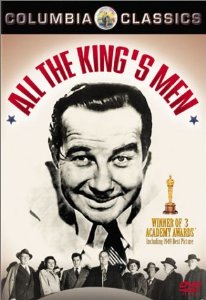
All the King's Men posterStark – played by movie tough guy Broderick Crawford in his Oscar-winning performance – starts out, like a few other Southern demagogues (including George Wallace) as a “man of the people” and a populist. But, along the way, on his road to near-dictatorial power, Stark begins cutting deals, bullying his enemies, and turning his state into a piggy-bank for himself and his cronies. Every step of that way is witnessed and recorded by intellectual newsman turned Stark supporter (and then foe) Jack Burden (John Ireland), who follows Willie from his back-country idealist origins to a dark, tragic climax.

Robert Rossen made “All the King’s Men” after writing many gangster and crime scripts for Warner Brothers. He directed two classic film noirs: “Johnny O’Clock,” with Dick Powell, and the classic “Body and Soul,” with John Garfield. Until Rossen directed another classic noir in 1961 (the gritty black-and-white pool-hall saga “The Hustler,” with Paul Newman, Jackie Gleason and George C. Scott) “All the King’s Men” remained his best film. Tough and stylish, hard as nails and idealistic underneath, it’s as dark as “Body and Soul” or “The Hustler.” The great cast includes Crawford, Ireland, Joanne Dru, John Derek, Shepperd Strudwick and, in another Oscar-winning performance, as Willie’s hard-bitten right-hand babe Sadie Burke, that great neglected actress, Mercedes McCambridge.

Wednesday, Feb. 5

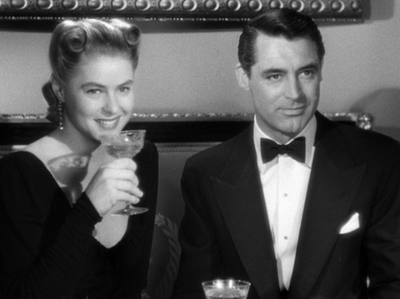
The incomparable Edith Head dressed Ingrid Bergman and Cary Grant in "Notorious."

The incomparable costume designer Edith Head dressed Ingrid Bergman and Cary Grant in “Notorious.”

1:30 a.m. (10:30 p.m.): “Notorious” (1946, Alfred Hitchcock). With Ingrid Bergman, Cary Grant and Claude Rains. Reviewed in FNB on Feb. 20, 2012.

Thursday, Feb. 6

11:30 a.m. (8:30 a.m.): “Caged” (1950, John Cromwell). With Eleanor Parker, Agnes Moorehead and Hope Emerson. Reviewed in FNB on July 13, 2012.

3:30 p.m. (12:30 p.m.). “Whatever Happened to Baby Jane?” (1962, Robert Aldrich). With Bette Davis, Joan Crawford and Victor Buono. Reviewed in FNB on July 28, 2012).

6 p.m. (3 p.m.): “Wait Until Dark” (1967, Terence Young). With Audrey Hepburn, Alan Arkin and Richard Crenna. Reviewed in FNB on 12/12/12 (Dec. 12, 2012)

Friday, Feb. 7

6:30 a.m. (3:30 a.m.): “Night Must Fall” (1937, Richard Thorpe). With Robert Montgomery, Rosalind Russell and Dame May Whitty. Reviewed in FNB on May 15, 2013.

4:15 p.m. (1:15 p.m.): “The Lavender Hill Mob” (1951, Charles Crichton), With Alec Guinness, Stanley Holloway and Sidney James.. Reviewed in FNB on Feb. 27, 2013.

Saturday, Feb. 8

7 a.m. (4 a.m.): “The Long Voyage Home” (1940, John Ford). With Thomas Mitchell, Barry Fitzgerald and John Wayne. Reviewed in FNB on Feb. 20, 2013.

9 a.m. (6 a.m.): “Crossfire” (1947, Edward Dmytryk). With Robert Young, Robert Mitchum and Robert Ryan. Reviewed in FNB on Nov. 10, 2013.

10 p.m. (7 p.m.): “All the King’s Men” (See Pick of the Week.)

Monday, Feb. 10

9:30 p.m. (6:30 p.m.): “Foreign Correspondent” (1940, Alfred Hitchcock). With Joel McCrea, Laraine Day and George Sanders. Reviewed in FNB on Feb. 20, 2013.

Film noir greats ‘Shadow of a Doubt,’ In a Lonely Place,’ Double Indemnity’ and more on the big screen in LA

By Film Noir Blonde and Michael Wilmington

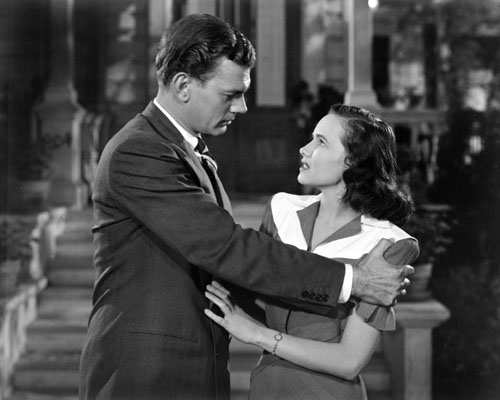
Shadow of a Doubt” (1943, Alfred Hitchcock) is the 1 p.m. matinee Tuesday, Feb. 4, at the Los Angeles County Museum of Art (LACMA).

A bright and beautiful small town girl named Charlotte “Charlie” Newton (Teresa Wright) is bored. Bored with her well-ordered home in her Norman Rockwellish little city of Santa Rosa, Calif., – where trees line the sunlit streets, everyone goes to church on Sunday and lots of them read murder mysteries at night. Charlie has more exotic dreams. She adores her globe-trotting, urbane Uncle Charlie Oakley (Joseph Cotten) – for whom she was nicknamed – and is deliriously happy when he shows up in Santa Rosa for a visit.

Joseph Cotten and Teresa Wright play kindred spirits, sort of, in “Shadow.”

Joseph Cotten and Teresa Wright play kindred spirits, sort of, in “Shadow.”

But Uncle Charlie has some secrets that no one in his circle would guess – not Uncle Charlie’s adoring sister (Patricia Collinge), nor his good-hearted brother-in-law (Henry Travers), nor their mystery-loving neighbor Herbie (Hume Cronyn), nor Charlie herself. Uncle Charlie, who conceals a darker personality and profession beneath his charming persona, is on the run, pursued by a dogged police detective (Macdonald Carey), who suspects him of being a notorious serial killer who seduces rich old widows and kills them for their money. As handsome, cold-blooded Uncle Charlie, Cotten, who also called “Shadow” his personal favorite film, is, with Robert Walker and Anthony Perkins, one of the three great Hitchcockian psychopaths.

“Shadow of a Doubt,” released in 1943, was Hitchcock’s sixth American movie and the one he often described as his favorite. As he explained to François Truffaut, this was because he felt that his critical enemies, the “plausibles,” could have nothing to quibble about with “Shadow.” It was written by two superb chroniclers of Americana, Thornton Wilder (“Our Town”) and Sally Benson (“Meet Me in St. Louis”), along with Hitch’s constant collaborator, wife Alma Reville. The result is one of the supreme examples of Hitchcockian counterpoint: with a sunny, tranquil background against which dark terror erupts.

Barbara Stanwyck book

On Thursday night at 7:30 p.m., the American Cinematheque presents a Nicholas Ray night at the Egyptian Theatre in Hollywood: “Johnny Guitar,” starring Joan Crawford and Sterling Hayden, and “In a Lonely Place,” starring Humphrey Bogart and Gloria Grahame. As Jean-Luc Godard said: “Nicholas Ray is the cinema.” And speaking of Godard, the AC’s Aero Theatre is hosting a Godard retrospective, starting Feb. 20.

Femmes fatales don’t particularly like birthdays, but here’s an exception:  “Double Indemnity” turns 70 this year! Did you know Raymond Chandler made a cameo in the film? Read the story here.

And be sure to attend on Sunday, Feb. 9, at the Aero Theatre in Santa Monica: Barbara Stanwyck biographer Victoria Wilson will sign her book and introduce a screening of “Double Indemnity” and “The Bitter Tea of General Yen.” The signing starts at 6:30 p.m. and the show starts at 7:30 p.m.

Wilson has two other signings coming up; for details, call Larry Edmunds Bookshop at 323-463-3273.

Costa-Gavras hits a peak in true-crime thriller ‘Z’

By Film Noir Blonde and Mike Wilmington

The Noir File is FNB’s guide to classic film noir, neo-noir and pre-noir from the schedule of Turner Classic Movies (TCM), which broadcasts them uncut and uninterrupted. The times are Eastern Standard and (Pacific Standard).

Pick of the Week

Z posterZ” (1969, Costa-Gavras). 3:45 p.m. (12:45 p.m.). Tuesday, Feb. 4.

In Greece, in the turbulent 1960s, under the tyrannical reign of “The Colonels,” an extremely popular leftist opposition leader (played by Yves Montand and based on the real-life politician Lambrakis) tries to speak at a political rally. But, before he even arrives, he is frustrated by the Greek police, by obstructionist “regulations” and by a vicious band of hecklers and armed thugs outside the hall. Finally, while crossing the street to the rally, Montand’s political leader is assaulted with a blow to the head that eventually kills him.

The police do nothing, though the killers are well known to them. These deliberately undiligent law enforcers and unresponsive government leaders (namely Pierre Dux) ignore the facts and leads, including one persistent witness (Charles Denner), whom the assassins try to run down in the street s most famous scene and image). But an incorruptible court investigator (Jean-Louis Trintignant) and a crusading young journalist (Jacques Perrin) keep gathering facts and tracking down the guilty.

Greek-French director Constantin Costa-Gavras had had an early ’60s film noir hit with his first film, the cop thriller “The Sleeping Car Murders.” It’s a fast exhilarating murder mystery, based on the Sebastian Japrisot novel, with a cast that boasted many of the same actors as “Z“: Montand, Trintignant, Perrin, and Denner. In “Z,” working with screenwriter Jorge Semprun, Gavras goes further, digs deeper. He exposed a real-life murder and a plot that involved the Greek police, right-wing political parties and government leaders — all part of the oppressive Greek regime.

The film’s impact was enormous. The French-made “Z,” a huge international hit and the 1970 Oscar-winner for Best Foreign Language Picture, is one of the most influential true-crime thrillers ever made. (In French, with English subtitles.)

Wednesday, Jan. 29

Manchurian Candidate poster8 p.m. (5 p.m.): “The Manchurian Candidate” (1962, John Frankenheimer). With Frank Sinatra, Laurence Harvey, Janet Leigh and Angela Lansbury Reviewed in FNB on July 18, 2013.

12:15 a.m. (9:15 a.m.). “Pennies from Heaven” (1981, Herbert Ross). Adapted from writer Dennis Potter’s brilliant British TV mini-series, this Depression-era film noir musical was probably star Steve Martin’s finest hour. He plays a traveling salesman, who, together with the ravishing Bernadette Peters, sings and lip-synchs his way to an unplanned career as an outlaw lover on the run. One of the major unfairly neglected Hollywood musicals, and a marvelous neo-noir. Features a wonderful score of vintage period recordings (including the title song) and standout dancing from lanky Christopher Walken.

Thursday, Jan. 30

9:45 a.m. (6:45 a.m.): “The Kennel Murder Case” (1933, Michael Curtiz). William Powell plays the snobbish Manhattan socialite/sleuth Philo Vance as he turns his detecting prowess to foul play at a Long Island dog show. Snappily acted by Powell and directed by Curtiz, and one of the best Golden Age detective series movies.

10:15 p.m. (7:15 p.m.): “What Ever Happened to Baby Jane?” (1962, Robert Aldrich). With Bette Davis, Joan Crawford and Victor Buono. Reviewed in FNB on July 28, 2012.

Sunday, Feb. 2

6 a.m. 3 a.m.: “The Letter” (1940, William Wyler). With Bette Davis, Herbert Marshall and James Stephenson. Reviewed in FNB on Sept. 19, 2012.

6:15 p.m. (3:15 p.m.): “12 Angry Men“ (1957, Sidney Lumet). With Henry Fonda, Lee J. Cobb, Ed Begley and Jack Warden, Reviewed in FNB on June 13, 2013.

8 p.m. (5 p.m.): “The Lost Weekend” (1945, Billy Wilder). Ray Milland as Don Birnam, an alcoholic writer is left alone by his girlfriend (Jane Wyman) and his brother (Phillip Terry) for a long, lost weekend in New York City. In something close in mood to a German expressionist nightmare, Don will try to sell his soul for a bottle, to find the booze (and the shame) that he’s hidden, and to stumble from (drunken) ecstasy to (withdrawal) agony, from life to near-death, from one empty glass to another.

It’s a noir without crime, but with plenty of guilt and punishment. “The Lost Weekend” won the Best Picture Oscar; Wilder won Oscars for directing and co-writing, and Milland won Best Actor.

The film’s source was the best-selling novel by Charles Jackson, himself an alcoholic writer, and a man who knew whereof he spoke. (The actress playing the hat-check girl in the night club became Wilder’s wife, Audrey Wilder.)

2:15 a.m. (11:15 p.m.): “Spellbound” (1945, Alfred Hitchcock). With Ingrid Bergman, Gregory Peck and Leo G. Carroll. Reviewed in FNB on Jan. 9, 2013.

Monday, Feb. 3

7 a.m. (4 a.m.): “Mildred Pierce” (1945, Michael Curtiz). With Joan Crawford, Jack Carson, Ann Blyth and Zachary Scott. Reviewed in FNB on Dec. 1, 2010.

4:15 a.m. (1:15 a.m.): “Rebel Without a Cause” (1955, Nicholas Ray). With James Dea, Natalie Wood, Sal Mineo and Dennis Hopper. Reviewed in FNB on April 13, 2013.

‘Laura’ and ‘Blue Velvet’ to screen at the Egyptian Theatre

Laura 1944 posterThe delightful, urbane and unapologetically posh film noir “Laura” (1944, Otto Preminger) screens tonight at 7:30 p.m. at the Egyptian Theatre in Hollywood, part of the American Cinematheque.

“Laura” makes me nostalgic for a life I never led — the adventures of a 1940s career girl living in Manhattan: landing a job on Madison Avenue, buying suits and silk stockings for work, renting a place for $40/month, meeting handsome men, dinner and drinks at the Stork Club, weekend trips to the country.

Of course, “Laura” does have a few downsides — murder and mistaken identity, for starters. Seems that turning every head and being the toast of the town, as is the case with the charming and lovely Laura (Gene Tierney), may prove very dangerous. In a series of flashbacks, we learn the details of Laura’s life and it appears that in addition to having many admirers, she attracted an enemy or two as well. You can read the full review here.

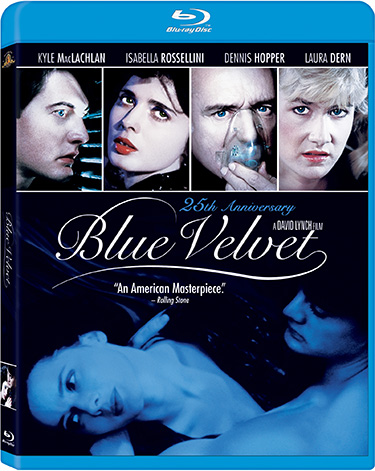
Blue Velvet posterAnd Thursday night: Thomas Ethan Harris presents a seminar on deconstructing writer/director David Lynch’s “Blue Velvet” (1986). This detailed look inside Lynch’s masterpiece takes place in the Spielberg Theatre of the Egyptian.

In “Blue Velvet,” Lynch dazzles and disturbs us as he probes the evil beneath the surface of sunny small-town Americana. Twenty-eight years later, its trippy shimmer has not dimmed, reminding us of Lynch’s auteur power. You can read the full review here.

The Film Noir File: A queen of the screen has her day

By Film Noir Blonde and Mike Wilmington

The Noir File is FNB’s guide to classic film noir, neo-noir and pre-noir from the schedule of Turner Classic Movies (TCM), which broadcasts them uncut and uninterrupted. The times are Eastern Standard and (Pacific Standard).

Pick of the Week

Joan Crawford Film Noir Day (Thursday, Jan. 23)

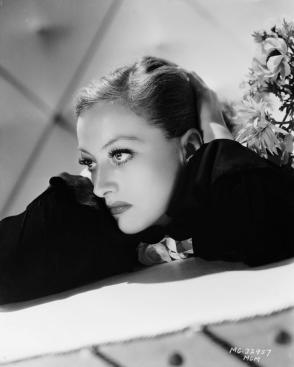
Joan Crawford was a muse for photographer George Hurrell.

Crawford was a muse for photographer George Hurrell.

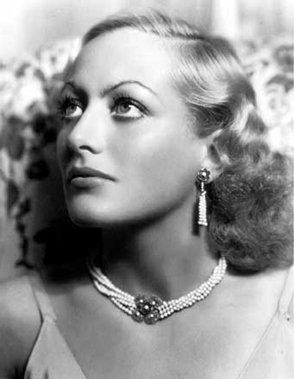
Joan Crawford – she of the huge dark burning eyes, limber legs and mighty shoulder pads – was a Queen of Film Noir, as well as a dancing daughter, a headstrong hottie and a Grande Dame of the movies. She had an unusually long career, during which she remained remarkably popular.

Crawford started in the silent era as one of the last great flappers and continued as a reigning lady of the MGM and then the Warner lot, making classic film noirs and neo noirs like “Mildred Pierce” (her 1945 “Best Actress” Oscar winner), “Flamingo Road,” “Sudden Fear” and “Whatever Happened to Baby Jane?” She worked all the way up to the ’70s when one of her last directors, on a TV episode of Rod Serling’s “Night Gallery,” was a young up-and-comer named Steven Spielberg.

Right to the end, when she looked at men (and sometimes women) with her cool, appraising stare, her dark eyes could drill into them. Through it all – with her flawless screen beauty and sexy presence – she memorably played women in love, women besieged, women at war, women in business, women dancing, women in peril, women who held their own in dark days and light. TCM has devoted Thursdays in January to Joan Crawford, highlighting some of the finest, darkest hours and best film noirs of a superstar who excelled in all-American allure and ultimate glamour.

Mildred Pierce

Crawford won an Oscar for "Mildred Pierce."

Joan Crawford won a Best Actress Oscar for “Mildred Pierce” from 1945.

(1945, Michael Curtiz). 8 p.m. (5 p.m.) Thursday, Jan. 23. With Joan Crawford, Jack Carson, Ann Blyth and Zachary Scott.

Flamingo Road” (1949, Michael Curtiz). 12:15 a.m. (9:15 p.m.). With Crawford, Zachary Scott and Sydney Greenstreet.

The Damned Don’t Cry” (1950, Vincent Sherman.). 2 a.m. (11 p.m.). With Crawford, David Brian and Steve Cochran.

Possessed” (1947, Curtis Bernhardt). 3:45 a.m. (12:45 a.m.). With Crawford, Van Heflin and Raymond Massey.  

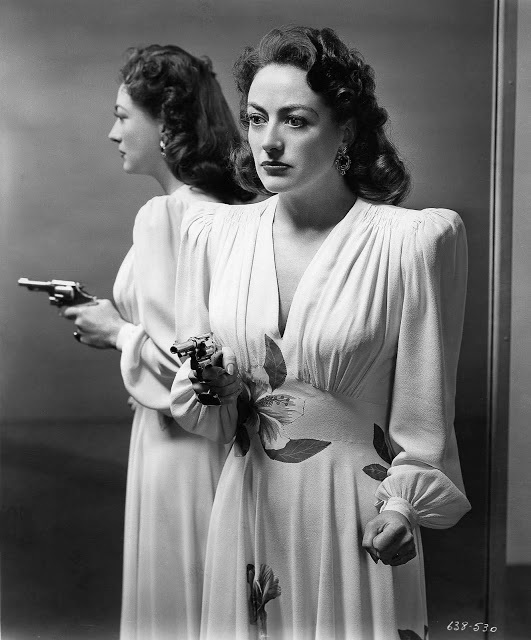
Another Joan Crawford portrait shot by George Hurrell.

Another Joan Crawford portrait shot by George Hurrell.

Bonus Crawford Noir on Friday, Jan. 24:
Autumn Leaves” (1956, Robert Aldrich). 4:15 p.m. (1:15 p.m.). With Crawford, Cliff Robertson and Vera Miles.

Wednesday, Jan. 22

10:45 a.m. (7:45 a.m.): “Scarlet Street” (1945, Fritz Lang). With Edward G. Robinson, Joan Bennett and Dan Duryea Reviewed in FNB on Nov. 24, 2011.

4 p.m. (1 p.m.). “Clash by Night” (1952, Fritz Lang). With Barbara Stanwyck, Robert Ryan and Marilyn Monroe.

6 p.m. (3 p.m.): “The Wrong Man” (1956, Alfred Hitchcock). With Henry Fonda, Miles and Anthony Quayle. Reviewed in FNB on Nov. 17, 2012.

Saturday, Jan. 25

6 p.m. (3 p.m.): “Bonnie and Clyde” (1967, Arthur Penn). With Warren Beatty, Faye Dunaway, Gene Hackman and Estelle Parsons. Reviewed in FNB on Feb, 4, 2013.

Sunday, Jan. 26

3:30 a.m. (12:30 a.m.): “Strangers on a Train” (1951, Alfred Hitchcock). With Farley Granger, Robert Walker and Ruth Roman. Reviewed in FNB on April 40, 2011. [Read more…]

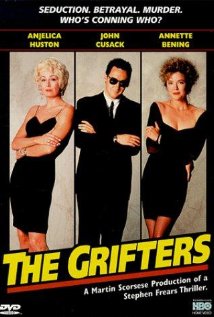
Bleak but stylish ‘The Grifters’ lets Anjelica Huston sparkle

Grifters posterThe Grifters/1990/Miramax Films/119 min.

“I’m lucky,” actress Anjelica Huston once said. “The people who tell me they like my work tend to be the kind of people I might be friends with anyway. I have a really nice audience.”

She definitely had a really nice audience last month at the book-signing party at Bookmarc in West Hollywood for her new memoir, “A Story Lately Told: Coming of Age in Ireland, London and New York.”

The FNB team got off the sofa for this one and we had a lovely time. It made us think of our favorite Anjelica Huston roles and “The Grifters” from 1990 (Yikes! Was it really that long ago?) was at the top of the list. Director Stephen Frears’ bleak but very stylish neo-noir about a family that grifts together and sticks together is a far cry from all that holiday/togetherness stuff, which can sometimes be a tad saccharine for our tastes.

The cold and cut-throat mother here is Lilly Dillon as played by the incomparable Ms. Huston (daughter of John Huston, who directed the classic noirs “The Maltese Falcon” and “The Asphalt Jungle.”) Rail thin, hard as fake nails and damaged as her ash blonde locks, Lilly works for the mob by wedging bad bets at the racetrack.

Her estranged son Roy Dillon (John Cusack) is a small-time con artist who says he can quit the grift any time he wants. Sure, Roy, whatever you say. Feeling a little guilty about never winning Mother of the Year and hoping she might help to set him straight, Lilly starts by paying Roy’s hospital bill after he’s in a dust-up that leaves him with internal hemorrhaging.

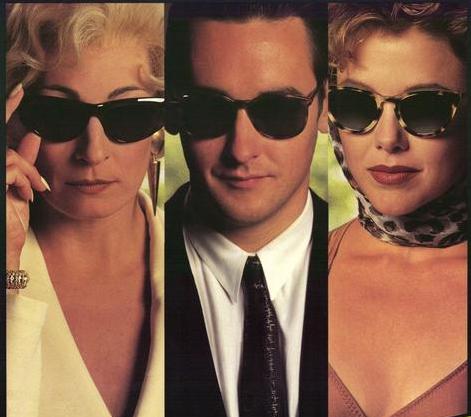
Anjelica Huston, John Cusack and Annette Bening play the members of a sordid trio.[/

Anjelica Huston, John Cusack and Annette Bening play the members of a sordid trio.

Roy’s not rushing back into her arms – at least not right away. He’s busy with his girlfriend Myra Langtry (Annette Bening). Myra used to be a “roper” for big-time money-bilking schemes, meaning she’d lure victims into parting with chunks of cash, falsely promising a big payoff down the line. But the roping biz has slow for Myra so she makes a living any way she can.

Meanwhile, while this strange version of a love triangle does its stuff, there’s another fly in the ointment: Lilly’s boss Bobo (Pat Hingle) who doesn’t write his staffers up – he prefers to inflict intense physical pain. When questioning Lilly after she slips up, he asks: “Do you want to stick to that story, or do you want to keep your teeth?” What a charming guy.

But charming is not what you’d associate with the mind behind “The Grifters” novel, on which the film is based. Writer Jim Thompson (1906-1977) was a troubled alcoholic who recorded his desolate vision of life on the pages of his pulpy but powerful novels. Thompson has been described as a dimestore Doestyevsky and as bringing Greek tragedy to the underclass.

“The Grifters” screenwriter Donald E. Westlake initially turned down the offer to write the script because he thought the novel was “too gloomy. … the characters all go to hell.” Director Frears (an English talent who directed Judi Dench in the terrifically funny and moving “Philomena” and directed Helen Mirren to an Oscar for 2006’s “The Queen”) talked Westlake into it, arguing that the crux of the story was not the son’s defeat, but the mother’s survival.

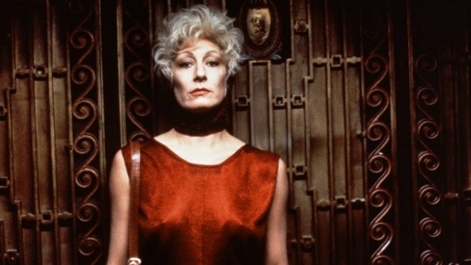
Lilly's long ride down the elevator, swathed in scarlet, symbolizes her descent into hell.

Lilly’s long ride down the elevator, swathed in scarlet, symbolizes her descent into hell.

Westlake accepted the challenge and wrote a sparkling, if sad and twisted, script. (“You really do like B movies,” Westlake told Frears, after hearing which scenes from the book Frears wanted in the movie. Well, the film’s producer Martin Scorsese is certainly a huge fan of B’s.)

Frears, who refers to the film as an “eccentric melodrama” said he was surprised at the film’s popularity, given its grim tone. The popularity surely stems from the fact that Frears still manages to entertain on some level and the leads all deliver searing performances. There are lots of funny one-liners, such as when Lilly addresses Roy’s doctor as they enter the hospital. She matter-of-factly informs him: “My son is going to be all right. If not, I’ll have you killed.”

Huston’s performance will make your skin crawl – Myra has long resigned herself to a lonely life that includes giving and taking violence as an inevitable part of the bargain. She’s tough, sometimes desperate, but also regal with the odd glimpse of warmth.

Bening lets her natural smarts show through, whether she’s coyly conning or clowning around in the nude. Frears says that while making the flick, he turned Bening on to the work of Gloria Grahame, gangster moll extraordinaire, and that Bening “went mad about her.” Bening brings Grahame gals into the ’90s in her own fresh, provocative way. Though Huston and Bening share only two scenes, their rivalry infuses the whole film.

The Grifters got four Oscar nods: Huston for best actress, Bening for best supporting actress, Frears for best director, and Westlake for adapted screenplay. (They lost to: Kathy Bates in “Misery,” Whoopi Goldberg in “Ghost,” Kevin Costner for “Dances With Wolves,” and Michael Blake for “Dances With Wolves.”) Huston and Bening did, however, win honors from several critics’ groups.

Cusack, who previously had played mainly all-American types, relished the chance to play a perverse cheater, who’s not above hitting women. Look out for his Chicago chum: actor Jeremy Piven in the scene with the sailors on the train.

Set mostly in sunny Southern California, the film looks glossy and glaring, just like its heroines. The movie is not a period piece, but Frears plays with time elements – we see Art Deco buildings and a ’50s-era motel. The characters drive ’70s cars like big old Caddys. The Elmer Bernstein score also deftly draws from a number of musical styles.

Cusack wears ’80s suits and rips people off at a Bennigans. Myra and Lilly wear a mixture of ’40s eveningwear, shift dresses, skin-tight animal prints and mini-skirts. Lilly’s wardrobe has special significance: the color red tracks her slide into total wretchedness. Frears says her long ride down the elevator, swathed in scarlet, symbolizes her descent into hell.

You know, maybe motherhood just isn’t for every woman.