Fabulously funny, edgily dark, ‘Big Lebowski’ is out on Blu-ray

The Big Lebowski/1998/Universal/117 min.

Post a comment on any story this month and you’ll be entered into a draw to win this Blu-ray release from Universal.

By Michael Wilmington
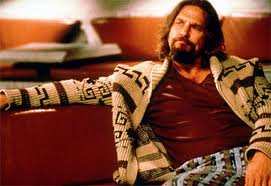
Jeff Bridges is matchless as The Dude.

“The Big Lebowski,” that class-by-itself, goofball masterpiece by Joel and Ethan Coen is a fabulously funny and edgily dark comic movie tribute to the time-wasters, layabouts and oddballs of the world. Especially the ones in Los Angeles, a city that the Coens catch here with devilish bite and angelic wit.

It’s as sharp and dead-on a picture of LA as you’ll see ever: of its rotten upper-crust and its laidback subculture, and especially of its well-lit bowling lanes.

Funny as hell, it’s a goddamn ode to all those guys who are too off-the edge to work out some halfway normal existence – embodied here in star Jeff Bridges, that man among men and dude among dudes Jeff Lebowski – who indeed prefers the name “The Dude.”

The Dude is … well, what can we say? He’s the Dude! He’s Santa Monica Boulevard on a sunny day; he’s the Farmer’s Market at sunrise; he’s Hollywood Boulevard at 10 p.m.

“The Big Lebowski” tells the story of this ’70s guy in a ’90s world. It’s also a great neo noir, a sort of thriller that plunges the Dude into a Raymond Chandler-style detective story, with the Dude as an impromptu detective who can’t really detect much, but gives it a try anyway.

Accompanying the Dude are his two bowling buddies, wired-tight Vietnam vet and Jewish convert Walter Sobchak (John Goodman) and quiet ex-surfin’ Donny Karabatsos (Steve Buscemi). In the tangled plot, The Dude is mistaken for another, much richer Jeff Lebowski (David Huddleston), a phony philanthropist. Phillip Seymour Hoffman is the other Lebowski’s shit-eating grin of a secretary. Julianne Moore is his artsy daughter and a sort of femme fatale, Maude Lebowski.
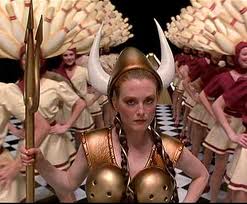
Julianne Moore

What a show. The writing is razor sharp and so is the filmmaking. Roger Deakins shot it immaculately, and the sound track, supervised by T-Bone Burnett, is fantastic – ranging from Mozart and Korngold to Debbie Reynolds singing “Tammy” to Dean Martin singing “Standing on the Corner” and Nina Simone singing “I Got It Bad and That Ain’t Good,” to Booker T. and the M. G.s to Townes Van Zandt covering that great underperformed Rolling Stones classic “Dead Flowers.”

As for Jeff Bridges … well, Jeff Bridges was born to play the Dude. The other actors are super, sometimes great, especially Goodman. But Bridges is beyond great, beyond wonderful, beyond Mombasa. He‘s the Dude. His Dudeness. Take it easy, man. But take it.

Extras: Documentaries; Featurettes; Jeff Bridges photos.

Crime comedy ‘30 Minutes or Less’ fails to deliver

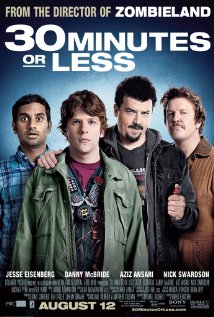
30 Minutes or Less/2011/Columbia Pictures/83 min.

Asking for a refund at a movie theater is an old joke. But it’s funnier than most of the material in “30 Minutes or Less,” by director Ruben Fleischer.

The premise has potential – a feckless pizza delivery guy (Jesse Eisenberg) is coerced into robbing a bank by two yahoos (Danny McBride and Nick Swardson) who need to raise cash to pay a hitman (Michael Peña). Pizza guy ropes his straight-arrow best friend (Aziz Ansari) into helping him.

There’s a smart, pretty girl involved (Dilshad Vadsaria). There’s a deadline and a ticking bomb. Worlds could collide, tension could build, funny lines could pop out of the mouths of authentically drawn characters.

Early on, it’s clear that none of the above is going to happen. Though the cast makes an effort (especially Ansari and Peña), the weak script by Michael Diliberti makes no sense, the flat direction induces yawns and cringes in equal measure, and the increasingly desperate hodgepodge of gags in the hopes that something will stick is downright tedious.

Having been a fan of Fleischer’s “Zombieland” from 2009 (written by Rhett Reese and Paul Wernick), I was looking forward to “30 Minutes or Less.” I like Eisenberg and respect his talent. I’m from Michigan (the film is set in Grand Rapids). I wanted to like this movie!

As it turned out, though, I couldn’t shake the feeling that “30 Minutes” was a project by a group of high school kids. Even then, you might get some good laughs appealing to your juvenile side. But my inner child quickly curled up for a nap and the three boys in the next row might as well have been taking an exam, so thick was their silence throughout the flick.

“30 Minutes or Less” was 83 minutes I wish I’d spent some other way.

Love it or hate it, ‘Bellflower’ is a major achievement

Michael Wilmington

By Michael Wilmington

Bellflower/2011/Coatwolf Productions/106 min.

“Bellflower” – a Sundance sensation reportedly shot for only $17,000 by first-time writer/director/co-star/co-editor Evan Glodell – introduces us to a couple of Valley dudes, Woodrow (Glodell) and Aiden (Tyler Dawson) who are obsessed with “Mad Max,” the coming apocalypse, muscle cars, WMDs and two women, Milly and Courtney (Jessie Wiseman and Rebekah Brandes). They all meet up at a barroom cricket-eating contest, where Milly wins. They dally awhile. Then “Bellflower” pulls us down into ink-black, psycho-macho, neo-noir pathology.

At first it looks as if it’s going to be a drama about twentysomethings on the fringe, with a lot of bar scenes, four-letter talk and onscreen sex. Then it descends into the same road warrior-ish violent fantasies as those self-absorbed, fantasizing dudes.

I didn’t like it all that much, or as much as a lot of other critics. I thought it was entertaining but a little light on real depth or truth or imagination. But I’ve got to admit, “Bellflower” is an incredible achievement for a Z-budget indie.

Glodell and his cinematographer, Joel Hodge, get a really strong visual style; they shoot their Valley scenes with a custom-built digital camera that makes everything look smeary and hot and dirty. The actors simultaneously play their scenes sort of Cassavetes-real and B-Movie-overblown, and there’s a scary, edgy feel to it all, that makes you genuinely uneasy and uncomfortable.

In the first part of “Bellflower” (the name of a street where the guys live), the main story is a love triangle/quadrangle and a hookup. Woodrow loves Milly, who cheats on him with Mike (co-editor Vincent Grashaw), and so the distraught Woodrow takes up with Courtney, who’s the crush of Aiden. [Read more…]

New noirs: ‘The Guard,’ ‘Good Neighbors’

The Guard/2011/Sony Pictures Classics/96 min.

In “The Guard,” Brendan Gleeson is a small-town Irish cop and Don Cheadle a by-the-book FBI agent who comes to the Emerald Isle to bust an international drug-smuggling gang. The two clash at first, then become unlikely allies, then friends, as they get closer to core of the criminal operation.

On the plus side, this black comedy, with a healthy dose of murder, blackmail and corruption, is good for some dark dry laughs, especially from the formidable and funny Gleeson. He knocks back the lines as easily as his character downs a pint. Writer/director John Michael McDonagh is the brother of Martin McDonagh (writer/director of 2008’s “In Bruges”) and, like his brother, he relishes irreverent sarcasm. On the minus side, though, “The Guard” is superficial and derivative; you have seen this movie before.

But if it’s a bit of entertainment you’re after, “The Guard” is your man.

“The Guard” opens July 29.

x

Good Neighbors/2010/Magnolia Pictures/96 min.

According to writer/director Jacob Tierney, “Good Neighbors,” based on a novel by Chrystine Brouillet, isn’t so much a whodunit as it is a satirical movie about people uncovering information and then having to decide what to do with it.

The people in this case are residents of a Montreal apartment building in 1995, three young tenants who become friends: charming, sly Spencer (Scott Speedman), brusque and to-the-point cat lover Louise (Emily Hampshire) and cute but geeky Victor (Jay Baruchel). The above-mentioned information relates to the rape and murder of several young women around the city. Safe at home in a cozy apartment? Not so much, especially since the members of the friendly trio turn out to be capable of shocking, searing violence.

There are more holes than surprises in this movie, the compositions are a little dull looking and it’s not particularly suspenseful until the last reel. That said, the last reel delivers some full-on tension, the actors are interesting to watch, especially Hampshire, and the writing’s not bad. Also, cats figure prominently in the plot – reason enough to see it in my book. 😉

“Good Neighbors” opens July 29.

Totally exciting, wildly preposterous: French police thriller ‘Point Blank’ knocks us out, then keeps right on going

Point Blank/2010/Magnolia Pictures/90 min.

French police thrillers, especially the classics by Clouzot, Chabrol and Melville, used to be a bit more plausible and psychologically acute than their American counterparts – explosive action shoot-’em-ups that have mostly tried to knock us on our asses. Not so these days. The French cops-and-robbers hit movie “Point Blank” out-Yanks the Yanks by knocking us on our derrieres in the first few minutes — and then keeps it up, racing like hell on wheels for the next 80.

That’s the good news: It’s an exciting movie. The bad news is that, like many of its U.S. counterparts, it doesn’t make a hell of a lot of sense. The other good news is that writer/director Fred Cavayé’s movie is so well-gunned and goes by so damned fast, you barely notice the holes as you bounce over them.

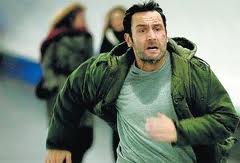
Gilles Lellouche as Samuel is caught between the crooks and the cops.

The plot, jam-packed into the movie’s screamingly fast running time, has to do with a hit man named Hugo Sartet (Roschdy Zem, the somberly magnetic actor of “Days of Glory”) who’s been betrayed and nearly killed. He winds up in the hospital in the custody of the police and the care of a low-key male nurse, Samuel Pierret (the amiable and wonderfully nervous Gilles Lellouche).

Samuel saves Hugo from more would-be assassins and then, to his horror, finds himself trapped between the crooks and the cops – and the crooks who are cops (quite a lot of them, as it turns out). Under the evil command of the Teutonic-looking Commandant Patrick Werner (Gerard Lanvin), who’s actually conducting the investigation of his own crimes, those rogue police start chasing Hugo and Samuel all around Paris.

And, for insurance, they kidnap Samuel‘s beautiful wife Nadia (Elena Anaya), who’s eight months pregnant — threatening her death unless Samuel helps them. Soon Samuel and Hugo have become friends, of a sort, and a large section of Paris has become a bloody battleground.

I told you it didn’t make much sense. And, as I said, it doesn’t really matter. Cavayé, an ex-fashion photographer with a good eye and a blistering sense of pace, also made the big French neo-noir hit “Pour Elle,” which was translated and Americanized into the savagely improbable Russell Crowe thriller “The Next Three Days.” (Hollywood copied it so fast that Cavayé’s French original wasn’t imported and may still pop up here.)

Like Luc Besson and his disciples, Cavayé can do certain high-tech American tricks better than a lot of Americans. How does he get any suspension of disbelief, besides pure speed and kinetic rush? The leads, Zem, Lellouche and Anaya, are all excellent actors (Zem has a great glare) and they bring emotional conviction to a story you can barely believe for a minute.

The title “Point Blank,” by the way, has nothing to do with Cavayé’s original title “A Bout Portant” and nothing to do with the 1967 Lee MarvinJohn Boorman noir classic “Point Blank,” which in turn was adapted from the 1962 Richard Stark-Donald Westlake novel “The Hunter,” which has nothing to do with the 1980 Steve McQueen crime thriller of the same name.

But whether you call it “Point Blank” or “A Bout Portant” or “The French Reconnection” or “Paris Goes Kaboom,” this is still one totally exciting if often wildly preposterous movie.

— Michael Wilmington

“Point Blank” opens July 29. (In French with English subtitles.)

With its engrossing story, gorgeous cinematography and riveting performances, ‘The Conformist’ still compels

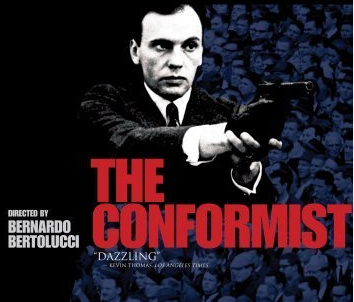
The Conformist/1970/115 min.

Is Bernardo Bertolucci’s “The Conformist” – an art film classic regarded by many cinematographers as the most beautifully photographed movie of its era – also a neo-noir?

Well, it’s a movie, set in the 1930s, about those old noir standbys: romance, sex, murder, betrayal, guilt and political/police corruption. Adapted from the famous novel by Alberto Moravia, it has a psychologically divided and tormented central character, Marcello Clerici (played by Jean-Louis Trintignant of “Z” and “A Man and a Woman”), who is racked by Freudian desires and guilty secrets. The opaque-faced Marcello has homosexual leanings, which he tries to wipe out by marrying and becoming a good reliable government man. In 1930s Italy, this means being a good fascist.

Marcello is also involved in a messy triangle with his lovely, naive wife Giulia (Stefania Sandrelli) and with the incredibly beautiful bisexual Anna Quadri (Dominique Sanda). In 1970, because of this movie, the ravishing blonde Sanda was often described as the most beautiful actress in movies. Sanda was also Bertolucci’s first choice to be Marlon Brando’s co-star in “Last Tango in Paris.” (She chose motherhood instead.)

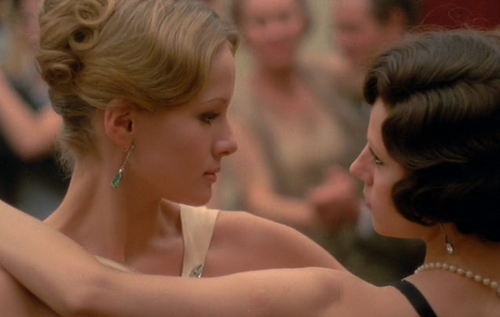
Dominique Sanda and Stefania Sandrelli

“The Conformist,” though, made her a movie immortal. Sanda’s feverish onscreen tango with Sandrelli against an iridescent, gorgeously colored background, while Marcello watches, is one of the most justly famous erotic/musical set-pieces in all of cinema.

Bertolucci later went on to make celebrated and even notorious classics like “The Last Emperor” and “Last Tango,” but many aficionados still prefer “The Conformist” for its engrossing story, the savvy political background, the absolutely gorgeous Storaro cinematography (the color equivalent of a great noir black-and-white), and for the riveting performances by Sanda, Trintignant, Sandrelli, Pierre Clementi, Yvonne Sanson and the others. [Read more…]

A deadly duo and classic of ’70s noir: ‘Honeymoon Killers’

The Honeymoon Killers/1970/107 min.

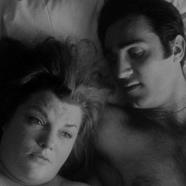
Shirley Stoler and Tony Lo Bianco star in "The Honeymoon Killers."

Based on a notorious real-life murder case, shot in striking black-and-white, and scored to the ominous strains of Gustav Mahler’s Symphony No. 6 (“Tragic”), this is one of the true classics of ’70s neo noir: a low-budget masterpiece about a couple of ruthless killers who make the murderous lovers of “Double Indemnity” look almost normal.

Hefty Shirley Stoler unforgettably plays Martha Beck, a deadly nurse who joins with sleazy Lothario Ray Fernandez (the equally unforgettable Tony Lo Bianco) to seduce, kill and rob her wealthy women patients. Crime doesn’t play, but not before your blood is thoroughly chilled.

The movie was both written and directed by Leonard D. Kastle, and despite consistent rave reviews for “The Honeymoon Killers“ from François Truffaut and many others, Kastle never made another movie. A young director who was fired from the project earlier on did slightly better. His name was Martin Scorsese.

— Michael Wilmington

“The Honeymoon Killers” plays at 7:30 p.m. Thursday, July 21, at the Los Angeles County Museum of Art (LACMA), 5905 Wilshire Blvd.

‘Tabloid’ by Errol Morris tells the bizarre tale of a femme fatale who refuses to give up

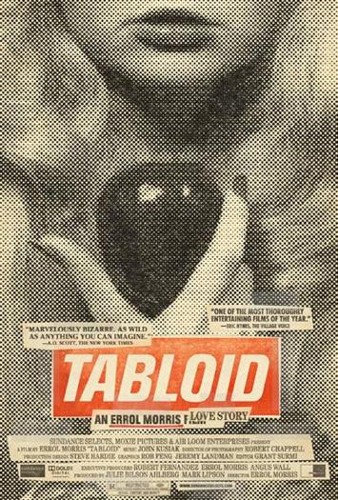
Tabloid/2010/IFC Films/88 min.

Celluloid femmes fatales, though they may lack morals and dabble in deadly sins, are nevertheless pretty easy to like. They have brains, beauty, ambition and style. And it’s just a movie, a 90-minute diversion from reality.

In the real world, however, manipulative, self-absorbed and conniving narcissists typically don’t receive our admiration; if they’re lucky, they might get our compassion. That’s the case with Joyce McKinney, the subject of the latest film from Errol Morris, one of America’s greatest documentarians. It’s a story that’s funny, frenzied and nothing short of astounding.

I was part of a roundtable interview with Morris last Friday and learned more about the film. About three years ago, browsing through the Boston Globe, Morris happened to see a wire story about McKinney, who made headlines most recently for having her dog cloned in South Korea. The story also noted that 30 years before, McKinney had been a front-page fixture in the British tabloids.

Why? Oh, she just wanted her man back. McKinney, a former beauty queen, fell head-over-heels in love with a clean-cut guy named Kirk Anderson. They had discussed marriage and even what to name their kids, McKinney says. But Anderson was (and apparently still is – he refused to be interviewed) a Mormon and was assigned to a mission in England.

According to a 2008 report in London’s Sunday Times: In 1977, the former Miss Wyoming stalked her lover, a Mormon missionary, to a tabernacle in East Ewell, Surrey, allegedly kidnapped him and held him in a cottage in Devon. There, the 17-stone [238 pounds] Kirk Anderson claimed, his petite, busty admirer tied him to a bed using mink-trimmed handcuffs, slipped into a see-through nightie and forced him into sex. At a remand hearing she declared her love for the Mormon with the immortal line: “I’d ski naked down Mount Everest with a carnation up my nose if he asked me.”

Once the story broke, Fleet Street journalists had a field day and McKinney’s bizarre mission was prime Page-One fodder. “Joyce’s story had all the qualities of a crazy B-movie,” says producer Mark Lipson.

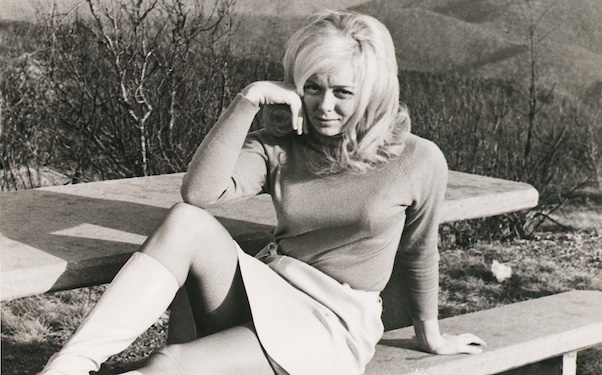
Joyce McKinney in an undated photo.

Fast forward to today to a McKinney who did not move on. She didn’t particularly want to. “I think she’s an amazing romantic heroine,” says Morris. “She’s this incredibly romantic soul – an absurdist, romantic figure pursuing some quixotic, hopeless love or the idea of love. She’s remarkable as a person who refuses to give up.”

Morris also likes “Tabloid”’s element of film noir. “I love film noir. … People don’t really have control over their lives in noir. They’re part of some infernal tapestry of design. There’s a sense of inexorability and there’s a sense of inexorability in this story.”

“Tabloid” opens July 15 in Los Angeles and New York.

Far out: ‘The Long Goodbye’ stretches the lingo of film noir

The Long Goodbye/1973/United Artists/112 min.

One of the best films of the ’70s or an ugly, boring travesty of a well respected detective novel?

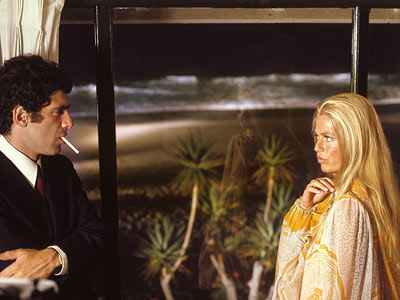
Elliott Gould and Nina Van Pallandt in "The Long Goodbye."

Decide for yourself as you watch Robert Altman’s 1973 movie of “The Long Goodbye,” by Raymond Chandler. The film, starring Elliott Gould as private investigator Philip Marlowe, divided critics, earning the above-mentioned rave from Time Out and the snooty slam from Leslie Halliwell.

It was primarily Gould’s free-wheeling interpretation of the beloved PI that drew ire. Charles Champlin called him an “untidy, unshaven, semi-literate dimwit slob.”

An entertaining yarn, soaked in ’70s atmosphere, the movie captures the sunny, scruffy, solipsistic mood and look of Malibu, Calif., at the start of the Me Decade. Marlowe’s next door neighbors, for example, are pot-brownie-baking, clothing-optional candlemakers. We only see them from a distance but in a way they are timeless party girls, a ’70s version of “The Girls Next Door.”

And “The Long Goodbye” stretches the vocabulary of film noir. As Foster Hirsch, author of “Detours and Lost Highways: A Map of Neo Noir,” writes: “For all its self-indulgence and contradiction – the film both satirizes and seeks acceptance as a cool, contemporary L.A. mystery story – Altman’s ‘new age’ noir suggested the genre’s elasticity at a time when it was considered passé. Produced before nouveau noir had taken root, ‘The Long Goodbye’ anticipates the full-force genre revival of the 1980s and 1990s.”

We meet Marlowe late one night as he’s trying to round up food for his hungry cat (Morris the Cat in the role that launched him to stardom). The story spices up when Marlowe’s friend Terry Lennox (Jim Bouton) asks him, after a marital spat, to drive him to Tijuana.

Marlowe doesn’t have much else going on (besides cat care, of course) and so they make the trip; Marlowe heads back on his own to find that Lennox’s wife is dead. The police press Marlowe for info on Terry’s whereabouts, hoping that a little jail time will jog his memory (David Carradine plays Marlowe’s cellmate). They ease up after Terry Lennox commits suicide, having first written a letter confessing to the murder.

Marlowe’s not buying the suicide, but turns his attention to a new client. The sun-kissed and sophisticated Eileen Wade (Nina van Pallandt) wants Marlowe to find her missing hubby Roger Wade, a boozy writer, (played by the wonderful Sterling Hayden, a veteran of film noirs like “Asphalt Jungle” and “The Killing”).

Searching for Roger isn’t all that challenging, but Marlowe has his hands full with a visit from psychopathic gangster Marty Augustine (director Mark Rydell) and his hoods (including young Arnold Schwarzenegger). They’re sniffing around for a load of cash that Terry Lennox was supposed to deliver to Mexico. Surprise, surprise, the cash never made it. So the surly, anti-social Marlowe plods on toward the truth, trying not to get any sand on the shag carpets. [Read more…]

‘The Long Goodbye’ quick hit

The Long Goodbye/1973/United Artists/112 min.

Private eye Philip Marlowe in the age of political protests and pot brownies. Director Robert Altman and lead actor Elliott Gould referred to the famous Raymond Chandler character as Rip van Marlowe, meaning a guy who wakes up from a 20-year sleep, more than a little groggy. Driving a buddy to Tijuana is the first step into a deep pool of confusion and crime. Nina Van Pallandt and Sterling Hayden co-star in this spectacular neo noir.