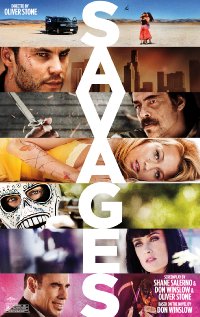
Entertaining ‘Savages’ wears blood and guts on its sleeve

Savages/2012/Universal/130 min.

Without giving too much away, Blake Lively’s character in “Savages,” Oliver Stone’s latest neo noir, is forced to, um, live rough for the sake of a business deal gone brutal. Still, this doesn’t stop the quintessential, sun-kissed beach blonde named O (short for Ophelia) from asking her keepers: “Do you think I could get a salad once in a while instead of pizza?”

O, with her lean limbs, long hair and dazzling smile, is a gorgeous if slightly vacuous pawn in this story, which she also narrates. The movie’s biggest strength is that Lively and the rest of the cast so effortlessly inhabit their characters.

The power brokers are her luscious boyfriends Ben (Aaron Johnson) and Chon (Taylor Kitsch); she’s involved with both of them and, even if she’s not the sharpest tool in the shed, she deserves a little credit for that nifty set-up. Ben’s a Buddhist who studied business and botany; Chon’s a baddist, as O puts it, and a former Navy SEAL. Together, they’ve built a thriving marijuana biz that catches the eye of a major Mexican cartel run by Elena (Salma Hayek) and Lado (Benicio Del Toro).

Lado is a badass assassin type with an abundance of fluffy hair and Elena puts her steely focus steadfastly on the bottom line. For Lado, that means bringing Ben and Chon on Elena’s board of directors, as it were. Ben and Chon don’t take kindly to hostile takeovers, however, and they aren’t afraid to fight back. (Not sure who runs the cartel’s IT department but it’s eminently capable of providing video footage of hideously violent acts with nary a glitch or file not found.) John Travolta plays Dennis, the corrupt cop.

Stone has lined up the perfect players (Hayek, Del Toro and Travolta have the meatiest parts) for an entertaining, extremely violent, sometimes-funny tale, based on Don Winslow’s novel, of savage “execs” and what they’ll do to keep making enormous gobs of illegal cash. (Stone co-wrote the script with Winslow and Shane Salerno.) Diced and sliced with kinetic editing, and drenched in the piercing bright light of Southern California, the story unspools with Stone’s trademark acuity and intensity.

But there are essentially two endings and the final “real” one strikes me as a mistake. I wish Stone, given his typical hard edge, had not felt the need to close on a sunny note when the bleaker, darker ending would have better fit this bold neo noir that throughout wears blood and guts on its sleeve.

“Savages” opens nationwide today.

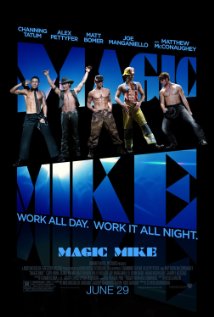
‘Magic Mike’ has bump and grind of truth, some of the time

Magic Mike/2012/Nick Wechsler Productions/110 min.

By Michael Wilmington

The art and commerce of striptease – at least as we see it in director Steven Soderbergh and producer/star Channing Tatum’s “Magic Mike” – is entertainment in a very elemental (let’s not say stripped-down) form. The performer takes off her/his clothes and dances suggestively. Audience members, if they choose, holler rude, lewd lines, drink themselves into a stupor and sometimes shower the stripper with bills.

Technique is helpful, but not as crucial as looks or stage presence – both of which Tatum must have had in his brief career, in his teens, as a male exotic dancer. The dancing doesn’t have to be particularly good, but it’s best when the dancer has a sense of humor or drama. (I guess Tatum must have had those too.)

The well-upholstered Tatum, who plays Magic Mike, star dancer dude at the raunchy Tampa club Xquisite, is also one of the film’s producers. (“Magic Mike” must be one of the few movies where a producer has to take off his clothes and get money jammed into his thong as part of his duties.) His producing partner Reid Carolin wrote the script (I assume based largely on Tatum’s memories) and plays the part of Paul. The plot Tatum and Carolin have come up with loosely resembles “All About Eve” crossed with “Boogie Nights,” “Showgirls” and Christina Aguilera’s “Burlesque” – with male strippers, mostly without bitchery.

Here’s what happens. Tatum as Magic Mike, ab-happy king of the strip hill at Xquisite, befriends college dropout Adam aka “The Kid” (Alex Pettyfer) on a construction job, introduces him to Xquisite head honcho Dallas (Matthew McConaughey), and gets him a job at the club. The Kid’s fresh looks and what-am-I-doing-here? attitude make him an immediate sensation. Meanwhile, Magic Mike, who wants to go legit with a custom-made furniture business, also gets a yen for Adam’s sister, sensible Brooke (Cody Horn).

The Kid’s star rises. Things get darker. There’s a lot of sex and nudity, including an orgy with a pig wandering around. (You suspect something like this once happened somewhere.) Dallas wants to take the act to Miami. The club deejay, good-natured and chubby Tobias (Gabriel Iglesias), peddles Ecstasy on the side. Adam loses a lot of drugs and dough. Hey, stripping isn’t all “woman, money and good times,” as one character puts it. Some mornings you wake up with a pig staring you in the face.

“Magic Mike” struck me as realistic in its depiction of the whole club milieu (not that I’ve done any research), but as somewhat phony in its story – though the dialogue is periodically sharp and the acting is much better than usual for this kind of show. (Remember “Showgirls”?)

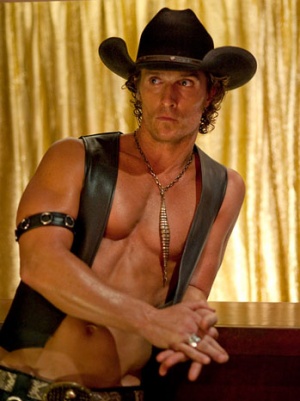
Matthew McConaughey gives depth to the part of Dallas.

There’s one knockout performance, by McConaughey as the affable, energetic and utterly shameless club czar and sometime stripper. McConaughey plays it strictly for sleaze and laughs, but he also suggests a real person: a sleazy, funny one. If the entire movie were as entertaining as McConaughey – or a bit darker than Tatum, Carolin and Soderbergh seem to want to make it – it would have been better.

Tatum, as mentioned, has the looks and presence for Mike, but not quite the magic. He does a fairly good job, and his onstage backflips are awesome, but I thought he spent too much time seducing the camera, James Deaning it up and getting us to like him, and not enough digging into the guy and making him real. It’s a very self-conscious “good” performance.

Pettyfer does an even more narcissistic job, and I’m not sure the fact that The Kid is supposed to be narcissistic and irresponsible is much of an excuse. Sister Brooke is a typical decent-onlooker part, which she does OK. People who like the dancing won’t care all that much about the acting – and that’s probably a good part of what made the movie such an opening-weekend hit.

So why did a sometimes brilliant and unpigeonholeable filmmaker like Steven Soderbergh want to make this movie? Well, sex, if not lies and videotape, has usually worked for him, and it’s always good news when a gifted moviemaker – especially one like Soderbergh, who really takes chances – gets a financial success. Obviously, he likes to work, likes the whole job of making movies. (He also photographed and edited this one.) He likes working with good-looking actors, and “Magic Mike” allows him to twist around sex roles for men the way “Haywire” shuffled them around for a woman (Gina Carano). Maybe he liked the music. And maybe he secretly harbored the desire to do a pig-at-the-orgy scene.

Noirish ‘Unforgivable’ is sleek, suspenseful, contemplative

Unforgivable/2011/Strand Releasing/112 min.

There’s a moment early on in “Unforgivable” when André Dussollier ’s character, a best-selling crime writer named Francis, suggests to a woman he just met (Judith, played by Carole Bouquet) that they move in together. Exasperated, she rolls her eyes and reminds him that they barely know each other. His response is that “knowing” isn’t a prerequisite to love.

Crazy as it seems, she accepts the offer (ok, it happens to be on an island near Venice) and somehow the decision seems completely plausible in the coolly hypnotic world created by director/co-writer André Téchiné.

He’s in his 60s, she’s in her 50s and, as they attempt to merge their lives, their flaws and frailties surface, not to mention their baggage. Francis’ adult daughter Alice (Mélanie Thierry) has a wild-child streak; while visiting the couple, she takes off, leaving no word as to her whereabouts.

Judith, a former model, now real-estate agent, has had many lovers with whom she has stayed friendly. She is independent, sometimes aloof and doesn’t take Francis and his family drama as seriously as perhaps he would like. Panicked about Alice, Francis taps an old flame of Judith’s (Adriana Asti as gumshoe Anna Maria) to find her. As his frustration about Alice mounts, Francis becomes suspicious and jealous of Judith’s chill charm and knack for attracting attention. So he hires Anna Maria’s son Jérémie (Mauro Conte), just out of jail and in need of cash, to follow her and report back to him her activities.

Technically, “Unforgivable” isn’t a neo noir, but there are noir elements in this sleek, suspenseful, contemplative movie that is particularly well written and well acted. (Based on a novel by Philippe Dijan, Téchiné co-wrote the film with Mehdi Ben Attia.) Arguably, there is almost too much going on – sometimes the supporting players’ strands of the story meander a bit randomly and Alice’s relationship with her father doesn’t quite feel authentic. But Téchiné, one of the most highly regarded French filmmakers of his generation, rewards patient viewing with graceful images and illumination of the niggling difficulties inherent in loving and trusting other people.

“Unforgivable” opens today in New York and LA.

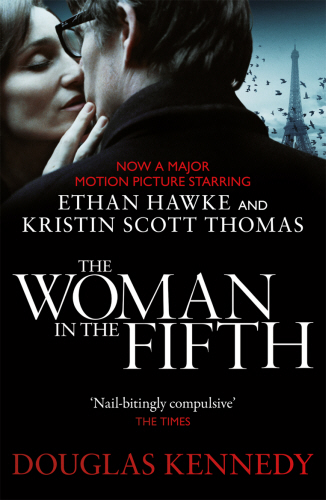
‘The Woman in the Fifth’ is a mystery thriller in disguise

The Woman in the Fifth/2011/ATO Pictures/83 min.

A hypnotic story set in Paris. A creeping sense of dread, hints of dark memories and damaging secrets about to unfold. Dream imagery and sleight-of-hand shots. Shadowy criminal types and a formidable, cryptic seductress. Excellent acting. “The Woman in the Fifth” has the ingredients for a first-rate psychological thriller, in the tradition of Roman Polanski or David Lynch.

Ethan Hawke plays Tom, an American writer trying to repair his relationship with his ex-wife (Delphine Chuillot) and daughter (Julie Papillon) in Paris. His wife wants nothing to do with him though, as per the restraining order against him.

Broke, frustrated and forlorn, he takes a job at a warehouse and finds solace from a distinguished, domineering translator who lives in the 5th arrondissement (Kristin Scott Thomas) and a young Polish barmaid (Joanna Kulig). But, when a fellow resident at Tom’s grim hostel is murdered, he struggles to retain his tenuous grip on reality.

Polish director Pawel Pawlikowski (his last work was 2004’s “My Summer of Love”) describes “Woman,” based on a novel by Douglas Kennedy, as a mystery thriller in disguise and more precisely as a nightmare about “a man who fails to pay attention to the outside world, who lives in his own head and is totally incapable of understanding his true motives.”

But the film is at its best and most interesting before the anything-goes twist; once that’s revealed, the tension seeps out and we’re left deflated as the story sputters to the end.

“The Woman in the Fifth” opens today in select cities and on June 22 in LA.

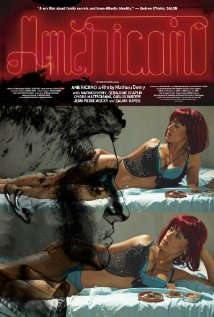
Poetic, mysterious ‘Americano’ lacks emotional resonance

Americano/2011/MPI Media Group/105 min.

“Americano,” Mathieu Demy’s first feature film, contemplates the passing of time and ghosts of memory, the grieving of a parent and letting go of the past. Poetic, dreamlike and visually compelling, the film has the makings of a personal odyssey meets noirish mystery but ultimately is undermined by a thin story that lacks emotional resonance.

Writer/director/actor Demy plays Martin, a real-estate broker who lives with his girlfriend Claire (Chiara Mastroianni) in Paris; he’s on the fence about raising a family with her. When his estranged mother dies, he travels to her home in Venice, Calif., where he spent part of his childhood before moving to France with his father (Jean-Pierre Mocky) after his parents divorced.

Returning to settle his mother’s affairs, with the help of a family friend named Linda (Geraldine Chaplin), Martin finds that in addition to the turmoil of pain, both raw and repressed, he is haunted by the recollection of Lola, a childhood acquaintance (Salma Hayek plays the adult Lola). She remained friends his mother while Martin was in France.

After learning that Lola was deported, Martin takes Linda’s red Ford Mustang convertible and heads to Tijuana (unfamiliar and dangerous territory that is all the more appealing in his grief) to find Lola and probe the relationship she had with his mother. There he finds the brassy, tough chick working in a strip club called Americano. It’s not exactly a happy reunion and Martin must decide whether he can trust this no-nonsense femme fatale.

Though a fictional film, “Americano” is also a valentine to Demy’s parents: French New Wave director Jacques Demy (he died in 1990) and Agnès Varda, who has been directing movies since the 1950s. Showing glimpses of Martin’s childhood in Venice, and simultaneously creating a more personal story, Demy uses footage of himself in Varda’s 1981 film “Documenteur.”

“I wanted the two films to echo one another, with 30 years separating them,” said Demy at a recent press conference in Beverly Hills. The desire to connect the films also prompted Demy to shoot “Americano” in super 16 mm cinemascope; “Documenteur” was shot in super 16 mm. And, of course, Hayek’s character name echoes Jacques Demy’s 1961 “Lola,” his first feature. Like Demy, Mastroianni (daughter of Catherine Deneuve and Marcello Mastroianni) and Chaplin (daughter of Oona O’Neill and Charlie Chaplin) are artists with prodigious legacies.

A.O. Scott, writing for the New York Times, notes, “As a director, [Mathieu Demy] owes less of a debt to his parents than to the American film noir tradition and, above all, to the melancholy romanticism of Wim Wenders, the German auteur whose love of scruffy North American locations, ambiguous quest narratives and the color red seems to resonate through much of ‘Americano.’ ” [Read more…]

With a stand-out lead performance, ‘Wallander’ delivers

‘Wallander: The Revenge’/90 min./Music Box Films

If you need a little Scandinavian neo-noir fix this weekend, “Wallander: The Revenge” should do the trick nicely. It’s one episode from a 13-part Swedish TV series, based on original stories by popular Swedish crime writer Henning Mankell and directed by Charlotte Brändström. Fast, good-looking, intelligent and compelling, it’s also very entertaining.

Krister Henricksson plays small-town police detective Kurt Wallander. Gruff, shrewd and set in his ways (he’s 62 in the books), he’s counting the days until he can live in his house by the sea and walk his dog. But first he’s got to suss the connection between three murder victims, all of whom have been shot 17 times. At the same time, a power substation has been blown up and some suspect Islamic terrorists are behind both the explosion and the murders.

Krister Henricksson

Lena Endre

Helping him out are rookie cop (Nina Zanjani) and public prosecutor Katarina Ahlsell (Lena Endre). The performances are excellent, especially Henricksson who shines in a tense scene toward the end in which he placates a crazed man clutching a bomb.

True, when Wallander cracks the case, it’s a bit pat, but for me that was a minor flaw. I was left wanting to watch the rest of the series.

“Wallander: The Revenge” is playing in LA at Laemmle’s Music Hall 3, 9036 Wilshire Blvd., Beverly Hills, 90211. The 13 films in this series will be available on DVD, VOD iTunes, Amazon and Vudu. (Kenneth Branagh plays Wallander in the BBC/PBS “Masterpiece Theater” adaptation.)

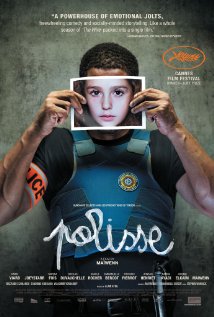
French drama ‘Polisse’ delivers raw story, rich performances

Polisse/2011/127 min.

Karin Viard

#
Lately, I’ve been admiring the work of acclaimed actress Karin Viard, a sort of French Everywoman and the star of “Polisse,” a gripping cop drama.

Viard, 46, brings to her parts a blend of jolting spontaneity and what-you-see-is-what-you-get earthiness grounded by a subtle, thoughtful core. She reminds me of Laura Dern, both in her looks and her impressive versatility as an actress.

In “Polisse,” directed by Maïwenn, Viard plays Nadine, a cop with the Parisian police department’s child protection unit. Of course, it’s a grim day-to-day routine – confronting criminals, often abusive parents, and tending to damaged children – and the members of this tightly knit crew rely on each other to deal with their anguish and stress.
#
They frequently let off steam over meals or after-work drinks; they know the details of each other’s personal lives. Nadine, for example, is going through a painful divorce, and confides in the tightly wound Iris (Marina Foïs), who is struggling with infertility.
#
Through swift, sometimes dizzying, editing, the kaleidoscopic narrative weaves together chapters of the cops’ own domestic dramas and vignettes of cases the unit tackles. Raw, often repellent, and unvarnished, the crimes that unfold can be hard to watch. But, overall, the story is fiercely compelling.
#
#
Director/writer/actress (“The Fifth Element,” “High Tension”) Maïwenn co-wrote “Polisse,” a child’s spelling of the word police, with Emmanuelle Bercot after researching and spending time with an actual police unit. They both act in the film; Bercot is Sue Ellen and Maïwenn plays Melissa, a photographer on assignment to document the team. This strand, inserting the photographer as an outside observer, strikes me as a misstep. It feels clunky and tacked on at first, then weirdly out of control once Melissa becomes romantically involved with Fred (French rapper Joey Starr).
#
That said, Maïwenn elicits unforgettable performances from the cast, with Viard leading the pack. (“Polisse,” which played in Los Angeles at the COL•COA film festival in April, won the jury prize at last year’s Cannes Film Festival as well as two César awards, Yann Dedet and Laure Gardette for best editing and Naidra Ayadi for most promising actress.) As the film spins to a devastating end, it makes a deep emotional mark. You have walked in these cops’ shoes and lived briefly in their world – dire, chaotic and sadly mundane.
#
“Polisse” opens today in New York and LA.

Blogathon to bring ‘The White Shadow’ to your computer

I am re-running my most recent Hitchcock review to support For the Love of Film: The Film Preservation Blogathon III, hosted by Ferdy on Films, the Self-Styled Siren and This Island Rod.

Working with National Film Preservation Foundation (NFPF), this blogathon aims to bring “The White Shadow,” a 1923 melodrama, to a wider audience. Directed by Graham Cutts, it was also the first film Alfred Hitchcock had a major role in creating (assistant director, screenwriter, film editor, production designer, art director, set decorator). The film was restored in New Zealand and repremiered by the Academy of Motion Picture Arts and Sciences last September at the Samuel Goldwyn Theater in Los Angeles.

To make “The White Shadow” available for free on its web site, the NFPF needs to raise $15,000. This money will allow the foundation to host and stream the film for four months and to record Michael Mortilla’s marvelous new score. It is the mission of this year’s For the Love of Film Blogathon to raise the money so that anyone with access to a computer can watch this amazing early film.

I hope you’ll read the great posts from fellow scribes and that you’ll make a donation.

‘Notorious’ is the film noir equivalent of an icy flute of Veuve Clicquot

1946/RKO, Vanguard Films/101 min.

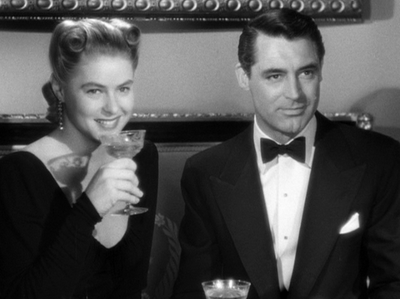
“Notorious” ranks as one of Alfred Hitchcock’s best films and Ingrid Bergman as Alicia Huberman is one of the most contemporary of all ’40s noir heroines. In this splendid 1946 suspense thriller, Bergman’s Alicia is a U.S. secret agent assigned to infiltrate a group of Nazis who have resurfaced in South America after WW2. Alicia risks her life to root out the Nazis’ source of uranium, an ingredient in atomic bombs. She also likes to throw parties, expose her midriff (love the sequin zebra-print top) and pursue her man, fellow secret agent T.R. Devlin (Cary Grant). Dev’s easy on the eyes, but he’s suspicious, uptight and seemingly unfeeling.

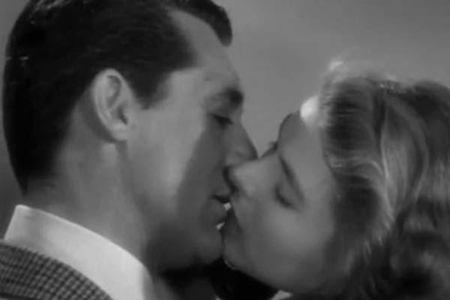
The Production Code stipulated that a kiss could not last more than three seconds.

Their “strange love affair” as she calls it, tinged with cynicism and mistrust, is decades ahead of its time. And their record-breakingly long kisses, which look tame now, were considered extremely racy in 1946.

The Production Code (ie, censors) stipulated that a kiss could not last more than three seconds. Hitchcock obeyed, but followed Bergman and Grant’s first swift kiss with another and another and another. Most importantly, she kisses him, noting that he hasn’t said, “I love you.”

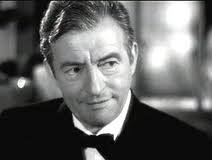
The demands of their work (spying and info gathering) create pressure. Alicia must charm Alexander Sebastian (Claude Rains), a wealthy, suave and impeccably dressed Nazi. Even though Alex is a high-ranking fascist, we never see him hatching his evil plans, so it’s a bit easier for the audience to put his heinousness on the back burner. Alex dotes on Alicia and is far more emotionally available than the shut-down Dev.

Claude Rains

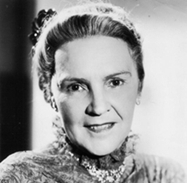
Leopoldine Konstantin

Before long, Alex proposes to Alicia and gives her quite the rock to seal the deal. Alicia accepts after getting the OK from her unsympathetic and cold boss, Captain Paul Prescott (Louis Calhern).

Living with Alex will let Alicia poke around his stately home, where Prescott reckons trouble is literally brewing, and bring her into frequent contact with baddies like ringleader Eric Mathis (Ivan Triesault), scientific mastermind “Dr. Anderson” (Reinhold Schünzel) and weak link, Emil Hupka (Eberhard Krumschmidt).

Living with Alex also means dealing with the other Mrs. Sebastian, Alex’s mother. Czech-born actress Leopoldine Konstantin, in her only American film, plays the hard and imperious Mrs. Anna Sebastian. When Alex asks Anna to be friendly to Alicia, the battle-ax tartly replies: “Wouldn’t it be a bit much for both of us to be grinning at her like idiots?”

Alicia (Ingrid Bergman) and Dev (Cary Grant) are secret agents assigned to infiltrate a group of Nazis in South America after WW2.

Declaring a shortage of closet space (that’s our girl!), Alicia explores the nooks and crannies of the Sebastian mansion, but finds the wine cellar is off-limits. So, she decides to throw a champagne reception and steal the cellar key from her husband.

She invites Devlin, natch, and the two discover that wine is not the only thing stored in the cellar. (Hitchcock makes his cameo at the shindig, swigging some bubbly.)

Alex realizes the key has been stolen and that his secret is no longer safe, at which point he seeks maternal support. Anna’s fresh out of that, telling him: “We are protected by the enormity of your stupidity, for a time.”

The uranium angle is merely a MacGuffin, Hitchcock argot for a narrative device to advance the plot. The real story is whether Devlin and Alicia can work through their issues, such as his hypocrisy and lack of emotion, her drinking and their mutual game playing, which gets downright cruel. “Our all-too-human capacity for inhumanity is the dark mystery at the heart of ‘Notorious,’ ” writes film scholar William Rothman in his liner notes for the Criterion DVD edition. “And yet, in ‘Notorious,’ the possibility remains alive that the miracle of love can save us from our own perversity.”

This is one of the most beautiful films Hitch ever made, from his gorgeous leads to ravishing cinematography from Ted Tetzlaff – the closeups of Dev and Alicia at the racetrack and the famous crane shot at the mansion before Alicia’s champagne reception are standouts. I also like the imposing silhouettes of Alex and his mother after Alicia susses that they’ve been spiking her coffee. The lighting is magnificent throughout. Using rear-projection, Hitchcock combined footage of the principals filmed on a set with background shots taken in Rio.

The movie clocks in at 102 minutes but it glides by so gracefully that it feels half an hour. Ben Hecht’s sparkling script went through revisions and rewrites with input from Clifford Odets and Hitchcock. (David O. Selznick, on board as producer until he sold his rights to RKO in order to raise cash for another flick, likely tossed ideas around as well. Selznick had eyed Vivien Leigh for the Alicia role.) A few elements of “Notorious” came from a short story by John Taintor Foote called “The Song of the Dragon.”

“Ingrid was very fond of my parents,” recalls Pat Hitchcock O’Connell in her book “Alma Hitchcock: The Woman Behind the Man.”

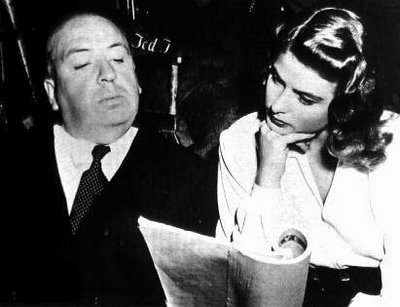
The entire cast dazzles and delights; the subtlety of the performances rewards multiple viewings. Hitch even accepted an idea from Bergman on shooting the dinner party scene.

In her book “Alma Hitchcock: The Woman Behind the Man,” the daughter of Alma and Alfred, Pat Hitchcock O’Connell, recalls that: “Ingrid was very fond of my parents. I remember, she’d finish one film with Daddy and she’d come over, sit on the couch, and say, ‘When do we start the next one?’ ” (Hitchcock O’Connell’s tribute to her mother makes a fun, chatty read and includes some of Alma’s favorite recipes and menus for home entertaining.)

In 1945, Bergman and Hitchcock made “Spellbound” co-starring Gregory Peck and in 1949 Hitch directed her in “Under Capricorn” opposite Joseph Cotten. Also in ’49, Bergman went to Italy to film “Stromboli” with Italian director Roberto Rossellini. Director and star fell in love, and Bergman left her husband Petter Lindstrom for Rossellini. Because of the scandal, Bergman’s reputation in the U.S. suffered, then rebounded; over the course of her career, she earned three Oscars (two for best actress and one for best supporting actress).

One of the most enjoyable and sophisticated films of the black and white era, “Notorious” strikes me as the film noir equivalent of an icy flute of Veuve Clicquot. Cheers!

MGM recently released “Notorious” along with “Rebecca” (1940) and “Spellbound” (1945) on Blu-ray.

‘Dark Shadows’ fam is all dressed up with nowhere to go

Dark Shadows/2012/Warner Bros. Pictures, Tim Burton Productions/113 min.

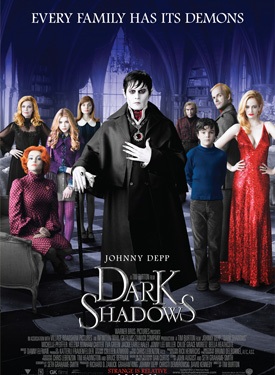
A vampire may be able to live on blood alone, but few movies can exist on camp alone. As much as I was hoping to enjoy Tim Burton’s much hyped and highly anticipated “Dark Shadows,” I found it disappointing.

On the plus side, Dark Shadows” looks slick and gorgeous – the art direction, cinematography, set decoration and special effects are spot on. As always, charismatic Johnny Depp is fun to watch. The character he inhabits here is Barnabas Collins, born in Liverpool in the mid 1700s. The Collins family acquires wealth and power not to mention an imposing mansion in their namesake city of Collinsport, Maine.

When Barnabas grows up, he crosses the wrong woman. Angelique Bouchard (Eva Green) is a witch, who turns Barnabas into a vampire and buries him alive. Two centuries later, Barnabas is freed from his tomb and walks into a world of hippies, macramé and mini-skirts. This is 1972. It’s hard to be lord of the manor, though, when the manor is falling apart and Angelique wants to reignite their dangerous romance.

The rest of the ragtag Collins clan includes Elizabeth Collins Stoddard (Michelle Pfeiffer), Carolyn Stoddard (Chloë Grace Moretz), Roger Collins (Jonny Lee Miller), David Collins (Gulliver McGrath), live-in psychiatrist Dr. Julia Hoffman (Helena Bonham Carter) and groundskeeper/butler Willie Loomis (Jackie Earle Haley). Bella Heathcote plays the newly recruited governess, Victoria Winters, and Barnabas’ true love from the past Josette DuPres.

But somehow these characters never really get off the ground nor do they jell as a “strange family.” This random crew, despite their fetching costumes and makeup, seems purely the result of stunt-casting. They aren’t given much to do besides exchange arch looks (Moretz does some good lip curls) and roll their eyes at Barnabas.

There’s minimal effort to develop these characters; for example, the attempt to delve into Victoria’s past (she was institutionalized as a child) feels supremely clumsy. And there’s little attention paid to why any of this is happening other than you know that the movie itself is a remake of “Dark Shadows,” a popular daytime TV soap opera that ran from 1966-71.

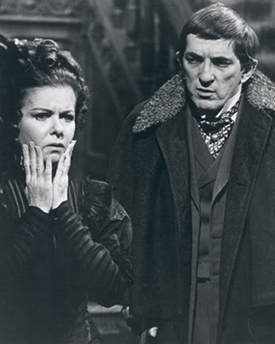
Joan Bennett and Jonathan Frid starred in the daytime TV soap opera, which ran from 1966-71.

The bland and feeble script from Seth Grahame-Smith creaks along with Barnabas remarking on child-birthing hips and unshaven young people, ie hippies. To liven things up, the Collinses throw a ball and hire Alice Cooper to perform. Barnabas declares that Alice is the most unattractive woman he’s ever seen. Were these jokes layered into an actual story, they would be fun but, by the time Cooper appears, the anachronistic humor is wearing pretty thin.

There is supposed to be a love triangle between Barnabas, Angelique, the icy-blonde bad girl and wide-eyed good girl Victoria. Green does an excellent turn as the powerful, alluring femme fatale. But there’s no tension – Barnabas seems strangely detached from both of them – and Angelique’s hell-hath-no-fury antics grow as tedious as the ’70s jokes.

I wasn’t familiar with the TV series (created by Dan Curtis, it starred Jonathan Frid as Barnabas and film-noir great Joan Bennett as Elizabeth), but one of its strengths was fusing low-key campiness and spooky-goth atmosphere. Burton’s anemic version sorely lacks on the eerie/creepy/scary front.

Though Depp is at his best here, to watch and truly enjoy him for almost two hours would require that he not be completely covered up in top coat and breeches.

“Dark Shadows” opens today nationwide.

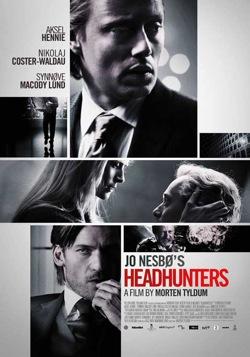
Norwegian hell-on-wheels neo-noir ‘Headhunters’ is no bore

Headhunters/2012 Norway/Magnolia Pictures/100 min.

By Michael Wilmington

Think you’ll be bored at a movie about corporate head-hunting and a missing Peter Paul Rubens painting? Not necessarily. The Norwegian neo-noir “Headhunters” may have its flaws – outrageous improbability chief among them – but it’s definitely no bore. In fact, the movie pretty well blasts you away as you watch it, using hot sex, cold brutality, and a twisty, constantly surprising crime plot to put you on the edge of your seat and then try to knock you out of it.

Based on a best-selling novel by Jo Nesbø– Norway’s most popular and highly regarded crime novelist, and the creator of the Harry Hole detective series – “Headhunters” revolves around a diminutive anti-hero, 5’6” Roger Brown (Aksel Hennie), who works as a headhunter and CEO recruiter, and dabbles in art thievery on the side. Roger, a self-professed “over-compensator,” is also married to an intimidatingly tall and beautiful Diana (Synnove Macody Lund), and he pulls his jobs with the unabashedly pathological heist man Ove Kikerud (Eivind Sander), a violent creep with nerves of ice and a taste for Russian hookers.

Into Roger’s life comes the intimidatingly tall and handsome Clas Greve (Danish actor Nicolaj Coster-Waldau), an ex-Dutch commando who also happens to have his hands on a long-missing, incredibly valuable Rubens painting, titillating the little headhunter/thief on two levels and maybe more. Roger’s life soon turns into a bloody mess.

The film however is slick and fast and gorgeously shot – if sometimes almost criminally outlandish and over-the-top. Director Morten Tyldum (a Norwegian TV commercial whiz), cinematographer John Andreas Andersen and editor Vidar Flataukan all succeed at times in knocking our socks off or at least getting them pulled pretty far off our toes. The four main actors are all compelling; Hennie and Coster-Waldau make a nice sparky pair of Mutt and Jeff antagonists. You may be irritated by “Headhunters.” You won’t be yawning, unless you were exhausted to begin with.

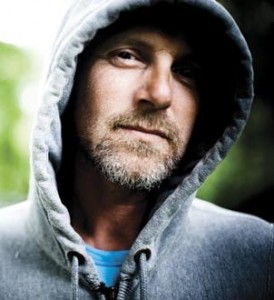
Writer Jo Nesbø

Norway’s Jo Nesbø is a thriller-writer in the Steig Larsson tradition, mixing sex and violence and social corruption with complex criminal behavior, and generating huge world-wide sales. Nesbø’s noir novels have been published in 140 countries and translated into 35 languages. He also scored the top three places in a recent Norwegian newspaper poll (by the journal Dagbladet) on Norway’s all-time best crime novels – and then took five more slots among the next eight. Hollywood is apparently impressed: Martin Scorsese and Mark Wahlberg are among the names that have been mentioned for the seemingly inevitable American versions.

But I suspect those movies, when they come, may not have quite the pizzazz of the Norwegian novels – as Tyldum’s “Headhunters” apparently does. It’s a racy, violent, hell-on-wheels neo-noir that makes Norway look, for at least a little while like the capitol of fictional crime – and maybe of overcompensation too.

“Headhunters” opens today in New York and LA.