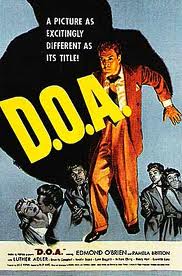
‘D.O.A.’ quick hit

D.O.A./1950/United Artists/83 min.

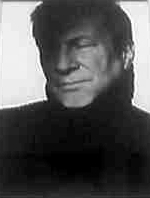
Edmond O’Brien plays the frantic but determined Frank Bigelow who spearheads the hunt for a killer – his own – in this riveting noir from director Rudolph Maté. You’d be freaked out too if you discovered you’d been poisoned and had to track the culprit before it’s too late. Talk about deadline pressure!

‘The Night of the Hunter’ a wondrous poem of terror, family, false gods and redemption

Michael Wilmington

The Night of the Hunter/1955/United Artists/93 min.

By Michael Wilmington

Some movies take a while to reach their audiences. Take, for example, Charles Laughton’s great Faulknerian film noir “The Night of the Hunter,” based on Davis Grubb’s Southern Gothic novel.

Beautifully scripted by James Agee, spellbindingly directed by Charles Laughton, evocatively shot by cinematographer Stanley Cortez, and memorably acted by Robert Mitchum (in his best performance), it’s a haunting tale of murder, terror and wild, lyrical flight.

Also unforgettable: the performances by Shelley Winters, Lillian Gish, James Gleason, Evelyn Darden, Don Beddoe, Peter Graves, and two little-known child actors Billy Chapin and Sally Jane Bruce.

In this mesmerizing movie, we see two orphaned West Virginia kids, John and Pearl Harper, desperately fleeing the honey-tongued but murderous preacher Harry Powell (Mitchum), a black-clad, brim-hatted charlatan who has “LOVE” and “HATE” tattooed on his knuckles as props to his sermons. Harry is the Hunter. The children are his prey because they can lead him to the money their father (Graves) stole and managed to hide before he was arrested and executed.

Harry cajoles them, bullies them, then kills their poor, sad, seducible mom Willa (Winters). The heroine of the film is the children’s savior Miss Cooper (Gish). Then close to 60, Gish is eternally enduring, a rustic angel with a hymn on her lips and a rifle in her lap.

John and Pearl escape down the river in an open boat. And for them, the world of the rural South in the Depression becomes a magical twilight of Halloween horrors, a nocturnal landscape of rushing water, moonlit skies, ghostly trees, croaking frogs, watchful owls, pensive rabbits and evil spiders spinning their webs.

As they flee, Preacher Harry follows them on horseback, far-off but omnipresent, a specter etched in silhouette against the evening sky, singing, in Mitchum’s rich, lazy  baritone: “Leaning, leaning…Safe and secure from all alarms. Leaning, leaning…Leaning on the everlasting arms.”   (You’ll recognize the soothing yet eerie tune; it’s the one threaded through the Coen Brothers’ remake of “True Grit” and sung under the credits.)

Are any classic noir images or sounds more scarily poetic than that flight, that drifting boat, those hands tattooed with “LOVE” and “HATE,“ that black-clad maniac preacher, that spider, that river, that song? [Read more…]

‘Don’t Bother to Knock’ a showcase for Monroe’s talent

Don’t Bother to Knock”/1952/Twentieth Century Fox/76 min.

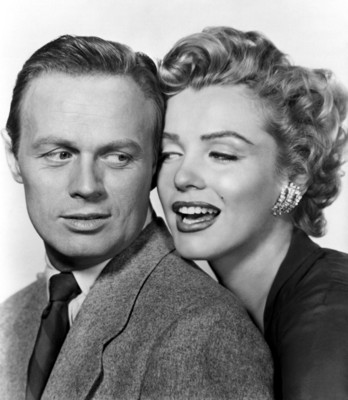
Richard Widmark and Marilyn Monroe

For any fool who still questions Marilyn Monroe’s depth as an actress, “Don’t Bother To Knock” should be required viewing. In this 1952 film directed by Roy Ward Baker and written by Daniel Taradash, Monroe stars with film noir icons Richard Widmark and Elisha Cook, Jr. and entirely holds her own.

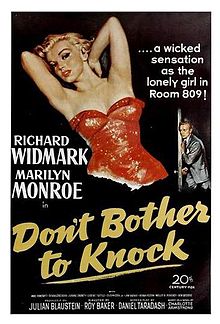
She plays Nell Forbes, a vulnerable and mysterious young woman who might be dangerous. Well, if you look at the movie poster, she’s definitely dangerous, though the image (Marilyn wears a shiny bright-red bustier) is a bit misleading — Nell doesn’t wear anything quite that daring. Of course, no matter what she wears, she’s still uber sexy.

Anyway, Nell has recently moved to NYC, from Washington state, to make a fresh start after a long recovery from a broken heart (a pilot who died in World War Two). Her sole contact in the big city is her ever-nervous and slightly creepy uncle (Cook Jr.), an elevator operator at the McKinley Hotel. When a couple staying at the hotel needs a baby-sitter, Uncle Eddie taps Nell for the job. Lurene Tuttle and Jim Backus play the parents; Donna Corcoran is their daughter Bunny.

Once the little girl goes to bed, Nell kills time by trying on Mrs. Jones’ jewelry, perfume and a negligee. She also notices Jed Towers (Widmark) in a room across the courtyard. He’s a pilot in from Chicago trying to patch things up with ex-girlfriend Lyn Lesley (Anne Bancroft), a sultry and svelte singer who performs at the hotel lounge.

Nell and Jed flirt from afar and he eventually joins her in the Jones’ room, bearing a wicked smile and a bottle of rye. It slowly becomes clear that Nell needs more tonic than a handsome cocky stranger with hard liquor can provide. (Rats!) By leading Nell toward help, Jed reveals a side of himself that changes his relationship with Lyn.

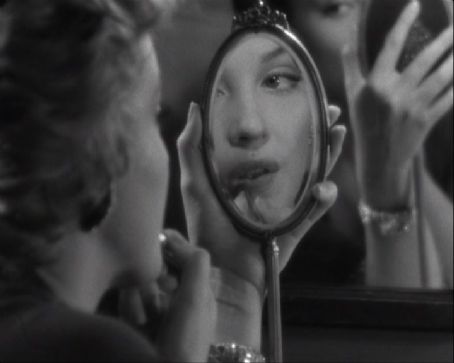
Mirrors (and their suggestion of fractured reality) pop up frequently in film noir.

Though the plot’s quite simple, the film’s strong direction and writing as well as resonant performances from some of the finest actors of the era infuse it with tension that fairly crackles. Luminous, fragile, restless and alluring, Monroe brings an undercurrent of torment and confusion to this memorable role.

Widmark appeals as the insolent yet sympathetic suitor. And the supporting cast is marvelous; in addition to Backus and Tuttle, there’s Verna Felton and Don Beddoe (nosy hotel residents), Willis Bouchey (the hotel bartender), Corcoran as the cute kid, and of course Cook Jr. and Bancroft.

The story is based on the novel “Mischief” by best-selling suspense author Charlotte Armstrong; Taradash wrote the script a year before he won the Oscar for adapting “From Here to Eternity.” “Don’t Bother to Knock” also offers moments of wry humor, such as when Jed asks the bartender if he fights and argues with his wife. The bartender’s deadpan reply: “Some of the time she sleeps.”

If you are a Marilyn fan, you’ll love her even more after seeing this movie and you’ll have definitive proof of her sensitivity and subtlety as an artist from early in career, just in case you ever happen to be chatting with someone who is dismissive of her talent. In 1952, given the way she was marketed and managed, you could forgive an assessment based purely on her physical assets. Nearly 60 years later, however, so much has changed. 😉

Btw, I found a wonderful blog called Blonde & Red. Author Rosanna “loves vintage fashion, red lipstick and Marilyn Monroe” and each week runs Marilyn Mondays. Enjoy!

‘Don’t Bother to Knock’ quick hit

Don’t Bother to Knock/1952/Twentieth Century Fox/76 min.

Great writing and a strong cast (Marilyn Monroe, Richard Widmark, Elisha Cook, Jr., Anne Bancroft) make 1952’s “Don’t Bother To Knock” by Roy Ward Baker a cinematic treasure, but one that is, sadly, often overlooked. Monroe plays a deranged baby-sitter who likes diamonds, perfume and negligees (ok, she’s clearly not completely bonkers) but can’t seem to put her past behind her.

Murder and martinis with a twist: ‘Laura’ brings us butlers, bodies and banter

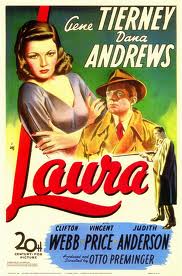
Laura/ 1944/ Twentieth Century Fox/88 min.

“Laura” makes me nostalgic for a life I never led — the adventures of a 1940s career girl living in Manhattan: landing a job on Madison Avenue, buying suits and silk stockings for work, renting a place for $40/month, meeting handsome men, dinner and drinks at the Stork Club, weekend trips to the country.

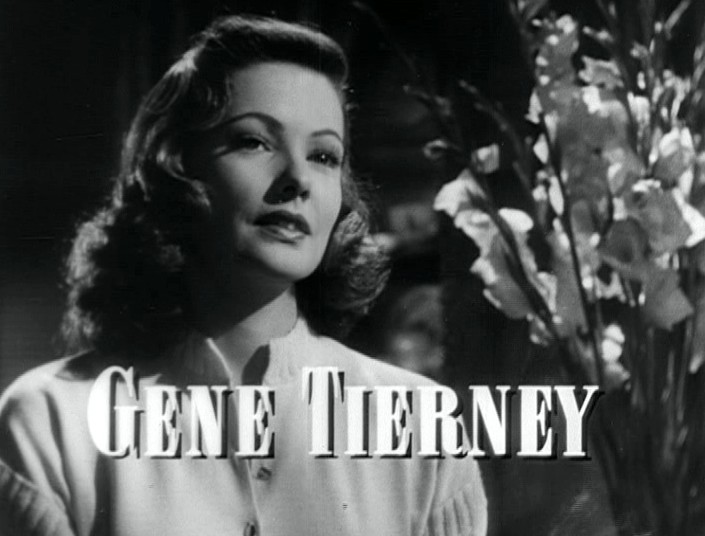
Of course, “Laura” does have a few downsides — murder and mistaken identity, for starters. Seems that turning every head and being the toast of the town, as is the case with the charming and lovely Laura (Gene Tierney), may prove very dangerous. In a series of flashbacks, we learn the details of Laura’s life and it appears that in addition to having many admirers, she attracted an enemy or two as well.

The movie starts with Waldo Lydecker (Clifton Webb) setting the scene. Lydecker, a campy, sybaritic writer, played mentor to Laura as she made a name for herself in advertising and he’s extremely proud of his protegee’s success, especially her popularity with men.

Lydecker is also, quite rightly, very proud of his apartment, with its animal-print chairs and a chunky bathtub equipped with a swiveled tray for his Smith Corona typewriter. I love this Lydecker line: “In my case, self-absorption is completely justified. I have never discovered any other subject quite so worthy of my attention.”

Later, he tells Laura, “For you, a lean, strong body is the measure of a man.” I knew I liked Laura. That doesn’t mean she’s picked the right man, however. She’s engaged to smarmy, sleazy Shelby (Vincent Price) and he clearly doesn’t deserve her.

Once the murder (I’ll keep this a bit vague so I don’t spoil it) is committed, we meet the anti-society, take-no-guff Det. Lt. Mark McPherson (Dana Andrews), who questions the upper-crust types that populate Laura’s world. Mark may lack social graces but he’s definitely a lean, strong body worth rooting for. And Mark definitely falls for Laura.

Amid his investigation, there’s plenty of cocktail conversation, pretentious accents, gorgeous gowns and quirky personalities. And after realizing Murder No. 1 was a bit careless, the killer strikes again.

Beautifully put together and immensely entertaining, “Laura” was nominated for five Academy Awards – art direction, screenplay, director, supporting actor (Webb) and b&w cinematography. Joseph LaShelle won for cinematography.

Based on a popular novel by Vera Caspary, the screenplay by Jay Dratler, Samuel Hoffenstein and Betty Reinhardt, with uncredited help from Ring Lardner Jr., is full of wit and Algonquin-caliber one liners. The wonderfully lush music came from David Raksin.

Otto Preminger served as producer and took over as director after Fox chief Darryl Zanuck pulled Rouben Mamoulian off the job. Preminger replaced the original cinematographer Lucien Ballard with LaShelle.

In 1977, the New Yorker called the movie: “Everybody’s favorite chic murder mystery.” This is no B picture. But that’s not to say it doesn’t have a dark side. With its treatment of sexual obsession, casual betrayal and class structure, “Laura” explores raw themes in a refined setting.

One of noir’s great strengths is that as a genre it very frankly challenged the myth that America was a classless society and pointed out that patrician elegance bred corruption just as much as, if not more than, the streetwise desperation of common criminals. [Read more…]

‘Laura’ quick hit

Laura/ 1944/ Twentieth Century Fox/88 min.

Part polished whodunit, part classic noir, this elegant, urbane thriller stars Gene Tierney in one of her most famous roles. Suspects and surprises abound as do witty one-liners and ’40s high style. Dana Andrews, Clifton Webb and Vincent Price are the men in Laura’s life. Otto Preminger directs.

Marilyn Monroe takes noir plunge in ‘Niagara’

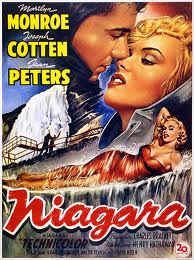
Niagara/ 1953/ 20th Century Fox/ 90 min

Marilyn tackles the role of devious vamp.

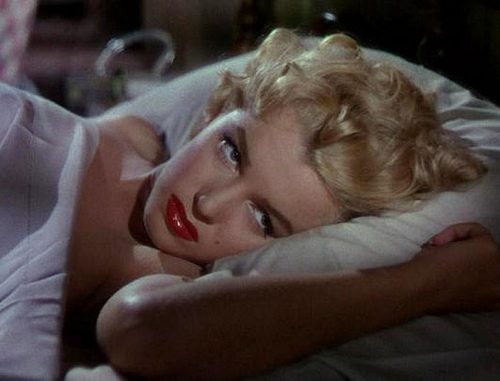
Screen legend and pop-culture icon Marilyn Monroe is known for many things (her amazing looks, bright talent and troubled personal life) but noir does not spring immediately to mind. And yet in “Niagara,” Monroe brilliantly tackles the role of devious vamp.

Directed by Henry Hathaway, this film is a bit hard to classify – the flashy Technicolor screams neo-noir while its 1953 release date puts it firmly in the classic noir camp. I suppose purists would argue that date trumps color and that neo noir doesn’t start until the 1970s, but I am nothing if not impure. Either way you want to label it, the characters, mood and color are irresistible, just like Monroe herself. We even get to see her sing.

In “Niagara,” we meet a wholesome good girl with a killer tan who’s on a “delayed” honeymoon (Jean Peters, as Polly Cutler) and a restless bad girl (Monroe as bored wife Rose Loomis), both staying at a Niagara Falls resort.

Polly and her husband Ray Cutler (Max Showalter, billed in this movie as Casey Adams) are the perky foils to Rose and her husband George Loomis (Joseph Cotten). George is fond of grousing about Rose’s slinky sartorial choices, especially the famous red dress with a bikini-esque bustline). Perhaps crabbing about Rose’s hemline gets his mind off darker problems. George spent some time in a psychiatric ward after the war.

Rose hopes that by returning to the site of their honeymoon, George can pop a few pills and chill. But that doesn’t seem to be working and everyone knows that a voluptuous blonde is easily distracted. 😉 Enter Rose’s delicious young lover and soon-to-be accomplice (Richard Allan) as she makes her bid for freedom by getting rid of cranky George.

It seems divorce would not be enough to permanently dissolve their union. If Rose walks, George will run after her. But the good news for Rose is: accidents happen, especially at Niagara Falls …

Essentially, “Niagara” warns The American Man: It might be fun to ogle a centerfold hottie, but she’ll burn you if you get too close. Sex equals sin, after all, in a puritanical worldview. Then there’s the tedious symbolism of the falls for passion’s highs and lows. Even the trailer hammers home the warning: Monroe is a “tantalizing temptress who lures men on to their eternal destruction.”

All right, already, we get it!

Still, “Niagara” is a fascinating product of its time. It was a box-office hit and fared reasonably well with critics. As the New York Times put it: “The producers are making full use of both the grandeur of the Falls and its adjacent areas as well as the grandeur that is Marilyn Monroe.”

Monroe, though not at the height of her dramatic power, sparkles as the femme fatale, a role that is a bit more complicated than arm candy or ditzy ingénue; Cotten is great, as always, as the brooding, war-torn vet. Monroe’s wardrobe is terrific, even her shiny yellow raincoat for visiting the falls, and it’s impossible to take your eyes off of her. (According to imdb.com’s trivia section, because Monroe was still under contract to 20th Century Fox as a stock actor at a fixed salary, she made less money than her make-up man Allan Snyder.) [Read more…]

‘Niagara’ quick hit

Niagara/1953/20th Century Fox/90 min.

When Marilyn Monroe plays the femme fatale in full Technicolor what man could resist? Burdened with a grumpy husband (Joseph Cotten), Marilyn and her lover (Richard Allan) attempt to engineer an “accident” over the falls. Shame about her nosy neighbors. Henry Hathaway directs.

‘Double Indemnity’ proves accessories are make or break

Double Indemnity/1944/Paramount/106 min.

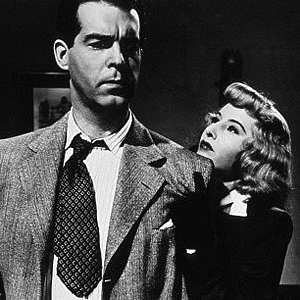
Fred MacMurray and Barbara Stanwyck

She’s got a plan, she just needs a man. And that’s a welcome challenge for a femme fatale, especially one with an ankle bracelet.

In Billy Wilder’s film noir masterpiece, “Double Indemnity,” from 1944 Phyllis Dietrichson (Barbara Stanwyck) wants out of her marriage to rich, grumpy oldster, Mr. Dietrichson (Tom Powers). Poor Phyllis doesn’t get much love from Dietrichson’s adult daughter, Lola (Jean Heather) either. Fresh-faced and feisty, Lola is hung up on her temperamental boyfriend Nino Zachetti (Byron Barr).

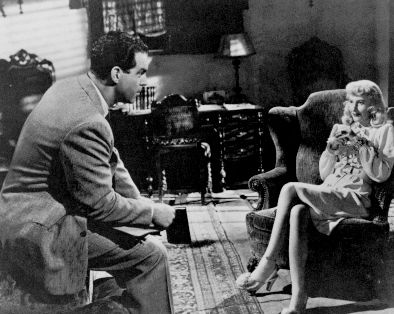
For Phyllis, seducing a new guy to help make hubby disappear is so much more cost-effective than hiring a divorce lawyer. A smart insurance man is even better. Along comes Walter Neff (Fred MacMurray) trying to sell a policy, just as Phyllis finishes a session of sunbathing, wearing an ankle bracelet and not much more. That’s about as much bait as Walter needs.

They flirt, fall for each other and eventually arrange to bump off Mr. Dietrichson, making it look like he fell from a train. It’s a one-in-a-million way to go with a huge payoff from a double-indemnity insurance policy issued by Walter’s company. After that, they play it cool and wait for the check. They’ve planned it like a military campaign, so they’re in the clear until Walter starts to suspect that he’s not the only guy who’s been drooling at Phyllis’ ankles.

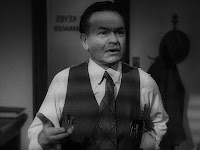
Edward G. Robinson

Besides his lust for the blonde (and their chemistry truly sizzles), Walter’s real love is the platonic father/son relationship he has with his boss at the insurance company, Barton Keyes, sharp, cynical and married to his job, played brilliantly by Edward G. Robinson.

Critic Richard Schickel says “Double Indemnity” is the first true noir. I disagree – what about 1941’s “The Maltese Falcon” and “Stranger on the Third Floor” from 1940? Or even Fritz Lang‘s “M” from Germany in 1931? But the point is “Double Indemnity” was the standard against which every subsequent noir was measured. It’s a glorious treat visually. John Seitz’s luscious lighting and captivating use of shadow bring to mind Vincent Van Gogh’s observation: “There are no less than 80 shades of black.” The score by Miklos Rozsa works perfectly with the visuals to build and sustain atmosphere.

The performances (Stanwyck, MacMurray and Robinson) are tremendous. Though Stanwyck was nominated for the best actress Oscar and “Double Indemnity” was also nominated in six other categories (picture, director, screenplay, cinematography, sound recording and score), MacMurray and Robinson were not in the running and the film didn’t win any Oscars. In retrospect, their work in this movie is some of the best acting of the decade. MacMurray (who might be most familiar as the father in TV’s “My Three Sons”) is such a natural as the easily tempted yet very likeable Neff, it’s surprising now to learn that the role was a major departure from his usual nice-guy parts.

As James Pallot of “The Movie Guide” writes: “Robinson … beautifully gives the film its heart. His speech about death statistics, rattled off at top speed, is one of the film’s highlights.” When Keyes realizes that Walter has betrayed him, it’s heartbreaking in a way that few other noirs are.

Wilder co-wrote the script with Raymond Chandler, based on the taut little novel by James M. Cain, published in 1936. (The novel was inspired by the real-life 1927 Snyder-Gray case.) In the book “Double Indemnity,” smitten Walter says of Phyllis’ physical charms, “I wasn’t the only one that knew about that shape. She knew about it herself, plenty.”

The dark, witty script follows the book pretty closely, but Chandler’s contributions are key. For example, check out this bit of simmering dialogue:

Phyllis: There’s a speed limit in this state, Mr. Neff, 45 miles an hour.

Walter: How fast was I going, Officer?

Phyllis: I’d say around 90.

Walter: Suppose you get down off your motorcycle and give me a ticket.

Phyllis: Suppose I let you off with a warning this time.

Walter: Suppose it doesn’t take.

Phyllis: Suppose I have to whack you over the knuckles.

Walter: Suppose I bust out crying and put my head on your shoulder.

Phyllis: Suppose you try putting it on my husband’s shoulder.

Walter: That tears it…

Chatting things over while Mr. Dietrichson is away.

Now it seems egregious that Wilder (1906-2002) and “Double Indemnity” were snubbed at the Oscars. Born in what is now Poland, Wilder escaped the Nazis, but his mother and other family members perished in a concentration camp. He knew firsthand the dark, sometimes horrific, side of life and that knowledge imbued his work with an unparalleled richness and depth. He was also hilarious. If I could have martinis with any film noir director, living or dead, it would be Billy.

I’ve seen interview footage of him where he punctuated his conversation with deep and frequent laughter. And I’ve heard stories about him playing practical jokes – apparently he when he lost the 1944 best director Oscar to Leo McCarey (who won for “Going My Way” starring Bing Crosby) Billy stuck out his foot and tripped McCarey as he walked down the aisle to pick it up. Maybe if I get that fantasy date with the spirit of Billy, I’ll bring Dick Schickel along too. He might benefit from a girly martini and tagging along with Billy and me.

So, suppose you do yourself a favor and watch “Double Indemnity” the first chance you get. You won’t be sorry.

‘Double Indemnity’ quick hit

Double Indemnity/1944/Paramount/106 min.

A hands-down noir favorite. Fred MacMurray and Barbara Stanwyck are adulterous lovers who plot to get rid of Stanwyck’s husband in a seamless “accident” and pounce on his insurance policy. Knock-out performances and marvelous direction from Billy Wilder. Based on a James M. Cain novel, the script, by Wilder and Raymond Chandler, crackles with wit and innuendo.