‘Sunday Best: The Untold Story of Ed Sullivan’ documentary reveals host’s hidden depths and courageous stance

Today’s consumers of pop culture and infotainment might not have vivid memories of iconic TV host Ed Sullivan, given that he died more than 50 years ago, at age 73, on Oct. 13, 1974 (about 2,000 people attended his funeral at St. Patrick’s Cathedral in New York). That said, he made his mark so deeply and was so famous in his day that even people who were too young to watch “The Ed Sullivan Show,” which ran on CBS from 1948-1971, nevertheless recognize his place in showbiz history.

Not that he was a king of cool. Just the opposite – in fact, he came across as staid, old-fashioned and a bit of a fuddy-duddy, particularly with the advent of rock ‘n’ roll. But the show was still the place to reach mainstream America. When the Beatles appeared on the variety show on February 9, 1964, they drew a record-breaking 73 million viewers.
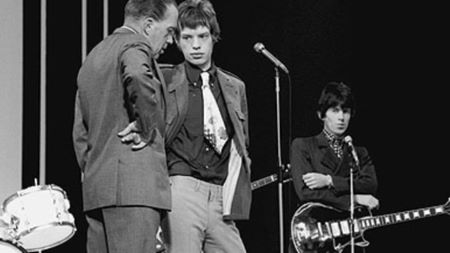
Ed Sullivan talks with Mick Jagger while Keith Richards (right) looks on. When the Rolling Stones performed on the show, Mick found a way to express himself without getting on Sullivan’s bad side. Hence, the Stones were invited back to the show.

Several rock performers made appearances during which they went against the grain – delighting the audience and drawing Sullivan’s ire. Before singing “Light My Fire,” Jim Morrison and the Doors indicated that Morrison would accept Sullivan’s request to substitute “girl, we couldn’t get much better” for “girl, we couldn’t get much higher.” On air, Morrison stuck to his original lyrics. Scandalous! Prior to the Rolling Stones’ appearance, they were told to change “let’s spend the night together” to “let’s spend some time together.” Mick Jagger complied but added a thick layer of sarcasm to his delivery. (To paraphrase Jagger, it wasn’t that what they were doing was especially shocking, it was that people at that time were easily shocked.)

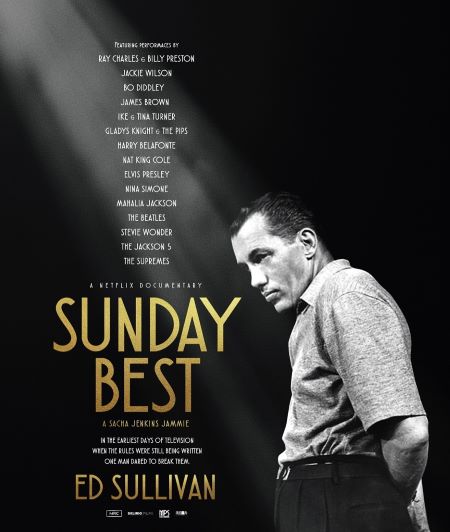
The times were definitely changing. But even before those milestones, Sullivan was changing the course of entertainment in America with his commitment to racial equality and his determination to book Black artists on his show – something that was extremely rare in TV’s early years and an aspect of Sullivan’s character that’s not well remembered today. A fascinating documentary “Sunday Best: The Untold Story of Ed Sullivan” directed by the late Sacha Jenkins highlights the lasting impact Sullivan made by challenging the norms of the day and introducing top-tier artists to the country and the world.

“Sunday Best” showcases performances from Sullivan’s guests, including Mahalia Jackson, Nat King Cole, Elvis Presley, Harry Belafonte, Ray Charles & Billy Preston, The Beatles, Ike & Tina Turner, Bo Diddley, Jackie Wilson, James Brown, Diana Ross & the Supremes, Gladys Knight & the Pips, Nina Simone, Stevie Wonder, and The Jackson 5. There are also clips of guests Cab Calloway, Ella Fitzgerald, Lena Horne, Louis Armstrong, Bill “Bojangles” Robinson, Sammy Davis Jr., and others.
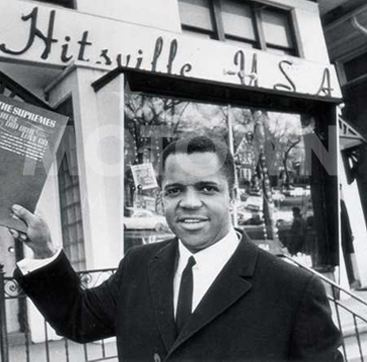
Photo by Tony Spina, Detroit Free Press
Outside Hitsville USA in 1964, Berry Gordy, Detroit native and founder of Motown Records, shows off The Supremes’ “Where Did Our Love Go.”

Numerous interviews with luminaries like Berry Gordy, founder of Motown Records in Detroit, help to put Sullivan’s fighter’s stance (and the risks he took by standing up to CBS and its sponsors) into context. “With Ed, everything changed,” said Gordy. “He seemed to be fearless.”

On the surface, Sullivan was an unlikely choice for such a prime slot in the CBS lineup. He was not a handsome gladhander or a slick showman. As the documentary points out, Sullivan was pilloried by the press for his lugubrious demeanor, stone-faced expression and sour-looking smile.

But he took the role seriously and brought to the job the skills he’d acquired as a journalist. Growing up in a poor but tightknit family in Harlem (at that time residents were mostly Irish and Jewish), he knew early on he wanted to be a writer. Eventually he became a sports reporter and editor, and developed an eye for identifying and describing the unique traits of great athletes.

After working at many newspapers, by the early 1930s, he was the Broadway columnist at the New York Daily News (and had a fierce rivalry with Walter Winchell). Sullivan worked hard to find the best up-and-coming entertainers (often visiting Harlem clubs) and was extremely confident in his critical judgment of talent. Also, he lauded TV’s ability to give everyone in the audience a front-row seat to a superb performance.
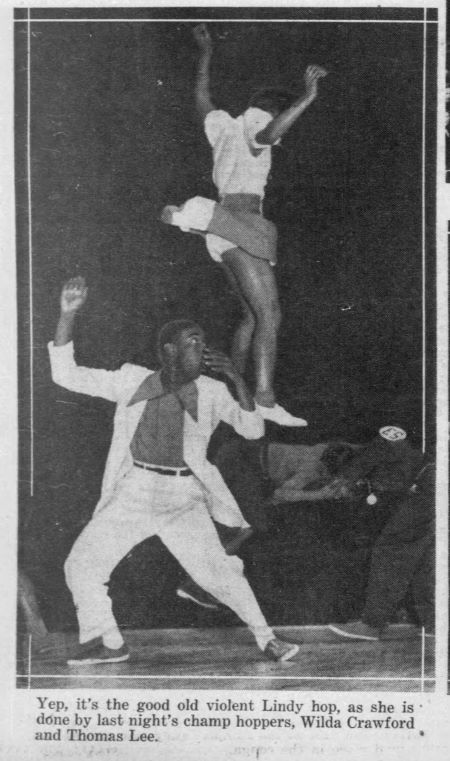
Wilda Crawford and Thomas Lee were the 1940 Lindy Hop dance winners at the Harvest Moon Ball amateur dance competition, which was held annually in NYC.

While still writing his column, he gave radio broadcasts and starred in the 1933 film “Mr. Broadway.” In 1947, CBS televised the Harvest Moon Ball, an amateur dance competition held annually in New York, and Sullivan was the master of ceremonies. The next year, he was selected to host “Toast of the Town” (later renamed “The Ed Sullivan Show”).

By that time, he’d developed a singular stage presence that was dry, straightforward and sincere without being star-struck or sycophantic. “On TV, I’ve been myself and it’s the only thing that saved me,” he said.

In breaking racial barriers, he credited his parents, especially his father, whom he described as sensible and courageous. As Irish immigrants, they’d faced prejudice and ignorance, and were quick to defend an underdog.

“Sunday Best” also gives a glimpse into Sullivan’s personal life. He clearly adored his wife Sylvia and their only child, a daughter named Betty; they were equally devoted to him. Their elegant apartment in the Delmonico Hotel on Park Avenue was packed with photos and other mementos, such as a pair of shoes that had belonged to Bill “Bojangles” Robinson.

By the time Sullivan’s show hit its 20-year mark, the mood and mores in America were far different than they’d been at the time of the program’s launch. The show slowly lost popularity and began to sink in the ratings. Sullivan was angry when in 1971 CBS canceled the show, but he hosted a 25th anniversary special in June 1973.

Though Sullivan could be dictatorial, short-tempered and thin-skinned, his equanimity usually won out. Toward the end of his life, he said, “I had a good long run. I put a good fight for what I believed in. And I have no complaints at all.”

“Sunday Best: The Untold Story of Ed Sullivan” was recently released on Netflix.

‘Crossfire Hurricane’ a kaleidoscopic tour of Stones history

Crossfire Hurricane/2012/111 min.

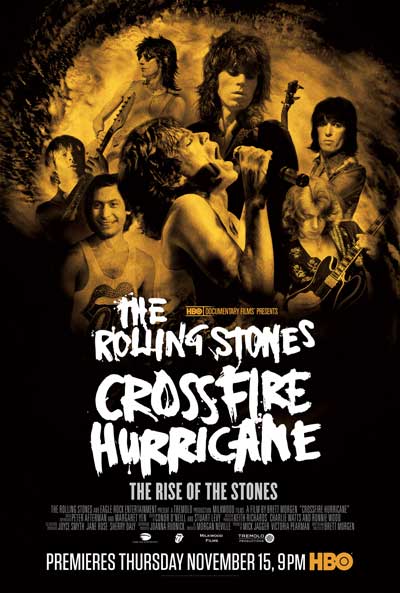
“Crossfire Hurricane: The Rise of the Rolling Stones” the new HBO film by and about the Rolling Stones marks the 50th anniversary of the musicians who went from badass to beloved, from “moronic cavemen” to the greatest rock ‘n’ roll band in the world.

The enduring appeal of the Stones stems from superb music, a capacity to reinvent themselves and the forceful personalities of the players – by turns outspoken, irreverent, shy, clownish, sensitive, clever, acerbic, funny and raw.

The Stones’ quick trajectory to fame was, as Keith Richards notes, kaleidoscopic. So is this must-see doc. Images are culled from more than 1,000 hours of film and “Crossfire” zips through the days at lightning speed.

Early on, we see a label (July 25, 1972, a day before Mick Jagger’s 29th birthday) and not much is time-stamped after that. But the chronology isn’t hard to follow, given the film’s tight pacing and focus on the early years.

As narration, you hear the voices (but don’t see the faces) of originals Richards, Jagger, Charlie Watts and Bill Wyman (he left the Stones in 1993) as well as Mick Taylor, who replaced Brian Jones (Jones died July 3, 1969) and was with the band until 1974, and Ronnie Wood, who replaced Taylor in 1975. There are no talking heads, i.e. rock critics, industry types or pop-culture commentators.

Drawing on more than 80 hours of new interviews with the band, “Crossfire,” directed by Brett Morgen, is the Stones talking about the Stones. They discuss their nearly-overnight success and chaotic early tours (“A chemical reaction seems to have happened,” says a young Jagger in an archival interview), the genesis of Jagger and Richards’ song-writing collaboration, the decline and death of Jones, the 1967 drug bust at Richards’ Redlands estate and subsequent run-ins with the law over drugs, the disastrous violence at the Altamont Speedway Free Festival in 1969, their days in the South of France recording 1972’s “Exile on Main Street” and their transition from “the band everybody hated to the band everybody loves,” as Jagger puts it.

Richards sounds craggy and wry. Charlie doesn’t remember much and sees himself as a loner, not truly a part of the band somehow. Jagger’s intelligence and charm is just as fresh as they were in his first interviews – a motif throughout “Crossfire” is the extent to which Jagger’s live performances can be likened to that of an actor’s craft. There is also never-before-seen footage as well as previously unheard versions of Stones’ songs and rare live performances.

Collectively, the Stones seem to have two Zen traits that in addition to heaps of talent, chemistry and supremely lucky timing, have held them in good stead for five decades. They exist in the moment and they’re authentic, whether they’re composing in a makeshift studio, performing at a stadium or just plain debauching, Keith’s specialty. They also don’t appear to take themselves 100 percent seriously. That could be why so many people around the world have loved them for so many years. In addition to being wildly entertaining, they act as an inspiration – to be creative, to be oneself, to question authority, to enjoy life, to swagger.

“When we got together,” says Wyman, “something magical happened.” A half-century later, the magic shows no sign of stopping.

“Crossfire Hurricane: The Rise of the Rolling Stones” will play several times on HBO and HBO2 through Nov. 29. (It debuted Nov. 15.)

Who Shot Rock & Roll shows photographers’ role in rock

Southern California National Public Radio (NPR) affiliate KCRW is hosting one more free night of outdoor live music, DJs and photography at the Annenberg Space for Photography in Century City. Moby played on July 14; on Saturday night, Portugal. The Man celebrated the 40th anniversary of T.Rex‘s “The Slider” and on Aug. 4 Raphael Saadiq & Band of Skulls will perform the songs of Bob Dylan.

The concerts are in conjunction with Who Shot Rock & Roll: A Photographic History, 1955 to the Present, organized by the Brooklyn Museum with guest curator and author Gail Buckland. Show organizers say it is the first major museum exhibit on rock and roll to spotlight the creative and collaborative role that photographers have played in the history of rock music. The show features 166 prints from iconic photographers, a Henry Diltz slideshow, several videos and a short doc film. Who Shot Rock & Roll runs at the Annenberg through Oct. 7.

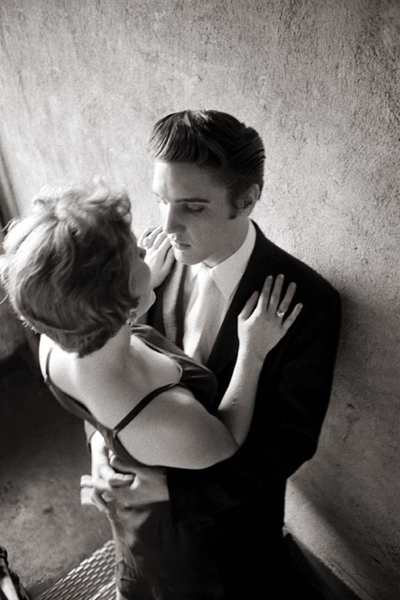
This is one of 1,500 shots that Alfred Wertheimer took of Elvis in 1956.

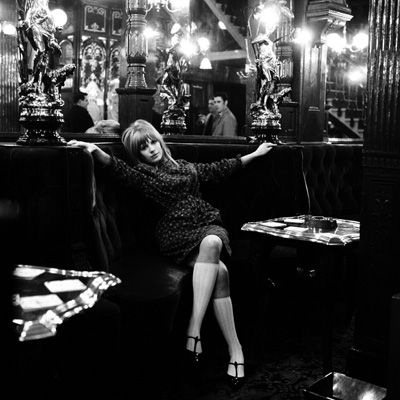
Marianne Faithfull at a London pub, 1964, by Gered Mankowitz. This shot was considered too provocative to use as an album cover.

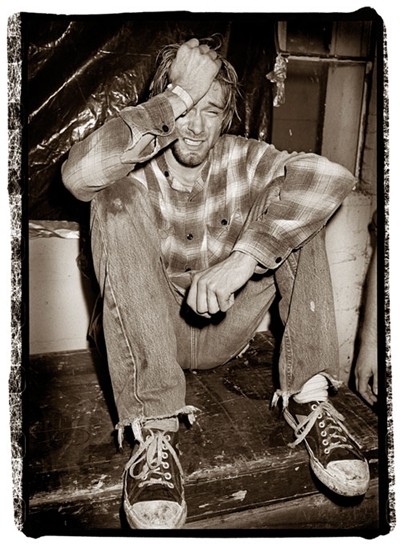
Kurt Cobain photographed by Ian Tilton at a Seattle venue, 1990.

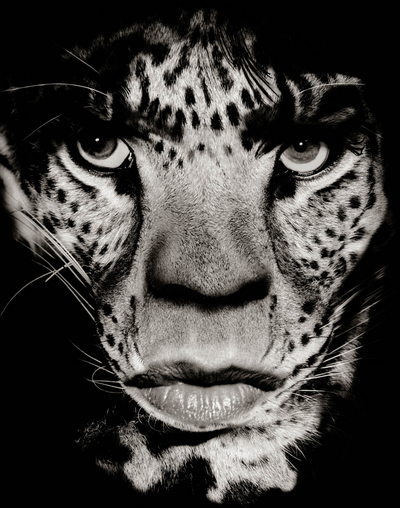
Mick Jagger shot by Albert Watson in Los Angeles, 1992.

Rolling Stones: Some Girls Live in Texas shows band at its best

I took a break from the Chicago Film Fest, which ends Thursday, to watch The Rolling Stones: Some Girls Live in Texas (a live concert shot in 1978 and shown last night in movie theaters nationwide). Seeing it made me think of a piece I wrote when I was on staff at the Chicago Tribune. This essay ran in January 2003 a few days before I saw the Stones live in Chicago. It’s an oldie but I hope still a goodie.

Copyright: The Chicago Tribune

An oddly touching moment over the holidays was seeing this tag on a gift from a girlfriend: “To Jackie, the Sixth Stone,” acknowledging my decades-long attachment to Mick Jagger, Keith Richards and the boys. The reason it touched me is that of all the millions of Rolling Stones fans around the world, I’m probably the least deserving of the honorary inclusion.

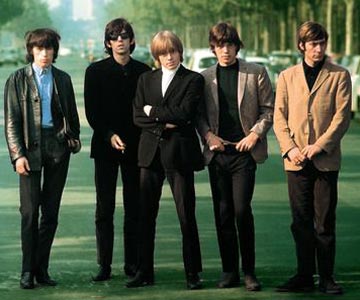
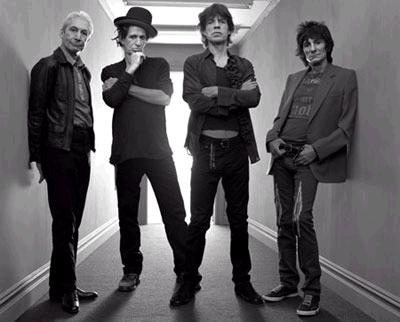
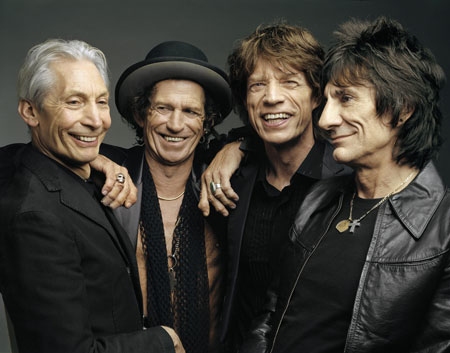
A vintage shot of the original band.

I’m a loyal fan and I love them to death. But I have to confess: I’m sort of a “lite fan.”

I have no idea what their first hit single was, I can’t recite all of the songs on “Exile on Main Street” and my fairly extensive collection of Stones memorabilia is composed mostly of gifts, rather than the result of any vigorous scouring or even casual browsing on my part.

That’s probably because I missed the early “street fighting” days, having become smitten in the 1980s. It may be a rite of passage for girls to have crushes on rock stars, but almost 20 years later my swooning is still going strong.

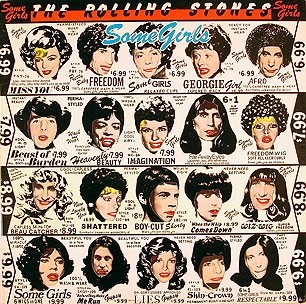
I think the first Stones record I bought was “Emotional Rescue.” The first one I fell in love with was “Some Girls,” which I probably “borrowed” from one of my older siblings.

My older sister is a big fan, although I don’t have any pivotal memory of her playing a song for me or of trying to copy her taste in music. As adults, we’ve attended several Stones shows together and last summer she flew in to attend the party I held to celebrate Sir Michael’s 59th birthday. (It was well attended, even if the guest of honor didn’t make it.)

Mick Jagger in 1978

What I find especially entertaining, besides the music of course, is that revealing my adoration yields varying and vehement responses.

I often hear the charge that Mick is a womanizer. And it’s pretty tough to argue to the contrary. Concerts and conquests have accounted for a huge chunk of his life. But my impression is that he’s been pretty open about not wanting to settle down and be faithful to one woman. Anyone who got involved with him would have to have been living in a cave not to realize that.

Sometimes people whine that the band should retire. It bores me to hear the claim that the Stones are passé or over the hill, and to the people who wrongly think the group hasn’t done anything good recently, I say, “So what? They’ve already done enough great stuff to last another 40 years.”

Meanwhile, without ever specifically seeking out fellow fans, I’ve bonded with people who share my love for the Stones. When I lived in London in the late 1980s and early ’90s, I went to lots of parties that culminated in guitars being plugged in, Stones songs being played and dancing until morning.

Producer/manager Andrew Oldham once wrote that "the Rolling Stones are more than just a group, they are a way of life."

I also encountered a fair amount of snobbery. “Mick’s trying to write an autobiography, except he can’t remember anything that happened past last year,” was one snide remark from a friend who thought the Stones were overrated.

It was in London that I met my French friend Véronique and discovered that in addition to our mutual frustration with English plumbing, we also shared a fascination with the sexy, stylish and silly Mick Jagger.

Given her record at other Stones shows, I wouldn’t put it past Véronique to try to use my above-mentioned gift-tag as a backstage pass. “I must see Meeck,” were her parting words when she left my boyfriend and me at Wembley Arena and rushed closer to the stage. I didn’t see her again that night. The next morning she called to say she had maneuvered her way into the third row – within touching distance of Meeck – and that we had been foolishly timid to stay behind. In fact, it wasn’t fear as much as confusion and disbelief at the way she took off.

But more power to her, I thought. And she has never hesitated to get up and dance to Stones songs at a pub, a bar or a party on either side of the Atlantic. It actually works better if different people “play” different band members, but with her I make concessions and we both play Mick.

Having left London with zero Stones sightings aside from Wembley, I almost booked a vacation to Mustique because Mick has a house there; until I checked the dizzying schedule of connecting flights from Chicago and chose St. Martin instead. Well, perhaps I’ll run into him in the south of France sometime.

The Stones' last studio album was "A Bigger Bang," 2005.

I briefly dated a friend of a friend whom I met at the “Bridges to Babylon” show at Soldier Field in 1997. Other romances have fizzled upon the discovery that I fawned from afar over Mick – who is not a “skinny little runt.”

A friend I met last year established a permanent claim to being cool when he revealed that he had once obtained backstage passes and met the whole band before seeing the show. “They’re all much shorter than I am,” he informed me. He added that Mick was diplomatic; Keith was dipping into a bottle.

Mick, with his prancing and preening, his strutting and sashaying, will always be my No. 1 favorite. But over the years my appreciation and affection for Keith has grown considerably. Yes, he’s still scruffy and spaced out, but endearingly so, I think now. And as a musician, he’s matchless. I understand why Mick is the leader, but even lite fans know that Mick really wants to be Keith and Keith is actually in awe of Charlie Watts, deadpan and detached, and charmingly eccentric.

For Wednesday night’s show, I’m happy to be going with a bona fide, longtime and proper fan. He vividly recalls hearing his first Stones song, “Satisfaction,” and can recite all the songs on the first Stones album he bought, “Aftermath.”

A Film Noir Blonde fave: Rolling Stones rock the big screen

I always thought Mick Jagger hit the nail on the head when in “Some Girls,” he says, “American girls want everything in the world you can possibly imagine.” I’d be good with that, as would most femmes fatales. I can’t wait to hear the song again later this month at The Rolling Stones: Some Girls Live In Texas, a one-night in-theater concert.

This rare, never-before-seen concert was captured live in Fort Worth, Texas, on July 18, 1978. The show will be broadcast to more than 300 theaters nationwide at 7:30 p.m. (local time) on Tuesday, Oct. 18. The event will also include an exclusive 20-minute interview with Jagger filmed in August 2011 where he reflects on the fabled 1978 U.S. tour, which is believed among many fans to be one of the band’s greatest tours and strongest musically.

“Fort Worth was an amazing night in a blistering hot July,” said Jagger. “Watching it now, the band was really intense and focused, but we were also having a blast with the fans who were really getting into the show and the new tracks from Some Girls.”

Digitally re-mastered to HD with Cinema Surround Sound, this legendary footage includes a mixture of classic Stones hits such as “Brown Sugar,” “Honky Tonk Women,” “Jumpin’ Jack Flash” and “Tumbling Dice,” paired with blues numbers and Chuck Berry covers, as well as songs from the Some Girls LP including “Beast of Burden” and “Miss You.”

Presented by NCM Fathom, More2Screen and Eagle Rock, tickets for The Rolling Stones: Some Girls Live In Texas are available at participating theater box offices and online at www.FathomEvents.com.