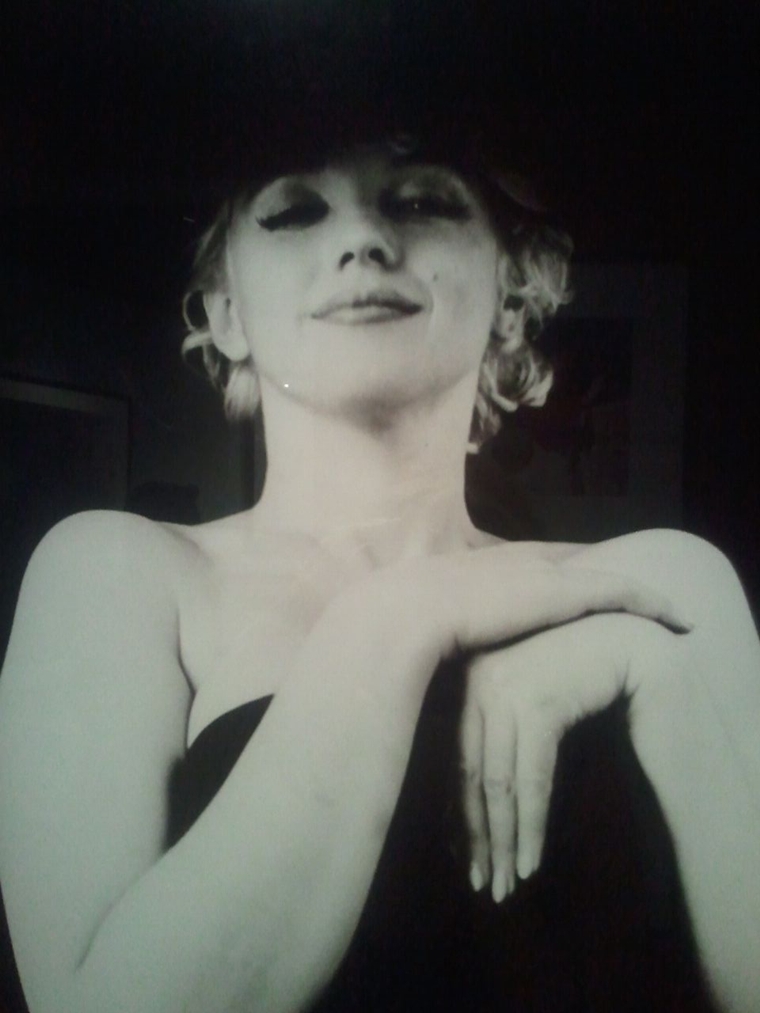
Marilyn Monroe honored with exhibits, Hollywood film festival

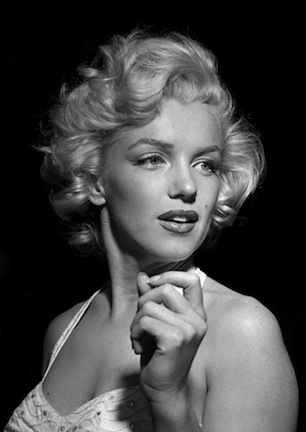
This summer marks the 50th anniversary of Marilyn Monroe’s death on August 5, 1962.
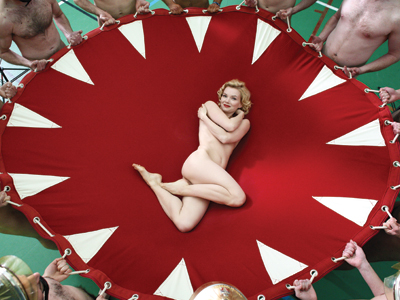
In New York, more than 50 photographs of Marilyn by Lawrence Schiller, many never-before-seen, go on public display this week at the Steven Kasher Gallery.

Tonight I am heading to a preview of Marilyn MonroeAn Intimate Look at the Legend at the Hollywood Museum. The exhibit opens Friday, June 1, which would have been Marilyn’s 86th birthday.

On display will be work by photographer George Barris, photos from her childhood, early modeling days and life as a star as well as famous wardrobe pieces, private documents and personal effects, such as cosmetics.

Also, on June 1, Playboy and Grauman’s Chinese Theatres are hosting a Marilyn Monroe Film Festival. Opening night is “Some Like It Hot” and one of my fellow fans has kindly provided this review.
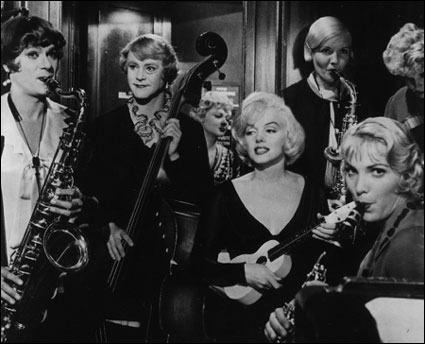
Writer/director Billy Wilder deliberately kept his two cross-dressing stars (Tony Curtis and Jack Lemmon, at left) straight in order to heighten the humor.

Ribald, jazzy, sexy joy and pure gold from the 20th century’s reigning sex symbol

SOME LIKE IT HOT/1959/MGM, UA/120 min.

By Michael Wilmington

The place: Chicago. The color: a film noirish black and white. The caliber: 45. The proof: 90. The time: 1929, the Capone Era and the Roaring Twenties, roaring their loudest.
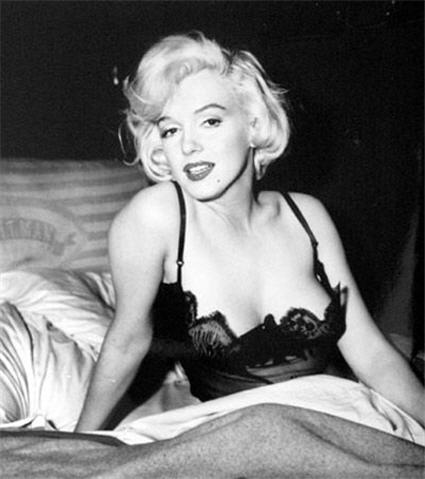
Sugar Kane of “Some Like It Hot” was one of Marilyn’s top roles.

We’re watching “Some Like It Hot” and Tony Curtis and Jack Lemmon are playing Joe and Jerry: two talented but threadbare Chicago jazz musicians working in a speak-easy fronted as a funeral parlor. Joe, who plays saxophone, is a smoothie and a champ ladies’ man. Jerry is your classic Jack Lemmon schnook, with a couple of kinks thrown in.

After getting tossed out of their speak-easy band jobs by a police raid and accidentally witnessing the St. Valentine’s Day Massacre (ordered by their ex-employer, George Raft as natty gangster Spats Colombo), they flee to Miami. They’re chased by the gangsters and the cops (Pat O’Brien as Detective Mulligan) but the guys are disguised as Josephine and Daphne, musicians in an all-female jazz orchestra.

The star of Sweet Sue and her Society Syncopators, songbird and ukulele player Sugar Kane, is the Marilyn Monroe of our dreams. Sugar has a weakness for saxophone players. Josephine and Daphne have a weakness, period. Director Billy Wilder, who made lots of gay jokes in his time, deliberately keeps his two cross-dressing stars straight.

In Miami, land of dreams and beaches and bathing beauties, the “ladies” meet millionaires, including Osgood Fielding III (Joe E. Brown), who marries chorus girls like some people catch trains. They also meet gangsters jumping out of birthday cakes, waving submachine guns. Miami, to quote Sugar Kane, is runnin’ wild. (“Runnin’ wild. Lost control. Runnin’ wild. Mighty bold. Feelin’ gay, reckless too! Carefree mind, all the time, never blue!”)

“Some Like It Hot” is full of playful references to classic gangster movies like “Little Caesar” and “Scarface.” (At one point, Edward G. Robinson, Jr. flips a coin just like Raft did in Howard Hawks’ “Scarface.” Raft grabs it and demands: “Where’d you learn that cheap trick?”)

Risqué, quick-witted, scathingly funny, unfazed by foibles and unfooled by phonies, Wilder and co-writer I. A. L. “Izzy” Diamond were two Hollywood moviemakers who could cheerfully rip up the establishment, and make the establishment love it – a pair of razor-sharp script wizards who understood our society to its core, relishing its delights and scorning its hypocrisies. And with “Some Like It Hot,” they broke the comedy bank.
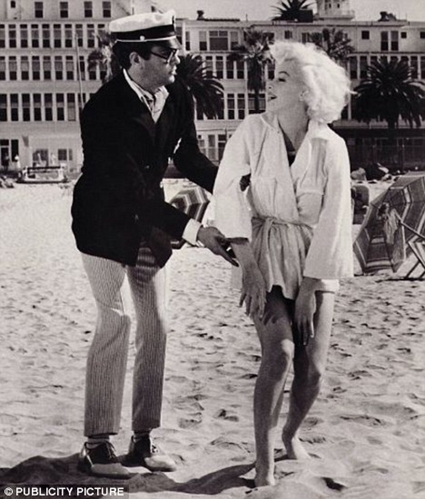
The movie provided plum roles for Tony Curtis, Marilyn and their co-stars.

Jerry and C. C. Baxter, of “The Apartment,” were Lemmon’s two greatest performances, and they’re as good as any American movie actor ever gave. The movie also handed Tony Curtis and Joe E. Brown their best movie roles (well, for Tony, probably a tie with Sidney Falco in “Sweet Smell of Success”). Sugar Kane was one of Marilyn’s top roles as well.

Ah, Marilyn. Who could forget the country’s and the 20th century’s reigning sex symbol crawling all over Tony Curtis in a borrowed yacht and a skin-tight gown (while Tony does his best Cary Grant impression)? As Jerry says when he spots her doing her famous wiggle-walk in the train station: “Look at that, it’s like Jell-O on springs! I tell you, it’s a whole different sex.”

Marilyn had a little trouble with her lines in “Some Like It Hot,” but we’re talking about dialogue, not curves. Wilder insisted to his dying day, that although it may have taken a while with Marilyn, it was worth it. Always. What you got was pure gold. The movie is pure gold too. Pure hilarity, pure straight-up Billy Wilder. It’s a ribald, jazzy, sexy joy – an absolute delight. As Osgood would say: “Zowie!”

On the radar: a new Marilyn book, Met show, ‘Bernie’ bound

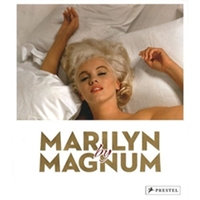
There will surely be much fanfare to mark the 50th anniversary of Marilyn Monroe’s death, Aug. 5, 1962. For starters, there’s a new book, “Marilyn by Magnum” (Prestel Publishing, $29.95). The Magnum photographic cooperative was founded in 1947 by Robert Capa, Henri Cartier-Bresson, George Rodger and David “Chim” Seymour.

In the book, we see the work of Cartier-Bresson, Elliott Erwitt, Eve Arnold, Inge Morath, Philippe Halsman, Bruce Davidson, Dennis Stock, Bob Henriques, Erich Hartmann and others.

The images range from glamorous portraits to intimate candids to Marilyn working on movies. Says Magnum: “In richly toned black and white as well as lustrous color, these photographs reveal Marilyn’s uncanny ease in front of the camera.”

Marilyn Monroe, 1952. By Philippe Halsman; copyright Philippe Halsman/Magnum Photos


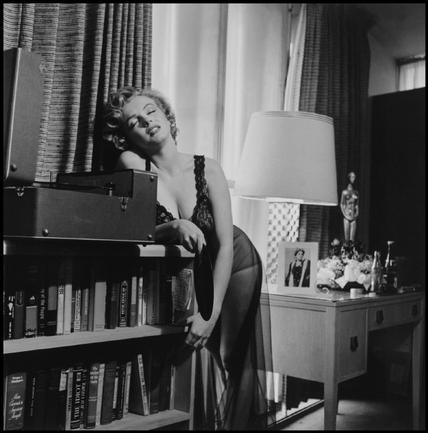
Marilyn in her apartment, 1952. The photo on the desk is of Italian actress Eleonora Duse, whom Marilyn admired. Copyright Philippe Halsman/Magnum Photos

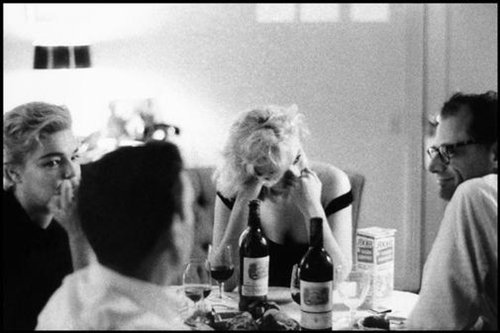
Yves Montand, Simone Signoret, Marilyn Monroe and Arthur Miller in Hollywood, Calif., 1960. Photo by Bruce Davidson; copyright Bruce Davidson/Magnum Photos

Talking shop: The Met’s Spring 2012 Costume Institute exhibition, Schiaparelli and Prada: Impossible Conversations, explores the striking affinities between Elsa Schiaparelli and Miuccia Prada, two Italian designers from different eras. Baz Luhrmann directed videos of simulated conversations between Schiaparelli and Prada.

Screenworthy: Richard Linklater’s black comedy “Bernie,” starring Jack Black, Shirley MacLaine and Matthew McConaughey, looks well worth seeing. I missed screenings because of all the festivals in town but am hoping to catch it asap.

Sunnyside Upton: Kate Upton goes retro glam with an Old-Hollywood inspired photo shoot at the Beverly Hills Hotel in this month’s Harper’s Bazaar.

More Marilyn at the Cinematheque in Hollywood

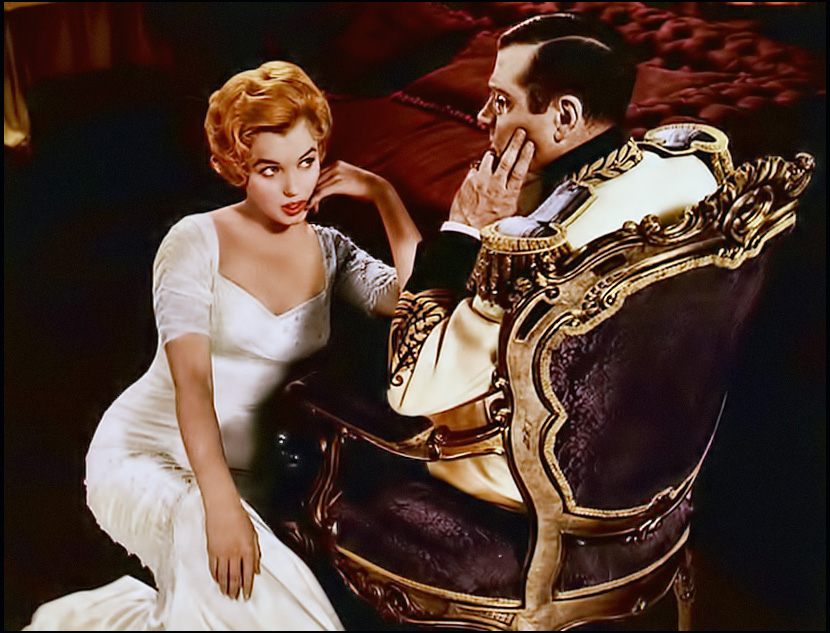
Marilyn Monroe and Sir Laurence Olivier

The American Cinematheque will show a Marilyn Monroe double feature at 7:30 p.m. Sunday, Jan. 8, at the Egyptian Theatre in Hollywood. The movies are: 1957’s “The Prince and the Showgirl” (co-starring and directed by Sir Laurence Olivier) and Billy Wilder’s “Some Like It Hot” from 1959.

At 6:30 p.m., in the lobby, Susan Bernard will sign copies of her book, “Marilyn: Intimate Exposures.” The book consists of 125 photos by her father Bruno Bernard. The photos, ranging from 1946 to 1954, include 40 previously unpublished images. There will be a discussion between films with Susan Bernard.

Michelle Williams and Kenneth Branagh will appear at the Egyptian’s screening of “My Week with Marilyn,” directed by Simon Curtis, 7 p.m. Wednesday, Jan. 11.

General admission is $11; members pay $7. The Egyptian is at 6712 Hollywood Blvd.

Film noir gifts for the holidays: Books

Last week, I was beauty-product happy. This week, it’s all about pages.

Here are my book-buying suggestions and descriptions from their sellers/review highlights.

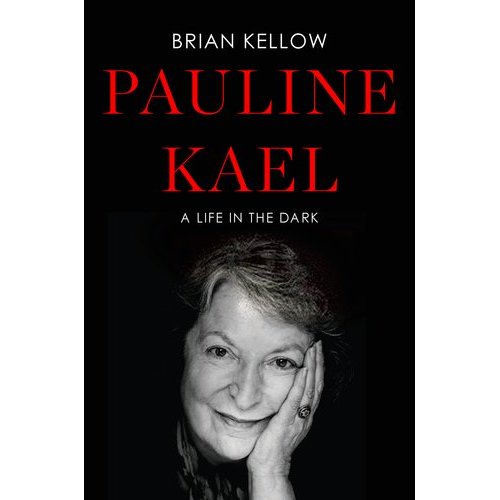
Pauline Kael: A Life in the Dark” by Brian Kellow, $27.95
Says fellow film critic Todd McCarthy in The Hollywood Reporter: “Kellow … writes beautifully and dexterously interweaves the story of a career long-thwarted with a sensitive reading of his subject’s youthful enthusiasm and intellectual growth. … Kellow admirably brings Pauline’s wit, insight and passion to life on the page and has made at least one critic nostalgic for the days when heavyweight critical battles raged and at least one of us lived a life worthy of a biography.”

The Doll: The Lost Short Stories” by Dame Daphne du Maurier, $15
Writing in ElleKate Christensen says of du Maurier (who wrote “Rebecca,” “My Cousin Rachel” and “Jamaica Inn”): “It’s all here: her fascination with the interplay between ingénue and femme fatale, her caddish male characters and the clinging females they devastate, and the inevitable disillusionment of innocence. … The stories are not all equally well realized – a few of them feel more like sketches – but the best ones are astonishingly good.”

Maigret at the Gai-Moulin,” a novel by Georges Simenon, $8
Belgian writer Simenon (1903-89) published his first novel at 17 and wrote more than 200 novels, many featuring a detective named Commissaire Maigret. Says People magazine: “Maigret … ranks with Holmes and Poiret in the pantheon of fictional detective immortals.”

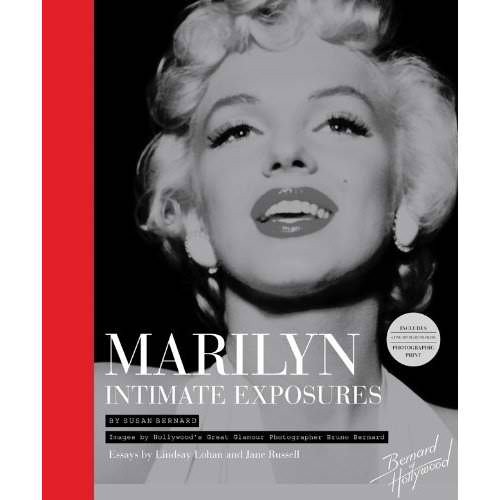
Marilyn: Intimate Exposures” by Susan Bernard/Bruno Bernard, $35
Hollywood photographer Bruno Bernard’s iconic photograph of Marilyn Monroe standing over the subway grate in a billowing white dress is synonymous with Hollywood glamour. Many of the images in this volume have never before been published.

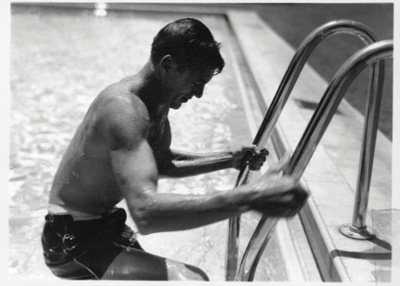
Gary Cooper

Also includes forewords from Jane Russell, Marilyn’s co-star in “Gentlemen Prefer Blondes,” and Lindsay Lohan as well as excerpts from Bruno’s journal and a frameable print. (Next year is the 50th anniversary of Marilyn’s death.)

Gary Cooper: An Enduring Style” by Maria Cooper Janis and G. Bruce Boyer, $60
The first monograph focused on the timeless fashion and allure of this leading man who was a fashion inspiration to his Hollywood peers, clothing designers and generations of stylish men. Unpublished, never-before-seen personal photographs, shot primarily by his wife Rocky.

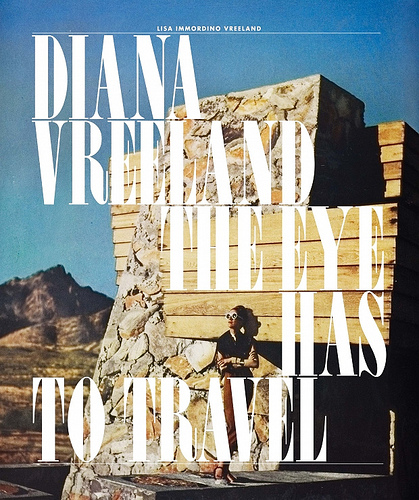
Diana Vreeland: The Eye Has to Travel” by Lisa Immordino Vreeland, $55
From Town & Country: “Before there was Daphne Guinness, before there was Lady Gaga, there was the original style setter. A new book takes a look at the career and influence of the woman who made fashion modern.”

Lisa Immordino Vreeland runs her own fashion design and production consulting business. She is the producer of a documentary film about Diana Vreeland, and is married to Vreeland’s grandson Alexander.

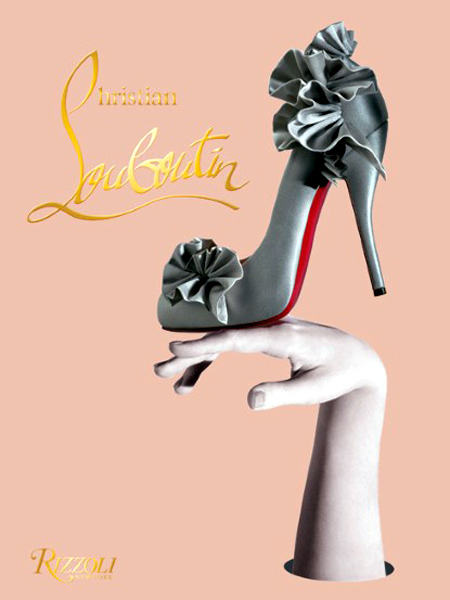
Christian Louboutin,” $150
Red rules in more than 300 pages of the legendary designer’s work. Read more about him and his career here.

Works on Paper” by David Lynch, $195
A collection of more than 500 drawings, dating from the 1960s by the renowned American film director, offers a unique glimpse into the artist’s creative process.

If you are in the LA area, treat yourself to a trip to Dragon Books, 2954 Beverly Glen Circle, 310-441-8545. There, you’ll find an inscribed first edition of 1984’s “Things I Did … and Things I Think I Did” by director Jean Negulesco (“The Mask of Dimitrios,” “Humoresque,” “Johnny Belinda” and “How to Marry a Millionaire,” along with many others); $150.

Also: a first edition of Don Allen’s “François Truffaut” from 1974, signed by Truffaut; $1,500.

Holiday movie magic: A brand-new black and white, the blonde bombshell, a bad cop, Cronenberg and Scorsese

It’s that time again … Oscar season is here. Starting Wednesday, Nov. 23., there is much to see at the movies; these films surely will appeal to noir fans. (Check your local listings for details.) Enjoy!

‘The Artist’

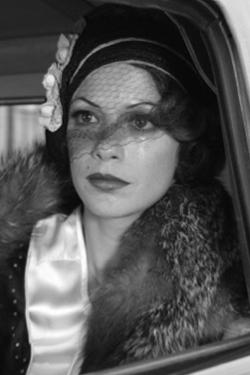
Bérénice Bejo

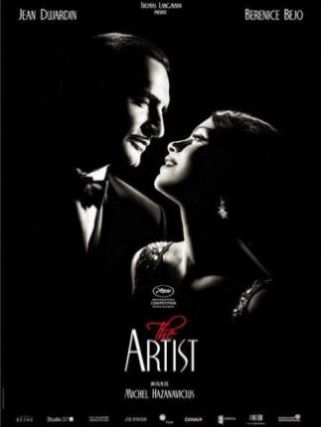
“The Artist,” set in 1927 Hollywood, is writer/director Michel Hazanavicius’ visually resplendent ode to the vivacious beauty of silent cinema. Debonair heartthrob and household name George Valentin (Jean Dujardin) coasts from movie to movie and lives in high style – posh home, trophy wife (Penelope Ann Miller), loyal valet (James Cromwell) and faithful companion, a Jack Russell terrier.

Ambitious actress and dancer Peppy Miller (Bérénice Bejo) has talent, looks and perfect timing – the introduction of sound is reshaping the way films are made. She’s drawn to George but, at first, he doesn’t pay her much attention beyond an admiring glance. George’s idyllic world starts to collapse when he sees that his style does not work with the latest and greatest technical advance, talkies. Can he find a way to keep up with the times and salvage his career?

The story, though a bit of a stretch, is delightful. The era is fastidiously recreated and Hazanavicius draws fine work from his cast. Dujardin neatly balances pomposity with humility and Bejo dazzles as Peppy. Her high energy nearly sparks off the screen and it’s a joy to watch her marvelously expressive face. And John Goodman is spot on as blustery producer Al Zimmer. The film has won several awards from festivals, including best actor for Dujardin at Cannes.

“The Artist” is a tender-hearted, near-perfect pastiche of a classic art form.

‘My Week with Marilyn’

Kenneth Branagh

Manipulative, desperate, vulnerable. Funny, gifted, magical. Never dumb. In “My Week with Marilyn,” Simon Curtis’ portrait of ’50s screen icon Marilyn Monroe (Michelle Williams), we see her multiple sides and many problems through the prism of chaste voyeurism and our jaded, tell-all modernity.

“They like to keep her doped up, she’s easier to control. They’re terrified their cash cow will slip away,” says one observer, during the shoot, in England, of 1957’s “The Prince and the Show Girl.” Her co-star and director Sir Laurence Olivier (Kenneth Branagh) takes issue with her erratic behavior, but he also envies her raw, intuitive talent.

Adrian Hodges wrote the screenplay, based on “The Prince, the Showgirl and Me,” a memoir by Colin Clark (Eddie Redmayne). Clark was an assistant director on the film and the son of art historian Sir Kenneth Clark (of “Civilisation” fame). Dame Judi Dench plays actress Dame Sybil Thorndike; Dougray Scott plays Arthur Miller.

Curtis creates a beguiling visual confection with tour-de-force Oscar-caliber performances.

‘Rampart’
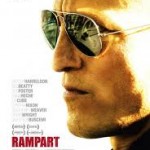
In “Rampart,” directed by Oren Moverman, Woody Harrelson plays a corrupt cop in early 1990s Los Angeles. Moverman wrote the screenplay with James Ellroy. Also stars Steve Buscemi, Sigourney Weaver, Robin Wright, Brie Larson, Anne Heche and Ice Cube.
Note: “Rampart” is out for one week only in Los Angeles and New York; wider release hits in January 2012. We at FNB are looking forward to seeing it!

‘A Dangerous Method’

David Cronenberg speaks at a press conference last week.

David Cronenberg brings his consummate eye to a remarkable historical drama in “A Dangerous Method.” Flawlessly photographed, the story is rendered with intelligence, austerity and precision. Though the chilly, almost clinical, tone undermines the film’s emotional buildup, it’s nevertheless a gripping saga.

Under Cronenberg’s lens is the groundbreaking work of Sigmund Freud (Viggo Mortensen) and Carl Jung (Michael Fassbender) in the pioneering days of psychoanalysis when ethical boundaries had yet to be drawn. Jung’s intent on helping a young woman named Sabina Spielrein (Keira Knightley), who enters his clinic flailing, wild and barely able to speak.

Beaten by her father as a child, Sabina is emotionally shattered as an adult. She makes rapid progress with Jung and the two begin an illicit, intimate relationship. Eventually Sabine decides to become an analyst and in the course of her study challenges some of Freud’s work.

Vincent Cassel plays psychiatrist Otto Gross; Canadian newcomer Sarah Gadon plays Jung’s wife. Christopher Hampton wrote the screenplay from his play “The Talking Cure,” which was based on the book “A Most Dangerous Method” by John Kerr.

“We’ve all been influenced by Freud whether we know it or not,” said Cronenberg at a press conference last week in Beverly Hills. Cronenberg added that though Freud fell out of favor, his professional stature has recovered lost ground in the last 15 years. “Some of his theories have been absolutely confirmed.”

He pointed out that despite his stern and uptight reputation, Freud was in fact “handsome, charming, witty and funny.” That called for “slightly oblique, non-traditional casting” so Cronenberg said he talked Mortensen into the part. This is their third collaboration, following “History of Violence” and “Eastern Promises.”

Of Knightley’s portrayal of Sabine, Cronenberg said, “I’ve always thought she was an underrated actress. … It’s a really beautiful performance.”

‘Hugo’

From a champion of film noir and master neo-noir director Martin Scorsese comes “Hugo,” an adaptation of Brian Selznick’s novel, “The Invention of Hugo Cabret.” It is one of Scorsese’s most accomplished productions ever (stunning 3D color cinematography; gorgeous production design by Dante Ferretti) and one of the year’s very best films.

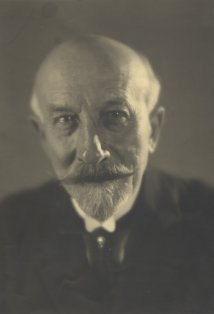
Georges Méliès

In 1930s Paris, a boy named Hugo (Asa Butterfield) lives in the walls of a railway station and keeps all the clocks running. He clashes with an over-zealous station inspector (Sacha Baron Cohen), flirts with a pretty young girl (Chloë Grace Moretz) and meets her family, including the great but forgotten filmmaker, Georges Méliès (Ben Kingsley).

The movie is Scorsese’s Valentine to the cinema, and few more sumptuous love-notes have been made. Filled with clips from silent classics, including Méliès’ 1902 masterpiece “A Trip to the Moon,” this is a jewel no genuine movie lover should pass by.

“Hugo” review by Michael Wilmington

On the radar: Battle of the Blondes begins, AFI fest kicks off, poets ponder Los Angeles noir

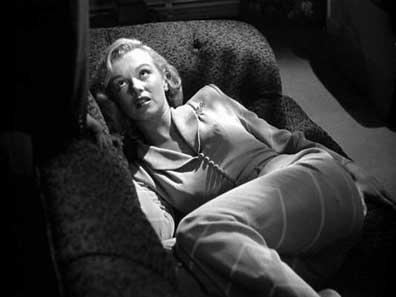
Marilyn in "The Asphalt Jungle" tops the TCM list.

One more reason to love Turner Classic Movies: The network has compiled a list of 10 favorite movie moments featuring Marilyn Monroe. The list comes as TCM gears up for its Battle of the Blondes this month, which kicks off Nov. 2 with a Marilyn Monroe double feature.

First on the fave moments list is Marilyn looking up at Louis Calhern in the classic noir “The Asphalt Jungle” from 1950 directed by John Huston. Third on the list is her sexy walk in “Niagara,” Henry Hathaway’s 1953 Technicolor noir. (“Niagara” and 1959’s “Some Like It Hot” by Billy Wilder are tonight’s double bill.)

Throughout November, TCM will celebrate Hollywood’s greatest blondes. Each Monday and Wednesday night’s lineup will feature two blondes going head-to-head in a pair of double features, including Marilyn Monroe and Jayne Mansfield on Nov. 2, Veronica Lake and Lana Turner on Nov. 7, Judy Holliday and Jean Harlow on Nov. 9, Marlene Dietrich and Ursula Andress on Nov. 14, Carole Lombard and Mae West on Nov. 16, Janet Leigh and Brigitte Bardot on Nov. 21, Betty Grable and Doris Day on Nov. 23, Julie Christie and Diana Dors on Nov. 28 and Grace Kelly and Kim Novak on Nov. 30.

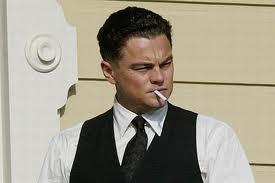
Leonardo DiCaprio

Best of the fest: The AFI FEST 2011, the American Film Institute’s annual celebration of international cinema from modern masters and emerging filmmakers, starts Nov. 3 with Clint Eastwood’s “J. Edgar,” starring Leonardo DiCaprio.

Noir gems include “Eyes Without a Face,” “The Killers,” “Nightmare Alley” “Le Cercle Rouge,” “Once Upon a Time in Anatolia” and “We Need to Talk About Kevin.” Topping my new-viewing list is: “Miss Bala,” “Art History,” “Carnage,” “Shame,” “Kill List” and “The Artist.”

The festival runs through Nov. 10 in Hollywood and I look forward to covering it.

Lines to remember: Continuing through Nov. 13, the Los Angeles Poetry Festival is hosting Night and the City: L.A. Noir in Poetry, Fiction and Film. There are readings, screenings and discussions in various locations. I’ve marked my calendar for the Raymond Chandler open reading on Nov. 6 in Hollywood.

The Marilyn Chronicles at Chicago film fest

Chicago saw the installation this summer of a 26-foot-tall tacky statue of Marilyn Monroe by J. Seward Johnson, so maybe it’s fitting that the city’s film fest hosted two Marilyn flicks, both much more elegant than the gargantuan “Seven Year Itch” tribute.
v
Simon Curtis’ “My Week with Marilyn” (UK) offers a glimpse into a brief period in the troubled actress’ life: her 1956 trip to London to shoot “The Prince and the Show Girl” in which she co-starred with Sir Laurence Olivier.
v
x
The source material is “The Prince, the Showgirl and Me,” a memoir by Colin Clark, an assistant director on the film and son of art historian Sir Kenneth Clark (of “Civilisation” fame). Curtis brings the memoir to life with sumptuous cinematography and spellbinding, Oscar-worthy performances from Michelle Williams as Marilyn, Kenneth Branagh as Olivier and Eddie Redmayne as Colin Clark.
v
“MWWM” also explores profound changes in the world of film acting as the Stanislavski/Method school took hold of Hollywood and clashed with British style, still deeply rooted in stage tradition.

"Nobody Else But You"

Darkly funny, quirky and delightful to watch was the story of a modern-day Marilyn, “Nobody Else But You,” by Gérald Hustache-Mathieu. Sophie Quinton plays Candice Lecoeur, a luscious weathergirl in a remote French village whose life oddly parallels Marilyn’s and in a “Laura”-like way becomes the focus of a murder mystery.

Hustache-Mathieu’s most brilliant achievement is the unlikely mix of disparate mood and tone – farce, black humor, drama – fluidly, splendidly coming together. The audience loved it and high-energy Hustache-Mathieu was humbly charming at the post-screening Q&A.
x
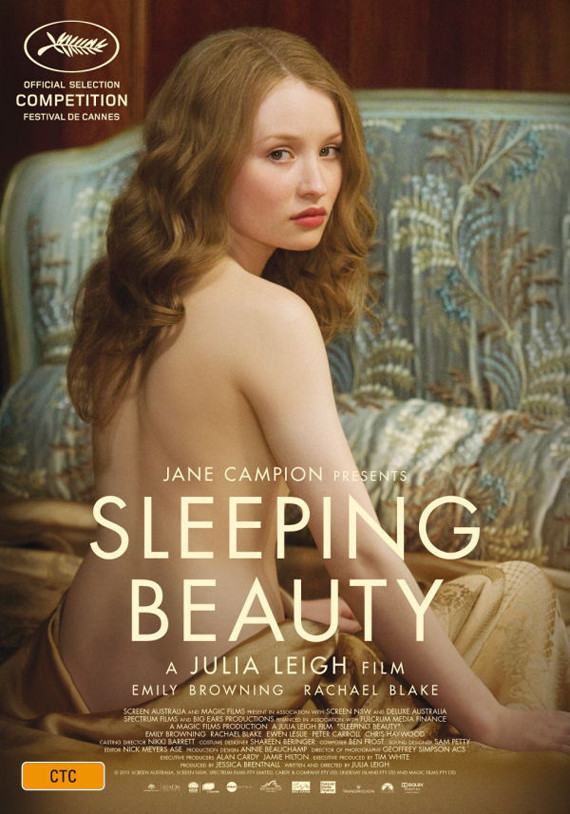
In writer/director Julia Leigh’s erotic reworking of the fairy tale “Sleeping Beauty” (Australia) we meet another stunning blonde: Emily Browning as Lucy, a desperate college student using her looks to make a living in the sex industry. Though I admired Browning’s performance, the movie was disappointingly sluggish and dull.
v
Tomorrow: More highlights from the fest

CIFF closes with ‘The Artist,’ Marilyn photo show opens in LA

The Chicago International Film Festival closes tonight with a much anticipated French film, “The Artist,” by writer/director Michel Hazanavicius. Described by the festival as “a love letter to the movies,” the story is set in 1927 Hollywood as silent films gave way to sound.

“The Artist” stars Jean Dujardin (he snared the Best Actor award at Cannes in May), Bérénice Bejo and John Goodman. It opens in the U.S. on Nov. 23.

I will posting in more detail about the films I saw and people I met at the fest as well as some ideas for retro chic dining in Chicago.

Meanwhile, in LA, the Hollywood Film Festival starts today at the ArcLight Cinema in Hollywood and runs through Oct. 24.

And on Friday from 7-9 p.m., the Duncan Miller Gallery is hosting the opening reception of 12 Photographs (and more) of Marilyn Monroe.

In addition to 12 large-format images from Lawrence Schiller, the exhibition features iconic prints from other photographers who captured Marilyn, including Philippe Halsman, Milton Greene, Bob Willoughby, Murray Garrett and Benn Mitchell.

The show runs through Nov. 26 at the Duncan Miller Gallery, 10959 Venice Blvd., Los Angeles, 90034, 310-838-2440.

Marilyn Monroe image copyright Murray Garrett

Marilyn Monroe remembered in West Los Angeles

Marilyn Monroe, shot by Milton Greene

In honor of the 49th anniversary of Marilyn Monroe’s death, about 75 people gathered today at Westwood Village Memorial Park Cemetery for a memorial service, followed by a reception at the Andrew Weiss Gallery in Beverly Hills. Born June 1, 1926, Marilyn was 36 when she died.

On Friday, Aug. 26, the gallery will host a cocktail reception and book signing of psychiatrist Carole Lieberman’s book, Bad Girls: Why Men Love Them & How Good Girls Can Learn Their Secrets. At the event, Dr. Lieberman will “put Marilyn on the couch” and discuss whether the iconic actress was a bad girl or just misunderstood. The reception and signing will run from 6-8:30 p.m.; the gallery is at 179 S. Beverly Drive, south of Wilshire Boulevard.

Lieberman’s promotional material features the following quotation from Marilyn: “Being a sex symbol is a heavy load to carry, especially when one is tired, hurt and bewildered.”

New Debbie Reynolds’ exhibition opens at Paley Center

Debbie Reynolds: The Exhibit opens Saturday at the Paley Center for Media in Beverly Hills.

This new multimedia show comes on the heels of last month’s Debbie Reynolds Hollywood memorabilia exhibit, which culminated in an auction during which Marilyn Monroe’s famous white dress from “The Seven Year Itch” sold for $4.6 million.

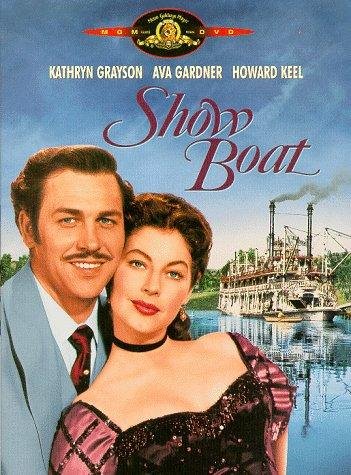
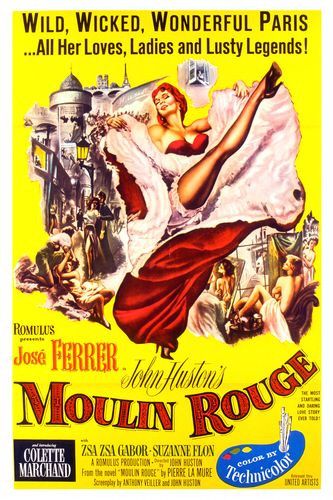
On display will be iconic costumes, posters and props from Academy Award-winning film classics including “Gone with the Wind,” “Show Boat,” “The Yearling” and “Moulin Rouge,” as well as costumes worn by icons such as Monroe, Frank Sinatra, Katharine Hepburn, Bette Davis, Carmen Miranda and Doris Day. Film clips will accompany the items.

Reynolds’ collection will stay at the Paley Center throughout 2011; additional items will be added each month. The first-floor viewing is free of charge. Admission to the second-floor space is free to Paley Center members and $6 for the general public. Visitors will also have access to the center’s media archive featuring more than 150,000 programs spanning the history of television, radio and digital media.