‘Sunday Best: The Untold Story of Ed Sullivan’ documentary reveals host’s hidden depths and courageous stance

Today’s consumers of pop culture and infotainment might not have vivid memories of iconic TV host Ed Sullivan, given that he died more than 50 years ago, at age 73, on Oct. 13, 1974 (about 2,000 people attended his funeral at St. Patrick’s Cathedral in New York). That said, he made his mark so deeply and was so famous in his day that even people who were too young to watch “The Ed Sullivan Show,” which ran on CBS from 1948-1971, nevertheless recognize his place in showbiz history.

Not that he was a king of cool. Just the opposite – in fact, he came across as staid, old-fashioned and a bit of a fuddy-duddy, particularly with the advent of rock ‘n’ roll. But the show was still the place to reach mainstream America. When the Beatles appeared on the variety show on February 9, 1964, they drew a record-breaking 73 million viewers.
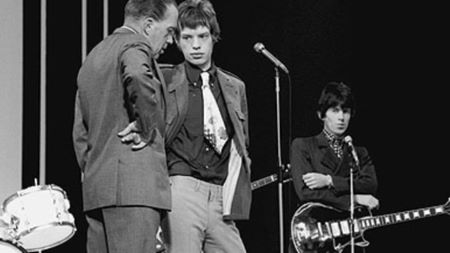
Ed Sullivan talks with Mick Jagger while Keith Richards (right) looks on. When the Rolling Stones performed on the show, Mick found a way to express himself without getting on Sullivan’s bad side. Hence, the Stones were invited back to the show.

Several rock performers made appearances during which they went against the grain – delighting the audience and drawing Sullivan’s ire. Before singing “Light My Fire,” Jim Morrison and the Doors indicated that Morrison would accept Sullivan’s request to substitute “girl, we couldn’t get much better” for “girl, we couldn’t get much higher.” On air, Morrison stuck to his original lyrics. Scandalous! Prior to the Rolling Stones’ appearance, they were told to change “let’s spend the night together” to “let’s spend some time together.” Mick Jagger complied but added a thick layer of sarcasm to his delivery. (To paraphrase Jagger, it wasn’t that what they were doing was especially shocking, it was that people at that time were easily shocked.)

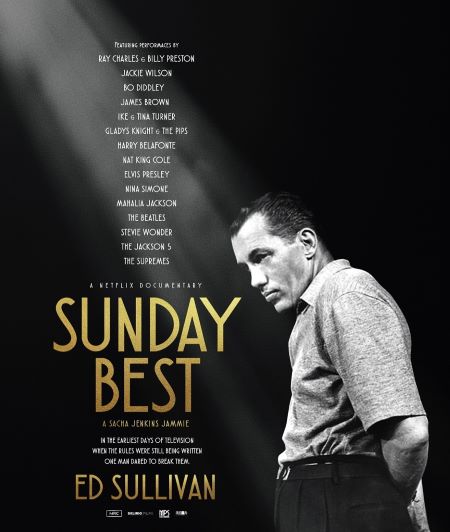
The times were definitely changing. But even before those milestones, Sullivan was changing the course of entertainment in America with his commitment to racial equality and his determination to book Black artists on his show – something that was extremely rare in TV’s early years and an aspect of Sullivan’s character that’s not well remembered today. A fascinating documentary “Sunday Best: The Untold Story of Ed Sullivan” directed by the late Sacha Jenkins highlights the lasting impact Sullivan made by challenging the norms of the day and introducing top-tier artists to the country and the world.

“Sunday Best” showcases performances from Sullivan’s guests, including Mahalia Jackson, Nat King Cole, Elvis Presley, Harry Belafonte, Ray Charles & Billy Preston, The Beatles, Ike & Tina Turner, Bo Diddley, Jackie Wilson, James Brown, Diana Ross & the Supremes, Gladys Knight & the Pips, Nina Simone, Stevie Wonder, and The Jackson 5. There are also clips of guests Cab Calloway, Ella Fitzgerald, Lena Horne, Louis Armstrong, Bill “Bojangles” Robinson, Sammy Davis Jr., and others.
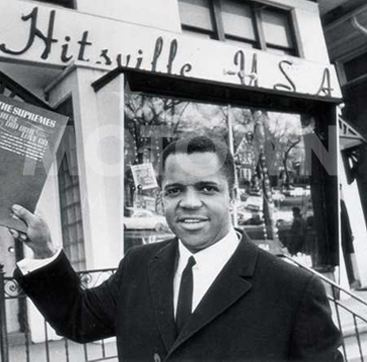
Photo by Tony Spina, Detroit Free Press
Outside Hitsville USA in 1964, Berry Gordy, Detroit native and founder of Motown Records, shows off The Supremes’ “Where Did Our Love Go.”

Numerous interviews with luminaries like Berry Gordy, founder of Motown Records in Detroit, help to put Sullivan’s fighter’s stance (and the risks he took by standing up to CBS and its sponsors) into context. “With Ed, everything changed,” said Gordy. “He seemed to be fearless.”

On the surface, Sullivan was an unlikely choice for such a prime slot in the CBS lineup. He was not a handsome gladhander or a slick showman. As the documentary points out, Sullivan was pilloried by the press for his lugubrious demeanor, stone-faced expression and sour-looking smile.

But he took the role seriously and brought to the job the skills he’d acquired as a journalist. Growing up in a poor but tightknit family in Harlem (at that time residents were mostly Irish and Jewish), he knew early on he wanted to be a writer. Eventually he became a sports reporter and editor, and developed an eye for identifying and describing the unique traits of great athletes.

After working at many newspapers, by the early 1930s, he was the Broadway columnist at the New York Daily News (and had a fierce rivalry with Walter Winchell). Sullivan worked hard to find the best up-and-coming entertainers (often visiting Harlem clubs) and was extremely confident in his critical judgment of talent. Also, he lauded TV’s ability to give everyone in the audience a front-row seat to a superb performance.
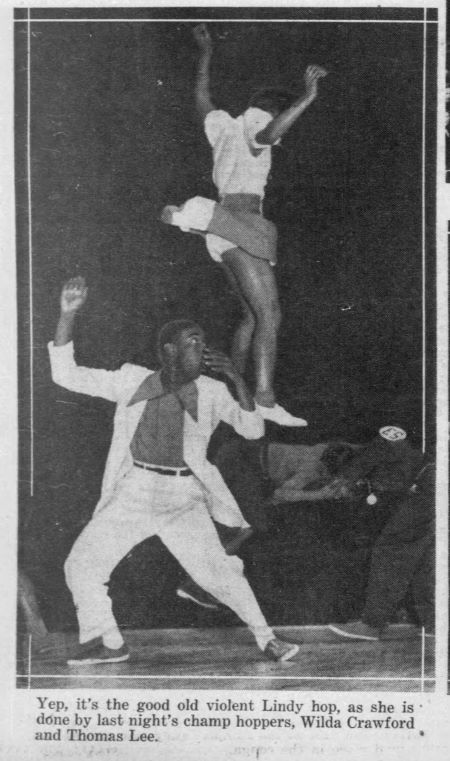
Wilda Crawford and Thomas Lee were the 1940 Lindy Hop dance winners at the Harvest Moon Ball amateur dance competition, which was held annually in NYC.

While still writing his column, he gave radio broadcasts and starred in the 1933 film “Mr. Broadway.” In 1947, CBS televised the Harvest Moon Ball, an amateur dance competition held annually in New York, and Sullivan was the master of ceremonies. The next year, he was selected to host “Toast of the Town” (later renamed “The Ed Sullivan Show”).

By that time, he’d developed a singular stage presence that was dry, straightforward and sincere without being star-struck or sycophantic. “On TV, I’ve been myself and it’s the only thing that saved me,” he said.

In breaking racial barriers, he credited his parents, especially his father, whom he described as sensible and courageous. As Irish immigrants, they’d faced prejudice and ignorance, and were quick to defend an underdog.

“Sunday Best” also gives a glimpse into Sullivan’s personal life. He clearly adored his wife Sylvia and their only child, a daughter named Betty; they were equally devoted to him. Their elegant apartment in the Delmonico Hotel on Park Avenue was packed with photos and other mementos, such as a pair of shoes that had belonged to Bill “Bojangles” Robinson.

By the time Sullivan’s show hit its 20-year mark, the mood and mores in America were far different than they’d been at the time of the program’s launch. The show slowly lost popularity and began to sink in the ratings. Sullivan was angry when in 1971 CBS canceled the show, but he hosted a 25th anniversary special in June 1973.

Though Sullivan could be dictatorial, short-tempered and thin-skinned, his equanimity usually won out. Toward the end of his life, he said, “I had a good long run. I put a good fight for what I believed in. And I have no complaints at all.”

“Sunday Best: The Untold Story of Ed Sullivan” was recently released on Netflix.

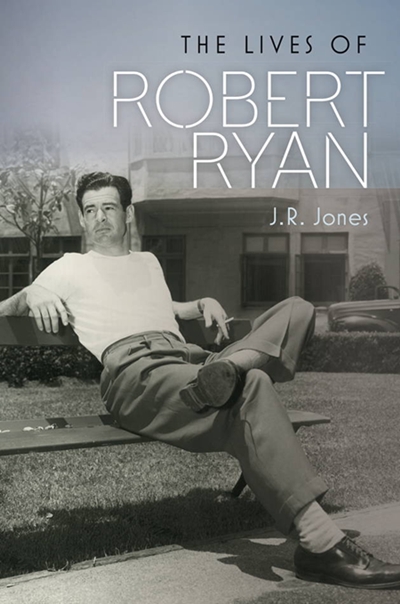
Robert Ryan author J.R. Jones to appear at Larry Edmunds Bookshop in conversation with Film Noir Blonde

Robert Ryan exuded masculinity and mystery in equal parts and he’s always been one of my favorite film noir actors. He could easily play a good guy but his forte was for those tormented, enigmatic characters, who were dark and volatile, moody and quick-tempered.

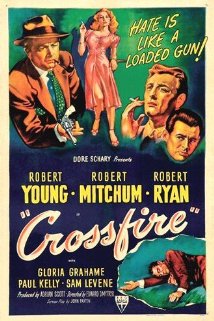
Robert Ryan book coverRemember him as an embittered vet in “Act of Violence,” (1948, Fred Zinnemann), where he co-starred with Van Heflin, Janet Leigh and Mary Astor? He made his mark the previous year as a vicious bigot in “Crossfire” (1947, Edward Dmytryk) with Robert Young, Robert Mitchum and Gloria Grahame.

He was unforgettable as the over-the-hill boxer fighting his last fight in “The Set-Up” (1949, Robert Wise) with Audrey Totter, and as the tormented cop in “On Dangerous Ground” (1952, Nicholas Ray) with Ida Lupino. In 1959, playing another bigot, Ryan again worked with Wise in the classic heist movie “Odds Against Tomorrow” which also starred Harry Belafonte, Gloria Grahame and Shelley Winters.

Not to mention “The Naked Spur,” “Bad Day at Black Rock,” “God’s Little Acre,” “Billy Budd,” “The Dirty Dozen,” The Wild Bunch” and “The Iceman Cometh.”

So, I am very excited to announce that I will be talking with Chicago-based author J.R. Jones about his new book, “The Lives of Robert Ryan,” at 12:30 p.m. on Saturday, May 16, at Larry Edmunds Bookshop in Hollywood.

“Crossfire” was the film that put Robert Ryan on the map.

“Crossfire” was the film that put Robert Ryan on the map.

According to Amazon: “The Lives of Robert Ryan” provides an inside look at the gifted, complex, intensely private man whom Martin Scorsese called “one of the greatest actors in the history of American film.”

The son of a Chicago construction executive with strong ties to the Democratic machine, Ryan became a star after World War II. … His riveting performances expose the darkest impulses of the American psyche during the Cold War.

At the same time, Ryan’s marriage to a liberal Quaker and his own sense of conscience launched him into a tireless career of peace and civil rights activism that stood in direct contrast to his screen persona. Drawing on unpublished writings and revealing interviews, film critic J.R. Jones deftly explores the many contradictory facets of Robert Ryan’s public and private lives, and how these lives intertwined in one of the most compelling actors of a generation.

Larry Edmunds Bookshop is at 6644 Hollywood Blvd., Los Angeles, CA, 90028, 323-463-3273.

The Film Noir File: Belafonte and Ryan bet it all on ‘Odds’

By Film Noir Blonde and Mike Wilmington

The Noir File is FNB’s guide to classic film noir, neo-noir and pre-noir from the schedule of Turner Classic Movies (TCM), which broadcasts them uncut and uninterrupted. The times are Eastern Standard and (Pacific Standard).

Pick of the Week

“Odds Against Tomorrow”
(1959, Robert Wise). 1 a.m. (10 p.m.) Monday, Jan. 20

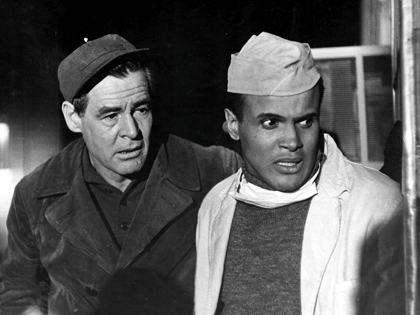
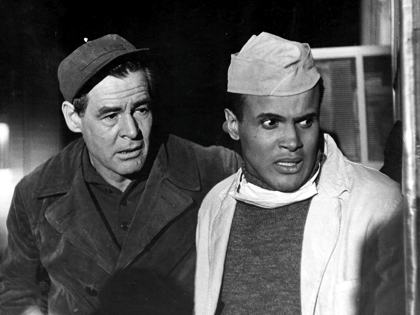
Robert Ryan and Harry Belafonte lead a stellar cast in "Odds Against Tomorrow."

Robert Ryan and Harry Belafonte lead a stellar cast in “Odds Against Tomorrow.”

Here is one of the great, underrated film noirs – a movie whose reputation and stature was recognized early on by French critics and has continued to grow over the past half century.

Based on a novel by suspense specialist William McGivern (“The Big Heat”), “Odds Against Tomorrow” boasts a riveting and exciting story, unforgettable characters and a social/political allegory that’s pointed and powerful. With Harry Belafonte, Robert Ryan, Shelley Winters and Gloria Grahame. Read the full review here.

Thursday, Jan. 16

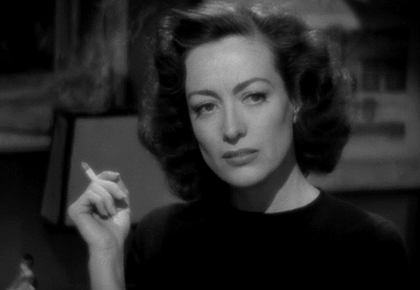
Joan Crawford plays a crime boss in this remake of a 1939 Swedish thriller.

Joan Crawford plays a crime boss in this remake of a 1939 Swedish thriller.

12:30 a.m. (9:30 p.m.): “A Woman’s Face” (1941, George Cukor). A crime boss (Joan Crawford) with a ruined face has her physical damage repaired by plastic surgery. Embarking on another crime, she must decide whether to pursue the evil she knows or the good that beckons. Remade from the 1939 Swedish thriller by director Gustaf Molander, with Ingrid Bergman in Crawford’s part. The original was better, but the remake is good. The supporting cast includes Melvyn Douglas, Conrad Veidt (in his Hollywood specialty, a smooth sadistic villain), Reginald Owen, Marjorie Main and Henry Daniell. Script by Donald Ogden Stewart and mystery writer Elliot Paul.

4:15 a.m. (1:15 a.m.): “These are the Damned” (1963, Joseph Losey). Expatriate American director Losey, a Black List victim, was still in Britain when he made this scintillatingly shot mix of neo-noir, juvenile delinquent thriller, and “Village of the Damned”-style anti-war science fiction. MacDonald Carey is the boat enthusiast/ businessman at a coastal British city, who falls for a Teddy Girl (Shirley Anne Field). Her gang-boss brother (played by sullen young Oliver Reed) is touchy, jealous and dangerous. Chased by the gang (whose signature song is the bizarrely uncatchy psychotic-sounding pseudo-rock ballad “Black Leather! Black Leather! Kill! Kill! Kill!”), the couple escapes to an island in the grip of a doomsday scientific experiment with irradiated children, run by Alexander Knox. It’s a pretty crazy show, but it really grips you, and it looks great. Written by Losey regular Evan Jones (“Eva” and “King and Country”).

Saturday, Jan. 18

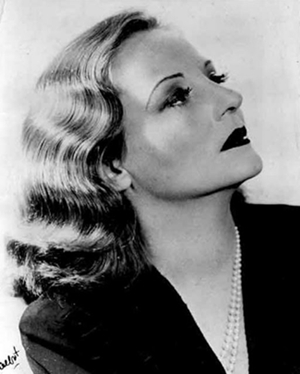
The one and only Tallulah Bankhead stars in "Lifeboat."

The one and only Tallulah Bankhead stars in “Lifeboat.”

8 p.m. (5 p.m.): “Lifeboat” (1944, Alfred Hitchcock). During World War II, an American ocean liner is torpedoed by a Nazi submarine. The survivors – now trapped in the lifeboat and in the vast waters – have to decide whether to trust the only person among them who knows how to navigate the boat: the Nazi captain of the sub that sunk them (Walter Slezak). This anti-Fascist parable/thriller and character study, the most political and left-wing movie Alfred Hitchcock ever made, was originally written by John Steinbeck; Ben Hecht and Jo Swerling also had hands in it. Shot basically in one studio tank and in the lifeboat, this underrated flick features a shocker of an ending and a first-rate cast, including Tallulah Bankhead, John Hodiak, William Bendix, Canada Lee, Hume Cronyn and Henry Hull.

Sunday, Jan. 19

6 a.m. (3 a.m.): “The Two Mrs. Carrolls” (1947, Peter Godfrey). With Humphrey Bogart, Barbara Stanwyck and Alexis Smith. Reviewed in FNB on June 27, 2012. [Read more…]

The Noir File: Belafonte and Ryan in ‘Odds Against Tomorrow’

By Michael Wilmington & Film Noir Blonde

The Noir File is FNB’s guide to classic film noir, neo-noir, and pre-noir on cable TV. All movies below are from the schedule of Turner Classic Movies (TCM), which broadcasts them uncut and uninterrupted. The times are Eastern Standard and (Pacific Standard).

PICK OF THE WEEK

Robert Ryan and Harry Belafonte lead a top cast in “Odds Aganist Tomorrow.”

Odds Against Tomorrow” (1959, Robert Wise). Tuesday, Jan. 15, 2:15 a.m. (11:15 p.m.). Here is one of the great, underrated film noirs – a movie whose reputation and stature was recognized early on by French critics and has continued to grow over the past half century.

Directed by Robert Wise, and based on a novel by suspense specialist William McGivern (“The Big Heat“), “Odds Against Tomorrow” boasts a riveting and exciting story, unforgettable characters and a social/political allegory that’s pointed and powerful.

Three mismatched New Yorkers – genial, corrupt ex-cop Dave (Ed Begley), brutal ex-con Earl (Robert Ryan) and reckless Johnny (Harry Belafonte), a nightclub entertainer with huge gambling debts – join forces for an upstate bank robbery, a well-planned heist that will supposedly solve all their money problems. But the problems are just beginning. Earl is a racist who hates Johnny on sight and Johnny has a short fuse as well. Things begin to unravel, then explode.

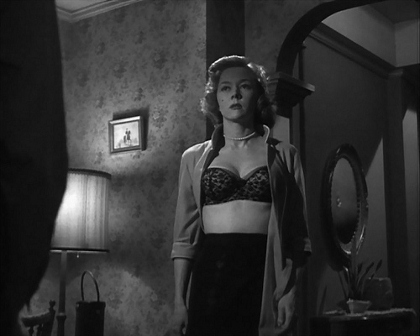
Gloria Grahame plays an extra-friendly neighbor.

Ryan’s performance is a scorcher; he‘s a perfect villain, bad to the bone. Belafonte’s is compelling and non-clichéd. (He was also one of the producers.) Begley’s is jovial but poignant, a Willy Loman-like salesman peddling his own destruction. The women in the case, a pair of bad blondes – Shelley Winters as Earl’s whining wife and Gloria Grahame as his slutty neighbor – are top-notch.

French noir master Jean-Pierre Melville named “Odds Against Tomorrow” as one of his three all-time favorite movies; the other two were: “The Asphalt Jungle” and “The Best Years of Our Lives.” Along with the 1949 boxing classic “The Set-Up” (which had Ryan in a sympathetic role, as the aging fighter) this is the best of Wise’s crime movies. The screenplay was mostly by the uncredited and blacklisted Abraham Polonsky (“Force of Evil“). The original jazz score is by John Lewis and the Modern Jazz Quartet. The atmospheric black and white cinematography is by Joseph C. Brun (“Edge of the City”).

Tuesday, Jan. 15

10 a.m. (7 a.m.): “Deadline at Dawn” (1946, Harold Clurman). With Susan Hayward and Paul Lukas.

Wednesday, Jan. 16

8 p.m. (5 p.m.) : “Cry Danger” (1951, Robert Parrish). Fast, breezy revenge yarn, with Dick Powell looking for payback, and Rhonda Fleming, William Conrad and William Erdman standing by.

12:45 a.m. (9:45 a.m.): “The Breaking Point” (1950, Michael Curtiz). With John Garfield and Patricia Neal.

2:30 a.m. (11:30 p.m.): “The Prowler” (1951, Joseph Losey). With Van Heflin and Evelyn Keyes.

Cary Grant and Ingrid Bergman

Friday, Jan. 18

4 p.m. (1 p.m.): “Notorious” (1946, Alfred Hitchcock). With Cary Grant, Ingrid Bergman and Claude Reins.

Saturday, Jan. 19

10:45 a.m. (7:45 a.m.): “The Big Knife” (1955, Robert Aldrich). Clifford Odets’ backstage Hollywood shocker of a play is like a faceful of acid, and director Aldrich pulls no punches. Jack Palance is the beleaguered movie star Charlie Castle; surrounding him in an infernally corrupt studio system are Ida Lupino, Rod Steiger, Shelley Winters and Everett Sloane.

8 p.m. (5 p.m.): “Lolita” (1962, Stanley Kubrick). With James Mason, Sue Lyon and Peter Sellers.

3 a.m. (12 a.m.): “I Died a Thousand Times” (1955, Stuart Heisler). Color and Cinemascope remake of the Raoul WalshHumphrey BogartIda Lupino gangster saga “High Sierra,” with the original stars replaced by Jack Palance and Shelley Winters. Inferior, but not awful. With Lee Marvin in his snarl mode.

Hitchcock blends noir, Americana in ‘Shadow of a Doubt’

By Michael Wilmington and Film Noir Blonde

A guide to classic film noir and neo-noir on cable TV. All the movies below are from the current schedule of Turner Classic Movies (TCM), which broadcasts them uncut and uninterrupted. The times are Eastern Standard and (Pacific Standard).

PICK OF THE WEEK

Shadow of a Doubt” (1943, Alfred Hitchcock). Thursday, Oct. 4, 3:15 a.m. (12:15 a.m.)

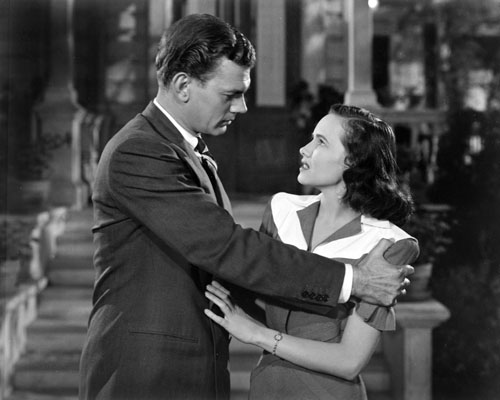
A bright and beautiful small town girl named Charlotte “Charlie” Newton (Teresa Wright) is bored, bored with her well-ordered home in her pretty Norman Rockwellish little city of Santa Rosa, Calif., – where trees line the sunlit streets, everyone goes to church on Sunday, and lots of them read murder mysteries at night. Charlie has more exotic dreams. She adores her globe-trotting, urbane Uncle Charlie Oakley (Joseph Cotten) – for whom she was nicknamed – and is deliriously happy when he shows up in Santa Rosa for a visit.

Joseph Cotten and Teresa Wright play kindred spirits, sort of, in “Shadow.”

But Uncle Charlie has some secrets that no one in his circle would guess – not Uncle Charlie’s adoring sister (Patricia Collinge), nor his good-hearted brother-in-law (Henry Travers), nor their mystery-loving neighbor Herbie (Hume Cronyn), nor Charlie herself. Uncle Charlie, who conceals a darker personality and profession beneath his charming persona, is on the run, pursued by a dogged police detective (Macdonald Carey), who suspects him of being a notorious serial killer who seduces rich old widows and kills them for their money. As handsome, cold-blooded Uncle Charlie, Cotten, who also called “Shadow” his personal favorite film, is, with Robert Walker and Anthony Perkins, one of the three great Hitchcockian psychopaths.

“Shadow of a Doubt,” released in 1943, was Hitchcock’s sixth American movie and the one he often described as his favorite. As he explained to François Truffaut, this was because he felt that his critical enemies, the “plausibles,” could have nothing to quibble about with “Shadow.” It was written by two superb chroniclers of Americana, Thornton Wilder (“Our Town”) and Sally Benson (“Meet Me in St. Louis”), along with Hitch’s constant collaborator, wife Alma Reville. The result is one of the supreme examples of Hitchcockian counterpoint: with a sunny, beguiling background against which dark terror erupts.

Saturday, Sept. 29

8 p.m. (5 p.m.): “The Fallen Idol” (1948, Carol Reed). In 1948, a year before they made the nonpareil thriller “The Third Man,” director Carol Reed and screenwriter Graham Greene collaborated on another tilted-camera film-noir classic: this mesmerizing story of a little French boy (Bobby Henrey), a French diplomat’s son, who hero-worships the embassy butler (Ralph Richardson), but mistakenly comes to believe his idol has murdered his wife, and keeps unintentionally incriminating him. With Michele Morgan, Jack Hawkins and Bernard Lee – and stunning cinematography by Georges Perinal.

Sunday, Sept. 30

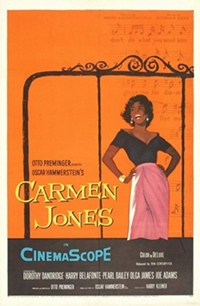
12 p.m. (9 a.m.): “Carmen Jones” (1954, Otto Preminger). From Georges Bizet’s great, tuneful, massively popular opera, based on Prosper Merimee’s novel about a lusty cigarette girl and the soldier who is obsessed with her, unwisely: A compelling noir musical, with an African-American cast (headed by Dorothy Dandridge as femme fatale Carmen and Harry Belafonte as soldier Joe), lyrics and libretto by Oscar Hammerstein II, and direction by Otto Preminger. The rest of the cast includes Pearl Bailey, Diahann Carroll and Brock Peters.

Monday, Oct. 1

2 p.m. (11 a. m.): “The Fortune Cookie” (1966, Billy Wilder). Billy Wilder, mastermind of that quintessential film noir “Double Indemnity,” comes up with another ingenious insurance swindle in this dark, very funny comedy noir. Jack Lemmon is Harry Hinkle, a likable pro- football TV cameraman who is run down before millions of spectators on a punt return. Walter Matthau won the Oscar playing Harry’s brother-in-law, a sneaky, cynical, loot-smelling lawyer.

Thursday, Oct. 4

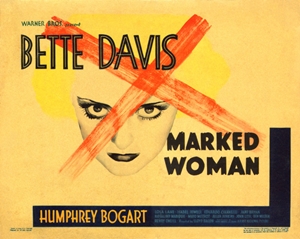
1:30 a.m. (10:30 p.m.): “Marked Woman” (1937, Lloyd Bacon). Bette Davis plays a feisty “hostess” and Humphrey Bogart plays a crusading D. A. Together with Bette’s pals, other “hostesses” (aka ladies of the evening), they go up against the mob, in this feminist pre-noir crime classic, co-scripted by Robert Rossen. Based on a famous real-life New York City prostitution case. The Bogart and Eduardo Ciannelli characters are modeled on Thomas Dewey and Lucky Luciano. With Lola Lane, Allen Jenkins and Mayo Methot (Mrs. Bogart).