Film noir gifts for the holidays: Makeup and fragrance

Bulletproof notes include tea, woods and cedar.

With socializing and chic travel in full swing, you may be looking for a few new additions to your makeup bag or stand-out presents for your beauty-addict chums. Here are my suggestions.

Tailor-made for wicked women is Tokyo Milk’s Femme Fatale collection, eight new fragrances with names like Crushed, Excess, Arsenic and, my favorite, Bulletproof. Fragrance notes too are uncommon: smoked tea, coconut milk, crushed cedar and ebony woods define Bulletproof, for instance. And the design is divine!

A three-piece Femme Fatale set runs $65 and includes 2 ounces of eau de parfum, 3.4 ounces of shea-butter hand cream and one .70 ounce lip elixir/balm. You can also buy items individually. (The photo shows two versions of the hand cream.)
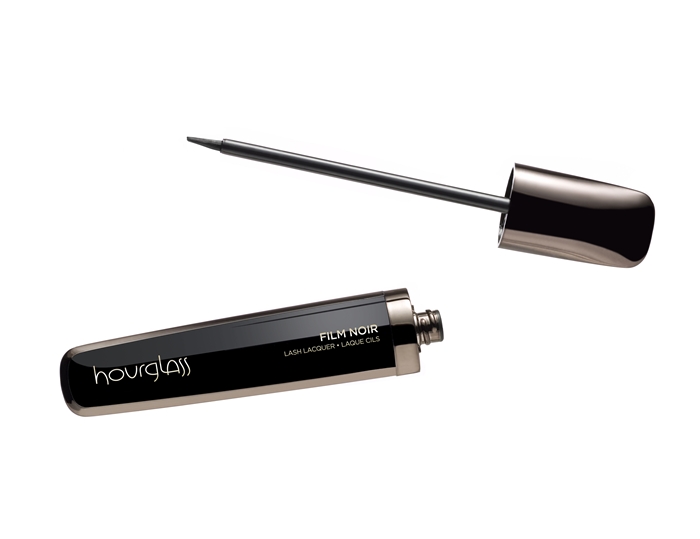
No-fuss drama by Hourglass.

Dior plays the blues.

Hourglass Film Noir Lash Lacquer, $28. Take your look up a notch for nighttime by creating high-drama eyes. Like gloss for the lashes, this Vitamin E-enriched lacquer can be worn alone or over mascara to add a little (or a lot of) shine. “The results are stunning, almost cinematic,” says Hourglass CEO and founder Carisa Janes.

OK, so frosty blue became a hideous icon of the ’70s. But midnight blue has always given inky black a run for its money. Look at the gorgeous color in Dior Blue Tie Essentials and you’ll see why. The gleaming chunky container also houses a square of pretty pink lip color. Regularly $70, this is selling online for $40, but is going fast! Try Bloomingdale’s.

Metallics, martinis. Life's good.

Lancome's lovely set.

Pressed for time? Add instant glitz with a quick metallic dusting on your brow bones and cheekbones with Bobbi Brown’s Martini Shimmer Brick, $40. Also makes a festive gift for a friend.

Hypnôse Drama mascara is the star of this four-piece set from Lancôme, selling at Nordstrom for $29.50 ($68 value). That said, the amazing eye-makeup remover very nearly steals the show and I’m so excited to find it in a travel size! The set includes:

Hypnôse Drama mascara in Excessive Black
– Travel-size Cils Booster XL mascara base
Le Crayon khol eyeliner in Black Ebony
– Travel-size Bi-Facil Double-Action eye-makeup remover (1.7 ounces).
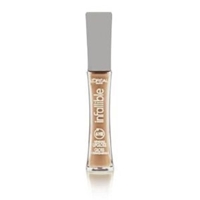
L’Oréal Infallible gives a soft sheen and lasts several hours.
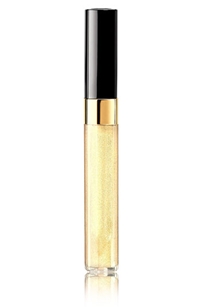
Chanel's coveted gloss.

Smoky eyes call for subtle lips and L’Oréal Infallible lip gloss, $12, does the trick. Designed to last for six hours, it’s also a lip plumper. For me, Infallible hasn’t quite lasted the full six hours but it’s easy to apply, feels good on, and comes in a bunch of cool colors. Shown here is Suede.

Chanel’s holiday 2011 collection is breathtaking! You’ll find there’s much to covet and, if struggling to decide, you can’t go wrong with Glossimer lip gloss in Sparkle D’Or, $28.50. On its own or over a red lipstick, Glossimer is sleek, smooth and vibrant.
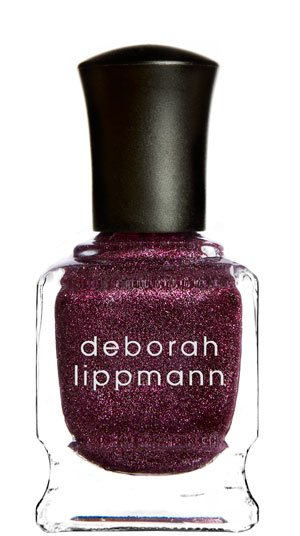
Being good is so overrated.
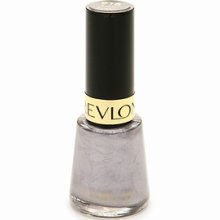
Be red-carpet ready with Revlon's Silver Screen.

Want to inject more zest into your office holiday party? Mix it up a little with Good Girl Gone Bad nail polish by Deborah Lippmann, $16. Or choose from the new holiday shades, which are “dripping in glittery excess,” as noted on her company’s site. Gotta love that this time of year, no?

I also love Lippmann’s success: she started her own line of products in 1998 after her flair for nails and color caught on with celebrities and fashion houses (Versace, Valentino, Balenciaga, Donna Karan and Zac Posen).
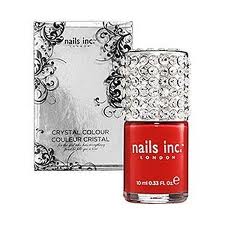
A stunning red by Nails Inc.

Revlon Silver Screen polish, $6, is a versatile metallic that picks up tints of pewter, shiny gray and muted lavender depending on the light. I can’t find this shade on Revlon’s site, which I found plodding and cumbersome, so I would suggest buying it at your local drug store.

Need a gift for your mani-pedi buddy? Try Nails Inc. London polish in Charing Cross – an irresistible red that Santa’s elves must be scurrying to stock. Company founder Thea Green was honored in June with a MBE (Member of the Order of the British Empire) for her outstanding contribution to the beauty industry. This polish is $19.50 at Sephora.
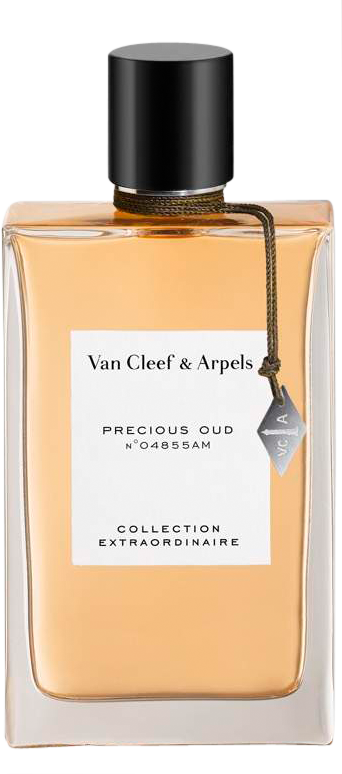
Precious Oud is a perfect holiday splurge.
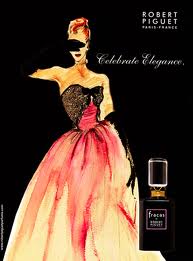
Fracas evokes vintage charm.

Tuberose, jasmine, jonquil, lily of the valley, white iris and pink geranium – must be Fracas, the classic fragrance by Robert Piguet, a legendary French designer who mentored Hubert de Givenchy and Christian Dior among others. Said Dior: “Robert Piguet taught me the virtues of simplicity through which true elegance must come.”

Neiman Marcus is selling Fracas sets (3.4-ounce eau de parfum spray and a 6.5-ounce body lotion) for $120. It’s a super deal because that’s the usually the price for the eau de parfum alone.

Such a pretty bottle and an uncommonly sophisticated, slightly exotic, scent (spicy florals with vetiver, wood and patchouli): Precious Oud eau de parfum by Van Cleef & Arpels, $185, at Neiman Marcus.

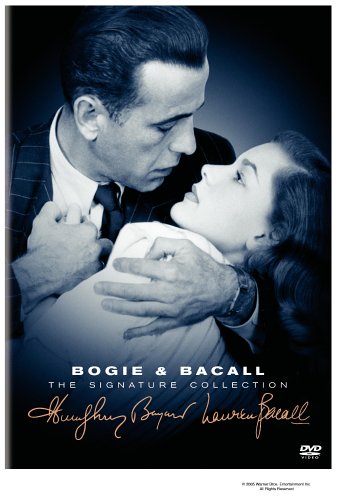
Free stuff from FNB: Win four Bogie and Bacall movies!

The Humphrey Bogart and Lauren Bacall set features four great movies.

I have a great Christmas-bonus giveaway this month: The Bogie & Bacall Signature Collection DVD set. The set includes these thriller/film-noir classics from the 1940s:

“To Have and Have Not,” 1944, by director Howard Hawks

“The Big Sleep,” 1946, Howard Hawks

“Dark Passage,” 1947, Delmer Daves

“Key Largo,” 1948, John Huston

(Anita is the winner of the November reader giveaway, Criterion’s DVD edition of “The Killers.” Congrats to Anita and thanks to all who entered!)

To enter the December giveaway, just leave a comment on any FNB post from Dec. 1-31. The winner will be randomly selected at the end of the month and announced in early January. Include your email address in your comment so that I can notify you if you win. Your email will not be shared.

McQueen paints harrowing portrait of addiction in ‘Shame’

Steve McQueen and Michael Fassbender

“Shame” by London-born writer/director Steve McQueen is a searing study of a man, both buttoned-up and out of control, obsessively seeking oblivion and teetering on the edge of disaster. A sex addict perpetually on the outside looking in, he lives solely for his next physical encounter.

On the surface, the laconic, hauntingly good-looking Brandon (Michael Fassbender) seems very much together. His colleagues like and respect him, he lives in a stylish Manhattan apartment, women are easily drawn to him.

His sister Sissy (Carey Mulligan), a struggling singer, is not faring as well and lands on his doorstep because she has nowhere else to live. Starting with Brandon finding Sissy in his shower, the two begin a tense co-existence. Brandon attempts to keep his porn, rooftop trysts and hotel hookups private, but we sense Sissy is completely up to speed on his compulsion; she tries half-heartedly to curb her own partying and sleeping around.

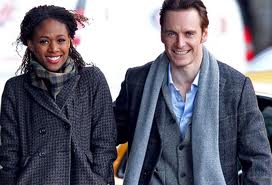
Whereas Brandon strips any feeling from his encounters (the one exception is a colleague he courts, the ethereally pretty and warm-hearted Marianne, played by Nicole Beharie), Sissy is the opposite, fiercely clinging to whoever will buy her champagne and share her bed for a night. Sissy’s mounting desperation eventually forces Brandon to confront his self-destructive compulsion.

With muted emotion and spare dialogue, McQueen, who wrote the screenplay with Abi Morgan, implies more than he tells but we know with certainty that Brandon and Sissy’s history is rooted in pain and deep dysfunction. The scene in which Brandon and his boss (James Badge Dale) come to hear Sissy sing at a club – she performs a wrenchingly sad version of “New York, New York” – flawlessly conveys their baggage and buried guilt.

McQueen, an acclaimed artist and director of 2008’s prize-winning “Hunger,” which also starred Fassbender, heightens the mood of numb despair by using long takes, cool tones and stark lighting. Toward the end, in bed with two women, Brandon’s anguished face tinged with yellow brings to mind a tortured figure in a Hieronymus Bosch painting, expunging any hint of sexiness or erotic allure.

Nicole Beharie and Michael Fassbender

Noirish shots of Brandon prowling New York streets at night reveal the energy he expends to shroud his life in secrecy and keep his emotions at bay.

There are many graphically raw scenes that earned the film a NC-17 rating and many are harrowing to watch. Harrowing, to be sure, but also moving – Mulligan and Fassbender are marvelously compelling in these roles that let them express uncommon depth and a mighty struggle. Beharie and Dale strike us as real people as opposed to stock types, yet they neatly suggest the general pattern of Brandon and Sissy’s superficial relationships.

To some extent, “Shame” follows in the tradition of “The Lost Weekend” and “The Man with the Golden Arm,” as well as “Last Tango in Paris,” but McQueen’s work seems broader, more resonant in our instant-gratification, must-have-it-now culture. Says Fassbender, “It speaks to this constant drive we have for satisfaction and highs, one that is followed by feelings of shame and self-loathing.”

“Shame” also speaks, in tough language, to vulnerability, damage, connection and love.

Tilda Swinton plays a beaten-down mother.

Also opening today (in a limited release) and very highly recommended: “We Need to Talk About Kevin” by Lynne Ramsay, a thriller in which neo noir meets New Age parenting. We witness, in jagged pieces that jump back and forth in time, the unthinkably brutal rupture of a dysfunctional but not entirely unhappy family.

Tilda Swinton plays a mother struggling to love her son Kevin (Ezra Miller) who comes into the world seething with anger. John C. Reilly plays her denial-prone husband. Though the script isn’t fully there and I just couldn’t buy Swinton and Reilly as a couple, this is nonetheless tour de force direction from Ramsay. I hope her vision and style are recognized during awards season.

Rich with visual metaphor, bold use of color and captivating performances, this is destined to be a neo-noir classic.

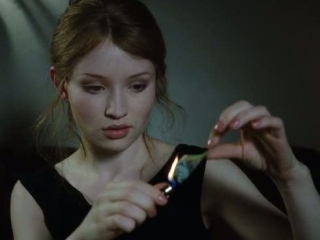
Emily Browning

In writer/director Julia Leigh’s erotic reworking of the fairy tale “Sleeping Beauty” we meet Lucy (Emily Browning), a perverse college student using her stunning looks to make a living in the sex industry.

Though I admired Browning’s performance, the movie was disappointingly sluggish and dull.

Honey, your December horoscope is here …

Julie Delpy

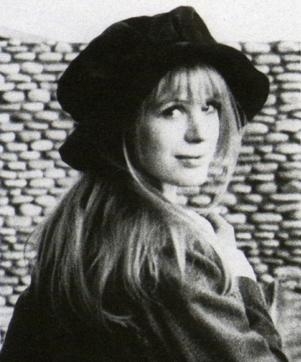
Marianne Faithfull

Fate reigns supreme in film noir, but that doesn’t mean we don’t love us some zodiac fun. Hope your December is full of expensive champagne, exquisite gifts and elegant entrances to parties. And happy birthday, Sagittarius and Capricorn! A special shout-out to Sag stars Julianne Moore (Dec. 3), Kim Basinger (Dec. 8), Julie Delpy (Dec. 21) and Vanessa Paradis (Dec. 22); and super-sexy Caps, the late Ava Gardner (Dec. 24), Sienna Miller (Dec. 28) and Marianne Faithfull (Dec. 29).

Sagittarius (November 23-December 22): Charismatic and funny, Sag values intelligence and fresh perspectives. Diligent portion control followed by triumphant shopping these last few weeks have been well worth the effort. You are being noticed even more than usual so try to be fair and carve out a little time for the slew of people wanting to socialize. That said, it’s a woman’s prerogative to change her mind. Remember that mid-month when you feel bound to do something simply because of a crossed conversational wire. A brilliant idea occurs to you around the 12th.

Capricorn (December 23-January 20): Possibility abounds now and in the New Year. Don’t concern yourself with what’s realistic, feasible or practical. There will be plenty of time for thorough scrutiny later on but, at this juncture, dream big and think boldly. It will come together one piece at a time. On the romantic front, you may be tempted by a coy boy; enjoy the dalliance without rushing into anything. If attached, celebrate your passion, hell, get creative. The holiday-party circuit will keep you extra busy and may open new doors. [Read more…]

Film noir feline stars: The cat in ‘Postman Always Rings Twice’

More on the most famous kitties in film noir

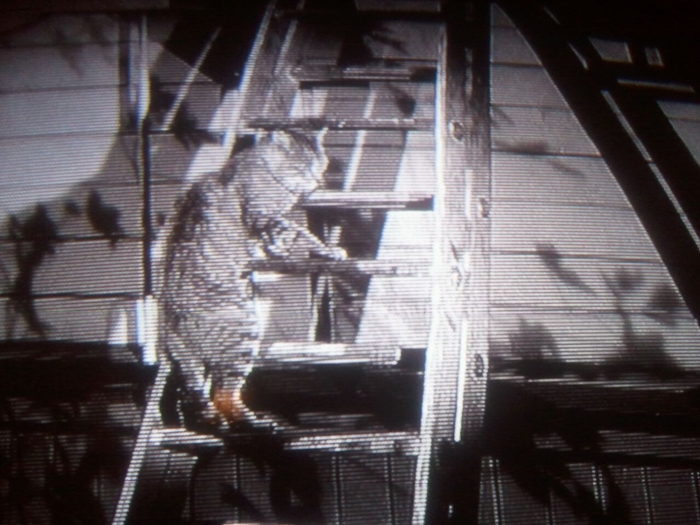
The Cat in “The Postman Always Rings Twice” 1946

Name: Sasha Pirster

Character Name: Curiosity

Though her screentime was brief, Sasha Pirster made a memorable impression in "Postman."

Bio: “I like cats, they’re always up to something,” says the motorcycle cop as he looks admiringly at a full-figured kitty climbing a ladder in “The Postman Always Rings Twice.” Directed by Tay Garnett and based on the famous novel by James M. Cain, “Postman” is a seminal film noir.

Sadly for Curiosity (Sasha Pirster), platinum blondes with nice legs are also always up to something. The blonde in this case is Cora (Lana Turner) who plots with her lover Frank (John Garfield) to kill her husband Nick (Cecil Kellaway). Curiosity is on screen only long enough to be noticed by the cop and make Frank nervous before she meets a rather brutal end.

The lovers’ first attempt to do away with Nick is staging an accidental drowning in a bathtub. But when the power fails, their plan is foiled and poor Curiosity, who happened to be an innocent bystander, is electrocuted. “I never saw a prettier cat,” says the cop. “It killed her deader’n’ a doornail.” This strange omen does not deter the killers in the least and they proceed to Plan No. 2.

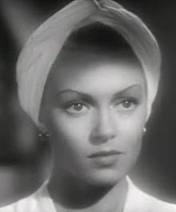
Lana Turner

Despite her character’s grim fate, feline actress Sasha Pirster was a joy to work with. Known for her wry one-liners and practical jokes (she was fond of offering cash rewards for mittens), Sasha was popular with both cast and crew.

In fact, Lana Turner was between husbands during the filming of this movie and the two actresses frequently went out on the town; their drink of choice was kahlua and cream. It was on one of these outings that Sasha met the love of her life, a wealthy fish merchant (well, ok, he was a fat cat) named Felix Kurllup, whom she married in 1947.

Sasha said goodbye to acting and became a homemaker; the couple had 13 children. After raising the kittens, she launched a popular line of turbans inspired by Turner’s elegant toppers in “Postman.”

Film noir bounty: Giving thanks for Fritz Lang, Joan Bennett, Edward G. Robinson and Dan Duryea

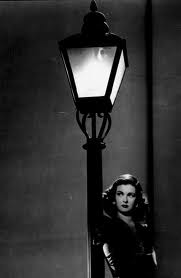
Joan Bennett

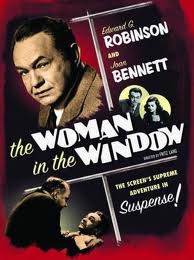
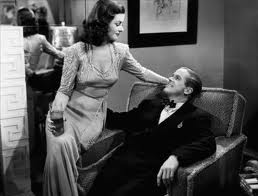
Hope you had a portion-control-be-damned! Thanksgiving. Feel like plopping onto the sofa for a noir double-feature? Treat yourself to a cinematic cornucopia – two films from director Fritz Lang with the same outstanding cast: Joan Bennett, Edward G. Robinson and Dan Duryea. “The Woman in the Window” from 1944 has Bennett juggling men, donning elegant frocks and downing cocktails.

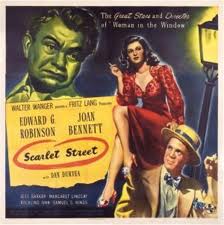
Even darker is 1945’s “Scarlet Street,” another noir love triangle, in which Bennett’s character, nicknamed Lazy Legs because she’s just not digging the whole 9 to 5 thing, decides that blackmail might not be as bad as it seems.

‘The Woman in the Window’ quick hit

The Woman in the Window/1944/Christie Corp./99 min.

The characters played by Joan Bennett, Edward G. Robinson and Dan Duryea, as directed by Fritz Lang, perfectly exemplify noir themes of fate, moral bankruptcy and sexual perversity. Robinson’s Professor Richard Wanley meets the beautiful Alice Reed (Bennett) by chance. He ends up committing a crime and they try to put it behind them. Making sure they can’t is a lowlife named Heidt (Duryea). Noir decadence at its finest.

A little bromance, a beautiful woman, a battle with Fate

The Woman in the Window/1944/Christie Corp./99 min.

When you least expect your life to unravel is exactly when your life will unravel, at least in a Fritz Lang film. Take “The Woman in the Window” from 1944. Professor Richard Wanley (Edward G. Robinson) lives a cozy bourgeois life – he gives lectures on Freud by day, enjoys after-dinner port and cigars by night. But by the end of this night, Richard will be covering up a murder.

Sipping and smoking with him at their Manhattan men’s club are his friends, District Attorney Frank Lalor (Raymond Massey) and Dr. Michael Barkstane (Edmund Breon), who’s fond of barking “Great Scott!”

Richard leaves the club after their booze-fueled yack-fest and lingers at the window of the art gallery next door. While he gazes at the creamy-skinned, raven-haired lady peering out from the canvas, another creamy-skinned, raven-haired lady materializes – it’s the model, a woman named Alice Reed (Joan Bennett).

Alice (Joan Bennett) is the woman in the painting Richard (Edward G. Robinson) and his friends admire.

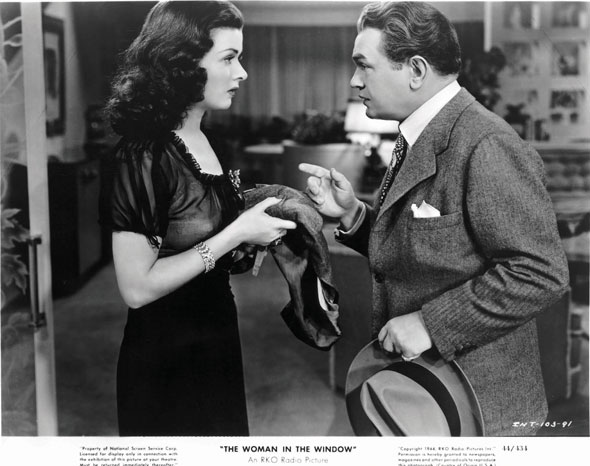
After chatting over drinks, she invites him back to her splendidly appointed place. Just as they’re getting to know each other, her flashy peacock boyfriend Claude Mazard (Arthur Loft) barges in. Clearly, Alice and Claude haven’t had that “Are we seeing each other exclusively?” talk and violence erupts.

Claude’s rumored “disappearance” doesn’t fool people for long – the cops are digging for info, Richard’s pals Frank and Michael chatter about the case endlessly, and a sleazy associate of Mazard’s named Heidt (Dan Duryea) sees a plum opportunity for blackmail.

Alice and Richard are randomly bound together.

Sharply written and brilliantly acted, “The Woman in the Window” proved a box-office hit. Nunnally Johnson produced the movie and wrote the script from the J.H. Wallis novel “Once Off Guard.” The movie’s original score, a group effort led by Arthur Lange and Hugo Friedhofer, received an Oscar nom.

Vienna-born Lang infuses the film with fatalism, despite its upbeat ending. “I always made films about characters who struggled and fought against the circumstances and traps in which they found themselves,” he said.

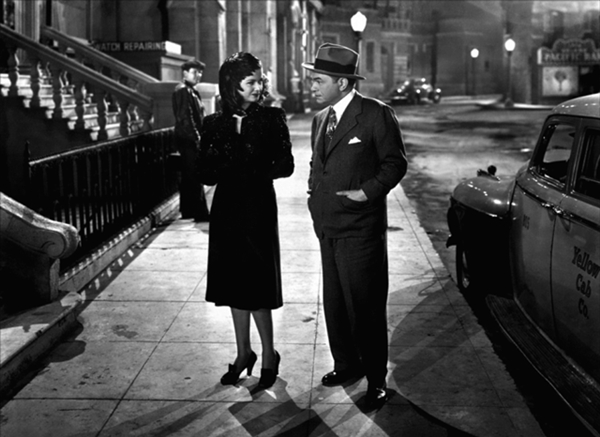
And, as usual, Lang pulls out all the visual stops, suggesting powerlessness, alienation and doom. A signature noir shot is Claude entering the shadowy lobby of Alice’s apartment building, against the backdrop of a lonely, rainy nightscape pierced by the glare of a neon clock. Later his body will be draped in more shadows, in the back seat of Richard’s car.

Alice sweet-talks Heidt (Dan Duryea).

Inside Alice’s pristine white apartment, mirrors splice and distort images, contributing to a fractured sense of reality. The effect may have helped inspire Orson Welles to create the fun-house mirrors sequence in 1948’s “Lady From Shanghai.”

Though he got typically great work from his actors, Lang also had a reputation for being difficult. But he clicked with Bennett. Maybe he appreciated the sacrifices she made for her art – a natural blonde, Bennett dyed her hair black. 😉 She also had lots of drama offscreen – she married four times and endured a scandal after her third husband, producer Walter Wanger, shot her lover in the groin. (Her second husband was producer Gene Markey).

Lang and Bennett made four (almost five) films together: another famous noir, 1945’s “Scarlet Street” (which also starts Robinson and Duryea, and is definitely the darker of the two), “Man Hunt” 1941, and “Secret Beyond the Door” 1948. Bennett also starred in “Confirm or Deny” 1941, but director Archie Mayo was brought in to replace Lang.

Johnny Depp

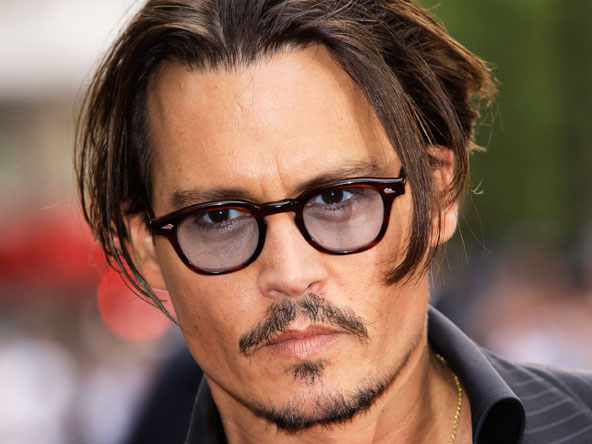
Later in her career, Bennett portrayed Elizabeth Collins Stoddard in the ’60s TV series “Dark Shadows” and she appeared in the 1970 movie “House of Dark Shadows.” The Collinses will hit the big screen again next spring in a Tim BurtonJohnny Depp collaboration.

The mood of “The Woman in the Window” is pure Lang, and much of that mood comes from the actors. Duryea convincingly plays a slimy loser while, in reality, he was a standup guy. It’s a testament to his versatility that Robinson, though famous for his tough gangster roles, is completely at ease as the innocent, cultured professor caught in a film-noir web.

Best of all is Bennett, noir to the nines, spinning that web.

‘Scarlet Street’ quick hit

Scarlet Street/1945/Fritz Lang Productions, Universal Pictures/103 min.

Joan Bennett, Edward G. Robinson and Dan Duryea regroup for more intrigue, manipulation and twisted love, having made “The Woman in the Window” with director Fritz Lang the year before. In this much darker flick, Christopher Cross (Robinson) is a bank employee who lets wannabe actress Kitty March (Bennett) think he’s a wealthy artist so she’ll give him the time of day. But that little fib is nothing compared with the con that her manager Johnny Prince (Duryea) has in mind. The sense of doom is almost palpable and you might wonder how Lang got this ending past the censors. Wry, stylish and very entertaining.

Langian gloom, love gone awry, Lazy Legs in ‘Scarlet Street’

Scarlet Street/1945/Fritz Lang Productions, Universal Pictures/103 min.

The 1945 film “Scarlet Street” was director Fritz Lang’s favorite in his American oeuvre. Screenwriter Dudley Nichols based the screenplay on Georges de La Fouchardière’s novel “La Chienne,” which also inspired Jean Renoir’s 1931 movie of the same name.

“Scarlet Street” stars the knock-out Joan Bennett as “actress”/call girl Kitty March, Dan Duryea as her sleazy cad “manager” Johnny Prince and Edward G. Robinson as kindly bank cashier and weekend painter Christopher Cross.

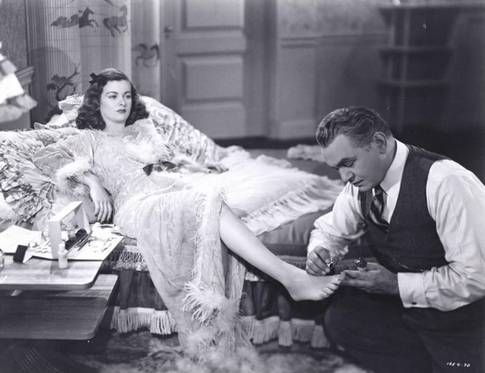
Kitty (Joan Bennett) tolerates dreary Chris (Edward G. Robinson) because she thinks he's loaded.

On a dark rainy street (natch) in Greenwich Village, Chris happens to walk by as Johnny is pushing Kitty around and manages to fend Johnny off. Kitty and Chris have a nightcap and he lets her think that he’s a well-established artist with money to burn, not a hobbyist with a day job. With a name like Chris Cross, the man is a magnet for mix-ups.

Kitty has hobbies too: drinking, smoking, lying on the sofa, eating bon-bons, and letting dirty dishes pile up in her sink. She’s tried modeling but getting to shoots on time is kind of a drag. Even though Johnny’s a jerk, his nickname for her, Lazy Legs, is spot on.

When Johnny learns of the alleged Mr. Moneybags, he decides Kitty can milk Chris for all he’s worth, then hand the proceeds to him. Chris, smitten with Kitty, caves every time she asks for money. He’s also keen on finding a way out of his miserable marriage to the shrewish and domineering Adele (Rosalind Ivan).

Eventually, however, Chris figures out he’s being scammed, at which point he swaps his paint brush for an ice pick and acts on his fury. Through lucky circumstance, he gets away with his crime – pretty much unheard of in ’40s Hollywood. But his residual, unrelenting guilt is perhaps more of a punishment than prison could ever be.

In Lang’s gritty pessimistic view, the harder Chris struggles to do the right thing, the fewer options he seems to have – the world is out to get him and it does. Lang uses high-contrast lighting and extreme-angle shots to set the mood of tension bordering on paranoia. But fear not, the movie is such an entertaining entanglement that it can’t be called a true downer.

A year before this flick, Lang directed the same three leads in a similar noir “The Woman in the Window.” Building on the rich talent and lively chemistry of his actors, with “Scarlet Street” Lang delves deeper into the psychic nightmare of a pawn caught in a trap.

Johnny (Dan Duryea) and Kitty (Joan Bennett) make plans, perhaps to go shopping for another ridiculous hat.

Bennett plays her role as effortlessly as a cat batting a piece of yarn. Duryea oozes unctuous badness and somehow makes his pimp’s wardrobe look perfectly plausible. Robinson, famous for playing tough-guy gangsters, turns that character type on its head and finds his simpering, submissive side, even donning an apron for his domestic scenes.

Considerably tamer and lighter, 1944’s “The Woman in the Window” was a box-office hit. The Spectator said of the movie: “Rarely has Art and Mammon been so prettily served.”

“Scarlet Street” remained loyal to Art and saw only middling commercial success, but many critics now consider it the superior of the two films. “The Woman in the Window” and “Scarlet Street” make a terrific double-bill regardless of whether you believe Art or Mammon makes the better master.