The Noir File: ‘The Set-Up’ is a highlight of Robert Ryan Day

By Michael Wilmington and Film Noir Blonde

The Noir File is FNB’s guide to classic film noir, neo-noir, sort of noir and pre-noir on cable TV. All movies below are from the schedule of Turner Classic Movies (TCM), which broadcasts them uncut and uninterrupted. The times are Eastern Standard and (Pacific Standard).

PICK OF THE WEEK
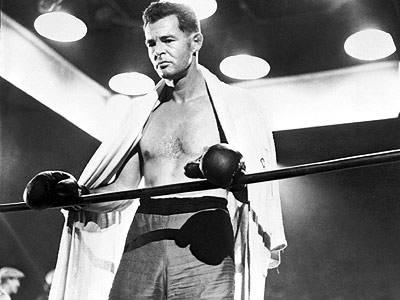
Robert Ryan plays the role of Stoker Thompson with dignity rather than sentimentality, with realism rather than melodrama.

The Set-Up” (1949, Robert Wise). Wednesday, April 10, 2:45 p.m. (11:45 a.m.). Boxing was a sport that the quintessential film noir tough guy Robert Ryan knew very well. Ryan was a four-year college boxing champion at Dartmouth, and later, when he became a Hollywood star, one of his finest roles and movies came in Robert Wise’s low-budget gem “The Set-Up,“ where Ryan played a seemingly washed-up prizefighter named Stoker Thompson – he’s been set up to lose what will probably be his last fight. Stoker’s craven manager Tiny (George Tobias) has been paid to insure Stoker throws the fight, by a crooked gambler (Alan Baxter), who has a big bet against the veteran. Tiny thinks it’s a sure defeat anyway. But Stoker still has his pride, still has his memories of what it was like when he was almost great and he doesn’t want to lie down in the ring, even if the mob will punish him severely if he doesn’t.
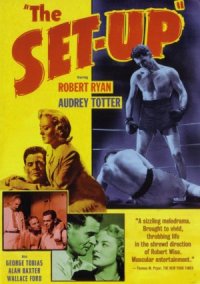
The film, which is based on a narrative poem by Joseph Moncure March, plays out in real time, beginning shortly before the fight, ending shortly after it. Wise, who is at his best as a director, gives “The Set-Up” relentless pace, tension, compassion and a marvelously seedy low-life atmosphere of matter-of-fact corruption and impending doom. Audrey Totter (in an untypical sympathetic role for this classic film noir dame) plays Stoker’s worried wife Julie. Wallace Ford is a salty old ring guy and Alan Baxter is Little Boy, the natty gambler who has the bet down and the muscle to back it up.

Ryan, one of the great film noir heavies, could play sociopathic bad guys like few other actors on screen. But here, he endows Stoker with the humanity and the grace under pressure that this great actor always had, but that we rarely see in his classic noir villain roles. Ryan plays this proud, beleaguered, supposedly over-the-hill fighter with dignity rather than sentimentality, with realism rather than melodrama, and with an intimate knowledge of the ways men can inflict bodily harm on each other for money.

Of all those tough and perceptive movies that show the dark side of professional boxing – “Body and Soul,” “Champion,” “Fat City,” “Requiem for a Heavyweight” and the others – “The Set-Up” may be the best. Once you hear the final bell, you’ll never forget it.

Wednesday, April 10: Robert Ryan Day

7:15 a.m. (4:15 a.m.): “Crossfire” (1947, Edward Dmytryk). With Robert Mitchum, Robert Ryan, Robert Young and Gloria Grahame. Reviewed on FNB November 20, 2012. [Read more…]

Neo-noirs now playing: ‘Trance,’ ‘The Company You Keep,’ ‘Room 237,’ ‘The Place Beyond the Pines,’ ‘Spring Breakers’

By Michael Wilmington and Film Noir Blonde

The Noir City film fest starts tonight at the Egyptian Theatre in Hollywood. Additionally, Joanna Lancaster, Susie Lancaster, actor Ed Lauter and author James Naremore will attend tonight’s screening of a new print of “Sweet Smell of Success” at the Billy Wilder Theater in Westwood.

And in case you’re more of a full-color fan, there are a several interesting neo-noir titles opening this weekend and currently playing in Los Angeles theaters. (Check your local listings for showtimes.)

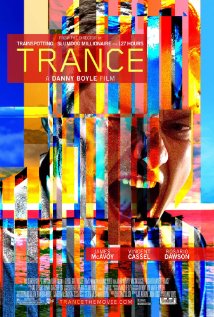
Trance/2013/Fox Searchlight Pictures/101 min.

Danny Boyle’s new movie “Trance” begins with the theft of a world-famous painting (Francisco Goya’s spooky “Witches in the Air”) from a London auction in mid-sale. It continues through all kinds of slick neo-noir alleys and crannies of bloody gangsterism and psychological mystery, and ends with an unraveling that twists and turns, and changes a lot of what went before.

What seems to be happening at first is a clockwork heist of the painting, complete with smoke bombs and switcheroos, by a brutal but stylish gang led by the fashionable Frank (French star Vincent Cassel). One of the auction house’s employees, Simon (James McAvoy), tries to save the painting by encasing and running off with it. (Or does he?). And he’s stopped and cracked on the head by Frank. (Or is he?)

Soon we discover that Simon is part of the caper, that the painting has now disappeared and that, because of the head-crack, Simon hasn’t the foggiest where it is. So Frank hires a luscious and oh-so-smart American hypnotherapist named Elizabeth (played by Rosario Dawson), to unlock the priceless secret in Simon’s mind, which she confidently tries to do. (Or does she?)

Boyle is rejoined here by his first screenwriter John Hodge (of “Shallow Grave” and “Trainspotting”), along with Joe Ahearne, who wrote (and directed) the 2001 TV film, also called “Trance,” on which this “Trance” is based. Like “Shallow Grave,” there’s a touch of meanness about the movie along with a roller-coaster speed, which can slightly discombobulate and even alienate you, while still giving you a dependably thrilling ride.

The actors are all top-chop and compellingly neo-noirish, including the hypnotic Dawson, the spellbound McAvoy, all the heavies and especially Cassel. The film, shot by Boyle’s usual camera-mate Anthony Dod Mantle, is full of glowing colors, helter-skelter action, pungent villains and sumptuous sights – the most sumptuous of which is the beautiful and brainy Ms. Dawson. As they said in the heyday of ’40s noir when a real femme fatale walked by, hubba hubba.

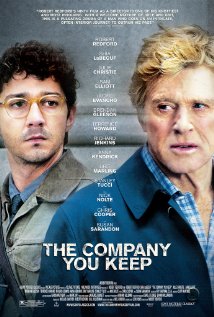
The Company You Keep/2012/Sony Pictures Classics/125 min.

“The Company You Keep,” a political thriller based on a Neil Gordon novel, is Robert Redford’s ninth film as a director and his first as both actor and director since 2007’s “Lions for Lambs.” Contemplative, nostalgic and insightful, “Company” satisfies, despite being a little short on suspense.

He plays Jim Grant, a public-interest lawyer and single father, who lives a quiet life in a suburb of Albany, New York. Grant’s peaceful existence is shaken up when an ambitious reporter named Ben Shepard (Shia LaBeouf) reveals that Grant is a former Weather Underground activist wanted for murder.

Grant must leave his daughter behind as he leaves Albany to find the person who can clear his name. As Grant backtracks through his past associations and across the country, he’s pursued by the FBI and by Shepard, eagerly digging for more details to use in his next story. Grant has more than one secret, natch.

The tension isn’t as strong as it needs to be in a thriller and the denouement, in Michigan’s upper peninsula, seems a bit tacked on – something we’ve seen many times before. But, for me, those were minor quibbles. Redford creates an unforgettable mood of wistfulness and regret, of love lost and found.

He elicits memorable performances from an outstanding cast, which includes Julie Christie, Sam Elliott, Brendan Gleeson, Terrence Howard, Richard Jenkins, Anna Kendrick, Brit Marling, Stanley Tucci, Nick Nolte, Chris Cooper and Susan Sarandon. Shot by Adriano Goldman, the naturalistic cinematography and striking compositions serve the story well.

“Dissent can be dicey,” says Sarandon’s character. In “Company,” Redford takes a nuanced look at a dicey chapter of American history.

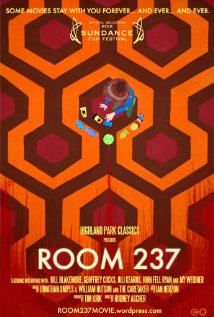
Room 237/2012/IFC Midnight/102 min.

No matter how many times you’ve seen Stanley Kubrick’s “The Shining” (1980), it’s unlikely you’ve delved into its subtext and symbols, and dissected its meaning(s) to the extent that the talking heads have in a new doc called “Room 237.”

Director Rodney Ascher puts the spotlight on die-hard fan/theorists who have spent years studying this mesmerizing, iconic yet flawed film starring Jack Nicholson, Shelley Duvall, Scatman Crothers and Danny Lloyd.

These fans (ordinary folk as opposed to industry-insiders, authors, academics or other experts) offer extensive and elaborate arguments for their interpretations, which range from the movie being a metaphor for genocide to proof that Kubrick faked the Apollo moon landings footage.

You may walk out believing none of the theories, but the energy, enthusiasm and imagination of these diligent decoders is great fun from start to finish.

The Place Beyond the Pines/2012/Focus Features/140 min.

“The Place Beyond the Pines” is the Iroquois Indian phrase for Schenectady, New York. Schenectady is where this madly ambitious neo-noir – about father and sons, motorcycles and bank robberies, and tragic destiny – takes place and where the movie was shot, super-documentary style, by director/co-writer Derek Cianfrance (“Blue Valentine”) and cinematographer Sean Bobbitt (“Hunger” and “Shame”).

Watching the collision between an outlaw and a cop, and its aftermath, is often riveting. The cast, an unusually good one, is topped by Ryan Gosling (as a carnival motorcyclist turned bank robber) and Bradley Cooper (as the cop). Eva Mendes, Rose Byrne and Ray Liotta are supporting players.

It’s a terrific-looking film. Cianfrance and Bobbitt shot the movie in a kind of coldly sunny blur of metallic speed and near-constant movement that starts out with a five-minute-long tracking shot.

“The Place behind the Pines,” unlike most big-star Hollywood vehicles, is something the people involved obviously cared about, that they wanted to be great. And it had a chance. The problem is the third act, which is by far the weakest. The dramatic devices are too easy to spot, the resolution too pat and some of the scenes too hard to swallow.

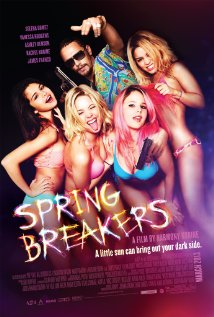
Spring Breakers/2012/A24/94 min.

Harmony Korine’s movies – up to and including his latest, “Spring Breakers” – are mostly outlaw pictures and weirdo comedies about people who don’t want to grow up, or shouldn’t have to: kids, crooks, artists. “Spring Breakers” is about four college girls who take off for collegiate revels in Tampa, Fla., and begin to descend into Hell.

It may be the apotheosis or culmination of all the Korines: a picture that starts off, as many have noted, like an arty “Girls Gone Wild” video, inflated to Hieronymus Boschian or Pieter Brughelian beach party proportions, and ends up doing a riff on the Al PacinoBrian De Palma 1983 “Scarface,” mashed up into “Charlie’s Angels” gone homicidal.

It’s a sometimes fascinatingly dumb movie, about fascinatingly dumb people doing fascinatingly dumb things. The story makes absolutely no sense. But some of “Spring Breakers” is great – namely the shimmering, sun struck , stunning cinematography (part of the movie was shot quasi-verité at an actual spring break) by Belgian/French maestro Benoit Debie. And there’s the amazingly entertaining gangsta-pranksta performance by James Franco. His brain-fried hip-hop-druggie, Alien, who calls his bed an art piece and plays piano and AK47s, is a triumph of charismatic dopiness and rebel posturing.

The ending is beyond ridiculous and not funny enough to save things. The four femme stars (Selena Gomez, Vanessa Hudgens, Ashley Benson and Rachel Korine) could have used better parts and better lines, but what the hell? The movie’s credibility vanishes after the restaurant robbery scene anyway, which is shot flashily, in a “Gun Crazy”-style single take.”

The Noir File: Jaunty Joan Crawford is a goddess of domestic noir in the matchless ‘Mildred Pierce’

By Michael Wilmington and Film Noir Blonde

The Noir File is FNB’s guide to classic film noir, neo-noir, sort of noir and pre-noir on cable TV. All movies below are from the schedule of Turner Classic Movies (TCM), which broadcasts them uncut and uninterrupted. The times are Eastern Standard and (Pacific Standard).

PICK OF THE WEEK

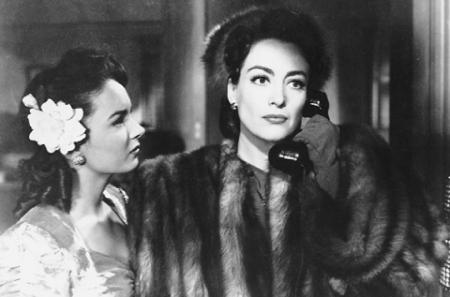
Ann Blyth is the venal daughter opposite Joan Crawford (and her shoulder pads) in “Mildred Pierce.” Blyth is slated to attend the TCM film fest later this month.

Mildred Pierce” (1945, Michael Curtiz). With Joan Crawford, Zachary Scott, Ann Blyth and Jack Carson. Friday, April 5, 8 p.m. (5 p.m.). Read the full review here.

Sunday, April 7

3:30 p.m. (12:30 p.m.): “Double Indemnity” (1944, Billy Wilder). With Barbara Stanwyck, Fred MacMurray and Edward G. Robinson.

8 p.m. (5 p.m.): “Spellbound” (1945, Alfred Hitchcock). With Ingrid Bergman and Gregory Peck.

10 p.m. (7 p.m.): “Diabolique” (1955, Henri-Georges Clouzot). With Simone Signoret, Paul Meurisse, and Charles Vanel. (In French, with subtitles.)

12 a.m. (9 p.m.)” “Blackmail” (1929, Alfred Hitchcock). Hitchcock’s first talkie: a thriller about a young London woman (Anny Ondra) who kills her would-be rapist (Cyril Ritchard), and then is blackmailed. The film was originally planned (and partially shot) as a silent movie and the transition to sound is sometimes a little clumsy. But the chills and invention and the fascination with perverse psychology are all recognizably Hitchcock.

2 a.m. (11 p.m.) “The Murderer Lives at Number 21” (1942, Henri-Georges Clouzot). Clouzot, one of the kings of French noir, grips and thrills and teases us with this dark-hued, very cynical and very smart murder mystery about a suave inspector (Pierre Fresnay of “Grand Illusion”) pursuing a serial killer. It’s also a stinging portrait of life in wartime Paris. With Suzy Delair. (In French, with subtitles.)

Monday, April 8

8 p.m. (5 p.m.): “Roxie Hart” (1942, William Wellman). If there’s such a thing as comedy noir, here’s one of the classics: the breezy, cynical tale of a loose-moralled Chicago showgirl (Ginger Rogers) who tries to parley a highly publicized murder trial into song-and-dance stardom. This is the movie, remade from a 1927 Cecil B. DeMille silent picture, that was later refashioned into the Tony-winning Bob Fosse show, which became the Oscar-winning 2002 Rob Marshall movie musical “Chicago.” (“He had it coming!”) With Adolphe Menjou, George Montgomery and Phil Silvers; written by Nunnally Johnson. [Read more…]

Noir City: Three weeks of divine darkness in Hollywood

Noir City: Hollywood, now in its 15th year, hits Los Angeles on Friday, April 5, with a Cy Endfield double feature: “Try and Get Me” and “Hell Drivers.” Presented by the American Cinematheque in collaboration with the Film Noir Foundation, the film festival runs until April 21. That’s three weeks of divine darkness to enjoy with FNF chief Eddie Muller and FNF co-director Alan K. Rode.

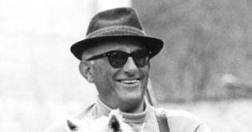
Robert Siodmak

They are bringing a slew of rarely screened gems to the Egyptian Theatre in Hollywood, including the FNF’s new 35mm restorations of “High Tide,” “Repeat Performance” and “Try and Get Me!” There’s also a night of African-American noir (“Native Son” and “No Way Out”) as well as show business noir (“Sunset Blvd.” and “The Other Woman”). Additionally, the fest is paying tribute to writer Cornell Woolrich (“Street of Chance” and “Night Has A Thousand Eyes”) and to director Robert Siodmak (“Cry of the City” and “The Killers”).

New this year is a special night of 3-D noir at the Aero Theatre in Santa Monica (“Man in the Dark” and “Inferno”) and a closing-night film noir party on April 21.

See you in the dark!

Retro window dressing …

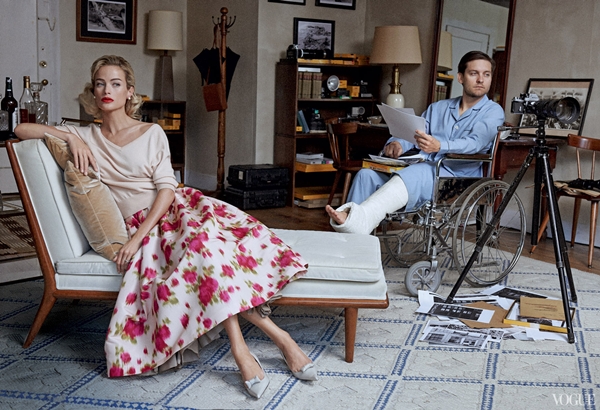
In April Vogue: Tobey Maguire and Carolyn Murphy reprise “Rear Window.” Click here to see the whole series.

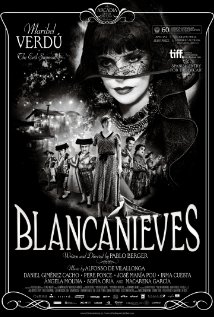
Poetic ‘Blancanieves’ is stunning in design, daring in vision

Blancanieves/2012/Arcadia Motion Pictures, et al/104 min.

Luminously beautiful, compelling and surprisingly moving, “Blancanieves” is a fairytale noir that’s a must-see for lovers of black and white and silent film. Writer/director Pablo Berger’s exquisite rendering of “Snow White” takes place in 1920s Seville and tells the passionate story of Carmen (Macarena García), the daughter of a famous bullfighter (Daniel Giménez Cacho), and her struggle to escape from under the thumb of her evil stepmother Encarna (Maribel Verdú).

Carmen has inherited her father’s talent in the ring and, after a near brush with death at the hands of Encarna’s henchman, Carmen, as Blancanieves (Snow White), is rescued and becomes the star of a troupe of seven bullfighting dwarves. But, like any cruel and conniving femme fatale worth her salt, Encarna isn’t that easy to vanquish and she reappears to cause murderous trouble for Carmen.

“The film is true to the dark spirit of the popular tale from the Brothers Grimm,” says Berger. “I use melodrama as a way of pushing the limits of characters in extreme situations.” Visually, Berger’s film is a celebration of the work of the masters of silent cinema, such as F.W. Murnau, Jacques Feyder and Victor Sjostrom. Superb music from Alfonso de Vilallonga heightens the mood of edgy enchantment.

Whereas the much acclaimed, Oscar-winning and gorgeously shot French b&w silent “The Artist” sometimes seemed slightly pat and overly commercial, Berger’s willingness in “Biancanieves” to take risks results in a poetic, personal work that’s rich in texture, stunning in design and daring in vision.

“Blancanieves” opens today in New York and LA with a national roll out to follow.

New York Film Academy’s favorite film noir classics

This is a paid post, written by the New York Film Academy.

The New York Film Academy is a purveyor of great cinematography of any genre, but faculty staff at the filmmaking school particularly enjoy a good film noir, especially when using it to teach students the nuances of expressionism.

Here we unveil seven of the Academy’s favorite film noir flicks. Where possible, we’ve provided links to the full movies.

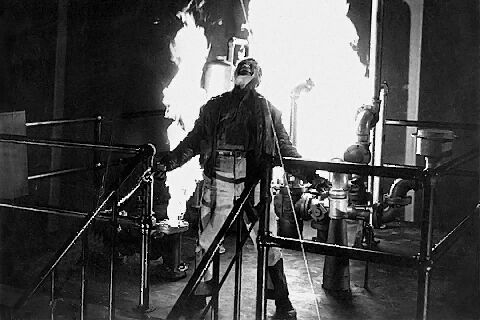
White Heat” (1949, Raoul Walsh)
Starring: James Cagney, Virginia Mayo, Edmond O’Brien

James Cagney gives a matchless performance in “White Heat.”

Heist films don’t get any better than this. “White Heat” is a precursor to many of the great gangster and prison movies of the ’50s, albeit a lot grittier and a lot darker than the films it went on to inspire.

Virginia Mayo is a divine femme fatale, and James Cagney’s performance as psychotic mobster Cody Jarrett is electrifying.

https://www.youtube.com/watch?v=ghapUv2Tp2I

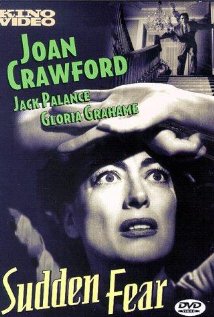
Sudden Fear” (1952, David Miller)
Starring: Joan Crawford, Jack Palance, Gloria Grahame

After a string of marvelous hard-boiled flicks with Warner Bros., Joan Crawford left the studio and went on to star in the psychological masterpiece “Sudden Fear.” It’s a great movie and one of the best of Crawford’s ’50s output; it also earned her an Oscar nomination for best actress. Palance received a nod for Best Actor in a supporting role. The film itself rightfully received nominations for best costume design and best cinematography.

https://www.youtube.com/watch?v=5ttC8gPoAMA [Read more…]

COL•COA fest to open with a Danièle Thompson comedy

One of my favorite film festivals starts in a few weeks. The City of Lights, City of Angels (COL•COA) film festival, a week of premieres in Hollywood, runs April 15-22. Last night, at the French Consulate, the Franco-American Cultural Fund announced the program for the fest, now in its 17th year.

“We are proud to offer the biggest and most exclusive program ever, including, for the first time, a new series that highlights the French film industry’s support of world cinema,” said François Truffart, COL•COA executive producer and artistic director.

COL•COA will feature 38 features and 19 shorts. It opens on Monday, April 15, with the North American premiere of “It Happened in Saint-Tropez,” a Danièle Thompson comedy, starring Kad Merad and Monica Bellucci. The film will be released in France on April 10.

Closing the fest on Sunday, April 22, is the recent French box-office success, “Jappeloup,” directed by Christian Duguay.

Of course, I am most looking forward to the film noir series, which will include “Armed Hands,” co-written and directed by Pierre Jolivet.

More on the fest later; meanwhile be sure to check the COL•COA site and snag your tickets – they will sell quickly!

The Noir File: A plan to swap murders in Alfred Hitchcock’s great thriller ‘Strangers on a Train’

By Michael Wilmington and Film Noir Blonde

The Noir File is FNB’s guide to classic film noir, neo-noir, sort of noir and pre-noir on cable TV. All movies below are from the schedule of Turner Classic Movies (TCM), which broadcasts them uncut and uninterrupted. The times are Eastern Standard and (Pacific Standard).

PICK OF THE WEEK

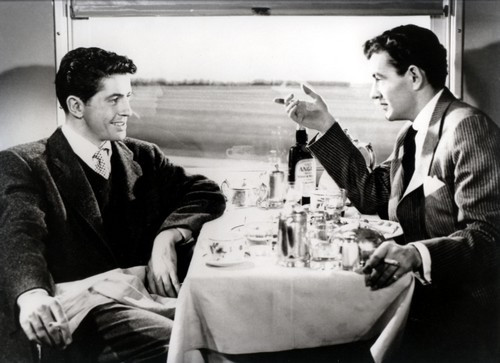
Farley Granger and Robert Walker chat over lunch in “Strangers on a Train.”

Strangers on a Train” (1951, Alfred Hitchcock). Tuesday, April 2, 8 p.m. (5 p.m.).

Tuesday, March 26

6 a.m. (3 a.m.): “The Asphalt Jungle” (1950, John Huston). With Sterling Hayden, Sam Jaffe and Marilyn Monroe.

12:45 p.m. (9:45 a.m.): “Crime Wave” (1954, Andre De Toth). One of De Toth’s best noirs. In this grim L.A.-shot cops-and-robbers thriller, Gene Nelson plays an ex-con trying to go straight, but stymied by a brutal cop (Sterling Hayden), who wants to nail him for a stick-up and murder committed not by Nelson but by his old prison mates. (The gang, a top-notch crock of crooks, includes Ted De Corsia, Charles Bronson and Timothy Carey). As for Hayden, this is one of his great “heavy” roles. As a cop who won’t give up, while confidently ruining the life of an innocent man, he’s maniacal, terrifying.

Thursday, March 28

7:45 a.m. (4:45 a.m.): “Dead Ringer” (1964, Paul Henreid). Two twin sisters, one obscenely rich, and one financially strapped, have been off each other’s radar for years, ever since bitchy rich Margaret stole bitter not-rich Edith’s wealthy fiancé. Then they meet up at the hubby’s L. A. funeral. Since both sisters are played by Bette Davis, we can expect the same kind of elegant switcheroo (one twin playing another) she pulled in the superior “A Stolen Life” (1946, Curtis Bernhardt), which plays at 11:30 a.m. (8:30 a.m.). Expect to have some fun, despite the fact, or maybe because of it, that the whole story is so implausible, even William Castle might have ducked it.

Bette manages the double role with skill, style and sizzle – though her “Now Voyager” co-star/chum Paul Henreid directs the whole thing without much inspiration, or even inspired silliness. But then again, why ask for the moon, when you have the stars? [Read more…]

The Noir File: Welles burns up the courtroom in ‘Compulsion’

By Michael Wilmington & Film Noir Blonde

The Noir File is FNB’s guide to classic film noir, neo-noir and pre-noir on cable TV. All movies below are from the schedule of Turner Classic Movies (TCM), which broadcasts them uncut and uninterrupted. The times are Eastern Standard and (Pacific Standard).

PICK OF THE WEEK

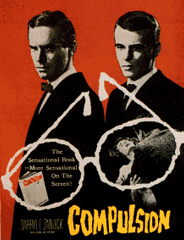
Compulsion” (1959, Richard Fleischer). Thursday, March 21, 8 p.m. (5 p.m.). Based on the Loeb-Leopold “thrill kill” murders and adapted from Meyer Levin’s best-selling novel on the grisly case, here is a true-crime drama to make your blood run cold, directed by a master of the form, Richard Fleischer (“The Boston Strangler,” “10 Rillington Place”). Dean Stockwell and Bradford Dillman admirably play two brilliant but immoral Chicago collegiate rich boys who take Nietzsche’s “superman” theories too seriously and decide to commit the perfect murder, simply to prove they can.

Shot in realistic yet eerie black-and-white, this movie is one of the screen’s most convincing portraits of pure evil. And it also contains one of the movies’ very best trial scenes: an astonishing tour de force by that sometimes amazing actor, Orson Welles.

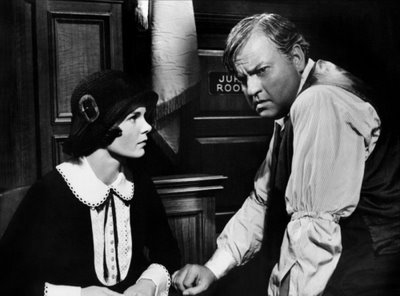
The lead actors (Orson Welles is shown above) won honors at Cannes.

With only one big scene, Welles burns up the screen as defense attorney Clarence Darrow, delivering (in one take) Darrow’s legendary “plea for life” speech, and making every word and sentiment echo and re-echo through his magnificent voice, his grand hamming and his deep theatrical soul. All three of these actors shared the Best Actor prize for “Compulsion” at the Cannes Film Festival. And they deserved it.

Thursday, March 21

5 a.m. (2 a.m.): “Port of Shadows” (French. Marcel Carne, 1939). A moody French army deserter (Jean Gabin, in one of his prototypical roles) hides out in Le Havre – port city of shadows, sin and impending danger – and falls in love with a beautiful victim (Michèle Morgan), who is also pursued by a poseur (Michel Simon) and a crook (Pierre Brasseur). A dark destiny awaits them all. One of the godfathers of film noir was the ’30s French sub-genre called “poetic realism,” and “Port of Shadows” is a classic example. Directed and written by the great poetic realist stylists Marcel Carné and Jacques Prévert, who went on to make together the immortal (and noirish) films “Le jour se lève” and “Children of Paradise.” (In French, subtitled.) [Read more…]