On her birthday, thoughts from and about Marilyn

I put this together last year and liked it so much I decided to run it twice. ; )

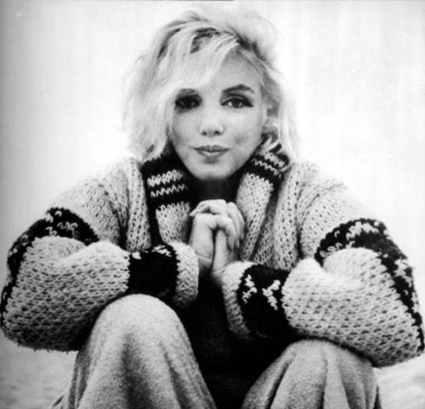
For what would have been Marilyn Monroe’s 86th 87th birthday (she was born on June 1, 1926), I’ve compiled quotations from her and about her. If you have a favorite quotation from or about MM, please send it and I will add it to the list. I have credited the photographers wherever possible; copyright of all photos belongs to the photographers and/or their estates/representatives.
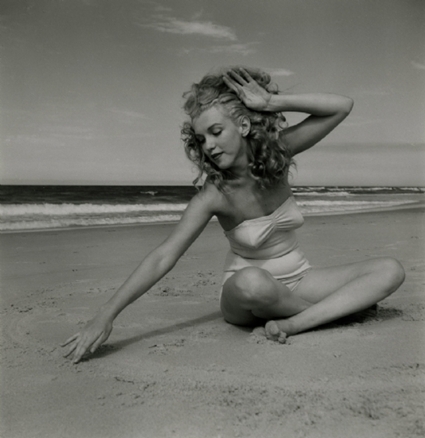
An early shot of Marilyn on the beach; she loved the water.

FROM MARILYN …

“The real lover is the man who can thrill you by touching your head or smiling into your eyes or just staring into space.”

“I love champagne – just give me champagne and good food, and I’m in heaven and love.”
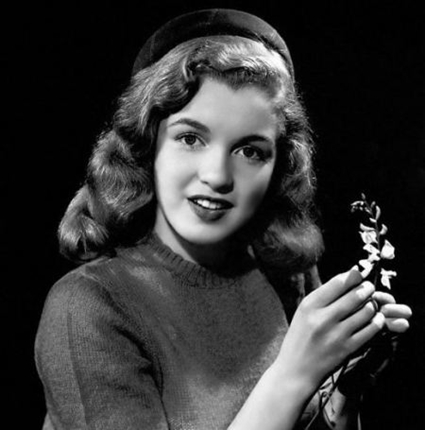
Marilyn started out as a model.

“The body is meant to be seen, not all covered up.”

“Sex is part of nature. I go along with nature.”

“My illusions didn’t have anything to do with being a fine actress, I knew how third rate I was. I could actually feel my lack of talent, as if it were cheap clothes I was wearing inside. But, my God, how I wanted to learn, to change, to improve!”
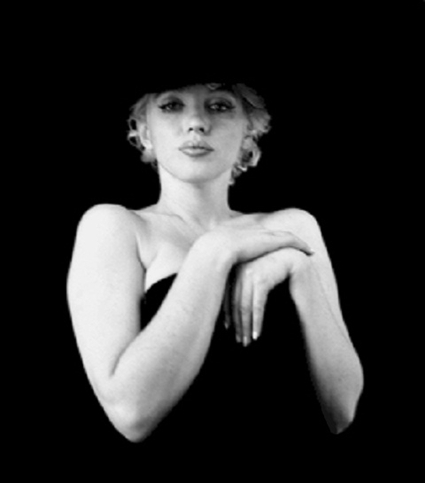
Marilyn shot by Milton Greene

“I don’t mind living in a man’s world as long as I can be a woman in it.”

“Husbands are chiefly good as lovers when they are betraying their wives.”

“People had a habit of looking at me as if I were some kind of mirror instead of a person. They didn’t see me, they saw their own lewd thoughts, then they white-masked themselves by calling me the lewd one.”
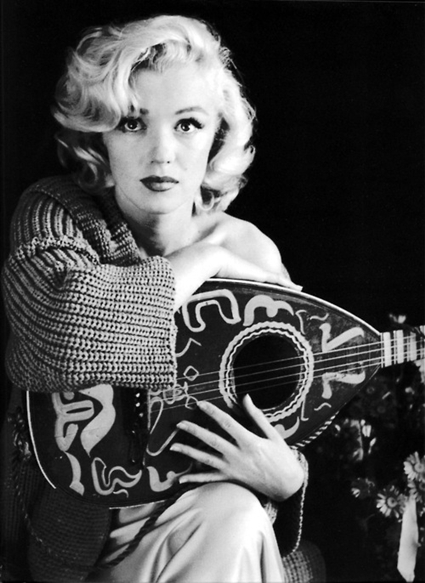
Marilyn shot by Milton Greene

“All the men I know are spending the day with their wives and families, and all the stores in Los Angeles are closed. You can’t wander through looking at all the pretty clothes and pretending to buy something.” – on why she hated Sundays

“Everyone’s just laughing at me. I hate it. Big breasts, big ass, big deal. Can’t I be anything else? Gee, how long can you be sexy?”
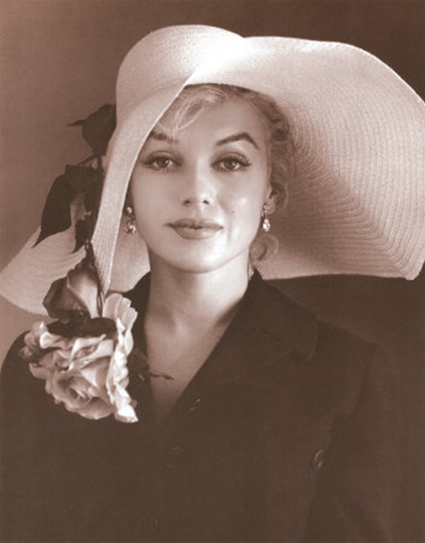
I love this shot and the elegant hat.

“Looking back, I guess I used to play-act all the time [as a child]. For one thing, it meant I could live in a more interesting world than the one around me.”

“No one ever told me I was pretty when I was a little girl. All little girls should be told they’re pretty, even if they aren’t.”
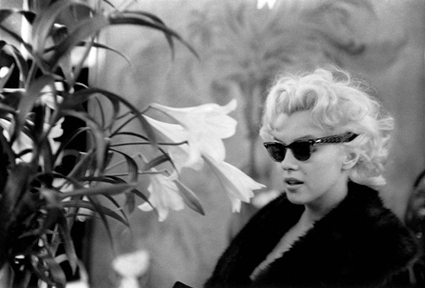
Marilyn in New York, shot by Ed Feingersh

“I’m selfish, impatient and a little insecure. I make mistakes, I am out of control and at times hard to handle. But if you can’t handle me at my worst, then you sure as hell don’t deserve me at my best.”

“My problem is that I drive myself … I’m trying to become an artist, and to be true, and sometimes I feel I’m on the verge of craziness. I’m just trying to get the truest part of myself out, and it’s very hard. There are times when I think, ‘All I have to be is true.’ But sometimes it doesn’t come out so easily. I always have this secret feeling that I’m really a fake or something, a phony.”
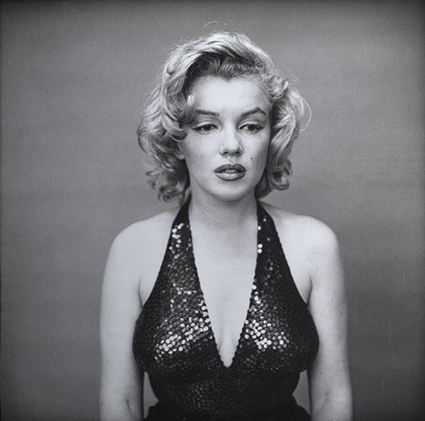
Marilyn shot by Richard Avedon

“Hollywood is a place where they’ll pay you a thousand dollars for a kiss and fifty cents for your soul.”

ABOUT MARILYN …

“Our marriage was a good marriage … it’s seldom a man gets a bride like Marilyn. I wonder if she’s forgotten how much in love we really were.” – Jim Dougherty talking to Photoplay magazine, 1953; they were married from 1942-46.
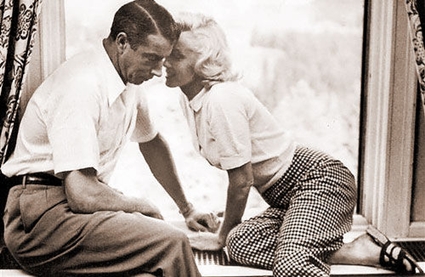
Marilyn and Joe DiMaggio were married less than a year.

“It’s like a good double-play combination. It’s just a matter of two people meeting and something clicks.” – Joe DiMaggio; he was married to Marilyn from Jan. 14, 1954 to Oct. 27, 1954
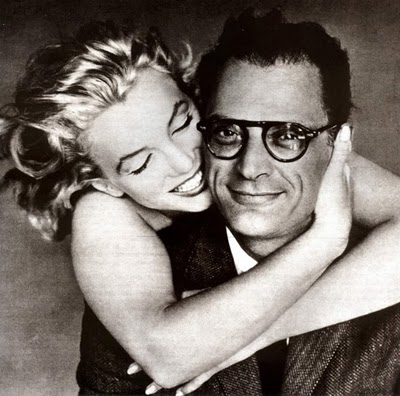
Marilyn and Arthur Miller, her third husband

“She was a whirling light to me then, all paradox and enticing mystery, street-tough one moment, then lifted by a lyrical and poetic sensibility that few retain past early adolescence. …

“She had no common sense, but what she did have was something holier, a long-reaching vision of which she herself was only fitfully aware: humans were all need, all wound. What she wanted most was not to be judged but to win recognition from a sentimentally cruel profession, and from men blinded to her humanity by her perfect beauty. She was part queen, part waif, sometimes on her knees before her own body and sometimes despairing because of it. …

“To have survived, she would have had to be either more cynical or even further from reality than she was. Instead, she was a poet on a street corner trying to recite to a crowd pulling at her clothes.” – Arthur Miller, her husband from 1956-61
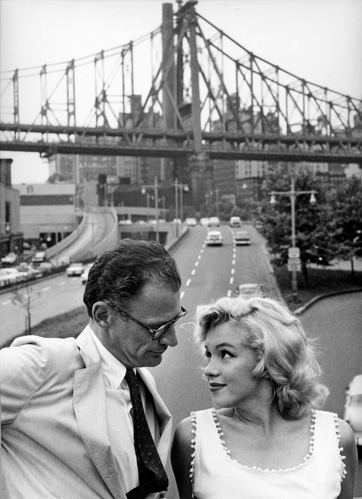
Marilyn Monroe and Arthur Miller in front of the Queensboro Bridge, New York, 1957. Sam Shaw/ Shaw Family Archives, Ltd.

“There’s a beautiful blonde name of Marilyn Monroe who makes the most of her footage.” xxxxxLiza Wilson of Photoplay magazine, writing about “The Asphalt Jungle,” 1950

She was, “a female spurt of wit and sensitive energy who could hang like a sloth for days in a muddy-mooded coma; a child girl, yet an actress to loose a riot by dropping her glove at a premiere; a fountain of charm and a dreary bore … she was certainly more than the silver witch of us all.” – Norman Mailer
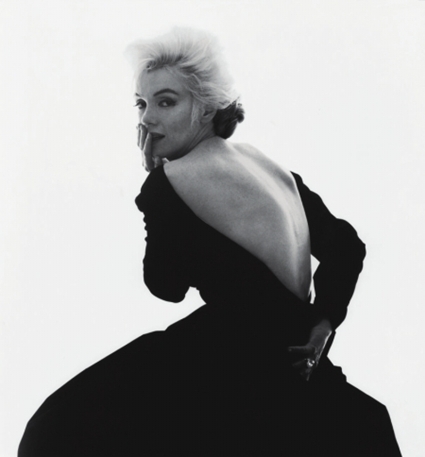
Marilyn shot by Bert Stern, 1962

‘‘From families that owned little but their own good names, she had inherited the fierce pride of the poor. Because she was sometimes forced to give in, to sell herself partially, she was all the more fearful of being bought totally.’’ – Gloria Steinem

“She deeply wanted reassurance of her worth, yet she respected the men who scorned her, because their estimate of her was her own.” – Elia Kazan
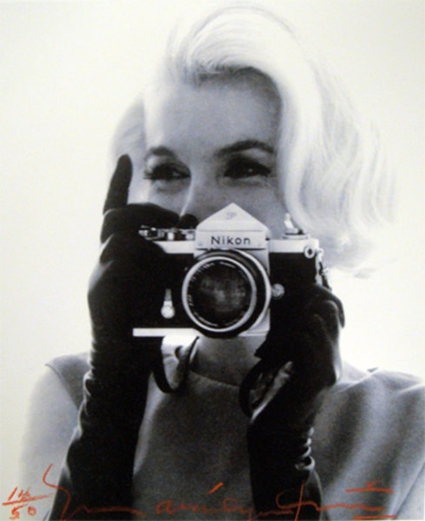
Marilyn shot by Bert Stern, 1962

All the sex symbols were endowed with a large portion of earthy coarseness. Marilyn had the most. … Only an inherent whore could walk like Marilyn and dress like Marilyn. … She had a trick of making all men feel she could be in love with them and I think she could be, a sort of saving each one for a rainy day, for when things would get tough again in her life and she would need help. … I saw the hope and the disappointments. The longing to give what the people wanted and, at the same time, to become a complete person herself. She was also selfish, rude, thoughtless, completely self-centered. She kept people waiting for hours.” – Hollywood columnist Sheilah Graham
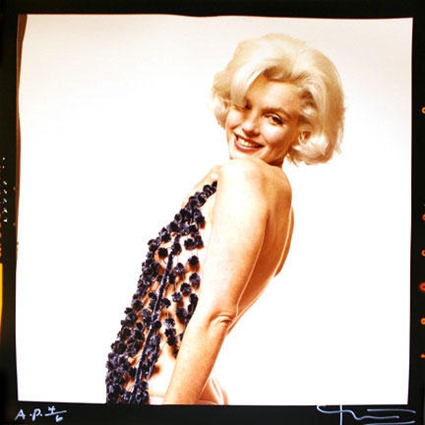
Marilyn shot by Bert Stern, 1962

“The luminosity of that face! There has never been a woman with such voltage on the screen, with the exception of Garbo. … She was an absolute genius as a comic actress, with an extraordinary sense for comic dialogue. … Nobody else is in that orbit; everyone else is earthbound by comparison.” – Billy Wilder

“If she’d been dumber, she’d have been happier.” – Shelley Winters

“Everything Marilyn does is different from any other woman, strange and exciting, from the way she talks to the way she uses that magnificent torso.” – Clark Gable, her co-star of 1961’s “The Misfits,” about which he said: “This is the best picture I have made and it’s the only time I’ve been able to act.
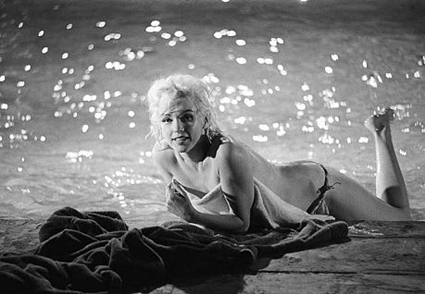
Marilyn shot by Lawrence Schiller on the set of “Something’s Got to Give,” 1962

“Her mixture of wide-eyed wonder and cuddly drugged sexiness seemed to get to just about every male; she turned on even homosexual men. And women couldn’t take her seriously enough to be indignant; she was funny and impulsive in a way that made people feel protective. She was a little knocked out; her face looked as if, when nobody was paying attention to her, it would go utterly slack – as if she died between wolf calls.” – Pauline Kael

“What I particularly liked about Marilyn was that she didn’t act like a movie star. She was down to earth. Although she was 28, she looked and acted like a teenager. … I was most impressed that Marilyn was always polite and friendly to everyone on the set. She was no phony or snob. … Marilyn always seemed determined to talk to me about her childhood. We would be discussing a subject of current interest to her and she would somehow bring up an incident from her bygone days.” – Photographer George Barris
Marilyn shot by George Barris, 1962

“I liked her. She was a good kid. But when you looked into her eyes, there was nothing there. No warmth. No life. It was all illusion. She looked great on film, yeah. But in person … she was a ghost.” – Dean Martin, her co-star in 1962’s (unfinished) “Something’s Got to Give”

“Nobody could be as miserable as she was in such a loving, good-natured way. No matter how sad she may have been, she was never mean, never lashed out at me. Instead she just wanted to hug me and have me hug her and tell her it was all going to work out. That it didn’t, broke my heart.” – George Jacobs, who was Frank Sinatra’s valet

“Marilyn Monroe was a legend. In her lifetime she created a myth of what a poor girl from a deprived background could attain. For the entire world she became a symbol of the eternal feminine.” – Lee Strasberg in his eulogy

The Noir File: ‘Mask of Dimitrios’ is an underseen ’40s gem

By Mike Wilmington and Film Noir Blonde

The Noir File is FNB’s guide to classic film noir, neo-noir and pre-noir from the schedule of Turner Classic Movies (TCM), which broadcasts them uncut and uninterrupted. The times are Eastern Standard and (Pacific Standard).

PICK OF THE WEEK

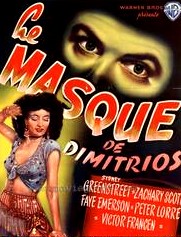
The Mask of Dimitrios (1944, Jean Negulesco). Tuesday, June 4, 1:15 a.m. (11:15 p.m.)

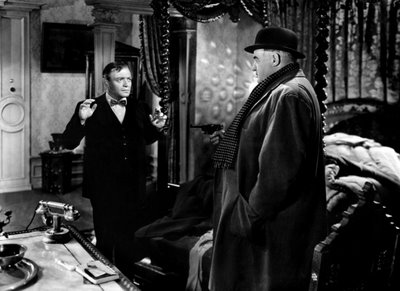
Tracking down an elusive international criminal named Dimitrios Makropoulos (Zachary Scott) becomes the obsession of a Dutch writer named Cornelius Weyden – a prime Peter Lorre role and the mild-mannered hero of the neglected but first-rate “The Mask of Dimitrios.”

Weyden learns of Dimitrios and his sordid career when a corpse is washed up near Istanbul and a talkative Turkish police colonel (Kurt Katch) tells colorful stories of the great swindler’s crimes. The inquisitive little scribe thinks he can use this material for a book.

When Weyden meets one of Dimitrios’ victims in the (ample) flesh – the genial Mr. Peters, played by Lorre’s usual partner-in-crime Sydney Greenstreet – the two join forces to try to unearth the villain’s trail through war-threatened Europe.

“The Mask of Dimitrios” was one of nine movies Peter Lorre and Sydney Greenstreet appeared in together.

They piece together Dimitrios’ dark history as they cross paths with his other partners and/or victims, including blonde intriguer Faye Emerson, Victor Francen, Steven Geray, Eduardo Ciannelli and the irrepressible Florence Bates. As Lorre and Greenstreet close in on their prey, dark questions loom. Is Dimitrios really still alive? And who are his next victims?

If you’ve never seen “Dimitrios” (from the novel known as “A Coffin for Dimitrios” in the U.S.), you’re in for a surprise and a treat. Faithfully adapted from master spy novelist Eric Ambler’s classic thriller by pulp fictionist/screenwriter Frank Gruber, shot in high noir style by cinematographer Arthur Edeson (“The Maltese Falcon,” “Casablanca”) and artfully directed by Romanian émigré and Warner Brothers’ “melodrama king” Jean Negulesco (in what is probably his best film), “Dimitrios” is an underseen gem of ’40s noir. It’s what used to be called a corker.

(Another Ambler adaptation with Lorre and Greenstreet, “Background to Danger,” immediately follows “The Mask of Dimitrios.” See below.) [Read more…]

Noirish ‘Some Like It Hot’ at Hollywood Forever Cemetery

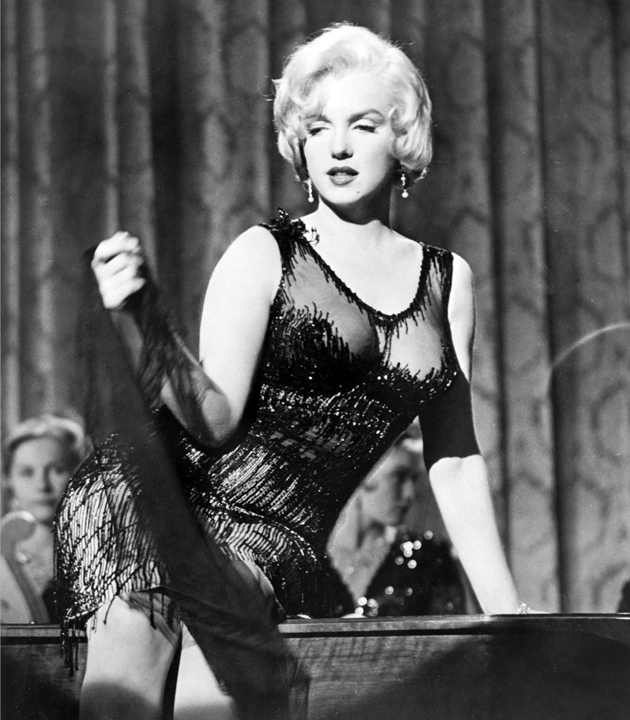
Marilyn Monroe as Sugar Kane in “Some Like It Hot.”

To celebrate Marilyn Monroe’s birthday, on Saturday, June 1, Cinespia.org will present “Some Like It Hot” (1959, Billy Wilder) at Hollywood Forever Cemetery. Though the film is considered one of Tinseltown’s all-time best comedies, Marilyn reportedly objected to the fact that her character, Sugar Kane, actually believed her fellow musicians (Tony Curtis and Jack Lemon dressed in drag) were women. No girl is that dumb, she said. Nevertheless, the movie was a hit and her performance is unforgettable. You can read Mike Wilmington’s review here.

More Burt on the big screen at UCLA’s Billy Wilder Theater

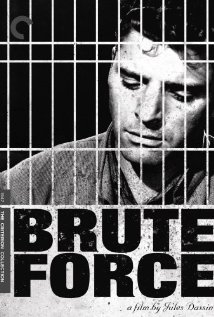
The Billy Wilder Theater at UCLA will present a choice double bill on Sunday, June 2, at 7 p.m.: two film-noir titles starring Burt Lancaster. First is the prison drama “Brute Force” (1947, Jules Dassin), in which Lancaster plays an angry inmate desperate to escape his sadistic captors.

Variety’s review of “Brute Force” noted that “Yvonne De Carlo, Ann Blyth, Ella Raines and Anita Colby are the women on the ‘outside’ whose machinations, wiles or charms accounted for their men being on the ‘inside.’ ” Natch. (Lancaster and De Carlo were paired again in 1949’s “Criss Cross,” directed by Robert Siodmak.)

“Brute Force” will be followed by “Kiss the Blood Off My Hands” (1948, Norman Foster). Lancaster plays a traumatized and violent ex-prisoner of war living in London and trying, unsuccessfully of course, to get his life together. Co-starring Joan Fontaine.

The evening is part of the Lancaster centennial celebration presented by the UCLA Film & Television Archive and the Hugh M. Hefner Classic American Film Program. The celebration of Lancaster’s movies runs through June 30. Author Kate Buford is the special guest on June 2.

Additionally, on Monday, June 3, at 7:30 p.m., the Archive’s look at emerging voices in Czech cinema comes to a close with director David Ondříček in person for his taut neo-noir police thriller, “In the Shadow” (2012), which was the Czech Republic’s official Oscar entry for 2013.

Film noir gets a Hawaiian punch Saturday at the Egyptian

New York, Los Angeles, San Francisco, Chicago … these are the cities we usually associate with the grim, glamorous tales of film noir.

But when you get the rare chance to see a noir with a more exotic setting, it’s all the more memorable. The American Cinematheque is offering just such a viewing opp when it goes tiki on Saturday, June 1.

Noir stalwart Marie Windsor stars in this unusual example of the genre.

The Egyptian Theatre in Hollywood is showing “Hell’s Half Acre” (1954, John Auer), which was filmed in filmed in Honolulu. Evelyn Keyes stars as a dancer combing the streets of Honolulu’s red-light district to hunt for her missing G.I. husband (Wendell Corey), who she believes is alive and writing songs in Hawaii.

Turns out, he’s also a gangster vying with Philip Ahn for control of the island’s vice rackets. Toss sultry, statuesque Marie Windsor into the mix, and it’s pulp nirvana, says the Cinematheque.

The party starts at 5 p.m. in the Egyptian’s courtyard, where there will performances from King Kukulele & the Friki Tikis and the Polynesian Paradise Dancers, tiki vendors and a cash bar with Polynesian drinks. A slide show and a 50th anniversary tribute to the Disney’s Enchanted Tiki Room by Bob Baker’s Marionettes will precede the 7:30 p.m. screening.

Beatty and Penn make ‘Mickey One’ an arty nightmare

By Mike Wilmington and Film Noir Blonde

The Noir File is FNB’s guide to classic film noir, neo-noir and  pre-noir from the schedule of Turner Classic Movies (TCM), which broadcasts them uncut and uninterrupted. The times are Eastern Standard and (Pacific Standard).

PICK OF THE WEEK 

Mickey One” (1965, Arthur Penn). Friday, May 24, 12:30 a.m.  (9:30 p.m.)

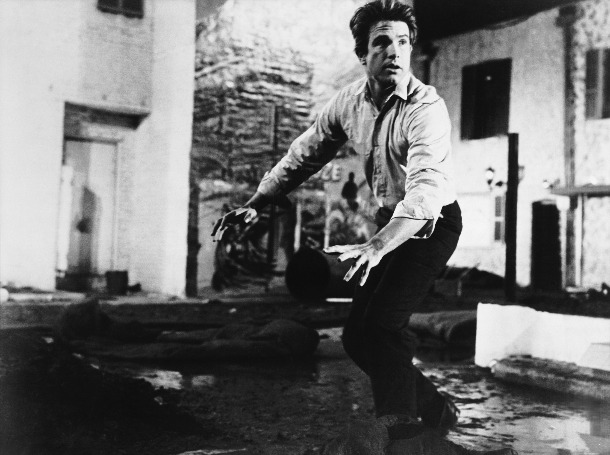
In “Mickey One,” Warren Beatty plays a Chicago comic who has angered the mob.

The man on the run in “Mickey One,” Arthur Penn’s and Warren Beatty’s nightmare of a 1965 neo-noir, is a Chicago standup comedian  trapped in an urban world of disorientation and fear. It’s one of Beatty’s most offbeat roles: a smart-ass hipster Lenny Bruce type who’s  gotten on the mob’s list for  a transgression  that he doesn’t remember (that possibly doesn’t even exist) and now feels himself in danger every time he walks out on stage. Mickey is a prototypical film noir outsider, lost in the big city night, in a darkness interrupted by neon guideposts to Hell.

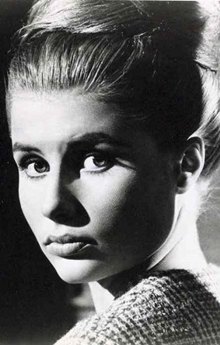
Donna Michelle

Around the terrified comedian is a gallery of bizarre characters who might have been assembled for some noirish Wonderland:  Hurd Hatfield (who once played Dorian Gray) as a devious club owner, Franchot Tone as Mickey’s elderly mentor, Alexandra Stewart as the girl who loves him (maybe), Playboy Playmate-of-the-Year Donna Michelle as the babe of babes, Teddy Hart as Mickey’s pint-size agent-manager, Jeff Corey as a club guy, and Kamatari Fujiwara (who was one of the two squabbling peasants in  Kurosawa’s “The Hidden Fortress”) as a conceptual artist.

This neglected film, written by Alan M. Surgal, is one of the artiest and most experimental of all ‘60s black-and-white neo-noirs. And though Surgal’s script is pretentious to a fault, “Mickey One” is beautifully made, a classic of ‘60s razzle-dazzle film technique – often more reminiscent of  early ‘60s foreign art film style than anything out of the Hollywood mainstream.

The movie was stunningly photographed by Ghislain Cloquet, who shot some of the French film masterpieces of Alain Resnais (“Night and Fog”) and Robert Bresson (“Au Hasard Balthazar”).  And the picture has one of the finest jazz scores in the movies, written and orchestrated by Eddie Sauter and improvised by saxophone genius Stan Getz.

One thing “Mickey One” doesn’t have is funny jokes. Mickey’s act couldn’t make a hyena laugh. But maybe that’s the point. The next time Penn and Beatty got together, it was to make “Bonnie and Clyde” (1967), which does have funny jokes, as well as  violence and beauty. Here, the director and his star may fail, but they fail grandly, with ambition, daring, style and images that stay in your head.

Wednesday, May 22

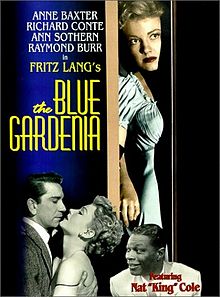
3:30 p.m. (12:30 p.m.): “The Blue Gardenia” (1953, Fritz Lang), Working girl Anne Baxter lets her guard down and gets mixed up in the murder of slimy Raymond Burr. (As the girls in “Chicago” say, “He had it coming.”)  The rest of the lineup includes Ann Sothern, Nat King Cole and George “Superman” Reeves. Not Lang’s best, but you won’t want to miss it anyway.

10:30 p.m. (7:30 p.m.): “The Outfit” (1973, John Flynn).  Here’s another adaptation of one of Donald Westlake’s (alias “Richard Stark’s”) ultra-hard-boiled “Parker” novels – the series that inspired “Point Blank.” This time, Robert Duvall plays the “Parker” character, and just as unstoppably as Lee Marvin did. Out to avenge his brother, aided (maybe) by Karen Black and Joe Don Baker, Duvall is up against villain Robert Ryan. The  stellar noir cast includes Timothy Carey, Marie Windsor, Jane Greer, Richard Jaeckel, Sheree North and Elisha Cook, Jr. The movie is underrated too. You’ll be surprised at how good it is – unless you look over that cast list again.

Saturday, May 25

4:30 a.m. (1:30 a.m.) “Foreign Correspondent” (1940, Alfred Hitchcock). With Joel McCrea, Laraine Day, and George Sanders. Reviewed on FNB February 20, 2013.

Tuesday, May 28

8 p.m. (5 p.n.): “Hard Times” (1975, Walter Hill). Charles Bronson, James Coburn and the illicit world of back-alley, bare-knuckle fighting during the American Depression. (Bronson is the boxer, Coburn his manager.)  With Jill Ireland and Strother Martin. Tough stuff.

10 p.m. (7 p.m.): “Bullitt” (1968, Peter Yates). With Steve McQueen, Jacqueline Bisset and Robert Duvall. Reviewed on FNB October 27, 2012.

The Noir File: Wilder’s dark favorite is an American nightmare

By Mike Wilmington and Film Noir Blonde

The Noir File is FNB’s guide to classic film noir, neo-noir and pre-noir from the schedule of Turner Classic Movies (TCM), which broadcasts them uncut and uninterrupted. The times are Eastern Standard and (Pacific Standard).

PICK OF THE WEEK

Ace in the Hole” (1951, Billy Wilder). Friday, May 17, 8 p.m. (5 p.m.).

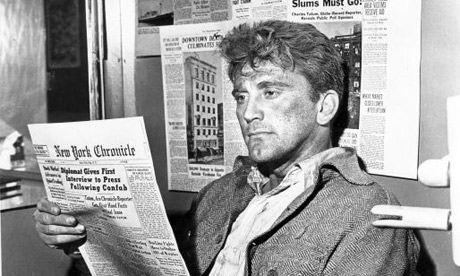
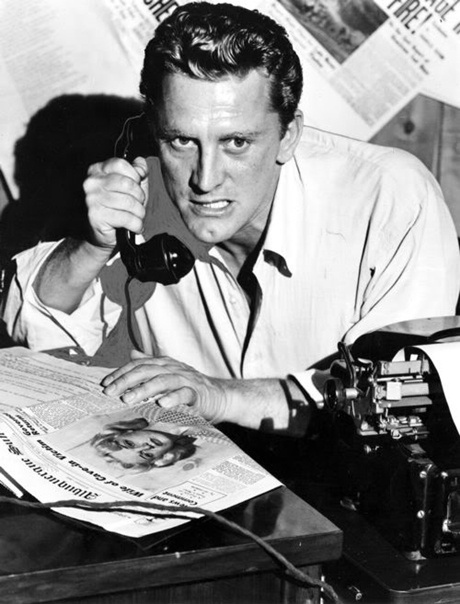
Kirk Douglas plays Chuck Tatum, a star reporter exiled from his big-city paper.

In the Golden Age of Hollywood and film noir, no one was better than Kirk Douglas at playing anti heroes, heels and villains. In movies like “Champion,” “The Bad and the Beautiful,” “I Walk Alone” and “Out of the Past,” he channeled the amoral climber who knifes you with a smile, or steps on almost everyone on his way to the top. The best (or worst) of all Douglas’s movie heels is Chuck Tatum in Billy Wilder’s “Ace in the Hole” – a slick-operator star newspaper reporter who messes up, gets exiled from his big-city paper and is now stuck in Albuquerque, N.M., in a desert dead-end.

When Chuck learns of a local miner named Leo Mimosa trapped in a cave-in in a Native American holy area, he sees a chance to ratchet up the drama and revive his career. A master manipulator, Chuck talks Leo and his rescuers into taking a longer, more dangerous escape route, then plays the story to the hilt, planning to sell it to the big outlets back east. With Leo’s life on the line and the clock ticking, this master of hype and hoopla turns the story into a circus and the circus into a nightmare.

A master manipulator, Chuck ratchets up the drama in an effort to revive his career.

Chuck Tatum, brought to stinging life by Douglas, was the brainchild of Billy Wilder, who had just dissolved his decades-long writing partnership with Charles Brackett after their hit, “Sunset Blvd.” Walter Newman, who later wrote “The Man with the Golden Arm” and “Cat Ballou,” was one of Wilder’s new co-writers and, though they never collaborated again, Wilder must have liked some of what they did.

Many times, Wilder cited “Ace in the Hole” as one of his favorites among his films, “the runt of my litter” as he affectionately called it. The runt is one of the darkest of all Wilder’s films: a portrait of American society, culture and media, a ruthless exposé of Tatum and his fellow opportunists.

The more conservative Brackett (who had refused to work with Wilder on “Double Indemnity”) had been something of a brake on Billy’s cynicism, which is fully unleashed here. Perhaps Brackett had a point. Many critics and audiences in 1951 didn’t much care for the acrid darkness and lacerating social indictment of Wilder’s “Ace in the Hole,” which was such a flop that it had to be pulled and re-released as “The Big Carnival.”

It didn’t come to be regarded as a classic of American cinema and social criticism until years later. Maybe the picture was just too noir for ’50s moviegoers. But it’s not too noir for us.

Friday, May 17

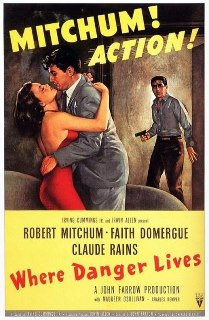
3 p.m. (12 p.m.): “Where Danger Lives” (1953, John Farrow). Love on the run, with infatuated Bob Mitchum falling for dangerous Faith Domergue, and the two of them heading for Mexico. A standard but engrossing “femme fatale” noir, from the director of “The Big Clock.”

8 p.m. (5 p.m.): “Ace in the Hole” (1951, Billy Wilder). See PICK OF THE WEEK.

2 a.m. (11 p.m.): “Our Man in Havana” (1960, Carol Reed). The third of the three film thriller collaborations between writer Graham Greene and director Carol Reed. (The others are “The Third Man” and “The Fallen Idol.”) It’s also the least admired by critics, and the team’s only comedy, with Alec Guinness playing a British vacuum cleaner salesman in Cuba inexplicably involved in a batty spy intrigue. The crack cast also includes Maureen O’Hara, Ralph Richardson, Ernie Kovacs, Noel Coward and Burl Ives.

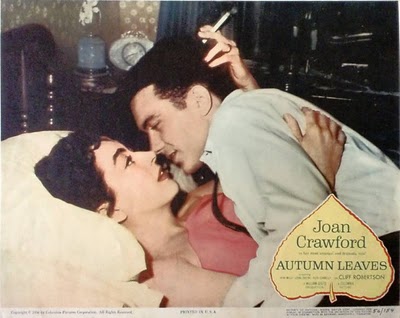
Joan Crawford and Cliff Robertson star in “Autumn Leaves.”

4 a.m. (1 a.m.): “Autumn Leaves” (1956, Robert Aldrich.) With Joan Crawford, Cliff Robertson and Vera Miles. Reviewed on FNB December 4, 2012.

Sunday, May 19

12 p.m. (9 p.m.): “Johnny O’Clock” (1947, Robert Rossen). Rossen’s directorial debut: a solid noir with a gambling backdrop and a vintage tough Dick Powell performance.

6 p.m. (3 p.m.): “Leave Her to Heaven” (1945, John M. Stahl). With Gene Tierney, Cornel Wilde, Jeanne Crain and Vincent Price. Reviewed on FNB April 18, 2013.

3 p.m. (12 p.m.): “Night Must Fall” (1937, Richard Thorpe). Emlyn Williams’ famed suspense play about a seductive young psycho (Robert Montgomery) and his rich lady target (Dame May Whitty) is given a plush MGM treatment. With Rosalind Russell. [Read more…]

Happy (film noir) Mother’s Day, everyone!

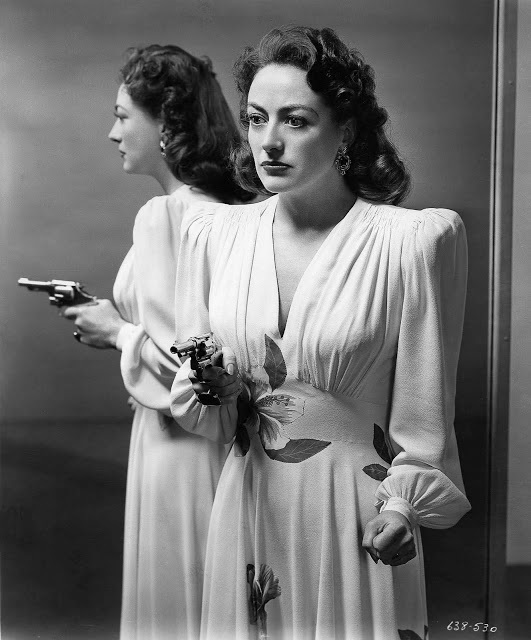
“I’d do anything for those kids, do you understand?” — Joan Crawford as Mildred Pierce.

The Noir File: Widmark is unforgettable as Tommy Udo

By Mike Wilmington and Film Noir Blonde

The Noir File is FNB’s guide to classic film noir, neo-noir and pre-noir from the schedule of Turner Classic Movies (TCM), which broadcasts them uncut and uninterrupted. The times are Eastern Standard and (Pacific Standard).

PICK OF THE WEEK

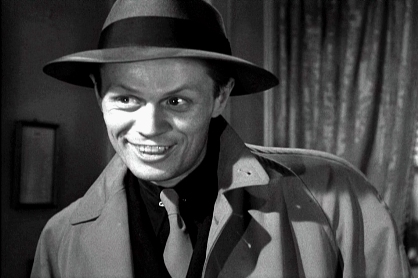
Grinning gangster Tommy Udo was a career-defining role for Richard Widmark.

Kiss of Death” (1947, dir. Henry Hathaway). Tuesday, May 14; 8 p.m. (5 p.m.). One of the most memorable, and scariest, of all film noir villains is Tommy Udo from “Kiss of Death,” as played by the young Richard Widmark. Tommy was a constantly grinning, giggling gunman with a pale, thin, deadly-looking face, topped by a trim fedora – a face and a chuckle that carried the promise of cold-blooded murder.

In “Kiss of Death” – another of director Henry Hathaway’s semi-true crime movies, this time co-scripted by the great Ben HechtVictor Mature plays Nick Bianco, an ex-crook trying to go straight, for his sweet wife Nettie (Coleen Gray). To escape his past, Nick becomes a mole recruited by the cops (including Brian Donlevy and Karl Malden) to infiltrate Udo’s mob and get the goods on this gangster. Udo falls for his new mob-mate, giggling, like a ton of bricks. Obviously, something very bad will happen when this psychopathic hood discovers that his new gun buddy is a traitor.

“Kiss of Death” is a classic, vintage Hollywood crime thriller, one of the film noirs that everyone has to see – to savor Hecht’s smart script and Hathaway’s taut direction, and to enjoy the terrific work of the entire killer cast and company. But mostly, you have to see it for Widmark. His Tommy Udo is an impersonation of pure evil so right-on that it almost freezes your blood to watch and hear him – and so convincing that a real-life member of the Mob, the notorious killer “Crazy Joey” Gallo, patterned his entire public personality after Widmark’s performance.

“Crazy Joey” Gallo

The role made Widmark a star, and, though he tried never to repeat it, and played mostly good guys for the rest of his career, he could never really get away from Tommy Udo and his pale, cold eyes, and what James Agee called his “falsetto baby talk, laced with tittering laughs.”

Tommy Udo is the last guy in the world you want to have his eye on you, the last guy whose laugh you want to hear on a dark street. And he’s the last guy you want to see standing behind a sick old lady, in a wheelchair, at the top of a staircase. Giggling.

Friday, May 10

6 a.m. (3 a.m.): “The Informer” (1935, John Ford). With Victor McLaglen, Preston Foster and Heather Angel. Reviewed on FNB December 12, 2012.

11 p.m. (8 p.m.): “Under Capricorn” (1949, Alfred Hitchcock). With Ingrid Bergman, Joseph Cotten and Margaret Leighton. Reviewed on FNB November 17, 2012. [Read more…]

Doc taps the typewriter’s mighty impact, enduring appeal

As a retro-obsessed scribe, I often dream of steno pads, fountain pens and carbon copies. (Think “Mad Men” or Tippi Hedren’s office job in “Marnie.”) And of course I recall the marvelous clack, smack and ding of a vintage Smith Corona.

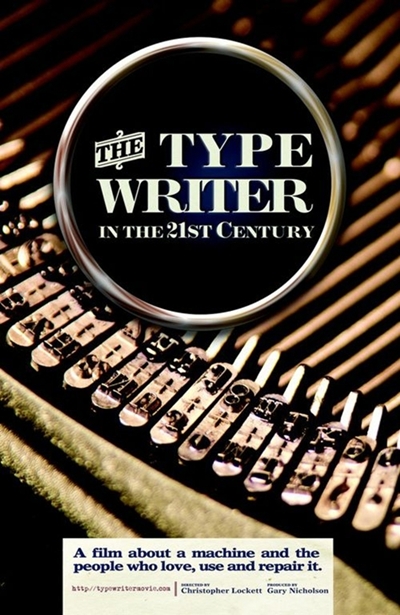
I am not alone in my nostalgia. Turns out, the good old-fashioned typewriter is experiencing a revival of popularity with users young and old. Just ask director Christopher Lockett and producer Gary Nicholson. Their documentary, “The Typewriter in the 21st Century,” opens in Los Angeles on Friday.

Inspired by a 2010 Wired magazine story called “Meet The Last Generation of Typewriter Repairman,” Lockett and Nicholson interviewed more than 30 typewriter devotees – writers, collectors, journalists, teachers, students, artists, inventors and repair men and women.

Among these old-school loyalists are non-fiction authors Robert Caro and David McCullough, who between them claim four Pulitzer Prizes, three National Book Awards and a Presidential Medal of Freedom. For Caro and McCullough (he has been writing on the same machine since 1965), the thoughtfulness and precision that a typewriter demands is integral to the writing and editing process.

And perhaps the creative process. It stands to reason that typewriters might have influenced the way literary heavyweights wrote, back in the day when a wordsmith might form a visceral connection with keys, carriage and ribbon. The film shows us machines once owned by the likes of Ernest Hemingway, Jack Kerouac, Tennessee Williams, John Steinbeck, Jack London, Sylvia Plath, George Bernard Shaw, John Updike, Ray Bradbury and Ernie Pyle. Certainly, all the great film noir novelists and screenwriters composed on typewriters.

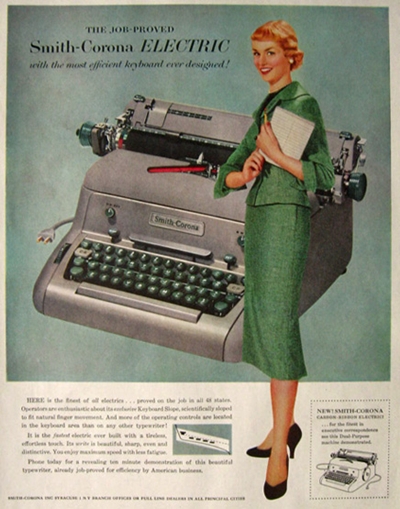
Smith Corona introduced the electric typewriter in 1955.

The filmmakers also explore the history (typewriters with a QWERTY keyboard date from 1873) and societal impact of these trusty devices. It’s easy to forget in our contemporary plugged-in cocoons, but typewriters changed the landscape of the business world. “The typewriter is the one piece of office technology that allowed women to move from the home to the professional work force,” says author Lynn Peril.

Whether drafting a work of art or just embracing a low-tech lifestyle, the connection to these machine endures. Singer-songwriter Marian Call uses a typewriter as a percussion instrument. “Nothing else makes that sound,” she says. “And it brings with it a flood of memories.”

Soldiers Peter Meijer and Alan Beck sent typewritten letters from the front lines in Afghanistan and Iraq. As Meijer put it: “One woman I sent letters to, when I visited her on leave, carried those letters around with her in her purse. You don’t get that with email.”

“The Typewriter in the 21st Century” runs May 10-16 at the Downtown Independent, 251 S. Main St., 213-617-1033. On May 10, the filmmakers will hold a Q&A between the 8 p.m. and 10 p.m. screenings.