Weegee works on display in New York and Los Angeles

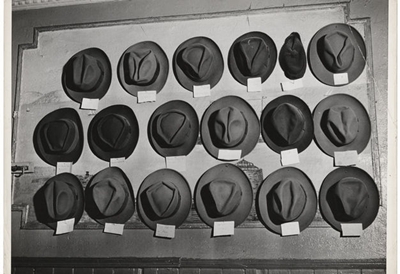
Weegee's Hats in pool room, Mulberry Street, New York, circa 1943. Copyright Weegee/ICP

Opening today at the International Center of Photography (ICP) in New York is “Weegee: Murder Is My Business.”

The famous photographer was born Usher Fellig in 1899 in what is now the Ukraine; his family moved to New York in 1909. He later acquired the nickname Weegee from the Ouija board game because of his knack for arriving at crime scenes just minutes after the crimes were reported.

Says the ICP: Between 1935 and 1946, Weegee was one of the most relentlessly inventive figures in American photography. His graphically dramatic and often lurid photographs of New York crimes and news events set the standard for what has become known as tabloid journalism.

Weegee also wrote extensively (including his autobiographical “Naked City,” published in 1945) and organized his own exhibitions. He died in 1968. This show includes environmental recreations of Weegee’s apartment and exhibitions. It runs through Sept. 2.
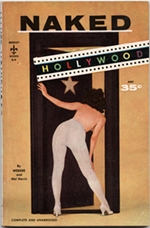
And running through Feb. 27 at MOCA is “Naked Hollywood: Weegee in Los Angeles.” More than 200 works from ICP’s Weegee archive are on display.

This Sunday, Jan. 22, at 3 p.m., Richard Meyer, guest curator of “Naked Hollywood,” Brian Wallis, chief curator at the ICP, and art historian Colin Westerbeck will discuss Weegee’s work, tabloid photography, celebrity culture and the lure of the lowbrow.

MOCA is at 250 S. Grand Ave. in Los Angeles.

Noir City X film fest starts Friday in San Francisco

The Film Noir Foundation celebrates 10 years of deliciously dark programming with NOIR CITY X: The Stuff Bad Dreams Are Made Of. The 10-day festival features a Dashiell Hammett marathon, freshly preserved 35mm rarities, by-popular-demand encore screenings, and special guest star Angie Dickinson. The fest runs Jan. 20-29 at the Castro Theatre in San Francisco.

Among the rarities NOIR CITY is presenting this year is a new 35mm print from Universal Pictures of 1949’s “The Great Gatsby,” starring Alan Ladd as F. Scott Fitzgerald’s legendary hero. Universal is also providing a new 35mm print of 1954’s “Naked Alibi,” starring noir’s favorite bad girl, Gloria Grahame. Also on the bill are preservations of the 1946 classic “Three Strangers” and 1950’s “The Breaking Point,” directed by Michael Curtiz and starring John Garfield.

After San Francisco, the fest will travel to other cities with variations on the programming.

Gearing up to watch the Golden Globes

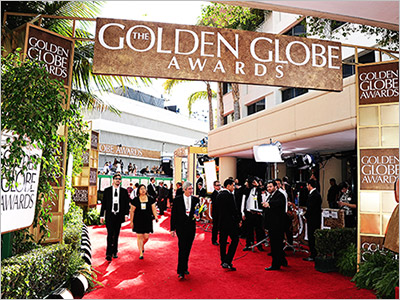
The Golden Globes red carpet in Beverly Hills

For me, a cozy spot on the sofa is the best place to watch the Golden Globes. Join me on Twitter as I scour the red carpet for nods to noir and retro charm.

The Hollywood Foreign Press Association presents the awards; the first ceremony was held in January 1944 at Twentieth Century Fox in LA.

Entertainment Weekly photo

Remembering the Black Dahlia 65 years after her death

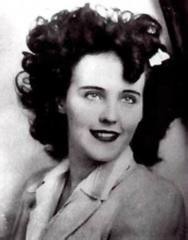
Beth Short was 22 when she died.

Today is the 65th anniversary of one of Hollywood’s most famous unsolved murders: the brutal slaying and mutilation of Elizabeth Short, also known as the Black Dahlia.

Her body, which had been cut in half at the waist, was found in a vacant lot at 39th Street and Norton Avenue in Los Angeles on Jan. 15, 1947. She was 22 years old.

Born in a Boston suburb on July 29, 1924, Elizabeth was the third of five daughters. Her father abandoned the family and her mother struggled to make ends meet. In 1944, Elizabeth came to California, hoping to live with her father; after a brief stay, he told her to leave.

It’s possible that she hoped to find work as an actress in Los Angeles but, with little education or means to support herself, she was frequently on the move, looking for new opportunities and cheap places to live. A few weeks prior to her death, Elizabeth stayed with a family in San Diego. She rode back to Los Angeles with a man named Red Manley and was seen downtown at the Biltmore Hotel on Jan. 9, 1947.

The Black Dahlia case remains unsolved.

Because the case was gruesome and sensational, and so little is known for certain about her life, theories and speculation, suspects and confessions abound. Police corruption and unethical journalistic practice severely impeded efforts to find justice. Her story spurred a plethora of media coverage as well as non-fiction and fiction books, including James Ellroy’s 1987 novel, “The Black Dahlia,” which was the basis for Brian DePalma’s film of the same name, made in 2006.

While her murder remains unsolved and many details are sketchy, it seems likely that Elizabeth ran out of friends and favors, that in those bleak days of January 1947, now such a long time ago, she had very few places to turn. With that in mind and to remember Elizabeth Short, I hope you’ll join me in making a donation to a women’s charity, such as the Downtown Women’s Center in Los Angeles, or a similar organization in your area.

Los Angeles photo expo is worth a visit

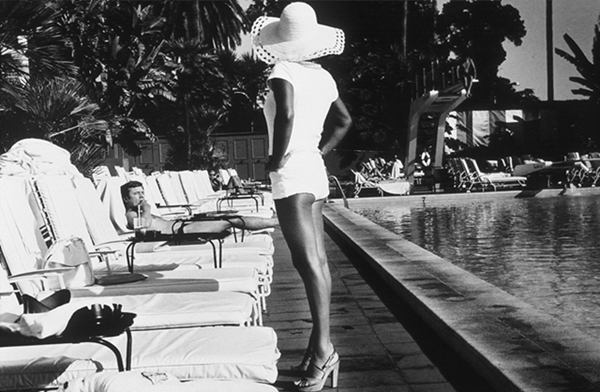
Woman by the Pool (Beverly Hills Hotel, 1975) by Anthony Friedkin; copyright Anthony Friedkin

The 21st annual international Los Angeles photographic art expo continues through Monday at the Santa Monica Civic Auditorium. The show features about 40 exhibitors as well as speakers and discussions.

To take his iconic Woman by the Pool (Beverly Hills Hotel, 1975), photographer Anthony Friedkin says he dressed up like a tennis pro so that he would blend into the “Hollywood thing – which is all about costume.”

Clad in white and carrying a racket, he saw his opportunity as soon as he got to the pool. “I believe photographers have a fate, a destiny, like all artists do. And much of this has to do with being in the right place at the right time. Regardless of the fact we work our whole lives to be there, at that precise moment in time, to get that extraordinary photograph, to visualize it and frame it artistically, there’s a certain amount of existential luck that has to come into play. And I felt it the day that I made that photograph.”

The Santa Monica Civic Center is at 1855 Main St., 90401. The show runs from 11 a.m. to 7 p.m. Saturday and Sunday, and Monday from 11 a.m. to 6 p.m. General admission is $20, with discounts available.

Visually stunning ‘Pina’ immerses you in singular style, but lacks context

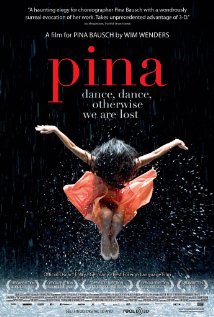
Pina/2011/Neue Road Movies, et al/106 min.

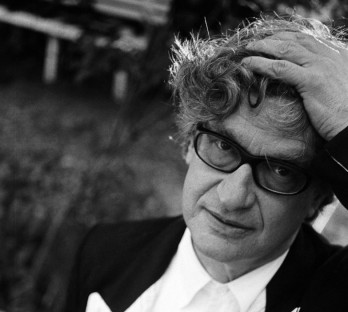
Wim Wenders

Having long admired Wim Wenders as a neo-noir director (“The American Friend,” “Hammett,” “The End of Violence,”) and documentarian (“Lightning Over Water,” Buena Vista Social Club,” “The Soul of a Man”), I always look forward to seeing his work. His latest film, “Pina” is a documentary about Pina Bausch, a German dancer, choreographer and teacher, who died in 2009 at the age of 68. It is the German entry for the Best Foreign Film Oscar.

Shot in 3-D and visually stunning, the film fully immerses you in Bausch’s singular aesthetic, vision and teaching style. From the first frame, you sense her intensity. And if you like German expressionistic dance, you might find the film illuminating, even moving. There are moments of humor as well.

If, like me, that style of dance is not your cup of tea, but you’re curious as to who this woman was, how she got started, how she made her mark and what critics thought, you’d best Google Pina Bausch beforehand. It’s definitely not in the film.

Oh all right, I’ll admit it, I’m a lazy American who doesn’t follow trends in Tanztheater, but I was hoping for maybe half a chapter of Bausch’s backstory and at least a glimpse of what made this woman tick. Interviews with people other than Bausch’s former students, perhaps?

Once you’ve done your Googling, be sure to follow critic Debra Levine’s brilliant suggestion for preparing to see this film and watch Mike Myers in “Sprockets.”

“Pina” opens today in LA and New York.

Frank DeCaro dishes up heaping helpings of camp in ‘The Dead Celebrity Cookbook’

“Highly offensive and exceedingly faggy.” It's all good for retro cookbook author Frank DeCaro.

“There’s a name for someone who says, ‘I can’t watch a movie in black and white.’ Stupid!”

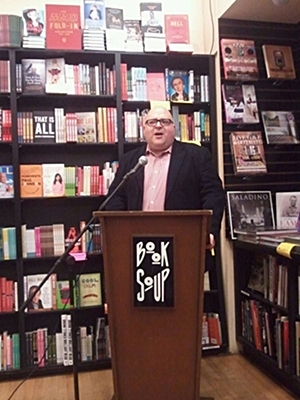
So said Frank DeCaro, author of “The Dead Celebrity Cookbook,” last night at a book signing in West Hollywood. A writer, critic and performer, DeCaro hosts a morning call-in program on Sirius XM satellite radio and writes the Icons column for CBS’ Watch! magazine.

He also likes to cook and throw parties. When the celebs were kind enough to die, as he puts it, the book seemed a natural. Highlights from noiristas include: Otto Preminger’s Deviled Eggs, Joan Crawford’s Poached Salmon, Bette Davis’ Red Flannel Hash, Lucille Ball’s Sunday Night Goulash, Fred MacMurray’s Flemish Pot Roast, Truman Capote’s Fettuccine, Anthony Perkins’ Tuna Salad, Alfred Hitchcock’s Quiche Lorraine, Janet Leigh’s Gâteau Doré, Agnes Moorehead’s Lobster Mousse, William Holden’s Hamburgers à la Hong Kong and Gregory Peck’s Ratatouille.

DeCaro’s favorite: Liberace’s Sticky Buns. “If Liberace didn’t know how funny that was, then the whole world crumbles,” said DeCaro. He is up front that he did not test every recipe, particularly Don Ho’s pigs’ feet soup. DeCaro suggests not picking Crawford’s salmon as a first effort. “Don’t start with Joan Crawford; that’s always good advice.”

And be warned: because many of the recipes are retro, they might call for fat-gram disasters like canned cream of mushroom soup. “You have to remember that frozen and canned food was not considered tacky,” he said. “It was considered modern, instant, groovy!”

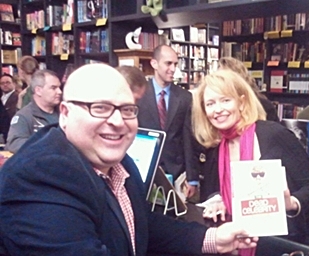
Frank DeCaro and FNB at Book Soup in West Hollywood

Having spent 15 years collecting recipes, DeCaro also has plenty of noshing trivia. Did you know that per capita Hawaii eats the most SPAM and Utah eats the most JELL-O?

Granted, the book might cause some to wince or groan (he includes a pie recipe from Karen Carpenter). One detractor told DeCaro she thought his book was “highly offensive and exceedingly faggy,” which pleases DeCaro to no end. He is now working on a Christmas edition.

Speaking of maximizing opportunity, DeCaro’s domestic advice was not limited to the kitchen. He’s fond of telling his husband Jim Colucci: “You cannot sleep with anyone but me. Unless it’s good for your career.”

“The Dead Celebrity Cookbook: A Resurrection of Recipes from More Than 145 Stars of Stage and Screen” (HCI Books, $19.95)

Free stuff from FNB: Win ‘We Need to Talk About Kevin’

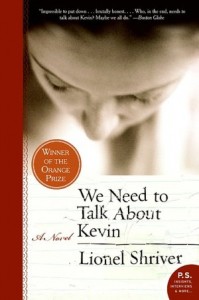
In need of winter reading? Enter to win our January giveaway: A paperback copy of “We Need to Talk About Kevin,” by Lionel Shriver, a gripping tale of horrifying family dysfunction. Director Lynne Ramsay’s neo-noir movie version of “Kevin” started release in December and returns this month. Check your local listings for details. “We Need to Talk About Kevin” stars Tilda Swinton, John C. Reilly and Ezra Miller.

(Matthew is the winner of the December reader giveaway, the Bogie-Bacall DVD set. Congrats to Matthew and thanks to all who entered!)

To enter the January giveaway, just leave a comment on any FNB post from Jan. 1-31. We welcome comments, but please remember that, for the purposes of the giveaway, there is one entry per person, not per comment.

The winner will be randomly selected at the end of the month and announced in early February. Include your email address in your comment so that I can notify you if you win. Your email will not be shared. Good luck!

More Marilyn at the Cinematheque in Hollywood

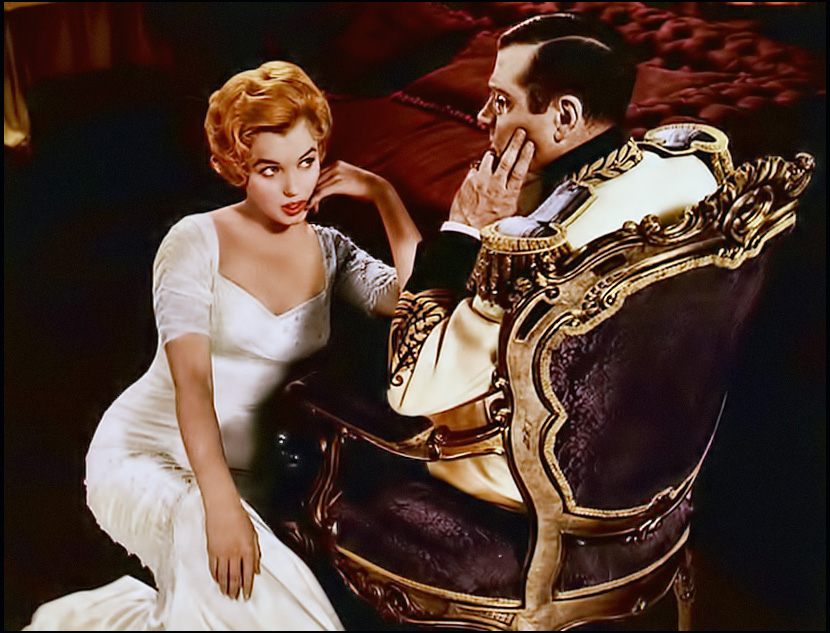
Marilyn Monroe and Sir Laurence Olivier

The American Cinematheque will show a Marilyn Monroe double feature at 7:30 p.m. Sunday, Jan. 8, at the Egyptian Theatre in Hollywood. The movies are: 1957’s “The Prince and the Showgirl” (co-starring and directed by Sir Laurence Olivier) and Billy Wilder’s “Some Like It Hot” from 1959.

At 6:30 p.m., in the lobby, Susan Bernard will sign copies of her book, “Marilyn: Intimate Exposures.” The book consists of 125 photos by her father Bruno Bernard. The photos, ranging from 1946 to 1954, include 40 previously unpublished images. There will be a discussion between films with Susan Bernard.

Michelle Williams and Kenneth Branagh will appear at the Egyptian’s screening of “My Week with Marilyn,” directed by Simon Curtis, 7 p.m. Wednesday, Jan. 11.

General admission is $11; members pay $7. The Egyptian is at 6712 Hollywood Blvd.

What are your New Year’s resolutions?

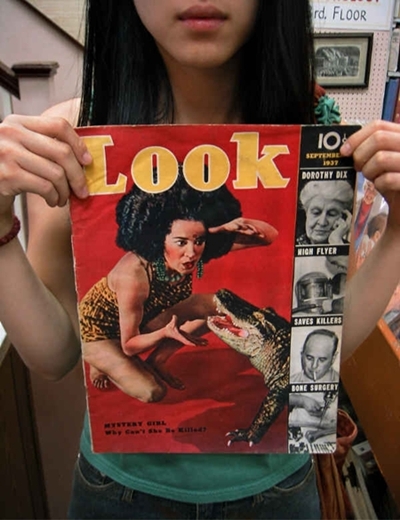
Look magazine was published from 1937 to 1971. Noir director Stanley Kubrick was a staff photographer from 1946 to 1951.

In 2012, I’m taking a leaf out of Mystery Girl’s book (see the cover girl above) and have decided to relish bafflements and enigmas without overthinking them.

Additionally, I plan to use Skype more. It’s easy, it’s free, it’s installed on my computers. Now I just have to start talking. This should be eminently do-able.

Photo for Film Noir Blonde by Randy Ruth