UCLA’s Festival of Preservation delivers two rare film noir titles

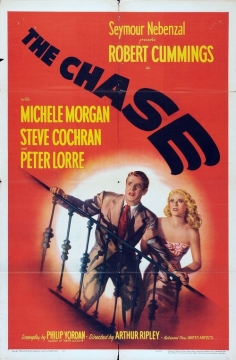
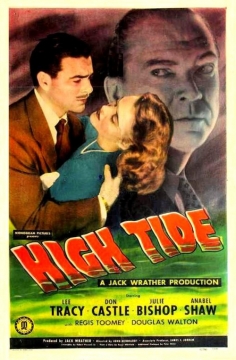
I’m looking forward to seeing two rarely screened noirs – “The Chase” (1946, Arthur D. Ripley) and “High Tide” (1947, John Reinhardt) – at 7 p.m. Sunday, March 10, at UCLA’s Billy Wilder Theater in Westwood. The special guest is Harold Nebenzal, son of producer Seymour Nebenzal, who worked on “The Chase.”

The titles are part of UCLA’s Festival of Preservation, which opened last weekend with a special screening of “Gun Crazy” (1950, Joseph H. Lewis), and runs through March 30.
Based on a Cornell Woolrich novel, “The Chase” tells the tale of a returning World War Two solider named Chuck Scott (Robert Cummings) who’s short of cash and job prospects. Enter Eddie Roman (Steve Cochran), a Miami businessman in need of a chauffeur. Chuck’s cool with the new uniform but before long finds himself in a murderous love triangle with Eddie’s wife (Michèle Morgan). Co-starring Peter Lorre, lensed by Frank F. Planer. (Preservation funded by the Film Foundation and the Franco-American Cultural Fund.)

“High Tide” was the second of two independent crime thrillers produced in 1947 by Texas oil tycoon Jack Wrather. It shares with “The Guilty” the same cameraman and screenwriter (Henry Sharp and Robert Presnell), the same protagonist (actor Don Castle plays a Los Angeles newspaper reporter turned private dick), and the same director, Austrian-born John Reinhardt. Lee Tracy co-stars in “High Tide” as a cynical editor. (Preservation funded by the Packard Humanities Institute and the Film Noir Foundation.)

Kim Novak, natural-born star, honored with TCM tribute

One way to Kim Novak’s heart was through first editions.

Airing tonight: Kim Novak: Live from the TCM Classic Film Festival. Taped at last year’s festival in Hollywood, this one-hour interview special kicks off a tribute night to Novak. Here, Michael Wilmington shares his appreciation for this actress.

My favorite Kim Novak line comes in “Pal Joey,” Columbia’s dubiously altered, shamefully bowdlerized but still entertaining adaptation of the great musical classic. Novak’s Linda English says to Frank Sinatra’s cabaret Casanova Joey Evans, in a girlish, amused, deliberately non-provocative voice, “You’re right. I do have a great shape. Confidentially, I’m stacked.”

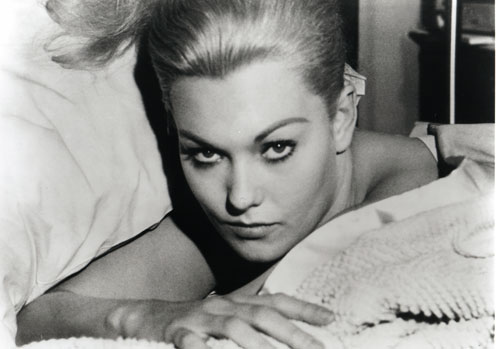
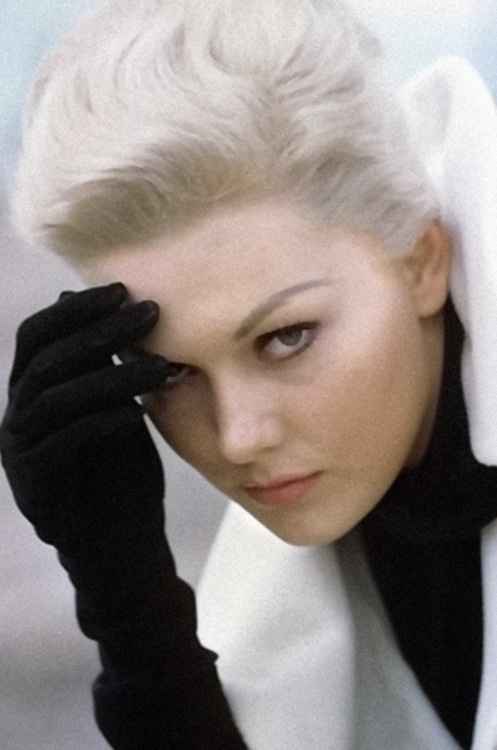
Kim Novak as Judy in Hitchcock’s “Vertigo” (1958).

Stacked she certainly was: a willowy but sumptuous blonde bombshell with short-cropped platinum hair and a 37-inch bosom that never knew a brassiere (“That’s right!” her “Vertigo” director Alfred Hitchcock once said tartly to François Truffaut. “She’s particularly proud of that!”)

Novak, born in 1933, was a Chicago railroad worker’s daughter and a natural beauty with haunting eyes and a vulnerable air, who became a movie star in her early twenties, with 1954’s film noir “Pushover” directed by her lover Richard Quine.

She then became a megastar with 1955’s “Picnic,” directed by the explosive Joshua Logan, in which – as playwright William Inge’s small-town Kansas princess Madge – Novak danced her way into the hearts and loins of William Holden’s ex-football star/drifter Hal, and many more of the males of a susceptible nation.

Her movies of course capitalize on the classic Novak image: a gorgeous fair-haired girl who’s a little troubled by her own long-legged, statuesque beauty, a bit hesitant about pushing herself forward, slinky and self-conscious, sometimes suspicious of men, a traffic-stopping but vulnerable glamour girl with brains and surprising sensitivity.

Like Marilyn Monroe, who often played it dumb, the real-life Novak was a reader. (Sinatra, one of her dates, wooed her with first editions, while Sammy Davis Jr. hit the jackpot in one of the more famous secret love affairs of the ’50s.)

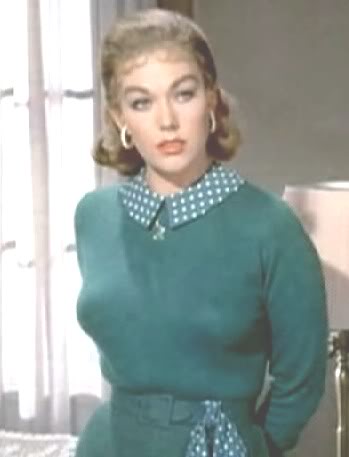
Kim Novak became a megastar with 1955’s “Picnic.” By 1964, she was considered past her prime.

By 1964, she was considered past her prime and, when she played Polly the Pistol, the girlish hooker (with the belly-button jewel and the requisite heart of gold) in Billy Wilder’s “Kiss Me, Stupid,” she shared in the movie’s lousy notices.

Today “Kiss Me” is rightly regarded as a flawed classic, and if original star Peter Sellers hadn’t had his heart attack and dropped out in mid shooting, we might see it as a masterpiece, as some of the French do (“Embrasse-moi, Idiote!”)

But maybe she was too much a creation of the ’50s, of the last fugitive years of the Golden Age, a kind of platinum blonde Jekyll and Hyde. Kim Novak could play it naïve and lower class, or tony and glamorous, and sometimes she played both in the same movie, as in her masterpiece, as Madeleine/Judy in Hitchcock’s “Vertigo.”

She perhaps wasn’t a natural actress. She gave some awkward performances. But she was a natural-born star. Kim was one of the movie dream girls of my youth, and I still get a pang looking at her. Confidentially, she’s stacked.

‘Airbrushed Nation’ reveals inner workings of beauty mags

By Anne Brennan

“Do not read beauty magazines. They will only make you feel ugly.”

That’s a line from Chicago Tribune columnist Mary Schmich.

Despite that warning, there’s something about beauty magazines that is irresistible. What is it about the glossy paper, the aspirational photos, the total escapism?

Thud.

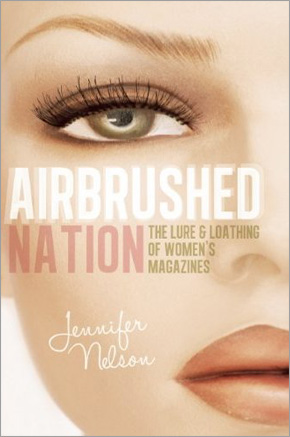
That’s the sound these magazines made when they hit the wastepaper basket after I read “Airbrushed Nation: The Lure & Loathing of Women’s Magazines,” (Seal Press, $16) by Jennifer Nelson.

Nelson is a freelance journalist who has written for “practically every women’s magazines on the newsstands,” according to her About the Author bio.

Just like the pulling back of the curtain in “The Wizard of Oz,” Nelson reveals the inner workings of beauty magazines such as Glamour, Vogue, Self and Ladies Home Journal, also called the “pink ghetto.”

“Let’s get real, ladies, because the magazines sure aren’t!” Nelson writes.

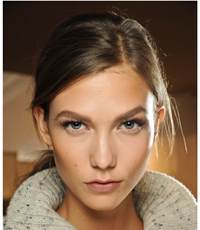
Karlie Kloss

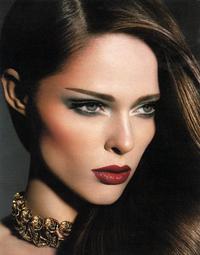
Everyone knows those pictures of Karlie Kloss and Coco Rocha are airbrushed, but that’s just touching the surface. Nelson explores an interesting range of topics within the women’s magazine industry: history, working environment, advertising, fear-mongering and politics, even if most stories focus on the weight and dress size of female politicians.

She finds some positive aspects about the industry, such as … wait, had to page through the book to find an example. Ah, yes, many of the magazines cover social issues and profile everyday women, Nelson says.

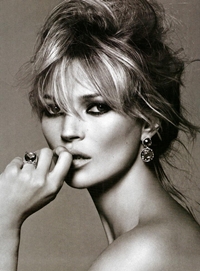
One little tidbit in the book stuck out to me. Even the makeup on the cover models, (you know, the “About the Shoot” notes that say Kate Moss is wearing Maybelline lipstick, blush and mascara, etc.) is fake. Editors try to match the shades used by the makeup artist to commercial cosmetic products. Then they say that’s what the model is wearing. No wonder I could never look like Kate, even if I did have the same Cherry in Snow lipstick!

Coco Rocha

As a writer, I was especially interested in the insider look at the editorial departments. Nelson confirmed what I’ve experienced and what other writers have told me. For example, editors only want beautiful “real people” profiled.

Also, I’ve often wondered: How many times can an editor write a version of “thin thighs in 30 days” or “burn belly fat” for a magazine cover? Twelve times a year, it appears.

That said, I was a little disappointed this book wasn’t juicier. I was expecting really outlandish anecdotes, à la “The Devil Wears Prada.”

The only question Nelson doesn’t seem to answer is why we (ok, I) continue to read these magazines. Long ago, when I traveled by T. Rex, we didn’t have the internet. The most beauty, fashion and sex advice I could find other than magazines was Judy Blume’s “Are You There God, It’s Me, Margaret?”

Kate Moss

We can get our fix from a multitude of media now. But nothing replaces a magazine for me. Like Nelson says, there is some good writing out there, especially in mags such as O, The Oprah Magazine, More and Real Simple.

So, yes, of course, I’ll pull those glossies out of the trash. At least I can read them with new and informed eyes, which are always un-airbrushed.

Except for maybe my LinkedIn profile.

Gotta do something about that.

Anne Brennan is an Ohio-based writer. It’s always a delight to have her contribute to FNB.

Happy Oscar Sunday, everyone!

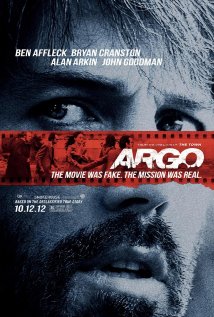
“Argo” seems a sure bet for Best Picture.

FNF film noir fest sparkles in the Emerald City

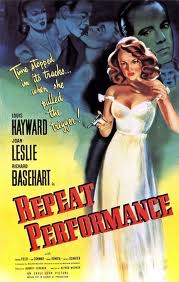
The Noir City Film Festival and Film Noir Foundation President Eddie Muller will return to Seattle Feb. 22-28 at the Seattle International Film Festival. Eddie will present a selection of films culled from San Francisco’s Noir City 11 including 35mm prints of the FNF’s most recent restorations: “Try and Get Me!” (1950), “Repeat Performance” (1949) and “High Tide” (1948).

There is also a night of African-American noir, including a screening of Richard Wright’s “Native Son” (1951), starring the author. The week winds up with a night of 3-D noir, pairing two of the first 3-D movies of 1953, “Inferno” and “Man in the Dark,” both digital restorations.

Additionally, the FNF and the American Cinematheque will combine forces for Noir City: Hollywood, the 15th annual festival of film noir, which runs April 5-21 at the Egyptian Theatre. Organizers say the lineup includes the FNF’s most recent restorations and several titles never before screened at a Noir City festival.

Win tickets to ‘Sparks’ premiere at Cinequest Film Festival

“Sparks,” a superhero noir thriller set in the 1940s, is slated to make its world premiere on Friday, March 1, at the Cinequest Film Festival in San Jose, Calif. “Sparks” will debut as a feature-length film and graphic novel.

The story focuses on a masked vigilante named Ian Sparks, whose pursuit of a notorious criminal leaves Sparks’ life in ruins.

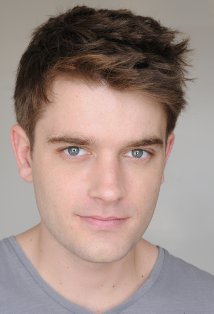
The film version pairs two of Hollywood’s rising stars, Chase Williamson (“John Dies at the End”) and Ashley Bell (“The Last Exorcism Part II”), with an award-winning supporting cast: Clancy Brown, Clint Howard, Jake Busey and William Katt.

Chase Williamson

As for the filmmakers, Christopher Folino and Todd Burrows directed “Sparks.” Producers are Folino, Tyler Endicott, Mike Anthony Smith and Eric D. Wilkinson.

“Sparks” will premiere at 7 p.m. Friday, March 1, at the California Theatre in San Jose. The cast and crew will be in attendance for a Q&A after the screening. There will be another screening and Q&A at 2 p.m. Saturday, March 2, at the San Jose Repertory Theatre. A third screening will take place at 4:45 p.m. Tuesday, March 5, at the San Jose Repertory Theatre. Folino will attend.

If you would like to be entered into a random draw to win tickets to the premiere on March 1, follow Film Noir Blonde on twitter and retweet a “Sparks” tweet. Two winners will be selected; each will win two tickets. Winners will be notified via twitter on Feb. 28 and tickets can be collected March 1 at the California Theatre’s will-call window.

Susan Andrews to introduce ‘Laura’ at the Egyptian Theatre

The delightful, urbane and unapologetically posh film noir “Laura” (1944, Otto Preminger) screens at 7:30 p.m. Wednesday, Feb. 20, at the Egyptian Theatre in Hollywood.

Here’s a quick synopsis from the event organizers: Investigating a murder, chain-smoking Detective McPherson (Dana Andrews) falls in love with the dead woman, only to find out it wasn’t she who was murdered. The brilliant cast includes Gene Tierney as the gorgeous Laura, Clifton Webb as Waldo Lydecker and Vincent Price as Laura’s fiancé, Shelby Carpenter. The film is said to have been an inspiration for David Lynch’s “Twin Peaks.”

You can read my full review of “Laura” here.

Dana Andrews’ daughter, Susan Andrews, will introduce the movie. Author Carl Rollyson will sign copies of his book “Hollywood Enigma: Dana Andrews” at 6:30 p.m. in the lobby. (“Laura” was recently released on Blu-ray and is a great addition to your film library.)

On Valentine’s Day, much noir love from FNB

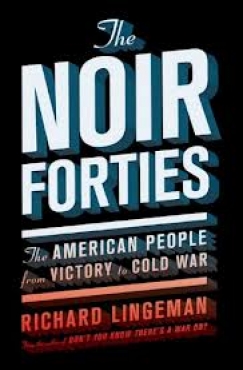
Happy Valentine’s Day, everyone! This sounds like a book to love: “The Noir Forties: America from Victory to Cold War” by Richard Lingeman.

From the LA Times review: “Films noir,” Lingeman declares at the outset, “are a key for unlocking the psychology, the national mood during those years.” But despite its title, The Noir Forties is not a book about the films – for that, readers should turn to J. Hoberman’s recent book An Army of Phantoms: American Movies and the Making of the Cold War, and to the classic More Than Night: Film Noir in its Contexts by James Naremore. Instead, Lingeman’s book provides a broader history of the brief but crucial period when the world of the New Deal died and the iron cage of Cold War politics and culture was forged. It would remain in place for the next 45 years.

Meanwhile, if you are in need of last-minute Valentine’s gift ideas for your guy(s), click here.

Happy 80th birthday, Kim Novak!

Lovely Kim Novak in a still from “Vertigo,” one of her most famous movies.

One of our all-time favorite film noir blondes, Kim Novak, turns 80 today. She was born Marilyn Pauline Novak in Chicago, where as a young woman she found work as a model. She moved to Los Angeles to continue modeling but instead became an actress.

Among her many screen credits, she is perhaps best known for her work in “Picnic” (1955), “The Man with the Golden Arm” (1955), “Pal Joey” (1957), “Vertigo” (1958) and “Bell Book and Candle” (1958).

“For every answer,” Novak once said, “I like to bring up a question. Maybe I’m related to Alfred Hitchcock or maybe I got to know him too well, but I think life should be that way.”

TCM will honor Novak with a tribute night and screening of four films on March 6. The evening will open with the premiere of Kim Novak: Live from the TCM Classic Film Festival, a one-hour interview special hosted by TCM’s Robert Osborne and taped at last year’s festival in Hollywood.

The Space airs short films exploring Hitchcock’s early work

In conjunction with the recent U.K. release of the film “Hitchcock” (starring Anthony Hopkins and Helen Mirren), The Space, an on-demand digital arts service developed by Arts Council England and the BBC, is offering a special treat for Hitch fans. The Space will air five short films that provide context to the master of suspense and his early work.

“The Pleasure Garden” (1925) was the first full film Hitchcock directed.

The set of short films, commissioned by the British Film Institute, includes:

Alfred Hitchcock from the archive

Hitchcock gives his insight into the workings of Hollywood, talking candidly about stars’ salaries and the difficulty of working with well-known actors.

Hitchcock at the picture palace

Historians Henry K. Miller and Matthew Sweet whisk viewers back to 1920s Britain – the era of the picture palace that saw the young Hitchcock learn his craft, refine his art and establish himself as an innovative, ambitious filmmaker.

Seeds of genius: “The Pleasure Garden”

Film historian Charles Barr and the BFI’s silent film curator Bryony Dixon explore Hitchcock’s distinctive style of visual storytelling, focusing on Hitchcock’s first full-length, finished film “The Pleasure Garden” (1925).

Restoring “The Pleasure Garden”

The unique story of how the BFI restored “The Pleasure Garden,” almost a century after it was made.

Scoring “The Pleasure Garden”

This short film follows composer Daniel Patrick Cohen’s journey to create a new score for this seminal Hitchcock work.

You can watch the films here.