Film noir’s feline fatales: The cat in ‘The Asphalt Jungle’

More on the most famous kitties in film noir

The Cat in the Diner in “The Asphalt Jungle” 1950

Name: Lola Pawsingham                                                

Character Name: Doris the Diner Cat

Bio: Unlike her “Asphalt Jungle” character Doris, who led a precarious and hardscrabble existence (stingy scraps and threats of harm from surly customers), feline actress Lola Pawsingham grew up in a secure and loving home, the daughter of Vaudeville’s Boots ‘n’ Hoots, a soft-shoe and comedy duo.

Lola Pawsingham

Lola and her parents were visiting relatives in Los Angeles when she ran into director John Huston at the Pig & Whistle in Hollywood; he immediately cast her in “The Asphalt Jungle.”

After filming wrapped, Huston invited her to join him on his next trip to Ireland. It was there, at the Owl & Pussycat pub in Galway, that she met the dashing, Sligo-born poet Seamus O’Haraball. Sparks flew and the pair embarked on a creative and romantic partnership that flourished for several years.

She inspired many of his works, perhaps most famously: “Lola and the Faun,” which was later turned into a play that premiered at the Tabby Theatre in Dublin. After that, they divided their time between Paris and Nice. But in 1959, tragedy struck and O’Haraball died in a plane crash on his way to London for the Eliot Awards, honoring feline-inspired verse and furry scribes. (O’Haraball was the favorite to win the highly coveted Jellicle lifetime-achievement award.)

Pawsingham was devastated, but a few years later met comedian Al E. Doode who managed to mend her broken heart and was by her basketside when she passed away peacefully in 1966.

Image from http://catsinsinks.com

Free stuff from FNB: Win ‘Blow Out’ or ‘The Maybelline Story’

Gerald C. has won March’s giveaway and will receive a copy of “Sweet Smell of Success,” recently rereleased by Criterion. For the April giveaway, I have two nice prizes and will pick two winners.

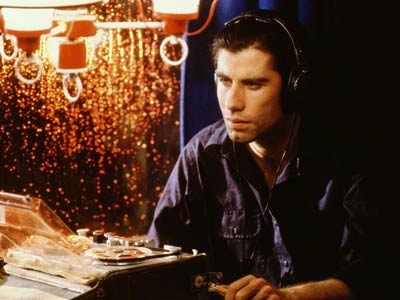
John Travolta in "Blow Out"

First, the lovely people at Criterion will provide a copy of Brian DePalma’s 1981 neo-noir thriller, “Blow Out,” starring John Travolta, Nancy Allen and John Lithgow. Extras include new interviews with DePalma and Allen.

Second, eyeing up a family drama: In 1915, when Tom Lyle Williams watched his sister Mabel fix her fire-singed lashes and brows with petroleum jelly, coal dust and ash, little did he know he was making a date with destiny. Read about the building of an iconic brand in “The Maybelline Story and the Spirited Family Dynasty Behind It,” a book by Sharrie Williams with Bettie Youngs.

To enter, just leave a comment on any FNB post from April 1-30. The winners will be randomly selected at the end of the month and announced in early May. Include your email address in your comment so that I can notify you if you win. Your email will not be shared.

Good luck!

Filmways Pictures image

Farley Granger (1925-2011): A face born for film noir and a movie immortal

By Michael Wilmington

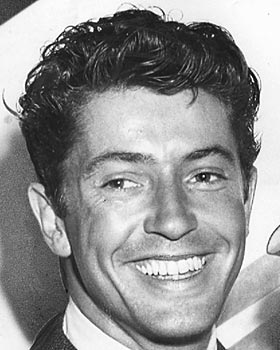
Farley Granger

Farley Granger, who died at 85 on March 27, was the darkly handsome, sensitive-looking lead in four indisputable noir classics: Nicholas Ray’s “They Live by Night” (1949), Anthony Mann’s “Side Street” (1950), and by Alfred Hitchcock: “Rope” (1948) and “Strangers on a Train” (1951).

Blessed (or sometimes cursed) with pretty-boy looks, dark curly hair and an expression that could vary from bruised innocence and outright anguish to wary bemusement and dissolute sadism, Granger became a Hollywood movie star at 18, right out of North Hollywood High, when Samuel Goldwyn decided to sign him and groom him.

The teenager was cast in two Lewis Milestone World War II movies, “North Star” (1943) and “The Purple Heart” (1944). Goldwyn signed him again when Granger returned from WWII service in 1948.

It’s his noirs that make Farley Granger a movie immortal. We remember him best as the murderous but conscience-plagued college boy modeled on thrill-killer Nathan Leopold in “Rope”; as the desperate young husband caught in a web of crime in “Side Street”; as the bank-robbing outlaw, Bowie, part of a Bonnie-and-Clyde team with Cathy O’Donnell’s Keechie in “They Live By Night” (O’Donnell also co-starred with him in “Side Street”); and as socially ambitious tennis star Guy Haines, bedeviled by the persistent “criss-cross” killer, Bruno Anthony (the magnificently deranged Robert Walker), in Hitchcock’s masterpiece “Strangers on a Train.”

After a minor noir “The Naked Street” and a lush period crime drama “The Girl in the Red Velvet Swing” (both 1955), Granger returned far less often to the big screen, though he remained a permanent part of Hollywood’s historical landscape.

And of the international film landscape. One of his finest performances was as the handsome, seductive and amoral Austrian Army officer, Lt. Franz Mahler, the wastrel who ruins Alida Valli’s life, in Luchino Visconti’s great operatic Italian period drama from 1954 “Senso” – a role that Marlon Brando had wanted and read for.

(“Senso” has just been released in a splendid Criterion edition, complete with a documentary, interviews and a bonus disc of the English-language version, “The Wanton Contessa,” with Granger’s voice.)

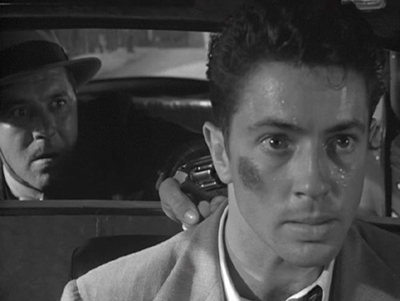
Farley Granger starred in "Side Street" from 1950 directed by Anthony Mann.

Sensitive or troubled in most of his famous parts, Granger may have suffered in ’50s Hollywood, a time and place where his bisexuality – hinted at in his “Rope” and “Strangers” roles – could be something of a career killer. (Among his lovers: “Rope’s” screenwriter Arthur Laurents, composer-conductor Leonard Bernstein, Shelley Winters and Ava Gardner.) [Read more…]

Honey, your April horoscope is here …

Fate reigns supreme in film noir, but that doesn’t mean we don’t love us some zodiac fun. Hope your April is devoid of tiresome fools and fretting over taxes, and instead marked by spring’s sensual delights and adorable bunnies bearing baskets of treats. And happy birthday, Aries and Taurus! A special shout-out to Aries bad asses Bette Davis, Spencer Tracy and Gregory Peck (April 5), Francis Ford Coppola and Russell Crowe (April 7), Julie Christie and Sarah Michelle Gellar (April 14), Maria Bello (April 18) and Taurus mega-talents Jack Nicholson (April 22), Al Pacino (April 25) and Penelope Cruz (April 28).

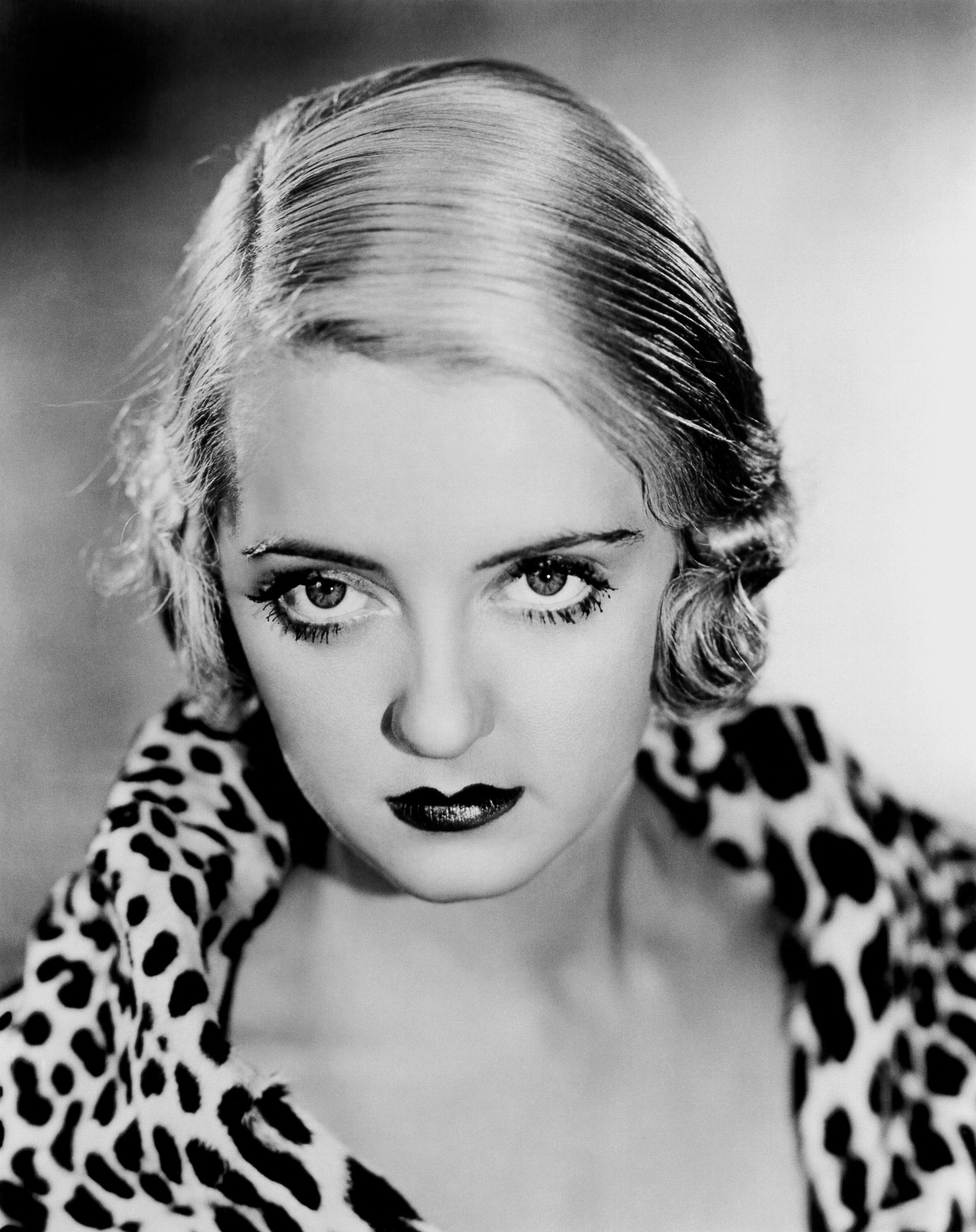
Bette Davis

Aries (March 21-April 20): Just when you thought strong-willed Aries was aptly personified by Joan Crawford (March 26), along comes Bette Davis (April 5) to give Joan a run for her money. An actress, a fighter and a thinker, Davis was always ahead of her time. One off-screen example: When she co-founded and ran the Hollywood Canteen, a nightclub for WWII servicemen, she insisted that the venue be racially integrated, pointing out that in combat, “The black soldiers take the bullets the same as the whites.” This month, follow in her determined footsteps and, on the creative front, adhere to this Davis maxim: “Attempt the impossible in order to improve your work.” Meanwhile, live it up! Be spontaneous, sexy and silly, and don’t waste time on guilt.

Taurus (April 21-May 21): It might be high time for a spring shopping spree. But before you whip out your wallet, consider the singular beauty of a big fat bank balance; it is a sight to behold. Perhaps you could get by on last year’s haul or restrict yourself to one frugal purchase. Don’t forget to tap your crafty, ever-so-slightly conniving side to dream up a few clever April Fools’ jokes. You shouldn’t deny your adoring fans the chance to enjoy your terrific flair for fun. Be bold with your man the week of the 18th. Come to think of it, why wait till then? [Read more…]

On the radar: Noir fest hits the Egyptian, get into Cain’s brain on ‘Mildred Pierce’ tour, Bette and Joan on stage

There’s nothing like a bunch of noirs in my back yard to put me in a good mood!

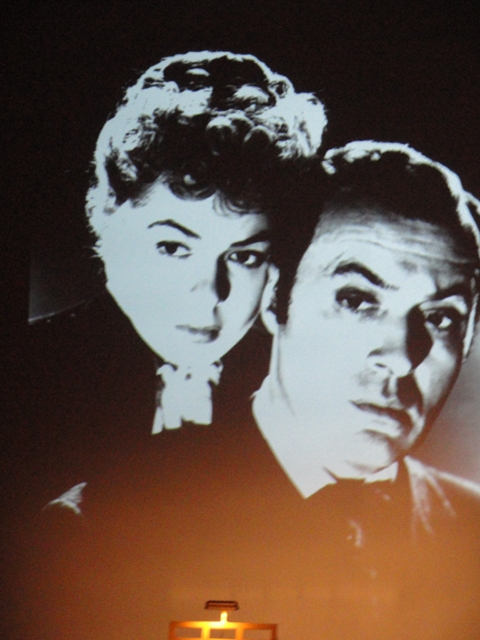
Ingrid Bergman and Charles Boyer star in "Gaslight" from 1944.

So I’m very excited that the NOIR CITY: HOLLYWOOD film festival, presented in collaboration with the Film Noir Foundation, returns to the Egyptian Theatre on April 1.

Now in its 13th year, the program features several new prints preserved by the foundation and the UCLA Film & Television Archive. The series is hosted by the foundation’s Eddie J. Muller and Alan K. Rode. For more info, visit: http://bit.ly/ebV4uM.

There is much to see at this year’s fest (28 films total) and top on my viewing list are:

“High Wall” (1947, Curtis Bernhardt)

“The Hunted” (1948, Jack Bernhard)

“The Two Mrs. Carrolls” (1947, Peter Godfrey) and “The Dark Mirror” (1948, Robert Siodmak)

“Journey into Fear” (1943, Orson Welles)

“Kiss Tomorrow Goodbye” (1950, Gordon Douglas)

“A Woman’s Secret” (1949, Nicholas Ray)

“Caught” (1949, Max Ophuls)

“Framed” (1947, Richard Wallace)

“Gaslight” (1944, George Cukor) and “My Name is Julia Ross” (1945, Joseph H. Lewis)

One way ticket to Noirville: Viewers of HBO’s “Mildred Pierce,” directed by Todd Haynes, may be interested to know about a bus tour of the Los Angeles venues that inspired James M. Cain, author of the novel on which the series and the 1945 film were based. Read Sean Macaulay’s story at: http://bit.ly/enRyfV.

London anyone? According to Playbill: “London’s Arts Theatre has announced details of its summer program, which will include the world premiere of Anton Burg’s Bette & Joan, which will star Greta Scaachi and Anita Dobson in the title roles of Bette Davis and Joan Crawford, respectively.” Read more at: http://bit.ly/f8kghH.

Huston explores ‘Asphalt Jungle’ with an unflinching eye

The Asphalt Jungle/1950/MGM/112 min.

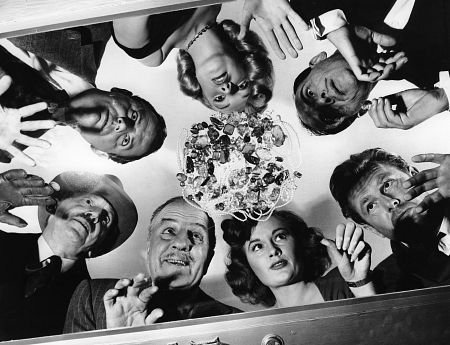
“The Asphalt Jungle” was a departure in that it humanized its villains.

“The Asphalt Jungle” was a departure in that it humanized its villains.

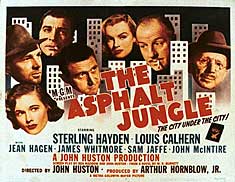
“The Asphalt Jungle” from 1950 by director John Huston is rightly considered a masterpiece. Excellent storytelling and an outstanding cast, including Sterling Hayden, Louis Calhern, Sam Jaffe, Jean Hagen and Marilyn Monroe, have helped it stand the test of time.

But its stark, unwavering realism is not for everyone. Louis B. Mayer, head of MGM, where Huston made the movie, had this to say about the flick: “That ‘Asphalt Pavement’ thing is full of nasty, ugly people doing nasty things. I wouldn’t walk across the room to see a thing like that.”

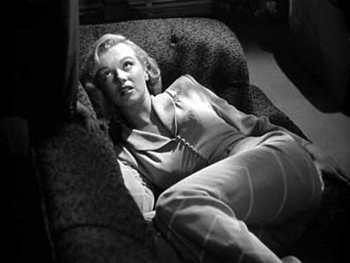
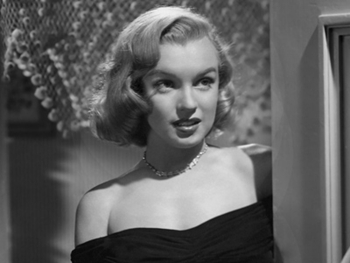
This small but pivotal role helped put Marilyn on the map.

This small but pivotal role helped put Marilyn on the map.

Um, did he not see luminous and fragile Monroe as mistress Angela Phinlay? Huston portrays a gang of thieves as flawed humans trying to make a living. “We all work for our vice,” explains menschlike mastermind Doc Erwin Riedenschneider (Jaffe). Recently released from jail, Doc has planned every detail of a $1 million jewel robbery and seeks to round up the best craftsmen he can find for one last heist.

A fat wallet means Doc can head to Mexico and court all the nubile girls he can handle. Dix Handley (Hayden), a tough guy with swagger to spare, hopes to pay his debts and return to his beloved horses in Kentucky. Getaway driver Gus Minissi (James Whitmore) is sick of running his dingy diner. Bookie ‘Cobby’ Cobb (Marc Lawrence) covets booze. Safecracker Louis Ciavelli (Anthony Caruso) has a wife and kid to support. Alonzo ‘Lon’ Emmerich (Calhern) is a wealthy but overspent lawyer who wants to be solvent again.

“You may not admire these people, but I think they’ll fascinate you,” says Huston in an archive clip included on the DVD. They pull it off, but what heist would be complete without a doublecross and crossing paths with the police?

In this macho, man’s-world movie, there is alas no femme fatale. But rest assured there are flawed women aplenty. Hagen plays the neurotic Doll, a struggling performer, and her vice is Dix. Monroe, as Lon’s barely legal girlfriend, orders mackerel for his breakfast, flips through travel magazines and is fond of saying, “Yipes!” Lon’s bed-ridden wife May (Dorothy Tree) wishes Lon were home more often. Teresa Celli plays dutiful wife Maria Ciavelli.

Said Huston of Marilyn: “She had no techniques. It was all the truth, it was only Marilyn.” (He later directed her in “The Misfits.”)

Said Huston of Marilyn: “She had no techniques. It was all the truth, it was only Marilyn.” (He later directed her in “The Misfits.”)

The actors complement each other deftly. Jaffe, both sage and seedy (when he lusts after pretty young things) is particularly entertaining; he nabbed an Oscar nom for best supporting actor. Helping his rich characterization is the fact that he gets some terrific lines, for instance: “Just when you think you can trust a cop, he goes legit.”

The movie is full of such dry asides. The whip-smart script, by Huston and Ben Maddow, also scored an Oscar nom. W.R. Burnett‘s novel provided the source material, though the book told its story from the police point of view; Huston and Maddow flipped the perspective. Huston was also nominated for best director; Harold Rosson for best B&W cinematography. (None won.)

“Asphalt Jungle” is the only noir I know of that’s set not in NYC, LA, Chicago or London, but in a smaller city in the Midwest, usually seen as the bedrock of integrity, and it’s fun to try to figure out exactly where this is happening.

The dark film was a departure for MGM—known for upbeat, lavish, escapist fare—but the studio’s production chief Dore Schary ushered in a period of social consciousness for the company, notes Drew Casper, film scholar and author of “Post-War Hollywood Cinema 1946-1962,” in his DVD commentary.

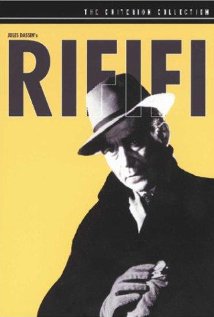
Rififi posterAs for the look of the film, Casper points out that in addition to elements of Expressionism (fractured frames and diagonals or horizontals blunting verticals to create tension), Huston’s experience filming war documentaries as well as the work of Italian Neo-realism (1945’s “Open City” by Roberto Rossellini and Vittorio De Sica’s “The Bicycle Thief” from 1948) also influenced his visuals.

In turn, Huston’s groundbreaking movie clearly had an impact on the great Jules Dassin, director of 1955’s “Rififi,” one of the best of all noirs. “Asphalt Jungle” was remade three times: “Badlanders” (1958), “Cairo” (1962), and “Cool Breeze” (1972). None is considered as good as the original.

Dry but never dull, “Jungle” is a straight-shooting portrait that undermines Hollywood’s often-moralizing and hypocritical gloss. “Crime is only a left-handed form of human endeavor,” as Lon so matter-of-factly puts it. Yipes!

‘The Asphalt Jungle’ quick hit

The Asphalt Jungle/1950/MGM/112 min.

John Huston‘s classic heist movie, which earned four Oscar noms, broke new cinematic ground by humanizing the criminals rather than writing them off as one-dimensional cheats. A suspenseful ride with stellar performers. The top-notch cast includes Sterling Hayden, Louis Calhern, Jean Hagen, James Whitmore, Sam Jaffe and an up-and-coming young starlet named Marilyn Monroe.

Feel-good news for FNB

Yesterday I was named at the top of a list of stylish bloggers by the lovely Marya, who runs Cinema-Fanatic.com: http://bit.ly/fpwHd2.

How cool!

‘Mildred Pierce’ by Haynes savors subtext of Cain’s novel

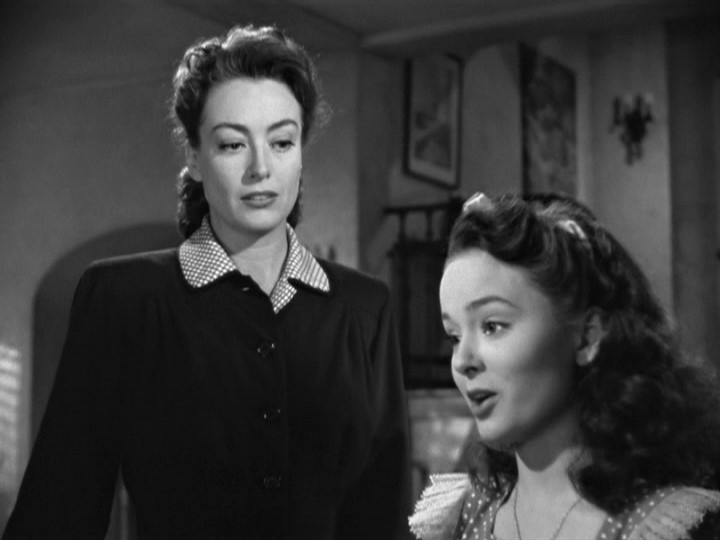
Crawford and Blyth

HBO’s “Mildred Pierce” mini-series, directed by Todd Haynes and based on James M. Cain’s 1941 novel, starts this Sunday.

In director Michael Curtiz’s 1945 movie version of the book, Joan Crawford won the Oscar for her portrayal of the title role in the ultimate story of a self-sacrificing mother and her ungrateful child, Veda (Ann Blyth). Mildred’s hard-earned success as a restaurateur allows her to support not only her family but also her aristocratic and cash-poor love interest Monty Beragon (Zachary Scott).

In Haynes’ mini-series, Kate Winslet stars as Mildred, Guy Pearce plays Monty and two actresses share the Veda role: Morgan Turner as the girl and Evan Rachel Wood as the young woman. Haynes and Jon Raymond wrote the teleplay.

In many ways, the series, which follows the book more faithfully than the 1945 movie and covers nearly 10 ten years in the characters’ lives, is a delight to watch. Depression-era Southern California is beautifully recreated and shot by Edward Lachman. Carter Burwell’s original music is spot-on as is Ann Roth’s costume design. And the acting is excellent, particularly the leads.

Whereas Crawford’s Mildred is stoic and dignified, Winslet’s is sensitive, wistful, often tentative and unsure of herself. Her expressive features suggest her mounting anger, guilt and desperation as her business grows but her relationships deteriorate.

Early on in the series, Winslet’s Mildred identifies in her daughter a “pride or nobility I thought I had” and we glimpse the complexity and closeness of her bond with Veda. The mother-daughter relationship in Haynes’ five-hour version is perhaps more nuanced than in Curtiz’s film.

Pearce easily inhabits the playboy scoundrel Monty and Wood sizzles as the junior miss femme fatale. As the story unfolds, we learn that Mildred and Veda also have very similar taste in men. This year’s supporting actress Oscar winner Melissa Leo and Mare Winningham are quite good as Mildred’s friends.

A disappointment, however, is James LeGros’ insipid performance as Pierce family “friend” Wally Burgan. In Curtiz’s version, the role as played by Jack Carson – conniving and sly, but charming – was one of the movie’s many strengths.

Another downside is the pacing, which is far too slow. It would have benefited from shaving about an hour, especially in the beginning. But then if Haynes’ aim was to be true to every page of the book, he has succeeded.

I prefer Curtiz’s original because it is canonical film noir, in tone, look and story. Granted, Cain’s book was altered because in 1940s Hollywood, immorality was never allowed to triumph. Instead of the evil-doers leaving California to begin a new life in New York, one is fatally shot and the other eventually is punished. The murder sets the story, told via flashback, in motion and lends an edgy suspense.

Still, Haynes did not set out to make a noir; apparently his aim is to explore the subtext and subtleties in Cain’s novel. Cain was, arguably, sympathetic toward his feisty protagonist (what choice does she have but to establish independence and security, given the weak and deceitful men she has to choose from?). But she pays a dreadful price for doing so and the book decries materialism, the class system and social climbing. As for Cain’s ultimate take on Mildred’s power, in Hayne’s work, there is fodder for both sides of the argument.

Warner Bros. image of 1945 “Mildred Pierce”

THR on red-carpet beauty, what Head said, Zoe’s dough

The Hollywood Reporter’s recent style issue was packed with great stories. For instance, Meg Hemphill spotted four awards beauty trends that she predicts we’ll be seeing for months to come. They are:

Think bright pink for spring.

1. Bright pink lips: Who doesn’t love a flirty pink pout? Not Scarlett Johansson, who wore MAC’s Sheen Supreme in Behave Yourself, $14.50, on Oscar night, or Claire Danes, who dazzled at the SAGs with Joli Rouge in 709 Parisian Pink, $24, by Clarins. Shown here is MAC’s Full Fuchsia.

2. Messy side-dos: Let loose with a softly asymmetrical look. Hairstylist Laini Reeves, creator of Amy Adams’ up-do for the Globes, called the effect “1920s with a twist.”

3. Soft makeup: Nars Illuminating Cream, $29, was key to Olivia Wilde’s sheer glow at the Golden Globes. Makeup artist Spencer Barnes was going for “a soft, timeless look that wasn’t focused on trendy color schemes or any one bold application.”

4. Retro waves: Frederic Fekkai hairstylist Adir Abergel took a cue from old Hollywood and Rita Hayworth, then updated the look for Anne Hathaway on Globes night.

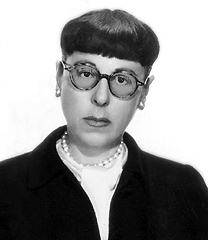
Edith Head

A must-read: Sam Wasson on the legacy of A-list costume designer Edith Head. The story is pegged to the release of two new books: “Edith Head: The Fifty-Year Career of Hollywood’s Greatest Costume Designer” and “The Dress Doctor: Prescriptions for Style from A to Z,” an adaptation of Head’s best-selling tome from 1959.

The spread features pictures from “Vertigo,” “Rear Window,” “The Birds” and other movies. Love this quotation from Head: “Clothes not only can make the woman – they can make her several different women. There’s no one style; there’s a style for a mood.”

THR’s cover story by Shirley Halperin details the empire of Rachel Zoe Inc., “a multiplatform brand powerhouse.” A companion piece names Hollywood ’s 25 most powerful stylists. The top four, after Zoe, are: Kate Young, Petra Flannery, Jen Rade and Anna Bingemann.

Other exiting news: Zoe and husband Rodger Berman are parents to a baby boy. Their first child, Skyler Morrison Berman, was born March 24 in Los Angeles.