Brian De Palma’s ‘Blow Out’ sometimes makes us roll our eyes and sometimes holds us spellbound

Having received good feedback from the winner of April’s giveaway – the prize was Criterion’s rerelease of “Blow Out” – I realized it was high time to run the review. 😉

Brian De Palma/1981/ Filmways Pictures/107 min.
Michael Wilmington

By Michael Wilmington

“Blow Out,” Brian De Palma’s 1981 neo noir about a movie sound man (played by John Travolta), who stumbles into a political conspiracy and a string of murders, is a movie for connoisseurs of trash and movie art. One of this movie’s strongest critical admirers (and one of De Palma’s) was Pauline Kael, and one of Kael’s most famous critical essays is called “Trash, Art and the Movies.” We get all three of them here, in a film that sometimes makes us roll our eyes and sometimes holds us spellbound.

“Blow Out” probably took its title partly from Michelangelo Antonioni’s “Blowup,” which is about a swinging ’60s London photographer who stumbles on what may be murder. And it centers around one of Travolta’s sexiest performances, as Jack Terry the lone-wolf Philadelphia sound-effects man, who is working on a sleazy slasher horror movie.

The director is dissatisfied with the scream Jack has supplied for one of the victims. The movie within the movie is a terrible, inept picture, which De Palma stages as a send-up of “Halloween” and other teen slasher pics. But Jack is a pro. He takes his equipment out that night to get more ambient night-sound on a suburban bridge.

Nancy Allen

That bridge is an unusually well-populated one, considering the lateness of the hour. There are crickets and an owl, who stares at us disturbingly, and there’s another filmmaker named Manny Karp (Dennis Franz), who’s got his camera set up somewhere near Jack (but whom Jack doesn’t know and doesn’t see), and finally there’s a speeding car, carrying, amazingly, the current front-running candidate for president of the United States, Governor McRyan, (John Hoffmeister) together with a hot blonde named Sally (Nancy Allen).

Jack hears a couple of bangs (and catches them on his recorder) and the governor’s car plunges through a fence and into the river where it quickly sinks. Jack dives in and is able to rescue Sally, but not the possible next president.

Soon we’re at the hospital, where Sally is groggily coming to. The police, reporters and some political people, visions of Chappaquiddick perhaps dancing in their heads, seem to want Jack and Nancy to just clam up and go away. He won’t. She wants to, at first, but decides she likes Jack.

Then Manny and his Zapruderish film turns up, and ex-Philadelphian De Palma turns the city into a house of horrors more violent than anything in ex-Philadephian David Lynch’s neighborhood, craning and swooping and whirling his camera all around a world gone seemingly mad. There’s a deadly plot of some kind afoot, and its bloodiest agent is a phony telephone company worker named Burke (played with a truly evil stare and icily smug expression by John Lithgow), a cold-blooded killer who seems willing to depopulate half the town to keep all the guilty secrets safe.

If that sounds like a pretty absurd plot, it often plays pretty silly too, though just as often it’s imaginatively over-the-top and hellishly exciting. I‘ve always thought De Palma should avoid solo-writing jobs on his own movie scripts. And “Blow Out” as well as “Raising Cain” and “Femme Fatale” (and 1968’s “Murder a la Mod,” which is included in this Criterion package) are good demonstrations why. “Blow Out” is never boring. But a lot of the time it doesn’t make any bloody sense.

So why did Kael call it a great movie? Mostly, maybe, because she very much liked De Palma’s work, because this movie is made with such great feverish style, and also maybe because she had a crush of sorts on Travolta, as she had on Marlon Brando, Paul Newman and Warren Beatty.

The style is what we remember about “Blow Out” – not the ideas, which are mostly shallow or obvious, or the story, which is both predictable and illogical, or the characters who are mostly overdrawn and somewhat stereotypical (or archetypal, if you prefer), or the movie itself, which is basically a set of ingeniously orchestrated suspense set-pieces, strung together in clever, artful ways that defy plausibility with an almost cheerful impudence. [Read more…]

Cinematheque honors Alfred Hitchcock, Bernard Herrmann

You can always count on the American Cinematheque to give noiristas some love.

The Egyptian Theatre in Hollywood is running Suspense Account: The Films of Alfred Hitchcock, featuring his Technicolor spectaculars, such as “North by Northwest,” “Rear Window,” “Vertigo,” “The Birds,” “The Man Who Knew Too Much,” and “To Catch a Thief.” Also showing are suspense thrillers “Notorious,” “Shadow of a Doubt,” “Suspicion,” “Spellbound,” “Saboteur” and “Psycho.” Now under way, the series runs through June 9.

Additionally, from June 23-30, the Aero Theatre in Santa Monica will host A Centennial Tribute to Composer Bernard Herrmann (1911-1975), one of cinema’s most brilliant and influential artists. The series will screen “Cape Fear,” On Dangerous Ground,” “Citizen Kane,” “The Magnificent Ambersons,” “Vertigo,” “Obsession,” “Marnie,” “Psycho,” and “Hangover Square.”

Check the schedule for more details. The Egyptian Theatre is at 6712 Hollywood Blvd. The Aero Theatre is at 1328 Montana Ave. General admission is $11; members pay $7.

‘Cape Fear’ shows Mitchum at his most menacing, most noir

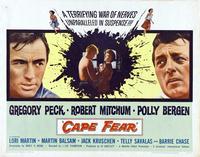
Cape Fear/1962/Universal Pictures/105 min.

From the moment Robert Mitchum appears in “Cape Fear” with his slow swagger, Southern drawl and serious mean spirit, there’s no doubt he’s a tour-de-force bad guy. In fact, he is one of cinema’s greatest psychos. His character Max Cady ranks No. 28 on the American Film Institute’s list of the top 50 villains of all time.

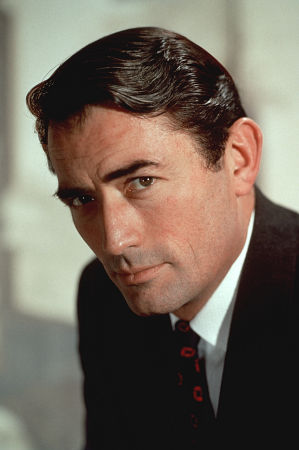
Gregory Peck

The plot is straightforward but it’s a story that simmers with tension. Ex-con Max Cady puts the blame for his recent stint in jail squarely on the man who testified against him: Sam Bowden (Gregory Peck, who also helped produce), a prominent lawyer in a small Southern town. Seeking revenge for the eight years he spent behind bars, Cady launches a campaign of terror against Bowden and his family that culminates in a life-and-death struggle in a moonlit swamp.

The 1962 film, still chilling today, had all the ingredients for success: accomplished director J. Lee Thompson (who also made Peck’s 1962 adventure classic, “The Guns of Navarone”), a near-perfect cast, top-notch material (James R. Webb’s screenplay is based on John D. MacDonald’s novel “The Executioners”), a Bernard Herrmann score, cinematography by Sam Leavitt, art direction by Robert Boyle and editing by George Tomasini.

Herrmann, Boyle and Tomasini were frequent collaborators with Alfred Hitchcock. Of shooting in black and white, director Thompson said, “I thought the black and the shadows would enhance the story and color might spoil it.”

The cast includes TV comedienne Polly Bergen as Sam’s wife Peggy, Lori Martin as their daughter, Martin Balsam (“Psycho’s” ill-fated detective) as police chief Mark Dutton, Telly Savalas as gumshoe Charlie Sievers and Barrie Chase as Diane, a goodtime girl victimized by Cady.

To Peck’s credit, he understood that Mitchum’s character was more dynamic than steadfast and respectable Sam Bowden. Mitchum makes even a quick line, such as, “You sweatin’ a little, huh counselor?” glow with burning malice.

Thompson says in the making-of feature in the DVD, “Greg was conscious the whole time that the villain was the colorful part and that Mitchum was playing it beautifully. And he let him run with it. … The way [Peck] played the part and the strength he showed, it became a very good battle between the two men. It was wonderful teamwork between the two.”

Thompson also recalls the way Mitchum embraced the role. “This part is a drunk, a rapist and a violent man, and I live my parts,” Mitchum told him. “It was sort of a warning that we might have some stormy passages during the making of the film … and we did have some stormy passages,” laughs Thompson. [Read more…]

Quick hit: ‘Cape Fear’

Cape Fear/1962/Universal Pictures/105 min.

Robert Mitchum and Gregory Peck engage in a battle of wills in this classic thriller by director J. Lee Thompson. Mitchum’s Max Cady is an ex-con looking to even the score with the man he blames for his jail time; he’s nuts but hides it so well. Peck’s good guy is a pillar of strength, guarding his family from Cady’s stalking, smirking and revenge-seeking. Strong support cast and virtuoso visuals.

Exhibit turns an eye on notions of feminine beauty

Tyra Banks once said, “I’m not ugly, but my beauty is a total creation.” You can see both creations and critiques of beauty at a new exhibit in Century City.
x
The Annenberg Space for Photography’s BEAUTY CULTURE explores how feminine beauty is defined, revered and challenged in modern society, featuring works from iconic photographers such as Albert Watson, Bert Stern, Herb Ritts, Man Ray, Jean-Paul Goude, ORLAN, Guy Bourdin, Horst, Melvin Sokolsky, Ellen von Unwerth, Lillian Bassman, Matthew Rolston, Philippe Halsman, Lauren Greenfield, Susan Anderson, Tyen and Carrie May Weems. There are 175 images on display in the print gallery.

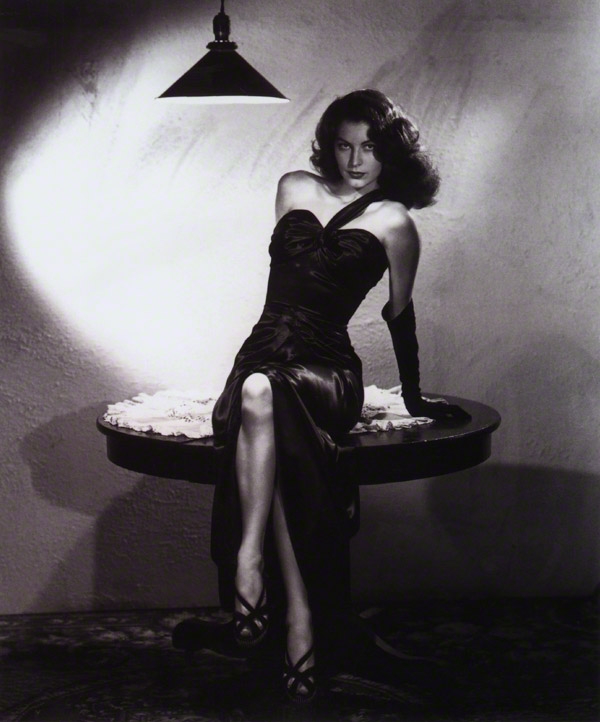
Ava Gardner's portrait by Ray Jones is part of the show's Hollywood section.

Organizers say they hope to spur dialogue about beauty’s allure and mystique as well as the cultlike glorification and multibillion-dollar industries that surround it. “As much as beauty can astonish and inspire, it can also corrupt and subvert, rendering all else – and even itself – broken and obsolete,” says Wallis Annenberg, board chairman, president and CEO of the Annenberg Foundation.

Show themes include:
*Dreams on Paper: The Pin-Up Girl
*Beauty, Inc.: The $300 Billion Cosmetics Industry
*The Marilyn Syndrome
*The Hollywood Glamour Machine: Vamps, Vixens and Bombshells
x
Visitors can also see a short documentary film directed by Lauren Greenfield as well as a digital slideshow and an interactive digital salon. In the salon, guests can alter images of themselves by changing their features (such as hair color, eye color and facial structure) and by applying cosmetics. Images can then be emailed or uploaded to Facebook.
x
Additionally, a Thursday-night lecture series, starting June 2, features photographers and editors discussing their experiences in the industry and their perspectives on photography’s role in defining beauty. The lectures are free to the public with advance registration.
x
Details, details
Annenberg Space for Photography, 2000 Avenue of the Stars, Century City, CA, 90067, 213-403-3000. Open 11 a.m. to 6 p.m. Wednesday through Sunday; closed Monday and Tuesday. Admission is free. The exhibit runs through Nov. 27.
x
Ava Gardner photo from the film “The Killers,” copyright 1946 Ray Jones, Universal.
x

‘Glenn Ford: A Life’ is an intimate view of a star

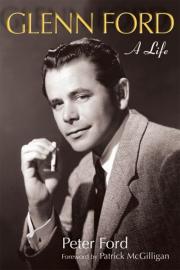
Peter Ford will discuss and sign his book “Glenn Ford: A Life” at 7 p.m. Friday at Book Soup, 8818 Sunset Blvd., West Hollywood, CA, 90069, 310-659-3110. The foreword is by Patrick McGilligan.

Some background on the book, provided by event organizers:

Glenn Ford – star of such now-classic films as “Gilda,” “Blackboard Jungle,” “The Big Heat,” “3:10 to Yuma,” and “The Rounders” – had rugged good looks, a long and successful career, and a glamorous Hollywood life. Yet the man who could be accessible and charming on screen retreated to a deeply private world he created behind closed doors.

This biography by Ford’s son, Peter, offers an intimate view of a star’s private and public life. Included are exclusive interviews with family, friends, and professional associates, and snippets from the Ford family collection of diaries, letters, audiotapes, unpublished interviews, and rare candid photos.

This biography tells a cautionary tale of Glenn Ford’s relentless infidelities and long, slow fade-out, but it also embraces his talent-driven career. The result is an authentic Hollywood story that isn’t afraid to reveal the truth.

Many ways to help Joplin’s tornado victims

At least 116 people have been reported dead in Joplin, Mo., after a devastating tornado hit the city on Sunday. ABC News has compiled a list of ways to donate to the tornado relief effort http://abcn.ws/iqIIJi.

This Facebook page provides info on lost and found animals in Joplin http://on.fb.me/lugadg.

On the radar: Sugar and spice Sydney style in ‘Recipe For Murder;’ cherchez la femme; Cannes kudos

Sonia Bible's film focuses on three notorious women.

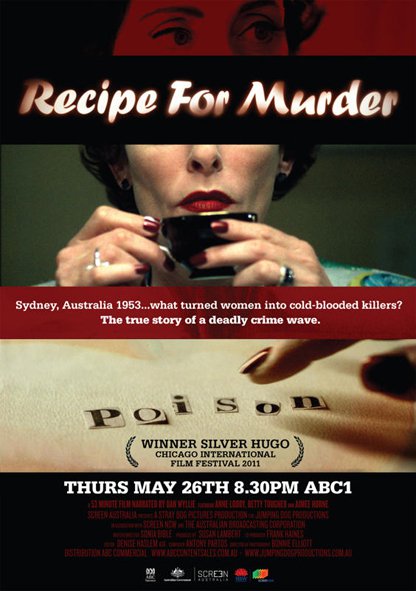
Yesterday I found out about an intriguing new movie, “Recipe For Murder,” and I look forward to speaking with writer/director Sonia Bible. It was news to me that in the early 1950’s, Sydney was a city in the grip of a deadly crime wave. In just over a year, more than 100 people were poisoned; most of the killers were women. “Recipe For Murder” tells the true story of three notorious perpetrators: Yvonne Fletcher, Caroline Grills and Veronica Monty.
x
The 52-minute film combines gritty archive footage, film-noir re-enactments, interviews with witnesses and a score from “Animal Kingdom” composer Antony Partos. Last month, “Recipe For Murder” won a Silver Hugo award (documentary category, history/biography) in the Chicago film fest’s 2011 Hugo Television Competition.
x

Rachel McAdams

B&W Boudoir: In the June issue of Elle, Rachel McAdams and the magazine’s creative director Joe Zee reinterpret Catherine Deneuve’s look in “Repulsion,” from 1965, by Roman Polanski. “Noir, Now” also features boudoir dressing suggestions, edited by Kyle Anderson. McAdams nails the film-noir vibe and it’s an excellent issue overall, particularly Cintra Wilson’s piece on how learning flamenco changed her life.

x

Kirsten Dunst in "Melancholia"

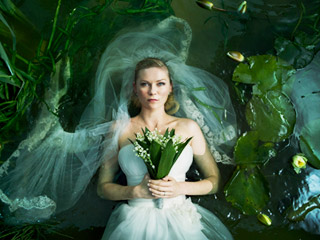
In Cannesclusion: Terrence Malick’s “The Tree of Life” won the Palme D’Or at the Cannes film fest, which ended Sunday. Kirsten Dunst snared best female actor for her role in “Melancholia” by Lars Von Trier. Harvey Weinstein calls this the best Cannes in 25 years. Read Peter Bradshaw’s wrapup in The Guardian at http://bit.ly/iZXTeV.

Make your Monday more exotic: Maja liquid soap

Add a bit of spice to your routine this week with a retro fragrance that has been around since the 1920s. The spicy Oriental scent was reportedly a popular choice among American GIs of World War II looking to bring a bit of Euro-glam back to their stateside sweethearts.

Maja dates to the 1920s.

According to Fragantica, Maja is a mix of nutmeg, carnation, patchouli, cloves, vetiver, rose and geranium. The liquid soap also has olive oil extracts to moisturize.

But what caught my eye was packaging, a mysterious Spanish dancer against a black background. What man could resist her? 😉 And at $9.95 for 8.5 fluid oz., it’s easy on the wallet; available at beauty-supply stores and Maja Soaps.

While I’m a fan of the liquid soap, I can’t vouch for other fragrance products. Alas, according to several sites, Myrurgia (part of Barcelona-based  Puig) decided to reformulate “the scent of seduction, Spanish passion.” This decision did not sit well with loyal fans, some of whom likened the reformulation to cheap aftershave.

Here’s hoping that the vintage scent will make a comeback. Well, stranger things have happened.

Product source: From my own collection; I did not receive product or compensation from Maja.

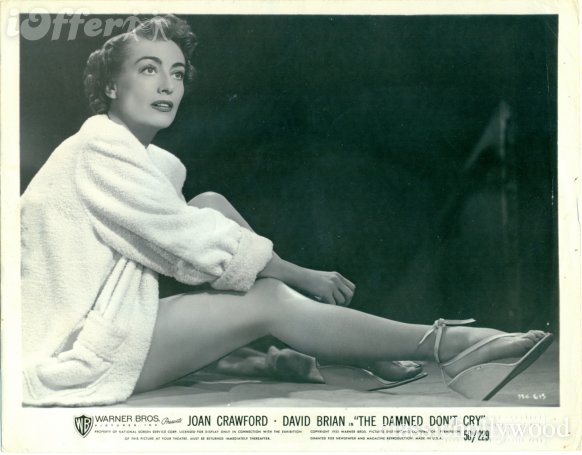
Married to the mob, Crawford style: ‘The Damned Don’t Cry’

The Damned Don’t Cry/1950/Warner Bros./103 min.

Joan Crawford was known for her gorgeous gams.

In “The Damned Don’t Cry,” which is full of sharp dialogue, this line cuts to the chase. Jacqueline DeWit asks Joan Crawford: “What else do we got to sell but a face and figure? And anyone who can make a peplum move like you do don’t need anything else.”

DeWit’s Sandra, a model by day and escort by night, briefly takes Crawford’s character, Ethel Whitehead, under her wing as Ethel learns to fend for herself in New York City. But, in addition to her modeling ability, Ethel has brains and ambition in spades and she soon surpasses Sandra to become the ultimate hard-as-nails femme fatale in this classic Crawford film noir.

Like many femmes fatales, Ethel has humble roots. A downtrodden housewife with a cranky husband (Richard Egan), she eventually rises to the top of a national crime syndicate and lives the high life – travel, the best restaurants, a great apartment, a closet full of swanky clothes. Key to her climb is cultivating contacts such as mild-mannered accountant Martin Blackford (Kent Smith). Ethel is impressed by the letters CPA after his name, even though she’s not quite sure what they mean.

Martin helps her gain entry into the world of tough but urbane George Castleman (David Brian), the leader of the syndicate. “I like men with brains,” Ethel tells George. Finding him far more impressive than number-crunching Marty, she shows up at his office the next day, proves she’s as gutsy as he is and gets a job with his racket. Never one to think twice about mixing business and pleasure, Ethel seals the deal with a kiss.

A quick study, Ethel devotes herself to the syndicate, then takes on a new identity. With polished and distinguished Patricia Longworth (Selena Royle) guiding her, Ethel transforms herself into wealthy socialite Lorna Hansen Forbes. It’s Ethel’s equivalent of an MBA.

But her toughest assignment is when George asks her for some due diligence on gangster Nick Prenta (Steve Cochran). Despite her new name, old habits die hard and Ethel/Lorna falls for Prenta. Naturally, it’s only a matter of time before George susses her out and decides to set things straight.

With its A-list performances, crackling script, crisp pace and striking cinematography by Ted McCord, “The Damned Don’t Cry,” is an ideal noir vehicle for Crawford. The movie is based on an original story by Gertrude Walker; Harold Medford and novelist Jerome Weidman and wrote the script. Also fodder for the story was the real-life affair of Virginia Hill and gangster Bugsy Siegel. The title comes from a line in “Mourning Becomes Electra” by Eugene O’Neill. [Read more…]