Happy birthday, Marilyn

For what would have been Marilyn Monroe’s 86th birthday, I’ve compiled quotations from her and about her. If you have a favorite quotation from or about MM, please send it and I will add it to the list. I have credited the photographers wherever possible; copyright of all photos belongs to the photographers and/or their estates/representatives. (Note: Film noir horoscopes will return next month.)

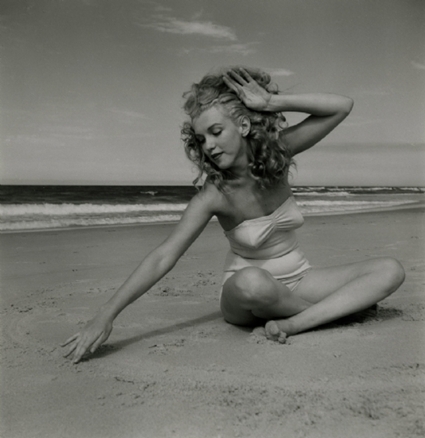
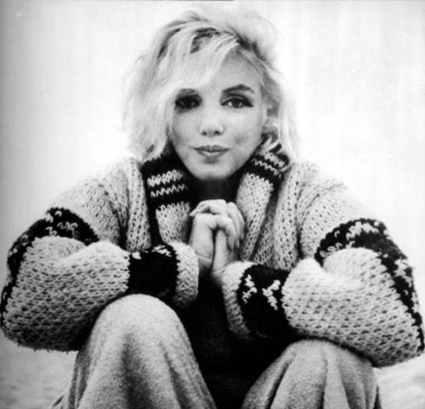
An early shot of Marilyn on the beach; she loved the water.

FROM MARILYN …

“The real lover is the man who can thrill you by touching your head or smiling into your eyes or just staring into space.”

“I love champagne – just give me champagne and good food, and I’m in heaven and love.”

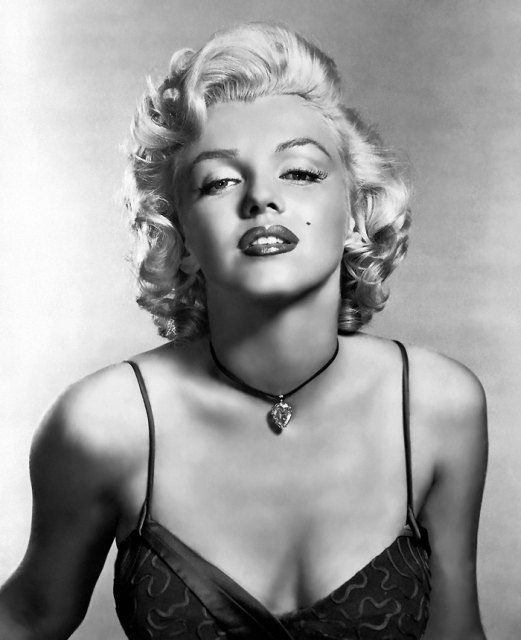
Marilyn started out as a model.

“The body is meant to be seen, not all covered up.”

“Sex is part of nature. I go along with nature.”

“My illusions didn’t have anything to do with being a fine actress, I knew how third rate I was. I could actually feel my lack of talent, as if it were cheap clothes I was wearing inside. But, my God, how I wanted to learn, to change, to improve!”

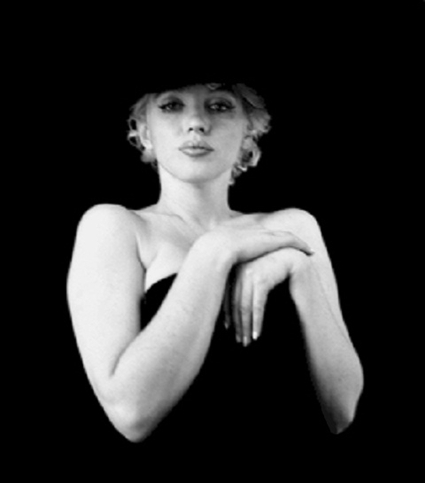
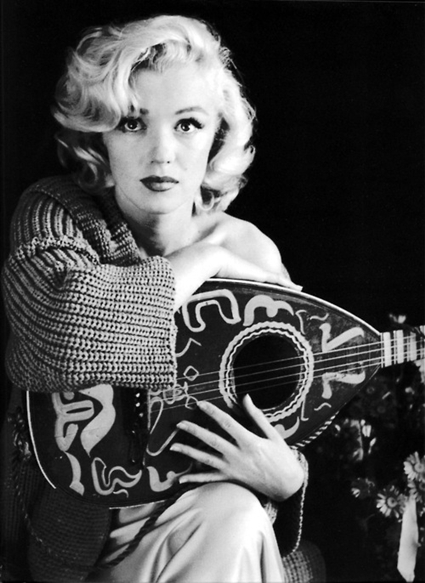
Marilyn shot by Milton Greene

“I don’t mind living in a man’s world as long as I can be a woman in it.”

“Husbands are chiefly good as lovers when they are betraying their wives.”

“People had a habit of looking at me as if I were some kind of mirror instead of a person. They didn’t see me, they saw their own lewd thoughts, then they white-masked themselves by calling me the lewd one.”

Marilyn shot by Milton Greene

“All the men I know are spending the day with their wives and families, and all the stores in Los Angeles are closed. You can’t wander through looking at all the pretty clothes and pretending to buy something.” – on why she hated Sundays

“Everyone’s just laughing at me. I hate it. Big breasts, big ass, big deal. Can’t I be anything else? Gee, how long can you be sexy?”

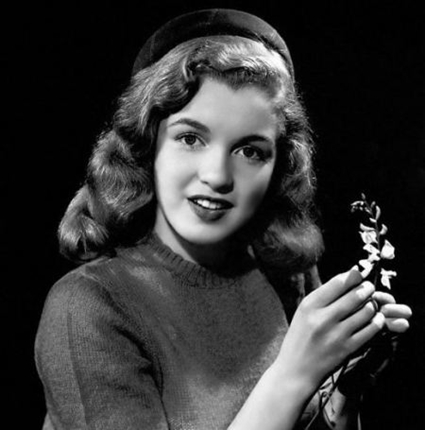
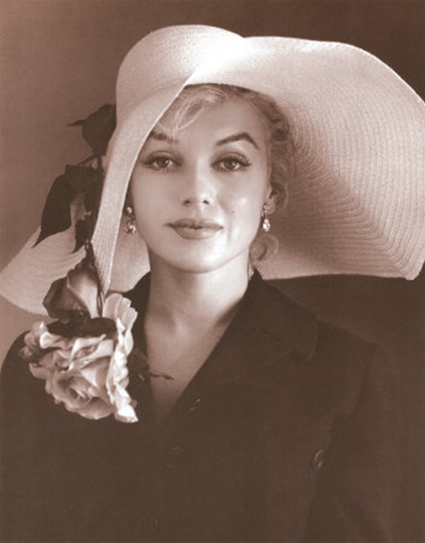
I love this shot and the elegant hat.

“Looking back, I guess I used to play-act all the time [as a child]. For one thing, it meant I could live in a more interesting world than the one around me.”

“No one ever told me I was pretty when I was a little girl. All little girls should be told they’re pretty, even if they aren’t.”

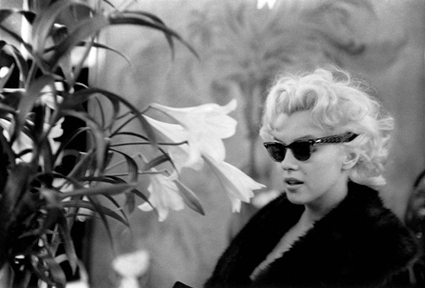
Marilyn in New York, shot by Ed Feingersh

“I’m selfish, impatient and a little insecure. I make mistakes, I am out of control and at times hard to handle. But if you can’t handle me at my worst, then you sure as hell don’t deserve me at my best.”

“My problem is that I drive myself … I’m trying to become an artist, and to be true, and sometimes I feel I’m on the verge of craziness. I’m just trying to get the truest part of myself out, and it’s very hard. There are times when I think, ‘All I have to be is true.’ But sometimes it doesn’t come out so easily. I always have this secret feeling that I’m really a fake or something, a phony.”


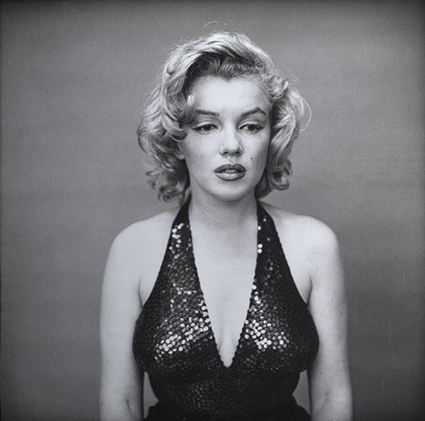
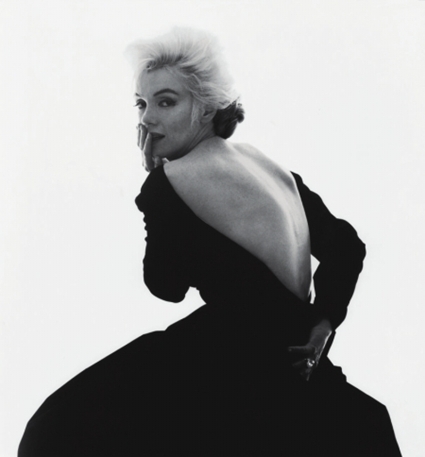
Marilyn shot by Richard Avedon

“Hollywood is a place where they’ll pay you a thousand dollars for a kiss and fifty cents for your soul.”

ABOUT MARILYN …

“Our marriage was a good marriage … it’s seldom a man gets a bride like Marilyn. I wonder if she’s forgotten how much in love we really were.” – Jim Dougherty talking to Photoplay magazine, 1953; they were married from 1942-46.

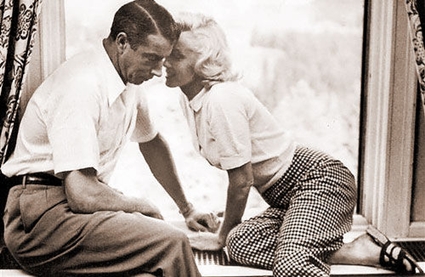
Marilyn and Joe DiMaggio were married less than a year.

“It’s like a good double-play combination. It’s just a matter of two people meeting and something clicks.” – Joe DiMaggio; he was married to Marilyn from Jan. 14, 1954 to Oct. 27, 1954

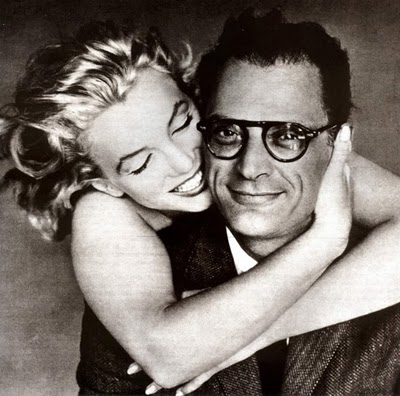
Marilyn and Arthur Miller, her third husband

“She was a whirling light to me then, all paradox and enticing mystery, street-tough one moment, then lifted by a lyrical and poetic sensibility that few retain past early adolescence. …

“She had no common sense, but what she did have was something holier, a long-reaching vision of which she herself was only fitfully aware: humans were all need, all wound. What she wanted most was not to be judged but to win recognition from a sentimentally cruel profession, and from men blinded to her humanity by her perfect beauty. She was part queen, part waif, sometimes on her knees before her own body and sometimes despairing because of it. …

“To have survived, she would have had to be either more cynical or even further from reality than she was. Instead, she was a poet on a street corner trying to recite to a crowd pulling at her clothes.” – Arthur Miller, her husband from 1956-61

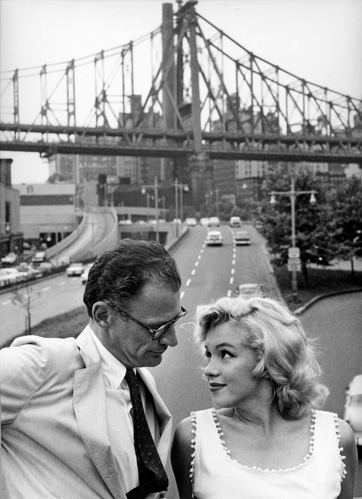
Marilyn Monroe and Arthur Miller in front of the Queensboro Bridge, New York, 1957. Sam Shaw/ Shaw Family Archives, Ltd.

“There’s a beautiful blonde name of Marilyn Monroe who makes the most of her footage.” xxxxxLiza Wilson of Photoplay magazine, writing about “The Asphalt Jungle,” 1950

She was, “a female spurt of wit and sensitive energy who could hang like a sloth for days in a muddy-mooded coma; a child girl, yet an actress to loose a riot by dropping her glove at a premiere; a fountain of charm and a dreary bore … she was certainly more than the silver witch of us all.” – Norman Mailer

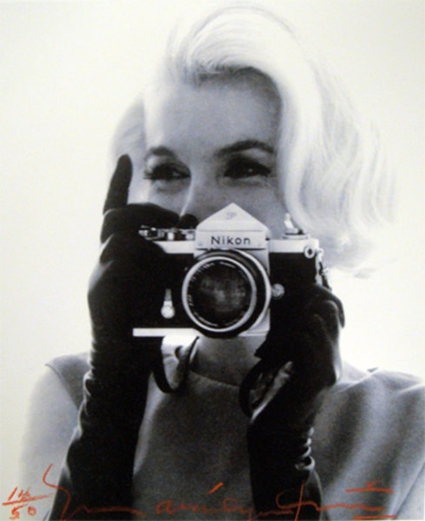
Marilyn shot by Bert Stern, 1962

‘‘From families that owned little but their own good names, she had inherited the fierce pride of the poor. Because she was sometimes forced to give in, to sell herself partially, she was all the more fearful of being bought totally.’’ – Gloria Steinem

“She deeply wanted reassurance of her worth, yet she respected the men who scorned her, because their estimate of her was her own.” – Elia Kazan

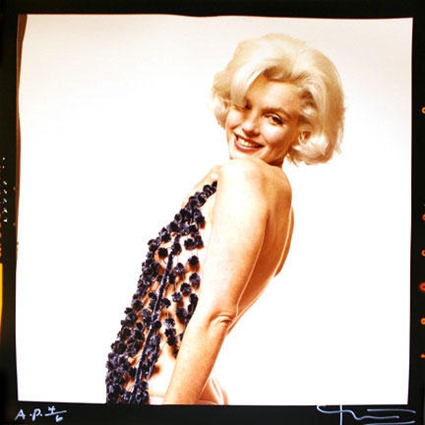
Marilyn shot by Bert Stern, 1962

All the sex symbols were endowed with a large portion of earthy coarseness. Marilyn had the most. … Only an inherent whore could walk like Marilyn and dress like Marilyn. … She had a trick of making all men feel she could be in love with them and I think she could be, a sort of saving each one for a rainy day, for when things would get tough again in her life and she would need help. … I saw the hope and the disappointments. The longing to give what the people wanted and, at the same time, to become a complete person herself. She was also selfish, rude, thoughtless, completely self-centered. She kept people waiting for hours.” – Hollywood columnist Sheilah Graham

Marilyn shot by Bert Stern, 1962

“The luminosity of that face! There has never been a woman with such voltage on the screen, with the exception of Garbo.” – Billy Wilder

“If she’d been dumber, she’d have been happier.” – Shelley Winters

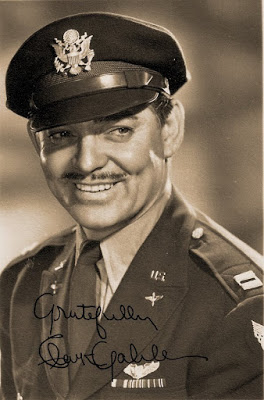
“Everything Marilyn does is different from any other woman, strange and exciting, from the way she talks to the way she uses that magnificent torso.” – Clark Gable, her co-star of 1961’s “The Misfits,” about which he said: “This is the best picture I have made and it’s the only time I’ve been able to act.

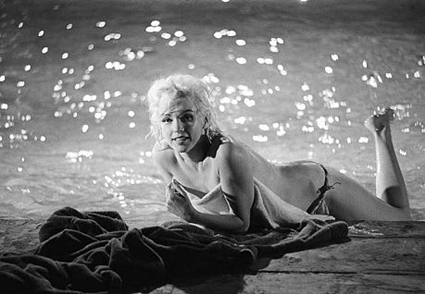
Marilyn shot by Lawrence Schiller on the set of “Something’s Got to Give,” 1962

“Her mixture of wide-eyed wonder and cuddly drugged sexiness seemed to get to just about every male; she turned on even homosexual men. And women couldn’t take her seriously enough to be indignant; she was funny and impulsive in a way that made people feel protective. She was a little knocked out; her face looked as if, when nobody was paying attention to her, it would go utterly slack – as if she died between wolf calls.” – Pauline Kael

“What I particularly liked about Marilyn was that she didn’t act like a movie star. She was down to earth. Although she was 28, she looked and acted like a teenager. … I was most impressed that Marilyn was always polite and friendly to everyone on the set. She was no phony or snob. … Marilyn always seemed determined to talk to me about her childhood. We would be discussing a subject of current interest to her and she would somehow bring up an incident from her bygone days.” – Photographer George Barris

Marilyn shot by George Barris, 1962

“I liked her. She was a good kid. But when you looked into her eyes, there was nothing there. No warmth. No life. It was all illusion. She looked great on film, yeah. But in person … she was a ghost.” – Dean Martin, her co-star in 1962’s (unfinished) “Something’s Got to Give”

“Nobody could be as miserable as she was in such a loving, good-natured way. No matter how sad she may have been, she was never mean, never lashed out at me. Instead she just wanted to hug me and have me hug her and tell her it was all going to work out. That it didn’t, broke my heart.” – George Jacobs, who was Frank Sinatra’s valet

“Marilyn Monroe was a legend. In her lifetime she created a myth of what a poor girl from a deprived background could attain. For the entire world she became a symbol of the eternal feminine.” – Lee Strasberg in his eulogy

TCM/Warner Home Video set highlights blonde bombshell Jean Harlow’s sharp, saucy screen persona

By Michael Wilmington

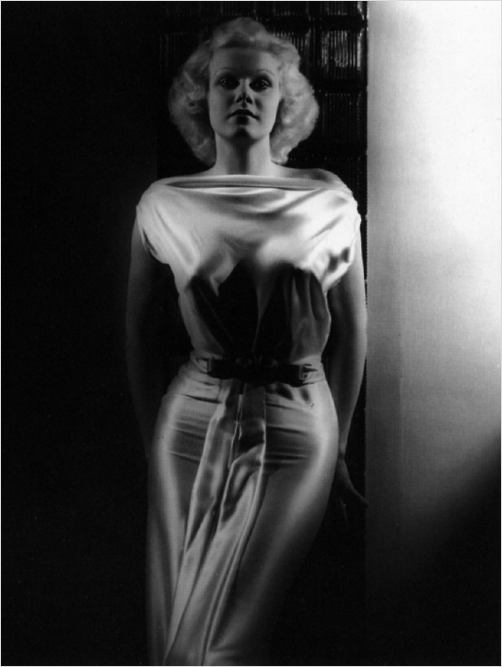
Jean Harlow may have been the first of the movie blonde bombshells, but her sharp, saucy screen persona was quite a ways removed from that of her sublime successor, Marilyn Monroe.
 

Marilyn Monroe often seemed like a girl in a woman's body.

Brassier and earthier than Monroe, Harlow was a bouncy sexpot who knew what she wanted and knew how to get it: a streetwise babe who lived in the real world and knew just how to manipulate it to her advantage. Harlow, like Monroe, had a baby-talk mode, but it was more clearly a put-on. Harlow’s juvenile antics, her “Daddy’s girl” banter with sugar daddies like beefy Wallace Beery let the audience firmly in on the joke.

Marilyn, or at least her screen persona, often seemed more like a little girl in a woman’s body, a blonde baby doll who never quite grew up, and often lived in a world all her own. Marilyn on screen, in some ways, is always a fantasy. Harlow on screen is usually real. Very real.

In the new TCM/Warner Home Video “Greatest Classics Legends: Jean Harlow” set, Harlow holds her own with the elite of MGM’s acting royalty — with the Barrymores (John and Lionel), and with Spencer Tracy, Clark Gable, William Powell, Myrna Loy, Rosalind Russell, and classy supporting players like Billie Burke, May Robson and C. Aubrey Smith, and even with the young James Stewart.

Holds her own? She’s a star, even in a roomful of stars. This Jean Harlow set includes the following four films.

Jean Harlow holds her own among Hollywood royalty.

“Dinner at Eight” (George Cukor, 1933) An MGM all-star special and in some ways, a better movie than the studio’s talent-studded “Grand Hotel” — wittier, more knowing, with a deeper, stronger cast, and more beautifully directed, by Cukor. David O. Selznick was the producer, and the source was the hit Broadway play by Edna Ferber and George S. Kaufman, with the screenplay and additional dialogue from Herman Mankiewicz, Donald Ogden Stewart and Frances Marion.
 
The play is classic. The script is brilliant. The direction and production are impeccable. The stellar cast, one of the all-time great Hollywood ensembles, includes Lionel Barrymore as the beleaguered shipbuilder Oliver Jordan and Billie Burke as his fluttery society wife, who’s holding a dinner (at eight) for British aristocrats Lord and Lady Ferncliffe.

On her guest list: Old-time diva actress Carlotta Vance (Marie Dressler); washed-up alcoholic Hollywood actor Larry Renault (John Barrymore, in an astounding piece of self-revelation and a classic of the actor‘s art), who’s romancing their twentyish daughter Paula (Madge Evans); voracious business shark Dan Packard (Wallace Beery) and his feisty platinum-blonde trophy wife Kitty (Harlow, in one of her best roles); smooth society doctor (and Kitty’s lover) Wayne Talbot (Edmund Lowe) and his tolerant wife (Karen Morley); and Paula’s hapless society beau (Phillips Holmes).

I’ve often thought that playwright Garson Kanin may have gotten the idea for “Born Yesterday” while watching Beery and Harlow in this film. In fact, she’s great with all her co-stars. A classic Harlow-Dressler moment is this exchange:

In the last scene, as they stroll in for dinner, Harlow muses, in a thoughtfully brassy way, “I was reading a book yesterday …”

Dressler: “Reading a book?”

Harlow: “Yes, it’s all about civilization or something, a nutty kind of a book. You know, the guy said that machinery is going to take the place of every profession! ”

Dressler, as she takes Harlow’s arm: “Oh, my dear, that’s something you need never worry about!”

It couldn’t be bettered. And neither could the movie, which, in some ways, is less another “Grand Hotel,” and more in the line of Jean Renoir’s great ensemble comedy-drama “The Rules of the Game.” Not as good, of course. Nothing is. [Read more...]